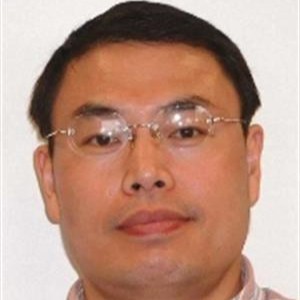
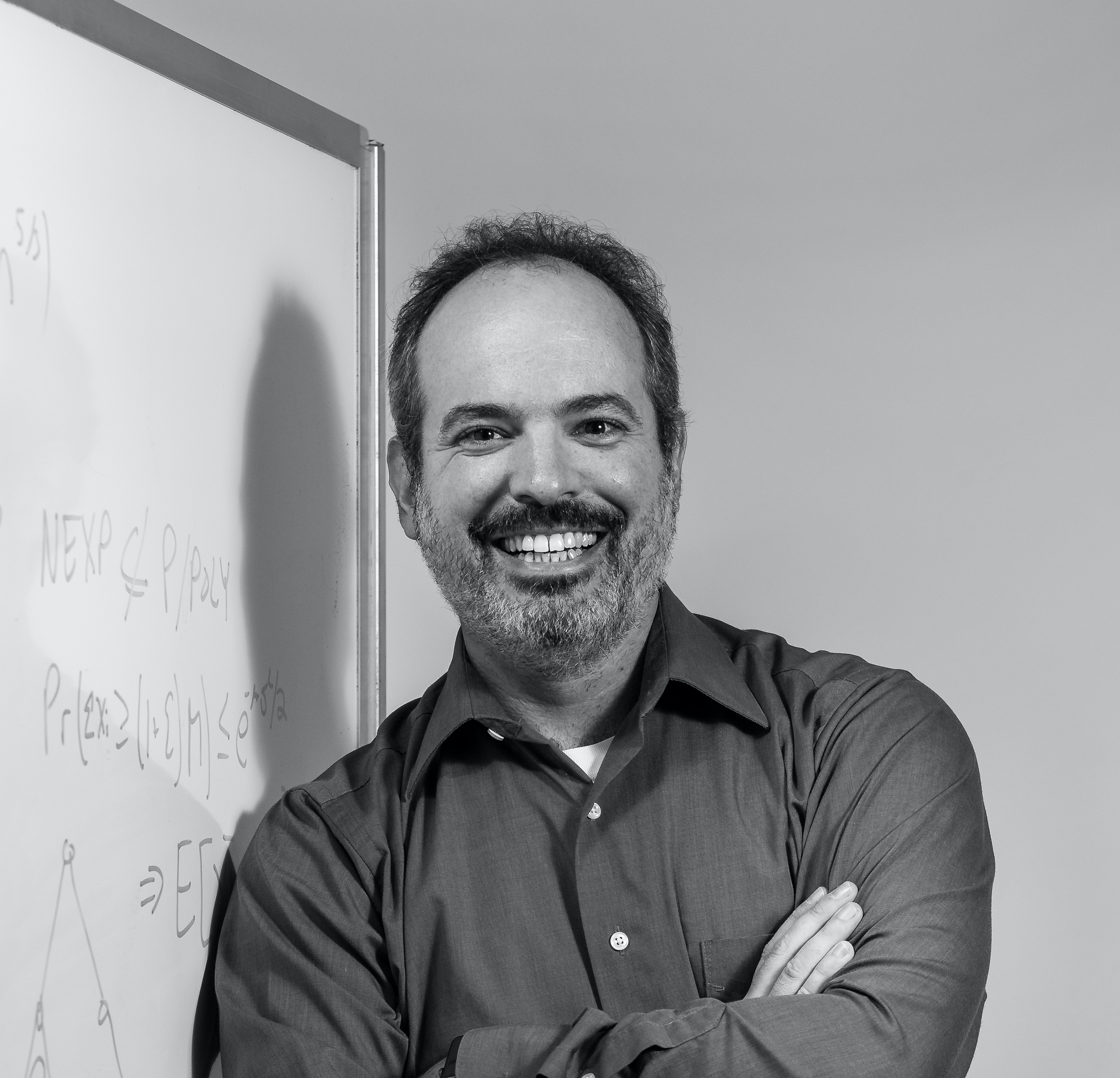
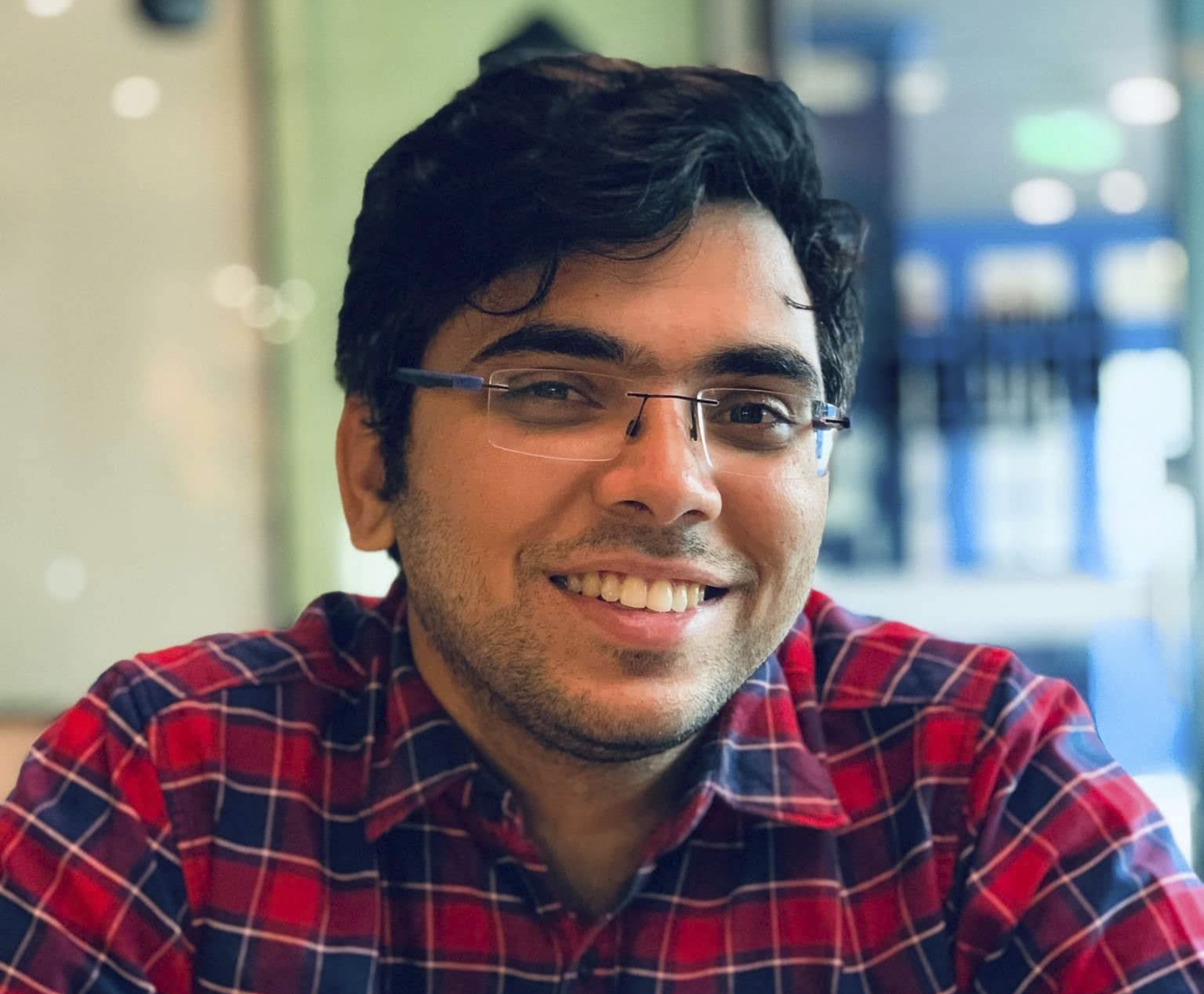
Shangyou Zhang is an Associate Professor in the Department of Mathematical Sciences at the University of Delaware, affiliated with the College of Arts & Sciences. He holds a B.S. from the University of Science and Technology of China and a Ph.D. from The Pennsylvania State University. His research focuses on finite element methods, numerical analysis, and computational mathematics, with an emphasis on constructing and analyzing finite elements for partial differential equations, including superconvergence and error analysis. He has contributed extensively to the development of conforming and nonconforming elements for various equations such as the Stokes, biharmonic, and Maxwell equations, with a particular interest in divergence-free and H(div)-conforming elements. His work bridges theoretical analysis and practical numerical methods, addressing challenges in mesh adaptivity, stabilization, and high-order accuracy. Education: B.S. (USTC), Ph.D. (Penn State) Affiliations: University of Delaware, Department of Mathematical Sciences Research interests include finite element methods for PDEs, superconvergence, and numerical solutions of fluid dynamics and elasticity. Recent work emphasizes weak Galerkin methods, HDG schemes, and stabilized finite elements for complex geometries. His publications span topics like C1-Pk elements, divergence-free discretizations, and error estimates for mixed formulations. Publications highlight contributions to high-order elements, locking-free plate models, and robust discretizations for singular perturbations. Teaching includes computational mathematics courses such as MATH 426 (Spring 2025).
Liuba Shrira is a Professor of Computer Science at Brandeis University, affiliated with the Michtom School of Computer Science and the Benjamin and Mae Volen National Center for Complex Systems. Her research focuses on distributed systems, storage systems, blockchain technology, concurrent programming, and system architectures. She holds a Ph.D., M.S., and B.S. from the Technion – Israel Institute of Technology. Her work emphasizes reliable and highly available systems, including innovations in snapshot management, transactional memory, and adversarial cross-chain commerce. She has been recognized with awards such as the ACM Distinguished Scientist (2009), Lady Davis Fellowship (2010-2011), and a Best Paper Award (2020). Her research has been supported by grants from the National Science Foundation and other institutions. Recent publications highlight advancements in optimistic concurrency control, blockchain interoperability, and modular past-state systems. Shrira has also contributed to middleware design and distributed computing frameworks, with applications in both academic and industry settings.
Trevor Brown is an Associate Professor in the Department of Computer Science at the University of Waterloo. Previously, he held positions as an Assistant Professor at the same institution, and completed postdoctoral research at the Institute of Science and Technology (IST) Austria under Dan Alistarh, and at the Technion – Israel Institute of Technology under Hagit Attiya. He earned his PhD from the University of Toronto under Faith Ellen's supervision, where he was part of the theory group. His research focuses on concurrent data structures, particularly lock-free algorithms, transactional memory, non-volatile memory systems, and techniques for non-uniform memory architectures (NUMA). He leads the UW Multicore Lab, which explores high-performance parallel computing and distributed systems. His work emphasizes rigorous experimental validation and practical implementations, reflected in extensive open-source code repositories. Brown has taught courses including CSC798 (Multicore Programming) and CSC341 (Algorithms), and has served as a teaching assistant for multiple computer science courses at the University of Toronto and York University. He maintains active collaborations through implementations of concurrent data structures (e.g., lock-free (a,b)-trees, B-slack trees) and benchmarks in the Setbench project.
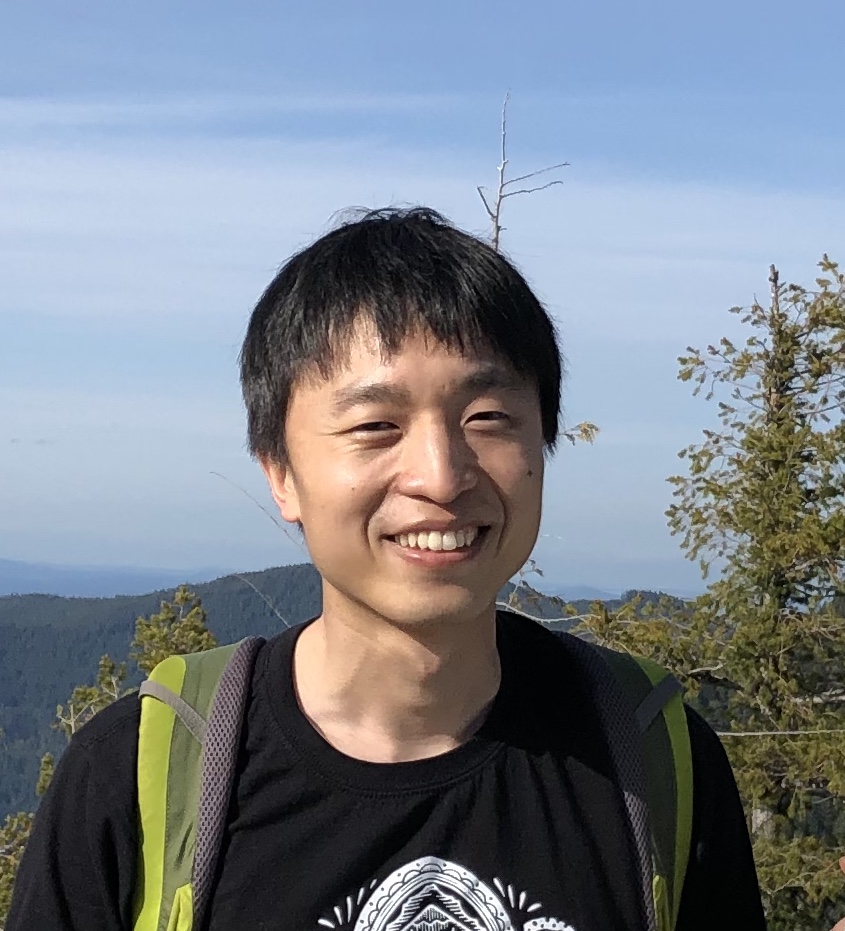
Zihe Gao serves as a tenure-track Assistant Professor in the Department of Electrical and Computer Engineering at Auburn University's College of Engineering since August 2023, following postdoctoral research at the University of Pennsylvania and industry experience at Meta (Facebook Reality Labs). His academic foundation includes: PhD in Electrical and Computer Engineering, University of Illinois Urbana-Champaign (2018) MS in Physics, University of Illinois Urbana-Champaign (2012) BS in Physics, Nanjing University (2011) Dr. Gao's research integrates optics, microelectronics, and physics to develop programmable photonic systems. His work focuses on controlling collective behaviors in multi-element photonic systems for scalable integrated chips, with applications spanning dynamically steerable laser sources and reconfigurable quantum optical platforms . Key methodologies include non-Hermitian physics, topological photonics, and spin-orbit coupling engineering. Analysis of his 2023-2025 publications reveals dominant trends in non-Hermitian photonic switching , high-dimensional quantum state manipulation , and topological semiconductor laser arrays . His team pioneers lithography-free reconfigurable photonics and spin-orbit microlasers for quantum key distribution, demonstrating strong industry-academia translation from prior Meta work on AR/VR structured-light systems. His scholarly trajectory shows continuous progression from VCSEL array fundamentals (PhD under Prof. Kent Choquette) to quantum-topological photonics (postdoc with Prof. Liang Feng), now establishing independent research at Auburn with emphasis on integrated quantum-classical hybrid systems.
Marina Papatriantafilou is an Associate Professor in the Department of Computer Science and Engineering at Chalmers University of Technology and University of Gothenburg. Her research focuses on distributed computing, fault-tolerance, parallel algorithms, and concurrency control. She has contributed to methods for fault-tolerant distributed systems, visualization tools for distributed algorithms, and scalable overlay networks. Her academic roles include teaching advanced courses on distributed systems, computer communication, and operating systems. She advises graduate students in areas like distributed algorithms and parallel computing. Key research interests include lock-free synchronization, memory reclamation, and self-stabilizing systems. She has authored over 100 publications in top-tier conferences and journals, with recent work on data streaming frameworks, energy-sharing optimization, and vehicular network processing. Professional involvement includes roles in program committees for conferences like OPODIS, SWAT, and SSS, plus membership in research evaluation boards for Swedish and European funding agencies. She pioneered educational tools like the Lydian environment for distributed algorithm visualization.
Philippas Tsigas is a Professor at the Department of Computer Science and Engineering at Chalmers University of Technology. He leads the Distributed Computing and Systems Research Group and has held roles as co-leader of research initiatives such as the PEPPHER project. His research spans distributed/parallel computing, information visualization, and fault-tolerant communication mechanisms. He has supervised numerous PhD students, including Yi Zhang, Håkan Sundell, and Farnaz Moradi. Research interests include lock-free data structures, multicore algorithms, secure network services, and visualization tools like Lydian and DataMeadow. Notable awards include Best Paper Awards at IPDPS 2003 and SNS 2012. His work has been published in top venues like IEEE Transactions on Parallel and Distributed Systems and ACM Journal of Experimental Algorithmics. Awards highlight contributions to lock-free algorithms and network modeling. Students have contributed to projects like NBmalloc (memory reclamation) and GPU Quicksort. Collaborations with institutions like SSF and VR have supported his research. Tsigas is also involved in teaching distributed systems and mentoring early-career researchers.
Anthony Kelly serves as a Postdoctoral Research Fellow in the Department of Electronic and Computer Engineering within the Faculty of Science and Engineering at the University of Limerick, Ireland, with his office located in E2-006. His affiliation spans both engineering and healthcare domains through interdisciplinary research initiatives. His research demonstrates dual expertise in artificial intelligence applications for healthcare and advanced power electronics. In healthcare AI, he develops interpretable mental health models, diabetes management chatbots, and comorbid condition interventions with emphasis on clinician trust and safety evaluation. In power systems, he pioneers digital control techniques for DC-DC converters, FPGA power management, and machine learning-integrated circuit designs. This bifurcated focus reveals a strategic transition from hardware-centric research (2005-2019) toward AI-health convergence (2024-2025). Analysis of his 15 most recent publications shows a pronounced shift toward healthcare AI since 2024, with 80% of current work addressing mental health modeling, diabetes chatbots, and comorbid condition management. Earlier publications (2009-2019) consistently focused on power electronics innovations including current-sharing algorithms, adaptive controllers, and FPGA-based systems, establishing foundational expertise later applied to healthcare technology development.
Christian Fager is a Full Professor at the Department of Microwave Electronics, Chalmers University of Technology, Sweden. He has been affiliated with Chalmers since completing his Ph.D. there in 2003. As Head of the Microwave Electronics Laboratory, his research focuses on nonlinear transistor modeling, energy-efficient power amplifier architectures, and distributed MIMO systems. He has co-invented 8 patents and published over 250 papers, including a seminal book on Nonlinear Transistor Model Parameter Extraction Techniques (Cambridge University Press, 2011). Dr. Fager holds editorial roles as Associate Editor of IEEE Microwave Magazine and member of the MTT-S Technical Coordination Committee on Wireless Communications. He is a Board Member of the European Microwave Association (EuMA) and has chaired multiple IEEE topical conferences. His awards include the Chalmers Supervisor of the Year (2018), inaugural Area of Advance Award (2010), and IEEE IMS Best Student Paper (2002). He leads research initiatives in distributed antenna systems, digital pre-distortion, and GaN/SiGe-based high-efficiency amplifiers, with projects involving testbed development for 5G/6G applications. His work bridges theoretical modeling and practical implementation in RF/microwave systems, emphasizing thermal and multi-physical simulation integration.
Karin Nachbagauer is a Professor of Applied Mathematics at the University of Applied Sciences Upper Austria, affiliated with the Faculty for Engineering's Mechanical Engineering Department. She holds a Hans Fischer Fellowship at the TUM Institute for Advanced Study (since 2020). Her research focuses on multibody system dynamics, numerical mathematics, optimal control, and inverse dynamics, with applications in mechanical engineering and robotics. She earned her PhD in Engineering Sciences (2012) and Diploma in Industrial Mathematics (2009) from Johannes Kepler University Linz. Notable awards include the 2020 Best Paper Award for optimal control research and 2019 Excellence in Teaching Award. Her work emphasizes adjoint gradient methods for optimization problems, parameter identification in multibody systems, and time-optimal control applications. Current projects include the VRoboCoop initiative for human-robot collaboration and IOMMS for innovative optimization in multibody systems. Publications span journals like Journal of Computational and Nonlinear Dynamics and Multibody System Dynamics , with over 80 peer-reviewed articles. She actively participates in international conferences and serves on editorial boards.
Alan D. Fekete is a Professor at the University of Sydney's Department of Computer Science, specializing in database systems, distributed data management, and consistency models. His work spans transaction processing, cloud computing, and query optimization, with recent focus on enhancing database concurrency and serializable execution. Key Research Areas: Database Concurrency & Transaction Isolation Multicore Scalability & Distributed Systems Cloud Data Consistency & Replication Query Optimization & NoSQL Performance Recent publications (2023-2025) explore transactional frameworks for analytical interfaces, DB-OS co-design for data ingestion, and mixed isolation levels for serializable execution. Earlier works (2018-2014) address scalable lock managers, coordination avoidance in databases, and consistency properties in cloud storage. He has contributed to educational initiatives, including a data-centric computing curriculum (2021) and teaching threading concepts (2008). Collaborations include co-authors like Nancy Lynch, Uwe Röhm, and Joseph Hellerstein.
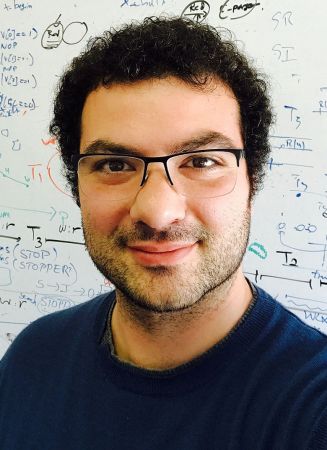
Roberto Palmieri is an Associate Professor in the Department of Computer Science & Engineering at Lehigh University, where he co-leads the Scalable Systems Software (SSS) Research Group. He holds a Ph.D., M.S., and B.S. in Computer Engineering from Sapienza University of Rome (2012, 2008, 2006). His research focuses on concurrency, synchronization, distributed computing, and heterogeneous systems, emphasizing protocols optimized for multicore, cluster-scale, and geo-distributed infrastructures. His work spans theoretical and practical advancements in distributed systems, including atomic registers, consensus algorithms, and blockchain concurrency control. He has received an NSF CAREER Award for research on RDMA-optimized distributed protocols. Palmieri advises students in the Rossin College of Engineering and collaborates on high-performance computing projects, contributing to frameworks like HyFlow and Shield. Education: Ph.D., Computer Engineering, Sapienza University of Rome (2012) M.S., Computer Engineering, Sapienza University of Rome (2008) B.S., Computer Engineering, Sapienza University of Rome (2006) His research emphasizes scalability, fault tolerance, and performance in distributed systems. Recent work includes protocols for RDMA systems (e.g., ALock, Rome), blockchain transaction management (OCToPus), and hardware-accelerated synchronization (HATS). He has published extensively at top venues like OPODIS, DISC, and IEEE conferences. Awards: NSF CAREER Award (2021) Grants: CAREER: Distributed Protocols and Primitives Optimized for RDMA (2021) Palmieri leads the SSS Group, which develops open-source tools for distributed systems and collaborates on industry-relevant projects. His lab investigates cutting-edge topics like NUMA-aware concurrency, transactional memory, and cloud-optimized data grids.
Seth Gilbert is the Dean's Chair Associate Professor and Head of the Department of Computer Science at the National University of Singapore. His research focuses on designing robust, scalable algorithms for large-scale distributed systems, particularly in the domains of Byzantine agreement, dynamic networks, and contention resolution. He holds a PhD from MIT (advised by Nancy Lynch) and completed a postdoc at EPFL under Rachid Guerraoui. His work emphasizes three core techniques: accountability (identifying network failures), work-sharing (task distribution in asynchronous environments), and contention resolution (efficient resource allocation). Notable contributions include the DConstructor (PODC 2020) and Polygraph (ICDCS 2021) protocols for accountable Byzantine agreement. He has received multiple awards, including the Edsger W. Dijkstra Prize (2021) and Best Paper Awards at DISC, ICDCS, and IPDPS. Prof. Gilbert has served as program chair for DISC 2021, OPODIS 2019, and SPAA 2016, and currently chairs the DISC Steering Committee. His career includes industry experience at Microsoft (Visual Studio team) and early work on solar car engineering at Yale University.
Sean Chester is an Assistant Professor in the Department of Computer Science at the University of Victoria, Canada. He is affiliated with the Faculty of Engineering and Computer Science and specializes in scalable data analytics, with a focus on data management, parallel computing, and algorithm engineering. His research interests include GPU-native algorithms, multicore optimization, spatio-temporal data processing, and graph-based analysis. He actively contributes to open-source projects and course materials on platforms like GitHub, emphasizing open science and education. Recent work highlights include advancements in skyline computation, GPU-accelerated algorithms, and efficient processing of large-scale datasets. His publications span topics such as kNN optimization, social network anonymization, and vectorized k-core decomposition. Sean is involved in teaching courses like CSC 485C/586C on data management on modern hardware and CSC 370 on database systems. No scientific awards or grants are explicitly mentioned in the provided texts. He collaborates with students and researchers through platforms like GitHub, where he maintains repositories related to algorithm engineering and educational materials.
Patanjali Sristi is an Assistant Professor at Augusta University's School of Computer and Cyber Sciences, specifically within the Department of Cybersecurity Engineering. Located at 100 Grace Hopper Lane in Augusta, Georgia, Dr. Sristi joined the university in January 2025 after previously working as a Postdoctoral Researcher at the University of Florida with Dr. Swarup Bhunia. Their academic journey began with a B.Tech in Electrical and Electronics Engineering from Pondicherry University in 2011, followed by both MS and Ph.D. in Computer Engineering from the Indian Institute of Technology (IIT Madras). Dr. Sristi's educational background demonstrates a strong foundation in electrical engineering and computer science, with advanced specialization in hardware security. Their Ph.D. research at IIT Madras was supervised by Dr. Kamakoti Veezhinathan, focusing on critical aspects of hardware security that would form the basis of their future research career. Dr. Sristi's research program centers on addressing one fundamental question: "How can we design, measure and build efficient and affordable security assurances for a given hardware design in the context of an untrusted supply chain while respecting the design constraints at each level of abstraction?" This research vision spans three interconnected domains: AI for System Design: Developing data models and AI techniques for next-generation hardware systems AI for Hardware Security: Creating AI models for vulnerability detection, countermeasure evaluation, and mitigation of supply chain threats Cybersecurity for AI: Establishing metrics and algorithms for secure development, deployment, and operation of AI systems Dr. Sristi's scholarly output reveals a consistent focus on hardware security challenges within the modern distributed electronics supply chain. Their work demonstrates a progression from foundational research on hardware trojans and side-channel attacks toward comprehensive frameworks addressing the emerging "zero trust" paradigm in hardware security. A notable trend is the integration of AI/ML techniques with traditional hardware security approaches, reflecting the evolving nature of security threats and countermeasures. Their publications span prestigious venues including IEEE Transactions on VLSI Systems, IEEE Transactions on Computers, and various IEEE conferences, indicating strong recognition within the hardware security community. While specific awards aren't detailed in the available information, Dr. Sristi's research impact is evident through multiple US patents (including US Patent 11,899,827 and US Patent App. 17/392,376) and invitations to deliver talks at prominent organizations including Sony Finishing School, Northrop Grumman, and IEEE events. Their work on Netflix Privacy Analysis was featured in Wired, demonstrating real-world relevance and impact. Dr. Sristi actively engages with students through courses including CSCI 8940 (Dissertation Research), CSCI 8720 (Problems in Computer & Cyber), and CSCI 7900 (Research Colloquium). Their research program appears well-supported through collaborations with major institutions and industry partners, as evidenced by workshops conducted for the Indian Army in conjunction with Pravartak and IIT Madras. These partnerships suggest substantial research funding and collaborative opportunities that enhance the educational experience for students. Though specific lab information isn't provided in the available text, Dr. Sristi's research scope suggests involvement with hardware security laboratories equipped for VLSI design, testing, and security evaluation. Their work on IoT security, hardware trojans, and supply chain security would require facilities for physical device testing, side-channel analysis, and hardware emulation. The focus on "zero trust" implementation for hardware security indicates a research environment that bridges theoretical security models with practical implementation challenges.
Bengt Jonsson is a Professor at the Division of Computer Systems, Department of Information Technology, Uppsala University. His research focuses on formal methods, real-time and distributed systems, semantics and verification of concurrent systems, and IoT security. Current Projects: UPMARC (Software Technology for Multicore Programming), aSSIsT (Secure Software for IoT), and Designed for UPDATE (Safe Embedded Software Updates) Past Projects: CoDeR-MP (Multicore Real-Time Applications), ProFun (Wireless Sensor Networks), CONNECT (Networked Component Synthesis) His work includes automated verification, model checking, and symbolic execution for concurrent systems. Recent publications address dynamic partial order reduction, IoT protocol testing, and lock-free data structures. Scientific Awards : CAV Award 2017 He advises PhD students and teaches courses like Model-Based Development of Embedded Systems and graduate-level symbolic execution. Personal interests include piano playing and orienteering.