Zurich University of Applied Sciences (ZHAW)Switzerland
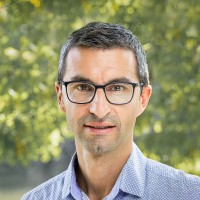
Prof. Dr. Alexandre de Spindler is a Professor of Information Systems at the Zurich University of Applied Sciences (ZHAW) within the School of Management and Law . He co-leads the Center for Information Systems and Technologies and focuses on application development frameworks for conversational interactions with information systems, leveraging multimodal foundation models while enhancing their controllability and reliability. His work extends to improving social skills in digital interactions and teaching agile requirements engineering. University: Zurich University of Applied Sciences School: School of Management and Law Department: Institute of Business Information Technology Academic Rank: Professor His research explores conversational systems , generative AI , and stateful prompt orchestration for complex interactions, particularly in healthcare and financial sectors. Recent work includes frameworks like PROMISE for model-driven prompt management and Science Fiction Prototyping for responsible AI innovation. Teaching contributions span data science programs (BSc, MSc, CAS) covering machine learning, generative AI, and full-stack application validation. He collaborates across disciplines including gerontology and forensic phonetics, with a focus on applying AI to societal challenges.
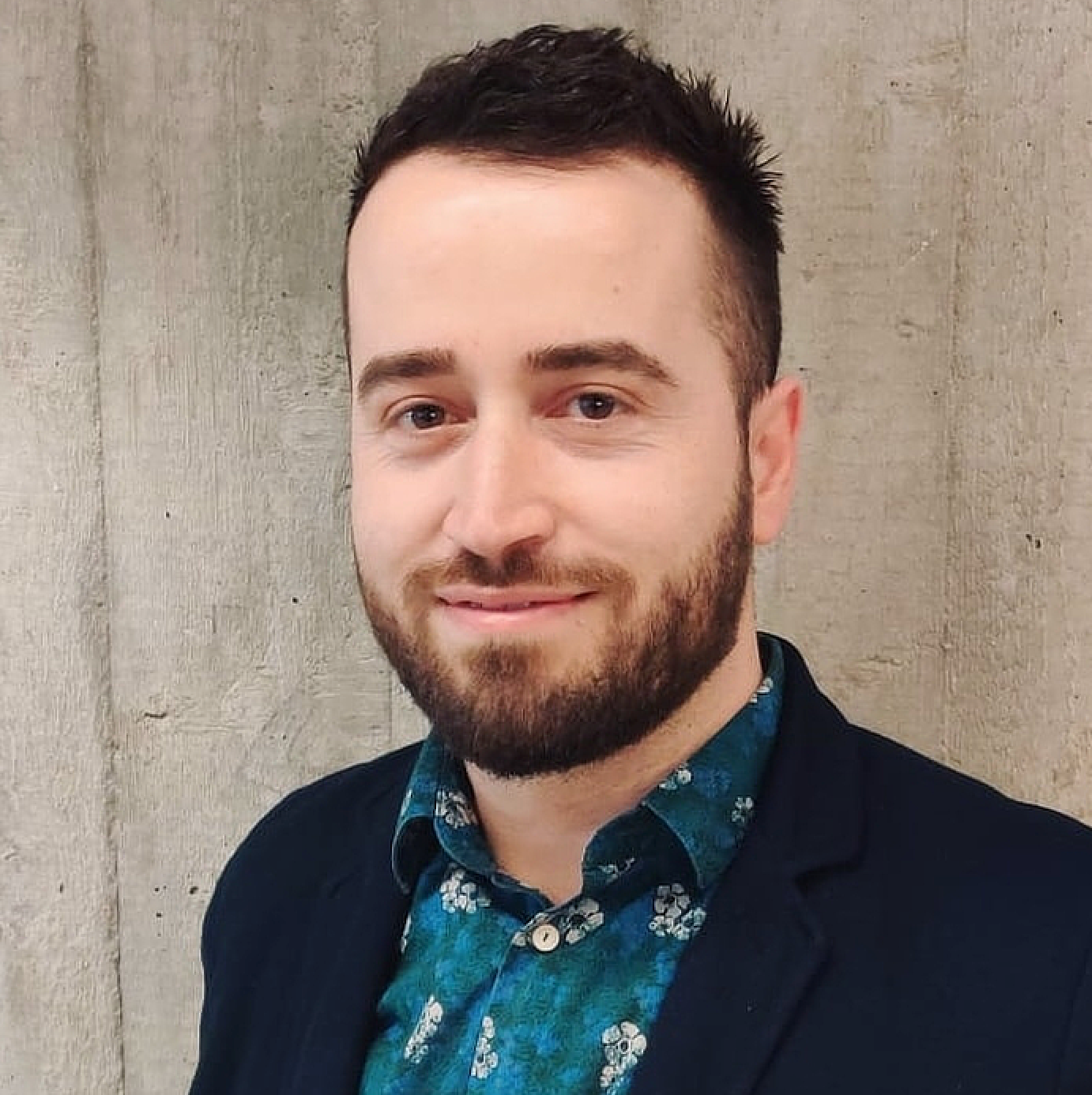
Kévin Huguenin is a Full Professor and head of the Information Security and Privacy (ISP) Lab at the University of Lausanne (UNIL), within the Faculty of Business and Economics (HEC). His research focuses on security and privacy in distributed systems, mobile/social networks, and interdisciplinary areas such as health informatics and legal aspects of privacy. He has held academic positions since 2016, including Assistant Professor (2016–2020) and Full Professor (2020–present). He previously worked at LAAS-CNRS and EPFL, with postdoctoral research at McGill University. Education: PhD (Computer Science, Université de Rennes, 2010), MSc (Network and Distributed Systems, University of Nice Sophia Antipolis, 2007), BSc (Computer Science, University of Rennes, 2006). He is an alumnus of École Normale Supérieure de Cachan. Research Interests: Interdependent privacy, wearable device security, genomic privacy, privacy-preserving technologies, and the social/human aspects of cybersecurity. His lab collaborates with institutions like CSEM and EPFL on projects such as PrivacyLife (SNF-funded). Recent Work: Focuses on second-hand storage device privacy, shadow health data, and participatory design for privacy solutions. Recent studies include personality inference from wearables and user behaviors in fitness data sharing. Awards: Best Paper Awards at OPODIS’09 and IEEE ICDCS’10, CNRS Excellence Award, and Best Teacher Award in the Master of Information Systems. Grants & Collaborations: Swiss National Science Foundation (SNF), Fondation Hasler, and industry partnerships like Nokia Research Center. Current projects include second-hand device privacy (SNF-funded) and mHealth privacy. Labs & Teams: ISP Lab at UNIL, collaborating with CSEM and EPFL on interdisciplinary projects. Active in program committees for venues like USENIX Security, PETS, and WEIS.
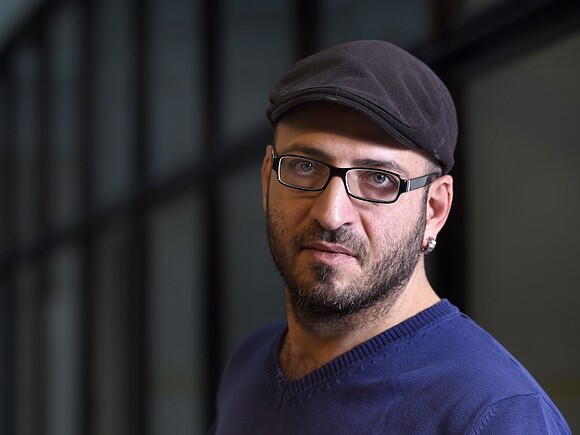
Dr. Ye Hong is a Researcher affiliated with the Institute of Cartography and Geoinformatics at ETH Zürich, specifically within the Department of Geoinformation Engineering. Their work focuses on geospatial data analysis, urban mobility modeling, machine learning applications in transportation systems, and sustainable urban planning. They contribute to open-source tools like Trackintel for mobility analysis and have published extensively on topics such as mobility data synthesis, traffic prediction, and privacy-preserving techniques. Research interests emphasize integrating multi-source geospatial data with deep learning to address challenges in urban sustainability, poverty reduction, and transportation efficiency. Their articles highlight innovations in trajectory generation, uncertainty quantification, and contextual-aware neural networks for spatial-temporal prediction. Dr. Hong’s publications explore the interplay between urban infrastructure, human behavior, and environmental impact. Key themes include accessibility measurement in cities, carbon footprint analysis, and the ethical implications of tracking mobility data. Their work bridges theoretical advancements in geoinformatics with practical applications in urban policy-making and infrastructure design. Notable contributions include frameworks for causal intervention in mobility data, methods to estimate poverty reduction efficiency using remote sensing, and analyses of tracking duration effects on location privacy. These efforts demonstrate a commitment to leveraging geospatial technologies for socially impactful research.
Swiss Federal Institute of Technology in LausanneSwitzerland
Dominique Pioletti is a Full Professor at École Polytechnique Fédérale de Lausanne (EPFL), holding multiple positions across the institution. He serves as Director of the Laboratory of Biomechanical Orthopedics (LBO) within the School of Engineering, and has additional appointments in the Institute of Bioengineering (IBI-STI), the School of Engineering Mechanical Engineering (STI-SGM), the Doctoral Program in Bioengineering (EDBB-ENS), and the Institute of Materials (IGM). His office is located at MED 3 2626, Station 9, 1015 Lausanne, Switzerland. Dr. Pioletti received his Master in Physics from EPFL in 1992 and continued at the same institution to earn his PhD in biomechanics in 1997, where he developed original constitutive laws accounting for viscoelasticity in large deformations. Following his doctoral studies, he spent two years as a post-doctoral fellow at UCSD (University of California, San Diego), gaining expertise in cell and molecular biology, particularly in gene expression of bone cells in contact with orthopedic implants. In April 2006, he was appointed Assistant Professor tenure-track at EPFL and became director of the Laboratory of Biomechanical Orthopedics. He was promoted to Associate Professor in 2013 and subsequently to Full Professor. His research focuses on orthopedic biomechanics, tissue engineering, and mechano-biology, with specific interests in biomechanics and tissue engineering of musculoskeletal tissues, mechano-transduction in bone, and development of orthopedic implants as drug delivery systems. The Laboratory of Biomechanical Orthopedics (LBO) under his direction is dedicated to advancing techniques and technology for patient care in the musculoskeletal system through fundamental research, applied research, and teaching. Analysis of his recent publications reveals a strong emphasis on hydrogel-based biomaterials for cartilage repair, with significant work on temperature effects in cartilage engineering, adhesive hydrogels, and mechanical properties of biomaterials. His research increasingly incorporates computational approaches including AI and deep learning for biomechanical modeling and prediction. There is also a consistent focus on understanding the relationship between mechanical stimuli and biological responses in musculoskeletal tissues. Professor Pioletti has supervised numerous doctoral students throughout his career, with current PhD candidates including Bouchez Mi-Lane Elodie, Mohammadi Ramin, Nottegar Alexander Arthur, Raja Sruthi, Reitzel Antoine, and Turgut Deniz Cemre. His past students form an extensive list spanning multiple cohorts, reflecting his long-standing commitment to academic mentorship. The Laboratory of Biomechanical Orthopedics (LBO) serves as the primary research hub for Professor Pioletti's work, focusing on the advancement of techniques and technology for patient care in the musculoskeletal system. The lab's mission encompasses fundamental research, applied research, and teaching, with current work emphasizing biomechanical considerations in orthopedic applications. The lab website (https://lbo.epfl.ch/) provides additional details about ongoing projects and team members.
Swiss Federal Institute of Technology in LausanneSwitzerland
Pierre Beck is a Doctoral Assistant at the École Polytechnique Fédérale de Lausanne (EPFL), affiliated with the School of Engineering’s Institute of Mechanical Engineering (IGM) and the Emergent Complexity in Physical Systems (ECPS) group. He is also a PhD student in Mechanics at EPFL, currently pursuing his doctoral degree since 2022. BA (Hons) Mathematics, University of Cambridge (2016–2019) MMath, University of Cambridge (2019–2020) PhD Mechanics, EPFL (2022–present) Beck’s research focuses on leveraging data-driven methods to analyze and predict nonlinear dynamical systems, particularly chaotic attractors and periodic orbits. His work bridges machine learning with theoretical physics, aiming to uncover hidden structures in complex physical phenomena through computational modeling. The articles demonstrate expertise in applying deep learning to chaotic systems, topological analysis of attractors, and DSGE economic models. Key interdisciplinary themes include algorithmic innovation, pattern recognition, and mathematical physics, with a strong emphasis on numerical methods and non-existing solutions in dynamical systems. Beck is based in the ECPS group at EPFL, where he contributes to advancing understanding of emergent complexity in physical systems. His office is located in MED 2 2924, and he can be contacted at pierre.beck@epfl.ch.
University of Applied Sciences and Arts LucerneSwitzerland
Ursula Sury is a Swiss law professor, Vice Dean at Lucerne School of Computer Science and Information Technology, and founder of Advokatur Sury AG. Specializing in IT law, data protection, and legal risk management, she combines academic leadership with practical legal consultancy. Her career spans academic governance, postgraduate teaching, and interdisciplinary research. University of Zurich (1986) - Law Harvard Business School (2013) - Executive Education Columbia University (2008) - Legal Mediation Her research focuses on data protection law , blockchain governance , and digital transformation across sectors. Recent work examines AI compliance , cross-border data flows , and cybersecurity liability . She leads EU Commission research projects on regional innovation strategies. Key article trends include: Comparative analysis of Swiss and GDPR frameworks Legal challenges in blockchain/DLT systems Corporate responsibility for AI decisions Cloud computing liabilities Smart home privacy issues Digital identity regulations As founder of Advokatur Sury AG since 1993, she advises on Data protection IT contract management Digital compliance Her academic leadership includes directing the Management & Law master's program and serving on the CRUS rector conference. She represents Switzerland in international digital law forums.
Western Switzerland University of Applied SciencesSwitzerland
Olivier Ertz is a Professor at the Media Engineering Institute (MEI) of the University of Applied Sciences and Arts Western Switzerland (HES-SO), based in Yverdon-les-Bains. He specializes in geospatial technologies, augmented reality (AR), and educational technology, focusing on applications for biodiversity education and citizen science. His work emphasizes open-source tools and interoperability standards, particularly within the Open Geospatial Consortium (OGC). Key projects include: BiodivAR: A location-based AR platform for biodiversity education, enabling users to explore geolocated media in natural environments. ArODES: Research on symbology encoding standards for cartographic interoperability, contributing to OGC specifications. CrowDPLOS: Developing pedestrian navigation tools for disabled users using crowdsourced geospatial data. Research interests span: Augmented Reality applications in education and cultural heritage. Geospatial data visualization, including 6DoF georeferencing and real-time AR integration. Citizen science platforms for biodiversity monitoring and data validation. Open-source geospatial tools and standards compliance (OGC). His recent work explores: The impact of AR on screen time and environmental engagement. Optimizing geolocation accuracy for AR usability in outdoor settings. Interoperability of citizen science datasets through standardized formats. He has led multiple funded projects (e.g., FNS, Fondation Hasler) with total funding exceeding CHF 1.5 million. Collaborations include institutions like Swisstopo, Camptocamp, and academic partners across Switzerland.
Mario Daniele Amore is Full Professor at Bocconi University, Research Affiliate at CEPR, Research Member at the European Corporate Governance Institute (ECGI), and Board Member of the International Corporate Governance Society (ICGS). He is Associate Editor of Management Science and Journal of Corporate Finance and serves on the Editorial Review Board of the Strategic Management Journal . Research Interests: Family business dynamics and governance Corporate governance structures and mechanisms Strategic management and entrepreneurship Decision-making processes of entrepreneurs and corporate managers Venture capital and entrepreneurial finance Role of culture and organizational identity in firm performance His scholarly output (2022-2025) emphasizes how family ownership, governance choices, and leadership transitions shape innovation, patenting, and venture-capital activities. Recent themes include the impact of CEO succession on patenting in family firms, the use of AI to detect family influence, and the consequences of hiring “lucky” CEOs. Collectively, the articles span strategic management, finance, innovation, and behavioral economics. Editorial & Professional Service: Associate Editor, Management Science Associate Editor, Journal of Corporate Finance Editorial Review Board Member, Strategic Management Journal Research Affiliations: Center for Economic Policy Research (CEPR) – Research Affiliate European Corporate Governance Institute (ECGI) – Research Member International Corporate Governance Society (ICGS) – Board Member
Dr. Christian Sailer is a Lecturer at ETH Zurich's Department of Civil, Environmental and Geomatic Engineering. As a teaching specialist, he supports educational innovation in geospatial technologies and digital learning methods. His research develops GIS-based educational frameworks for field studies and civic engagement. Sailer created the OMLETH platform for location-based mobile learning and founded GEOSchoolDay to promote geospatial literacy. Current projects examine augmented reality for urban planning participation and AI integration in geography education. He holds a PhD from ETH Zurich focused on enhancing spatial reasoning through mobile technologies. Beyond academia, Sailer leads geoinformatics initiatives through SOGI (Swiss Organization for Geographic Information) and applies GIS in environmental education through his smartTrip consultancy. He maintains active political engagement in sustainable community development in Langnau.
Bruno Rodrigues is an Assistant Professor of Computer Science (Embedded Sensing Systems) at the University of St. Gallen (HSG). His research focuses on embedded sensors, sensor networks, distributed systems, and network security, with additional expertise in software-defined networks and distributed ledgers. He holds a PhD from the University of Zurich (2020), a Master's from the Polytechnic School of the University of São Paulo (2016), and a Bachelor's from the University of Santa Catarina, Brazil (2013). Prof. Rodrigues' professional career includes roles as a Senior Researcher (2020–2024) and Junior Researcher (2016–2020) at the University of Zurich, where he contributed to projects like the EU-funded CONCORDIA H2020 and collaborations with Swiss innovation agencies (KTI/Innosuisse). His work spans DDoS mitigation, blockchain applications in voting systems, and energy-efficient cloud networks. Notable projects include the 'Passive Wireless Intelligence Tracking System (PasWITS)' and 'Energy-Efficiency to Clouds (E2C)' with Ericsson Research. His research portfolio includes over 50 publications on topics such as secure IoT frameworks (SHIFT, WeTrace), blockchain-based voting systems (ProvotuMN, Æternum), and cybersecurity tools like SecGrid for traffic analysis. He has pioneered solutions for privacy-preserving mobile tracking (LaFlector), real-time medical device inventory systems (PMD-Track), and decentralized financial inclusion tools (AfriBit). Prof. Rodrigues' work bridges theoretical computer science with practical applications, emphasizing sustainability, security, and innovation in distributed systems. He has led interdisciplinary projects at the intersection of blockchain technology, sensor networks, and ethical AI, with a focus on real-world implementation challenges.
Swiss Federal Institute of Technology in LausanneSwitzerland
Mathias Humbert is an Associate Professor at the University of Lausanne, with affiliations at the Department of Information Systems in the Faculty of Business and Economics. Previously, he held roles as a Scientific Project Manager at the Cyber-Defence Campus, Senior Data Scientist at the Swiss Data Science Center (SDSC) at ETHZ and EPFL, and Postdoctoral Researcher at CISPA in Saarbrücken. He earned his Ph.D. in 2015 from EPFL (Switzerland) after completing B.Sc./M.Sc. studies at EPFL and UC Berkeley. His research focuses on privacy, cybersecurity, and machine learning, particularly examining privacy risks in MLaaS, online social networks, wearable devices, and spectrum monitoring, while developing novel privacy-preserving frameworks for biomedical data and social graphs. Key research areas: Privacy in data sharing, interdependent privacy, genomic privacy, location privacy, and graph-based machine learning Notable contributions: GraphEraser for graph unlearning, KGP Meter for genomic privacy awareness, and SVT² for differential privacy in methylation data His recent publications explore machine unlearning vulnerabilities, privacy risks in DNA methylation data, and usability challenges in web security mechanisms, with a focus on empirical studies and cryptographic solutions. He received a Distinguished Paper Award at NDSS 2019 for his work on MBeacon and has contributed extensively to privacy research across ACM CCS, IEEE EuroS&P, and USENIX Security venues.
Armand Kapaj is a Postdoctoral Researcher at the University of Zurich's Faculty of Science, Department of Geography, affiliated with the Geographic Information Visualization and Analysis (GIVA) research group. His work explores mobile map design, spatial cognition, and navigation in spatially enabled societies. Research Focus: Mobile cartography, spatial cognition, and human-computer interaction Labs: GIVA research group Contact: armand.kapaj@geo.uzh.ch Research examines how mobile maps influence visual attention, spatial learning, and cognitive load during navigation tasks. Key themes include landmark visualization, attention guidance, and navigation interface effectiveness. Scientific contributions include 15 recent publications analyzing mobile map design's impact on spatial knowledge acquisition, landmark memory, and route cognition through experimental studies and VR simulations.
Mela Kocher is a Senior Researcher in Game Design at the Zurich University of the Arts (ZHdK), where she also serves as Deputy Head of E-Learning and Project Manager of Ludic Didactics. Her work focuses on the intersection of play, games, and education, particularly in the development of experimental teaching formats that integrate digital tools and spaces through gamification and playification. PhD in Philosophy (University of Zurich, 2004) Licentiate in German Language and Literature, Computational Linguistics, and General History (University of Zurich, 2000) Her research explores the cultural and societal significance of games, emphasizing their role in fostering key skills for learning. She has led projects such as the SNSF-funded "Confederation Ludens: Swiss Game Design History 1980–2000" and developed games like "LucyZH" and "WunderKeeper" to address educational and urban engagement challenges. Mela Kocher's publications and projects span transmedia storytelling, alternate reality games, narrative mechanics, and the aesthetics of interactive media. She has collaborated internationally, including affiliations with the University of Lausanne, University of Bern, and institutions in Sweden and the U.S., focusing on digital humanities and innovative pedagogy. At ZHdK, she supervises PhD students in the SNSF Sinergia project and mentors game design learners. Her research has been supported by grants from the Swiss National Science Foundation (SNSF) and institutions like the Mobile Life Center in Stockholm and UC San Diego's Center for Research in Computing and the Arts (CRCA). Mela Kocher is actively involved in labs such as GameLab ZHdK, which drives experimental game design projects. Her collaborative efforts extend to the Swiss Institute for Children's and Youth Media (SIKJM), where she has held leadership roles in shaping media literacy and interactive learning initiatives.
University of Applied Sciences and Arts LucerneSwitzerland
Severin Nowak is a Lecturer at the Institute of Electrical Engineering (IET) within the Lucerne School of Engineering and Architecture at Lucerne University of Applied Sciences (HSLU). He holds a Ph.D. in Electrical Engineering from the University of British Columbia, Canada, focusing on electric power systems, and a federal diploma in electrical engineering from the University of Applied Sciences and Arts Western Switzerland. His research integrates industrial experience with academic rigor, emphasizing data-driven approaches for modernizing power grids, renewable energy integration, and sustainable energy systems. Research Interests: Grid Modernization and Digitalization Renewable Energy Deployment Electric Vehicle Integration AI and Machine Learning in Energy Systems Decarbonization Strategies Key Projects: FIT4GRID: Integration of electric trucks into grid design EVFlex: Aggregation of electric vehicle flexibility for grid services AISOP: AI-assisted grid operational planning Publications span topics like fault detection in distribution networks, federated learning for load forecasting, and vehicle-to-grid systems. His work bridges academia and industry, addressing challenges in sustainable energy transition and grid resilience.
Marc Atallah is a Senior Lecturer and Researcher in the French Section at the Faculty of Arts, University of Lausanne (UNIL), a position he has held since August 1, 2011. He is also the Director of the Maison d'Ailleurs, a museum of science fiction, utopia, and extraordinary journeys located in Yverdon-les-Bains, a role he assumed in early 2011, which provides a unique interdisciplinary bridge between academic research and cultural institutions. Institution: University of Lausanne (UNIL) School: Faculty of Arts Department: French Section Role: Senior Lecturer and Researcher Museum Leadership: Director, Maison d'Ailleurs Atallah earned his Master of Arts from UNIL in Philosophy, Epistemology, and French Language and Literature, complemented by studies in Theoretical Physics at the École Polytechnique Fédérale de Lausanne (EPFL) as a free auditor. He completed his doctoral thesis in 2008 at UNIL under the supervision of Professor Danielle Chaperon, titled "Writing tomorrow, thinking today. Science fiction at the crossroads of disciplines: shaping a poetics, sketching a pragmatics" . His research is centered on conjectural literature, including utopia, dystopia, imaginary journeys, and science fiction. He investigates the structural and theoretical dimensions of these genres, exploring their relationship with scientific imagination and broader literary theory. His work bridges literary studies with philosophy and epistemology, particularly in how speculative narratives model future possibilities and engage with scientific thought. Marc Atallah has published numerous academic articles and delivered both specialized and popular lectures. He is currently developing book projects based on his ongoing research. His leadership at the Maison d'Ailleurs enables him to integrate museum-based pedagogy into his academic teaching, offering students experiential learning opportunities that connect literary theory with cultural heritage and exhibition practices. Marc Atallah has not been mentioned as receiving any scientific awards in the provided text. However, his dual role as an academic and museum director highlights his commitment to public engagement and interdisciplinary scholarship. He has supervised or advised no named students in the available information. There is no indication of external grants or funding, but his position as a researcher and lecturer at UNIL, combined with his museum role, suggests active involvement in research projects and academic initiatives. Through the Maison d'Ailleurs, Marc Atallah is associated with a vibrant cultural and research team focused on science fiction and speculative thought. The museum serves as a hub for exhibitions, archives, and public events related to utopian and futuristic narratives, functioning as an extension of his academic work and providing a platform for collaborative research and outreach.