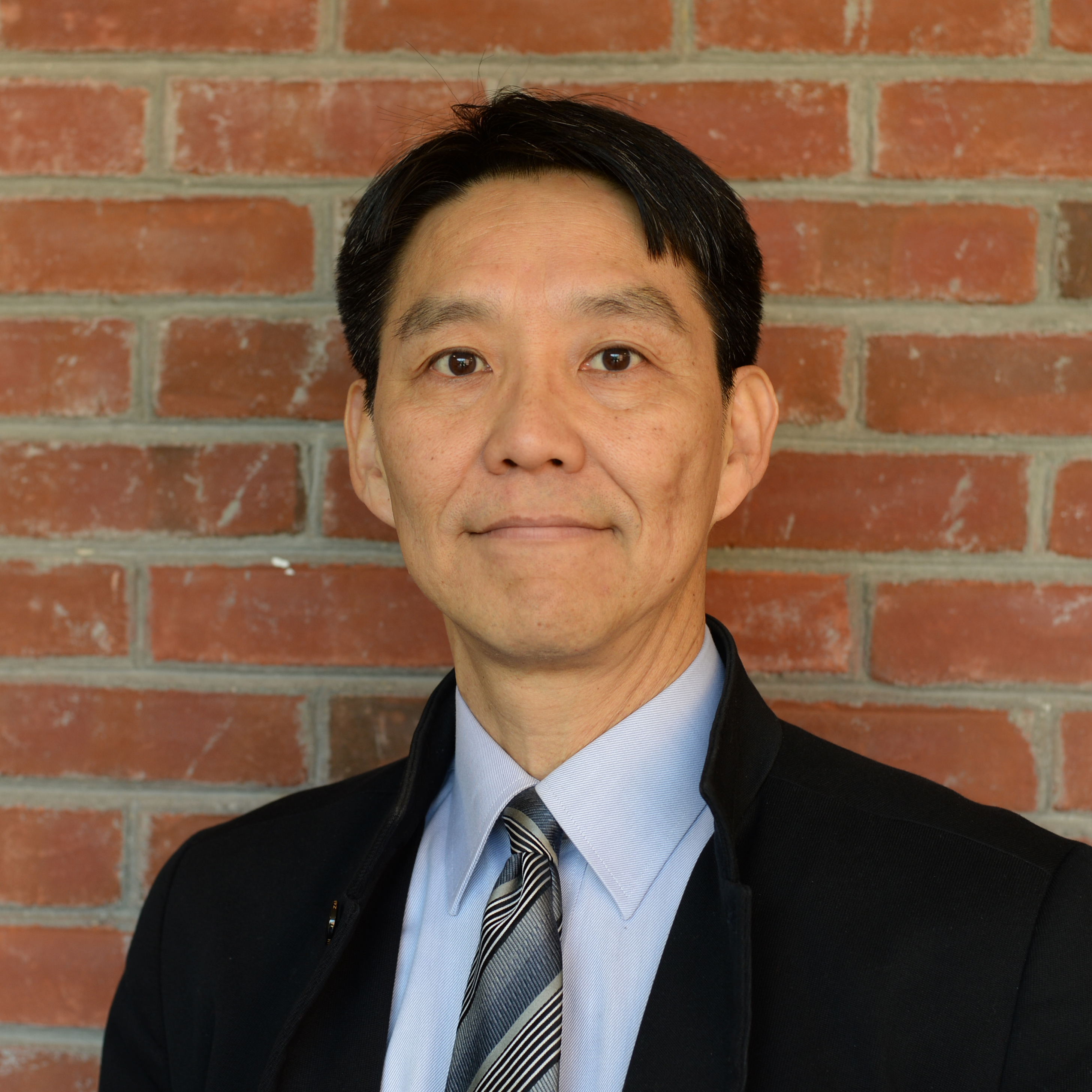
Hiroyuki Iseki is Associate Professor of Urban Studies and Planning at University of Maryland's School of Architecture, Planning and Preservation, and Research Affiliate with the National Center for Smart Growth. His work examines interactions between transportation, land use, equity, and environmental sustainability. Research focuses on: Transit-oriented development impacts on firm location Equity in public transit finance Climate policy implementation in urban planning Active transportation infrastructure analysis Recent publications analyze post-pandemic transit demand shifts, campus multimodal conflicts, and bicycle accessibility modeling. Methodological strengths include spatial econometrics, GIS analysis, and longitudinal data approaches. Work increasingly addresses climate adaptation in transportation planning and EV charging grid impacts. Research contributes to urban policy through WMATA collaborations and Japanese municipal climate planning studies. Current PhD program directorship advances urban planning analytics training.
Nallan C. Suresh is the Associate Dean for Faculty, Research and Centers and a SUNY Distinguished Professor in the Operations Management and Strategy department at the School of Management, University at Buffalo . His work bridges academic research with industry practice, focusing on manufacturing systems, supply chain agility, and sustainable operations. PhD , University of Cincinnati MBA , McMaster University, Canada BTech , Indian Institute of Technology Suresh's research spans cellular manufacturing , flexible automation , forecasting models , and reverse supply chains . He has pioneered frameworks for evaluating manufacturing systems and optimizing supply chain agility through empirical and simulation-based studies. Recent publications emphasize sustainability and disruptive technologies in supply chains, including reverse logistics for plastics recycling and agile responses to catastrophic events using data analytics. His work integrates DEA models , neural networks , and policy analysis . Summer Research Fellowship, University at Buffalo Joseph T.J. Stewart Faculty Scholar Alfred V. Bodine/SME Award for Machine Tool Economics Cleveland Foundation Grant for High Technology Firms Suresh has secured grants totaling over $145,000, advised numerous students, and contributed to global research through empirical studies in the Netherlands and executive training in China/Latvia. His consulting spans automotive, electronics, and manufacturing sectors.
Xiaohui Yu is a Professor and Graduate Program Director in the School of Information Technology at York University. He holds a BSc from Nanjing University, an MPhil from the Chinese University of Hong Kong, and a PhD from the University of Toronto. His research focuses on the intersection of data management and machine learning, including ML-based database systems, large-scale machine learning, and spatio-temporal data analysis in contexts like intelligent transportation systems and social networks. Supported by grants from NSERC and industry partners, his work has been published in top venues such as SIGMOD, VLDB, and TKDE. He serves as an Associate Editor for journals like IEEE TKDE and ACM TKDD, and actively participates in conference program committees. Education: BSc (Nanjing University), MPhil (Chinese University of Hong Kong), PhD (University of Toronto). Research Interests: Big data management, database systems, machine learning, spatio-temporal data analytics, and video query processing. Recent articles emphasize ML-driven database components, efficient video query optimization, and scalable algorithms for large-scale data. His work addresses challenges in query processing, indexing, and real-time systems. Service: Serves on editorial boards (e.g., Information Systems), and chairs/workshops (e.g., Symposium on Data Markets). Active in program committees for SIGMOD, ICDE, and other leading conferences. Advising & Grants: Directs graduate programs and leads research groups. Collaborates with industry on data marketplaces and AI model integration. No specific student names listed, but actively recruits PhD/Master’s candidates.
Andre Berger is an Associate Professor of Operations Research at Maastricht University, affiliated with the QE Operations Research department within the School of Business and Economics. He holds a PhD in Mathematics from Emory University (2006) and completed a postdoc at Technical University Berlin. His research focuses on optimization algorithms, combinatorial optimization, and their applications in scheduling, network design, and operations research. Notable contributions include work on the many-visits Traveling Salesman Problem and cluster editing algorithms. Berger’s recent publications span scheduling theory, MRI-based clinical research collaborations, and theoretical advancements in facility location models. He is based at Tongersestraat 53, Maastricht, and can be reached via a.berger@maastrichtuniversity.nl. Education: MSc in Mathematics, Emory University (2003) PhD in Mathematics, Emory University (2006) Research Interests: Berger’s work bridges theoretical computer science and practical applications in operations research, emphasizing algorithm design for complex optimization problems. Key areas include scheduling algorithms, network flow optimization, and geometric optimization challenges such as the Apollonius problem in facility location. His interdisciplinary approach integrates mathematical programming with real-world scenarios in telecommunications and healthcare.
Shantanu Dutt is a full Professor in the Department of Electrical and Computer Engineering at the University of Illinois at Chicago , located in Chicago, IL. His office is in 930 SEO at 851 S. Morgan St, and he can be reached at dutt@uic.edu . Education Ph.D. in Computer Science and Engineering, University of Michigan, Ann Arbor (1990) M.Tech. in Computer Engineering, Indian Institute of Technology Kharagpur (1984) B.E. in Electronics and Communication Engineering, Maharaja Sayajirao University of Baroda (1983) Research Interests Professor Dutt’s research agenda centers on VLSI Computer-Aided Design (CAD) , with particular emphasis on physical design and incremental synthesis targeting both ASICs and FPGAs. He explores discrete optimization techniques to solve placement, routing, and partitioning problems. Another major thrust is FPGA built-in self-test (BIST) and trusted design , ensuring provable diagnosability and security against hardware Trojans. He also investigates fault-tolerant computing at both chip and system levels, and develops parallel and distributed computing algorithms for scalable performance. Scientific Awards 1996 Best Paper Award , ACM/IEEE Design Automation Conference, for “A probability-based approach to VLSI circuit partitioning” 1995 Most Influential Paper Award , Fault-Tolerant Computing Symposium, for “Design and reconfiguration strategies for near-optimal k-fault-tolerant tree architectures” Research Impact and Funding Professor Dutt has published extensively in top-tier journals (IEEE TVLSI, ACM TRETS, IEEE TCAD) and premier conferences (ICCAD, DAC, DATE, FTCS). His work has shaped incremental placement, timing-driven routing, FPGA security, and fault-tolerant multiprocessor architectures. While specific grant numbers are not listed, the breadth and longevity of his publication record indicate sustained funding from NSF, industry, and other agencies. Laboratory and Collaborations Although no formal laboratory name is provided, Professor Dutt’s research is conducted within the ECE department’s VLSI CAD and Fault-Tolerance groups, collaborating with graduate students and colleagues across the US and internationally.
Viswanath Nagarajan is an Associate Professor of Industrial & Operations Engineering and Computer Science Engineering (courtesy) at the University of Michigan. His research focuses on combinatorial optimization, approximation algorithms, and stochastic models for routing, scheduling, and location problems. He previously served as an Assistant Professor at the University of Michigan (2014–2020) and a Research Staff Member at IBM T.J. Watson Research Center (2009–2014). He holds a Ph.D. in Algorithms, Combinatorics, and Optimization from Carnegie Mellon University (2004–2009) and a B.Tech. in Computer Science from IIT Bombay (1999–2003). His research explores uncertainty management in optimization, including stochastic models and approximation algorithms for decision-making under uncertainty. He has contributed to adaptive algorithms, submodular optimization, and applications in logistics, network design, and scheduling. Education: Ph.D., Algorithms, Combinatorics, and Optimization (Carnegie Mellon University, 2009) B.Tech., Computer Science and Engineering (IIT Bombay, 2003) Prof. Nagarajan has organized major conferences like IPCO 2019 and served on editorial boards for journals including Operations Research , ACM Computing Surveys , and ACM Transactions on Algorithms . His service includes program committees for SODA, APPROX, and IPCO. He advises Ph.D. students focusing on optimization theory and applications, with advisees securing positions at Yahoo! Research, the University of Chicago, Ford Motor Company, and Georgia Tech.
Laura Albert is a Professor of Industrial & Systems Engineering at the University of Wisconsin-Madison and former David H. Gustafson Department Chair (2021-24). She serves as a Fellow of AAAS and IISE, and previously held the INFORMS presidency. Her research focuses on optimizing public-sector systems, with applications in critical infrastructure protection, emergency response, and cybersecurity. She advocates for public engagement through op-eds and blogs like 'Punk Rock Operations Research.' Education: PhD in Industrial Engineering, University of Illinois at Urbana-Champaign (2006) MS in Industrial Engineering, University of Illinois at Urbana-Champaign (2001) BS in Industrial Engineering, University of Illinois at Urbana-Champaign (2000) Research Interests: Dr. Albert’s work bridges operations research and public policy, addressing challenges in emergency medical services, voting system security, law enforcement strategies, and opioid treatment diversion programs. She employs mathematical optimization, game theory, and stochastic modeling to design resilient systems. Awards: INFORMS Impact Prize (2018) NSF CAREER Award (2011) Fulbright Award (2020) AAAS Fellow (2020) Advising & Grants: While explicit student names aren’t listed, her research has been supported by grants from the NSF, Army Research Office, and other agencies. She advises on interdisciplinary projects involving public health, cybersecurity, and disaster management. Labs/Teams: Engaged in collaborative efforts across the College of Engineering, including affiliations with the Electrical & Computer Engineering department. Leads initiatives on resilient infrastructure and emergency response systems.
Prof. Jack van der Vorst is the Personal Professor of AgriFood Supply Chain Logistics at Wageningen University's Operations Research and Logistics Group. Previously serving as a member of the Board of Directors of Wageningen University & Research (until 2024) and General Director of the Social Sciences Group, he leads over 1000 personnel across three institutes. His advisory roles include the Topteam AgriFood (Science Captain), Top consortium for Knowledge and Innovation (TKI), The Sustainability Consortium (TSC), and Florensis BV's Supervisory Board. With 20+ PhD supervisions and 200+ publications, his research focuses on innovative logistics concepts in AgriFood systems, including supply chain resilience, sustainability, and system innovation. His work integrates modeling frameworks with practical industry applications, emphasizing perishable products, horizontal collaboration, and environmental efficiency. Research interests span AgriFood System Design, Supply Chain Strategy, and Performance Management. His recent studies address challenges like postharvest loss reduction in developing countries, CO2 emission minimization in cold chains, and circular economy implementation in mushroom supply chains. Methodologically, he employs multi-criteria decision models, optimization techniques, and simulation to address complex logistics problems. Publications highlight themes such as horizontal collaboration success factors, vulnerability assessment frameworks, and green supply chain design. His work bridges academic rigor with industry needs, often collaborating with policymakers and international organizations to promote sustainable agri-food systems.
Shashi Shekhar is a Professor at the University of Minnesota, holding the distinguished titles of McKnight Distinguished University Professor and Distinguished University Teaching Professor. He serves as the ADC/CSE Chair and Director of the AI-LEAF Institute within the Department of Computer Science at the College of Science and Engineering. His research interests span multiple areas of spatial computing including spatial data science, spatial data mining, spatial databases, Geo-AI, and Geographic Information Systems (GIS). His work has focused on developing scalable algorithms for eco-routing, evacuation route planning, and spatial pattern mining. He has made significant contributions to the field through his Spatial Databases textbook, the Encyclopedia of GIS which has seen over 192,918 downloads in 2017, and a spatial computing book for professionals. His research group has produced numerous PhD graduates dating back to 1993 through 2023. Analysis of his recent publications reveals a strong focus on applying spatial computing to critical societal challenges including climate change mitigation through the AI-LEAF Institute, pandemic response through mobility data analysis, and sustainable transportation through eco-routing algorithms. His work bridges theoretical advances in spatial data science with practical applications in urban planning, emergency management, and environmental sustainability. Distinguished McKnight University Professor Distinguished University Teaching Professor UCGIS Education Award (2015) Graduate Education Award (2015) President of University Consortium for GIS (2017-2018) Computing Research Association Board Member (2016-2019) Professor Shekhar has advised over 30 PhD students since 1993, with his most recent graduate in 2023. He has secured significant research funding including a $20 million AI Institute grant focused on climate-smart agriculture and forestry. His Spatial Computing Research Group maintains active collaborations with government agencies and industry partners. The group has developed practical applications featured in media outlets including FoxTV coverage of evacuation route planning algorithms. Current research directions include applying AI techniques to address climate challenges through the AI-LEAF Institute and advancing spatial data science for polar regions through NSF-funded initiatives.
Dino Pedreschi is a Full Professor of Computer Science at the University of Pisa, affiliated with the Department of Computer Science (DI-UNIPI). He co-leads the Pisa KDD Lab, a joint research initiative between the University of Pisa and the Italian National Research Council’s Institute of Information Science and Technology, one of the earliest labs focused on data mining and knowledge discovery. His research spans Big Data Analytics , Social Network Analysis , Human Mobility Analysis , Privacy-by-Design , Explainable AI (XAI) , and ethical data mining . He is a pioneer in privacy-preserving data mining and has contributed significantly to understanding societal impacts of AI and big data. Recent publications highlight trends in explainable AI , fairness-aware data mining , urban mobility modeling , and socio-economic nowcasting , reflecting a strong interdisciplinary focus combining computer science, social science, and policy. Notable scientific awards include: Google Research Award on Privacy (2009) University of Pisa Ordine del Cherubino (2017) Pedreschi has played leadership roles in major conferences such as ECML/PKDD (Co-Chair 2004), ICDM (Vice-Chair 2005), and ICDE (Vice-Chair 2014). He founded the Business Informatics MSc program at the University of Pisa to train interdisciplinary data scientists. He has been a visiting scientist at the University of Texas at Austin, CWI Amsterdam, UCLA, and the Barabási Lab at Northeastern University. He actively contributes to European research initiatives including SoBigData++, FAIR, and TAILOR, and has advised on AI policy, including testimony before the Italian Parliament on AI and labor markets. He is a key member of the Pisa KDD Lab, a leading research group in data science and AI ethics, fostering collaboration between academia and public institutions.
Douglas A. Loy is a full Professor at the University of Arizona with joint appointments in the Department of Materials Science and Engineering and the Department of Chemistry and Biochemistry, and additional affiliations with the BIO5 Institute and the School of Mining and Mineral Resources. A fifth-generation Arizonan, he earned his BS in Chemistry from the University of Arizona (1983), MS in Chemistry from Northern Arizona University (1986), and PhD in Organic Chemistry from the University of California, Irvine (1991). Before returning to academia he spent 14 years at Sandia National Laboratories and then led the Polymer and Nanomaterials Synthesis Team at Los Alamos National Laboratory. Research Interests Sol-gel & polysilsesquioxane chemistry: fundamental studies and unconventional routes to hybrid organic-inorganic materials. Tetrazine polymer chemistry: synthesis, click modification, and application in antioxidant foams and UV-stable sunscreens. 3-D printing of glasses & ceramics: additive manufacturing of micro-optics, multi-refractive-index glass objects, and transparent devices using silica and silsesquioxane resins. Energy & biomaterials: new materials for energy storage, polymer-ceramic bone scaffolds, and smart packaging films. Across more than 70 recent publications (2012-2025), the dominant themes are advanced additive manufacturing of specialty glasses and ceramics, design of photochemically stable sunscreen systems, and development of multifunctional polymer-ceramic composites for biomedical and energy applications. The work integrates molecular-level organic synthesis with macro-scale materials processing, enabling applications ranging from holographic micro-optics to lunar in-situ resource utilization. Scientific Awards & Recognition While specific honors are not listed in the provided text, Loy is described as a “distinguished member of technical staff” at Sandia National Laboratories, indicating prior recognition for his research achievements. Funding & Collaborative Teams At the University of Arizona his group pursues federally and industrially funded projects spanning NSF, DOE, and NASA programs, particularly in advanced manufacturing and energy materials. He collaborates closely with the BIO5 Institute for biomedical applications and with the School of Mining and Mineral Resources for resource-based materials research. No explicit student lists are included in the text. Laboratory & Facilities Loy’s laboratories are located in Mines and Metallurgy 338B at the University of Arizona, equipped for sol-gel synthesis, polymer processing, and state-of-the-art 3-D printing instrumentation including multi-photon lithography systems for micro-optics fabrication.
Kai A. James is an Associate Professor in the Department of Aerospace Engineering at the University of Illinois at Urbana-Champaign (UIUC), with affiliations in Computational Science and Engineering. He holds a Ph.D. (2012) and M.A.Sc. (2006) from University of Toronto, and B.A.Sc. (2004) in Engineering Science. His research focuses on multidisciplinary design optimization, topology optimization, aeroelasticity, and nonlinear mechanics, with applications to aerospace structures, additive manufacturing, and smart materials. He teaches courses such as Structural Design Optimization (AE 498), Nonlinear Solid Mechanics (AE 598), and Finite Element Analysis (ME 471). His honors include the NSF CAREER Award (2018), Scott White Aerospace Engineering Fellow (2020), and UIUC Teacher of the Year (2017). His work spans academic publications (over 50 journal/conference articles listed) and innovations in topology optimization frameworks for complex systems. Recent research emphasizes bi-stable structures (e.g., cardiovascular stents, morphing airfoils), thermomechanical design of shape-memory alloys, and spatial packing optimization for engineering systems. His lab, located in Talbot Laboratory, develops computational tools for multiphysics and multiscale design optimization.
Ke Xu is a Professor in the Department of Computer Science at Tsinghua University's School of Information Science and Technology. With extensive research contributions in network security, privacy-preserving technologies, and machine learning applications for networking, Professor Xu has established himself as a leading researcher in computer science. Professor Xu's research interests span network security, privacy-preserving technologies, machine learning for networking, federated learning, internet protocols, encrypted traffic analysis, blockchain applications, and AI in networking. His work bridges theoretical foundations with practical implementations, focusing on real-world security challenges and network optimization problems. He has developed novel frameworks for secure network operations, privacy-preserving data sharing, and efficient AI deployment in distributed environments. Professor Xu's publication record shows a clear trend toward integrating artificial intelligence with traditional networking challenges. His recent work explores federated learning security, encrypted traffic analysis using deep learning, and novel approaches to network security that leverage machine learning techniques. The interdisciplinary nature of his research spans computer networking, security, privacy, and artificial intelligence. Professor Xu has received recognition for his contributions to network security and privacy-preserving technologies through publications in top-tier venues including IEEE journals, ACM conferences, and security symposia. His work has appeared in IEEE Transactions on Dependable and Secure Computing, IEEE/ACM Transactions on Networking, and security conferences like CCS and NDSS. Professor Xu actively collaborates with researchers across institutions, supervising students and junior researchers in exploring cutting-edge problems in network security and AI. His research has been supported by significant grants focusing on network security, privacy, and intelligent networking infrastructure. He leads projects that address fundamental challenges in secure communication, privacy-preserving data analysis, and intelligent network management. Professor Xu is involved with research laboratories focusing on network security and intelligent systems at Tsinghua University. His team works on developing practical security solutions, privacy frameworks, and AI-enhanced networking protocols that address real-world challenges in today's increasingly connected world.
Dr. Harry O. Maier is Professor of New Testament and Early Christian Studies at Vancouver School of Theology since 1994, with ongoing fellowships at the Max Weber Center for Advanced Cultural and Social Studies at the University of Erfurt since 2017. His academic career spans over 25 years with significant contributions to understanding early Christianity within the context of the Roman Empire. His educational background includes a D. Phil from Oxford University (1987), Master of Divinity from Lutheran Theological Seminary (1989), and B.A. from Pacific Lutheran University (1981). Maier's research focuses on the intersection of New Testament studies, early Christianity, and spatial theory within the Roman Empire. His work examines how early Christian communities navigated urban spaces, constructed religious identity, and engaged with imperial ideologies. He has pioneered approaches that analyze biblical texts through spatial theory, examining how geography, urban structures, and neighborhood dynamics shaped early Christian thought and practice. His research particularly emphasizes the Book of Revelation, the Shepherd of Hermas, and Pauline literature, with attention to how these texts engaged with Roman imperial culture. His scholarly contributions include significant publications such as New Testament Christianity in the Roman World (Oxford University Press, 2018) and Picturing Paul in Empire (Bloomsbury, 2013), which won recognition for their innovative approaches to understanding early Christian texts within their socio-spatial contexts. Canadian Christian Writers Association Award for Best Book in Philosophy and Christian Leadership (2003) for Apocalypse Recalled: The Book of Revelation after Christendom Canadian Corportation of Religion Award for Best Dissertation in Religion (1990) for The Social Setting of the Ministry as Reflected in the Writings of the Shepherd of Hermas, Clement and Ignatius Maier has organized numerous academic conferences including "The Shepherd of Hermas and Religious Experience" (2018), "Religion of Quarters" (2018), and "Locating Martyrs and Space/Time" (2017). He serves on editorial boards for several prestigious publications including as associate editor for the Bryn Mawr Classical Review since 2016 and co-editor of the Christian Religion and Public Life book series since 2020. His external reviewing work includes major academic presses such as Oxford University Press and Cambridge University Press. As founder and co-organizer of The Greater Vancouver Biblical Colloquium since 2008, Maier has fostered interdisciplinary dialogue among scholars of biblical studies and related fields. His academic leadership extends to professional societies including the Society of Biblical Literature and the North American Patristics Society.
Bart De Keijzer is a Senior Lecturer in Computer Science at King's College London, within the Department of Informatics. He serves as Deputy Director of the Distributed AI Research Group and is the Finance Hub Champion. His research focuses on the intersection of economics and theoretical computer science, particularly algorithmic game theory, mechanism design, and financial networks. Education includes a PhD in Algorithmic Game Theory from Centrum Wiskunde & Informatica (CWI) and Vrije Universiteit Amsterdam, and a Computer Science degree from Delft University of Technology. Prior to King's, he held roles at the University of Essex, Sapienza University of Rome, and the University of Liverpool. His research interests span financial networks, systemic risk mitigation, auction design, and multi-agent systems. Recent work explores strategies to reduce systemic risk in financial networks and the development of strategyproof mechanisms. Awards: EPSRC New Investigator Award (2024). Labs/Teams: Distributed AI Research Group, Informatics Finance Hub.