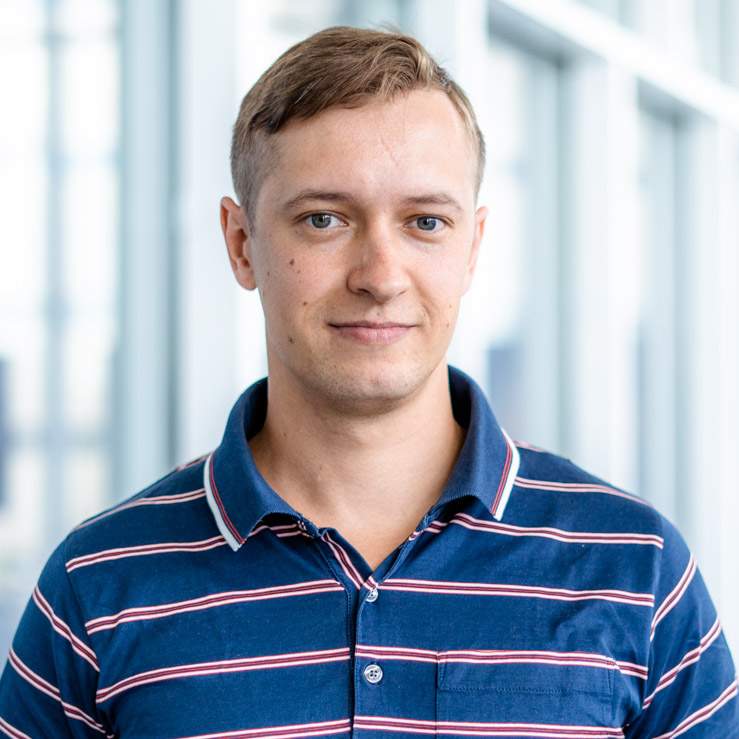
Jurgita Astrauskienė is an Associate Professor at Vilnius University's Kaunas Faculty within the Institute of Languages, Literature and Translation Studies . She specializes in audiovisual translation , dubbing , and media accessibility , with a focus on cultural adaptation in animated films and inclusive translation practices. Lectures on translation theory and practice Researches cultural references in AVT Active in European academic associations Research Interests : Translation of culture-specific items in film Accessibility solutions for deaf/hard-of-hearing audiences Historical and contemporary AVT practices in Lithuania Comparative analysis of dubbing vs. subtitling Terminology standardization in AVT Humor and wordplay translation in animation Publication Trends show consistent focus on: Cultural adaptation in animated films (Coco, Luca, Encanto) Terminology challenges in AVT Profanity and taboo translation Technological advancements in media accessibility Comparative studies of Lithuanian AVT modes Historical analysis of translation practices
Vijolė Satkauskienė is a Lecturer and CEO of UAB „Verslo barometras“. She specializes in applied research and experimental development activities conducted between 2020–2023, with a focus on science popularization. Conducted 8-hour accounting and tax training for non-profit accountants (Contract No. ST-6 2020-12-02) Active member of Utena City Board Local Action Group, Lithuanian Engineers Union (Utena Civil Engineers Club), and Chairperson of Utena Accountants Club Her research interests emphasize practical applications in financial governance and regulatory compliance for non-profit organizations.
Vincas Grigas is an Associate Professor at the Department of Digital Cultures and Communication , Faculty of Communication , Vilnius University. His work focuses on media and information literacy, book piracy dynamics, scholarly communication, and digital culture transformations. He holds a PhD and has extensive international collaboration through ERASMUS programs and research visits to institutions like HTWK Leipzig and the University of Osijek. Research Interests: Media and Information Literacy Book Piracy Mechanisms Scholarly Publishing Practices Digital Transformation of Publishing Accessibility in Publishing Recent work analyzes digital piracy's societal impacts, challenges in small-language publishing ecosystems, and the transition from print to digital scholarly journals. He co-authored Lithuanian Scientific Periodical Publishing: From Printed Journals to Digital Ecosystems (2024) and has published in Publishing Research Quarterly , Information & Media , and LOGOS . Awards : Recognized as the Best Lithuanian Young Librarian (2011) and winner of the EU Journalist Award for Diversity (Lithuania) . Holds roles in professional bodies like the Lithuanian Library Council and Crossref Board.
Nijolė Vaitkevičienė serves as an Associate Professor at the Department of Plant Biology and Food Sciences within the Agricultural Academy of Vytautas Magnus University. Appointed to her current academic rank in 2022, she maintains active research and teaching responsibilities within the university's bioeconomy research framework. Her research interests focus on plant-based resources and food systems, specifically examining: Quality characteristics of plant raw materials Storage conditions and processing techniques for agricultural products Safety parameters in food production chains Sustainable approaches to agricultural resource management Analysis of her conference participation from 2021-2025 reveals a strong emphasis on sustainability challenges in modern agriculture. Her work increasingly addresses the intersection of soil health, carbon sequestration, and food security within the context of climate change. She demonstrates particular expertise in precision farming methodologies and the application of digital technologies to optimize agricultural production while minimizing environmental impact. Her research trajectory shows growing engagement with Green Deal initiatives and bioeconomy development strategies. Throughout her academic career, Dr. Vaitkevičienė has actively participated in knowledge transfer activities, contributing to science-business collaboration through numerous conference presentations and workshops. Her institutional affiliations include the Bioeconomy Research Institute since 2024, reflecting her integration into interdisciplinary research frameworks addressing contemporary agricultural challenges.
Assoc. Prof. Dr. Saulius Šimkonis serves as an Associate Professor at the ISM Executive School (ISM University of Management and Economics) and currently holds the position of Project Portfolio Manager at Swedbank. With over 20 years of experience, he specializes in Project, Program, and Portfolio Management (PPM), risk management, and lessons learned processes. He holds certifications such as IPMA-A, PMP, and PRINCE2, and is an IPMA Assessor in Lithuania. His academic roles include leading the Project Management Program at ISM Executive School and teaching at Vilnius University Business School. Education: Graduated from ISM University of Management and Economics and earned a PhD from Vilnius University with a dissertation on 'Factors influencing lessons learned processes in innovative projects'. Research focuses on governance of interorganizational project networks, balanced leadership transitions, and ESG implementation frameworks. Recent work explores multi-level governance models, collaboration in distributed teams, and horizontal leadership dynamics. Teaching areas include PPM, risk management, and lessons learned methodologies. He contributes to professional bodies like the Project Management Institute and Lithuanian Project Management Association.
Prof. Vitalis Nakrošis is a Professor at Vilnius University's Institute of Political Science, affiliated with the Center for Public Administration and Policy Analysis. He also serves as Director of Research and Advice at the Public Policy and Management Institute (PPMI) in Vilnius, Lithuania. Bachelor of Political Science (1997), Vilnius University Master of Political Economy of Transition (1998), London School of Economics PhD in Social Sciences (2004), Vilnius University His research focuses on public administration reforms , crisis management , and policy dynamics in post-Soviet states, particularly Lithuania. He explores institutional resilience, EU funding impacts, and governance structures through comparative analyses. Recent publications address topics like COVID-19 crisis management , fiscal consolidation , and agencification processes , reflecting his expertise in public sector adaptation and policy evaluation. Scientific Awards: Alena Brunovska Award (2015) for excellence in public administration Prof. Nakrošis has led multiple research projects funded by the Research Council of Lithuania, including studies on welfare state resilience , COVID-19 policy impacts , and government priorities implementation . He has participated in COST network projects and international comparative studies.
Vidmantas Jankauskas is a Lithuanian art researcher and historian affiliated with the Vilnius Academy of Arts' Institute of Art Research since 1994. His work focuses on Lithuanian manorial culture, pre-Christian iconography, and 19th–early 20th-century Lithuanian art. A journalist by training, he has contributed extensively to regional historical narratives through monographs, scholarly articles, and editorial work. Graduated in journalism (1985) and art history (1994) Key affiliations: Institute of Art Research, VAA Publishing House His research bridges art history and cultural anthropology, emphasizing: Lithuanian manorial estates and their visual representation Ecclesiastical iconography and religious art traditions Historical documentation through archival and visual sources Intersections of political resistance and artistic expression Recent publications highlight trends in cultural heritage preservation, manorial genealogy, and historical cartography. He has compiled encyclopedic works and edited academic series for the Vilnius Academy of Arts. Additional roles include: Editor of VAA newsletter since 1994 Contributor to doctoral studies and research projects Collaborator on regional historical exhibitions
Dr. Kazimieras Nomeika is a Senior Researcher at the Institute of Photonics and Nanotechnology (IPN) of Vilnius University, Lithuania. His work focuses on semiconductor optoelectronics, particularly III-nitride materials and perovskite-based devices. Research Interests: His expertise spans InGaN quantum wells, carrier diffusion and dynamics, quantum efficiency optimization, and photoluminescence spectroscopy. He investigates structural and optical properties of LEDs, solar cells, and radiation detectors using advanced techniques like MOCVD and transient absorption. Publications & Projects: His 15 most recent articles highlight trends in carrier localization, alloy disorder effects, and novel epitaxial methods. Key topics include improving light-emitting diodes, understanding Auger recombination in InN, and developing radiation detection technologies. Advising: Dr. Nomeika has supervised 7 theses on non-equilibrium carrier dynamics in optoelectronic materials, including topics on N-polar InGaN, (Al,Sc)N layers, and CsZn x Pb 1-x I 3 perovskites.
Mykolas Michelbertas is a Professor at Vilnius University’s Department of Archaeology, Faculty of History. Born in 1939, he has dedicated his career to Lithuanian archaeology, focusing on the material and spiritual culture of the Baltic tribes during the Early Iron Age (1st–4th centuries). His work bridges Baltic and Roman studies, emphasizing artifact chronology and trade networks. Born: March 9, 1939, Kražiai, Kelmė district Education: Vilnius University (History and Philology, 1960) His research spans Lithuanian burial grounds, Roman coin imports, and kurgan cultures. Notable monographs include The Old Iron Age in Lithuania (1986) and Paragaudis Burial Ground (1997). Articles highlight Baltic warfare, artifact analysis, and cross-cultural interactions during the Roman period. Scientific awards include the Order of the Cross of Vytis (2007) for contributions to archaeology. He co-founded the Lithuanian Archaeological Society and served on the State Cultural Heritage Commission. Current projects focus on the Kuršių Burial Mounds and Paprūdžių Cemetery in Kelmė district.
Dr. Lina Strupinskienė is an Associate Professor at the Institute of International Relations and Political Science of Vilnius University . Her research focuses on Comparative Politics , Transitional Justice , and Western Balkans studies. BA in Political Science (VU) MA in Conflict Studies and Human Rights (Utrecht University) PhD in Political Science (VU, 2015) Lina specializes in post-conflict reconciliation , ICTY impact assessment , and grassroots justice mobilization . Her recent work examines EU enlargement policies and hybrid threats in the Western Balkans. Key publication trends include: ICTY's role in post-Yugoslav justice Transitional justice mechanisms EU security and enlargement strategies War crimes prosecution dynamics She serves as Deputy Director for Studies at IIRPS VU and contributes to the Hybrid CoE Western Balkans Experts Pool . Her teaching covers ethnic conflict analysis and transitional justice .
Edgaras Klivis, PhD, is an Associate Professor at the Department of Theater Studies within the Faculty of Arts at Vytautas Magnus University. His research focuses on intercultural art exchange in Eastern and Central Europe, exploring global contexts and local practices. Research Interests: Historical memory in theater, intermediality in performance arts, cultural identity through artistic expression, and interdisciplinary approaches to theater and cinema studies. Recent Publications: His work appears in 48 research outputs including analyses of virtual reality cinema development in Lithuania, feminist cinema communication, and intermedial expressions in Baltic theater. Key trends include studies on digital media integration, genre evolution in Lithuanian cinema, and cultural impacts of international film production.
Audrius Aleknavičius is a Researcher at Vytautas Magnus University's Bioeconomy Research Institute, specializing in land management and consolidation. Previously serving as Professor (2010-2020) and Head of the Department of Land Management (2008-2012), he has been affiliated with the Agriculture Academy since 1997, when it was known as the Lithuanian University of Agriculture until 2011, and later as Aleksandras Stulginskis University (2011-2018). Dr. Aleknavičius earned his Doctor of Technological Sciences degree in 2002 after graduating from the Lithuanian Academy of Agriculture in 1995. He furthered his education at the Royal Institute of Technology in Stockholm, completing studies there in 2007. His international experience includes internships in Sweden (1999, 2000, 2001) and Taiwan (2003), which have informed his comparative approach to land management systems. His research focuses on critical aspects of land administration, with particular expertise in land consolidation, agricultural land use development, and real estate valuation. Dr. Aleknavičius has pioneered methods for optimizing large farm holdings, analyzing land market dynamics across Lithuanian municipalities, and adapting European land consolidation models to different national contexts including Ukraine. His work bridges theoretical land management principles with practical applications for improving agricultural efficiency and rural development. Recent publications reveal a strong trend toward practical solutions for land fragmentation issues, with significant attention to municipal-level land planning schemes and pre-emption rights for farm owners. His research increasingly incorporates comparative analysis of Baltic states' land administration systems while addressing contemporary challenges in land markets following Lithuania's land reform completion. Dr. Aleknavičius has supervised numerous master's theses covering diverse aspects of land management, from agricultural land use in specific municipalities to land lease processes and special land use conditions. His academic mentorship has produced research addressing practical land administration challenges across Lithuania's regions. Working within the Department of Land Use Planning and Geomatics, he contributes to the Agriculture Academy's mission of advancing sustainable land management practices. His current research activities focus on optimizing land holdings for large agricultural enterprises, analyzing land market intensity across Lithuanian municipalities, and developing more efficient land administration models through comparative analysis of European systems.
Joana Vitkutė is a Lithuanian art historian and researcher at the Institute of Art Research of the Vilnius Academy of Arts since 2021. She serves as a curator at the Vilnius Picture Gallery of the Lithuanian National Museum of Art, organizing thematic exhibitions on historical art. Her academic journey includes a BA in Art Research from the Vilnius Academy of Arts (2019) and an MA in Art History from the University of Groningen (2020). She is currently pursuing a PhD in History and Theory of Arts at the Vilnius Academy of Arts, focusing on child representation in Lithuanian 18th–19th century art. Education: BA (2019), MA (2020), PhD candidate (2021–present) Institutional Affiliation: Institute of Art Research (Vilnius Academy of Arts); Vilnius Picture Gallery (Lithuanian National Museum of Art) Her research interests revolve around Lithuanian and Western secular art from the 16th to 19th centuries, with a focus on portraiture, childhood representation, cultural heritage, and museum studies. Her curatorial projects include major exhibitions like 'Senses and Sensations' (2024) and 'Florentem' (2025), which explore thematic connections in historical art collections. Recent scholarly works span analyses of family portraiture during Romanticism, attribute symbolism in children's portraits, and cross-border artistic influences. She has contributed to exhibition catalogues and peer-reviewed journals, addressing topics such as the reception of Władysław Niewiarowicz's works and Jean-Baptiste Greuze's Lithuanian connections. Research trips include a 2023 visit to the Warburg Institute (London). Media engagements feature interviews on LRT programs and articles in Krantai and 7md.lt , discussing historic art narratives and museum practices.
Mindaugas Bloznelis is a Professor at Vilnius University's Faculty of Mathematics and Informatics. His academic career spans decades, with active involvement in teaching and research as evidenced by his continuous presence in the university's schedules from 2016/2017 to 2025/2026. Professor Bloznelis specializes in Random Graph Theory , Network Analysis , and Probability Theory . His research focuses on connectivity thresholds, clustering coefficients, and statistical approximations in complex networks. Recent work includes advancements in modeling sparse and clustered dynamic networks, connectivity thresholds for Bernoulli random graph superpositions, and Edgeworth approximations for symmetric statistics. He co-authored the 2025 Modelling and Mining Networks workshop proceedings, highlighting his leadership in network analysis. His publications demonstrate deep expertise in stochastic processes, asymptotic theory, and finite population statistics. While no formal awards or student advisories are listed in the provided texts, his extensive publication record underscores significant contributions to probability and network science.
Jolita Butkevičienė is a Lecturer at the Department of Art History within the Faculty of Arts at Vytautas Magnus University. She holds a Doctor of Sciences degree (awarded in 2010) and has been employed as academic staff since 2011. Her work is closely associated with the Research on Lithuanian Art and Cultural Heritage: Identities, Memories, Policies cluster at the university. Dr. Butkevičienė's educational background, while not explicitly detailed in the available information, is reflected in her doctoral degree in sciences obtained in 2010. Her academic journey has positioned her as a significant contributor to Lithuanian art and architectural history studies. Her research interests center on Lithuanian architecture, cultural heritage preservation, and the intersection of historical architecture with contemporary urban development. She has made significant contributions to understanding Kaunas as the Temporary Capital during the interwar period, examining fine street architecture, manor house preservation, and the adaptation of historical buildings for modern use. Her work often explores how cultural heritage can be leveraged for tourism development while maintaining authenticity and historical value. Analysis of her supervised theses reveals consistent focus areas across multiple years: Lithuanian architectural history (particularly Kaunas as the Temporary Capital), cultural heritage management, sustainable tourism development based on cultural resources, and the relationship between urban spaces and cultural identity. Her most recent work shows increasing attention to digital applications for heritage presentation and child-friendly urban design considerations. While no specific scientific awards are listed in the available information, Dr. Butkevičienė has demonstrated significant academic leadership through her supervision of numerous bachelor's and master's theses across various aspects of cultural heritage and architectural history. Dr. Butkevičienė has advised a substantial number of students across multiple graduating classes, with her supervision spanning topics from residential architecture trends to manor house preservation and cultural tourism development. Her students frequently conduct field research, surveys, and architectural analyses, indicating her emphasis on empirical research methods. She appears to collaborate with students on projects that have practical applications for regional development and heritage management. Her research activities are closely tied to the Department of Art History's laboratories and research teams focused on Lithuanian cultural heritage. She participates in interdisciplinary projects that connect architectural history with tourism studies, urban planning, and cultural policy development. Her work often involves field research across various Lithuanian regions, examining local heritage resources and their potential for sustainable development.