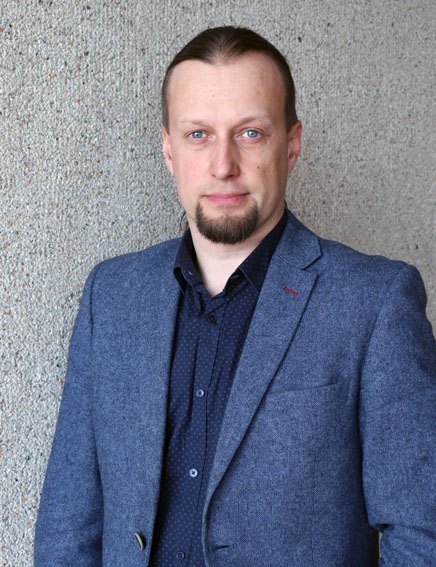
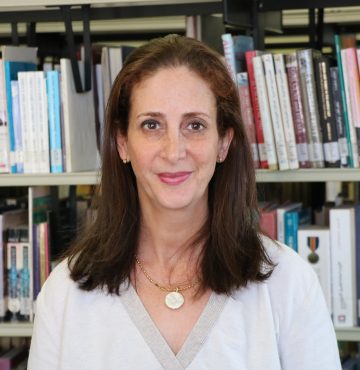
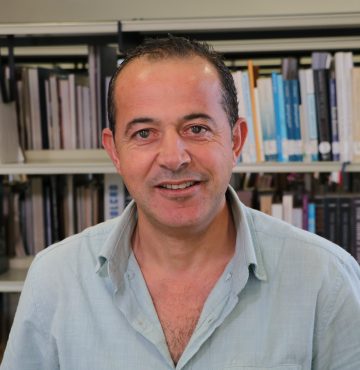
Gintaras Valiulis is a Professor at Vilnius University's Laser Research Center , specializing in Ultrafast nonlinear optics and Laser-matter interactions . His work focuses on advanced photonic phenomena including solitons, X-shaped light bullets, and parametric amplification. Key Research Themes : Nonlinear optical wave dynamics Ultrafast laser systems Photonic material characterization Notable Contributions : Pioneering studies on vortex solitons (2000), light bullets (2003), and parametric amplification (2008) published in Physical Review Letters and Physical Review A . Awards : Recipient of the National Science Prize (2004) Academic Leadership : Supervised doctoral students A. Zaukevičius and V. Jukna, while teaching courses in Atom and Nuclear Physics (bachelor’s), Ultrashort Pulse Optics (master’s), and Modern Optics and Spectroscopy (PhD level).
Dr. Saulius Maskeliūnas serves as a Researcher and Deputy Director at the Cybersocial Systems Engineering Group within Vilnius University's Institute of Data Science and Digital Technologies (formerly Institute of Mathematics and Informatics). His career at the institute spans from 1984 to present, progressing through positions from junior research associate to his current leadership role. Dr. Maskeliūnas earned his Doctor of Science degree in Informatics in 1996 with a dissertation on 'Knowledge base structuring method for heuristic and qualitative reasoning systems,' building upon his engineering education in automated control systems from Kaunas Polytechnic Institute (now Kaunas University of Technology) in 1984. His research expertise centers on information and knowledge-based systems, with significant contributions in Semantic Web technologies, ontology engineering, knowledge management, and workflow automation. Over his extensive career, his work has evolved from foundational research in knowledge representation to practical applications in environmental monitoring systems, water resource management, and national research data infrastructure. Dr. Maskeliūnas' scholarly output demonstrates a consistent trajectory of innovation across multiple domains, particularly in developing semantic technologies for environmental informatics and research data management systems. His recent publications focus on AI standardization, water resource monitoring systems, and research evaluation frameworks. He holds prominent leadership positions including President of the Lithuanian Computer Society (since 2010), Chair of the Technical Committee LST TK4 'Information Technologies' (since 2021), and member of the State Commission of the Lithuanian Language's Committee on Language Technologies (since 2012). Throughout his career, Dr. Maskeliūnas has successfully balanced theoretical research with practical implementation, contributing significantly to Lithuania's information technology infrastructure, research evaluation systems, and standardization efforts in computer science terminology.
Šubonienė Aušra is a junior researcher and PhD student at the Cognitive Computing Group of Vilnius University's Institute of Data Science and Digital Technologies. She works on applying machine learning techniques to medical imaging, particularly for pancreatic cancer detection using CT scans. Field: Computer Science Supervisor: Prof. Dr. Olga Kurasova Study Period: 2023–2027 Research Focus : Her work centers on semi-supervised learning and pseudo-labelling methods for improving diagnostic accuracy in medical imaging. She has contributed to developing deep learning models that identify cut-off points for pancreatic cancer detection, with applications in CT scan analysis. Publication Trends : Recent articles demonstrate expertise in medical image segmentation , neural network optimization , and clinical decision support systems , primarily focused on oncology and radiology.
Dr. Rasa Karbauskaitė is a Researcher at the Cognitive Computing Group within Vilnius University's Institute of Data Science and Digital Technologies . She holds a Doctor of Computer Science degree (2010) and specializes in multidimensional data visualization, dimensionality reduction, and intrinsic dimension estimation. Her work combines geometric and statistical methods to analyze high-dimensional datasets. PhD: Computer Science (2010), focusing on local structure preservation in multidimensional data visualization Advanced Training: B2.1 English language course (2016) Research interests include: Fractal dimension analysis for speech emotion classification Manifold learning and topological preservation Optimization of maximum likelihood estimators for dimensionality reduction Geodesic distance applications in data structure analysis Nonlinear data projection algorithms Scientific contributions show a focus on Developing visualization quality assessment frameworks Advancing dimensionality reduction techniques Fractal-based feature selection for emotion recognition Comparative analysis of intrinsic dimension estimation methods Parameter optimization in manifold learning algorithms Awards : Lithuanian Academy of Sciences Young Scientists' Research Prize (2011) Professional Roles : Managing Editor of the Informatica journal Participant in international conferences like Data Analysis Methods for Program Systems (2011-2015) Contributor to IEEE proceedings and specialized workshops
Assoc. Prof. Dr. Algirdas Lančinskas is a Senior Researcher and Associate Professor at Vilnius University's Faculty of Mathematics and Informatics, working within the Global Optimization Group at the Institute of Mathematics and Informatics. His academic career spans over a decade at Vilnius University, where he has progressed from Junior Researcher to his current position as Associate Professor and Chief Researcher on multiple projects. He maintains an active international research profile with collaborations across Europe. Doctor of Physical Sciences (Informatics, 09P), Vilnius University Institute of Mathematics and Informatics, 2013 Dissertation: Parallelization of random search global optimization algorithms Dissertation supervisor: Prof. Dr. (HP) Julius Žilinskas Dr. Lančinskas specializes in global optimization, particularly competitive facility location problems, discrete optimization, and parallel computing. His research bridges theoretical optimization methods with practical applications in business, spatial economics, and public health. He has made significant contributions to nature-inspired optimization heuristics, developing novel algorithms for solving complex location problems with applications ranging from business expansion strategies to pandemic testing protocols. His work often involves multi-objective optimization approaches and the development of efficient parallel algorithms to handle computationally intensive problems. Analysis of his recent publications reveals a strong focus on competitive facility location modeling, with particular expertise in discrete optimization problems where multiple competitors vie for market share. His research increasingly incorporates robustness considerations under uncertainty in customer behavior, reflecting the growing complexity of real-world location decisions. The integration of ranking-based approaches with traditional optimization techniques represents a distinctive methodological contribution across his work. Dr. Lančinskas actively supervises doctoral students and has served on multiple dissertation defense councils. His research is supported by significant funding from the Research Council of Lithuania and international collaborations through COST actions. He has led multiple research projects focused on optimization algorithm development and their applications. As a member of the Global Optimization Group, he contributes to Vilnius University's strong tradition in optimization research, collaborating closely with Prof. Julius Žilinskas and international partners across Spain, the UK, and other European institutions. His work exemplifies the institute's commitment to both theoretical advances and practical applications of optimization methods.
Sandra Virbukaite is a Lecturer at Vilnius University's Department of Lecturers. She is currently pursuing doctoral studies (2020–2024) at Vilnius University Institute of Data Science and Digital Technologies, focusing on deep learning methods for identifying pathological changes in fundus images under Dr. Jolita Bernatavičienė. Master’s degree in Applied Statistics (Vilnius Gediminas Technical University, 2011) Bachelor’s degree in Engineering Informatics (Vilnius Gediminas Technical University, 2009) Recent certificates from Oxford University's Machine Learning Summer Schools (2023–2024) and DeepLearn 2021 Summer Her research centers on medical imaging and artificial intelligence applications for eye disease detection, particularly glaucoma through optic disc and cup segmentation . Analysis of her 15 most recent publications (2020–2024) shows focus areas in convolutional neural networks , image preprocessing , and segmentation accuracy in fundus imaging. Presenter at 8 major conferences including DAMSS (2021–2022), WSCG (2022), and AI Technologies in Medicine (2023–2024) Contributor to 5 peer-reviewed publications in IEEE Access and Nonlinear Analysis: Modelling and Control She teaches Database Query Languages at Vilnius University since 2020, demonstrating both pedagogical and research expertise in applied statistics and deep learning domains.
Gediminas Navickas is a Lecturer at Vilnius University's Institute of Data Science and Digital Technologies (DMSTI) within the Faculty of Mathematics and Informatics, specializing in the Image and Signal Analysis Group. His work bridges academic research with practical applications in Lithuanian language technologies. His primary research focuses on automatic Lithuanian speech recognition, speech signal processing, speech synthesis methods and algorithms, and speech synthesis quality assessment. Navickas has made significant contributions to developing speech technologies specifically for the Lithuanian language, addressing the challenges of resource scarcity compared to more widely spoken languages. His work demonstrates strong interdisciplinary connections between computer science, linguistics, and cognitive science. Navickas's publication record reveals a consistent trajectory of innovation in speech technology, with recent work emphasizing cognitive approaches to evaluating synthetic speech, particularly examining differences in perception between blind and sighted users. His research has evolved from foundational work on neural network architectures for speech synthesis to comprehensive studies on speech corpus development and accessibility applications. He has been instrumental in major EU-funded projects including the LIEPA series (2013-present), which have developed comprehensive speech recognition and synthesis systems for Lithuanian. These projects have produced practical applications ranging from educational robots to voice-controlled mobile services and assistive technologies for the visually impaired. Member of Lithuanian Computer Society (LIKS) Council Member of IEEE organization Active participant in COST actions including UniDive and Multi3Generation Navickas regularly engages with the public through media appearances on LRT radio and television, where he explains complex speech technology concepts to general audiences. His science communication efforts demonstrate a commitment to making technical research accessible and relevant to Lithuanian society.
Alice Paola Handal, M.A., is a Lecturer at Bethlehem University and Co-Director of the Academic Innovation Hub. With decades of experience across multiple countries, she teaches literature, writing, communications, and English pedagogy, primarily for education majors in the Faculty of Education and Department of Early Childhood Education. Founded the Creative Writing Contest and Palestinian Festival of Literature (Palfest) on campus Co-editor of Womenity , the university's all-female empowerment magazine Conducts local teacher training programs and serves on the Lions Club Bethlehem City of Peace board Her research interests focus on creative teaching methodologies, student engagement, and educational empowerment, particularly in cross-cultural contexts. She has contributed to community service initiatives while maintaining active roles in academic innovation and cultural programming. Her work at the Academic Innovation Hub and involvement in extracurricular activities like Palfest demonstrate her commitment to holistic education and cultural enrichment within the Bethlehem University community.
Ziyad Banishamsa is an Assistant Professor and Chair of the Department of Arabic at Bethlehem University's Faculty of Arts. Born in Nablus in 1973 and active across Palestinian cities, he holds a Ph.D. in Moral, Critical, and Cultural Discourse from Cairo University. Educational Background Ph.D. in Moral, Critical and Cultural Discourse, University of Cairo, Egypt Polytechnic and linguistic composition expertise Research Interests span religious discourse analysis, semiotics, contemporary Palestinian literature, international literary discourse, and cultural studies. He has presented at numerous local and international conventions on topics including the International Discourse Crisis and the works of artist Naji Al Ali. Academic Contributions include editing two encyclopedias and analyzing media discourse frameworks through courses like "Language of Media" and "Making of Discourse and Movies." His work emphasizes intercultural tolerance and discourse renewal. Professional Affiliations Palestinian Critics Association Palestinian Writers United Literary Association Composition and Publishing Ethics Committee Bethlehem University Literature Department
Professor Artūras Razbadauskas is a distinguished academic leader currently serving as the Rector of Klaipeda University since 2018. He holds a professorship in the Department of Nursing within the Faculty of Health Sciences at Klaipeda University, where he previously served as Dean of the Faculty of Health (2009-2018) and Head of the Department of Nursing (2001-2009). His professional affiliations include: Rector of Klaipeda University (2018-present) Former Dean of Klaipeda University Faculty of Health (2009-2018) Former Head of Klaipeda University Department of Nursing (2001-2009) Clinic surgeon at Klaipėda University Hospital Former Head of Surgery Clinics of Seamen's Hospital (2003-2019) Member of World Health Organization European Healthy Cities Network Political Committee (2020-present) Member of National Health Council (2013-present) Chairman of the Community Health Council of Klaipėda City Municipality (2011-present) Professor Razbadauskas's research spans multiple critical healthcare domains including nursing practices, cardiovascular disease prevention, patient self-care, and hospital infection management. His scholarly work consistently addresses practical challenges in healthcare delivery, with recent focus on pandemic-related issues such as nursing burnout and teamwork dynamics. He has published 180 original scientific articles, with 39 indexed in major databases, demonstrating significant contributions to healthcare knowledge. His editorial expertise includes serving as an academic Editor for 'BioMed Research International Journal' (Hindawi) since 2020 and as Lead Editor of a Special Issue in 'Evidence-Based Complementary and Alternative Medicine Journal' (Hindawi) since 2021. This positions him at the intersection of research production and academic dissemination. Professor Razbadauskas has successfully supervised three PhD students at Finnish universities and numerous master's students at Klaipeda University, with theses examining diverse healthcare challenges from cardiovascular prevention to pandemic response. His supervision approach emphasizes practical applications of research in real healthcare settings. His commitment to public health extends beyond academia through active participation in WHO networks, National Health Council, and local health governance structures, demonstrating his dedication to translating research into policy and practice that improves community health outcomes.
Romualdas JUZEFOVIČIUS serves as Associate Professor and Senior Researcher at the Lithuanian Culture Research Institute (LKTI) in Vilnius, where he has worked continuously since 1979 following the reorganization of the Institute of Philosophy and Sociology. He earned his doctorate in humanities from Vilnius University in 1990 with a dissertation on Lithuanian scientific history. His research specializes in 20th-century Lithuanian academic history, with concentrated focus on the socio-cultural dimensions of scholarly life during the interwar period (1918-1940). Key investigations examine institutional frameworks of humanities organizations, profiles of academic elites, and the interplay between national identity formation and intellectual development within Lithuania's university system. Dr. JUZEFOVIČIUS maintains an extensive publication record spanning four decades, including monographs like Lithuanian Academic Elite in 1922-1940 (2019) and Humanities Organizations In Lithuania 1918-1940 (2007). His recent editorial work on Sovijus: Interdisciplinary Studies of Culture demonstrates continued scholarly productivity through thematic volumes exploring cultural theory and historical methodology. He actively contributes to academic communities as editorial board member of Sovijus , member of the Lithuanian Community of Historians and Philosophers of Science, and participant in the Association of the History and Philosophy of Sciences of the Baltic states. His institutional commitment spans LKTI's entire organizational history, reflecting deep integration within Lithuania's cultural research infrastructure.
Dr. Asta Giniūnienė serves as a Senior Research Scientist at the Institute of Lithuanian Cultural Research in Vilnius, where she leads research in the Department of Sacral Art Heritage. With over a decade of institutional experience since 2014 (following prior heritage work at the Centre of Cultural Heritage), she holds a PhD in Art History from Vilnius Academy of Fine Arts, specializing in Lithuanian religious art traditions. Her academic background includes: Art History degree from State Art Institute of Lithuanian SSR (now Vilnius Academy of Arts), 1979-1984 Doctoral diploma in Humanities and Art History from Vilnius Academy of Fine Arts (2010), dissertation: 'The Way of the Cross in the Diocese of Samogitia in the second half of the 18th century – the beginning of the 20th century' Dr. Giniūnienė's research centers on religious art of the 18th-20th centuries, with particular expertise in iconography and sacred heritage. She has systematically documented artistic expressions across Lithuanian dioceses, analyzing how Catholic traditions like the Way of the Cross were localized through church paintings, sculptures, and devotional objects. Her work bridges art history with cultural anthropology, revealing regional variations in religious practice while preserving endangered aspects of Lithuania's spiritual identity through meticulous scholarly documentation. Her publication record demonstrates consistent thematic focus, with recent works examining Virgin Mary iconography in Videniškiai Church (2021) and the painting heritage of Veliuona Church (2021). The research trajectory shows progression from monographic studies of the Way of the Cross (2013) to detailed diocesan analyses in the 'Sacred Art of Lithuania' series, reflecting deepening regional expertise and methodological refinement in documenting Lithuania's ecclesiastical art. As an active member of the Lithuanian Art Historians Society, Dr. Giniūnienė contributes to national scholarly discourse while maintaining institutional affiliation with the Institute of Lithuanian Cultural Research. Her research is supported through the institute's cultural heritage framework, enabling sustained documentation projects across Lithuanian dioceses. While not involved in formal student supervision, her publications serve as essential resources for researchers in Baltic religious art. Current projects appear focused on completing diocesan documentation, with recent work covering Šiauliai and Joniškis regions, indicating ongoing commitment to comprehensive mapping of Lithuania's sacred artistic legacy.
Vijole Satkauskiene serves as a Lecturer and Director of UAB "Verslo barometras", conducting applied research and experimental development from 2020 to 2023 alongside science popularization initiatives. She secured grant funding (Contract No. ST-6 2020-12-02) to deliver specialized 8-hour training for non-profit accountants on accounting and tax compliance. Her research focuses primarily on Accounting and Taxation frameworks for Non-profit Organizations, with secondary engagement in Civil Engineering through professional affiliations. This dual emphasis reflects her practical approach to bridging financial management and technical sectors within community development contexts. Ms. Satkauskiene holds significant leadership roles: board member of the Utena City Local Action Group, member of the Lithuanian Engineers Union and Utena Civil Engineers Club, and Chairwoman of the Utena Accountants Club. Her scholarly profile is maintained via ORCiD (0009-0007-4693-0122), though no formal academic institution is specified in current activities.
Gintautė Žibėnienė serves as an Associate Professor at Mykolas Romeris University's Institute of Educational Sciences and Social Work within the Faculty of Human and Social Studies. Her academic profile demonstrates active engagement in educational research with practical applications for Lithuanian municipal education systems. Her research focuses on critical challenges in contemporary education, particularly teacher motivation and recruitment strategies. Key areas include: Psychological factors influencing teacher retention Municipal-level education policy implementation Digital transformation initiatives in educational settings Quantitative and qualitative methodologies for educational research Dr. Žibėnienė actively participates in national research projects addressing real-world educational challenges, with current work centered on Kalvarija Municipality's teacher staffing issues. Her research combines theoretical frameworks with practical solutions for local educational authorities. Professional profiles: ORCID: 0000-0003-4194-7332 Scopus Author ID: 55600294000 Google Scholar: Active profile with publications LinkedIn: Professional networking presence Her academic service includes conducting both quantitative surveys and qualitative focus group research to identify effective teacher motivation strategies and recruitment mechanisms for regional educational institutions.