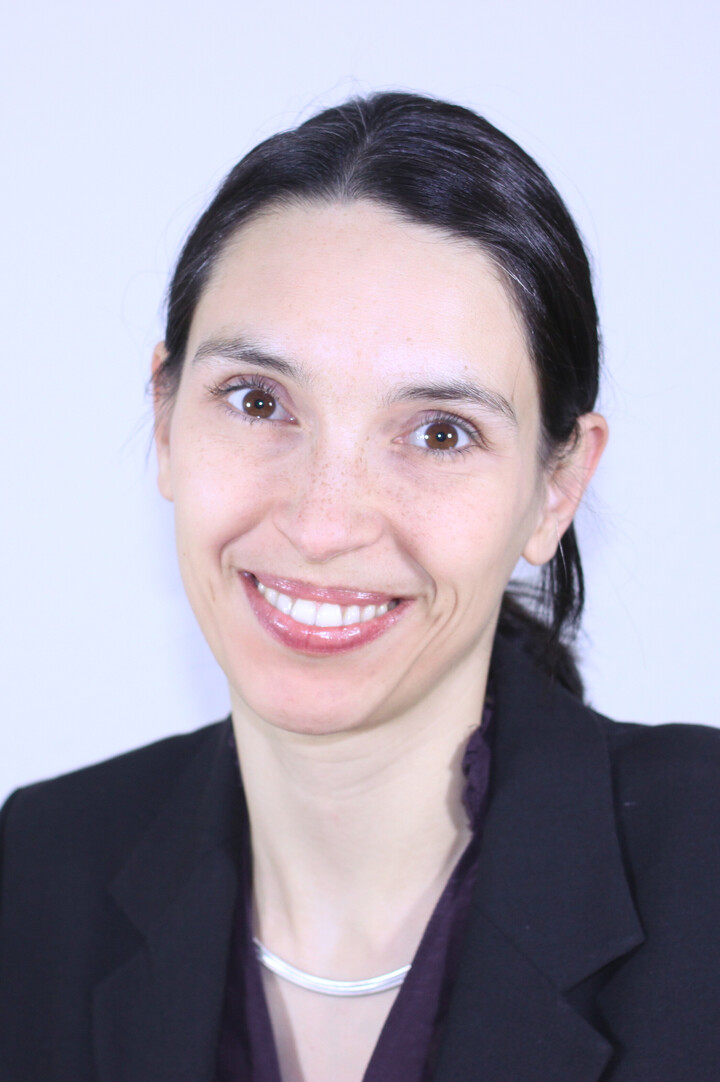
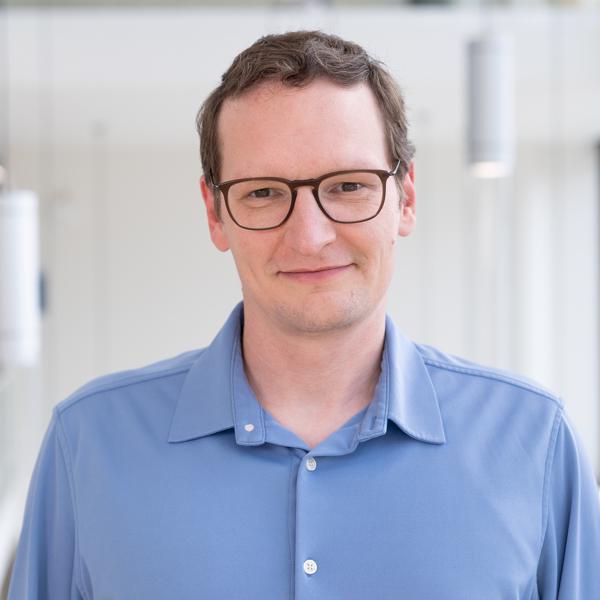
Prof. Dr. Dominik Schwarz is a faculty member at the Faculty of Physics , Bielefeld University. His research focuses on Cosmology and Particle Physics , particularly in the areas of Dark Energy , Dark Matter , Cosmological Inflation , and Large-Scale Structure Formation . He contributes to projects like the International LOFAR Telescope Consortium and the SFB-TRR 211 on strongly interacting matter. APART Fellow of Austrian Academy of Sciences Humboldt Fellow CERN Fellow His recent work explores the cosmic dipole anisotropy , axion density perturbations , and multi-wavelength cosmic web mapping . He also advances data science infrastructure through the PUNCH4NFDI consortium.
Dagmar Schäfer is a leading historian of science and technology, serving as Managing Director of the Max Planck Institute for the History of Science (MPIWG) and holding the Chair of China Studies and History of Technology at the University of Manchester (2011). She directs Department III: Artifacts, Action, Knowledge at MPIWG since 2013 and holds Honorary Professorships at Technische Universität Berlin (History of Science and Technology) and Freie Universität Berlin (China Studies). Her research spans the history of Chinese technology (Song-Ming dynasties), material culture, and knowledge systems, emphasizing artifacts' role in scientific diffusion. Doctorate (1996) and Habilitation (2005) in Sinology and History of Science Guest Professorships: Shanghai Jiao Tong University (2017), IAS Princeton (2019), European University Institute (2022) Her seminal work, The Crafting of the 10,000 Things (2011), explores 17th-century Chinese knowledge systems, earning the Pfizer and Levenson Prizes. Recent contributions focus on knowledge ownership (co-edited Ownership of Knowledge , MIT Press 2023) and plurilingual scholarship in Eurasia (co-edited Brill 2023). Her 2020 Leibniz Prize recognized her innovative approaches to global cultural studies. Publications analyze comparative technological paradigms, local knowledge in historical contexts, and transcultural artifact analysis. She is central to the Kn/Own/Able project challenging intellectual property norms in knowledge dissemination.
Prof. Dr. Markus Schwarzländer leads the Arbeitsgruppe for Plant Energy Biology at the Institute for Plant Biology and Biotechnology (WWU Münster) . His research focuses on mitochondrial physiology, redox signaling, and biosensor development in Arabidopsis thaliana and other plant species, integrating molecular biology with systems-level analyses to understand energy regulation. Key Research Areas: Mitochondrial-NAD(P)H dynamics Redox-regulated signaling networks Organelle communication Stress-adaptive metabolism Recent work highlights Golgi-localized mitochondrial uncoupling proteins , chloroplast-mitochondria redox coupling , and mitochondrial calcium uniporter function . His group employs cutting-edge fluorescent biosensors and proteomic approaches to dissect energy physiology. Students benefit from hands-on training in bioimaging , metabolic modeling , and organelle biology through iMoPLANT and Life Sciences programs. Scientific Awards: DAAD Fellowship (2019) As an active member of the Faculty of Biology , he collaborates with international institutions including University of São Paulo , CEA France , and Siberian Institute of Plant Physiology , while maintaining a robust publication record in top journals like Plant Cell and Nature . His teaching emphasizes integrative plant sciences and advanced biosensing techniques for B.Sc. and M.Sc. students.
Anna Levina is an Assistant Professor for Computational Neuroscience at the University of Tübingen , affiliated with the Department of Computer Science under the Faculty of Science. Her research focuses on the self-organization of neuronal activity, critical dynamics in neural networks, and the excitation/inhibition balance in cortical circuits. Current positions: Assistant Professor (since 2018), Group Leader (2017-2018), Equality Officer (Computer Science) Previous roles: IST Fellow (2015-2017), Associated Researcher (2011-2015), Postdoc/PI (2011-2015), Postdoc (2008-2011) Her research integrates mathematical modeling , statistical physics , and computational neuroscience to study criticality phenomena, neural avalanches, and adaptive network dynamics. Key interests include: Self-organized criticality in neural systems Excitation/Inhibition balance mechanisms Network topology and dynamics Timescale analysis in neural processing Stochastic modeling of neural activity Recent publications reveal trends in understanding critical dynamics across biological and artificial networks, with applications to memory systems, sensorimotor integration, and disease modeling. She has received recognition as an IST Fellow .
Jishen Zhao is an Assistant Professor in the Department of Computer Science and Engineering at the University of California, San Diego (Jacobs School of Engineering). His research focuses on computer architecture, non-volatile memory systems, and deep learning acceleration. Dr. Zhao has published extensively in top venues including ISCA, MICRO, ASPLOS, and IEEE Transactions. He collaborates with researchers at UCSD and beyond to advance systems for emerging applications in AI and autonomous vehicles. Dr. Zhao's primary research areas include persistent memory systems, hardware/software co-design for deep learning, and safety-critical computing. He develops techniques for crash consistency, memory disaggregation, and efficient neural network deployment. His work on autonomous vehicles addresses scenario generation and perception-aware system design. Recent projects explore LLM applications for software engineering and hardware verification. Analysis of Dr. Zhao's 2024-2025 publications reveals a strong shift toward AI-integrated systems research. He applies large language models to tasks like RTL verification and software issue localization while continuing to innovate in memory systems for serverless computing. There is growing emphasis on safety-critical systems for autonomous vehicles and energy-efficient neural network training using novel hardware architectures. Information about Dr. Zhao's scientific awards, advising activities, grants, and laboratory facilities was not available in the provided documentation.
Prof. Dr.-Ing. Ahmad Osman is a Professor at the Saarland University of Applied Sciences (htw saar), specializing in Test Technologies and Test Methods within the Faculty of Engineering. He also holds an Adjunct Professor position at Laval University in Quebec, Canada, in the Department of Electrical Engineering and Computer Science. His research focuses on Artificial Intelligence applications in Signal and Image Processing for Non-destructive Testing (NDT) , with extensive work on Deep Learning , 3D Ultrasound Tomography , and Sensor Data Fusion in industrial contexts. Engineering Artificial Intelligence Signal Processing Image Processing Non-destructive Testing Quality Control Augmented Reality Osman leads the AutomaTiQ research group and serves as Head of the Algorithms/Signal and Data Processing Department at Fraunhofer IZFP . His recent publications (2017–2022) emphasize Deep Learning for defect detection in CFRP , Terahertz Imaging for artwork diagnostics, and Acoustic Sensors for agricultural quality control. He has organized international conferences on Structural Health Monitoring and contributed to Springer books on NDT technologies. His projects include ComforTex-AI (2024) and development of 3D positioners for ultrasound measurements. Collaborations span institutions in Germany, Canada, Italy, and Brazil, with advisory roles in the German Society for NDT and technical committees for conferences in Montreal and Egypt.
Steffen Patzold is a Professor for Medieval History and Auxiliary Sciences at the Department of History, Faculty of Philosophy, University of Tübingen, since 2008. He previously held research and teaching positions at the University of Hamburg (1999–2006), Max Planck Institute for European Legal History (2007), and University of Kassel (2007–2008). His research focuses include the Carolingian period, political and ecclesiastical history, monasticism, perception patterns in the Middle Ages, and interdisciplinary projects like the DFG-funded 'Migration and Mobility in Late Antiquity' and Collaborative Research Center SFB 923 'Threatened Orders.' Education: University of Hamburg (History, Art History, Journalism, 1996–1999; PhD, 2000) Affiliations: Heidelberg Academy of Sciences, SFB 923 subprojects E02/F02, DFG Centre for Advanced Study in Humanities His recent publications analyze Carolingian political structures, feudal systems, historical semantics, and interdisciplinary topics like archaeogenetics. Key projects examine local societies in Carolingian Europe, bishop networks, and crisis management in early medieval orders. He collaborates extensively in edited volumes and international journals, particularly on comparative medieval studies.
Jens Behley is a Lecturer (Privatdozent) and postdoctoral researcher at the Department of Photogrammetry, University of Bonn. He completed his habilitation in 2023 with a thesis on LiDAR-based spatio-temporal scene understanding for autonomous vehicles and earned his PhD in 2014 under Prof. Armin Cremers. His research focuses on LiDAR perception, agricultural robotics, and 3D scene understanding. Behley is an Associate Editor at IEEE Robotics and Automation Letters (RA-L) and has authored influential datasets like SemanticKITTI and BonnBeetClouds3D. Education: PhD in Computer Science, University of Bonn, 2014 Habilitation in Photogrammetry, University of Bonn, 2023 Research Interests: LiDAR-based perception in urban and agricultural environments, machine learning for robotics, semantic mapping, SLAM algorithms, and 3D reconstruction. His work bridges computer vision and robotics, with applications in autonomous vehicles and precision agriculture. Awards: Best Agri-Robotics Paper Award (IROS 2024) Outstanding Reviewer Awards (ECCV, CVPR, ICRA) Faculty Award for Geodesy (2021) Advisees & Grants: Behley collaborates extensively with the PRBonn lab and researchers like Cyrill Stachniss, focusing on projects funded by EU Horizon and industry partners. His team develops open-source tools for LiDAR processing (e.g., KISS-ICP, VDBFusion). Labs/Teams: Part of the Photogrammetry and Robotics Institute (IGG) at the University of Bonn, contributing to the PRBonn research group.
Dongwoo Kim is a researcher affiliated with Hanyang University, ERICA Campus (Department of Electronics and Communication Engineering) and has previously collaborated with institutions like POSTECH , Chungnam National University , and Microsoft . His work spans interdisciplinary domains in Computer Science and Engineering . Hanyang University, ERICA Campus - Department of Electronics and Communication Engineering POSTECH - Power Analog Electronics & Semiconductor Devices Lab Microsoft Chungnam National University Kim's research focuses on formal verification of automotive control software, deep learning applications in environmental monitoring, 3D modeling for indoor positioning, and machine learning for signal processing. His recent publications highlight advancements in graph neural networks (GNNs), including analyzing oversmoothing and gradient dynamics, as well as developing geometric vision-language models with domain-agnostic encoders. His 15 most recent articles (2023-2025) address topics like: Optimizing hybrid electric vehicle engine performance 3D modeling for indoor localization GNN training stability UAV-based environmental monitoring Algorithm difficulty prediction for programming problems Millimeter-wave antenna design Kim collaborates with researchers in software engineering , signal processing , and environmental science domains. His work intersects formal methods , applied machine learning , and embedded systems research.
Detlef F. Sprinz is a Senior Scientist at the Potsdam Institute for Climate Impact Research (PIK) and a Professor at the Faculty of Economics and Social Sciences of the University of Potsdam, Germany. During 2024-2025, he leads the project "AMaReNa - A Market for the Restoration of Nature" , focusing on carbon removals. His academic background includes a Ph.D. and M.A. in Political Science from the University of Michigan and an M.A. in Economics from the University of the Saarland. Research Interests: Climate policy at multiple levels, long-term policy design, evaluation of international/national institutions, European/international environmental policy, and modeling political decisions for sustainability. Notable Projects: Tandem Fellowship (2020-2022) for interdisciplinary course development, Visiting Researcher at University of Lund (2022-2023), and coordination of research at the Käte Hamburger Kolleg (2017). Publications emphasize climate cooperation under the Paris Agreement, effectiveness of environmental regimes, and predictive modeling for climate negotiations. His work spans empirical analyses of acid rain regulation, Kyoto Protocol implementation challenges, and bioenergy accounting errors. Scientific Awards & Memberships: Tandem Fellowship (German Stifterverband) Member, European Academy Co-founder, Ecologic Institute Teaching includes courses on global climate governance, political decision modeling, and environmental policy at the University of Michigan, Yale, University of Oslo, and University of Potsdam. He has contributed to IPCC’s Sixth Assessment Report as a Lead Author. Advisory Roles: Chairmanship of the European Environment Agency’s Scientific Committee (2009-2012), Senior Research Fellow at CICERO (2011-2013), and consultancy for governments, corporations, and think tanks.
Dr. Theresa Jedd is an Environmental Policy Specialist and Post-Doctoral Research Associate at the Department of Environmental and Climate Policy , Technische Universität München , since 2019. Previously, she worked at the National Drought Mitigation Center (University of Nebraska-Lincoln, 2015-2019) and the Natural Resource Ecology Laboratory (Colorado State University, 2015). Her work spans drought policy analysis, transboundary conservation, and participatory governance methods across diverse regions including Montana, Nebraska, and the Middle East/North Africa. Current Affiliation: Technische Universität München (2019-present) Prior Roles: University of Nebraska-Lincoln (2015-2019), Colorado State University (2015) Research Focus: Combines qualitative methods (interviews, focus groups, workshops) with physical drought indicators to analyze policy frameworks at multiple governance levels (local, national, international). Key themes include: Climate risk governance Water allocation mechanisms Drought early warning systems Transboundary environmental policy Civil society engagement Ethics of environmental crises Publication Trends: Recent work highlights polycentric governance challenges, drought resilience limitations, and participatory monitoring approaches. Her research spans environmental policy, water resource management, and climate adaptation.
Mathias Niepert is a Professor at the Institute for Artificial Intelligence within the Faculty of Computer Science, Electrical Engineering and Information Technology at the University of Stuttgart. His research focuses on advancing machine learning techniques with applications in scientific computing, graph neural networks, and medical imaging. He is particularly known for contributions to physics-informed neural networks, equivariant models, and graph learning frameworks. Key research areas include: Scientific Machine Learning for PDEs and molecular modeling Graph neural networks and their theoretical limitations Medical vision-language models and multimodal learning Efficient neural network architectures (transformers, FNOs) Domain knowledge integration in deep learning His work often bridges theoretical foundations with practical applications, as evidenced by extensive publications (2018–2025) on topics like adaptive message passing, equivariant networks, and medical imaging systems. He has contributed to benchmark development through initiatives like PDEBench and pioneered methods for equivariant diffusion models and molecular representation learning. His current projects emphasize: Improving generalization in Fourier Neural Operators Addressing oversmoothing in graph networks Combining physics principles with neural architectures Medical AI applications through multimodal fusion
Prof. Margret Keuper is a Professor of Machine Learning at the University of Mannheim's School of Business Informatics and Mathematics, leading the Data and Web Science Group. She is also affiliated with the Max-Planck-Institute for Informatics and ELLIS (fellow since 2024). Her research focuses on robust deep learning, neural architecture search, and computer vision tasks like motion segmentation and adversarial defense. She holds a PhD from the University of Freiburg and previously held positions at the University of Siegen and the University of Mannheim. Her work spans projects funded by DFG and BMBF, including Climate Visions for social media analysis and TrackOpt for motion tracking. She teaches courses on computer vision, generative models, and reinforcement learning. She actively serves on program committees for top conferences like CVPR, ECCV, and NeurIPS, and is an associate editor for IEEE TPAMI and JAIR. Education: PhD in Computer Science from University of Freiburg (advisor: Thomas Brox) Research Projects: Learning to Sense (DFG), Climate Visions (BMBF), TrackOpt (BMBF) Key Roles: Head of Mannheim Master in Data Science Examination Board, Member of MSc Business Informatics Board Her research emphasizes robustness in AI systems, with contributions to adversarial attacks, domain generalization, and efficient solvers for large-scale problems. She advises over 15 PhD students across academic and industry partnerships.
Nils Ole Tippenhauer is a faculty member at the CISPA Helmholtz Center for Information Security , leading the SCy-Phy research group . His academic journey includes an Assistant Professorship at the Singapore University of Technology and Design (SUTD) (2014–2018), a PhD in Computer Science from ETH Zurich (2012), and a Diploma in Computer Engineering from Hamburg University of Technology (2007). He also holds an exchange study year at the University of Waterloo (2004–2005) supported by a DAAD scholarship. Research Interests focus on practical systems security , particularly Security of Cyber-Physical Systems Industrial Control Systems (ICS) and Industrial IoT (IIoT) Physical-Layer Security and Wireless Security Privacy-Preserving Technologies (e.g., DP3T project) Embedded Systems Security Threat Detection & Defenses His work integrates both theoretical and applied approaches, addressing vulnerabilities in critical infrastructures like water systems and power grids. Recent Publications highlight trends in Anomaly detection evasion in industrial networks Microarchitectural side-channel defenses Localization techniques in cellular networks Security analysis of ICS protocols Data-driven vulnerability assessments for robotics Cyber-physical simulation for infrastructure security Scientific Awards include Best paper at DIMVA'23 Distinguished Paper at ACSAC 2022 Best paper at CPSIOTSEC 2022 Best paper at CPSS 2017 K-H Ditze Award for diploma thesis (2007) SG Mark Institution award (2016) Runner-Up at smart energy hackathon (2013) Advising and Grants feature PhD defenses of Daniele Antonioli and Hamid Reza Ghaeini (2022), co-organizing conferences like WiSec and CPSS , and leading projects such as the National Science Experiment (NSE) with 50,000 mobile sensors in Singapore. He also contributed to the DP3T project for privacy-preserving contact tracing. Labs and Teams include the SCy-Phy research group at CISPA and the development of testbeds like SWaT (Secure Water Treatment), WADI (Water Distribution), and EPIC (Electric Power and Industrial Control) at SUTD. These platforms enable hands-on security research in realistic industrial environments.
Prof. Dr. rer. nat. Lothar Elling is a University Professor and director at the Helmholtz Institute for Biomedical Engineering, RWTH Aachen University, Germany. His research focuses on biomaterials, glycoengineering, and enzymatic synthesis of carbohydrates and glycoconjugates. Institution: RWTH Aachen University Research Unit: Helmholtz Institute for Biomedical Engineering Academic Rank: Full Professor Prof. Elling's research interests include: Glycoengineering of biomaterials Enzymatic synthesis of glycans Glycosyltransferase immobilization Glycan-protein interactions Biocatalytic cascade reactions Biomedical applications of glycomaterials His recent publications demonstrate strong expertise in: - Automated enzymatic glycan synthesis - Multi-enzyme cascade systems for nucleotide sugar production - Glycosyltransferase engineering - Galectin-targeted glycomaterials - Microgel-based biosensors