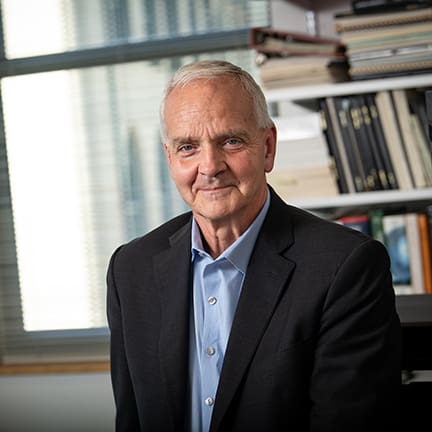
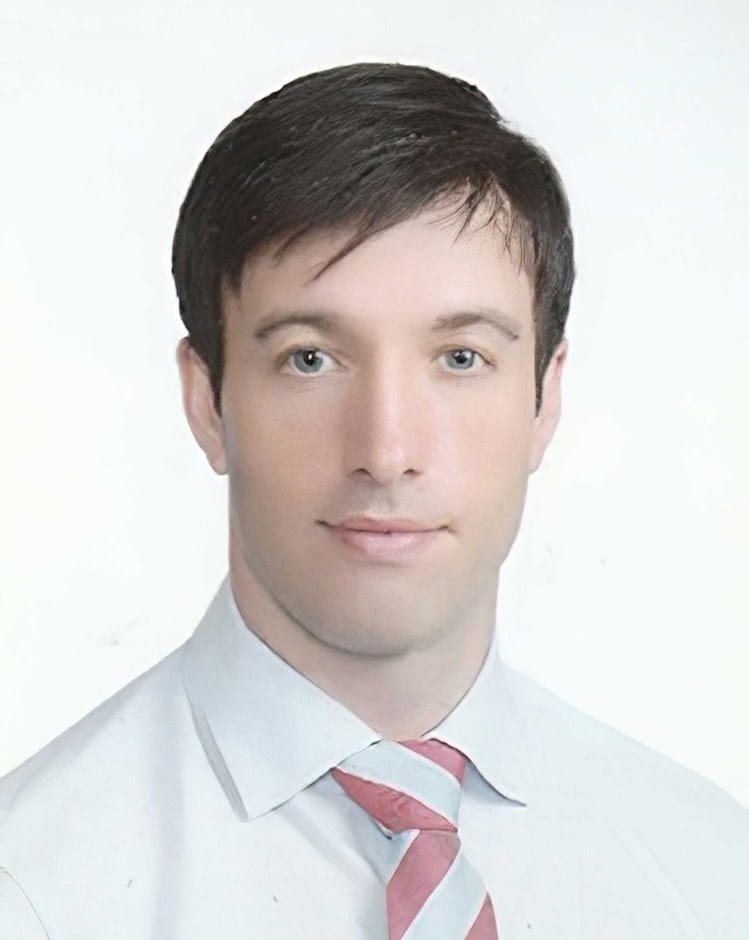
Martial Hebert serves as the Dean of the School of Computer Science at Carnegie Mellon University, a position he assumed in August 2019. He is the sixth dean to lead the school since its inception in 1988 and holds the title of University Professor of Robotics. Professor Hebert is an active participant in global AI discussions, with an upcoming speaking engagement at the AI and Planet session on May 30, 2024, where he will address "Generative AI and regulation: From local implementations to global standards." Professor Hebert is a leading researcher in the fields of computer vision and robotics. His work has contributed significantly to advancing these disciplines, which are critical components of modern artificial intelligence and autonomous systems. His expertise spans theoretical foundations and practical applications of vision systems and robotic technologies, positioning him as a key figure at the intersection of academic research and real-world AI implementation. As Dean of one of the world's most renowned computer science schools, Hebert oversees a diverse academic community dedicated to innovation and excellence in computing education and research. Under his leadership, the School of Computer Science continues to maintain its position at the forefront of technological advancement and academic achievement in the computing field, while also engaging with critical issues around AI governance and regulation.
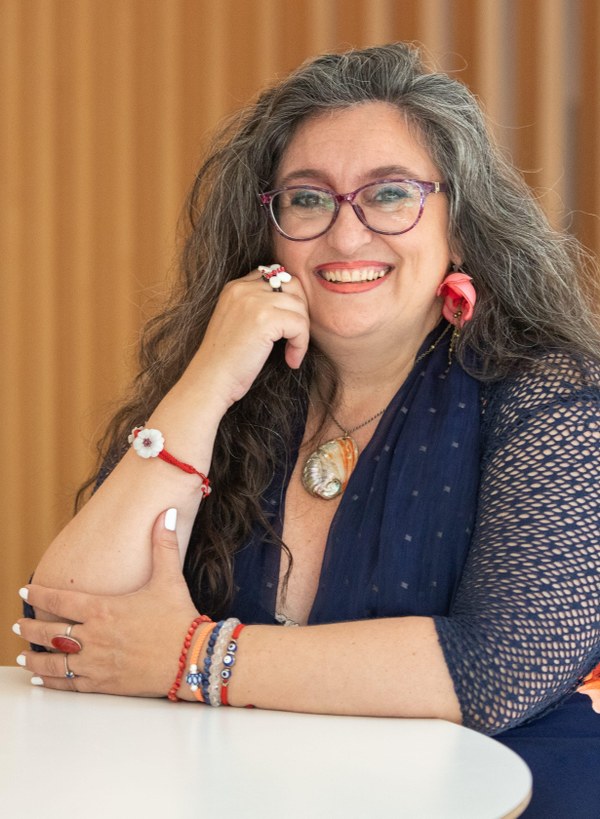
Miguel Ángel Bernal Merino serves as a Part-Time Lecturer in the Department of Modern Philology, Translation and Interpretation at the University of Las Palmas de Gran Canaria. Concurrently, he acts as convener of the MA in Translation at the University of Roehampton in London, managing its Specialised Translation, Audiovisual Translation, and Intercultural Communication pathways since 2005. His academic profile bridges theoretical research and industry application in localization disciplines. PhD in The Localisation of Video Games, Imperial College London MSc in The Localisation of Multimedia Interactive Entertainment Software, Imperial College London Certificate in Software Localisation, University of Limerick CELTA, University of Cambridge MPhil in Lip-Synched Dubbing, Universidad de Alicante MA in Hispanic Literature, University of Rhode Island BA in English & Spanish Linguistics, Universidad de Alicante Bernal Merino's research pioneers the expansion of Translation Studies into interactive media domains. His work on video game localization examines interactivity, cultural adaptation, glocalisation, and playability, while his audiovisual translation research investigates creativity in lip-synched dubbing, subtitling, and audiodescription. He extends these frameworks into gaming-based language learning through haptic environments and multisensory reinforcement, exploring physiological aspects of multilingual cognition and polysemiotic neural networks. This multidisciplinary approach fundamentally challenges traditional boundaries in translation theory. His publication trajectory reveals evolving industry-academia integration, shifting from foundational game localization frameworks (2008-2015) toward user-centered research and educational applications (2018-2024). Recent work emphasizes measurable business impacts through quality localization, regional market adaptations, and crowd-sourced methodologies, demonstrating consistent influence on professional standards across gaming and translation sectors. Fellow of the Higher Education Academy Bernal Merino supervises doctoral research on mobile game localization, transmedia fan experiences, and historical game content translation while developing industry-academia pipelines through projects like AHRC's Media Across Borders. His funded initiatives—including Maximising ROI through Quality Game Localisation and Video Games for Language Learning—bridge theoretical innovation with commercial implementation, focusing on glocalisation strategies, interactivity metrics, and playability optimization. These collaborations connect European universities, gaming studios, and localization service providers. As chair of the IGDA Localization SIG and member of GIR Discourse, Communication and Society, he directs international forums for game localization discourse. His work with Routes into Languages promotes audiovisual media in language education, while REF-readiness collaborations enhance research excellence across European institutions through his professional network spanning industry conferences like GDC Summit and Game Global.
Alicia Orea Giner is a Professor at the Faculty of Economics and Business Sciences of Rey Juan Carlos University, specializing in sustainable tourism and social justice. Her research focuses on Generation Z's sustainable consumption practices in food tourism, AI integration in hospitality, and ethical dimensions of tourism. She co-authored the award-winning article The way we live, the way we travel: generation Z and sustainable consumption in food tourism experiences , recognized with the 2024 Emerald Literati Outstanding Paper Award. Her work bridges sustainability, technology, and cultural studies. Key themes include feminist methodologies in tourism research, transformative travel through ecofeminism, and post-pandemic food tourism trends. She explores AI applications in service robots, wellness tourism's mental health connections, and marginalized communities' roles in culinary tourism. Recent studies address LGBTQ+ tourism challenges, stakeholder participation in World Heritage sites, and ghost tours' cultural narratives. Awards highlight her contributions to sustainability and social justice in tourism. Awards: 2024 Emerald Literati Outstanding Paper Award Research Foci: Food Tourism, AI Ethics, Feminist Tourism Studies, Cultural Heritage Management Labs/Teams: No specific lab mentioned; collaborates across interdisciplinary tourism research networks.
Bryon Aragam is an Associate Professor of Econometrics and Statistics and Robert H. Topel Faculty Scholar at the University of Chicago Booth School of Business. His research focuses on the intersection of causality, statistical machine learning, and probabilistic modeling, with particular emphasis on applications to artificial intelligence systems including large language models like ChatGPT and generative models like DALL-E. Dr. Aragam completed his PhD in Statistics and a Masters in Applied Mathematics at UCLA, where he was an NSF graduate research fellow. Prior to joining the University of Chicago, he was a project scientist and postdoctoral researcher in the Machine Learning Department at Carnegie Mellon University. Research Focus: Causal structure learning in probabilistic generative models Key Areas: Causal machine learning, deep generative models, latent variable models, statistical learning theory Applications: AI interpretability, ethics, and fairness in artificial intelligence systems Teaching: Business Statistics, Econometrics and Statistics Colloquium His recent publications demonstrate a strong theoretical foundation combined with practical applications, particularly in understanding and improving AI systems. His work spans causal discovery, graphical models, deep learning, and latent variable modeling, with particular attention to the theoretical properties of these methods and their applications to real-world AI challenges. The research shows a progression toward increasingly complex problems in causal representation learning and AI interpretability. Scientific Awards: Robert H. Topel Faculty Scholar NSF Graduate Research Fellow Dr. Aragam's work has been published in top statistics and machine learning venues including the Annals of Statistics, Neural Information Processing Systems (NeurIPS), the International Conference on Machine Learning (ICML), and the Journal of Machine Learning Research (JMLR). His research group publishes broadly across both statistical and machine learning communities, demonstrating the interdisciplinary nature of his work at the intersection of statistics, machine learning, and causal inference. As a data science consultant for technology and marketing firms, Dr. Aragam has applied his expertise to problems in survey design, customer retention, logistics, and ranking, bridging the gap between theoretical research and practical applications.
Karina Gibert is a Full Professor at Universitat Politècnica de Catalunya (UPC), specifically at the Faculty of Computer Science of Barcelona (FIB) in the Department of Statistics and Operations Research. With a permanent teaching position since 1990, she contributes to research and education with a focus on Data Science, Artificial Intelligence, Explainable AI, and Ethics in AI. Full Professor, UPC (since 1990) PhD in Informatics Engineering Postgraduate in Higher Education Teaching Director and co-founder of IDEAI research center Dean of the Official Professional College on Informatics Engineering of Catalonia Active in bridging the gender gap in STEAM through multiple initiatives Her research focuses on extracting strategic knowledge from data and intelligent systems with ethical and explainable perspectives. She has led various projects including Diet4You for personalized diets, INSESS-COVID19 for social vulnerability analysis, Top Rosies Talent for female AI development, and ciutadanIA for AI culture promotion. Her work spans health, environment, sustainability, tourism, and social technology applications. As an editor of Environmental Modeling and Software journal and active academic, she contributes to international conferences, working groups, and research collaborations. Her service includes membership on various ethics and AI strategy committees and advisory boards. Women Tech Award 2023 National Informatics Engineering Award in Digital Dissemination 2022 Ada Byron Award 2022 Honorific Mention of Creu Casas award 2021 donaTIC 2018 Award Finalist at AMETIC Awards 2021 Finalist of European Social Services Awards 2021
Yolanda Vidal Segui is an Associate Professor in the Department of Mathematics at the Universitat Politècnica de Catalunya (UPC), affiliated with the Escola d'Enginyeria de Barcelona Est (EEBE). Her research focuses on wind energy systems, predictive maintenance, and structural health monitoring of wind turbines. She leads projects in the CoDAlab and WinTurCoM research groups, specializing in data-driven models, condition monitoring, and failure prognosis. Her work integrates machine learning, mathematical modeling, and sensor technology to enhance turbine reliability and energy efficiency. Dr. Vidal holds a PhD in Applied Mathematics and has authored over 350 publications. Her contributions include advancements in SCADA data analysis, vibration-based diagnostics, and AI-driven condition monitoring systems. She has received several accolades, including the WindEurope Technology Workshop recognition and the IFIT Distinction in Mechanism and Machine Science. Her research bridges academia and industry, addressing challenges in offshore wind turbine integrity and maintenance strategies. Active in professional service, she serves on conference committees and editorial boards (e.g., Mechanical Systems and Signal Processing, Wind Energy). Her work emphasizes sustainable energy solutions and has been applied in real-world scenarios like the Alpha Ventus wind farm. She also contributes to educational initiatives, developing innovative teaching materials for engineering students.
Scott Nelson is an Associate Professor of Finance at the University of Chicago Booth School of Business. His research bridges consumer credit markets, regulatory frameworks, and behavioral economics, with a focus on how information asymmetries and algorithmic decision-making shape market outcomes. He has contributed to understanding the impacts of the 2009 CARD Act, eviction protections in housing markets, and fairness in credit scoring systems. PhD in Economics, Massachusetts Institute of Technology BA (summa cum laude) in Economics and Mathematics, Yale College Nelson's work employs diverse data sources, including credit reports, court filings, and tax records, combined with structural models to analyze consumer and firm behavior. Key themes include regulatory efficiency, validity disparities in predictive models, and the welfare implications of policy interventions. His articles reveal trends in algorithmic regulation (2025), eviction dynamics (2025), credit scoring disparities (2024), and public finance impacts on Chinese real estate (2023). These publications highlight interdisciplinary methodologies integrating economics, law, and data science. Scientific awards include the AQR Top Finance Graduate Award (2018) and National Science Foundation Graduate Research Fellowship. He has held postdoctoral roles at the Consumer Financial Protection Bureau/Princeton University and visiting research positions at the Federal Reserve Bank of Boston.
David Rossell is an Associate Professor at the Department of Economics, Universitat Pompeu Fabra (UPF) in Barcelona, Spain. He is affiliated with the Statistics@UPF research group and directs the Master in Data Science at the Barcelona School of Economics (BSE). Previously, he held positions at IRB Barcelona as head of the Biostatistics Unit and at the University of Warwick's Statistics Department. He obtained his PhD in Statistics from Rice University, Houston (USA), and conducted postdoctoral research at M.D. Anderson Cancer Center under Professors Valen Johnson and Veera Baladandayuthapani. Research Interests: Rossell specializes in high-dimensional statistical inference, Bayesian methods, computational statistics, and applications in biomedicine and social sciences. His work emphasizes methodology for complex data integration, variable selection, graphical models, and experimental design. Key areas include non-local priors, scalable Bayesian computation, and the development of R packages for statistical analysis (e.g., casper , chroGPS , gaga ). Publications: His recent work focuses on advancing Bayesian variable selection, graphical models with external data, and causal inference. Themes include leveraging external datasets for improved model accuracy, robustness to model misspecification, and applications in healthcare and complex mixture analysis. His contributions span methodological innovation and computational tools for high-dimensional problems. Funding & Grants: Rossell has secured funding through Spanish and European grants, including Juan de la Cierva Fellowships, AGAUR fellowships, and Marie Slodowska-Curie Actions. He supports PhD and postdoctoral researchers through programs like La Caixa InPhD and Beca Beautriu de Pinós. Labs & Teams: He leads the BSE Data Science Center and contributes to interdisciplinary collaborations at UPF and IRB Barcelona, bridging statistical theory and practical applications in genomics, epigenomics, and health data analysis.
LUIS GONZALEZ GUERRERO is an Assistant Professor at the Universidad Carlos III de Madrid, specializing in photonics and telecommunications. His research focuses on integrated photonic circuits for millimeter-wave and terahertz (THz) communication systems, with applications in satellite payloads, wireless fronthaul/backhaul, and space technology. He leads projects in hybrid integrated optical platforms (e.g., InP-Si3N4), laser stability, and high-frequency signal generation. His work bridges photonics with electrical engineering to enable next-generation wireless systems. Research Interests: Dr. Gonzalez Guerrero’s expertise spans integrated photonics, microwave photonics, THz communication links, satellite communication systems, and photonic signal generation. His innovations include low-noise radiometers, optical injection locking for stable local oscillators, and high-purity mm-wave/THz signal transmission. His contributions address challenges in frequency stability, bandwidth efficiency, and phase noise mitigation in high-frequency systems. Publications: His recent work emphasizes hybrid photonic platforms, sub-THz wireless bridges, and phase noise mitigation techniques. Articles highlight advancements in optical signal processing, laser source integration, and applications in space communication. His research trends reflect a strong focus on translating laboratory prototypes into deployable systems for satellite and terrestrial networks. Affiliations: He is affiliated with the Grupo Universitario de Tecnologías de Identificación (GUTI), a research group at UC3M. His work is supported by grants focused on photonic integrated circuits and space communication technologies. He collaborates internationally on projects involving multicore fiber systems, coherent THz transmitters, and optical frequency comb applications.
Prof. Valerio Pruneri is an ICREA Professor and Group Leader at the Institute of Photonic Sciences (ICFO), holding the Corning Inc. Chair in Optoelectronics. He leads a research group focused on quantum optics, nanophotonics, and biomedical imaging. His academic background includes a PhD in Laser Physics from the University of Southampton (UK). Research interests span quantum communication technologies, plasmonic sensors, and nanomaterials for optical applications. Recent advancements include work on quantum key distribution systems, graphene-based devices, and super-sensitive phase imaging techniques. Articles highlight innovations in quantum-enhanced imaging, integrated photonic circuits, and hyperbolic metamaterials. His team collaborates on EU projects like NANO-GLASS ITN and FLIGHT, with a strong emphasis on translational research. Over 50 students and researchers are advised, many funded by national and international grants (e.g., Agencia Estatal de Investigación, CELLEX Foundation). Key lab facilities include state-of-the-art cleanrooms and optical characterization tools.
Mar Pérez-Sanagustín is an Associate Professor at the Institute de Recherche en Informatique (IRIT) , Université Toulouse III Paul Sabatier. She actively participates in international conferences such as EIAH, ATICA, and EDEN, focusing on Technology Enhanced Learning (TEL), Smart Cities, and MOOCs. Award-winning researcher with the 1rst ITWorldEdu Award and Best Demo Award at ECTEL 2013 Specializes in datafication in education, collaborative learning, and social media integration Research interests include: Technology Enhanced Learning (TEL) and its intersection with computer science Smart Cities Learning ecosystems and context-aware services Massive Open Online Courses (MOOCs) and educational analytics Space-aware design for mobile learning Personal Learning Environments and collaborative tools Her recent publications analyze trends in TEL methodology, the PROF-XXI Framework, and global blended learning initiatives. She actively collaborates with institutions like Universidad Carlos III, UNED, and BUAP de México, and has been invited to keynotes and workshops across Europe and Latin America. Scientific awards: 1rst ITWorldEdu Award (2014) for educational technology solutions Best Demo Award at ECTEL 2013
Dr. Jose Manuel Sánchez Peña is a Full Professor at Universidad Carlos III de Madrid (UC3M), affiliated with the Grupo Universitario de Tecnologías de Identificación (GUTI). His research focuses on precision agriculture technologies, optoelectronics, and neuroscientific interfaces. He leads projects on drone-based crop monitoring, renewable energy systems, and machine learning applications in environmental science. Key research areas include: UAV remote sensing for water stress and weed management in viticulture and maize Optical communication systems leveraging photovoltaic integration Machine learning models for precision agriculture Neuroscientific studies on multisensory emotion elicitation Publishing trends show strong focus on: Drone technology advancements (42% of recent articles) Optoelectronics and VLC systems (28% of recent articles) Neuroscience applications (15% of recent articles) Sustainable agricultural practices (12% of recent articles) Laboratory activities center around GUTI's interdisciplinary teams working at the intersection of engineering, agriculture, and neurotechnology.
Albert Guisasola Canudas is an Assistant Professor at the Autonomous University of Barcelona (UAB), specializing in environmental engineering with a focus on wastewater treatment and nutrient recovery. He holds a PhD from UAB (2005), an MSc in Environmental Sciences (2003), and a Chemical Engineering degree (2001). His research emphasizes bioelectrochemical systems, enhanced biological phosphorus removal, and microbial electrolysis cells. Key projects include TRAMPOLINe (2025–2028), promoting industrial adoption of microbial electrochemical technologies, and BINAFET (2022–2025), addressing sustainable agriculture through local resource utilization. Collaborative work spans international institutions like the University of Queensland and the University of Girona. He leads or co-leads 18 research projects, including nutrient recovery initiatives and CO2 valorization programs. His lab focuses on developing innovative solutions for ecological transition, such as fertilizer recovery from urine and carbon capture via electrochemical processes. Despite no explicit awards listed, his extensive publication record (138+ outputs) and project leadership reflect significant contributions to environmental sustainability. Supervised 37 works, though specific student names are not detailed here.
Christopher R. Stewart is an Associate Professor of Accounting at the Booth School of Business , University of Chicago. He specializes in empirical accounting research, with a focus on mergers and acquisitions (M&A), healthcare markets, and the intersection of corporate law, finance, and accounting. His work explores how information influences economic decisions. Education PhD and Master of Commerce in Accounting, University of Melbourne MBA in Finance, Wilfrid Laurier University BA, Laurentian University Visiting PhD student, Stanford University Graduate School of Business Research Interests Stewart’s research spans M&A , healthcare economics , and information-driven financial decision-making . He examines topics such as antitrust scrutiny in M&A, patient outcomes in healthcare consolidation, and the role of local hiring in auditing. Professional Experience Prior to academia, Stewart worked as a financial analyst at General Motors of Canada and founded a technology company sold in 2009. He has taught accounting and finance at the University of Melbourne and Dankook University in Seoul. Scientific Awards FMC Faculty Scholar Teaching At Booth, Stewart teaches courses such as Internal Information for Strategic Decisions and Research Seminars in Accounting . His teaching spans 2024–2026 quarters.
Javier Saez Valero is a Professor in the Department of Biochemistry and Molecular Biology at Miguel Hernandez University of Elche, where he also serves as Deputy Vice Rector for Research - Management of Research and Transfer. His academic roles include teaching Biochemistry I in the Bachelor's in Medicine program and courses in the Master's in Neuroscience and Master's in Translational Neuropsychopharmacology, while coordinating the Doctorate in Neuroscience program. His research focuses on neurochemical mechanisms in neurodegenerative disorders, particularly Alzheimer's disease biomarker discovery in cerebrospinal fluid and blood. Key areas include NMDA receptor dynamics, ACE2 fragments, apolipoprotein E interactions, and reelin signaling pathways. His work bridges molecular biochemistry with clinical neurology to develop diagnostic tools and understand disease pathogenesis. Analysis of his 15 most recent publications (2023-2025) reveals a dominant focus on Alzheimer's disease biomarkers, especially CSF protein alterations (nicastrin, ADAM10, ACE2). Significant themes include synaptic vs extrasynaptic receptor distributions, COVID-19 neurological impacts, and nanocarrier drug delivery limitations. His work consistently targets translational applications for early diagnosis and therapeutic development. No scientific awards were documented in the provided information. Professor Saez Valero provides academic guidance through tutorials and course coordination across undergraduate, master's, and doctoral programs. As Doctorate in Neuroscience coordinator, he oversees research training while managing institutional research transfer activities through the Vice Rectorate. His teaching spans biochemistry, neuropathology, and molecular neuroscience with laboratory components. He operates from Laboratory 241 at the Institute of Neurosciences (Campus de San Juan), a joint research center with CSIC. His work integrates with the university's Vice Rectorate for Research and Transfer, facilitating technology transfer and collaborative neuroscience research within the university's research infrastructure.