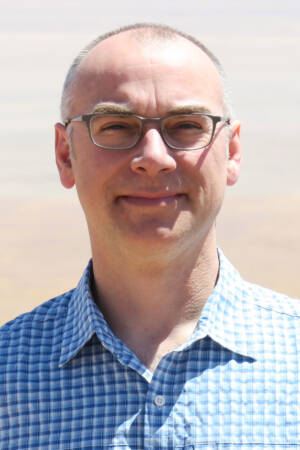
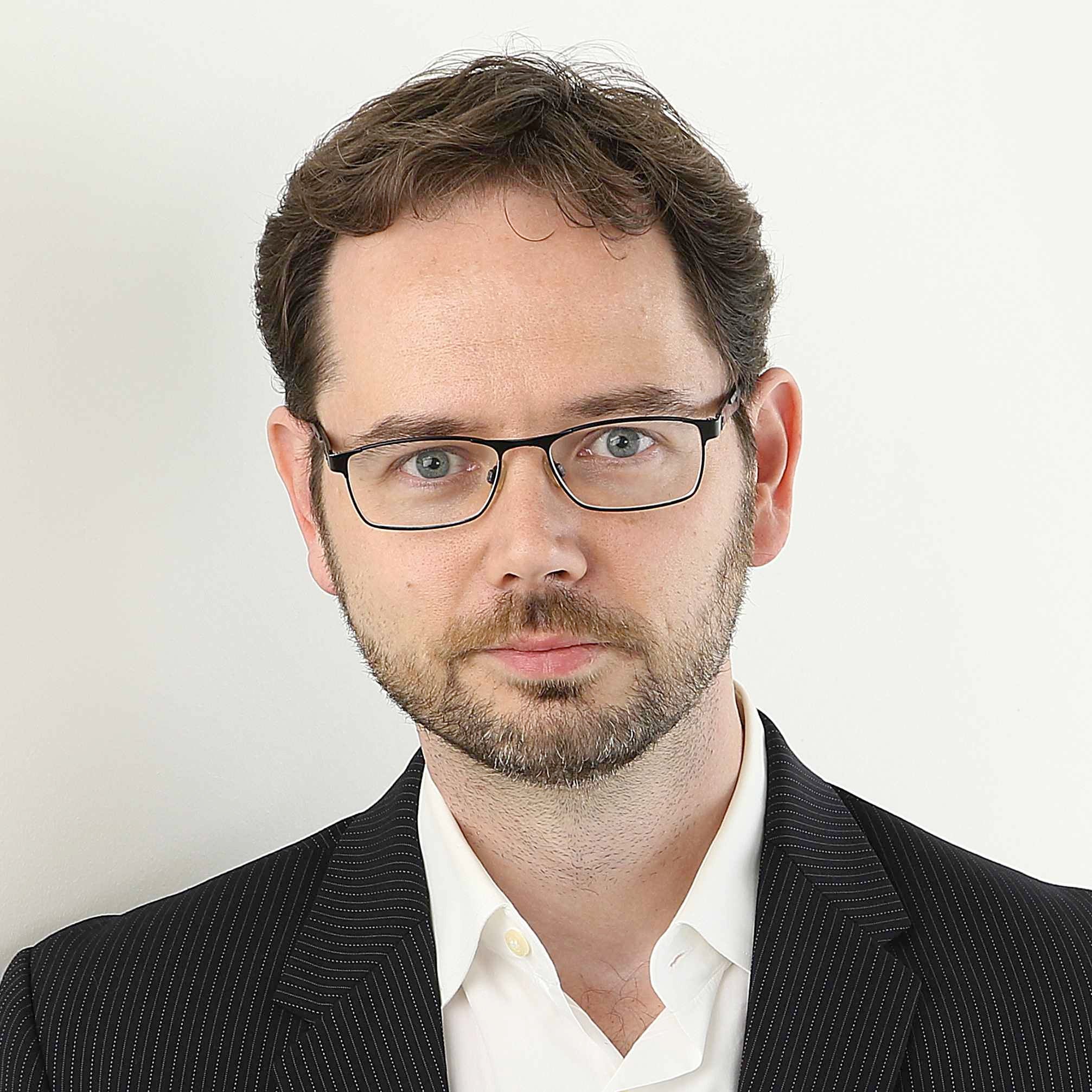
Valerie Hansen is the Stanley Woodward Professor of History at Yale University's Department of History. She specializes in Chinese history to 1600, the Silk Road, and global medieval connectivity. Her research bridges legal, religious, and economic dimensions of pre-modern societies. Hansen’s work includes groundbreaking books such as The Year 1000 (2020), redefining globalization’s origins, and The Silk Road: A New History (2012), integrating archaeological and textual sources. She led the Luce Foundation-funded Silk Road Project (1995–1998), unifying Turfan artifacts. Her articles span legal pluralism in Silk Road cities, Liao dynasty material culture, and Viking exploration’s global impacts. Awards include American Academy of Arts and Sciences Fellowship (2021) and Collège de France lectureship (2019). Hansen collaborates internationally, editing volumes on textiles as money and Song-Yuan studies. Her research emphasizes interdisciplinary methods, blending history with archaeology and art.
Kostas Daniilidis is the Ruth Yalom Stone Professor at the University of Pennsylvania in the School of Engineering and Applied Science , specifically the Department of Computer and Information Science . He is also affiliated with the GRASP Laboratory and Archimedes, Athena Research Center, Greece . Education : PhD in Computer Science (1992) from the University of Karlsruhe with Hans-Hellmut Nagel Diploma in Electrical Engineering (1986) from the National Technical University of Athens Research Interests : Kostas Daniilidis is a leading researcher in Computer Vision and Robotics , with significant contributions to event-based vision , equivariant learning , 3D human pose estimation , and hand-eye calibration . His work spans neural rendering , dynamic scene modeling , and low-latency sensing systems . Article Trends : Daniilidis’s recent publications focus on event cameras for low-light and high-speed applications, Gaussian splatting for real-time 3D reconstruction, and equivariant neural architectures for robust motion estimation. His work bridges deep learning with geometric vision , emphasizing human mesh recovery and multi-agent coordination . Scientific Awards : Best Conference Paper Award at ICRA 2017 IEEE Fellow (2012) Teaching : He has taught courses such as CIS580: Machine Perception and CIS121: Data Structures , alongside advanced topics in robotics and computer vision. Lab & Collaborations : As director of the GRASP Laboratory (2008–2013), he fostered interdisciplinary research in robotics, and currently collaborates with institutions like the Athena Research Center in Greece.
Dr. Mao Shan is a Senior Research Fellow at the Australian Centre for Robotics, part of The University of Sydney. He holds a PhD from The University of Sydney (2014) and has held research positions at Nanyang Technological University (2016-2017) and the Australian Centre for Robotics (2014-2016). His research focuses on autonomous systems, V2X communication, cooperative perception, and sensor fusion. Current students include Yaoqi HUANG, Henry LYU, Zhenxing MING, Nguyen TRAN, Tzu-yun TSENG, and Yupeng WANG. His work spans robotics, intelligent transportation systems, and control systems. Recent publications emphasize 3D object detection, cooperative perception frameworks, and autonomous navigation. He has contributed to the development of the University of Sydney Campus Dataset for robust autonomy testing and led cooperative perception projects funded by iMOVE CRC (2018). His research bridges theoretical advancements with practical applications in autonomous vehicles and multi-robot systems. Labs and affiliations include the Australian Centre for Robotics and the Intelligent Transport Systems Group. His interdisciplinary approach integrates probabilistic modeling, sensor fusion, and machine learning to address challenges in autonomous systems.
Tariq Iqbal is an Assistant Professor at the University of Virginia , with joint appointments in the Department of Systems and Information Engineering and Department of Computer Science . He leads the Collaborative Robotics Lab (CRL) , specializing in human-robot teams and embodied AI . Previously, he was a Postdoctoral Associate at MIT's CSAIL , advised by Prof. Julie Shah , and earned his Ph.D. in Computer Science from University of California San Diego (UCSD) under Prof. Laurel Riek . Ph.D. in Computer Science, University of California San Diego (2017) M.S. in Computer Science, University of Texas at El Paso (2012) B.S. in Computer Science and Engineering, Bangladesh University of Engineering and Technology (2007) His research lies at the intersection of artificial intelligence and robotics , focusing on human-robot collaboration in dynamic environments. Key areas include motion prediction , multimodal fusion , trust modeling , and collaborative learning . His work integrates cognitive science and deep learning to enhance robotic fluency in naturalistic settings. Recent publications (2023–2025) highlight advancements in human-robot team dynamics , multimodal dataset creation , and motion prediction algorithms . Notable works include Energy-Based Transformers for scalable AI, PoseTron for motion prediction, and Accessible Navigation Mapping for assistive robotics. These contributions span trust modeling , cloud robotic infrastructure , and safety in close-proximity collaboration . National Science Foundation (NSF) CAREER Award Air Force Office of Scientific Research (AFOSR) Young Investigator Program (YIP) Award Commonwealth Center for Advanced Manufacturing (CCAM) Innovation Award As faculty, he has secured grants from NSF and AFOSR , mentored research students, and taught courses like Stochastic Modeling I (SYS 6005) and Robots and Humans (SYS 4582/6465, ECE 4502/6465, CS 6465) . His prior industry roles at IBM Watson Lab and Grameenphone Ltd. inform his applied research in telecom infrastructure and cognitive robotics . He leads the Collaborative Robotics Lab (CRL) at UVA, which develops multimodal datasets , real-time coordination algorithms , and adaptive pathfinding systems . Current projects explore human motion prediction , team synchrony , and embodied question-answering , reflecting his commitment to advancing human-robot fluency and contextual AI .
Regina Ragan is a Professor in the Department of Materials Science and Engineering at the Samueli School of Engineering, University of California, Irvine. Her research focuses on nanomaterials, self-assembly, and surface-enhanced Raman scattering (SERS) for applications in optical communication, energy systems, and biomedical diagnostics. Education: Ph.D. in Applied Physics, California Institute of Technology, 2002 M.S. in Applied Physics, California Institute of Technology, 1998 B.S. in Materials Science and Engineering, University of California, Los Angeles, 1996 Her work integrates scanning probe microscopy and first-principles calculations to study thermodynamic driving forces in self-assembly and structure-function relationships. Recent publications highlight applications in antimicrobial susceptibility testing, environmental monitoring, and plasmonic device fabrication. The Ragan group develops low-cost diagnostic tools using SERS for telemedicine applications. Current lab members include graduate students and postdoctoral researchers working on nanoscale systems from atomic to mesoscale. Scientific Awards: NSF CAREER Award for fundamental studies of biological/inorganic interfaces Research Trends: Recent articles show a focus on SERS-based diagnostics, plasmonic nanoantennas, machine learning-assisted spectral analysis, and scalable synthesis of 3D graphene architectures. Subfields span quantum plasmonics, stress-activated materials, and biofilm monitoring.
John Folkesson is an Associate Professor at the Department of Robotics, Perception and Learning at KTH Royal Institute of Technology. His research focuses on mobile robotics, underwater autonomous vehicles (AUVs), and Simultaneous Localization and Mapping (SLAM), particularly addressing challenges in dynamic underwater environments. He leads the AUV group within the Swedish Maritime Robotics Centre (SMaRC2.0) and supervises multiple PhD projects, including those funded by Ocean Infinity and Vinnova. Folkesson has pioneered work on sonar-based SLAM, bathymetric mapping, and autonomous underwater navigation without human intervention. He teaches courses such as Probabilistic Graphical Models (DD2420) and Applied Estimation (EL2320). Recent projects include developing neural rendering techniques for sidescan SLAM and automatic launch systems for AUVs in collaboration with Purdue University and SAAB. His research emphasizes long-term autonomy, environmental ambiguity, and sensor data interpretation in unstructured underwater scenarios. Education: PhD in Robotics (2005, KTH Royal Institute of Technology) Recent Funding: 2024 projects include ALARS (Vinnova), WASP WARA-PS, and industrial collaborations. Research Interests Folkesson's work spans underwater robotics, SLAM algorithms, and sensor fusion. Key areas include: Underwater SLAM and sonar modeling Bathymetric reconstruction using neural networks Autonomous decision-making in AUV missions Real-time terrain modeling and localization Articles Trends Recent publications emphasize neural networks for SLAM optimization, sonar data processing, and autonomous underwater systems. Themes include real-time bathymetric mapping, sensor fusion in dynamic environments, and neural rendering techniques for improving navigation accuracy. Folkesson's work bridges theory and practice, with applications in marine robotics and industrial surveys. Advising & Grants PhD supervision: AUV perception (2024), SLAM with Ocean Infinity, event-response AUV systems. Collaborations: Purdue University, SAAB, Ocean Infinity. Course responsibilities: Over 10 advanced robotics and engineering courses at KTH. Labs & Teams Lead of SMaRC2.0, KTH's official research center for maritime robotics. Active in developing AUV systems for long-duration missions, including ice-covered and deep-sea exploration.
Maximilian Hilger is a doctoral researcher at the Chair of Perception for Intelligent Systems, part of the Munich Institute of Robotics and Machine Intelligence at Technische Universität München (TUM). He joined the chair in 2024 and specializes in radar perception for autonomous systems. M.Sc. in Automation Engineering (RWTH Aachen, 2023) Doctoral studies previously at AASS, Örebro University, Sweden His research focuses on radar-based localization, mapping, and introspection in challenging environments, with publications addressing 4D imaging radar SLAM, loop closure techniques, and sensor fusion methodologies. Recent work includes evaluating radar odometry algorithms and developing robust mapping systems using intensity-augmented normal distributions transform. Key research themes: Radar perception for autonomous systems SLAM robustness and introspection Occlusion-resistant localization Sensor fusion in dynamic environments He collaborates with team members including Prof. Achim Lilienthal, Valeria Salazar, and Thomas Wiedemann at TUM's Siemens Technology Center campus in Garching, Germany.
David Blaauw is the Kensall D. Wise Collegiate Professor of Electrical Engineering and Computer Science (EECS) at the University of Michigan. His research focuses on ultra-low-power analog/mixed-signal circuits, mm-scale sensors, neural networks, and biomedical applications. He leads the Blaauw Lab, which has pioneered innovations like the Michigan Micro Mote (M^3) and neural recording probes. His work emphasizes real-world deployability, with applications in environmental monitoring (e.g., monarch butterflies), medical devices, and robotics. Education: B.S. in Physics and Computer Science, Duke University (1986) Ph.D. in Computer Science, University of Illinois Urbana-Champaign (1991) Research Interests: Blaauw’s lab explores ultra-low-power computing, mm-scale systems, RF communication, in-memory computing, and genomics acceleration. Key projects include: Millimeter-scale computers (e.g., 0.04mm³ temperature sensors) Wireless neural interfaces for brain-machine communication Energy-efficient accelerators for edge AI and genomics Micro-robotics with sensing/actuation/computation Awards: IEEE Fellow 2016 SIA-SRC Faculty Award Motorola Innovation Award Best Paper Awards at ISSCC, ISCA, and RFIC Advising & Impact: Over 600 publications, 65 patents, and 4 startup companies spun from his lab. Current research includes genome sequencing accelerators (GenAx) and neural recording dust for brain mapping. He directs the Michigan Integrated Circuits Lab and chairs major conferences like ISSCC and DAC. Labs/Teams: Blaauw Lab (University of Michigan) Michigan Integrated Circuits Lab (MICAL)
Brad Hayes is an Associate Professor of Computer Science at the University of Colorado Boulder within the College of Engineering and Applied Science, where he directs the Collaborative AI and Robotics (CAIRO) Laboratory. He also serves as Chief Technology Officer at Circadence, leading efforts in developing AI-enabled products for cybersecurity training and assessment. Undergraduate degree from Boston College PhD in Computer Science from Yale University Postdoctoral Associate at MIT Professor Hayes' research focuses on developing techniques that enable autonomous agents and robots to learn from and collaborate with humans safely, reliably, and productively. His work occurs at the intersection of pervasive and personalized artificial intelligence, human-robot teaming, and decision support. He has made significant contributions to collaborative robotics, dependable explainable AI, and imitation learning, with applications spanning manufacturing, healthcare, disaster response, autonomous vehicles, and space exploration. His recent publications reveal a strong emphasis on human-robot interaction, with particular focus on improving predictability in collaborative tasks, developing explainable AI systems that build trust, leveraging augmented and virtual reality for enhanced collaboration, and creating more efficient learning algorithms from human demonstrations. His work increasingly integrates large language models and advanced neural network architectures while maintaining a strong human-centered design approach. Sustainability Recognition (2025) for computational efficiency in motion planning Best Student Paper Runner-up at AAMAS 2022 Nominated for Best Technical Paper at HRI 2024 Best Technical Paper Runner-up at HRI 2019 Hayes has successfully mentored numerous graduate students through the CAIRO Lab, including multiple PhD graduates in 2024 alone. His lab receives funding from various organizations supporting research in human-robot interaction and collaborative AI. He frequently collaborates with industry partners and has established connections with major technology companies through his research and speaking engagements. The CAIRO Lab, under Hayes' direction, is a vibrant research environment focused on turning theoretical concepts into practical applications through hands-on work with real robots and human participants. The lab's research spans multiple domains including manufacturing, disaster response, autonomous vehicles, and space exploration, with a consistent emphasis on safe and effective human-machine teaming.
Prof. Dr.-Ing. Christoph Stiller is a full professor at the Karlsruher Institut für Technologie (KIT) and serves as the director of the Institute of Measurement and Control Technology (Institut für Mess- und Regelungstechnik, MRT). His work focuses on autonomous driving, sensor fusion, probabilistic estimation, HD mapping, motion planning, and intelligent transportation systems. Education: Details on his academic degrees are not provided in the text, but he holds the title of Dr.-Ing. indicating a doctoral degree in engineering. Research Interests: Prof. Stiller's research spans a wide array of topics critical to the development of autonomous vehicles. His work includes: Sensor Fusion: Integrating data from LiDAR, cameras, and radar to create robust perception systems. HD Mapping & Localization: Developing high-definition maps and precise localization techniques for urban and highway environments. Motion Planning & Decision Making: Creating algorithms for safe and efficient trajectory planning under uncertainty. Machine Learning & AI: Applying deep learning and reinforcement learning to perception, prediction, and control tasks. Publication Trends: His recent publications (2023–2025) emphasize robust traffic light detection, image stitching for panoramic views, motion prediction using redundancy reduction, and safety-enhanced model predictive control. The work increasingly integrates learning-based methods with classical control and estimation theory. Scientific Awards: No specific awards are listed in the provided text. Teaching & Supervision: Prof. Stiller teaches foundational and advanced courses in measurement and control systems, probabilistic estimation, and autonomous driving. He holds regular office hours during both summer and winter semesters and is actively involved in advising students and researchers. Labs & Teams: He leads the Institute of Measurement and Control Technology (MRT) at KIT, which is engaged in cutting-edge research in autonomous systems. The institute collaborates with industry and academia on large-scale projects such as UNICARagil and various European initiatives.
Dr. Chee Kiat Seow is an Associate Professor at the University of Glasgow's School of Computing Science. He holds a PhD from Nanyang Technological University (NTU) and an MSc from the National University of Singapore (NUS). His research focuses on cyber-physical security, wireless communication localization, and IoT systems leveraging AI/ML. He has led projects valued in the millions, winning awards like the IEEE Best Student Paper and National Instruments Engineering Impact Awards. Education: PhD (NTU), MSc (NUS) Research: Specializes in UWB positioning, spoofing detection, and IoT integration with 5G/GNSS. Teaching: Courses include Big Data, Software Engineering, and Data Analytics. His recent work addresses NLOS mitigation in indoor localization and cyber-physical security threats. Over 63 publications span journals like IEEE Transactions and conferences such as IPIN and WF-IoT. Supervised 6+ PhD/MSc students on topics like autonomous robotics and AI-driven localization. Grants: Includes $853K for 5G-X Smart Building projects and $797K for GNSS signal authentication. Awards: IEEE PIERS Best Student Paper (2019), NI Engineering Impact Awards (2015-2016). He advises on IoT and cybersecurity for organizations like ARTC and National Instruments. Active in IEEE Signal Processing and Computer Society.
David Wettergreen is a Research Professor at the Robotics Institute within Carnegie Mellon University's School of Computer Science , where he has been a faculty member since 2000. He directs the PhD Program in Robotics and holds a courtesy appointment in Mechanical Engineering. His research focuses on robotic exploration systems for extreme environments, spanning planetary surfaces, underwater caves, and terrestrial deserts. Key areas include autonomous navigation , science autonomy , multi-modal perception , and resource-cognizant planning . Field validation drives his work, with deployments in the Atacama Desert, Antarctic volcanoes, and lunar analog sites. Co-founder of Mesh Robotics LLC for off-road autonomy Former Research Fellow at Australian National University Former National Research Council Research Associate at NASA Ames Research Center His 15 most recent publications (2023-2025) demonstrate expertise in autonomous path planning , machine learning applications , terrain modeling , and science-driven exploration . Collaborations span planetary science, environmental monitoring, and space systems engineering. He has advised 17 PhD and 33 MS students , many of whom now work in space exploration or field robotics, and teaches courses in Robotics Systems Engineering . Current projects include the MoonRanger lunar micro-rover and technologies for autonomous resource mapping .
Mark Crowley is an Associate Professor in the Department of Electrical and Computer Engineering at the University of Waterloo , with a cross-appointment in the Cheriton School of Computer Science . He is actively involved in the Waterloo Artificial Intelligence Institute (WAII) , the Waterloo Institute for Complexity and Innovation (WICI) , and serves as National Secretary for the Canadian Artificial Intelligence Association (CAIAC) , coordinating the Canadian Conference on AI . Research interests span the theoretical and applied aspects of Reinforcement Learning , Deep Learning , Manifold Learning , and Ensemble Methods . His work addresses challenges in domains with spatial dynamics, multi-agent systems, and uncertainty, particularly in Computational Sustainability (forest fire management, sustainable forestry), Autonomous Driving , Medical Imaging , and Material Design . Recent research focuses on integrating causal modeling with generative representation learning to improve out-of-distribution robustness in motion forecasting applications. Key publications include foundational work on ChemGymRL environments for safe chemical process reinforcement learning, Generative Causal Representation Learning for robust forecasting, and collaborative work on multi-advisor reinforcement learning in multi-agent settings. He co-authored a textbook Elements of Dimensionality Reduction and Manifold Learning (Springer, 2023) with Prof. Ali Ghodsi and Prof. Fakhri Karray. Teaching includes graduate and undergraduate courses in Algorithm Design , Computational Intelligence , Reinforcement Learning , and Data Modeling at the University of Waterloo since 2018. His research group has produced several notable graduates including Benyamin Ghojogh (2021), who continued as a postdoc until 2022.
Philippe BONNIFAIT is a Professor at the University of Technology of Compiègne (UTC) and Director of the Heudiasyc Research Lab (UMR UTC-CNRS 7253) since 2018. He specializes in robotics, autonomous vehicles, and data fusion, with a focus on localization systems and sensor integration. His research addresses challenges in intelligent transportation, fault detection, and cooperative robotics. He holds leadership roles including Head of the Autonomous Land Robotics axis in the TIRREX EQUIPEX+ project, and serves on the steering committee of the SIVALab joint lab with UTC, CNRS, and Renault. His international collaborations include Coimbra University (Portugal). Research Interests: Autonomous Vehicle Navigation Multi-Sensor Fusion GNSS-Based Positioning Decentralized Cooperative Systems Intelligent Transportation Systems Publications highlight advancements in vehicle localization, error mitigation, and sensor integration for autonomous systems. Notable work includes fault detection methodologies and HD map-aided navigation. No scientific awards listed. Active in lab administration and industry partnerships, contributing to experimental vehicles and robotics infrastructure.
Dr. Olga Vysotska is a Researcher affiliated with the Professorship for Robotic Systems at ETH Zurich's Department of Mechanical and Process Engineering. Her work focuses on advancing robotic systems through research in sensor-based navigation, SLAM (Simultaneous Localization and Mapping), and autonomous systems. She holds a doctoral degree and is based in Zurich, Switzerland. Her email is olga.vysotska@inf.ethz.ch. Research Interests: Olga's research spans robotics, computer vision, and autonomous navigation. She specializes in LiDAR-based place recognition, SLAM algorithms, and cross-modal localization using 3D scene graphs. Her work addresses challenges such as environmental changes, sensor fusion, and data association in dynamic environments like agriculture and underground exploration. Key themes include robust localization, loop closure detection, and adaptive algorithms for real-world robotic applications. Publications Overview: Olga's recent work emphasizes diffusion-based LiDAR place recognition (2025), 4D spatial-temporal mapping for agricultural robots (2023), and SceneGraphLoc for cross-modal localization (2024). Her research trends highlight innovation in sensor integration, algorithmic robustness, and practical applications in challenging environments. Earlier contributions include exploration of catacombs with mobile robots (2013) and SLAM enhancements using public map data (2017). Grants & Advising: While specific grants or student advisement details are not listed, her active publication record suggests involvement in funded research projects. Her work often collaborates with industry and academic partners to advance robotic autonomy in complex scenarios. Labs/Teams: As part of the Robotic Systems Professorship, she likely contributes to ETH Zurich's robotics labs focused on SLAM, sensor systems, and autonomous navigation. Her projects may intersect with the Department's broader initiatives in mechanical and process engineering.