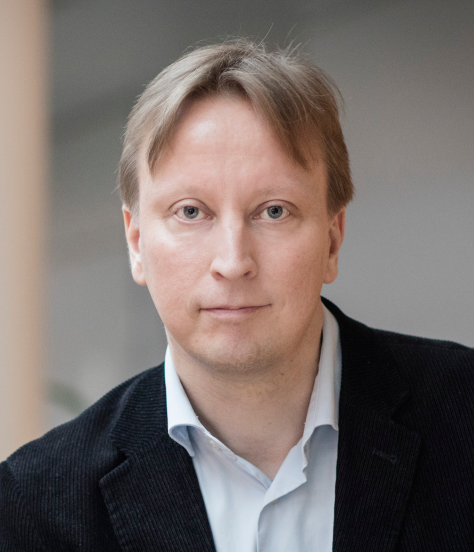
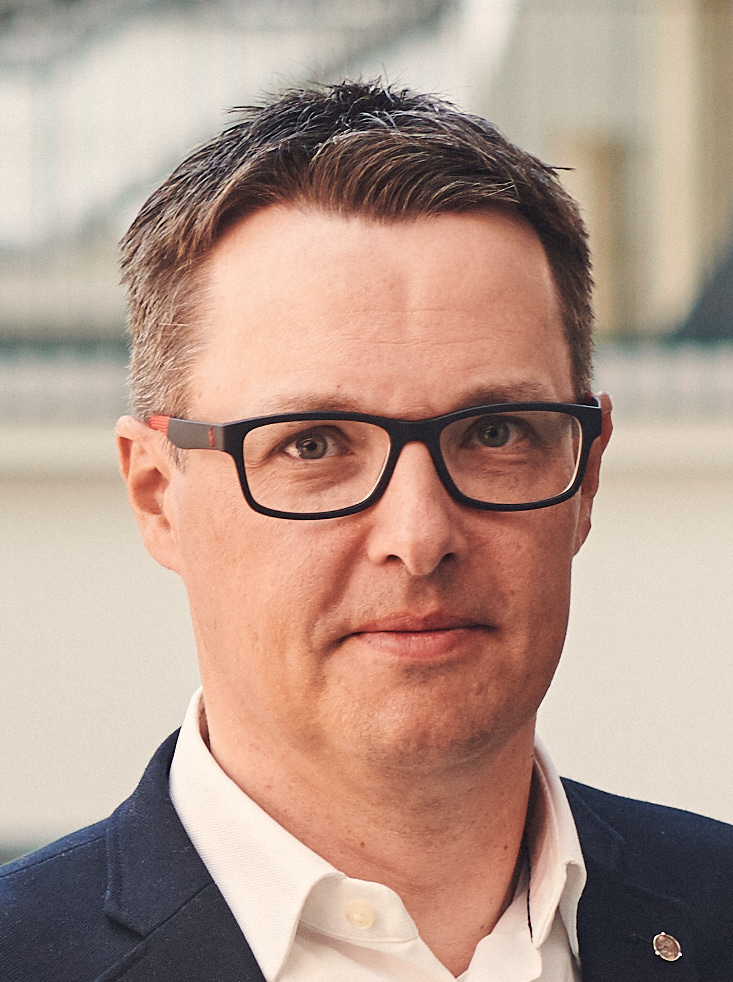
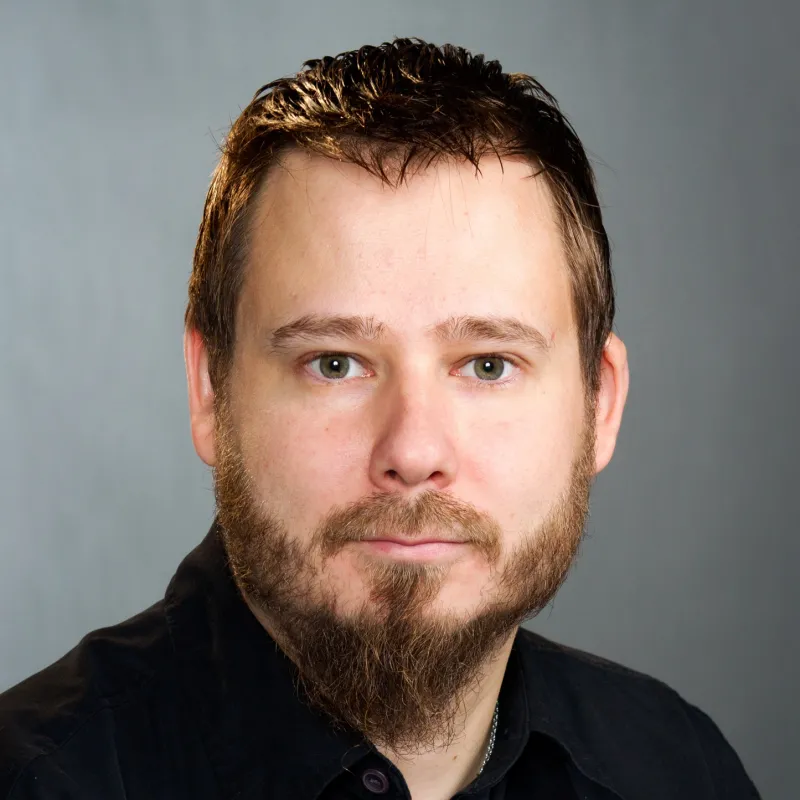
Professor Simo Särkkä holds a position in Sensor Informatics and Medical Technology at the Department of Electrical Engineering and Automation (EEA), Aalto University. His research focuses on multi-sensor data processing, Bayesian filtering, machine learning, and their applications in medical technology, brain imaging, and inverse problems. He leads research groups including the Helsinki Institute for Information Technology (HIIT) and Sensor Informatics and Medical Technology. His work bridges theoretical advancements in probabilistic methods with practical implementations in healthcare and engineering. Key research interests include Gaussian processes, stochastic differential equations, quantum machine learning, and signal processing. He has contributed to advancements in algorithms for nonlinear state-space models, parallel computing techniques, and medical imaging technologies such as scatter correction in CT scans. His methodologies are applied across domains like autonomous systems, robotics, and bioengineering. Notable publications span topics like quantum-assisted Gaussian regression, physics-informed machine learning for industrial processes, and parallel-in-time numerical methods. His work emphasizes computational efficiency and robustness in high-dimensional and real-time systems.
Aapo Hyvärinen is a Professor of Computer Science at the University of Helsinki , affiliated with the Helsinki Institute for Information Technology and the Helsinki Probabilistic Machine Learning Lab . He previously held the position of Professor of Machine Learning at the Gatsby Computational Neuroscience Unit, University College London (2016-2019). Education : Undergraduate Mathematics at University of Helsinki, Vienna, and Paris; Ph.D. in Information Science from Helsinki University of Technology (1997) His research focuses on machine learning and computational neuroscience , particularly: Independent Component Analysis (ICA) Natural Image Statistics Causal Representation Learning Neural Signal Processing Applications to brain imaging (MEG, CryoEM) Recent publications emphasize causal discovery , identifiable machine learning , and nonlinear ICA . Key projects include: VETURI (AI for health) DIGIMIND (AI in mental health) CIFAR grants (2022-2025) Scientific awards : Highly Cited Researcher (2010) He serves as Action Editor for the Journal of Machine Learning Research and Neural Computation , and has held Area Chair roles at NeurIPS, ICML, ICLR, AISTATS, and UAI conferences. His work bridges theoretical machine learning with neuroscience and philosophical implications of artificial intelligence .
Olav Tirkkonen serves as a Full Professor in the Department of Communications and Networking at Aalto University, Finland, a position he has held since August 2006. He leads the Communication Theory research group, driving innovation in wireless communication systems. His academic journey includes a distinguished career spanning industry and academia, with significant contributions to 3G, 4G, and 5G technologies. His educational qualifications are: Doctor of Science (Ph.D.) in Theoretical Physics, Helsinki University of Technology, 1994 Master of Science (M.Sc.) in Theoretical Physics, Helsinki University of Technology, 1990 Professor Tirkkonen's research interests are centered on wireless communications, with a focus on physical layer processing, coding theory, and quantum information processing. His group explores advanced topics including 5G and beyond wireless networks (spectrum management, large-scale MIMO, ultra-reliable low-latency communication), network-level interference coordination, collaborative caching, machine learning applications for wireless channel geography, coding on manifolds, and quantum communication systems. This research bridges fundamental theory with practical implementation in next-generation wireless networks. Analysis of his recent publications (2024-2025) indicates a predominant focus on machine learning techniques for wireless channel modeling (channel charting), pilot allocation in MIMO systems, and quantum error correction. His work is instrumental in addressing key challenges in 5G/6G networks, particularly in scenarios demanding ultra-reliability, low latency, and efficient resource utilization. His scientific contributions include: Co-inventor of approximately 80 families of patents and patent applications Co-author of the book "Multiantenna transceiver techniques for 3G and beyond" Throughout his career, Professor Tirkkonen has mentored numerous graduate students and secured substantial research funding from various sources. His industry experience at Nokia Research Center (1999-2010) and visiting position at Cornell University (2016-2017) have enriched his research perspective and fostered strong industry-academia collaborations. The Communication Theory group, under his leadership, maintains active collaborations with leading institutions and companies worldwide, positioning Aalto University at the forefront of wireless communications research.
Mikko Valkama is a Professor at the Department of Communications Engineering , part of the Faculty of Information Technology and Communication Sciences at Tampere University . His research focuses on advanced wireless communication systems, positioning technologies, and integrated sensing and communication (ISAC). He holds an Orcid ID ( 0000-0003-0361-0800 ) and can be reached at mikko.valkama@tuni.fi . Research interests span 5G/6G networks , RF antenna design , deep learning for signal processing , and millimeter-wave systems . He leads projects on positioning algorithms (e.g., mmWave SLAM, NLOS mitigation), ISAC architectures, and hardware-efficient transmitter linearization. Notable contributions include works on DECT-2020 NR standards, phase-based localization, and RIS-assisted systems. In 2025 alone, his group published over 30 articles on topics such as: Antenna array design for Ka-band and wideband applications Machine learning for power amplifier predistortion Bistatic radio SLAM and mmWave mapping Covert transmission and physical-layer security His work bridges theoretical advancements with practical implementations, often validated through experimental setups (e.g., TUJI1 dataset for indoor localization). No scientific awards were explicitly listed in the provided texts.
Jari Puttonen is a Professor of Structural Engineering at Aalto University's Department of Civil Engineering, School of Engineering. His research focuses on structural analysis, fire safety, materials science, and nuclear infrastructure safety. He has held roles as Principal Investigator in projects related to nuclear waste repository concrete modeling and aging management of NPP infrastructure. He has advised over 20 academic visitors and served in doctoral thesis committees. Education: Doctoral degree (1987), Licentiate (1984), and Master's degree (1979) in Engineering and Technology from Helsinki University of Technology (now part of Aalto University). Research Interests: Steel and composite materials behavior under extreme conditions Fire resistance of structural systems Long-term performance of concrete in nuclear facilities Non-destructive testing of construction materials Seismic resilience of critical infrastructure Awards: Recipient of the Knight, First Class of the Order of the White Rose of Finland (2020), PUUPalkinto 2010, and Schweighofer Prize 2011 for innovative energy facade research. Grants & Projects: Led 13 research projects including PERCO2_2023 (nuclear waste repository modeling) and CONAGE2022 (NPP concrete aging). Active in EU-funded initiatives and industry collaborations. Labs & Teams: Core member of Aalto's Structural Engineering Research Group, collaborating with Chalmers University and Technical University of Munich on advanced materials testing.
Jukka Manner is a Full Professor (tenured) of Networking Technology at Aalto University's Department of Communications and Networking (Comnet), School of Electrical Engineering. With a career spanning over two decades in internet technologies, he leads research in networking, wireless systems, and energy-efficient ICT solutions. Dr. Manner received his MSc (1999) and PhD (2004) degrees in computer science from the University of Helsinki. His academic journey has been marked by significant contributions to internet standardization through the IETF since 1999, where he served as co-chair of the NSIS working group. Professor Manner's research focuses on networking, software and distributed systems, with particular emphasis on wireless and mobile networks, transport protocols, energy efficient ICT and cyber security. His work bridges theoretical advancements with practical applications, addressing critical challenges in modern communication systems, sustainable networking practices, and security frameworks. His research group has made significant contributions to 5G technologies, UAV communications, and energy-efficient network design. His extensive publication record shows a clear evolution toward sustainability in networking technologies, with recent work focusing on energy efficiency in 5G systems, sustainable web technologies, and the environmental impact of digital infrastructure. The research demonstrates strong interdisciplinary connections between telecommunications engineering, computer science, and environmental science, with particular emphasis on reducing the carbon footprint of digital systems while maintaining performance. Cross of Merit, Signals (2014) Medal for Military Merits for contributions in national defence and C4 (2015) Professor Manner has supervised over 200 MSc theses and more than 20 doctoral dissertations, establishing himself as a dedicated mentor in the field. He has been principal investigator and project manager for over 15 national and international research projects, including serving as Academic Coordinator for the Finnish Future Internet research programme (2008-2012). His leadership extends to conference organization, having served as local co-chair of Sigcomm 2012 in Helsinki, and active participation as a peer reviewer and member of various Technical Program Committees. As an active contributor to internet standardization through the IETF, Professor Manner's work has practical impact on global networking technologies. His research group maintains strong connections with industry partners and participates in shaping future networking standards and practices, particularly in the areas of sustainable networking, 5G evolution, and security frameworks for emerging technologies.
Yu Xiao is an Associate Professor at the Department of Information and Communications Engineering, Aalto University, specializing in edge computing, extended reality (XR), wearable computing, and crowdsensing. Their research contributes to the UN Sustainable Development Goals, particularly in education and technology innovation. Active in mobile cloud computing and decentralized systems Principal Investigator in EU-funded projects (EMIL, TUTL) Expert in 5G networks, autonomous systems, and human activity recognition Yu Xiao's work spans interdisciplinary domains, including healthcare (cardiovascular resuscitation devices) and urban mobility (autonomous vehicle interactions). They have received multiple awards, including Best Paper Awards and Nokia Foundation Scholarships. Focus on low-latency communication and multiagent reinforcement learning Developed frameworks like FediLive for decentralized social networks Contributed to 128+ publications and software tools Recent collaborations include institutions like Pontificia Universidad Católica de Chile and participation in IEEE committees. Their research integrates blockchain for secure IoT communication and advanced AR applications.
Robert Piche is a Professor at the Computing Sciences Mathematics Research Centre, specializing in advanced signal processing, positioning systems, and sensor fusion. He holds a Doctor of Science (Technology) and Master of Science from the University of Waterloo, Canada (1986 and 1982, respectively). His research focuses on Kalman filters, Global Positioning Systems (GPS), particle filters, and indoor positioning technologies. He has contributed extensively to fields like satellite orbit prediction, non-line-of-sight (NLoS) positioning, and machine learning applications in biomechanics and robotics. Dr. Piche has authored over 230 publications and received recognition through an invitation/ranking in a 2014 competition. He actively participates in academic activities, including conference presentations and peer-review roles. His work bridges theoretical advancements and practical applications, with contributions to autonomous systems, sensor data analysis, and wearable technology. Collaborations span international institutions, reflecting his global impact in engineering and computer science disciplines.
Esa Rahtu is a Professor in the Department of Computer Science at Aalto University, Finland. His research focuses on computer vision, machine learning, and deep learning applications. He leads projects in image coding, neural networks, 3D reconstruction, object pose estimation, and anomaly detection. Rahtu has contributed to over 98 research outputs since 2017, with recent work emphasizing Gaussian splatting for SLAM, neural radiance fields, and hybrid video codecs for human-machine compatibility. His expertise spans visual-inertial odometry (e.g., ADVIO dataset), LiDAR-based place recognition, and manufacturing quality control systems. Key areas include: 3D scene reconstruction using Gaussian splatting techniques Deep learning models for anomaly detection in industrial processes Hybrid video codecs optimizing human perception and machine processing Multi-sensor fusion for robotic navigation and indoor mapping Notable datasets include ADVIO for visual-inertial odometry and FIORD for 3D reconstruction benchmarking. His research aligns with UN SDG 9 (Industry, Innovation & Infrastructure) and SDG 4 (Quality Education) through advancements in smart manufacturing and educational technology. Rahtu has received continuous research funding, including a grant period from April to June 2018. His work emphasizes practical applications, collaborating on real-world challenges like paper manufacturing quality control and smartphone-based 3D reconstruction.
Prof. Vesa Välimäki is an Audio Signal Processing Professor at Aalto University's School of Electrical Engineering, leading the Audio Signal Processing Research Group within the Aalto Acoustics Lab. He also serves as Vice Dean for Research and Head of the Doctoral Programme at the university. His research focuses on digital signal processing, machine learning, and their applications in audio, acoustics, and music technology, particularly in artificial reverberation, audio filter design, and virtual analog modeling. He has pioneered techniques like velvet noise for reverberation synthesis and contributed to open-source tools like FLAMO. His academic accolades include IEEE, AES, and AAIA Fellowships, along with multiple best paper awards at venues like DAFx and ICASSP. He has advised numerous students, including recipients of prestigious awards like the Huawei Master's Thesis Award. Prof. Välimäki has held editorial roles at the Journal of the Audio Engineering Society and organized major conferences such as SMC-17. His work extends to applied projects like acoustic optimization for early childhood education facilities and immersive audio in virtual reality (e.g., the 'Space Walk' project). Key Projects: NordicSMC (Nordic University Hub for Sound and Music Computing), Aalto Acoustics Lab, FLAMO library Grants: NordForsk funding (2018–2023), Foundation for Aalto University Science and Technology His research spans both theoretical advancements (e.g., diffusion models for audio restoration) and practical implementations (e.g., real-time equalizers, headphone compensation systems). He collaborates internationally, contributing to acoustic measurement techniques and noise reduction strategies for diverse environments.
Tarmo Lipping is a Professor in the Department of Computer Science and Engineering at the Faculty of Information Technology and Electrical Engineering, University of Oulu. His work bridges computing sciences with biomedical engineering, environmental modelling, and data-driven societal applications. Doctor of Science (Technology), Information Technology – Awarded 14 Feb 2001 Master of Science (Technology), Information Technology – Awarded 10 Sept 1993 His research focuses on electroencephalography (EEG) , mental workload assessment , depth of anesthesia monitoring , and machine learning applications in healthcare and human-computer interaction. He also contributes to environmental informatics , particularly in land uplift modelling and radionuclide transport , aligning with UN Sustainable Development Goals. Recent publications highlight trends in transformer networks for EEG analysis , wearable HCI systems , data-driven food safety , and participatory municipal governance . His work integrates deep learning, signal processing, and real-world deployment. Scientific awards include: CIMO opettajavaihto (2017) Lipping has supervised numerous master’s students and served as an examiner in diverse topics including data vault modelling , telecom revenue estimation , and EEG hyperscanning . He has evaluated funding applications, acted as a journal reviewer (65 times), and contributed to editorial work. His activities reflect strong engagement in academic service and interdisciplinary research mentorship. He has contributed datasets on Fennoscandian land uplift , lake isolation , and archaeological shorelines to PANGAEA, supporting open science in geosciences and environmental history.
Henrikki Tenkanen is an Assistant Professor in the Department of Built Environment at Aalto University, specializing in Geoinformatics. His research focuses on geospatial analysis, urban planning, transportation accessibility, and open data applications for sustainable development. His primary research interests include Geospatial Analysis , Urban Planning , Transportation Accessibility , and Population Dynamics . Tenkanen's work integrates mobile phone data, social media, and open geospatial sources to understand urban environments, accessibility patterns, and carbon emissions. His research contributes significantly to UN Sustainable Development Goals related to sustainable cities and communities. Tenkanen's recent publications demonstrate strong trends in high-resolution spatial analysis of urban environments, with particular emphasis on transport equity , carbon emissions mapping , and rural population representation . His work combines advanced geocomputing techniques with practical urban planning applications, often developing open-source tools to enhance reproducibility and accessibility of geospatial research. As an active member of the academic community, Tenkanen serves as a peer reviewer for journals including Big Data & Society and Environment and Planning B, and participates in conference committees such as the International Conference on Location Based Services. His research has garnered significant attention, with multiple publications featured in news outlets and academic platforms. Tenkanen leads several major research projects including Geo-R2LLM (developing geographic large language models), Geoportti (open geospatial infrastructure), MAPICO (mapping commute-related carbon emissions), and LIH: Location Innovation Hub. His work bridges academic research with practical applications for urban planning and sustainable mobility.
Samuli Honkapuro is a tenured Professor of Energy Markets and Energy Systems at LUT University's School of Energy Systems in Lappeenranta, Finland. He leads the Laboratory of Electricity Markets and Power Systems and heads the LUT Doctoral Programme in Energy Systems. Honkapuro holds a D.Sc. (tech) from LUT University (2008) and has focused his career on advancing energy systems research and education. His research emphasizes electricity market design, integration of distributed energy resources, demand side management, and energy communities. Key themes include socio-technical challenges in renewable energy adoption, consumer behavior in demand response programs, and policy frameworks for decarbonization. He explores topics like grid flexibility, prosumer economics in mini-grids, and the socio-economic impacts of rural electrification. Notable contributions include methodologies for rural electrification feasibility, agent-based modeling of consumer enrollment in demand response, and analysis of battery storage bottlenecks. His work bridges technical innovation with societal needs, addressing both Nordic and global energy challenges. Current projects involve energy communities in agriculture, vehicle-to-grid (V2G) systems, and smart charging infrastructure. As a lab and doctoral program leader, Honkapuro fosters interdisciplinary collaboration between academia, industry, and policymakers to accelerate sustainable energy transitions. His research often combines quantitative analysis with stakeholder-driven approaches to ensure practical applicability.
Daolang Huang is a Doctoral Researcher and Student in the Department of Computer Science at the School of Science, affiliated with Professor Samuel Kaski's group. He holds a Bachelor's degree in Engineering and Technology from Jinan University (2020). His research focuses on advanced machine learning techniques, including Bayesian inference, robust statistical modeling, and simulation-based methods. Key areas include experimental design optimization, neural processes, and equivariance in deep learning. Recent work emphasizes decision-aware algorithms and cost-effective simulation frameworks. Huang has collaborated internationally, with publications in top venues like NeurIPS. Despite no listed awards, his work demonstrates significant contributions to probabilistic modeling and optimization. Education : Bachelor's degree in Engineering and Technology, Jinan University (2020) Research Interests : Bayesian methods and amortized inference Robust statistics under model misspecification Continuous control and neural process architectures Optimization algorithms with decision-theoretic foundations Recent Research Trends : His articles (2020–2025) emphasize Bayesian experimental design, preference-based optimization, and equivariant neural networks. Themes include balancing statistical rigor with computational efficiency, particularly in high-dimensional decision-making contexts. Labs/Teams : Active member of Samuel Kaski’s research group, focusing on interdisciplinary applications of machine learning.
Pauli Mustalahti is a Research Fellow at Tampere University's Automation Technology and Mechanical Engineering department. His expertise lies in advanced control systems for heavy-duty robotic manipulators, hydraulic systems, and model-based control design. Mustalahti holds a Master of Science (Technology) in Automation Engineering from Tampere University (2016) and a Bachelor of Science (Technology) in the same field (2013). His research focuses on optimizing automated operations for industrial manipulators through innovative control strategies, including bilevel optimization frameworks, vision-aided positioning, and robust safety-constrained systems. Key contributions include improving long-reach manipulator accuracy via local calibration and enhancing electric linear actuator performance with safety protocols. Research interests: Robotics, Hydraulic Systems, Model-Based Control, Industrial Automation Notable achievements: Doctoral thesis on modular model-based control design for heavy-duty manipulators (2023) Collaborations: Global Fluid Power Society, IEEE, and international researchers in automation Mustalahti's work aligns with UN Sustainable Development Goals related to Industry, Innovation, and Infrastructure. His publications span peer-reviewed journals like IEEE Transactions on Automation Science and Engineering and conferences such as PEMC, addressing challenges in actuator safety, real-time control, and energy efficiency.