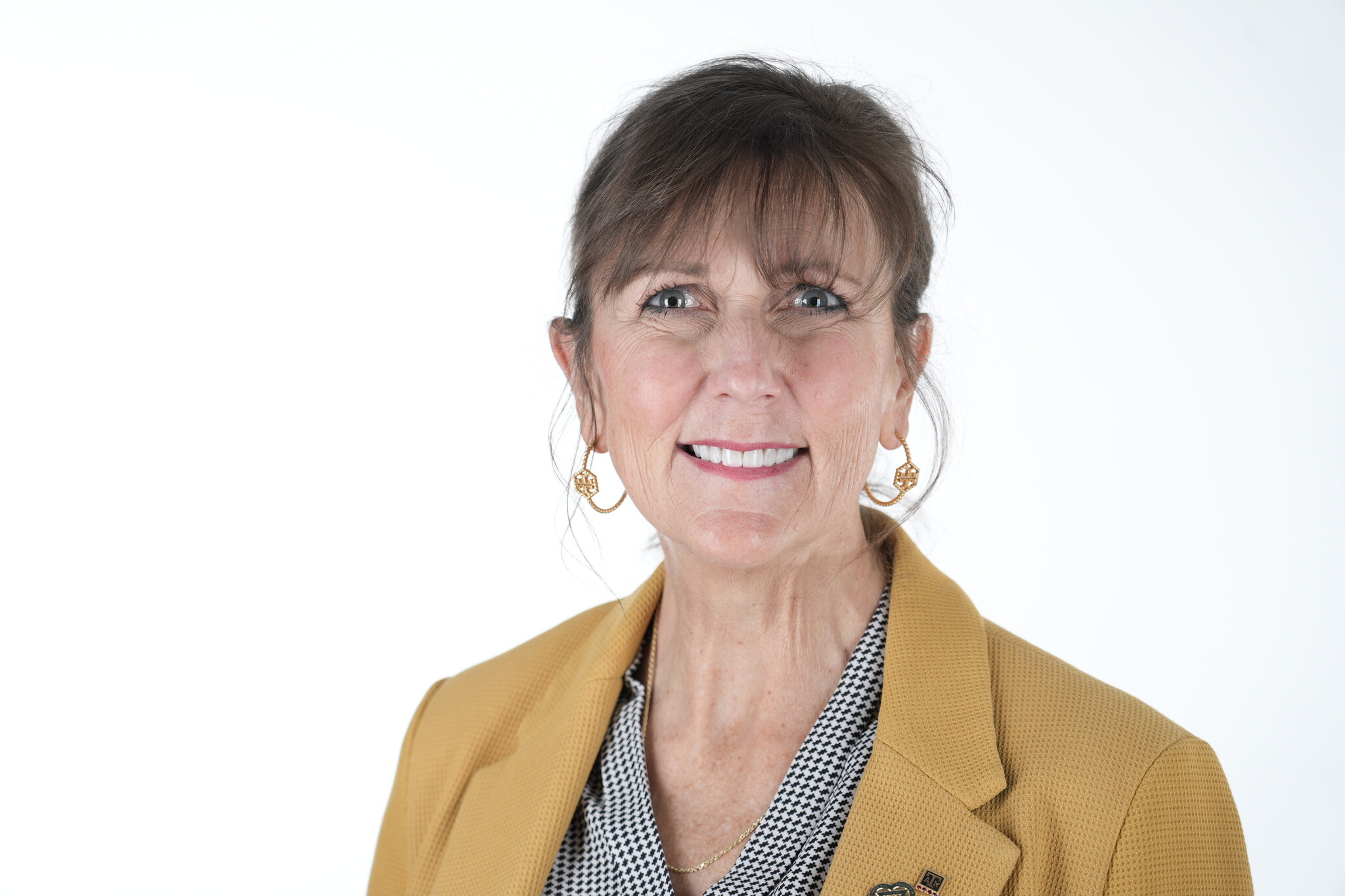
Elisa Beth McNeill is a Teaching Professor in the Department of Health Behavior at the School of Public Health, Texas A&M University, with over 40 years of teaching experience spanning middle school to university levels. Her expertise includes adolescent health, health pedagogy, and population health promotion. PhD in Health Education (2010) MS in Educational Administration (1989) BS in Health Education (1985) Her research focuses on adolescent health, sexuality education, and curriculum innovation. Recent work explores mental health outcomes for males with intellectual disabilities, game-based learning tools, and teen pregnancy prevention programs. Her publications emphasize mental health, sexuality education standards, and health equity. She co-authored the textbook Health Education: Creating Strategies for School and Community Health . Emma Gibbons Legacy Award (2018) Health Division Teach of the Year (2005, 2009, 2013) Distinguished Achievement Award (2009) Fish Camp Namesake (2023) Dr. McNeill contributes to national organizations like the American School Health Association and serves on local boards. She holds certifications in Mental Health First Aid and Effective College Instruction.
Dr. Alina Brad is a Senior Scientist and Deputy Head at the Department of Political Science, University of Vienna, with a focus on international climate and environmental policy, carbon dioxide removal technologies, decarbonization, and political ecology. She contributes to socio-ecological transformation research and serves as a Coordinating Lead Author for the 2nd Austrian Assessment Report on Climate Change (AAR2). Institution: University of Vienna, Department of Political Science Projects: FWF Elise Richter Programme (2023–2027), FOCAL-points (2022–2026), APCC Climate Change Reports Education: PhD in Political Science (University of Vienna, 2011), Diploma in Political Science (University of Vienna) Her research bridges political ecology, climate governance, and demand-side mitigation policies, analyzing structural challenges in decarbonization and transnational environmental conflicts. Recent work addresses carbon management tensions in Austria, EU climate target negotiations, and household GHG footprint inequalities. Scientific contributions span critical evaluations of carbon certification practices, socio-ecological conflicts in Indonesia, and debates on degrowth versus post-extractivism. She collaborates with institutions like the Austrian Academy of Sciences and Leibniz Institute for Regional Development. Awards: FWF Elise Richter Programme Grant, Austrian Academy of Sciences Fellowships Memberships: Editorial Board of Journal for Development Policy, Austrian Society for Political Science, Association for Critical Society Research
Rebecca Harris is a Professor of Politics at Washington and Lee University, where she teaches in the Williams School of Commerce, Economics, and Politics. She specializes in food policy, farm policy, and public policy, bringing a unique dual perspective as both an academic scholar and a commercial farmer operating in the Shenandoah Valley. Her research focuses on the intersection of politics and agriculture, with particular attention to how partisan dynamics shape food and farming policies in America. Harris examines historical and contemporary relationships between political parties and agricultural policy, challenging common assumptions about which party supports farmers and why. Her primary research interests include: Food policy and politics US farm subsidies and agricultural economics Partisan approaches to food security and safety Environmental regulations affecting farmers Policy implementation at the local level Agricultural risk management Harris has published significant scholarly work, most notably her book "Party Food: A Partisan History of Food & Farming in America" (2021), which examines how Democratic and Republican approaches to food policy have evolved throughout American history. Her research reveals that Democrats have historically supported farm subsidies as social welfare policy, while Republicans have often preferred market-based solutions despite being perceived as the "farmer's party." She is currently working on a follow-up book titled "Barnstorming" that explores changing political attitudes toward American agriculture. Harris has participated in congressional farm bill field hearings, including one hosted by Ranking Member Thomas in Rockbridge County, Virginia, in October 2021. Her teaching portfolio includes courses on public policy, environmental policy, and a specialized Spring Term course on food policy, where she connects theoretical frameworks with practical farming experiences from the Shenandoah region. She aims to help students understand how government policies translate to real-world impacts on individual lives.
Sarah Holst Kjaer is an Associate Professor at Stockholm University's Department of Ethnology, History of Religions and Gender Studies, where she bridges academic research with practical applications in tourism and cultural industries. With a PhD completed in 2009, her career spans over 15 years of scholarly contribution and industry collaboration. Her research focuses on two interconnected domains: Scandinavian family-folklore examining how families create local culture and relationship narratives through everyday practices Tourism studies specializing in culture-based innovation and experience economy concepts Dr. Kjaer has developed expertise in transforming everyday environments into extraordinary experiences, with recent emphasis on staycation phenomena. Her work combines ethnographic methods with action research to create social and economic sustainability in communities through cultural expressions. Her publications reveal consistent scholarly output with themes spanning romantic relationships, museum development, experience design, and tourism industry adaptation. The research demonstrates a trajectory from theoretical analysis toward practical implementation, particularly in Scandinavian tourism contexts. Dr. Kjaer maintains a visible public profile through media appearances where she translates academic insights about romantic relationships for general audiences, including serving as a love expert on Danish Broadcasting's reality shows reaching over 150,000 viewers. At Stockholm University, she teaches European ethnology, urban studies, museum studies, and folklore studies to both Swedish and international students, while also developing executive-level courses for industry professionals.
Dr. Elina Varoutsa is a Senior Lecturer in Accounting at Cardiff Business School , Cardiff University, since 2014. Previously, she was a Lecturer at Surrey Business School. Her academic journey includes a PhD in Management Accounting (University of Manchester), MSc in Accounting and Finance (University of Manchester), and BSc in Business Administration (Athens University of Economics and Business). She is a Fellow of the Higher Education Academy (FHEA). Current Roles: Senior Lecturer, Admissions Tutor (Accounting & Finance postgraduate programs), Year 1 Exam Board Chair, Trustee & Honorary Treasurer (Management Control Association). Research Interests span interdisciplinary studies connecting management accounting with sociology and marketing, focusing on: Public value and social impact in organizational accounting Employee diversity and racial accountability in NHS Risk management frameworks in financial sectors Management control systems across industries Charity impact measurement practices Scientific Awards UKRI Creating Opportunities through Local Innovation Fellowship (COLIF) as Principal Investigator (2025) Teaching includes undergraduate modules like Foundations of Business Accounting, postgraduate courses in Advanced Management Accounting, and MBA-level Financial Analysis and Control. She contributes to curriculum design and academic governance.
Melanie Nagel is a political scientist affiliated with the University of Tübingen and Heidelberg University , focusing on environmental policy. She leads the ICAWaR research project at the Geo- and Environmental Research Center (GUZ) and coordinates carbon emission initiatives for local climate action. Doctorate : University of Konstanz (2014) Habilitation : University of Tübingen (2023) Her research spans climate policy networks , air pollution control , water management , and agricultural sustainability . She employs social network analysis to decode governance dynamics in urban and local climate action. Current projects include analyzing biodiversity strategies and transformative climate policies in German and international contexts. Recent publications highlight trends in environmental governance , urban climate resilience , and policy network effects . Her work appears in journals like Journal of Environmental Management , Npj Climate Action , and Review of Policy Research . Melanie Nagel collaborates with institutions such as the University of Arizona, IBEI in Barcelona, and the international COMPON network. She teaches social network analysis at the POLNET Methods School and has held visiting positions in Germany, Europe, and the U.S.
Adell L. Amos serves as the Clayton R. Hess Professor of Law at the University of Oregon School of Law and Executive Director for the UO Environment Initiative. She teaches in the nationally ranked Environmental and Natural Resources Law Program, specializing in Water Law, Federal Administrative Law, and Environmental Conflict Resolution. Her work bridges legal scholarship with practical water policy development across federal, state, and local levels. Her educational background includes a B.A. from Drury College (1995) and a J.D. from the University of Oregon (1998, Order of the Coif). She clerked for the Ninth Circuit Court of Appeals and practiced environmental law with the U.S. Department of Interior before joining academia. Amos' research centers on water governance structures, examining federal-state jurisdictional dynamics, administrative agency roles in water policy, and stakeholder participation in decision-making. Her interdisciplinary approach integrates hydrologic and socioeconomic modeling to address climate change impacts on water systems, with particular focus on the Willamette River Basin and western U.S. water conflicts. Her extensive publication record reveals consistent interdisciplinary trends, merging legal analysis with hydrological science and policy modeling. Recent work emphasizes drought management in human-natural systems, groundwater-dependent ecosystem protection, and the integration of law into regional water models. These publications demonstrate growing emphasis on climate resilience, transboundary water governance, and innovative conservation mechanisms within western U.S. water frameworks. Clayton R. Hess Professor of Law (2015) UO Faculty Fund for Excellence Award (2013) Orlando J. Hollis Teaching Award (2009) Wayne Morse Center Resident Scholar (2009-2010) Dean’s Distinguished Faculty Fellow (2013) Amos has secured major research funding from the National Science Foundation, NOAA Fisheries, U.S. Department of Energy, and Natural Resources Defense Council for projects like the Willamette Water 2100 initiative. As Executive Director of the Environment Initiative, she leads campus-wide sustainability efforts while maintaining active roles in national policy discussions through the Hewlett Foundation's Open Rivers Fund and frequent engagements with federal agencies and judicial bodies. She directs the Environment Initiative's interdisciplinary research teams and collaborates with institutions including Oregon State University on water resources policy. Her leadership extends to the Willamette Water 2100 project, a multi-institutional effort modeling hydrologic and socioeconomic interactions in the basin.
Philip J. Barnes is an Assistant Professor at the Joseph R. Biden, Jr. School of Public Policy and Administration and Lead Policy Scientist at the Institute for Public Administration (IPA) at the University of Delaware. He specializes in local climate change adaptation, municipal planning, and sustainable development. His work focuses on flooding and sea level rise mitigation, non-traditional transportation systems (e.g., bikeshare, electric vehicles), and smart cities. Barnes holds a Ph.D. in Urban Affairs and Public Policy (University of Delaware, 2015), an MScEng in Structural Engineering (University of Michigan, 2003), and a BScEng in Civil and Environmental Engineering (University of Michigan, 2002). His research emphasizes community resilience, policy implementation, and justice/equity in urban contexts. He has extensive experience in roles ranging from postdoctoral research to leadership in policy science at IPA, alongside teaching courses such as Planning Sustainable Communities and Washington, D.C. Policy Practicum . Barnes collaborates with municipalities and state agencies to design actionable climate adaptation strategies and evaluates emerging transportation technologies' societal impacts. No scientific awards are explicitly listed in the provided text. His professional trajectory includes international work as a structural engineer in Ireland, a teacher in France and Burkina Faso, and research in Ghana. He is affiliated with the SNF Ithaca Initiative and contributes to initiatives like the Delaware Center for Civics Education and the Water Resources Center.
Timothy J. Shaffer is the inaugural Stavros Niarchos Foundation (SNF) Chair of Civil Discourse and Director of the SNF Ithaca Initiative at the Joseph R. Biden, Jr. School of Public Policy and Administration, University of Delaware. He holds joint appointments in the Department of Communication and School of Education, and serves as Senior Faculty Fellow with the Institute for Public Administration (IPA). Shaffer also directs Civic Engagement and Deliberative Democracy at the National Institute for Civil Discourse (University of Arizona) and co-directs the Deliberative Pedagogy Lab. PhD, Education, Cornell University (2014) MPA, University of Dayton (2008) MA, Theological Studies, University of Dayton (2006) BA, Theology, St. Bonaventure University (2004) Shaffer's research bridges deliberative democracy , civic engagement , and public administration , with a focus on how civic professionals facilitate democratic processes in institutions like local governments and NGOs. His work explores civic education , small group communication , and equity-driven policy , particularly in higher education and community development contexts. Recent publications analyze technological impacts on democratic discourse , pedagogical innovations , and grassroots social justice frameworks . Shaffer's awards include the Early Career Recognition Award (IARSLCE), National Team Excellence in Extension Award , and 2021 National Extension Award for Diversity . He mentors the SNF Ithaca Student Leaders and coordinates national dialogues across 15 universities.
Afsaneh Moradi is a Lecturer at the Department of Organization, Strategy, and Entrepreneurship (OSE) within the School of Business and Economics (SBE) at Maastricht University. She holds a Ph.D. in Business Economics and Management, focusing on public sector management. Her professional background includes roles as a project manager, business consultant, and management consultant in industrial engineering projects. Her research interests span Entrepreneurship, Public Sector Consultancy, Innovation, Sustainability Studies, and Climate Coaching. She is an approved assessor for Entrepreneurship projects in the EU certified professional system and a member of Climate-KIC's Network of Coaches and Trainers, part of the EIT-European Institute of Innovation & Technology. Her recent publications explore themes such as service innovation in SMEs, ridesharing adoption in Iran, low-carbon mobility transitions, and sustainable urban planning. These works reflect her interdisciplinary focus on bridging theory and practice in business management and sustainability. Moradi contributes to academic and policy discussions through her expertise in innovation systems, climate policy, and organizational strategies. She actively engages with industry and governmental stakeholders to advance sustainable development goals.
Komal Aryal is a Research Fellow in Disaster Risk Governance at the University of Salford's THINKlab. With over 17 years of experience, his work focuses on participatory disaster risk management, humanitarian response coordination, and community resilience. Aryal investigates the integration of Earth Observation, AI, and social intelligence for improving local disaster governance. His research portfolio includes projects in Sri Lanka, Pakistan, and Malaysia funded by GCRF/EPSRC. Aryal has field experience in major crises including the 2014 Ebola outbreak and 2015 Nepal earthquakes. He collaborates with Tyne and Wear Fire and Rescue Service on community safety knowledge exchange. He holds a PhD from Northumbria University on disaster vulnerability in Nepal and an MSc in Disaster Management. Aryal's publications analyze governance challenges and vulnerability assessment methodologies in disaster contexts.
Professor Daniel P. Hawes is a faculty member in the Department of Political Science at Kent State University's College of Arts & Sciences. His research focuses on public policy and administration, with substantive emphases on education policy, immigration policy, and the role of public management in addressing inequities for disadvantaged groups. He holds a PhD from Texas A&M University (2008) and a BA from the University of Texas Pan-American (2003). His work examines how organizational structures, political representation, and social environments shape policy outcomes. Notable themes include the impact of immigration enforcement on academic performance of undocumented students, the role of nonprofits in immigrant advocacy, and the intersection of social capital with public health and policy. He has published in journals like Public Administration Review , Administration & Society , and Journal of Public Policy . Dr. Hawes has received the 2021 Best Paper Award from the American Political Science Association's Public Administration Section. He serves as Associate Editor for the International Journal of Public Administration and has held leadership roles in professional organizations including NASPAA and MPSA. His research has been funded by grants such as the Russell Sage Foundation award for studying detained immigrants' parole decisions. He mentors students through programs like the McNair Scholars Program and actively participates in academic governance as a committee member for prestigious awards like the Leonard D. White Dissertation Prize.
Thomas Conzelmann is a Full Professor of International Relations at Maastricht University's Faculty of Arts and Social Sciences (FASoS), serving as Director of the FASoS Graduate School since 2020. Previously, he held roles as Associate Dean of Research (2009-2013, 2018-2020) and Associate Professor (2007-2013). He earned his PhD from the University of Mannheim (2002) and holds an MA in Political Science from Heidelberg University. His research focuses on global governance mechanisms, particularly peer reviews among states and the authority of non-binding instruments. Education highlights include studies at FU Berlin, Victoria University of Manchester, and Heidelberg University, culminating in an MA with highest distinctions. His career also includes visiting research fellowships at the LSE and University of Birmingham. Research interests include global governance authority, EU external policy, and transnational private regulation. Major projects include the LIMES doctoral network (2020-2025) on border dynamics and the Legal Mobilization Platform addressing accountability challenges. He has secured €1.4M+ in grants, including a European Commission COFUND award. Publications emphasize peer review mechanisms, EU governance, and sustainable development. Supervision includes over 10 PhD candidates focusing on cybersecurity, sustainable development, and international organizations. Active in academic leadership, he coordinates courses on European diplomacy and global governance.
Eline Poelmans is an Associate Professor at KU Leuven's Faculty of Economics and Business (FEB), specializing in Economic History, International Economics, and Food Economics with a focus on beer and chocolate economies. She holds appointments at the Brussels Campus and maintains active research projects analyzing historical economic policies and contemporary consumer behavior. PhD in Economic History (2009) from KU Leuven Additional bachelor and master degrees in History and International Relations Her research explores: Economic history of beer and chocolate industries Impact of historical alcohol policies International trade dynamics Regional food economy development Recent publications include: 2025: Analysis of post-Prohibition beer legalization 2024: Consumer rating impacts on beer pricing 2022: Comparative prohibition policy studies She serves as promotor for research projects on: Ukrainian refugee labor markets 1933 beer legalization heterogeneity Contemporary consumer choice models
Babak J. Fard, PhD, is a Research Assistant Professor in the Department of Environmental, Agricultural & Occupational Health at the University of Nebraska Medical Center (UNMC) College of Public Health. He holds a PhD in Interdisciplinary Engineering and an M.Sc. in Civil & Environmental Engineering from Northeastern University. His research focuses on environmental data science techniques, including geospatial analysis, machine learning, and AI models, to study climate variables and their health impacts across geographical and temporal scales. He has conducted extensive work on drought-related health risks, heat vulnerability mapping, and satellite-derived environmental data applications. Dr. Fard is affiliated with the American Geophysical Union (AGU) and the American Meteorological Society (AMS). His recent research emphasizes climate change adaptation strategies, public health risk assessment, and community resilience in the face of extreme weather events. Notable projects include mapping heat vulnerability in Nebraska, evaluating drought's impact on respiratory/cardiovascular mortality, and developing decision-support tools for drought preparedness. His work integrates interdisciplinary approaches to address pressing environmental health challenges, with a focus on rural and urban disparities. Ongoing projects include analyzing PM2.5 health risks using satellite data and exploring links between severe weather and mental health outcomes.