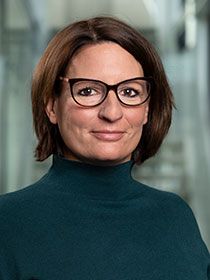
Oddrun Marie Hovde Bråten is a Professor in Religious and Worldviews Didactics at the Norwegian University of Science and Technology (NTNU) , Faculty of Social and Educational Sciences. She specializes in international comparative studies of religious education, exploring classroom dynamics, inquiry-based learning, and worldview integration in education. PhD in Educational Science, University of Warwick Master in Religious Studies, University of Bergen Research interests include: International comparative religious education Deep learning methodologies Worldviews in educational contexts Intercultural RE integration Curriculum development Empirical school research Recent publication trends show focus on diversity challenges in European education, comparative methodologies, and worldview inclusivity. Her Institute for Teacher Education team develops the 'utForskerne' inquiry-based learning model. Professional roles Leader of NTNU RE Research Group (2014-2024) Director of InDeep project on deep learning in RE Former government committee member (2010-2011) Networks : NoReFo , ISREV , ENRECA , EASR , IAHR
Elisabeth Donat is an Associate Professor and Deputy Head of Department at the Department for European Politics and Democracy Studies , University of Continuing Education Krems . She has previously held teaching and research roles at the sociology institutes of the Universities of Salzburg, Innsbruck, and Vienna , where she completed her sociology degree . Her work emphasizes interdisciplinary and transdisciplinary approaches , particularly focusing on regions in the EU multi-level system , political trust , and social cohesion . Her 15 most recent publications (2020–2025) explore topics such as value typologies in pro-European movements , polarization around climate change and LGBTIQ equality , citizen proximity in regional parliaments , and regional strategies in EU affairs . These works span journals like Innovation , Sustainability , and Politics and Governance , alongside edited volumes. She has taught over 50 courses on methodology (qualitative/quantitative), project management , and didactics at universities and applied sciences institutions. Her current project, REGIOPARL: Regional Parliaments Lab (2018–2022), funded by Stiftung Forum Morgen , investigates regional parliamentary engagement in the EU.
Leonardo Elias Letelier Saavedra is a Full Professor at the Institute of Public Affairs and Faculty of Government of the University of Chile . With a PhD in Economics from the University of Sussex and additional degrees from Cambridge and the University of Chile, he specializes in fiscal decentralization , public finance , and local governance . Education: PhD in Economics (2002), University of Sussex M.Phil in Development Economics (1989), University of Cambridge Master in Economics (1985), University of Chile Commercial Engineer (1982), University of Chile His research focuses on fiscal decentralization , municipal finance , and intergovernmental policy . Over 15 recent publications analyze topics like subjective well-being effects of decentralization , education funding , tax reform , and subnational fiscal rules . He has led FONDECYT projects on municipal performance and education/health financing. Articles span journals like Sustainability , Environment and Planning C , and Economía Chilena . He currently serves as Dean of the Faculty of Government (2023–) and Director of the Interdisciplinary Institute (2022–2023). Previously, he was Principal Investigator for Chilean and international research grants, including collaborations with the Institute of Fiscal Studies (Spain) and the Inter-American Development Bank . Teaching areas include Public Sector Economics and Subnational Finance at undergraduate and postgraduate levels.
Leonie Büttner is a Research Scientist and PhD candidate at the Helmholtz Centre for Environmental Research (UFZ) in Leipzig, Germany, working within the Department of Environmental Politics. Her research focuses on the intersection of digital transformation, urban sustainability, and environmental governance, with particular expertise in smart city development, energy and water politics, and urban infrastructure systems. Her educational background includes an M.Sc. in International Area Studies from Martin Luther University Halle-Wittenberg (2015-2018) and a B.Sc. in Biochemistry from the University of Leipzig (2011-2015). During her studies, she completed several relevant internships including at the Centre for Transformation Research and Sustainability in Wuppertal and the Office for Housing and Urban Renewal in Leipzig, and received a DAAD scholarship for research at EWHA Womans University in Seoul, South Korea. Büttner's research examines how digital technologies reshape urban governance and sustainability transitions, particularly through her work on smart city governance frameworks, energy transitions in urban contexts, and the political dimensions of Sustainable Development Goals implementation. Her approach integrates perspectives from political science, urban studies, and environmental governance to analyze the complex relationships between technology, society, and environmental sustainability in urban settings. Her publication record demonstrates growing expertise in analyzing urban sustainability transitions, with recent work examining smart city governance narratives in Germany, energy transitions in German and Indian contexts, and challenges in implementing the 2030 Agenda. Her research often employs comparative and qualitative methodologies to unpack the political dimensions of technological change in urban environments. At UFZ, Büttner contributes to research projects including Governance of Sociotechnical Transformations (GoST) and research on sustainable management of global commons. Her work connects theoretical frameworks from political science with practical applications in urban sustainability governance, bridging academic research and policy-relevant insights for urban sustainability transitions.
Kalpana Vijayavarathan is an Associate Professor in TEFL and Educational Sciences and serves as the Dean of the Faculty of Education at the University of the Faroe Islands. With a PhD in Teacher Cognition and TEFL, she has established herself as a leading figure in language education and inclusive pedagogy within the Faroese educational context, holding leadership positions while maintaining an active research profile. Dr. Vijayavarathan earned her PhD with research focused on teacher cognition in English language teaching in the Faroe Islands. Her academic journey began at Women's Christian College, University of Madras, India (1986-1989), where she taught English language and literature courses before transitioning to her current role in the Faroe Islands. Her research explores critical areas in contemporary education with particular emphasis on Teaching English as a Foreign Language (TEFL), Teacher Cognition, and Inclusive Education for immigrant students. She investigates how rural educational contexts shape teaching practices and how culturally responsive pedagogy can promote equity in classrooms, with specific attention to first- and second-generation immigrant children in the Faroese compulsory school system. Her work bridges theoretical frameworks with practical implementation challenges in small island communities. Dr. Vijayavarathan's publication portfolio reveals a clear trajectory from foundational work on teacher cognition to current research on language policy implementation and inclusive education frameworks. Her recent scholarship increasingly connects local Faroese educational contexts with broader Nordic and Arctic educational networks, demonstrating growing regional influence while maintaining focus on the unique characteristics of Faroese education. Her significant contributions include: Active leadership in the UArctic Thematic Network on Teacher Education for Social Justice and Diversity in Education Membership in the Nordic Migrant Expert Forum under the Nordic Council of Ministers Key advisory roles in Faroese government education strategy and policy development Editorial contributions to the Fróðskaparrit - Faroese Scientific Journal As an academic leader, Dr. Vijayavarathan has supervised numerous bachelor's theses and currently co-supervises two PhD projects. She has designed and led multiple teacher development initiatives across all educational levels, focusing on TEFL, Assessment & Feedback, and Teacher Cognition. Her substantial grant portfolio includes major projects such as (ACCESS): Arctic Conference on Educational Sciences, ConnectED: Creating Connections in the Arctic Educational Science Community, and research on the impact of COVID-19 school closures on student wellbeing, securing funding from both national and international sources. She collaborates extensively with researchers across the Nordic region and participates in projects examining cultural dimensions of education, including the 'Tradition and Music Education' project exploring Faroese identity in music education. Her leadership extends to chairing committees that shape national language policy and curriculum development for English Language Teaching in the Faroe Islands.
Ari Kokko serves as a Professor in the Department of International Economics, Government and Business at Copenhagen Business School, with an extensive publication record exceeding 60 research outputs. His work focuses on international economics and development policy in emerging economies, particularly Vietnam and Tanzania, addressing critical issues in trade, investment, and institutional reform. Research Interests: Professor Kokko specializes in international trade dynamics, foreign direct investment impacts, and development economics, with regional expertise in Southeast Asia and Africa. His scholarship examines multinational enterprise spillovers, trade preference utilization, vocational education reform, and state-owned enterprise transitions, consistently bridging academic rigor with policy relevance for sustainable economic growth. Publications Trends: Recent work demonstrates sophisticated empirical approaches using firm-level and transaction data to analyze export spillovers, FDI linkages, and trade agreement effects. Key themes include foreign intermediary roles in agricultural exports, MNE-local firm interactions in Vietnam's food sector, and policy learning under preferential trade arrangements, reflecting a strong commitment to evidence-based development solutions. Advising and Professional Impact: Kokko has supervised 12 students and actively engages public discourse through 9 media appearances discussing Vietnam's business environment and global trade dynamics. His research directly supports UN Sustainable Development Goal 8 (Decent Work and Economic Growth), emphasizing practical pathways for inclusive economic development in emerging markets.
Laura Skrip serves as Assistant Professor with a joint appointment at Nagasaki University's School of Tropical Medicine and Global Health (Japan) and the London School of Hygiene and Tropical Medicine (UK) since 2024. Previously, she held academic positions at the University of Liberia School of Public Health (2020-2024) and research roles at the Swiss Tropical and Public Health Institute (2020-2021) and Institute for Disease Modeling (2018-2020). Her educational background includes: MPH PhD Dr. Skrip's research centers on infectious disease dynamics using social epidemiological modeling to quantify behavior-focused interventions. She investigates vaccine impact (particularly measles outcomes linked to nutritional programs), risk communication efficacy, and community engagement during Ebola/COVID-19 outbreaks. Her fieldwork spans Liberia, Democratic Republic of Congo, and Cameroon, emphasizing context-driven policy guidance through collaboration with social scientists, clinicians, and communities. Analysis of her publication record reveals consistent focus on outbreak response modeling in resource-limited settings, integrating social determinants into transmission dynamics. Key themes include cross-outbreak behavioral analysis (Ebola to COVID-19), simulation-based vaccine impact assessment, and post-crisis health system strengthening in Liberia, with methodological emphasis on mixed-methods approaches and data quality innovation. Dr. Skrip supervises Master's and Doctoral students at both institutions while teaching core modules in Epidemiology and Statistics for Population Health. Her research implies involvement in externally funded initiatives related to epidemic preparedness, though specific grant details are unreported. Her collaborative work engages international consortia including the Social Mobilization Action Consortium during Ebola response, with ongoing field partnerships in Liberia focusing on quantitative capacity building and community-driven outbreak mitigation strategies.
Christopher A. Simon is a Professor at the School of Public Affairs , The University of Utah , where he has served since July 2024. His academic journey began with a Ph.D. in Political Science from Washington State University in 1997, preceded by MA (1994) and dual BS degrees in History and Political Science from Oregon State University (1991). With expertise in alternative energy policy , immigration policy , and public administration , Simon bridges political science and policy implementation through extensive research and publication. Simon’s research spans political science , policy and administration , and strategy/organizational behavior with significant focus on applied economics . His recent work examines energy security , police promotion bias , and public perceptions of bureaucratic corruption . His publications include 15+ peer-reviewed articles in journals like Armed Forces & Society , Energy Research & Social Science , and Public Integrity , alongside 5 monographs with publishers such as Rowman & Littlefield and Oxford University Press. Notable awards include the Choice Outstanding Academic Title (2020), Inter-University Seminar Fellow (2010), and multiple Faculty Achievement Commendations (2017-2018). He has taught courses in Research Design , Administrative Theory , and Thesis Research over three decades of academic service. His current work integrates GIS spatial analysis and social identity frameworks to address policy outcomes in diverse communities.
Rui Wang serves as an Assistant Professor in the Department of Urban Planning within the School of Public Affairs at the University of California, Los Angeles (UCLA). His academic work centers on urban policy and planning with a specific regional focus on China and broader Asian contexts. He actively contributes to research on climate adaptation, transportation systems, and sustainable urban development while teaching graduate-level courses in transportation and environmental planning. Dr. Wang's research explores the critical intersection of urban development, environmental sustainability, and transportation in rapidly growing cities, particularly in China. His work investigates how land use patterns influence travel behavior and carbon emissions, examines policy responses to motorization and air pollution, and analyzes the health impacts of urban form. Key projects include studying California cities' climate policy adoption, bicycle-transit integration in U.S. cities, and urban gentrification in Beijing linked to factory removal, transit development, and the Olympics. A recurring theme addresses the tension between rapid motorization and sustainable transport solutions, with significant implications for air quality and public health. His publication record reveals a strong empirical focus on urban environmental challenges in China, characterized by rigorous analysis of transportation policy, land price structures, and household carbon emissions. The research frequently employs comparative policy analysis across regions and leverages data from Chinese cities to develop sustainable development strategies. Notable trends include examining local government commitment to climate actions, evaluating transportation mode costs, and investigating the relationship between urban form and environmental outcomes. No scientific awards were mentioned in the provided documentation. Dr. Wang serves on the panel for the Transit Cooperative Research Program (TCRP) Project H-41 "Environmental Performance of Major Transit Projects" under the Transportation Research Board of the National Academies (2009). The available information does not specify any research grants he has secured or graduate students he advises, though he teaches UCLA graduate courses including Transportation and Environmental Issues, Introduction to Environmental Policy and Planning, Travel Behavior Analysis, and Advanced Spatial Analysis, as well as a Harvard undergraduate seminar on Urban Economics and Policy. There is no mention of specific research laboratories, centers, or dedicated research teams associated with Dr. Wang in the provided materials.
Dr. Matea Belošević serves as a Senior Lecturer in the Department of Behavioural Disorders at the Faculty of Education and Rehabilitation Sciences, University of Zagreb. Her academic work focuses on prevention science within rehabilitation frameworks, particularly examining adolescent risk behaviors and evidence-based interventions. She actively contributes to European collaborative projects including FENIQS-EU and ASAP Training, which aim to standardize drug prevention systems across the continent through quality assurance frameworks and practitioner training. Her research centers on three interconnected domains: School Environments – Evaluating programs like “Imam stav” to understand how positive school climates mitigate peer violence through risk/protective factor analysis Family Dynamics – Investigating communication patterns across family structures and their impact on adolescent life satisfaction and resilience development Prevention Implementation – Assessing community readiness for prevention investments and developing culturally adapted quality standards for Southeastern Europe Methodologically, she integrates adolescent perspectives through mixed-methods approaches to capture nuanced behavioral patterns. Analysis of her 2022-2025 publications reveals a cohesive trajectory in European prevention science: 40% focus on policy translation (EUPC curriculum implementation, decision-maker training) 35% on adolescent-specific factors (leisure activities as protective buffers, family communication mechanisms) 25% on system-level evaluation (FENIQS-EU quality standards, community readiness metrics) This demonstrates her role as a bridge between Croatian implementation contexts and pan-European prevention frameworks, with growing emphasis on adolescent agency in program design. Dr. Belošević operates within the Faculty’s Laboratory for Prevention Research infrastructure, which supports her program evaluations through dedicated research spaces and data collection tools. Her collaborative network spans 12 European institutions via FENIQS-EU, where she leads Croatian case studies on training curriculum adaptation. This transnational engagement enables direct knowledge transfer between academic research and national prevention policy development.
Dr. Enock Nixon Sakala serves as a Lecturer and Researcher at the Department of Geography and Environmental Studies within the School of Natural Sciences at the University of Zambia. He concurrently holds consultancy positions and participates in international research collaborations, notably with the Universities of Bonn and Cologne through the Collaborative Research Centre (CRC) "Future Rural Africa: Future-making and social-ecological transformation." His educational credentials include a Masters in Environmental Science and a PhD in Environmental Engineering, though specific institutions and graduation years remain unreported. Dr. Sakala's research portfolio demonstrates deep engagement with Zambia's environmental and developmental challenges through interdisciplinary lenses. Dr. Sakala's scholarly work centers on environmentally sustainable development , with emphases spanning environmental monitoring and assessment, land use planning, climate change adaptation, and disaster risk management. His fieldwork particularly addresses agricultural sustainability and food security within Zambia's socio-ecological context, reflecting a practitioner-oriented approach to environmental governance. The integration of technical tools like GIS with community-level adaptation strategies characterizes his methodological framework. Analysis of his 2012-2017 publications reveals consistent focus on Zambian case studies addressing climate-agriculture linkages, urban service delivery, geospatial planning, and international governance dynamics. These works collectively demonstrate his commitment to context-specific environmental solutions while engaging with global sustainability frameworks. The geographic specificity of his research underscores localized applicability of findings within Southern Africa. Professional recognition includes significant certifications: National Focal Point Thematic Expert-MESA SADC (2018) Advanced International Training in Education for Sustainable Development (2014) Transport and Environmental Science Technology Certification (2012) Large Volume Waste Management Certification (2012) Dr. Sakala actively contributes to the CRC "Future Rural Africa" project, indicating substantial involvement in internationally funded research. His consultancy work complements academic activities, though specific grant details remain undisclosed. While student advisement isn't documented, his role as Lecturer implies teaching responsibilities across environmental science curricula. He maintains strategic affiliations with the Global Centre of Spatial Methods for Urban Sustainability (TU Berlin), SASSCAL Task 303, Australia Alumni for IM4D, and the CRC "Future Rural Africa" network. These connections facilitate transnational knowledge exchange while anchoring his work within both European and Southern African research ecosystems focused on sustainable development.
María José Dorado Rubin serves as an Associate Professor in the Sociology Department at Pablo de Olavide University in Seville, Spain. Her academic work centers on urban policy integration, sustainable tourism planning in Andalusia, and sociology of education. She completed her PhD at the same institution in 2023 with a dissertation examining integrated approaches in urban policy frameworks under the supervision of Dr. Clemente J. Navarro and Dr. María José Guerrero Mayo. Her research interests span urban policy integration frameworks, sustainable tourism development in regional contexts, educational sociology with emphasis on cooperative learning methods, and elderly well-being metrics. She has developed significant expertise in analyzing how European Union urban initiatives are implemented at regional and local levels, particularly examining policy coherence across different sectors. Dorado Rubin's publication record shows consistent scholarly output since the early 2000s, with notable concentration on Andalusian regional planning, sustainable tourism strategies, and educational methodologies. Her recent work demonstrates increasing focus on EU policy integration mechanisms and their practical implementation in urban contexts. She has made substantial contributions to understanding how complex urban problems require cross-sectoral approaches that transcend traditional policy boundaries. As a member of the SPL-UPO (Political Sociology and Local Policies) research group, she contributes to advancing knowledge in political sociology with practical applications for local governance. Her work on universal design in sociology education reflects commitment to inclusive pedagogical approaches, while her research on elderly well-being demonstrates engagement with demographic challenges facing European societies.
Jef Smulders serves as a Research Fellow at KU Leuven's Elections and Democracy research group (Organisatiegroep), focusing on the financial and organizational dimensions of political parties within Belgium's complex federal system. His work examines campaign finance regulations, party funding mechanisms, and electoral system impacts across federal, regional, and European electoral contexts. Smulders' research centers on party financing and party organization , with particular expertise in Belgian electoral systems. His investigations span campaign expenditure patterns, public subsidy allocation mechanisms, and the financial consequences of electoral outcomes. Recent work analyzes the June 2024 Belgian elections through multiple lenses including expenditure limits, financial consequences of results, and party interest declarations. He employs longitudinal analysis of financial reports and quantitative examination of voting systems, particularly Belgium's flexible-list proportional representation. His publication trends reveal consistent focus on Belgian party finance evolution since 2000 Gender quota impacts on campaign resource allocation Parliamentary staff utilization as indirect party funding Cross-national comparisons of European party finance systems Notable outputs include the 2024 monograph The Colonists of Wetstraat analyzing Belgium's party financing within EU frameworks. Smulders collaborates extensively with Bart Maddens, Gertjan Vanden Eynde, and other KU Leuven researchers, producing regular briefing papers for VIVES (Flemish Institute for Technological Research). His work informs policy debates on campaign finance regulation, electoral transparency, and party funding reform in Belgium's multi-level governance system.
Helle Ørsted Nielsen is a Senior Researcher at Aarhus University, affiliated with the Department of Environmental Science (Environmental Social Science and Geography) and the Department of Political Science. Her research focuses on climate, energy, and agro-environmental policies, emphasizing policy target group behavior, effectiveness evaluation, EU policy implementation at national/local levels, and municipal climate strategies. Projects: URBANOME (2025), U_CAN (2024–2027), Coast to Coast Climate Challenge (2021–2022), ACCESS (2019–2023), ETC/CCA (2019–2021), PEER-TRISD (2018–2021), RoboWeedMaPS (2017–2020). Expertise: Climate-energy-environmental policy, policy-target behavior, multi-level governance, implementation of EU directives.
Dr Dan Fisher is a Research Associate at the Centre for Public Policy, University of Glasgow, specializing in political geography with a focus on borders, asylum determination, and refugee integration. His work examines governance practices of refugee integration, decision-making processes of forced migrants, and judicial determinations of asylum appeals. Previously, he contributed to the evaluation of Scotland's 'New Scots Refugee Integration Strategy' through the UNESCO Chair for Refugee Integration. Dan Fisher completed his PhD at the University of Edinburgh, where his thesis critically engaged assemblage theory to analyze border control mechanisms. His field research spanned Spain, Morocco, and the UK, tracing performances of border control and tactics of resistance. Educational background includes doctoral research at Edinburgh and prior research positions at the James Hutton Institute and University of Exeter. Fisher's research interests center on the political geography of borders and migration, with particular expertise in asylum processes, refugee integration strategies, and the material politics of migration governance. His work combines theoretical frameworks like assemblage theory with empirical research on administrative practices, spatial dynamics, and temporal dimensions of border control. He investigates how forced migrants navigate complex bureaucratic systems and how integration policies are implemented at local levels, with increasing focus on comparative analysis of integration approaches across European contexts. His publication record demonstrates consistent thematic focus across multiple disciplines, bridging political geography, legal studies, and migration policy. Recent works show evolution from theoretical explorations of border control to increasingly policy-relevant research on asylum appeals and refugee integration strategies. The geographical scope spans European contexts with particular attention to the UK and Scotland, while methodologically combining qualitative approaches with legal and policy analysis. Fisher actively engages with policy communities through multiple channels. He has assisted in drafting the third iteration of Scotland's New Scots Strategy, co-organized stakeholder events on refugee integration, and published open-access research reports including work with the Public Law Project. His research has directly informed Scottish Parliament debates and contributed to the UK Government's Home Affairs Committee Inquiry into Immigration Detention. He regularly participates in the Scottish Government's Cross-Party Working Group on Migration. As part of the Centre for Public Policy at the University of Glasgow, Fisher collaborates with interdisciplinary teams focused on migration governance. His current work continues to analyze judicial determinations of asylum appeals while examining practical implementation of refugee integration strategies in Scotland, building on previous research conducted with the UNESCO Chair for Refugee Integration through the Languages and the Arts.