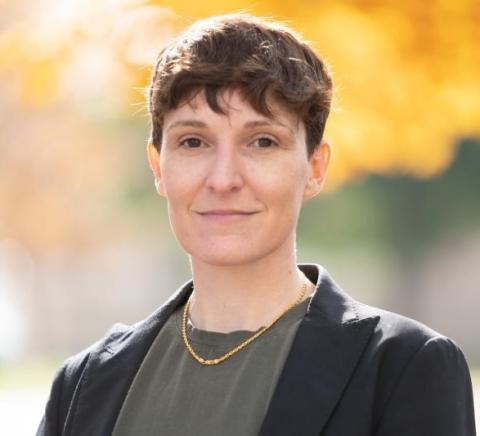
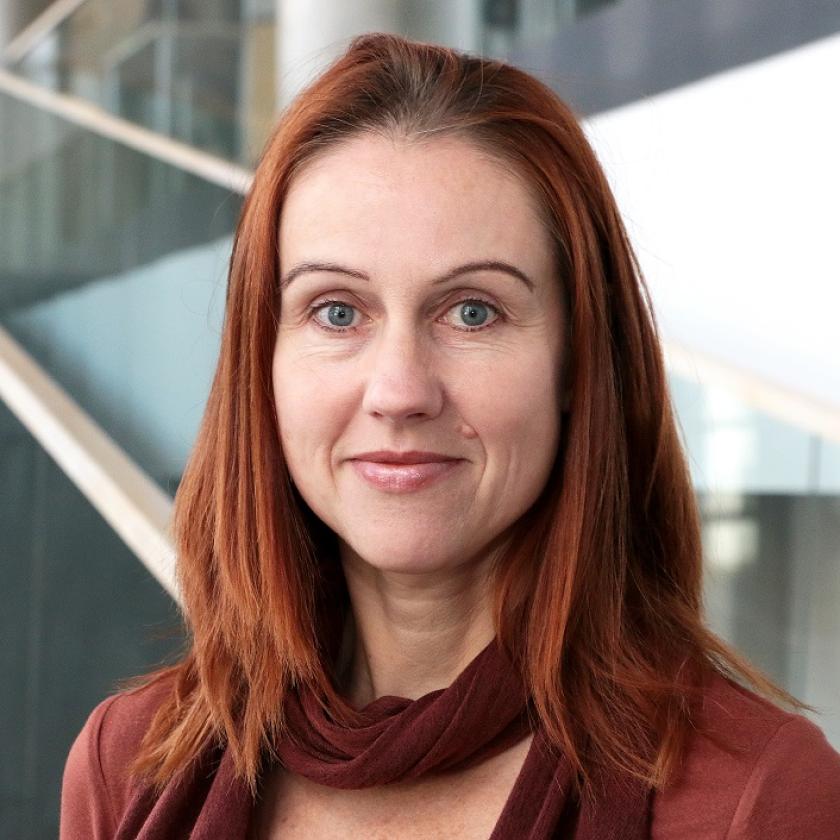
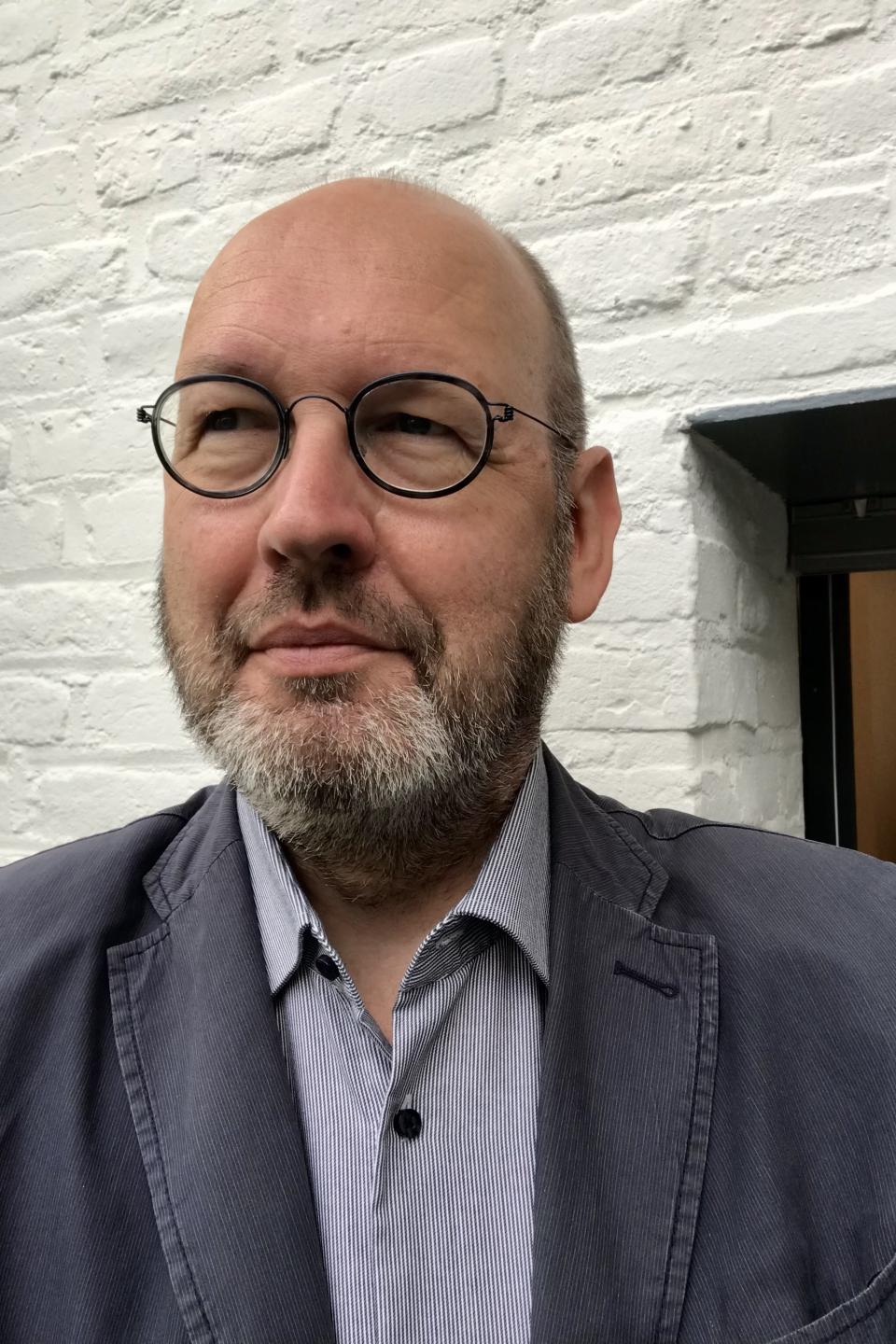
Andrea Bocco Guarneri is a Full Professor of Technological and Environmental Design of Architecture at the Polytechnic University of Turin and Director of the Interuniversity Department of Regional and Urban Studies and Planning (DIST). His career spans teaching, research, and leadership in sustainable architecture, low-tech construction, and urban regeneration. Academic roles: Member of DIST, Academic Senate, University Committee for Research, and GEDI Observatory. Research Interests Appropriate Technology Environmental Impact Assessment Urban Regeneration Cultural Heritage Ontology in Architecture Low-Tech Construction His recent research trends focus on sustainable building practices using natural materials, environmental impact methodologies, and revitalizing marginal regions through traditional architecture. He emphasizes bridging ecological awareness with computational terminological resources. Scientific Awards JSPS Invitation Fellowship for Research in Japan (2015-2016) As an advisor , he supervises PhD students in Urban and Regional Development, including Arthur Bohn, Redina Mazelli, Martina Bocci, and Manuela Ronci. He leads collaborative projects such as the Memorandum of Understanding with Yokohama National University and agreements with the Municipality of Turin for regulatory plan studies.
Paola Gregory is an Associate Professor in the Department of Architecture and Design at the Polytechnic University of Turin, with significant academic contributions to architectural theory, urban transformation, and the affective dimensions of space. She maintains dual academic affiliations, serving as a member of the Board of the PhD Program in 'Architecture. Theories and Design' at Sapienza University of Rome while continuing her primary appointment at Politecnico di Torino. Her research focuses on the intersection of architecture, human experience, and urban transformation, with particular emphasis on affective spaces, social content in architectural design, and the relationship between embodied cognition and built environments. Gregory examines how emotional and sensory experiences shape our interaction with urban spaces, especially in contexts of regeneration and transformation. Her work bridges architecture with neuroscience, exploring how the body perceives and attributes meaning to environments through embodied cognition. She has conducted significant research on Turin's urban transformations, particularly in the Le Vallette neighborhood and the Vallino railway yard area, examining how de-industrialized spaces transition from Fordist to post-Fordist urban landscapes. Gregory's extensive publication record reveals a consistent trajectory exploring the emotional and experiential dimensions of architecture. Her recent work increasingly integrates neuroscience perspectives with architectural design, examining how spatial configurations affect human cognition and emotion. She has pioneered approaches that consider atmosphere, empathy, and memory as central components in urban design processes, challenging traditional functionalist approaches to space. National Competition of Ideas for Projects for the Redevelopment of Areas for Neighborhood Green Spaces (1987) Publication of works and treatises by the National Research Council, Italy (1998) As an advisor, Gregory has supervised numerous theses exploring innovative intersections between architecture and other disciplines, including the relationship between architecture and neuroscience, and architecture's role in the metaverse. Her teaching spans both undergraduate and doctoral levels, with a consistent focus on integrating social content and human experience into architectural design education. She has coordinated experimental workshops that engage local communities in participatory design processes, such as the 'Qui Abito' project in Turin's Le Vallette neighborhood, which used play practices to reimagine public spaces.
Lauren Bridges is an Assistant Professor in the Department of Media Studies at the University of Virginia. Her work critically examines the material, environmental, and societal implications of digital infrastructures, surveillance systems, and technological governance. She can be reached at lbridges@virginia.edu . Research Focus: Digital environmental justice, surveillance capitalism, and critical data studies. Key Themes: Data center impacts, e-waste geographies, AI critique, and community surveillance dynamics. Publication Trends: Recent work analyzes the paradoxes of digital sovereignty (2020-2024), environmental costs of cloud computing (2023-2025), and resistance to techno-surveillance regimes (2020-2021).
Karin Dean is a political geographer at Tallinn University since 2007, with a focus on Southeast Asian societies and politics. Her research integrates ethnographic fieldwork across Myanmar, China, Thailand, and Northeast India, examining interrelations between states, societies, and spaces. Interests: political geography, mobilities, Southeast Asia, Burma/Myanmar, Kachin, Asian urbanization, political anthropology Projects: Advancing Trans-Regional Border Studies Her work analyzes borders as dynamic social constructs, exploring how ethnic minorities navigate state power through mobility and spatial contestation. Recent publications examine China's Belt and Road Initiative in Myanmar and the spatial dimensions of ceasefire politics. As a supervisor, she guides BA, MA, and PhD students in Southeast Asian studies, political geography, and Asian urban research. Her fieldwork-based approach bridges critical geopolitics with lived experiences in contested borderlands.
Dr. Nico Randeraad is an Extraordinary Professor and Director of the Centre for the Social History of Limburg (SHCL) at Maastricht University's Faculty of Arts and Social Sciences. He holds a PhD from the European University Institute (1992) and has held academic positions at multiple Dutch and international institutions. His research focuses on 19th and 20th century European history, particularly the social history of governance, public administration, and regional landscapes. He teaches modules in European Studies and Arts & Culture, including a BA research course on the Meuse River's history and an Honors course on digital heritage. His career includes co-directing the Netherlands Centre for Contemporary History (1999–2002) and directing SHCL since 2002. Randeraad's work bridges historical methodologies with digital humanities, emphasizing comparative analyses of Limburg's socio-economic and environmental history. Recent projects explore the social history of infrastructure (e.g., the Route impériale no. 3) and river management in Limburg. He actively participates in international research networks and has authored/co-edited over 50 books and articles. Publications span topics like transnational social reform congresses, administrative history, and the integration of statistics into governance. His writing frequently addresses the intersection of history, policy, and cultural memory. Randeraad also supervises BA/MA theses and engages in public outreach through the SHCL, promoting the digitization and accessibility of historical archives.
Professor Giovanni D'Angelo is an Associate Professor at EPFL's School of Life Sciences, leading the D'Angelo Lab within the Interschool Institute of Bioengineering (IBI-SV). His primary affiliation is with the Molecular and Cellular Biology section, with additional roles in doctoral education programs (EDMS). He holds the Kristian Gerhard Jebsen Chair on Metabolism. Education: D'Angelo earned a MSc in Medical Biotechnology (2003) from the University of Naples and a PhD in Cell Biology (2008) from the Consorzio ‘Mario Negri’ SUD. Postdoctoral training followed at the Telethon Institute for Genetics and Medicine and the National Research Council of Italy. He joined EPFL in 2018 as an Assistant Professor and transitioned to Associate Professor. Research: His lab focuses on lipid biology's role in cell identity and development, particularly sphingolipid metabolism, membrane composition dynamics, and lipid heterogeneity in neural and fibroblast systems. Techniques include single-cell lipidomics (MALDI-IMS), lipid imaging, and biochemical approaches. Key areas include lipid-driven cell fate decisions, viral infection mechanisms (e.g., SARS-CoV-2), and metabolic disorders like obesity. Advising & Funding: Supervises ~10 doctoral students and has trained postdocs in lipidomics and cell biology. Active in doctoral committees (e.g., Molecular Approaches to Living Organisms program). Research is supported by grants from SNF and EPFL initiatives. Labs/Teams: Head of the D’Angelo Lab, collaborating with experts in neurodegeneration (e.g., Hilal Lashuel) and virology. The lab integrates lipidomics, cell biology, and advanced imaging to study lipid-cell interactions in health/disease.
Matthew Painter is a Professor and Chair of the Department of Sociology at the University of North Texas. His research focuses on wealth attainment, social stratification, and the intersection of race/ethnicity, immigration, and socioeconomic inequality. He has served as department chair since 2024 and has published widely in top journals including Demography , Social Forces , and Social Problems . His work explores topics such as skin-tone-based disparities, immigrant economic integration, and white ethnic diversity in rural communities. Office hours are by appointment during summer 2025. Education: Ph.D., Sociology, The Ohio State University, 2010 Research Interests: Wealth inequality and its structural determinants Racial/ethnic stratification in asset accumulation Immigrant integration and labor market outcomes Skin tone and health disparities among new immigrants Community dynamics in rural U.S. settings Recent Scholarly Trends: Recent publications emphasize moving beyond binary frameworks in studying gender expression and LGBQ+ identities, while continuing longstanding investigations into immigrant wage channeling and police resource allocation in municipalities with Hispanic populations. His work consistently highlights how race, skin tone, and gender intersect with socioeconomic outcomes. Advising & Grants: While specific student advisees aren’t listed here, Dr. Painter’s research has been supported by grants focusing on immigrant integration and wealth disparities. He advises students pursuing studies in social stratification, migration, and intersectional inequality. Labs/Teams: Engages collaboratively with interdisciplinary teams studying urban/rural inequality and migration policy at the University of North Texas.
Monika Metykova is an Associate Professor in Media Communications/Journalism Studies at the University of Sussex's School of Media, Arts and Humanities. She previously held academic positions at Northumbria University, the University of Sunderland, and Goldsmiths, University of London. Her research focuses on journalism practices, media policies, and their relationship to democracy, with particular attention to European media landscapes, migration narratives, and media labor conditions. She has authored books like Diversity and the Media (2016) and contributed to over 30 peer-reviewed publications. Her work explores topics such as the autonomy of peripheral news workers, the impact of digital media on journalism, and the cultural implications of migration. Research interests include: Journalistic work and labor European media policy and governance Migrant identities and transnational practices Media representation of diversity Cultural memory and local journalism Teaching specialization spans undergraduate and postgraduate courses on journalism transitions, global news industries, and academic writing. Her publications span a decade of scholarship addressing both theoretical and practical dimensions of media systems, with a focus on Eastern/Central Europe and the Balkans.
Dr. Kristin Lamoureux is a Visiting Professor and Graduate Director of the MSBA-HTM Program at Virginia Tech University’s Pamplin College of Business. She previously served as Associate Dean at NYU’s Tisch Center for Hospitality and Tourism and Executive Director of the International Institute of Tourism Studies (IITS). Her expertise spans sustainable tourism, indigenous tourism development, and destination management, with a focus on economic equity and cultural preservation. She holds an A.S. from Universidad Catolica del Ecuador, a B.S. from Johnson & Wales University, and a Ph.D. in Business Administration from George Washington University. She is fluent in Spanish and has advised organizations like USAID, the World Bank, and the UN World Tourism Organization. Her research emphasizes community-driven tourism solutions, notably co-authoring the Communities, Conservation and Tourism: An Assessment Toolkit . She has consulted on projects in over 20 countries, including tribal nations in the U.S. and developing regions like Jordan, Morocco, and Myanmar. Dr. Lamoureux has received awards such as the Meritorious Service Award for Lifetime Achievement (2015) and regularly speaks at industry conferences like Destination International and AIANTA. Her work bridges academia and practice, advocating for inclusive tourism policies and cross-sector collaboration.
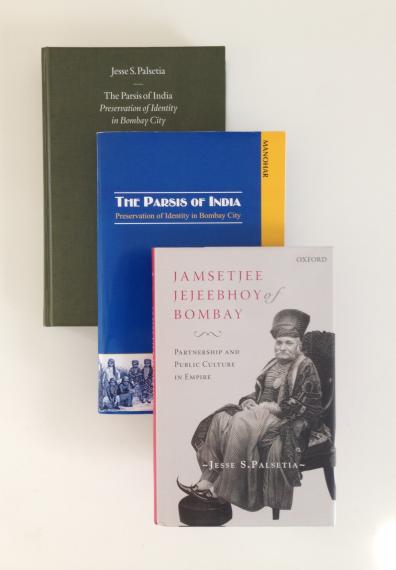
Jesse Palsetia is a Professor in the Department of History at the University of Guelph, where he has held a permanent faculty position since 2002 after serving as a Visiting Assistant Professor at both the University of Guelph and University of Toronto at Mississauga (2001-2002). His academic career includes significant research affiliations with the Centre for South Asian Studies at the University of Toronto (1997-2002). Palsetia earned his doctoral training at the University of Toronto, completing his Ph.D. in 1996 after obtaining an M.A. (1989) and B.A. (1987) from the same institution. Ph.D., University of Toronto, 1996 M.A., University of Toronto, 1989 B.A., University of Toronto, 1987 His research centers on South Asian history with emphases on British imperialism in India, the urban development of colonial Bombay (Mumbai), and the socio-religious dynamics of the Parsi (Zoroastrian) community. Palsetia examines how religious identity, merchant patronage, and public culture intersected during the colonial period, particularly through studies of charity systems, responses to Christian missionary activities, and the construction of urban modernity. His work reveals the complex negotiations between indigenous communities and imperial structures through meticulous archival analysis. Analysis of his publication trajectory shows consistent scholarly engagement with Bombay's urban transformation and Parsi community identity across three decades. Recent works explore technological modernization (gas lighting), transnational travel, and material culture, while earlier research established foundational understandings of Parsi political strategies and religious adaptation. This body of work demonstrates a methodological commitment to examining colonial encounters through localized community experiences rather than imperial frameworks alone. Palsetia's scholarly recognition includes prestigious appointments such as: Professional Fellow, Royal Asiatic Society (2024) He supervises graduate research in South Asian history and British Empire studies, focusing on community identity formation and colonial urbanism. While specific grant details aren't provided in available materials, his sustained publication record and recent fellowship indicate ongoing research support. Palsetia conducts his scholarship within the Department of History framework at Guelph, contributing to Canada's South Asian studies community through archival research and theoretical contributions to postcolonial urban history.
Prof. Saskia Keuzenkamp is an Endowed Professor at the Vrije Universiteit Amsterdam's Faculty of Social Sciences (Sociology department) and the Identities, Diversity and Inclusion (IDI) research group. She serves as Director of Knowledge and Innovation at Movisie. Her work focuses on evidence-based practices integrating scientific, professional, and client expertise to address poverty, debt, and social inclusion. She emphasizes experiential knowledge integration in social policies and teams. Education details are not explicitly provided in the text, but her academic roles suggest advanced training in sociology/social policy. Research interests include LGBTQ+ rights, migrant integration, health-employment linkages, and participatory methodologies. She critiques systemic barriers faced by marginalized groups, advocating for institutional reforms. Recent articles highlight interventions reducing LGBTQ+ prejudice, experiential experts' roles in healthcare/social work, and migrant youth employment challenges. Her work spans 135+ outputs across journals, books, and public reports. Awards are not listed, but her contributions are recognized through institutional appointments. She advises on projects like Movisie's knowledge initiatives and collaborates with organizations like Stichting Urgente Noden Nederland. Key projects include neighborhood workshops enhancing integration via experiential knowledge and anti-discrimination campaigns. Labs/teams: Active in the IDI research group and collaborates with Utrecht municipality on experiential expertise in social teams. Her work bridges academia and practice through knowledge centers and policy consultations.
Kristof Vrancken is an Assistant Professor at the Faculty of Social Sciences, KU Leuven, and a researcher in the arts at the Media Culture & Policy Lab Future Scenarios in Genk, Belgium. His work bridges media culture, environmental humanities, and participatory design, focusing on the Anthropocene and regenerative futures through visual and material practices. Co-promotor : Changing gaze, changing perception - Participatory art practices for dementia care (2023-2027) Member : DigiSoc – KU Leuven Digital Society Institute Coordinator : Future Scenarios, Genk His research explores: Participatory art and design for ecological awareness Visual narratives addressing the Anthropocene Regenerative futures and multispecies coexistence Biodiversity valuation in agroecosystems Historical and contemporary garden design as ecological practice His recent publications examine: AI-driven community visual storytelling Biofuturing methodologies for multispecies futures Catalytic design processes Critical pedagogies for regenerative design Visual advocacy for invasive species He engages in: Interdisciplinary collaboration between arts, sciences, and policy Curatorial practices for environmental discourse Material experimentation with sustainable processes Designing frameworks for ecological empathy Exploring the intersection of technology and nature The Media Culture & Policy Lab Future Scenarios serves as a platform for: Developing innovative media methodologies Creating policy-relevant artistic interventions Advancing speculative design for societal challenges Cultivating cross-sector collaborations Investigating digital society's environmental implications
Luuc Brans is a Lecturer at the Erasmus School of History, Culture and Communication (Erasmus University Rotterdam) and a postdoctoral researcher at KU Leuven. He is affiliated with Harvard’s Weatherhead Centre for International Affairs and holds visiting scholar ties to Harvard’s Sociology Department. His work bridges cultural sociology and political science, focusing on climate crisis intersections with fashion, political polarization, and cultural inequality. Education: BSc Political Science (cum laude, University of Amsterdam), MSc Nationalism Studies (cum laude, University of Edinburgh). Former fashion model experience in London, Milan, Paris, Amsterdam, and Tokyo informs his scholarly lens on fashion systems. Research Interests: Investigates how climate crises politicize cultural industries, particularly fashion. Current projects explore ‘sustainable-cultural entrepreneurs’ and how cultural production inequalities fuel moral polarization. Past work analyzed fashion journalism, transparency apps, and EU/UN fashion policy reforms. Uses international fieldwork across Europe and North America. Teaching & Outreach: Over 8 years of teaching experience from high school to master’s levels, including political science (UvA), sociology (KU Leuven), and civic education. Co-produces the Culture & Inequality Podcast with the European Centre for Culture and Inequality. Developed anti-disinformation media literacy programs across Europe. Labs/Teams: Affiliated with the European Centre for Culture and Inequality (EUCCI) through podcast collaborations. Maintains ties to Harvard’s Weatherhead Centre for research networks.
Leah Gerber is a Senior Lecturer at Monash University and a core member of the Monash Intercultural Lab (MIL). She holds a PhD in German Studies from Monash University (2008), supported by DAAD funding for research at Humboldt University, Berlin. Her work focuses on literary translation, Australian literature in global contexts, and multilingual communication strategies for culturally diverse communities. Gerber’s research intersects with UN SDGs 4 (Quality Education) and 10 (Reduced Inequalities), emphasizing equitable access to language services and cultural understanding. Education: Bachelor’s in German Studies, Monash University (2002) DAAD Scholarship for studies at Free University, Berlin (2001) PhD in German Studies, Monash University (2008), with DAAD-funded research in Berlin Research Interests: Literary and creative translation methodologies Children’s literature translation dynamics Cross-cultural mediation in multilingual contexts Technology-enhanced translator training (e.g., VR for family violence interpreters) Key Projects: Primary Investigator in initiatives like Building Mental Health Capacity of the Auslan Workforce (2024–2026) and Best Practice Guidelines for Co-designing Community Translations (2024). Her work bridges academic research with practical applications, including training bilingual workers and enhancing healthcare communication for CALD populations. Awards: Recipient of DAAD scholarships for undergraduate and PhD studies, recognizing her contributions to intercultural research. Labs/Teams: Leads the Monash Intercultural Lab, fostering collaborative research on translation, migration, and community engagement.
Dr. William Yat Wai Lo is an Associate Professor in Intercultural and International Education at Durham University's School of Education. His research focuses on higher education policy and governance in East Asia, with a particular emphasis on postcolonial contexts such as Hong Kong, Macao, and Taiwan. He holds a PhD in Social Policy from the University of Bristol and has extensive experience in teaching and supervising students in postgraduate and undergraduate programs. His research interests include globalisation and educational reforms, comparative analysis of higher education systems, and the intersection of policy, governance, and student activism. Recent work explores topics such as university leadership during political crises, the Belt and Road Initiative's impact on student mobility, and the evolution of governance models in postcolonial education systems. Editorial Contributions: Editorial Review Board Member, Higher Education (2023) Editorial Board Member, Comparative Education (2023) Associate Editor, Asia Pacific Journal of Education (2020–present) Associate Editor, Higher Education Evaluation and Development (2018–2020) Dr. Lo supervises doctoral students investigating international higher education policies, comparative governance frameworks, and global educational reforms. His work bridges global and local perspectives, often analyzing how national imperatives shape regional and institutional policies in East Asia.