
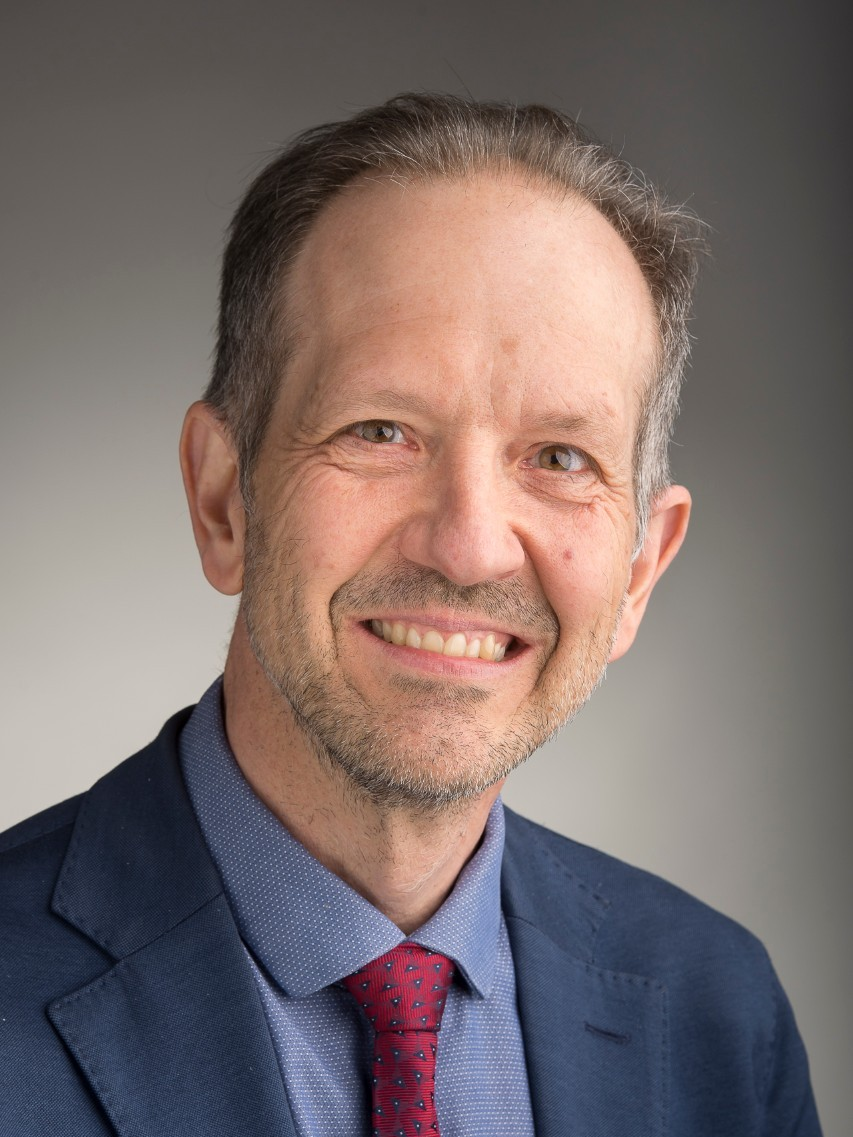
Fred Popowich is a Professor in the School of Computing Science at Simon Fraser University (SFU), Canada. He holds adjunct positions at Dalhousie University's Faculty of Graduate Studies and is an Associate Member of SFU's Department of Linguistics and Cognitive Science Program. His academic career began post-PhD (Cognitive Science/Artificial Intelligence, University of Edinburgh, 1989) and has spanned over three decades at SFU. Education: PhD in Cognitive Science/Artificial Intelligence (University of Edinburgh, 1989); M.Sc. and B.Sc. in Computing Science (Simon Fraser University and University of Alberta, 1985/1982). Research focuses on natural language processing (NLP), machine translation, intelligent systems, and big data applications. He directs SFU’s Big Data Initiative and leads the Natural Language Laboratory, supervising MSc/PhD students in computing science. His work includes developing systems for smart homes, toxic language detection in social media, and energy grid analysis. Industry roles include co-founding Axonwave Software (as CTO/President) and contributing to technology commercialization. Current projects address EV charging impacts, personalized learning systems, and real-time load monitoring. Publications span machine translation, sentiment analysis, and NLP applications in education and energy systems. His work bridges theoretical computer science with practical applications in healthcare, smart cities, and education.
جستوجوی استاد و پژوهشگر
استاد راهنما، استاد دانشگاه یا پژوهشگر مناسب برای مسیر پژوهشیتان را پیدا کنید و با او ارتباط بگیرید.
نمایش ۷۲۱-۷۳۵ از ۶٬۱۳۴ استاد راهنما
اطلاعات این پروفایلها از صفحات عمومی دانشگاهها جمعآوری شده و ممکن است بهروز نباشد.

Juha Latvalaمشاهده پروفایل
پژوهشگر
Juha Latvala is a Staff Scientist at the Department of Civil Engineering, Faculty of Built Environment, Tampere University. His research focuses on railway infrastructure, particularly railway track drainage systems, sub-ballast layer behavior, and the effects of water content on track stability. He holds a Doctoral degree from Tampere University (2024) and has collaborated extensively with institutions like Väylävirasto on railway engineering challenges. Education: Doctoral Thesis in Civil Engineering (2024) Research Interests: Latvala’s work emphasizes understanding and mitigating issues related to railway track drainage, seasonal frost impacts on track structures, cyclic loading resistance of materials, and moisture content analysis. His studies often involve field measurements, laboratory testing, and case studies to improve infrastructure durability and safety. Publications Overview: His recent articles highlight advancements in drainage solutions, sub-ballast material behavior under varying conditions, and the design of monitoring systems for heavy railway traffic. Key themes include optimizing track performance through moisture management and enhancing infrastructure resilience in cold regions. Grants & Collaborations: Collaborations with Väylävirasto and Tampere University have supported projects on railway traffic monitoring stations and drainage improvements. His research integrates geotechnical engineering principles with practical infrastructure solutions.

Andreas Stollwitzer is a researcher affiliated with the Research Area Steel Construction at TU Wien. His academic titles include Univ.Ass. (University Assistant), Dipl.-Ing. (Diplom-Ingenieur), and Dr.techn. (Doctor of Technical Sciences). His research focuses on railway bridge dynamics, track-bridge interaction, and structural health monitoring. Key areas of investigation include the behavior of ballasted tracks on railway bridges, dynamic characteristics of bridge-track systems, and vibration analysis in high-speed rail infrastructure. His work emphasizes experimental and numerical methods to study phenomena such as longitudinal/lateral track-bridge interaction, dynamic stiffness and damping measurement, and destabilization of ballast beds under vertical vibrations. He has contributed to projects like DYS-GROS, analyzing the dynamic interaction between track components and bridge structures through both simulations and in-situ testing. Recent publications (2021–2023) highlight advancements in damping factor calculations, comparison of vehicle-bridge interaction approaches, and the application of indirect structural health monitoring techniques using vehicle-based sensors. His findings aim to improve bridge safety, reduce computational uncertainties in dynamic analyses, and optimize railway infrastructure design under high-speed conditions. He collaborates with institutions and researchers in Austria and internationally, focusing on railway engineering challenges. While no formal awards are listed, his extensive publication record reflects significant contributions to civil engineering dynamics and infrastructure systems.

Jana Levisonمشاهده پروفایل
دانشیار
Jana Levison is an Associate Professor in the School of Engineering at the University of Guelph, specializing in Water Resources Engineering. She holds the inaugural Doody Family Chair for Women in Engineering (2022-2027) and is affiliated with the Morwick G360 Groundwater Research Institute. Her research focuses on groundwater quality and quantity, particularly examining agricultural and climate change impacts on hydrological systems. Dr. Levison earned her Bachelor's and Ph.D. in Civil Engineering from Queen's University, with her doctoral research focusing on anthropogenic impacts on fractured bedrock aquifers. Prior to her position at Guelph, she completed a postdoctoral fellowship at the Université du Québec à Montréal, worked with the Cataraqui Region Conservation Authority on Drinking Water Source Protection, and served as Junior Fellow and Acting Executive Director of the Ontario Centre for Engineering and Public Policy. Her research program addresses critical water resource challenges through multiple funded projects examining agricultural nutrient transport, groundwater-surface water interactions, climate change impacts, and source water protection for Indigenous communities. Dr. Levison's work spans field investigations, advanced modeling techniques, and policy-relevant analysis to protect water resources in the Great Lakes Basin and beyond. Analysis of Dr. Levison's recent publications reveals a strong focus on nutrient transport dynamics in agricultural watersheds, particularly examining nitrogen and phosphorus movement through various hydrological pathways. Her research increasingly incorporates machine learning approaches for water quality prediction and integrates climate change scenarios into groundwater modeling. A significant portion of her work addresses source water protection challenges for First Nations communities and examines the impacts of road salt and neonicotinoids on groundwater quality. Dr. Levison has received notable recognition for her contributions to hydrogeology: IAH-CNC Early Career Hydrogeologist Award (2020) Dr. Levison has supervised over 20 graduate students and numerous undergraduate researchers, with current projects funded by MECP, OMAFRA, and NSERC. Her research group conducts field investigations in southern Ontario watersheds to understand nutrient transport mechanisms, groundwater-surface water interactions, and climate change impacts on water resources. She has established collaborative projects with multiple conservation authorities, government agencies, and Indigenous communities to address practical water resource challenges. As part of the Morwick G360 Groundwater Research Institute, Dr. Levison's team operates advanced hydrogeological monitoring equipment and employs innovative techniques for groundwater quality assessment. Her research group maintains instrumented field sites in agricultural watersheds throughout southern Ontario, with particular focus on clay plain systems in the Great Lakes Basin.
- Building Performance Modeling
- HVAC Fault Detection and Diagnosis
- Energy Efficiency in Indoor Agriculture
- +۹ مورد دیگر
Liping Wang is a Professor in the Department of Civil and Architectural Engineering at the University of Wyoming, part of the College of Engineering and Physical Sciences. She also serves as the Director of the Center for Controlled Environment Agriculture, highlighting her leadership in sustainable building and agricultural systems. Her work bridges engineering, energy efficiency, and environmental resilience. Academic Background: B.S., Xi’an University of Architecture and Technology, China M.S., Xi’an University of Architecture and Technology, China Ph.D., National University of Singapore Her research interests focus on building performance modeling, fault detection and diagnosis for HVAC systems, energy efficiency in indoor agriculture, and the development of resource-efficient and resilient future communities. She applies data-driven and adaptive modeling techniques to enhance building energy systems and indoor environmental quality. The analysis of her recent publications reveals a strong trend toward intelligent building systems, with recurring use of machine learning (e.g., Gaussian mixture models, particle swarm optimization) for HVAC modeling, fault detection, and energy optimization. Her work increasingly integrates controlled environment agriculture, reflecting a shift toward sustainable food-energy-water nexus solutions. Topics span from fundamental thermodynamics to applied field evaluations of ASHRAE standards. Scientific Awards: NSF CAREER Award (1944823), National Science Foundation, 2019 Appreciation Award, Advisor of ASHRAE Student Branch, University of Wyoming, 2019 Liping Wang has secured competitive research funding, notably the NSF CAREER Award, and mentors students through research and professional engagement. She actively contributes to the academic community as an Associate Editor of the International Journal of Sustainable Energy Technologies and Assessments and a guest editor for Energy and Buildings . Her work involves interdisciplinary collaboration, with co-authors from diverse engineering and environmental science backgrounds. She has served as an ad hoc reviewer for top journals including Building and Environment , Energy and Buildings , and Applied Energy . She leads the Center for Controlled Environment Agriculture, which likely involves a research team focused on energy-efficient indoor farming technologies, greenhouse modeling, and sustainable building-agriculture integration. Her lab appears to utilize low-cost sensor systems (e.g., Arduino-based platforms) for real-time monitoring of environmental conditions.
David Bickhamمشاهده پروفایل
پژوهشگر
- Children and Media
- Health Communication
- Pediatrics
- +۷ مورد دیگر
David Bickham is a health communication researcher at Boston Children's Hospital, where he serves as an Instructor of Pediatrics in the Division of Adolescent Medicine and as a Research Scientist at the Center on Media and Child Health (CMCH). His work focuses on the impact of media on children’s physical, psychological, and social well-being. Research Interests: Dr. Bickham investigates how digital media influences adolescent health, particularly in areas such as obesity, mental health, and risky behaviors. His research spans media literacy, digital food advertising, problematic media use, and the interplay between screen time and depression or anxiety. He employs both quantitative and qualitative methods to understand the context, content, and form of media exposure. Publication Trends: His recent publications reflect a strong focus on social media, mental health, and behavioral interventions in youth. Themes include internet addiction, media reduction strategies, and the psychological effects of digital media, often using cohort studies and clinical samples. Scientific Awards: No awards mentioned in the text. Advising and Grants: While specific students or grants are not listed, Dr. Bickham leads and contributes to multiple research initiatives related to media and child health, suggesting active involvement in mentoring and project leadership. His work often involves school-based and clinical interventions. Labs and Teams: He is a key member of the Center on Media and Child Health (CMCH) at Boston Children’s Hospital, a multidisciplinary research group dedicated to studying the effects of media on children and families.

Susan L. Ustin is a Professor in the Department of Land, Air, and Water Resources at the University of California Davis, where she has been a faculty member since 1999. She is also the Associate Director of the John Muir Institute of the Environment and Head of the Center for Spatial Technologies and Remote Sensing (CSTARS). Her academic journey began with a Ph.D. in Botany from UC Davis in 1983, followed by a postdoctoral fellowship working with NASA's Jet Propulsion Laboratory on imaging spectroscopy. Ph.D. in Botany, University of California Davis, 1983 M.A. in Biology, California State University, Hayward, 1978 B.S. in Biology, California State University, Hayward, 1974 Dr. Ustin is a leading expert in remote sensing, with over 30 years of experience applying imaging spectroscopy, LiDAR, thermal, and multispectral data to ecological and environmental problems. Her research spans landscape and ecosystem ecology, focusing on vegetation mapping, invasive species detection, canopy water content estimation, wildfire risk modeling, and climate change impacts. She has developed novel methods for quantifying biophysical and biochemical properties of vegetation using remote sensing technologies. Her recent publications demonstrate a strong trend in integrating multiple remote sensing platforms (LiDAR, hyperspectral, thermal, satellite) to study complex ecological systems. Key research areas include fuel type and canopy structure mapping for wildfire risk, biochemical analysis of plant species, and monitoring environmental disturbances such as oil spills and hurricanes. She has been a key member of NASA's MODIS Science Team and the HyspIRI Preparatory Science Team, contributing to major Earth observation missions. Elected Fellow, American Geophysical Union (AGU), 2017 Honorary Doctorate, University of Zurich, Switzerland, 2010 Outstanding Service Award, American Society of Photogrammetry and Remote Sensing, 2004 Elected Senior Member, IEEE, 2004 SERDP Conservation Project of the Year Award, 2004 Elected Fellow, The Remote Sensing and Photogrammetry Society, 2002 Dr. Ustin has advised numerous graduate students and postdoctoral scholars and has led major research initiatives including the Center for Spatial Technologies and Remote Sensing. She has secured significant research funding from NASA, DOE, and other agencies to support her work on global environmental change and remote sensing applications. Her collaborations span across institutions and disciplines, including work with the National Research Council and Battelle on NEON. She leads the Center for Spatial Technologies and Remote Sensing (CSTARS), which focuses on developing and applying advanced remote sensing technologies for environmental monitoring. The center works on projects ranging from agricultural productivity to wildfire risk assessment and ecosystem health monitoring using airborne and satellite platforms.
David Bellمشاهده پروفایل
پژوهشگر
Dr. David Bell is a Scientist at the Paul Scherrer Institute (PSI) within the Center for Energy and Environmental Sciences and Laboratory of Atmospheric Chemistry . Since 2017, he has conducted research on aerosol formation and aging processes, particularly focusing on secondary organic aerosol (SOA) from biomass burning and complex combustion sources. He transitioned to a Tenure Track position at PSI in 2021. Education : B.Sc. in Chemistry and Mathematics from University of Wisconsin-Stevens Point (2008); Ph.D. in Chemistry from University of Utah (2013); Postdoctoral Researcher at Pacific Northwest National Laboratory (2013-2017). His research systematically investigates aerosol source profiles using atmospheric simulation chambers and real-time chemical composition analysis. Key areas include secondary organic aerosol formation , oxidative potential of combustion aerosols , and humidity effects on aerosol behavior . He employs advanced instrumentation like extractive electrospray ionization mass spectrometry (EESI-TOF) for molecular-level insights. The 15 most recent publications (2023-2025) highlight his work on biomass burning emissions , α-pinene oxidation , NO3 radical impacts , and instrument development for aerosol analysis. His studies emphasize the interplay between inorganic-organic interactions (e.g., ammonia effects) and climate-relevant processes (e.g., cloud formation).
Mina Mirhosseiniمشاهده پروفایل
پژوهشگر ارشد
- Optimization methods
- Metaheuristics
- Heuristics
- +۱۲ مورد دیگر
Mina Mirhosseini is a Research Fellow at the Faculty of Logistics, Molde University College, Norway. She holds a PhD in Computer Science from Shahid Beheshti University of Tehran, Iran, and has prior academic experience as a faculty member and lecturer in Iran and as a remote teaching assistant at the University of Hertfordshire, UK. Her primary research interests include Optimization Methods, Metaheuristics, Heuristics, Linear Integer Programming, Parallel Processing, Machine Learning, Artificial Intelligence, and Logistics. She has made significant contributions to solving complex computational problems such as the n-similarity problem and Mixed Integer Linear Programming (MILP) models using hybrid and parallel algorithms, particularly in the context of high-level synthesis and wireless sensor networks. The analysis of her recent publications reveals a strong focus on developing and applying advanced optimization techniques, especially quantum-inspired gravitational search algorithms and parallel genetic algorithms, to real-world engineering and computational challenges. Her work consistently emphasizes performance improvement, scalability, and load balancing in distributed and heterogeneous computing environments. Mina Mirhosseini has an extensive publication record in high-impact journals such as IEEE Transactions on Parallel and Distributed Systems, Journal of Parallel and Distributed Computing, Journal of Supercomputing, and Computers and Electrical Engineering. Her research has been published across a range of venues, reflecting interdisciplinary work at the intersection of computer science, electrical engineering, and applied optimization. She has actively contributed to the academic community through roles such as program committee member and executive committee member for conferences on fuzzy systems, swarm intelligence, and evolutionary computation. Her academic journey includes teaching and research roles in Iran, demonstrating a sustained commitment to higher education and scientific inquiry. Mina Mirhosseini is part of the research group focused on Planning, Optimization and Decision Support at Molde University College. Her current work continues to advance the state-of-the-art in parallel and metaheuristic optimization methods, with applications in logistics, synthesis, and sensor network design.

Professor Vesa Linnamo is the head of the Vuokatti Sports Technology Unit at the University of Jyväskylä's Faculty of Sport and Health Sciences. He obtained his Ph.D. in Biomechanics from the same university in 2002. His research focuses on sports biomechanics, motor control, neuromuscular adaptation, and Nordic winter sports. With nearly 30 years of experience, he has supervised 11 completed PhD students and 5 ongoing ones. Linnamo has secured over €15 million in research grants, managed over 30 projects, and delivered 43 book chapters, 102 peer-reviewed articles, and numerous international lectures. He collaborates with institutions like the University of Gothenburg and Balgrist University Hospital. Current projects include CEMIS-UDDA, INSHAPE, and SmarTrack. His research emphasizes technology integration in sports performance, including high-precision GNSS for skiing analysis and markerless motion capture systems. He also explores physiological factors like hemoglobin mass adaptation in endurance athletes and carbohydrate intake optimization for cross-country skiers. Linnamo's work bridges applied biomechanics with real-world sport performance enhancement. Key grants include EU-funded INSHAPE (targeting sedentary lifestyles) and national projects like Elite Sport Data Strategy. His labs focus on winter sports technology, biomechanical analysis, and performance optimization. Over 28 years at the University of Jyväskylä, he has held leadership roles in academic administration and international congress organization.
Serena Ng is the Edwin W. Rickert Professor of Economics at Columbia University and an Affiliated Faculty member in the Department of Statistics. Her research spans econometrics, empirical macroeconomics, time series analysis, and big data methods, with a focus on factor models, missing data, and macroeconomic forecasting. She has developed influential datasets such as FRED-MD and FRED-QD, widely used in macroeconomic research. Her research interests include: High-dimensional econometric modeling Factor analysis and principal components Missing data and matrix completion Dynamic modeling of disasters and climate shocks Macroeconomic forecasting and nowcasting Structural vector autoregressions and DSGE identification Her recent publications (2021–2025) reflect a strong trend toward integrating machine learning and computational methods into econometric modeling, particularly in handling large datasets, imputing missing values, and analyzing the macroeconomic impact of climate and disaster shocks. She has also contributed to foundational work in uncertainty measurement and time-varying parameter models. Her scientific contributions are recognized through extensive publication in leading journals. While no specific awards are listed, her editorial and collaborative roles (e.g., with the Journal of Econometrics) indicate high standing in the profession. She advises doctoral students in economics and statistics, though no names are publicly listed. She has received funding from major institutions including the National Science Foundation and NIH for interdisciplinary research. Her work bridges econometrics with environmental and health economics, particularly in projects related to climate adaptation and disaster impacts. She maintains a laboratory-like research group focused on macroeconometric modeling and big data analysis, contributing to the development of tools for real-time economic monitoring and policy analysis.
Rich Whittleمشاهده پروفایل
استادیار
Dr. Rich Whittle is an Assistant Professor in Mechanical and Aerospace Engineering at the University of California, Davis, leading the Bioastronautics and eXploration Systems (BXS) Laboratory within the Center for Space Flight Research (CSFR). His work focuses on understanding human physiological responses to space environments and developing technologies to enhance spaceflight safety and efficiency. Education: PhD in Aerospace Engineering, Texas A&M University MSc in Astronautics and Space Engineering, Cranfield University PGDip in Strategic Management and Leadership, Stratford Business School MA/MEng in Engineering, University of Cambridge Research interests include space physiology, human-systems engineering, and exploration systems design. Key themes involve cardiovascular responses to gravity, virtual reality applications for astronaut training, and countermeasures for long-duration missions. His lab investigates ocular perfusion, metabolic modeling in altered gravity, and lunar habitat safety concepts. Recent publications analyze ocular pressure dynamics, gravitational stress impacts on cardiovascular systems, and virtual reality's role in mission resilience. His work bridges clinical data, engineering systems, and mission-critical design. Awards: Fellow of the British Interplanetary Society (BIS) Advising and grants: While specific student names are unlisted, his lab actively collaborates on NASA-funded projects. Research focuses include military recruit injury prevention and pandemic epidemiology modeling (e.g., NYC's 2020 data). Dr. Whittle leads the BXS Lab and contributes to the CSFR, fostering interdisciplinary teams in space systems engineering and human factors. His prior military service (2009–2023) as a British Army officer informs his focus on operational readiness and mission-critical decision-making in extreme environments.
Marta Catilloمشاهده پروفایل
پژوهشگر
Marta Catillo is a Researcher at the Department of Engineering (DING) of the University of Sannio (UNISANNIO) . She specializes in Cybersecurity , with focus on Machine Learning applications for intrusion detection , IoT security , and cloud auto-scaling mechanisms . Her research addresses challenges in Denial of Service (DoS) mitigation , anomaly detection , and deep learning architectures for security. Teaching: [803004] PROGRAMMING 1 for Electronic and Biomedical Engineering students (2025 cohort) Contact: Office hours: Thursdays 3-5 PM, Room 23, Bosco Lucarelli Palace Research trends: From 2019-2025 publications, her work spans adversarial attack resistance , collective anomaly detection , outlier-aware architectures , and empirical analysis of defense mechanisms , with recurring collaborations with Antonio Pecchia , Umberto Villano , and Massimiliano Rak . Key methodologies include deep autoencoders , hybrid detection systems , and measurement-based security evaluation . Technical Contributions: Developed the ZED-IDS framework for zero-day threat detection, MultiCIDS for multivariate time series intrusion detection, and DEFEDGE for edge-cloud security testing.
Thierry Duval is a Professor in the Department of Computer Science (INFO) at IMT Atlantique , Brest campus. His work focuses on Virtual Reality (VR) , Human-Computer Interaction (HCI) , and 3D Interaction in collaborative environments.
Joanna McGrenere is a Professor in the Department of Computer Science at the University of British Columbia . Her research focuses on Human-Computer Interaction , Personalized User Interfaces , and Universal Usability , particularly for older adults and users with aphasia . She has extensively published on cross-device learnability , collaborative environments , and adaptive interface design . Research Interests: Human-Computer Interaction Personalized User Interfaces Universal Usability Interactive Technologies for Aging Populations Recent Publications address: real-time feedback in online meetings (2025), AI support for interviews (2025), financial technology for older adults (2025), ambient social systems (2025), computer-mediated self-disclosure (2025), digital home health assessments (2024), and intergenerational VR communication (2024). Key trends show increasing focus on age-inclusive design , context-aware interfaces , and interruption management . Collaborations include: Leah Findlater (University of Washington), Andrea Bunt (University of Manitoba), Karyn Moffatt (McGill University), and Kellogg S. Booth (University of British Columbia). Her work appears in journals like ACM Transactions on Accessible Computing and International Journal of Human-Computer Studies .
فقط ۷۵۰ نتیجه اول نمایش داده میشود. برای رسیدن به نتایج دقیقتر، جستوجو را با فیلترها محدودتر کنید.