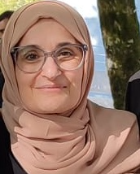
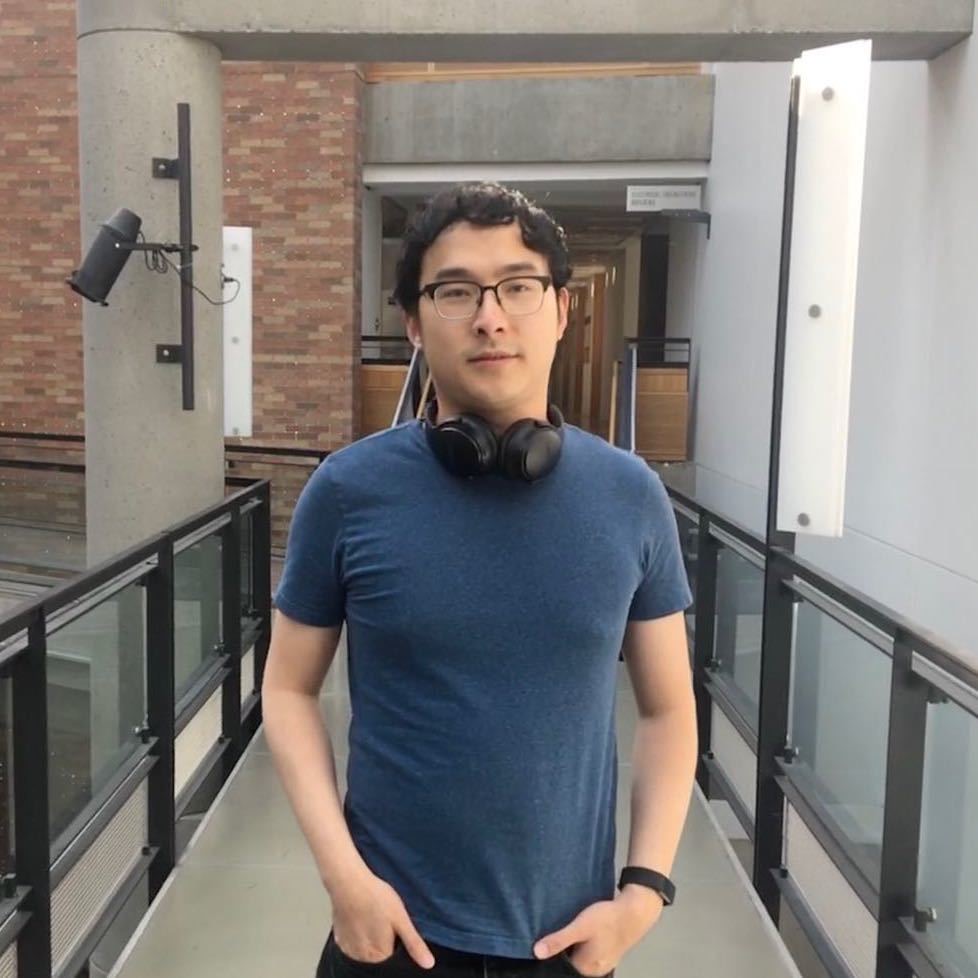
Xiaojiang Du is the Anson Wood Burchard Endowed Professor at Stevens Institute of Technology, directing research in IoT security, AI security, and wireless networks. An IEEE Fellow and ACM Distinguished Member, he leads NSF-funded projects on secure IoT systems and cross-platform security vulnerabilities. Education PhD in Electrical Engineering, University of Maryland MS in Electrical Engineering, Tsinghua University BE in Electrical Engineering, Tsinghua University Research Focus: Develops security frameworks for IoT ecosystems and adversarial machine learning, with recent breakthroughs in smart home security anomaly detection. Honors: IEEE Fellow, ACM Distinguished Member, multiple best paper awards at IEEE conferences. Graduated PhD students hold faculty positions at UNC Charlotte, UL Lafayette, and ShanXi University. Professional Service: IEEE ComSoc Distinguished Lecturer, Associate Editor for IEEE Transactions, and General Co-Chair for IEEE/ACM IWQoS 2023. Secured $9M+ in research funding from NSF, NSA, and DOD.
Jens Kreitewolf is a Faculty Lecturer in the Departments of Psychology and Mathematics and Statistics at McGill University. He teaches courses in statistics, research methodology, and psychophysics. His research focuses on auditory cognition, speech comprehension, and the neural mechanisms underlying voice perception. Dr. Kreitewolf holds a Ph.D. (Dr. rer. nat.) from Humboldt University of Berlin and completed postdoctoral fellowships at BRAMS and the University of Lübeck. His work combines experimental psychology, neuroimaging, and psychophysics to explore auditory processing challenges in adverse listening conditions. Key interests include how familiarity with a talker’s voice aids comprehension and the impact of hearing impairment on speech perception. Education: M.Sc. in Psychology (Ruhr University Bochum, 2009); Ph.D. in Psychology (Humboldt University of Berlin, 2014). Research Interests: Auditory scene analysis and speech-in-noise processing Voice recognition and familiarity effects Neural correlates of perceptual decision-making Circadian rhythms and perceptual sensitivity Cognitive neuroscience of auditory attention Publications highlight contributions to understanding: Risk factors for depression symptom progression Self-concept clarity in romantic evaluations Neurobiological mechanisms of working memory vulnerability Vestibular symptoms in migraine patients His interdisciplinary approach bridges psychology, statistics, and neuroscience, with applications to clinical populations and sensory processing disorders.
Kenneth Ross is a Professor in the Computer Science Department at Columbia University in New York City. His primary appointment is within the Department of Computer Science, with affiliations including the Foundations of Data Science Committee. His work bridges theoretical database research and practical system implementation. His research focuses on database systems with particular expertise in query processing, query language design, data warehousing, and architecture-sensitive database system design. Additional research spans computational biology, especially analysis of large genomic data sets. Current projects include Linear Algebra Operators in Databases for machine learning workloads and Repeats and Somatic Mutation analysis in genomics. His work consistently addresses the intersection of hardware capabilities and database system design. Ross leads the Database Research Lab at Columbia, which has produced significant work on query optimization, GPU database processing, and hardware-conscious database systems. His recent publications demonstrate strong focus on adapting database systems to modern hardware including GPUs, SIMD processors, and persistent memory. His scientific recognition includes: Packard Foundation Fellowship Sloan Foundation Fellowship NSF Young Investigator Award Distinguished Faculty Teaching Award (2008) Ross actively advises undergraduate engineering students (juniors with last names P-Z) and has taught foundational courses including Introduction to Databases and Programming and Problem Solving for over two decades. His teaching portfolio shows consistent engagement with both theoretical concepts and practical implementation challenges in computer science education.
Leslie Valiant is the T. Jefferson Coolidge Professor of Computer Science and Applied Mathematics in Harvard University's School of Engineering and Applied Sciences, where he has held a faculty position since 1982. A foundational figure in theoretical computer science, his work bridges artificial and natural computational phenomena across multiple disciplines. His academic background includes education at: King's College, Cambridge Imperial College, London Ph.D. in Computer Science from Warwick University (1974) Valiant's research spans computational complexity , machine learning theory , parallel systems , and computational neuroscience . He pioneered the PAC (Probably Approximately Correct) learning framework that established computational learning theory as a rigorous field. His holographic algorithms work revealed deep connections between computational complexity and statistical physics, while his neuroidal model and evolvability theory provide computational explanations for cognitive processes and biological evolution. Current investigations focus on cortical computation primitives and knowledge infusion architectures. His publication trends show increasing integration of neuroscience with computational theory since 2010, with dominant themes in holographic computation (2006-2018), cortical modeling (2012-2018), and evolvability (2009-2017). The work consistently applies computational complexity analysis to biological and cognitive systems. Major recognitions include: Nevanlinna Prize (1986) for mathematical aspects of computer science Knuth Award (1997) for foundational algorithms contributions EATCS Award (2008) for theoretical computer science impact Turing Award (2010) for computational learning theory and complexity Fellowship in the Royal Society and National Academy of Sciences Valiant's research has been supported by NSF and international grants enabling cross-disciplinary work in computational neuroscience and evolutionary algorithms. While specific advisees aren't documented in source materials, his theoretical frameworks have shaped generations of researchers in machine learning and complexity theory. His current research group explores neuroidal architectures for cognitive computation, investigating how cortical circuits achieve robust information processing through in-circuit testing methodologies. Ongoing projects aim to identify fundamental computational primitives in neural systems and develop biologically inspired AI frameworks.
Irina Oleinikova is a Professor at the Norwegian University of Science and Technology (NTNU) in the Department of Electric Energy, Faculty of Information Technology and Electrical Engineering. She leads the Power System Operation and Analysis research group and serves as the NTNU Smart Grid Team Leader. She is a steering committee member of the European Energy Research Alliance (EERA) Joint Programme on Smart Grids and an expert in the International Smart Grid Action Network (ISGAN) WG6. Research Interests : Power System Operation, Digital Power System Protection and Control, Grid Resilience, Energy Flexibility, Cybersecurity in Power Systems, and Hydrogen Technology Integration. Her work focuses on advancing smart grids, grid flexibility, and cybersecurity through projects like FME CINELDI, HONOR, ASAP, and ZeroKyst. Key Projects : CINELDI : Developing intelligent electricity distribution grids. HONOR : Cross-sectoral energy flexibility markets. ASAP : Next-generation system protection schemes. ZeroKyst : Hydrogen and charging infrastructure along Norway’s coast. COSPAT : Stability of AC/DC transmission grids via co-simulation. Advising & Grants : Supervises PhD students in digital protection and cybersecurity. Active in projects funded by RCN, STATNETT, and EU Horizon 2020. Leads the Power System Operation and Analysis group and collaborates with SINTEF and industry partners. Labs/Teams : NTNU Smart Grid Team and the Power System Operation research group.
Clyde Kruskal is an Associate Professor in the Department of Computer Science at the University of Maryland, College Park. His research focuses on parallel architectures, models, and algorithms. He earned a Ph.D. from New York University in 1981 and a bachelor’s degree from Brandeis University in 1976. His work includes foundational contributions to parallel computing, such as the read–modify–write concept in distributed systems. Kruskal’s research spans topics like interconnection networks, synchronization mechanisms, and algorithm design for parallel systems. Education: Bachelor’s Degree: Brandeis University, 1976 Master’s Degree: New York University (Courant Institute), 1978 Ph.D.: New York University (Courant Institute), 1981 Research Interests: Parallel computing architectures, parallel algorithms design, multiprocessor synchronization, interconnection networks, and computational geometry problems like graph coloring and visibility analysis. His work emphasizes theoretical foundations and practical implementations in parallel systems. Notable Contributions: Kruskal co-authored the book Problems With A Point: Exploring Math And Computer Science (2019), and his research includes foundational papers on parallel prefix operations, sparse matrix algorithms, and synchronization protocols. His publications span over three decades, reflecting sustained contributions to parallel computing theory and practice. Advising & Outreach: He has mentored students through programs like the Summer Combinatorial Algorithms REU at UMD, fostering undergraduate research in algorithm design and parallel computing.
Giancarlo Ferrari Trecate is an Adjunct Professor at the Swiss Federal Institute of Technology Lausanne (EPFL) , affiliated with the School of Engineering and the SCI-STI-GFT department. He is also involved in teaching and research through the STI-SGM and EDRS-ENS programs. Research Interests : Automatic control, state estimation, system identification, machine learning, distributed control, hybrid systems, microgrids, biochemical networks, voltage and frequency stabilization in AC/DC microgrids. Publications Trends : His recent work focuses on integrating Neural ODEs and Hamiltonian structures for stable control systems, regret minimization in distributed control, and robust state estimation under uncertainty. Applications include autonomous mobility-on-demand , power grid optimization , and secure microgrid control against cyber-attacks. Scientific Awards : No specific awards mentioned in the provided data. Teaching & Advising : He supervises PhD students in mechanical engineering and teaches courses on Multivariable control and Networked control systems . His lab, DECODE , specializes in Dependable Control and Decision systems.
Jiaxin Lin is an Assistant Professor in the Department of Electrical and Computer Engineering at Cornell University , affiliated with the Computer Systems Laboratory . She earned her Ph.D. in Computer Science from UT Austin (2025) , preceded by an M.S. from University of Wisconsin-Madison and a B.S. from ShenYuan Honors College at Beihang University. Her research focuses on co-designing software and hardware systems to enable high-performance data center communication, particularly through: Programmable network interface controllers (SmartNICs) Terabit network system stacks Cache/memory interconnects Compilers for in-network computing Chip-to-chip interconnects Her work addresses challenges in portability across heterogeneous SmartNICs, demonstrated through the development of the Alkali compiler framework (NSDI '25). Key themes include hardware abstraction, data center scalability, and network-compute co-design. Scientific Awards: Google Junior Faculty Award (2025) MIT EECS Rising Star (2024) Google Ph.D. Fellowship (2021) Meta Ph.D. Fellowship (2021)
Xuemin (Sherman) Shen is a University Professor in the Department of Electrical and Computer Engineering at the University of Waterloo. He is a Fellow of the Institute of Electrical and Electronics Engineers (IEEE), the Royal Society of Canada, the Canadian Academy of Engineering, and the Engineering Institute of Canada. Professor Shen serves as Editor-in-Chief of multiple prestigious journals including the IEEE Internet of Things Journal and Springer Peer-to-Peer Networking and Applications. Dr. Shen received his Doctorate in Electrical Engineering from Rutgers University in 1990, following a Master of Applied Science from the same institution in 1987. His undergraduate degree is a Bachelor of Applied Science in Electrical Engineering from Dalian Marine University, China (1982). Professor Shen's research spans wireless communications and networking, with particular expertise in resource allocation, mobility management, wireless network security, and privacy preservation. His work extends to IoT applications, connected and automated vehicles, network digital twins, and satellite-terrestrial networks. His research has been applied to vehicular networks, wireless body area networks, remote e-healthcare systems, and smart grid technologies, demonstrating both theoretical depth and practical impact across multiple domains. His recent publications reveal strong trends in AI-assisted networking, security and privacy preservation for IoT applications, and energy management in vehicular and smart grid systems. The research shows an increasing focus on integrating AI techniques with traditional networking approaches, addressing critical challenges in security, privacy, and resource management for next-generation wireless systems. R.A. Fessenden Award (2019) from IEEE Canada James Evans Avant Garde Award (2018) from the IEEE Vehicular Technology Society Joseph LoCicero Award (2015) from the IEEE Communications Society Education Award (2017) from the IEEE Communications Society West Lake Friendship Award from Zhejiang Province (2023) President's Excellence in Research from University of Waterloo (2022) Canadian Award for Telecommunications Research (2021) Professor Shen has mentored over 100 graduate students and postdoctoral fellows throughout his career, with many now holding prominent academic positions at top universities worldwide. His supervision has been recognized with multiple awards including the Award of Excellence in Graduate Supervision (2006) from the University of Waterloo. He has served in numerous leadership roles including Past President of the IEEE Communications Society and has chaired major international conferences including IEEE Globecom 2024.
Patrick Kastner is an Assistant Professor at the School of Architecture and holds an adjunct appointment at the H. Milton Stewart School of Industrial and Systems Engineering at Georgia Tech. He directs the Sustainable Urban Systems Lab, focusing on environmental performance simulation and urban decarbonization. His work emphasizes software tools for sustainable urban decision-making, such as Eddy3D, a microclimate modeling toolkit widely adopted in academia and practice. Education: Ph.D. and M.S. in Systems Science and Engineering, Cornell University (2022, 2021) M.S. in Sustainable Building Science, Technical University of Munich (2017) B.S. in Energy Engineering, University of Erlangen–Nuremberg (2012) Research Interests: Environmental performance simulation, urban decarbonization, machine learning applications in urban systems, spatial analysis, and software development for sustainability. His work integrates computational fluid dynamics (CFD), surrogate modeling, and data-driven approaches to address urban climate challenges. Key Projects: Leads the Vertically Integrated Project SMUR (Surrogate Modeling for Urban Regeneration), fostering interdisciplinary collaboration across Georgia Tech. Developed Eddy3D, which streamlines microclimate simulations for architects and urban planners. Grants & Advising: Engages students from sophomore to graduate levels in sustainability research. Teaches at Cornell and UPenn previously. Advises on projects blending engineering, urban design, and climate science. Labs & Teams: Director of the Sustainable Urban Systems Lab, focusing on software tools for sustainable urban transformation. Collaborates with industry partners and global institutions on decarbonization strategies.
Jalaa Hoblos is an Associate Professor of Practice in the Department of Computer Science at Stony Brook University, part of the College of Engineering and Applied Sciences. She holds a B.S. from the Lebanese University in Beirut, Lebanon, and an M.S. and Ph.D. in Computer Science from Kent State University. Prior to Stony Brook, she served as an Assistant Professor at Penn State Behrend, a Visiting Assistant Professor at Hiram College, and adjunct faculty at Kent State University and the University of Akron. Her primary roles include teaching and research. Her research focuses on Data Quality Analysis, Cloud Computing (particularly load balancing and security), Wireless Networks Security, and Statistical Mathematics. She has explored topics such as fairness and throughput in multi-hop wireless networks, malicious behavior detection in clouds, and protocol modifications like the adaptive 802.11 MAC. Her work integrates statistical methodologies with network optimization and security challenges. Recent publications emphasize anomaly detection in time-series data and fairness-enhancing protocols. She has also applied techniques like Latent Semantic Analysis to educational technology. No scientific awards are explicitly mentioned in the texts. While no advising or grant details are provided, her teaching includes courses like CSE 114 (OOP), CSE 101 (Principles), CSE 310 (Computer Networks), and security-focused courses such as ISE 331 (Fundamentals of Computer Security). She has maintained consistent academic engagement across institutions and disciplines.
Danyang Zhuo is an Assistant Professor of Computer Science at Duke University, Trinity College of Arts & Sciences, with expertise in datacenter/cloud computing and machine learning systems. He joined Duke in 2020 after postdoctoral research at UC Berkeley under Ion Stoica and a PhD at the University of Washington advised by Tom Anderson and Arvind Krishnamurthy. Education: PhD in Computer Science (University of Washington, 2019) His research focuses on improving cloud infrastructure through systems like Phoenix (application-level abstractions) and Phantora (GPU cluster simulation). Recent work explores LLM verification, tensor compression via video codecs, and fairness in LLM serving. His 15 most recent publications span operating systems, machine learning, and networked systems conferences like HOTOS, NSDI, SIGCOMM, and OSDI. Scientific honors include NSF CAREER Award (2023), USENIX Security Distinguished Paper (2023), and multiple industry research awards. He has secured major NSF grants for projects including "OS-Managed Remote Procedure Call" and "Campus-level RDMA Networking." At Duke, he advises PhD students and teaches courses such as Introduction to Operating Systems (CompSci 310) and Systems for Machine Learning (CompSci 590.05). His work appears in leading conferences and journals, with collaborations across institutions including UC Berkeley, University of Washington, and industry partners.
Tariq Iqbal is an Assistant Professor at the University of Virginia , with joint appointments in the Department of Systems and Information Engineering and Department of Computer Science . He leads the Collaborative Robotics Lab (CRL) , specializing in human-robot teams and embodied AI . Previously, he was a Postdoctoral Associate at MIT's CSAIL , advised by Prof. Julie Shah , and earned his Ph.D. in Computer Science from University of California San Diego (UCSD) under Prof. Laurel Riek . Ph.D. in Computer Science, University of California San Diego (2017) M.S. in Computer Science, University of Texas at El Paso (2012) B.S. in Computer Science and Engineering, Bangladesh University of Engineering and Technology (2007) His research lies at the intersection of artificial intelligence and robotics , focusing on human-robot collaboration in dynamic environments. Key areas include motion prediction , multimodal fusion , trust modeling , and collaborative learning . His work integrates cognitive science and deep learning to enhance robotic fluency in naturalistic settings. Recent publications (2023–2025) highlight advancements in human-robot team dynamics , multimodal dataset creation , and motion prediction algorithms . Notable works include Energy-Based Transformers for scalable AI, PoseTron for motion prediction, and Accessible Navigation Mapping for assistive robotics. These contributions span trust modeling , cloud robotic infrastructure , and safety in close-proximity collaboration . National Science Foundation (NSF) CAREER Award Air Force Office of Scientific Research (AFOSR) Young Investigator Program (YIP) Award Commonwealth Center for Advanced Manufacturing (CCAM) Innovation Award As faculty, he has secured grants from NSF and AFOSR , mentored research students, and taught courses like Stochastic Modeling I (SYS 6005) and Robots and Humans (SYS 4582/6465, ECE 4502/6465, CS 6465) . His prior industry roles at IBM Watson Lab and Grameenphone Ltd. inform his applied research in telecom infrastructure and cognitive robotics . He leads the Collaborative Robotics Lab (CRL) at UVA, which develops multimodal datasets , real-time coordination algorithms , and adaptive pathfinding systems . Current projects explore human motion prediction , team synchrony , and embodied question-answering , reflecting his commitment to advancing human-robot fluency and contextual AI .
Roy Dong is an Assistant Professor at the University of Illinois at Urbana-Champaign, affiliated with the Coordinated Science Laboratory. His research bridges Control Theory Economics Statistics Optimization to address challenges in cyber-physical systems and the Internet of Things, focusing on data manipulation, privacy, and strategic behavior in interconnected systems. His academic journey includes a Ph.D. in Electrical Engineering and Computer Sciences from UC Berkeley (2017) and dual B.S. degrees in Economics and Computer Engineering from Michigan State University (2010). At Illinois, he teaches courses ranging from Control Systems to Convex Optimization , with multiple teaching excellence awards. Roy's research explores Closed-loop effects of machine learning Causality in decision systems Incentive design for strategic agents Privacy-utility tradeoff optimization Human behavior modeling with applications in smart grids, transportation networks, and semi-autonomous vehicles. His work formulates privacy-preserving mechanisms as optimization problems, balancing data utility against user privacy in dynamic systems. Article trends show expertise in Game theory for strategic data sources Energy disaggregation techniques Nonlinear basis pursuit algorithms Privacy-aware control systems with a focus on cyber-physical systems and human-in-the-loop applications. Scientific recognition includes 'Teacher Ranked as Excellent' awards (ECE 120, ECE 486, ECE 515) Contributions to smartSDH building control and CPRL compressive sensing Roy leads the Privacy-aware Control Systems research group, collaborating with institutions like UC Berkeley and Michigan State University , and directs projects funded by grants including the New USDA NIFA grant for agricultural robot autonomy .
Dr. Dominika Ignasiak is a Researcher affiliated with the Institute of Biomechanics at ETH Zürich. Her work focuses on spinal biomechanics, musculoskeletal modeling, and computational analysis of spinal pathologies. She contributes to understanding the biomechanical implications of surgical interventions, spinal deformities, and age-related changes in spinal alignment and loading. Her research integrates clinical data with advanced musculoskeletal modeling techniques, particularly in predicting postoperative outcomes and assessing spinal load distributions under dynamic conditions. Key areas include spinal stenosis, idiopathic scoliosis, and the biomechanics of spinal fusion surgery. Dr. Ignasiak collaborates on translational studies bridging computational simulations with clinical applications. Her publications emphasize the role of personalized models in optimizing surgical strategies and understanding degenerative spinal conditions. While no formal awards are listed, her contributions to spinal biomechanics research are evident through her active publication record in high-impact journals. Dr. Ignasiak is based at ETH Zürich’s Institute of Biomechanics, where she engages in cutting-edge research and contributes to both academic and clinical advancements in orthopedic biomechanics.