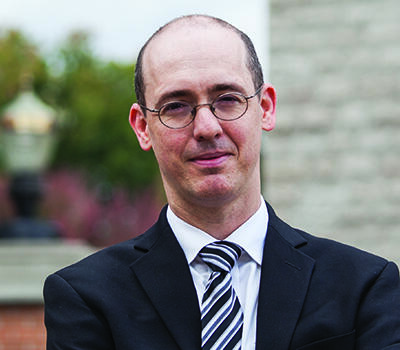
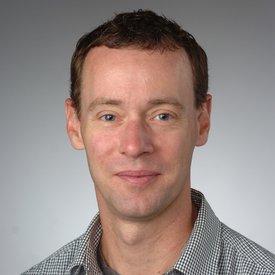
Christopher Dell is a Professor and theorist specialising in urban forms of knowledge, organisational theory, and relational practices. He directs the Institute for Improvisation Technology (ifit) in Berlin and previously held a professorship for Urban Forms of Knowledge at a university (exact name unspecified). His work focuses on trans-disciplinary approaches to urban design, improvisation in architecture, and the interplay of organisational processes and urban spaces. His research interests include the conceptualisation of relational forms of action, spatial agency, and the role of improvisation in architectural and urban design. He has taught at institutions like Technical University Munich, the Architectural Association in London, and the University of the Witwatersrand in Johannesburg. Publications span urban theory, collaborative planning methodologies, and spatial analysis, with recent works addressing contested urban spaces and performative approaches to urban design. His projects often involve experimental collaborations, such as the 'Building a Proposition for Future Activities' initiative in Hamburg. He leads the ifit institute, exploring improvisation as a tool for innovative spatial practices. His teaching includes courses on urban composition, research methods, and the social dimensions of urban environments.
Federica Frabetti is an academic and author affiliated with the School of Arts, Humanities, and Social Sciences, holding a position in the Centre for Research in Arts and Creative Exchange. She convenes the BA(Hons) in Digital Media program and holds a Senior Lecturer academic rank. Her work bridges cultural studies, philosophy, and technology, with a focus on software theory, digital humanities, and gender studies. Frabetti earned a BA(Hons) in Classics from the University of Bologna, followed by an MRes and PhD in Media and Communications from Goldsmiths, University of London. Her research explores the intersection of technology and culture, including studies on software materiality, originary technicity, and the ethical implications of AI. She has authored Software Theory (2015) and edited several volumes. Her recent work critiques biometric bordering technologies and predictive policing software's human rights impacts. Frabetti has held visiting lectureships at Oxford Brookes University, University of Sussex, and Columbia University, among others. Key research trends in her articles include critical analyses of AI ethics, biometric surveillance systems, and software's philosophical underpinnings. She co-authored influential papers on feminist approaches to AI and the performativity of technology. Frabetti serves on editorial boards for journals like Digital Culture & Society and JDMDH , and is a Fellow of the UK Higher Education Academy. Education: BA(Hons) Classics, University of Bologna MRes Media and Communications, Goldsmiths, University of London PhD Media and Communications, Goldsmiths, University of London Her advisory work includes overseeing PhD students Shirin Bismillah and Tanya Wetenhall. Collaborations span institutions like the Humanities and Critical Code Studies Lab (USC) and the Metabody Project. She actively engages in media discussions through podcasts like Culture Machine Live and In the Midst of Philosophy .
Dr T. J. Bacon is a Research Fellow at the Guildhall School of Music & Drama (GSMD), affiliated with the De-Centre for Socially Engaged Practice & Research. She specializes in performance art, phenomenology, and queer/trans theory, co-authoring influential works like An Introduction to the Phenomenology of Performance Art: SELF/s (2022) and The Phenomenology of Blood in Performance Art (2025). Her practice integrates art, activism, and academia, focusing on trans+ identities, disability, and socially engaged research. She supervises PhD students at GSMD, emphasizing experimental methodologies. Education: PhD in Experiencing a Multiplicity of Self/s (University of Bristol, 2017), MA in Performance (Goldsmiths, 2006), BA in English & Theatre Studies (London Metropolitan University, 2003), and PGCE in Post-Compulsory Education (University of Greenwich, 2007). Research interests include queer phenomenology, crip theory, disaster studies, and futures. She co-created the Performance for Futures methodology through an EU/UNESCO project (2020–2023) and founded the Trans+ Virtual Centre of Excellence (2024), a global network advocating trans+ inclusion. She also curates the Tempting Failure performance festival and serves as an external examiner at University of the Arts London (UAL). Her work challenges oppressive structures through art, blending interdisciplinary practices with radical pedagogy. Recent projects explore queered esoterica and temporal resistance, emphasizing hope as a transformative force.
Stephen Ramsey, an Associate Professor at Oregon State University, holds dual appointments in the School of Electrical Engineering and Computer Science (College of Engineering) and the Department of Biomedical Sciences (Carlson College of Veterinary Medicine). With a PhD in Physics from the University of Maryland, his postdoctoral training in computational genomics at the University of Washington, and professional experience at the Institute for Systems Biology and Center for Infectious Disease Research, Ramsey bridges computational methods with biomedical applications. Education : Ph.D., Physics, University of Maryland; M.S., Physics, University of Maryland; Sc.B., Mathematical Physics, Brown University Ramsey specializes in computational systems biology , focusing on bioinformatics , biomedical knowledge graphs , and precision medicine . His research integrates machine learning , gene regulatory network modeling , and multi-omics data analysis to address challenges in rare disease diagnostics , drug monitoring , and inflammatory disease mechanisms . Current work includes AI-driven biomedical translation and electrochemical biosensor development for non-invasive diagnostics . Recent publications highlight knowledge graph applications in translational biomedicine , causal network inference in clinical-environmental data integration , and cross-species cancer transcriptomics . His team develops tools like RTX-KG2 and PloverDB to standardize biomedical data sharing and semantic reasoning . Scientific Awards : 2019 Zoetis Award (Carlson College of Veterinary Medicine) 2016 NSF CAREER Award 2016 PhRMA New Investigator Award 2010 NIH K25 Mentored Quantitative Research Award Ramsey advises in computational biology courses (CS 446/546) and contributes to biomedical AI through projects like mediKanren for rare disease diagnostics . His NSF-funded research explores gene expression noise and regulatory network dynamics , while NIH and PhRMA grants support his translational medicine initiatives. He leads the Ramsey Laboratory , which develops graph-based reasoning tools for biomedical data translation and multi-omics integration . The lab's work spans comparative oncology models, electrochemical biosensors , and knowledge graph infrastructure for clinical decision support .
Patrick Finney is a Professor and currently serves as Acting Faculty Pro Vice-Chancellor for the Faculty of Arts and Social Sciences at Aberystwyth University. He holds a BA in International History and Politics and a PhD in International History from the University of Leeds, joining Aberystwyth University in September 2002. His academic career includes significant leadership roles as Head of the Department of International Politics, Director of Research, Deputy Head, and Director of Undergraduate Studies within the department, as well as Director of Undergraduate Studies for the Institute of Geography, History, Politics and Psychology. Finney's research focuses on twentieth century international history, 'collective memory,' and theory and method in historical writing. He is particularly known for his work on Second World War collective memory, the League of Nations and inter-war years, and cultural approaches to international history. His scholarship bridges traditional diplomatic history with cultural and theoretical approaches, establishing him as a recognized authority on 'culturalist' international history. His 2010 monograph Remembering the Road to World War Two examines the relationship between international history, national identity, and collective memory in the historiography of WWII origins. His recent publications demonstrate a continued focus on global historical memory, particularly regarding the Second World War. Finney is completing a monograph titled Good War Follies , described as a 'panoramic, transnational, global history of the collective memory of the Second World War since the end of the Cold War.' He has also developed projects exploring 'authenticity' in contemporary cultural memory of WWII, building international collaborative networks through edited collections such as Remembering the Second World War (2017). Among his professional recognitions, Finney is a Fellow of the Royal Historical Society, served as Chair of the British International History Group (2017-2024), and is Editor of the journal Rethinking History . His editorial work extends to the Journal of War and Culture Studies and service on the Arts and Humanities Research Council peer review panel (2012-2019). Finney has received research funding from prestigious bodies including the AHRC and the British Academy, including an Overseas Conference Grant for the International Studies Association Annual Convention in 2010. He maintains a long track record of PhD supervision, welcoming students interested in collective memory (particularly regarding WWII), critical historiography in international history, inter-war international history, Southeastern European history, and historical theory (especially Hayden White's work). He has also contributed public commentary, including a 2022 media piece titled 'Britain must heed the lessons of history and let in Ukrainian refugees.'
Ed Krčma is an Associate Professor in the Department of Art History and World Art Studies at the University of East Anglia (UEA), leading the School of History and Art History. He specializes in modern and contemporary art, with a focus on European and American art from the 1950s–60s and contemporary practices. His research explores art’s engagement with everyday life, image/text dynamics, and medieval/contemporary art intersections. Education: B.A. (2000, Nottingham), M.A. (2002), Ph.D. (2007, University College London) Research interests include Robert Rauschenberg’s solvent transfers, drawing theory, and intersections between art and philosophy. He is co-curating the 2026 exhibition The Rule: Shaping Lives, Medieval and Modern at the Sainsbury Centre. Key publications include a 2017 monograph on Rauschenberg’s Inferno series and articles in Art History and Burlington Magazine . Current projects include a book on 'compression' in contemporary art. He supervises PhDs on topics like Tacita Dean, Philip Guston, and Irish contemporary sculpture. His administrative roles include Head of Department (2021–present) and Research Coordinator (2019–2021). Teaching focuses on post-1945 American/European art, drawing theory, and art’s relationship with philosophy.
Dennis C. Coates is a Professor of Economics at the University of Maryland, Baltimore County (UMBC). His research focuses on Public Choice, Public Finance, and Sports Economics, with a particular emphasis on evaluating the economic impacts of sports events, policy analysis of public subsidies for sports facilities, and the behavioral economics of fan attendance. He holds a Ph.D. from the University of Maryland and has held academic positions within the Department of Economics at UMBC for over two decades. Coates' work spans theoretical and applied economics, including studies on Olympic bid referendums (e.g., Hamburg and Munich), competitive balance in sports leagues, and the socio-economic effects of fitness programs. His research also examines the interplay between interest groups and economic development, as well as the long-term impacts of professional sports franchises on urban areas. Notable recent contributions include analyses of voter opposition to hosting the Winter Olympics, the role of designated players in Major League Soccer, and the valuation of minor league baseball's social benefits. His publications appear in journals such as Contemporary Economic Policy , Journal of Sports Economics , and Public Choice . Coates' teaching and research are supported by a dedicated academic office (PUP 323) and administrative hours at the Public Policy Building. His current projects include working papers on fitness substitution effects and collaborative innovation in MLB stadium construction, reflecting his continued engagement with both sports economics and broader public policy issues.
Dr. Richard W. Lachman is a Professor in Digital Media at Toronto Metropolitan University's RTA School of Media, while currently on leave. He serves as Director of Zone Learning, Creative Technology Research and Development, and the Experiential Media Institute. Director, Zone Learning (Toronto Met) Director, Creative Technology R&D Director, Experiential Media Institute His research explores convergent media, digital documentary, collaborative work, and new storytelling forms. He specializes in prosocial VR applications, interactive cinema, and emotional regulation through games. Current projects include immersive narratives for mental health and AI-enhanced media production. Recent scientific publications focus on: Virtual reality applications for clinical psychology Interactive storytelling in metaverse environments Conversational AI design challenges Prosocial impact of immersive media AI integration in entertainment workflows Awarded the Gemini Award for creative production, Lachman collaborates with Discovery Channel Canada, NFB, CTV, and the Banff Centre for the Arts. His work spans entertainment properties, educational gamification, and cross-disciplinary innovation in STEAM education. Over 25 years of industry experience in computer games shipping millions of copies Featured in New York Times, Time Magazine, and USA Today Exhibited at American Museum of the Moving Image
Dr. Norah Lorway is an Assistant Professor at the RTA School of Media, Toronto Metropolitan University. She specializes in artificial intelligence and music research, film composition, and live coding performance. With a PhD in Computer Music & Human-Computer Interaction from the University of Birmingham, her work bridges technology, health care, and creative expression. Her research spans artificial intelligence applications in music and healthcare, digital sound design, and human-computer interaction. Key projects include developing AI assistants for dementia care with the NHS and co-creating the Scorch music programming language. Education: BMus, Piano Performance, Mount Allison University Masters, Music Computing, University of Calgary PhD, Computer Music & Human-Computer Interaction, University of Birmingham Postdoc, University of British Columbia Awards: 18 Women Composers You Should Know (Sundance Institute, 2019) Cinema Eye Honors Nominee (2020) Immersion Fellowship, South West Creative Technology Network (2018) She co-founded the Studio for Creative Artificial Intelligence and has two software companies. Her artistic works have been featured globally, including TIFF and Sundance festivals.
Mohsen Amini is an Associate Professor in the Department of Computer Science and Engineering at the University of North Texas (UNT). He previously held tenured positions at the University of Louisiana Lafayette (UL Lafayette) and completed postdoctoral research at the University of Miami and Colorado State University. His research focuses on Cloud 2.0 systems, AI-friendly serverless architectures, and domain-specific computing for Industry 4.0, multimedia, and edge-to-cloud integration. He leads the High Performance Cloud Computing (HPCC) Lab and has attracted over $2.7 million in research funding, including an NSF CAREER Award (2021). His work emphasizes democratizing cloud-native development and enhancing system resilience through heterogeneous computing frameworks. Education: Ph.D. in Computing and Software Engineering, University of Melbourne (2012) M.Sc. in Software Engineering, Ferdowsi University (2006) B.Sc. in Software Engineering, Azad University (2003) Research Interests: Cloud+AI Integration Fluid Computing across Edge-to-Cloud Continuum Domain-Specific Cloud Platforms (e.g., Industry 4.0, Multimedia) Confidential Computing Security Awards: NSF CAREER Award (2021) Best Service Award at IEEE/ACM CCGrid 2023 Francis Patrick Clark/BORSF Endowed Professorship (2021–2024) Grants & Projects: NSF IRES Track 1: Wireless Federated Fog Computing for Remote Industry 4.0 ($400k grant) NSF CAREER: Special-Purpose Cloud for Serverless Multimedia Streaming ($513k grant) SmartSight: AI-Based Platform for Visually Impaired Assistance ($499k grant) Teaching & Advising: Current advising 5 PhD students and leading a team of 25+ researchers Teaches courses on Cloud Computing, Distributed Systems, and Software Engineering Lab & Collaborations: HPCC Lab develops open-source tools like the E2C simulator and OaaS framework. Active collaborations with institutions like IMDEA Networks and industry partners like Hub Enterprise Inc.
Peter Schwehr is a Professor and Head of the Competence Center for Typology and Planning in Architecture at the Hochschule Luzern - Technik & Architektur (HSLU T&A). He also serves as an Honorarprofessor at TU Berlin and leads the Institute of Architecture (IAR) ad interim. His roles include research leadership in urban transformation, sustainable building, and architectural typology. Educational Background: 2004: Dr.-Ing. (Technical University of Stuttgart) 1996: Dipl.-Ing. in Architecture (Technical University of Stuttgart) Additional qualifications in didactics and emergency services Research Focus: Transformations of buildings and neighborhoods in sustainable contexts, evolutionary architectural processes, interdisciplinary planning methods, and architectural theory emphasizing 'open architecture.' Key projects include Hybridize the Ordinary , Low Tech High Rise , and Smart Density . Publications & Articles: Over 50 peer-reviewed works, book chapters, and reports focusing on urban quality, retrofitting strategies, and modular building systems. Recent themes include density optimization, post-anthropocentric urbanism, and resilient architecture. Awards: 1st Prize for the TU Berlin competition project 'Mikrowohnen barrierefrei?' (2021). Grants & Collaborations: Led projects funded by Innosuisse, BFE, and BWO, including Wertvermehrende Sanierungsstrategien and SanStrat . Active in national networks like Brenet and SIA. Labs & Teams: Directs the Competence Center for Typology and Planning (CCTP), organizing interdisciplinary workshops and international conferences on urban challenges.
Inger-Lise Ulsrud is a Professor of Organ and Organ Improvisation at the Norwegian Academy of Music and Cantor at Oslo's Uranienborg Church. She holds a distinguished career in church music, organ performance, and music education. Her expertise spans organ improvisation, historical performance practices, and Norwegian sacred music traditions. She has led the church music department at the Norwegian Academy of Music and contributed to national projects like the Norwegian Hymn Book 2013. Ulsrud is actively involved in international festivals, competitions, and publications, including her acclaimed textbook Confessions of an Improviser (2018). Education: Norwegian Academy of Music (Church Music) Hochschule für Musik und Darstellende Kunst, Frankfurt (Concert Organist Diploma) Stockholm Studies in Organ Improvisation Düsseldorf Studies on Messiaen Research Focus: Ulsrud’s work explores organ improvisation techniques, historical performance practices of organ literature, and pedagogical approaches to church music education. She emphasizes Norwegian cultural heritage in her compositions and performances, often collaborating with living composers like Kjell Mørk Karlsen. Her discography includes recordings of Messiaen, Brahms, and contemporary Norwegian works, showcasing her versatility across eras and genres. Ulsrud has also served on international juries, including the Royal Swedish Academy of Music, and directed festivals such as the Bodø International Organ Festival (2020–2021). Awards: Prize at Altenberger Dom Improvisation Competition (1991) 2021 Honorary Member, Women's Student Singing Association Grants & Projects: She led the NordART-funded Messiaen’s Colours (2013–2014), an artistic research project on 20th-century organ repertoire. Her advocacy extends to choral music through roles in the Oslo International Church Music Festival and Women’s Student Singing Association recordings. Labs/Teams: Active in the Oslo Organ Festival board and vocal ensemble collaborations like the Uranienborg Vocal Ensemble (2L Records, 2016).
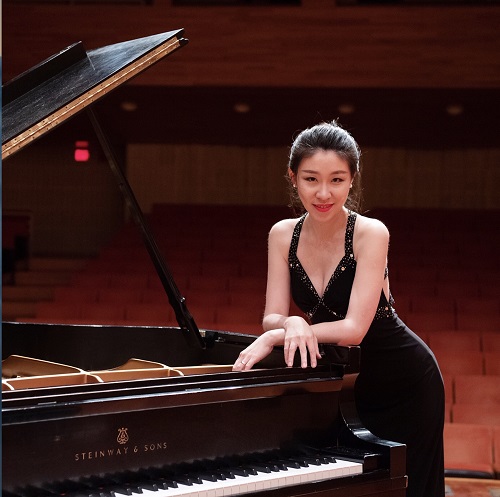
Dr. Shitong Sigler serves as an Adjunct Professor of Music (Piano) at The College of Wooster and Piano Faculty at Ashland University, where she coordinates applied piano and class piano studies. She holds a Doctor of Musical Arts (D.M.A.) from The Ohio State University, alongside multiple Master's degrees and dual Bachelor's degrees in Music and Business Economics from The College of Wooster. Her career spans international performance as a solo and chamber musician, specializing in Baroque to contemporary repertoires. She has premiered new works by living composers and collaborated with orchestras like the Wooster Symphony Orchestra and The Ohio State University Symphony Orchestra. As a collaborative pianist, she has served as principal keyboardist in orchestral, opera, and musical theatre productions. Sigler's research focuses on piano pedagogy and music entrepreneurship, presented at conferences including the National Conference on Keyboard Pedagogy and the College Music Society. She maintains a pre-college teaching studio in Columbus, Ohio, mentoring students who achieve regional honors and international examination distinctions. Her professional affiliations include roles at both institutions, with active involvement in performance, education, and advancing contemporary musical practices through performance and scholarly engagement.
Mike Goode is a Professor in the Department of English at Syracuse University, affiliated with the Women's and Gender Studies program. He holds a PhD and has published extensively on Romantic-era literature, media studies, and gender history. His work bridges literary criticism with media theory, examining how historical texts interact with evolving media forms. Research focuses on intersections between literature/media, masculinity/historiography, and 19th-century cultural practices. Notable works include Romantic Capabilities (Oxford UP, 2020) analyzing Blake, Scott, and Austen's media adaptations, and Sentimental Masculinity (Cambridge UP, 2009) exploring gendered historical narratives. Publications demonstrate interdisciplinary approaches to literary analysis, with recent work extending into music history through studies of Emerson, Lake & Palmer. No formal advising/grant information provided in texts. Active in academic discourse through peer-reviewed publications and scholarly reviews.
Wren Radford is a Lecturer in Religions & Theology at the University of Manchester, specializing in interdisciplinary approaches that connect practical theology with socio-economic inequalities, feminist theory, disability studies, queer theory, and postcolonial critique. Their work emphasizes collaborative research with marginalized communities and creative methodologies. Education: PhD in Theology and Religious Studies (University of Glasgow, 2019) MTheol in Theological Ethics (University of Edinburgh, 2011) MA in Divinity (University of Edinburgh, 2009) Research interests include theology and the arts, embodied resistance, and the intersection of lived experience with transformative praxis. They have explored these themes through projects like ‘The Embodied Everyday: Constructing Anti-Poverty Activism as a Theology of Practice’ . Recent publications address topics such as cripqueer care, welfare stigma, and pandemic temporality, reflecting their commitment to integrating theology with social justice. They contribute to debates on qualitative research ethics, creative methods, and anti-austerity activism.