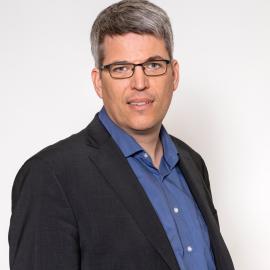
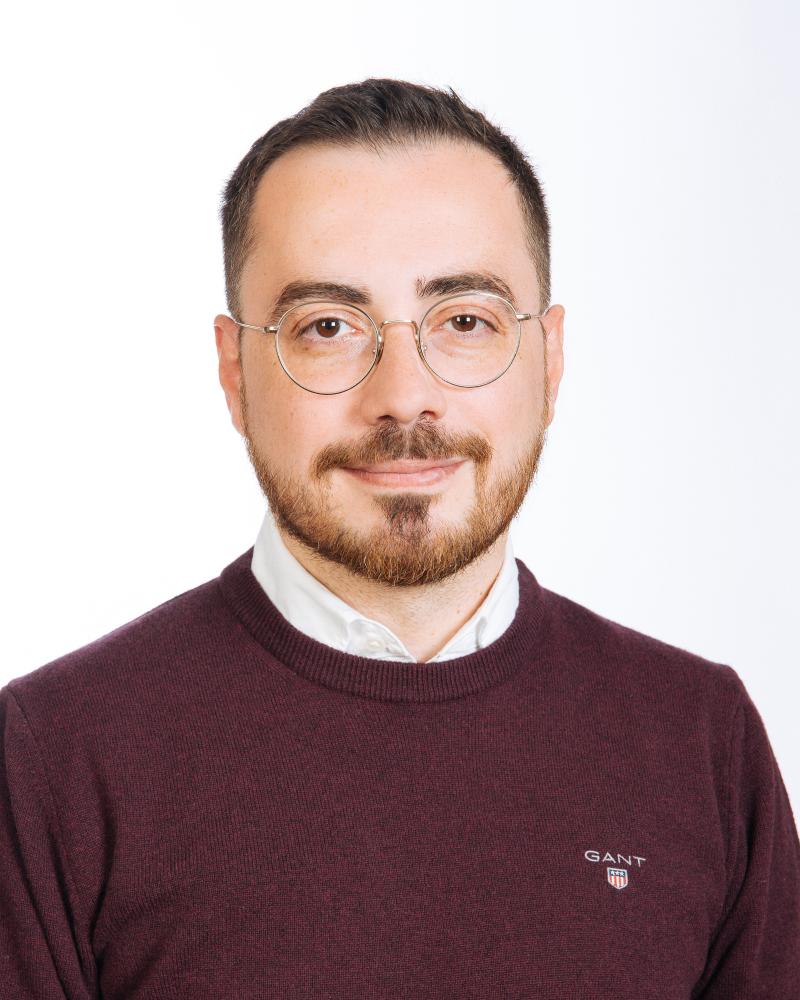
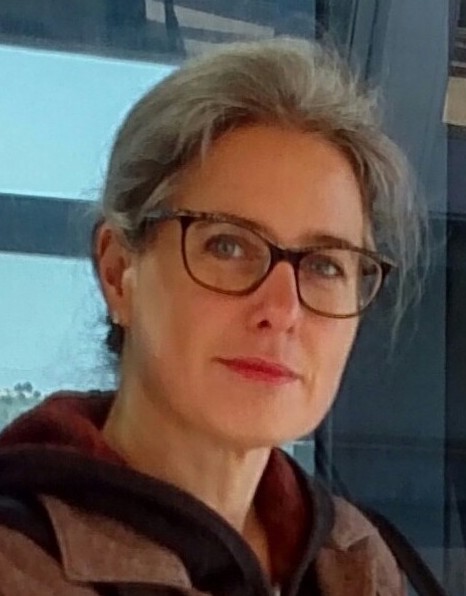
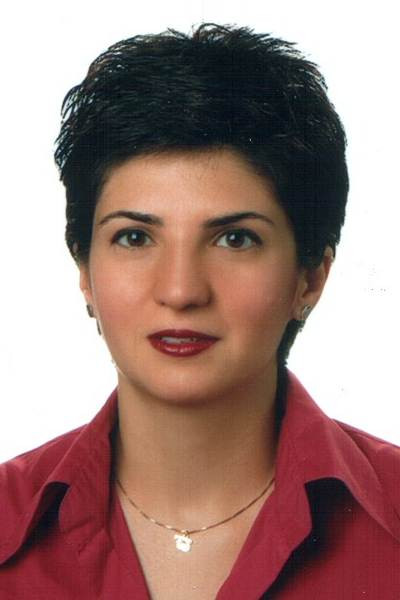
Anu Ramaswami is the Sanjay Swani ’87 Professor of India Studies and Professor of Civil and Environmental Engineering at Princeton, directing the M.S. Chadha Center. She leads research on sustainable, equitable urban systems, integrating infrastructure, food, energy, and water policies. Her work employs nexus modeling to co-produce decarbonization pathways with global cities, emphasizing health, equity, and resilience co-benefits. Recent projects analyze fine-scale urban metabolism and heat vulnerability in India. Awards include the AAEES Science Award (2022) for interdisciplinary impact. She chairs the Urban Nexus Lab, advancing data-driven urban transitions.
Devis Tuia serves as Associate Professor at the Swiss Federal Institute of Technology Lausanne (EPFL), holding appointments in the Institute of Environmental Engineering (IIE) within the School of Architecture, Civil and Environmental Engineering (ENAC). He leads the Environmental Computational Science and Earth Observation Laboratory (ECEO) since 2020 and contributes to EPFL's Doctoral Program in Civil and Environmental Engineering. His academic journey began in Lausanne with studies at UNIL and EPFL, culminating in a PhD in remote sensing from UNIL. Postdoctoral research followed at institutions in Valencia, Boulder, and EPFL, focusing on machine learning model adaptation. He progressed from Research Assistant Professor at University of Zurich to Associate and Full Professor at Wageningen University before joining EPFL. Tuia's research bridges Earth observation with artificial intelligence, specializing in interpretable deep learning for environmental applications. His lab develops algorithms for making remote sensing accessible, with particular emphasis on digital wildlife conservation through automated censuses using drone and satellite imagery. Current projects tackle the 'black box' problem in environmental modeling while advancing spatial intelligence for sustainable urban development. His 2023-2025 publication portfolio reveals three dominant trends: (1) species distribution modeling using incomplete observations, (2) multimodal fusion of satellite/drone data with textual descriptions, and (3) interpretable AI frameworks for environmental decision-making. This work consistently addresses real-world challenges like wildfire forecasting and biodiversity monitoring. As an educator, Tuia supervises 12 current PhD students and has graduated 4 former EPFL doctoral candidates. His teaching portfolio includes Frontiers of Deep Learning for Engineers , Sensing and Spatial Modeling for Earth Observation , and Image Processing for Earth Observation courses. The ECEO laboratory maintains active collaborations with ESA-NASA initiatives and conservation organizations globally.
Patrick Rérat is a Professor at the University of Lausanne, affiliated with the Institute of Geography and Sustainability within the Faculty of Geosciences and Environment. He is a prominent researcher at LIVES (Interdisciplinary Centre of Excellence for Research on Life Course Changes), where he focuses on urban mobility, transportation patterns, and sustainable mobility transitions. His research interests span transportation studies, urban mobility, sustainable transportation systems, cycling research, residential mobility, and the geography of daily mobility practices. Rérat employs interdisciplinary approaches to examine how individuals navigate urban spaces across different life stages, with particular attention to cycling infrastructure, e-mobility adoption, and the relationship between transportation modes and broader social patterns. Rérat's recent work demonstrates a strong focus on cycling practices, with numerous publications examining cargo bike adoption, e-bike usage patterns, and the effects of cycling infrastructure. His research employs various methodological approaches including user segmentation, longitudinal mobility studies, and spatial analysis of urban transportation patterns. He has made significant contributions to understanding how transportation choices evolve across the life course, particularly during youth transitions. His scholarly output includes numerous publications in leading transportation and geography journals, with recent work focusing on contemporary mobility challenges including pandemic-era transportation changes, telework impacts on mobility patterns, and the political dimensions of cycling infrastructure. As a professor at the University of Lausanne, Rérat contributes to advancing research on sustainable urban mobility while training the next generation of geographers and transportation specialists. His work bridges theoretical geographic concepts with practical urban planning applications, making significant contributions to both academic scholarship and urban policy development.
Dr. Pavlos Tafidis is a Lecturer in Transport (Systems) Engineering at the School of Engineering, University of Edinburgh. His work integrates interdisciplinary approaches to advance transport planning and engineering, with a focus on smart and sustainable mobility solutions. PhD in Transport Engineering, Hasselt University (2022) M.Sc in Transport Planning, Aristotle University of Thessaloniki (2015) M.Eng in Transportation, Aristotle University of Thessaloniki (2013) He leads projects like "BikeHood" (Science Foundation of Ireland), developing Ireland’s first cycling neighborhood, and contributes to initiatives such as "REALLOCATE" (Horizon 2020) and "CISMOB" (Interreg Europe). His research emphasizes accessible mobility solutions, equity in transport infrastructure, and urban livability. Recent publications analyze cyclist crash hotspots using machine learning, electric bike route preferences via GPS data, and traffic-emission correlations in Dublin. His expertise spans digital twins, virtual reality, and geospatial analysis. Dr. Tafidis teaches courses including Transport Engineering 3, Transport and Society, and Multi-Scale Energy Demand, affiliated with the School of Engineering and Edinburgh Future Institute.
Dr Luke Hespanhol is a Senior Lecturer in Design and Computation at the University of Sydney's School of Architecture, Design and Planning. He is affiliated with the Sydney Southeast Asia Centre and Sydney Nano Institute, and previously served as a guest researcher at Aarhus University's Department of Aesthetics and Communication. His work focuses on interactive media installations that foster reflection on human-environment relationships, blending urban design, technology, and social engagement. He holds a PhD in interactive media architecture from the University of Sydney's Design Lab, with research exploring user-centred hybrid urban environments. His doctoral work laid the foundation for his current interests in digital placemaking, urban informatics, and smart cities. Research Interests: - Designing technology-infused public spaces - Media architecture as a tool for inclusive urban development - Ethical implications of AI and blockchain in cultural contexts - Temporal and spatial dimensions of urban interaction design - HCI methodologies for multiperspectival cultural heritage interpretation - Antifragile city frameworks integrating citizen participation His recent publications highlight trends in reimagining urban futures through speculative design, ethical AI systems, and autonomous vehicle interaction paradigms. While no specific scientific awards are listed, his work often addresses critical societal issues like decolonization in technology and climate-resilient infrastructure. Grants and Collaborations: - 2025: 'Waste to Resilience: Sanitation Against Stunting and Climate Vulnerability in Informal Coastal Areas' (Sydney Southeast Asia Centre) - 2022: 'The Metaverse as Vehicle for Aboriginal Digital Inclusion, Wellness and Self-Determination' (Facebook Research) Dr Hespanhol is actively involved in the Media Architecture Institute and contributes to cross-disciplinary initiatives uniting technology, art, and urban planning. His research emphasizes co-creation processes with communities to ensure equitable technological integration in urban systems.
Aura Istrate is a Lecturer/Assistant Professor in Urban Planning & Sustainable Urbanism at the School of Architecture, Planning and Environmental Policy at University College Dublin (UCD). With an international background spanning multiple continents, she conducts interdisciplinary research on sustainable urban development, focusing on active mobility, nature-based solutions, and climate-neutral cities. She teaches GIS and urban planning modules while coordinating several significant research projects across European and Asian contexts. University College Dublin, School of Architecture, Planning and Environmental Policy Primary Coordinator of C-NEWTRAL (Horizon MSCA-DN 2024-2028) Co-Leader of REALLOCATE (Horizon Europe project 2023-2027) Principal Investigator for BIODIVERSA+ projects (NatureScape and NBS4AQUAMISSION) Educated at the University of Architecture and Urban Planning 'Ion Mincu' in Bucharest (BA and MA) and the University of Liverpool (PhD), Dr. Istrate further enhanced her teaching credentials with a Professional Certificate in University Teaching & Learning from UCD. Her academic journey reflects a strong foundation in architectural and urban planning principles combined with specialized expertise in sustainable urbanism. Dr. Istrate's research focuses on smart and sustainable urbanism, particularly examining active mobility, livable streets, green public spaces, and nature-based solutions in urban planning. Her work employs participatory, geospatial, and mixed methods to inform smart communities and the transition to climate-neutral cities. She has practical international experience in urban design and planning, with ongoing collaborations spanning European and Asian countries, currently teaching and researching across cultures in UCD and UCD's International Colleges (CDIC). Her recent publications reveal a strong focus on street vitality, urban heat adaptation, and nature-based solutions. The research demonstrates methodological diversity combining quantitative spatial analysis with qualitative community engagement approaches. Her work spans multiple geographic contexts, with particular expertise in Chinese urban environments and European cities, showing how urban planning concepts need to be contextualized for different cultural settings. The articles consistently address climate adaptation challenges through innovative approaches like urban nature games and fine-grained street classification systems. Dr. Istrate serves as a PhD thesis supervisor and is actively involved in major research initiatives including C-NEWTRAL (as Primary Coordinator), REALLOCATE (as Co-Leader), and BIODIVERSA+ projects (as PI for NatureScape and NBS4AQUAMISSION). Her grant portfolio includes Horizon Europe projects and other significant funding that supports interdisciplinary research on climate-neutral urban development. She has coordinated multiple teaching modules including Planning Design & Development, GIS & Planning, Intro to Spatial Planning, and Local Planning Studio. She leads international research collaborations and maintains active partnerships across various European and Asian countries. Her work bridges academic research with practical urban planning applications, particularly through her focus on research-by-design approaches and participatory methods that engage communities in the planning process. She has served as a lecturer, tutor, or teaching assistant across departments of Architecture, Planning, Environmental Studies, Global Studies, and Human Geography in Ireland, the UK, Czechia, Sweden, China, and Romania since 2010.
Lauren Leve is an Associate Professor of Religious Studies and Director of Graduate Studies at the University of North Carolina at Chapel Hill. Her academic career centers on the intersection of religion, culture, and changing forms of life in contemporary Nepal and South Asia. Trained as an anthropologist, she examines how religious practices and subjectivities interact with broader political, economic, and social trends, particularly those associated with neoliberal globalization. Ph.D., Princeton University B.A., University of Chicago A.A., Simon's Rock of Bard College Professor Leve's research interests span ethnographic methods, the ethnography of religion, personhood, subjectivity, the anthropology of ethics, democracy, law, violence, international development, globalism, postcoloniality, and the religious landscapes of Nepal, South Asia, and Buddhist Southeast Asia. Her work explores how religious practices mediate and are mediated by political and economic transformations, with particular attention to how human agents use religion to reflect on their world and aspirations. Her scholarly output reveals a consistent focus on Theravada Buddhism's revival in Nepal, particularly among Newar communities, and how this religious movement intersects with democratic reforms, economic liberalization, and changing forms of personhood. Her publications demonstrate expertise in both ethnographic methodology and theoretical contributions to understanding modern religious subjectivity, with a special emphasis on how global processes are reflected and reflected upon by Nepali Buddhists. James Fisher Prize for First Books on the Himalayan Region (2018) UNC FIRE grant (2016) Carolina Women's Center, Faculty Fellow (2013-14) Institute for Arts and Humanities, Faculty Fellow (2007) Harry Frank Guggenheim Foundation, Research Award (2004) Program in Agrarian Studies, Yale University, Program Fellow (2004-2005) As Director of Graduate Studies in Religious Studies, Professor Leve mentors graduate students and teaches courses on ethnographic methodologies, Theravada Buddhism, Himalayan Buddhism, and topical theories reflecting her research interests. She has consulted on research studies in international development, focusing on women's literacy and empowerment, and provides expert witness services in US courts. Her current research projects explore the globalization of Buddhist meditation through the Goenka tradition and follow rural women's experiences through development projects, Maoist insurrection, and conversion to Christianity.
Prof. Dagmar Haase is a Full Professor in Landscape and Urban Ecology at Humboldt Universität zu Berlin, serving as Deputy Director of the Geographical Institute. She holds affiliations with the Helmholtz Centre for Environmental Research (UFZ) and has earned honorary professorships in Sweden and Romania. Her academic journey includes a PhD from the University of Leipzig (1999) and Habilitation from Martin-Luther-University Halle-Wittenberg (2009). Her research focuses on urban ecosystem services, social-ecological systems, and nature-based solutions to urban challenges. Key projects include EU-funded initiatives on green infrastructure (e.g., Horizon Europe’s NaturaConnect) and climate resilience. Awards include the AXA Research Fund Award (2014) and Honorary Wallenberg Professorship (2016). Haase’s work integrates remote sensing, citizen science, and participatory modeling to address urban sustainability. Over 250+ publications and an h-index of 77 reflect her prolific contributions. She advises numerous PhD candidates exploring urban dynamics, biodiversity, and governance. Current grants span climate adaptation, urban densification, and ecological networks.
Dr. Sara Alidoust is a Senior Lecturer in Planning at the University of Queensland's School of Architecture, Design and Planning , with affiliations to the Centre for Community Health and Wellbeing and the Centre of Architecture, Theory, Criticism and History. Her research merges Urban Planning and Public Health , focusing on: Developing resilient and liveable cities through systems thinking Age-friendly urban planning for elderly populations Addressing housing vulnerability in the Global North Enhancing community engagement in policy-making Recent publications analyze topics like anti-gating policies in China , thermal comfort in vertical cities , and house-sitting practices among older Australians. Her work informs national and international planning frameworks with emphasis on health equity. As a principal advisor for PhD candidates, she supervises projects on climate-resilient urbanism , gender-focused housing models , and car-free urbanism in low-density contexts. Current initiatives include 1000 Cities Challenge health indicators development.
Branden Born is an Associate Professor in the Henry M. Jackson School of International Studies and Chair of the Department of Urban Design and Planning at the University of Washington. His work bridges academic research with community engagement, focusing on equitable planning processes and food systems governance. His research critically examines social justice in planning decision-making, regional governance, and the impacts of neoliberalism through the lens of food systems. Key interests include land use policy, state-community dynamics, democracy in development, and migration rooted in food sovereignty struggles, particularly in Oaxaca, Mexico. Dr. Born co-founded the Puget Sound Regional Council's Regional Food Policy Council and Washington State Food System Roundtable. He co-directs the University of Washington's Livable City Year program, partnering 20+ university classes annually with communities on sustainability projects, and teaches field courses on Food Sovereignty and Migration in Oaxaca.
Prof. Fatih Terzi is a faculty member in the Department of Urban and Regional Planning at Istanbul Technical University's Faculty of Architecture. His research focuses on sustainable urban development, resilience, ecology, GIS applications, and smart cities. He has held visiting researcher positions at Clemson University (USA), University College London, and Technical University Berlin. He has led projects supported by EU, TÜBİTAK, and others, addressing ecological planning, risk reduction, and urban regeneration. His work bridges academic research with practical urban planning, including projects with municipalities and the Ministry of Environment. He has received multiple awards for research and design, including the Best Paper Award (2025) and TÜBİTAK recognitions. Education: PhD in Urban and Regional Planning from Istanbul Technical University (2010), MSc in Urban Planning (2004), BSc in Urban and Regional Planning from Yıldız Technical University (2000). Research interests include spatial strategic planning, ecological cities, and climate-sensitive urban design. He uses urban modeling and GIS to address sustainability challenges. His recent projects include Istanbul's flood risk analysis, green space strategies, and sustainable city planning in Kayseri and Malatya. Notable awards include the 2024 TÜBİTAK award for urban resilience projects and the 2023 Istanbul Technical University Academic Performance Award. He has also been recognized for design competitions, including the İzmir Ecological Living Area Project (2021) and the 2017 Balkan Architectural Biennale Urbanism Grand Prix. Prof. Terzi holds administrative roles at Istanbul Technical University, including Merkez Danışma Kurulu Üyeliği (2023–present). He oversees academic projects on urban resilience, smart cities, and ecological planning, contributing to both national and international initiatives.
Prof. Müge AKKAR ERCAN is a Professor in the Department of City and Regional Planning at Middle East Technical University (METU), Ankara. She holds a PhD in Urban Design from the University of Newcastle, UK, alongside B.Sc. and M.Sc. degrees in City and Regional Planning from METU. Her academic roles include teaching courses on urban design studios, planning strategies, and thesis supervision. She specializes in urban design, public space analysis, urban regeneration, and sustainable community development with a focus on historic neighborhoods in Turkey and post-industrial cities. **Education:** B.Sc., City and Regional Planning (METU, 1994) M.Sc., Urban Policy Planning and Local Governments (METU, 1997) Ph.D., Urban Design (University of Newcastle, 2003) **Research Interests:** Her work investigates evolving roles of public spaces in post-industrial cities, challenges in balancing community needs with conservation policies, and sustainable urban regeneration strategies. Notable projects include studies on Ankara’s Gençlik Park, Istanbul’s historic neighborhoods, and walkability models for urban revitalization. She contributes to international journals like Journal of Urban Design and Urban Design International , and co-edits books on heritage valuation and urban planning discourses. **Recent Research Trends:** Her publications (2010–2020) emphasize spatial inclusivity in public spaces, heritage-led regeneration, and micro-scale urban interventions. Recent work explores place-making roles in China’s heritage contexts and EU-funded projects on underground cultural heritage and middle-class housing. **Grants & Projects:** Currently involved in EU-funded projects CA18110 (underground heritage valorization) and CA18137 (European middle-class housing analysis). Her work bridges academic research with policy implementation in Turkey and globally. **Labs/Teams:** Leads METU’s urban design research through her department’s studios and collaborates internationally on heritage conservation and urban dynamics initiatives.
Elaine Gerber is an Associate Professor of Anthropology at Montclair State University (MSU), affiliated with the College of Humanities and Social Sciences. Her research focuses on the intersection of disability studies, medical anthropology, and food systems, emphasizing disability as a social construct. She holds a PhD from UCLA and has conducted extensive fieldwork on disability culture, accessibility, and food insecurity. Education: PhD, Anthropology, University of California, Los Angeles (1999) MA, Anthropology, University of California, Los Angeles (1999) BA, Anthropology, University of Michigan, Ann Arbor (1989) Research Interests: Disability studies and cultural anthropology Food insecurity among disabled populations Audio description and accessibility Intersection of race, gender, and disability Her work bridges theory and practice, including community-based participatory research projects like the #EatDis initiative examining barriers to food access for disabled individuals. Notable publications explore disability identity, food as a site of resistance, and the built environment's impact on marginalized groups. Awards & Grants: Recipient of the 2018 Society for Applied Anthropology Fellowship, Chateaubriand Fellowship (1996), and Montclair State’s “Best Professor” recognition (2019). Funded projects include a Robert Wood Johnson Foundation grant ($100k) on physical activity barriers for people with disabilities. Teaching & Service: Teaches courses on disability studies, medical anthropology, and food studies. Founded MSU’s Disability Caucus and volunteers with organizations like the Reelabilities Film Festival. Served as President of the Society for Disability Studies (2007–2009). Labs/Teams: Leads the #EatDis research project and collaborates with the World Institute on Disability on food education initiatives.
David Amborski is a Professor at Toronto Metropolitan University’s School of Urban and Regional Planning, specializing in urban planning economics. He founded the Centre for Urban Research and Land Development (CUR) and previously led the City Building Institute. His work focuses on municipal finance, land development, housing markets, and land value capture tools. Education: BA MSc MA Research interests include infrastructure finance, property tax reform, and strategic planning practices in Ontario and Eastern Europe. He advises government bodies like the National Treasury of South Africa and collaborates with international organizations such as the OECD and World Bank. Key Contributions: Consulted on Toronto’s Smart Track financing and MPAC’s property tax assessment processes Authored works on suburban policy challenges and livable cities Presented globally at UN Habitat III, Medellín, and across Eastern Europe/Latin America Awards: Lambda Alpha Honourary Land Economics Society membership. Advisory Roles: Google Sidewalk Affordable Housing Advisory Committee City of Toronto Inclusionary Zoning Advisory Committee Metrolinx Project Evaluation Advisory Panel Editorial boards of Town Planning Review and Journal of European Research and Spatial Policy Labs/Initiatives: Active in CUR and the City Building Institute, advancing land value capture and urban policy innovations.
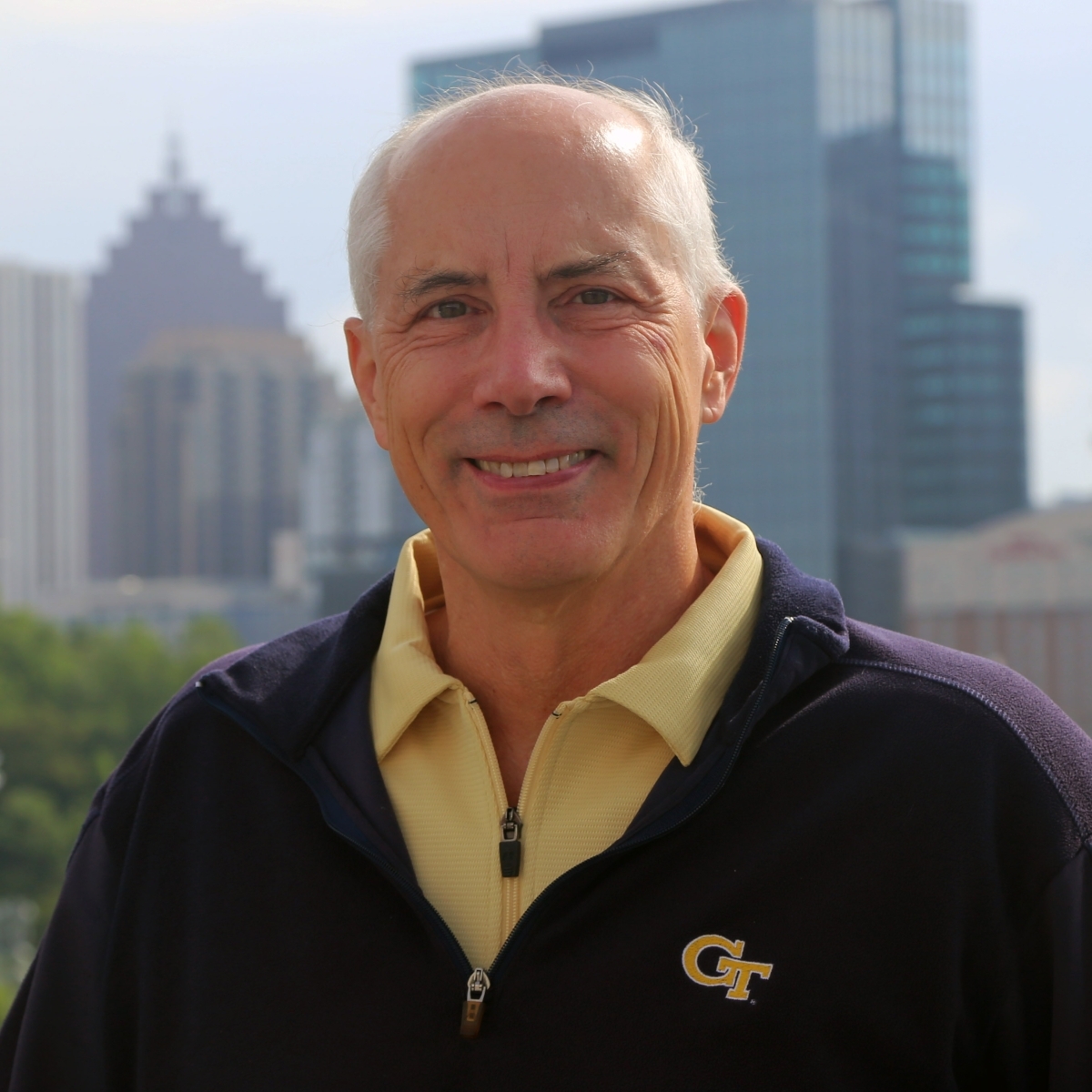
Armistead (Ted) Russell is the Howard T. Tellepsen Chair and Regents' Professor in the Department of Civil and Environmental Engineering at the Georgia Institute of Technology's College of Engineering. He co-directs the Southeastern Center for Air Pollution and Epidemiology and the NSF Sustainability Research Network 'Environmentally Sustainable, Healthy and Livable Cities' project. Dr. Russell earned his B.S. from Washington State University and his M.S. and Ph.D. in Mechanical Engineering from the California Institute of Technology, where he conducted research at Caltech's Environmental Quality Laboratory. Russell's research focuses on air pollution modeling, health effects of air pollutants, aerosol dynamics, environmental economics, atmospheric chemistry, and CO2 capture technologies. His group works to understand air pollutant dynamics at urban and regional scales and assess their impacts on health and the environment to develop effective air quality improvement strategies. His work integrates satellite and ground-based observations with air quality models and assesses climate-air quality strategy interactions. His recent publications reveal a strong focus on urban air quality issues, health impacts of pollution, sustainable city development, and pollution control technologies. His work spans from local Atlanta air quality improvements to global issues like pollution in India and China, demonstrating a comprehensive approach to environmental challenges across different scales and contexts. Howard T. Tellepsen Chair Regents' Professor Russell has advised numerous students who have gone on to prominent positions at institutions worldwide, including UC-Berkeley, Rice University, and Peking University. His research has been funded by major organizations including the National Science Foundation, NASA, EPA, CDC, NIH, and industry partners like Phillips 66 and Southern Company. His work is used in policy and regulatory decision-making at local-to-international levels and is highly cited in scientific literature. Russell's research group (Lambda) operates from the Ford Environmental Science and Technology building at Georgia Tech, which houses extensive air quality research facilities including a state-of-the-art smog chamber and numerous laboratories. The group collaborates extensively with researchers from Earth and Atmospheric Sciences, Chemical and Biomolecular Engineering, City & Regional Planning, and Emory University's Rollins School of Public Health.