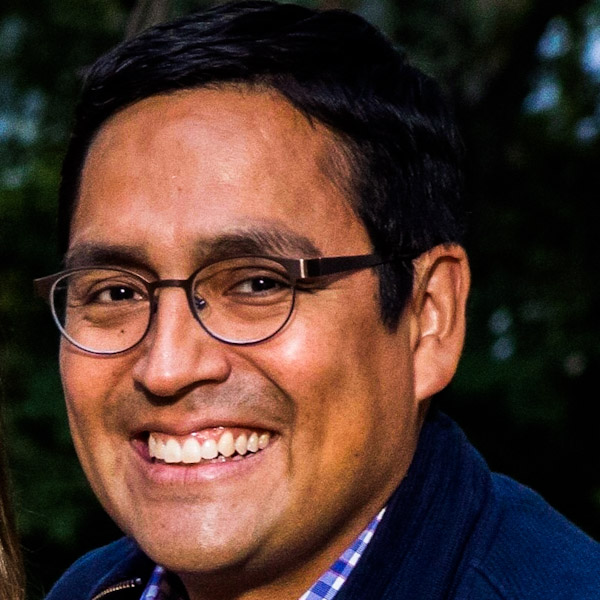
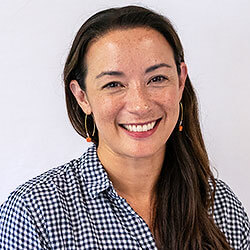
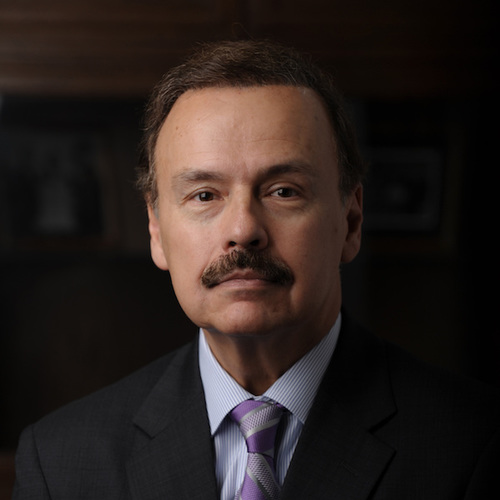
John R. Bowblis is a Professor of Economics in the Farmer School of Business and Research Fellow at the Scripps Gerontology Center at Miami University. He holds a PhD in Economics from Rutgers University. His research examines market dynamics in healthcare, particularly nursing home operations, Medicaid policies, and quality regulation. Recent studies analyze staffing benchmarks, racial disparities in care quality, and economic feasibility of long-term service models. Professor Bowblis teaches econometrics, industrial organization, and health economics while providing expert economic analysis in business litigation. He collaborates with the University of South Florida's School of Aging and serves as an academic affiliate with The Brattle Group. Grants support research on nursing home staffing variability and Medicaid payment structures.
Franky Newcomb serves as the Reference & Instructional Services Law Librarian and Adjunct Assistant Professor of Law at Marquette University Law School. They provide research support to students, faculty, and the community while teaching Advanced Legal Research (ALR) courses and collaborating on first-year legal analysis programs. Their professional background includes roles at non-profit civil rights organizations and the Minneapolis law firm Lockridge Grindal Nauen, focusing on disability discrimination and antitrust litigation. Education: B.A. in English (summa cum laude) and Classics Minor, McNeese State University J.D., University of Minnesota Law School Master's in Library and Information Science, University of Wisconsin-Milwaukee Research & Expertise: Specializes in legal research methodologies, civil rights advocacy, antitrust litigation, and disability rights. Integrates library science principles into legal education and practice. Professional Memberships: State Bar of Wisconsin Milwaukee Bar Association Law Librarians Association of Wisconsin American Association of Law Libraries
Scott Crain is an Adjunct Professor and statewide advocacy counsel for the Northwest Justice Project (NJP) in Seattle, Washington. His work focuses on litigation support, training, and leadership for NJP lawyers advocating low-income individuals' rights to safe, stable housing free from discrimination. Education: B.S. in Mathematics, Seattle University Education: J.D. (cum laude), University of Minnesota (Editor-in-Chief, Journal of Law and Inequality) Crain co-founded NJP's Medical Legal Partnership (MLP) and has litigated public benefit issues for Medicaid-eligible children, including preventing TANF reductions and expanding autism services. His research and practice span housing rights, civil rights litigation, and medical-legal collaboration. His publications address affordable housing litigation and rural housing preservation. Awards include cum laude recognition at the University of Minnesota and a leadership role in legal scholarship through the Journal of Law and Inequality.
J. Michael Diaz is an Adjunct Professor of Law at Seattle University School of Law, where he teaches civil rights and supervises students. He currently serves as a Judge on Washington State Court of Appeals Division I, appointed by Governor Jay Inslee in 2022. Previously, he was a King County Superior Court Judge (2018–2022) and Chief Judge of the Patricia H. Clark Children & Family Justice Center. A career prosecutor, he spent a decade at the U.S. Attorney's Office for the Western District of Washington, founding its Civil Rights Program and earning prestigious awards. He holds a J.D. from Cornell Law School (2002) and a B.A. in Philosophy (magna cum laude) from the University of Notre Dame (20XX). Education: B.A., Philosophy, University of Notre Dame; J.D., Cornell Law School His expertise spans civil rights litigation, criminal justice reform, and judicial ethics. He has pioneered initiatives addressing systemic discrimination and prosecuted high-profile civil rights cases. Diaz is a faculty member at the DOJ's National Advocacy Center and chairs the Washington State Supreme Court Interpreter Commission. His community contributions include leadership roles in legal aid clinics and pro bono initiatives supporting underserved communities. Notable recognitions include the EOUSA Director's Award and nomination by President Obama for federal judgeship (2016). His career reflects a commitment to advancing justice through legal education and public service.
Zeenat Pathan serves as a Programme Support Tutor at the Manchester Law School, University of Manchester, where she delivers instruction in Civil Justice and provides academic supervision for students. Her research and teaching focus centers on Civil Justice and Legal Education, contributing to institutional initiatives such as the Law School's pilot programme highlighted in university press coverage. This work emphasizes practical legal training frameworks and accessibility in civil litigation education. As a Programme Support Tutor, she oversees student academic progression, curriculum support, and professional development within the law school's educational ecosystem, collaborating with research centers like the Sylvia Pankhurst Gender and Diversity Research Centre.
Clare Keefe Coleman is Professor of Law and Director of Programs for International Students at Drexel University's Thomas R. Kline School of Law. She holds a JD from Villanova University, MA from Temple University, and AB from University of Pennsylvania. Her expertise encompasses legal writing pedagogy and academic support for international students. She has taught landmark Supreme Court cases at Israel's College of Management Academic Studies and presented at the Legal Writing Institute. Prior to academia, Coleman practiced commercial litigation at firms including Drinker Biddle & Reath and has background in fiction writing and magazine editing.
Natasha Brown serves as the Director of Access to Justice & Community Engagement at the University of Manitoba Faculty of Law (Robson Hall), where she leads comprehensive access to justice initiatives and coordinates efforts among multiple stakeholders across Manitoba's legal landscape. Dr. Brown's educational background includes a Bachelor of Education (2001) and a Bachelor of Laws (2005). Her career trajectory spans private family law practice (until 2012), leadership at the Legal Help Centre of Winnipeg, and progressive administrative roles at Robson Hall including Director of Professional Practice & Externships. Her professional focus centers on practical solutions to systemic barriers in the justice system, with particular emphasis on community engagement, legal education, and innovative service delivery models. She has developed the Manitoba Access to Justice Hub as a central platform connecting various organizations working to improve access to justice across the province. Dr. Brown's recent publications examine critical intersections between emerging technologies like AI and traditional legal procedures, prison library systems globally, and innovative approaches to family law services. Her work consistently emphasizes Manitoba-specific applications of national access to justice developments. Her contributions to legal education and access to justice have been recognized with significant awards: National Lexpert Zenith Award (2017) Robson Hall's Dean's Award for Teaching Excellence (2020) Jurist of Robson Hall designation (2022) As an elected council member of the Manitoba Bar Association, Dr. Brown actively participates in shaping legal practice standards while leading initiatives like Access to Justice Week that have reached record-breaking audiences. Her leadership philosophy emphasizes collaboration as the cornerstone of progress in access to justice, aiming to amplify impact, advocate for change, and create a more inclusive legal system serving all Manitobans. Through the Manitoba Access to Justice Hub, Dr. Brown directs a comprehensive platform providing regular blog updates, newsletters, and coordination of province-wide access to justice activities, serving as a vital connection point for organizations working to improve legal access across Manitoba.
Allison Fenske is Clinical Professor and Clinical Counsel at the University of Manitoba Faculty of Law, joining in 2023. She directs the University of Manitoba Community Law Centre and leads the International Human Rights Clinic. Her work integrates clinical legal education with advocacy for marginalized communities. Education: LL.B. (2007) from the University of Manitoba, recognized as a Solomon Greenberg Finalist and Top Oralist at the Wilson Moot. Called to the Manitoba Bar in 2008. Research focuses on human rights, constitutional law, and access to justice through a lens of social inclusion. Highlights include representing residential school survivors and 2SLGBTQ+ families in landmark cases. She advocates for systemic change via public interest litigation. Awards include the Manitoba Bar Association Access to Justice Award (2017) and Jurist of Robson Hall (2022). Her advocacy spans courts and tribunals, emphasizing equity-deserving groups. Advising: Supervises students in clinical programs. Grants and funding support initiatives like the Prison Law Clinic. Community roles include Board Chair of Klinic Community Health and past leadership in the Manitoba Bar Association’s Aboriginal Law Section. Labs/Teams: Oversees the University of Manitoba Community Law Centre and International Human Rights Clinic, fostering experiential learning and community legal empowerment.
Irina Ceric is an Assistant Professor at the University of Windsor Faculty of Law, specializing in legal frameworks governing social movements and protest regulation. She holds a PhD from Osgoode Hall Law School, an LLM from Osgoode, a JD from Osgoode, and a BA from University of Toronto. Her research investigates legal regulation of dissent, particularly injunction use, contempt proceedings, and criminalization of Indigenous land defense. Additional interests include movement lawyering, access to justice, and protest policing tactics. Current research examines civil law mechanisms for protest policing through class actions and injunctions, analyzing cases like the 'Freedom Convoy' occupations. Her forthcoming book explores activist legal support networks in Canada and the US since the 1990s. Professor Ceric teaches Property Law and Access to Justice courses, employing methodologies integrating legal scholarship with social movement studies and critical theory.
Charles Epp is the University Distinguished Professor at the University of Kansas's School of Public Affairs and Administration (SPAA). His work focuses on law, social change, and administrative reform, particularly regarding rights and racial discrimination. He has authored seminal books including The Rights Revolution and Pulled Over , both recognized with major awards such as the C. Herman Pritchett Award and the Choice Outstanding Academic Title. His research is supported by NSF grants, and he has held editorial roles at the Journal of Law and Courts . Epp teaches in areas of law and public policy, and his awards include the Kemper Teaching Award. His research interests span policing practices, racial disparities, legal mobilization, and bureaucratic reform. He analyzes how legal frameworks shape societal dynamics, particularly in contexts like police-citizen interactions and immigrant rights. His collaborations with SPAA and interdisciplinary teams have produced influential studies on systemic racism in policing and the role of tort lawsuits in accountability. Epp’s recent work critiques institutional sources of racial disparities in policing, leveraging ethnographic data and surveys to map street-level legal interactions. His articles in Journal of Law and Courts and other journals reflect ongoing engagement with legal systems’ societal impacts. He has served on the Law & Society Association’s leadership and contributed to public administration research through award-winning publications. Awards: C. Herman Pritchett Award, Lasting Contribution Award (APSA), Choice Award, Kemper Teaching Award Grants: Multiple NSF-funded projects on policing, legal mobilization, and immigrant rights Labs/Teams: Collaborations with SPAA faculty on urban policing, legal reform, and rights-based advocacy
Makena Coffman is a Professor in the Department of Urban and Regional Planning at the University of Hawaii and Director of the Institute for Sustainability. Her research addresses energy sustainability, climate resilience, and resource management through system modeling and policy analysis. Key research areas include: 1) Climate adaptation strategies for coastal communities, 2) Economic analysis of sustainability transitions, 3) Post-disaster recovery planning, and 4) Resource management in island contexts. Recent work examines sea level rise impacts on property values and wildfire recovery in Maui. Publications demonstrate strong policy engagement, with work spanning climate risk assessment, housing affordability, and Hawaiian political economy. Methodologies frequently integrate economic modeling with spatial planning approaches.
Sally Adams is an Adjunct Professor in the School of Business at St. Catherine University, following her retirement from a distinguished career in education. With over 20 years of teaching experience at secondary and post-secondary levels, she focuses on fostering financial literacy and student success. She holds a Bachelor of Business Administration in Accounting and Risk Management and a Master of Business Administration from the University of Wisconsin-Madison. Her professional experience includes roles as a CPA at Price Waterhouse and in litigation support consulting. She currently serves on the Board of the Minnesota Jump$tart Coalition for Personal Financial Literacy and has testified before the Minnesota Senate Education Committee on high school financial literacy standards. Research interests center on financial education, accounting practices, and organizational leadership. No recent articles are listed, but her work emphasizes practical applications of financial literacy in academic and professional contexts.
Professor Vincent C. Alexander is a distinguished legal scholar and educator at St. John's University School of Law, where he has taught since 1977. He holds a B.A. (magna cum laude) from Yale University, a J.D. (cum laude) from St. John's University, and an LL.M. and J.S.D. from Columbia University. His academic career includes serving as Editor-in-Chief of the St. John's Law Review and Interim Dean of the School of Law during the 1999-2000 academic year. He is renowned for his expertise in evidence law, civil procedure, and New York practice, reflected in his co-authored treatise Evidence in New York State and Federal Courts and extensive commentary on the New York Civil Practice Law and Rules (CPLR). Professor Alexander has been frequently cited by the U.S. Supreme Court and is a sought-after lecturer for judges and legal professionals. His research and writing span topics such as attorney-client privilege, judicial review of administrative actions, and procedural reforms. He has contributed to the New York Law Journal as a columnist and authored model jury instructions. His service includes roles on the New York Advisory Committee on Civil Practice, the Mayor's Advisory Committee on the Judiciary, and the St. John's Law School faculty. He has been honored with numerous awards, including the Lifetime Achievement Award (2018) and the Pietas Medal (2010). With his wife Anne, he established the Alexander-Dillon Fire, Police and Military Scholarship to support veterans and their families. Professor Alexander's influence extends beyond academia through his advocacy for legal education and public service. His work bridges theory and practice, shaping legal frameworks and mentoring generations of lawyers.
Jimmy Gurulé is a Professor of Law at the University of Notre Dame and Faculty Director of the Exoneration Justice Clinic. His expertise spans criminal law, international criminal law, terrorism and terrorist financing, and national security law. He has held prominent public law enforcement roles, including Under Secretary for Enforcement at the U.S. Department of the Treasury (2001-2003) and Assistant Attorney General at the U.S. Department of Justice (1990-1992), and has consulted on high-profile counter-terrorism cases such as the 1983 Beirut bombing and the 9/11 attacks. Research Interests include terrorist financing, anti-money laundering (AML) policies, national security law, and international cooperation in counter-terrorism strategies. His scholarship focuses on legal frameworks for disrupting terrorist funding, secondary sanctions, and the evolution of criminal justice systems. Recent Publications analyze material support laws, ISIS financing, UN sanctions regimes, and reforms to anti-terrorism financial policies. He has authored multiple books, including National Security Law and the Constitution (2021) and Handbook of Criminal and Terrorism Financing Law (2018). Scientific Awards : Distinguished Professor of the Year (2021), Graciela Olivarez Award (2006), Fellow of the National Academy of Public Administration (2009). Professional Activities include serving on the Board of Directors of the USAID Rule of Law and Cultural Integrity in Paraguay initiative, advising governments on criminal justice reform via the American Bar Association, and participating in United Nations expert working groups on public corruption. He directed the Exoneration Justice Clinic and has been featured in major media outlets like CNN, BBC, and New York Times .
Dave Yarin is a Part Time Lecturer in Biotechnology at Northeastern University's Roux Institute in Maine, bringing over 30 years of healthcare industry, consulting, and project management experience. He serves as Alliance Manager for Music Partnerships at MedRhythms, a Roux Institute partner company. Previously, he advised multiple Boards of Directors for national hospital systems, pharmaceutical manufacturers, and medical device companies, specializing in regulatory compliance, due diligence, litigation support, and corporate integrity agreements. His research interests focus on biotechnology enterprise, healthcare administration, and regulatory frameworks. Yarin teaches the Biotech Enterprise course at The Roux Institute and contributes to community health initiatives through MaineHealth Intellectual Property & Business Development Committee and Saddleback Mountain health services planning. Education: BBA, University of Massachusetts Amherst MBA/MHA, Clark University