Kevin Furlong serves as a Professor in the Department of Geosciences within the College of Earth and Mineral Sciences at Pennsylvania State University, contributing to the department's research excellence in earth sciences and tectonics. Education: Ph.D. in Geosciences, University of Utah (1981) Research Focus: Professor Furlong specializes in lithospheric deformation mechanisms and thermal evolution of tectonic systems , employing advanced numerical modeling to investigate plate boundary dynamics and intraplate stress fields. His work bridges theoretical geophysics with observable crustal processes, particularly in subduction zones and continental rift systems. He directs the Geodynamics Research Laboratory (geodyn.psu.edu), where computational modeling of mantle-lithosphere interactions forms the core methodology. Current projects emphasize coupling thermal and mechanical models to predict seismic hazard zones. Contact: kpf1@psu.edu | Office: 413 Deike Building | Phone: 814-863-0567
Dr. Bartosz Pieterek is an Assistant Professor at Adam Mickiewicz University specializing in planetary geology with a focus on Martian volcanology and sulfide geochemistry. As Principal Investigator of the PRELUDIUM 16 project, he combines satellite imagery , digital terrain models , and spectral data to study Martian volcanic processes and metal distribution in terrestrial lithosphere. Venue: Room 214 Contact: b.pieterek@amu.edu.pl | bpieterek94@gmail.com His research spans two interconnected domains: (1) Reconstructing Martian volcanic history through analysis of small-scale volcanic structures in young regions, and (2) Investigating sulfide dynamics at crust-mantle boundaries with implications for metallogeny and planetary exploration. This dual focus enables cross-disciplinary insights between terrestrial and extraterrestrial magmatic systems. Peer-reviewed publications (2017-2025) demonstrate consistent output across volcanology , geochemistry , and planetary exploration domains. Key trends include: Systematic analysis of Martian fissure eruptions and volcanic ramparts Quantitative studies of sulfide behavior in both terrestrial and Martian contexts Development of specialized instruments like MIRORES for ore detection Integration of thermal inertia mapping with structural geology Comparative studies of oceanic and continental crust-mantle transitions Time-resolved analysis of Martian magmatic activity periods Technically, Pieterek combines remote sensing with petrological modeling to address fundamental questions about planetary evolution and resource distribution.
Doctor Trevor Falloon is a Research Fellow in Earth Sciences at the University of Tasmania's School of Natural Sciences. His research focuses on igneous and metamorphic petrology, inorganic geochemistry, and volcanic processes, with a particular emphasis on mantle dynamics, subduction zone magmatism, and tectonic evolution. He has supervised numerous doctoral students, including Gisela Rossana Cobenas Benites and Fiona Claire Best. Falloon has been involved in several funded projects, including studies of the Kerguelen Plateau and Heard Island, and has authored/co-authored over 98 peer-reviewed articles. His work explores the petrogenesis of magmatic systems in oceanic and continental settings, with recent studies focusing on volcanic activity in the SW Pacific, the role of mantle plumes, and the geochemical evolution of oceanic crust. Falloon's research often integrates field observations with experimental petrology and geochemical modeling, contributing to our understanding of mantle melting processes and crustal formation. Key contributions include investigations into the geochemistry of submarine lavas, the dynamics of subduction initiation, and the nature of mantle-derived magmas. He is a principal investigator on grants totaling over $6 million, including projects funded by the Australian Research Council and the Department of Environment and Energy. Falloon's collaborative work extends globally, with involvement in IODP drilling expeditions and Antarctic research voyages.
Dr. Charlie Beard is an Assistant Professor in Economic Geology at Utrecht University's Department of Earth Sciences. His research focuses on geodynamic and magmatic controls on mineralization of critical raw materials for renewable energy, integrating field, experimental, and theoretical approaches to optimize exploration strategies. Education: M.Sc. degrees from the University of Bristol (UK) and University of British Columbia (Canada), Ph.D. from McGill University (Canada, 2018). Previous positions included roles at British Geological Survey (Edinburgh), Université Grenoble Alpes/Sisprobe SAS, University of Brighton, and University of Cambridge. Research Interests: Specializes in alkaline-silicate REE-HFSE systems, magmatic processes in rift settings, and regolith-hosted REE deposits. Active in projects like the Gardar Rift REE belt and Arctic lake methane dynamics. Teaching: Leads courses in Petrology, Geochemistry, and Sustainable Mineral Resources across Utrecht University and Vrije Universiteit Amsterdam. Labs/Teams: Involved in interdisciplinary projects funded by NWO and EU initiatives, collaborating with institutions globally. Current group includes 3 BSc, 2 MSc students, and an upcoming PhD candidate.
Dr. Michael Roach is an Adjunct Researcher in Earth Sciences at the University of Tasmania's School of Natural Sciences. His research focuses on geophysics, structural geology, and electromagnetic methods applied to mineral exploration, mine waste management, and environmental geoscience. He has collaborated on projects involving Tasmania's geological structure, tailings dam stability, and geophysical imaging of subsurface features. Education: Doctoral training in geophysics and exploration methods, with expertise in integrating geophysical data with geological mapping and machine learning. Research Interests: Geophysical exploration methods (electromagnetic and gravity/magnetic), structural analysis of ore deposits, geotechnical assessment of mine tailings, and environmental applications of geophysics. His work bridges academic research with industry needs in mineral exploration and environmental remediation. Key Projects: Geophysical characterization of mine tailings dams for stability assessment 3D modeling of granite intrusions in Tasmania Immersive visualisation tools for field-based geoscience education Environmental monitoring of legacy mine sites using geophysical techniques Supervision & Teaching: Advised over 15 PhD and MSc students on topics ranging from mineral exploration methods to geophysical inversion techniques. Contributed to educational grants advancing geoscience visualization and fieldwork pedagogy. Labs/Teams: Collaborates with the ARC Centre of Excellence in Ore Deposit Research and industry partners like GHD Pty Ltd on tailings management and geophysical innovation.
Paul Byrne is an Associate Professor in the Department of Earth, Environmental, and Planetary Sciences at Washington University in St. Louis. He is affiliated with the McDonnell Center for the Space Sciences and the Remote Sensing Laboratory. His work focuses on comparative planetary geology, analyzing planetary surfaces and interiors to understand geological systems across the solar system and beyond. Byrne holds a BA and PhD in geology and planetary geology from Trinity College Dublin. He previously served as an assistant and associate professor at North Carolina State University, and held postdoctoral fellowships at the Carnegie Institution for Science and the Lunar and Planetary Institute. His research integrates remote sensing data, numerical models, and Earth-based fieldwork to study phenomena like Venusian volcanism, Martian tectonics, and Mercury's contraction. Key interests include planetary surface evolution, extraterrestrial resource potential, and exoplanet geology. Notable recent studies address Venus' geological activity, Mercury's crustal dynamics, and mission concepts for planetary exploration. Byrne has contributed to over 100 peer-reviewed articles, emphasizing Venus surface imaging techniques, Mars fault analysis, and Mercury's geological history. His work often bridges planetary geology with astrobiology and space resource utilization.
Sarah Lambart is an Associate Professor in the Department of Geology and Geophysics at the University of Utah, where she leads the MagMaX Lab. Her research focuses on igneous processes, mantle heterogeneity, and magma genesis using experimental and analytical techniques. Education: PhD in Petrology, Blaise Pascal University, France (2010) MS in Earth Sciences, Blaise Pascal University (2006) BS in Earth Sciences, Blaise Pascal University, France (2004) Research Interests: Sarah Lambart's research explores the composition and dynamics of Earth's mantle, particularly how heterogeneities influence basalt genesis. Her work integrates high-pressure experiments, geochemical modeling (e.g., Melt-PX), and isotopic analyses to understand magma formation and transport. She investigates pyroxenite melting, melt-rock interactions, and the geochemical signatures of recycled materials in the mantle. Her recent projects involve IODP Expeditions 396 and 402, focusing on magmatism during continental breakup and its climate implications. Publication Trends: Her recent articles (2021–2025) span planetary science (Mercury's mantle), deep Earth processes (mantle heterogeneity), and paleoclimate (PETM). They emphasize isotope geochemistry (B, Fe, U-series), experimental petrology, and numerical modeling. Key themes include recycled volatiles in the mantle, crustal anatexis during rifting, and melt transport dynamics. Scientific Awards and Funding: NSF MRI Grant (co-PI) NSF MG&G Grant NSF EAR Grant Geology and Geophysics Faculty Research Award (2024) University of Utah Graduate Research Fellowship (mentor) Multiple student fellowships and travel grants (WAGS, MSA, GSA, Chapman) Advising and Grants: She mentors numerous graduate and undergraduate students, many of whom have received prestigious awards. She has secured significant external funding, including from NSF and internal university programs, supporting lab development (e.g., Neoma MC-ICP-MS) and student research. She actively promotes student participation in conferences and field expeditions. Labs and Collaborations: She directs the MagMaX Lab at the University of Utah, which collaborates internationally with institutions such as Cardiff University, VU Amsterdam, CRPG (France), and UNIL (Switzerland). She is involved in major projects like IODP Expeditions and serves as a handling editor for Advances in Geochemistry and Cosmochemistry .
Gregory Dumond is an Associate Professor in the Department of Geosciences at the University of Arkansas , specializing in tectonics, structural geology, petrology, and geochronology. His research investigates the evolution of continental crust through metamorphism, partial melting, strain partitioning, and crustal flow, with fieldwork conducted in the American Southwest, Canadian Shield, Rocky Mountains, and Scandinavian Caledonides. His work focuses on: Deep continental crust dynamics beneath orogenic plateaus Genetic links between deformation, metamorphism, and magmatism Geochronological dating using monazite and zircon Collaborative applications of SEM, electron probe microanalysis, and isotope geology Recent publications highlight studies of monazite deformation, lower crustal flow, and Archean-Proterozoic tectonics across multiple continents. Awards include NSF fellowships, a Fulbright Fellowship, and multiple Sigma Gamma Epsilon Faculty of the Year honors. Teaching interests include structural geology, tectonics, metamorphic petrology, and field-based education at the University of Arkansas.
Roman Botcharnikov is a researcher at the Department of Petrology, Institute of Geosciences, Johannes Gutenberg University Mainz. His work focuses on experimental petrology, magmatic processes, and geochemical analysis of melt inclusions and volcanic systems. He employs advanced techniques like electron microprobe analysis, XANES spectroscopy, and fluid inclusion experiments to study magma evolution, volatile solubility, and metal mobilization. Research Interests : Experimental petrology, melt inclusion analysis, sulfide systems, iron oxidation states, and magmatic-hydrothermal fluid interactions. Collaborations : Works with teams studying geoarchaeology, hydrogeochemistry, and volcanology. Collaborators include experts in XANES, LA-ICP-MS, and thermodynamic modeling. Recent Article Trends : His recent publications investigate ion substitution in beryl, Fe oxidation in olivine-hosted inclusions, and REE transfer mechanisms. These studies bridge experimental petrology with natural systems in collision zones and layered intrusions. Student Advising : Mentors students like Stepan Krashenninikov and Antonia Simon in petrological and mineralogical research.
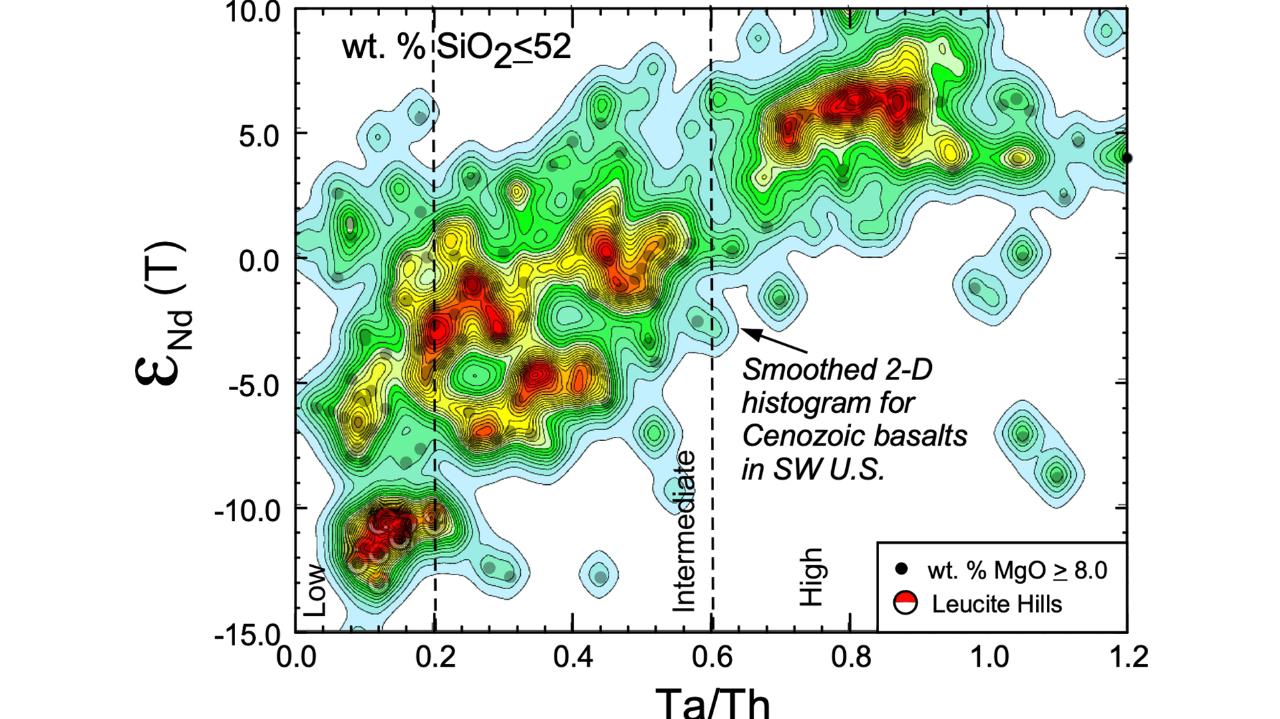
Lang Farmer is a Professor of Geological Sciences and Divisional Dean for Natural Sciences Education at the University of Colorado Boulder. He is affiliated with the Cooperative Institute for Research in Environmental Sciences (CIRES) and has made significant contributions to the field of geochemistry and isotope geology over several decades. Dr. Farmer earned his Ph.D. from the University of California, Los Angeles in 1983. His academic journey has led him to become a leading researcher in the application of trace element abundances and radiogenic isotopic data to study Earth's lithosphere. Farmer's research centers on applications of trace element abundances and radiogenic isotopic data from natural materials to study the origin and evolution of Earth's lithosphere. His current projects include using hafnium and neodymium isotope data from siliciclastic sediments to investigate the paleogeography of ancient continents and conducting "big data" studies of space-time-composition patterns in Cenozoic volcanic activity in western North America. This work aims to assess the evolution of the deep continental lithosphere beneath this region over the past 70 million years. He is also involved in developing MicroInterdigitated Electrode Arrays as Ion Sources for Thermal Ionization Mass Spectrometry (TIMS), funded by the National Science Foundation, which seeks to improve ionization efficiency in geological analyses. His extensive publication record spanning from 1981 to the present demonstrates consistent contributions to understanding mantle processes, lithospheric evolution, and geochemical methodologies. Farmer's work often involves collaborative research with colleagues across multiple institutions, focusing on isotopic analysis to unravel complex geological histories across diverse settings from the Rocky Mountains to ancient continental reconstructions. ORCID ID 0000-0003-1292-0624 An electrochemical ion source for thermal ionization mass spectrometry (CIRES Recognition 2004) Development of novel si-gel based ion sources for thermal ionization mass spectrometers (CIRES Recognition 1999) As Divisional Dean for Natural Sciences Education, Farmer plays a significant role in shaping science education at the University of Colorado Boulder. His research group likely mentors numerous graduate and undergraduate students, though specific student names are not listed in the available information. His NSF-funded research on electrochemical ion sources represents ongoing innovation in analytical techniques for geological studies. Farmer is actively involved with CECA (CIRES Education and Community Affairs), which connects graduate students and postdocs from various academic units to conduct environmental research.
Bao Xueyang is an Assistant Professor at the Department of Earth and Space Sciences (Faculty of Science) of Southern University of Science and Technology (SUSTech) , where he has worked since January 2019. His academic background includes a Ph.D. in Geology from the University of Missouri-Columbia (2011) , M.S. and B.S. degrees in Geophysics from the University of Science and Technology of China . Ph.D., Geological Sciences, University of Missouri-Columbia (2011) M.S., Earth and Space Sciences, University of Science and Technology of China (2005) B.S., Earth and Space Sciences, University of Science and Technology of China (2001) His research focuses on seismological full-waveform inversion , seismic wave attenuation measurement , and geophysical studies of tectonically active regions such as the Tibetan Plateau and Tethys domain. Methodologically, he develops techniques for: 3D full-waveform inversion Joint seismic-gravity inversion Seismic wave attenuation anisotropy Background noise tomography Wavefield simulation on complex topographies Seismic source parameter inversion Analysis of his recent publications reveals expertise in full-waveform sensitivity kernel development , ocean-bottom seismology , and cratonic lithosphere thermal structure through Rayleigh wave attenuation studies. His work spans both theoretical advancements in inversion algorithms and practical applications in energy resource characterization and tectonic studies. Scientific recognition includes: 2019 Shenzhen Overseas High-Level Talent 2022 Excellence Awards in Reviews of Geophysics and Planetary Physics He leads multiple National Natural Science Foundation projects while co-leading international research initiatives. His teaching portfolio includes undergraduate and graduate courses on geophysical inversion theory, covering both linear and nonlinear inversion methods with machine learning applications.
Associate Professor Guo Zhen is affiliated with the Department of Marine Science and Engineering at Southern University of Science and Technology (SUSTech), where he has been since 2017. He previously worked as a Research Associate at Macquarie University's Department of Earth and Planetary Sciences (2014-2016). His academic credentials include a PhD in Science from Peking University (2015) and a B.S. in Geophysics from Yunnan University (2009). Research Focus: Solid geophysics, seismic tectonics, and urban underground space exploration Key Contributions: Developed high-precision seismological inversion techniques, proposed small-scale mantle convection models for Northeast China volcanism, and led ultra-dense seismic array projects in major Chinese cities Guo's publications (over 40 in top journals like Geology and Geophysical Research Letters ) analyze lithospheric structures, mantle dynamics, and geophysical inversion methods. His work on the Ordos block lithospheric reworking and Datong volcano magma systems represents critical advances in understanding intracontinental tectonic processes. Scientific awards include: 2013-2014 Chancellor’s Scholarship, Peking University 2014-2015 Chancellor’s Scholarship, Peking University 2013-2014 National Scholarship, Chinese Ministry of Education He currently serves in multiple academic roles: Deputy Secretary of the Party Committee, Department of Marine Science and Engineering Deputy Director, Sheshan National Geophysical Field Observatory Member, Continental Geodynamics Committee (Chinese Geophysical Society) Member, Youth Work Committee (Seismological Society of China)
Seth C. Kruckenberg serves as Associate Professor and Associate Chair in Earth and Environmental Sciences at Boston College, specializing in quantitative field-based research at the intersection of structural geology, petrology, and tectonic analysis. His educational background includes: B.S. from University of Wyoming Ph.D. from University of Minnesota-Twin Cities Dr. Kruckenberg's research integrates field mapping , structural/petrologic analysis , EBSD crystallographic studies , geochronology , and magnetic fabric techniques to investigate how rock properties and pressure-temperature conditions influence lithospheric deformation. His work spans global field sites from Antarctica to New England, focusing on petrofabric development and rheology in orogenic systems. Recent publications (2019-2021) demonstrate consistent focus on mantle rheology, seismic anisotropy, and shear zone mechanics through integrated field-lab approaches, with strong emphasis on crystallographic texture analysis and deformation processes across multiple tectonic settings. He actively mentors graduate researchers: Current students: Olivia Burek (2021), Rebecca Richards (2020) Recent M.S. graduates: Miranda Wiebe (2021), Lauren Shea (2019), Martha Parsons (2017), William Montz (2016), Shaina Cohen (2016) His work leverages the SEM Facility for electron backscatter diffraction analysis and maintains active field programs in Australia, Antarctica, and New England.
Songqiao Wei serves as Associate Professor in both the Department of Earth & Environmental Sciences and the Department of Computational Mathematics, Science and Engineering at Michigan State University, conducting research at the intersection of seismology and computational geophysics with focus on subduction zone dynamics and Earth's deep interior. Education: Ph.D. in Earth and Planetary Sciences, Washington University in St. Louis (2016) M.A. in Earth and Planetary Sciences, Washington University in St. Louis (2012) M.S. in Geophysics, Peking University (2010) B.S. in Geophysics, Peking University (2007) Dr. Wei's research spans Seismology , Geophysics , and Tectonics , with core expertise in subduction zone processes , mantle transition zone structures , and seismic attenuation methodology . He integrates field deployment of seismic instruments with advanced computational analysis to investigate mantle discontinuities, melt/volatiles distribution, and intermediate-depth seismicity, particularly in the Tonga-Lau system and Alaska Peninsula regions. His work bridges observational seismology with geodynamic modeling to unravel complex mantle processes. Analysis of his 15 most recent publications reveals dominant research themes in subduction zone tomography (60% of works), seismic attenuation applications (25%), and machine learning integration (15%), with strong regional focus on Alaska (45%) and Tonga (35%). The publications demonstrate methodological evolution toward transdimensional Bayesian approaches and deep learning techniques for earthquake detection and structural imaging. Scientific Awards: Green Scholar Postdoctoral Fellowship, Scripps Institution of Oceanography (2016-2017) Dr. Wei's research program emphasizes field-based data acquisition through temporary seismic deployments, particularly in subduction zone settings. While specific grant details and student advisement records aren't documented in the provided materials, his active field work and computational research indicate ongoing project funding for instrumentation and data analysis. His dual departmental appointments reflect the interdisciplinary nature of his work combining geophysical observation with advanced computational methods. He maintains active involvement in seismic field campaigns for data collection and leads computational research groups focused on developing novel tomographic and machine learning approaches for seismic data analysis, with particular emphasis on subduction zone environments and deep Earth structure.
Laura Cobden is an Assistant Professor in the Faculty of Geosciences , Department of Earth Sciences at Utrecht University . Her work focuses on integrating seismology with mineral physics to study the Earth's deep interior . Expertise: Earth's Deep Interior, Mineral Physics, Global Seismology Teaching: Continuum Mechanics and Mantle Dynamics, Mineralogy & Petrology Laura's recent research explores mantle plumes , water in the mantle transition zone , and partial melting processes . Her work combines seismic tomography with thermodynamic modeling to understand Earth's internal structure and dynamics. She has presented extensively at international conferences, including the AGU Fall Meeting and EGU General Assembly , focusing on topics like mantle hydration , seismic discontinuities , and deep Earth imaging . In 2015, she conducted research at Academia Sinica , Taiwan. Laura's methodological approach bridges geophysical data analysis with laboratory mineral physics to constrain thermochemical models of the Earth's mantle. She also contributes to academic mentorship through initiatives like "Meet the Master" workshops.