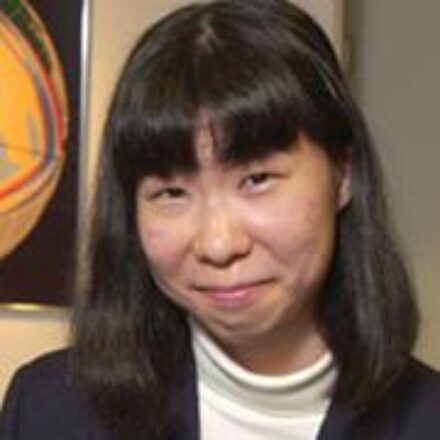
Miaki Ishii is a Professor of Earth and Planetary Sciences at Harvard University, affiliated with the Department of Earth and Planetary Sciences. She leads the Harvard Seismology Group and has held academic roles at Harvard since 2006, progressing from Assistant to Associate Professor and then Full Professor. Education: Ph.D. in Geophysics (2003), Harvard University Hon.B.Sc. in Physics (1998), University of Toronto Research Interests: Ishii specializes in seismic imaging of Earth's internal structure, including the mantle and core. Her work focuses on earthquake mechanisms, signal processing, and theoretical seismology. She uses seismic data to study rupture dynamics, subduction zone processes, and free oscillations of the Earth. Key Contributions: Notable projects include analyzing the 2011 Tohoku-Oki earthquake rupture, developing the DigitSeis software for analog seismogram digitization, and studying inner core anisotropy using normal mode splitting. Her research integrates high-performance computing and waveform inversion techniques. Awards: James B. Macelwane Medal (2009) Kavli Fellow (2012) Charles F. Richter Award (2008) Alice Wilson Award (2004) Labs/Teams: Directs the Harvard Seismology Group, collaborating internationally on seismic networks like Hi-net and USArray. Her work bridges computational seismology with observational geophysics.
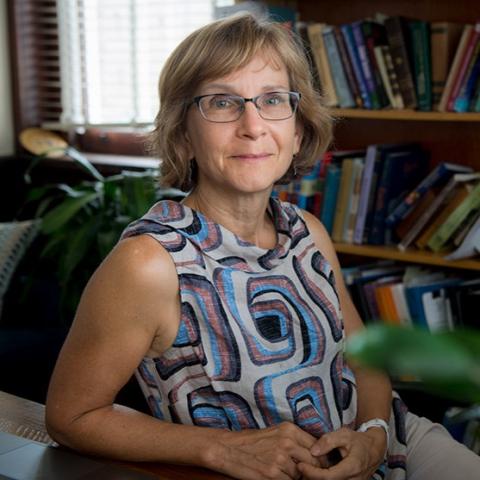
Keith D. Koper is a Professor in the Department of Geology & Geophysics at the University of Utah and serves as Director of the University of Utah Seismograph Stations (UUSS). He is also the editor-in-chief of The Seismic Record . His work integrates academic research with operational seismic monitoring and public safety initiatives across Utah and the Intermountain West. Education: PhD in Geophysics, Washington University, 1998 BA in Math, Geology, and ISP, Northwestern University, 1993 Dr. Koper's research focuses on array seismology, forensic seismology, deep Earth structure (especially the inner core), earthquake rupture imaging, ambient seismic noise, and seismic hazards in the Intermountain West, including mining-induced and urban earthquakes. His work combines observational seismology with advanced signal processing and machine learning techniques to improve detection, discrimination, and imaging capabilities. He has led or contributed to major projects involving the Wasatch Front, Yellowstone, and regional seismic networks. His recent research emphasizes machine learning for earthquake detection, high-resolution relocation of aftershock sequences (e.g., Magna 2020, Bluffdale 2019), microseism generation in lakes, and fine-scale imaging of the Earth's inner core using seismic reflections. His studies often involve interdisciplinary collaboration, particularly with mining engineering and geodesy. Dr. Koper's research has been consistently funded by federal and state agencies, including the National Science Foundation (NSF), U.S. Geological Survey (USGS), Department of Energy (DOE), Air Force Research Laboratory (AFRL), and the Utah Department of Public Safety. His publications reflect a strong trend toward integrating computational methods with traditional seismological analysis to tackle complex problems in both natural and induced seismicity. Scientific Service and Leadership: Editor-in-Chief, The Seismic Record Director, University of Utah Seismograph Stations Secretary, U.S. Air Force Seismic Review Panel Former Chair and Vice-Chair, Utah Seismic Safety Commission Dr. Koper mentors graduate students in seismology and geophysics, including recent advisees Sean Hutchings and Alysha Armstrong. His research group actively engages in both fundamental and applied seismological research, with strong ties to national labs such as Sandia. The group is involved in deploying portable seismic arrays, analyzing large datasets, and developing new algorithms for event detection and classification. The University of Utah Seismograph Stations, under his leadership, plays a critical role in monitoring seismicity in Utah and Yellowstone, producing real-time earthquake information, ShakeMaps, and public outreach materials. The station also contributes to national and international efforts in nuclear test monitoring and volcanic hazard assessment.
Cynthia Ebinger is a Professor in the Department of Earth and Environmental Sciences at Tulane University, affiliated with the School of Science & Engineering. She holds the Marshall-Heape Chair and previously served at the University of Rochester and as an Adjunct Professor at Royal Holloway, University of London. Her research focuses on geophysics, rift systems, seismic monitoring, volcanoes, and plate tectonics in West Africa and East Africa, particularly the Turkana Depression and East African Rift. She has conducted fieldwork in Ecuador, Peru, Kenya, Uganda, Ethiopia, and Australia. Education : Ph.D., MIT/WHOI, Joint Program in Oceanography, Marine Geology & Geophysics (1988) M.A., MIT, Geophysics (1986) B.S., Duke University, Geology (1982) Research Interests : Dr. Ebinger investigates continental rifting mechanisms, magmatic processes, seismic anisotropy, and volcanic systems. Her work integrates geophysical methods (e.g., InSAR, receiver functions) to study deformation in regions like the East African Rift and Gulf of Mexico passive margin. She emphasizes understanding crustal dynamics, lithosphere modification, and the interplay between tectonics and surface processes. Publications : Her recent work addresses rift linkage mechanics, crustal anisotropy variations, and volcanic deformation (e.g., Nyiragongo eruption). Key themes include seismic imaging of rift zones, subsidence patterns in coastal Louisiana, and mantle lithosphere interactions. Awards : American Geophysical Union Distinguished Lecturer (2023-2024) NASEM Jefferson Science Fellow (2022-2023) Woollard Award (2021) Tulane Honors Professor of the Year (2021) Grants & Collaborations : Leads projects funded by NSF and international collaborations, focusing on Turkana Depression geodynamics, Gulf of Mexico subsidence, and volcanic monitoring in East Africa. Active in education initiatives to strengthen quantitative geophysics training. Labs/Teams : Core member of the Tulane Earth Sciences group and collaborates with global networks (e.g., Project TRAILS in East Africa). Engages in field-based research and satellite geodesy applications.
David Eaton is a Professor and former NSERC/Chevron Industrial Research Chair in Microseismic System Dynamics at the University of Calgary's Department of Geoscience. He holds a PhD in Geophysics from the University of Calgary (1992) and has published the textbook 'Passive Seismic Monitoring of Induced Seismicity'. Educational Background: PhD Geophysics, University of Calgary, 1992 MSc Geophysics, University of Calgary, 1988 BSc Geology and Physics, Queen's University, 1984 His research focuses on induced seismicity characterization, microseismic monitoring technology development, distributed acoustic sensing applications, physics-informed machine learning approaches, and lithospheric structure analysis. Current projects investigate earthquake triggering mechanisms during hydraulic fracturing and geothermal energy development. Publications show consistent focus on induced seismicity source characterization, monitoring methodologies, and geophysical applications for energy resource development. Recent work integrates machine learning with seismic monitoring to understand geological controls on induced seismicity. Scientific Awards: NSERC Synergy Award for Innovation (2020) J. Tuzo Wilson Medal, Canadian Geophysical Union (2020) CSEG Distinguished Lecturer (2019) Schulich School of Engineering Distinguished Collaborator (2019) University of Calgary Great Supervisor Award (2016) He leads the CREATE-REDEVELOP program training future leaders in responsible resource development and directs the microseismic research laboratory.
Professor Patrice Rey is a faculty member at the School of Geosciences, The University of Sydney. He holds the rank of Professor and specializes in geodynamics, tectonics, and landscape evolution. With an international career spanning 12 institutions across three continents, his research focuses on continental rifting, mantle dynamics, metamorphic processes, and the interplay between climate and tectonics. Notable projects include studies on Australia’s geological history, the formation of precious opal, and the dynamics of early Earth geodynamics. His work bridges field geology, numerical modeling, and geophysical analysis. Key research themes include gravitational collapse in cratons, the role of isostasy in fold belt evolution, and the impact of dynamic topography on sedimentary systems. He has contributed to interdisciplinary projects such as the Perseverance Mars mission, highlighting connections between Earth’s geology and Martian surface processes. Recent publications emphasize continental crust evolution, landscape dynamics, and the integration of virtual reality tools in geological education. He leads research teams funded by grants like the Australian Research Council (DP22 and LP20 projects), focusing on mineral systems and Proterozoic rift basins. His media presence includes BBC documentaries and NOVA series, showcasing his expertise in continental evolution and planetary geology.
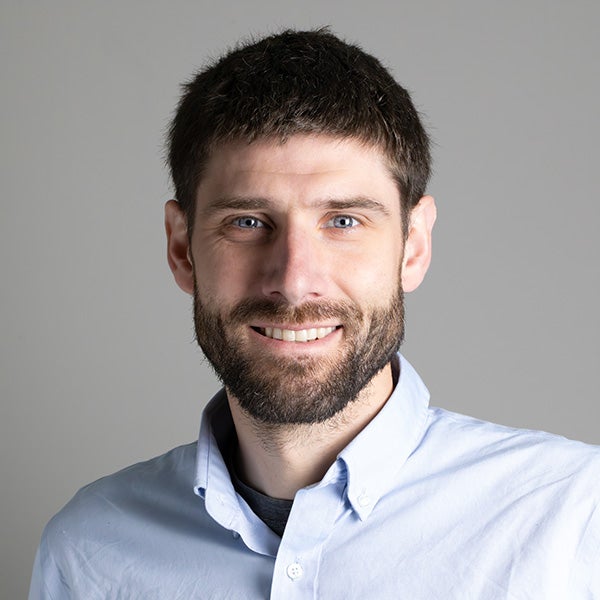
Brandon Schmandt is a Professor in the Department of Earth, Environmental and Planetary Sciences at Rice University, where he leads research using seismology to investigate Earth systems. His work integrates interdisciplinary approaches, data science, and numerical modeling to study tectonic processes, magmatic systems, and environmental interactions. His educational background includes a PhD in Geological Sciences from the University of Oregon (2011) and a BA in Environmental Studies from Warren Wilson College (2006). Dr. Schmandt's research focuses on seismology, tectonics, volcanology, and surface processes , with emphasis on seismic imaging of subsurface structures. His group employs innovative time-series analysis and field projects to resolve geologic history and contemporary Earth dynamics, particularly examining fault zones, magmatic reservoirs, and deep convective processes. Key methodologies include dense seismic arrays and machine learning applications. Analysis of his recent publications (2023-2025) reveals dominant trends in seismic event discrimination (earthquakes vs. explosions), magmatic system imaging (Yellowstone, Cascades), and global mantle structure studies. There is strong emphasis on induced seismicity, machine learning applications, and high-resolution imaging of Earth's discontinuities using dense arrays. His distinguished honors include: Aki Award of the AGU Seismology Section GSA Donath Medal AGU Macelwane Medal Body Dr. Schmandt directs an active research group conducting field projects across diverse settings including the Raton Basin, Yellowstone, Antarctica, and the Caribbean. While specific student advisees and grant details aren't provided in available materials, his group's work involves collaborative data collection, advanced computational modeling, and development of novel seismic analysis techniques applicable to both natural and anthropogenic seismic sources. The research program maintains focus on magmatic systems beneath volcanic regions, induced seismicity mechanisms, and global mantle structure using dense node arrays and interdisciplinary approaches to address fundamental questions in Earth dynamics.
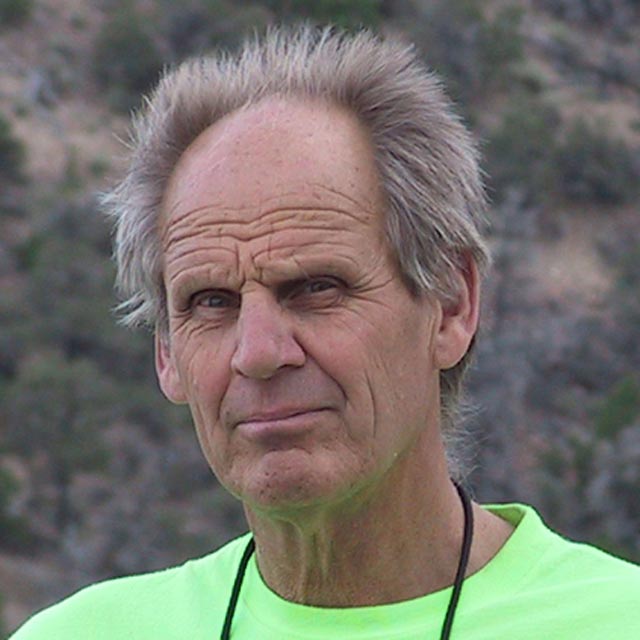
Dr. Steven G. Wesnousky is the Foundation Professor and Director of the Center for Neotectonic Studies at the University of Nevada, Reno (UNR). He holds a Ph.D. in Seismology from Columbia University (1982) and a B.A. in Geology from the University of California, Santa Barbara (1975). His academic career spans over three decades at UNR, where he combines geology and seismology to study earthquake mechanics, seismic hazard quantification, and crustal deformation. Research focuses on neotectonics, active fault systems, and the Himalayan seismic hazard. Key areas include fault slip rates, paleoearthquake reconstruction, and integrating geological data into seismic risk models. He teaches advanced courses on photogeology, neotectonics, and seismic hazard analysis. Publications emphasize Quaternary fault mapping, Himalayan tectonics, and rupture mechanics. Notable works include studies on the Walker Lane deformation zone and the 2015 Gorkha earthquake in Nepal. Awards include the Foundation Professorship (2008), F. Donald Tibbetts Teaching Award (2008), and a Fulbright Scholarship (2005). Professional roles include presidency of the Seismological Society of America (1995–1997), board memberships, and international collaborations at institutions like King Abdul University and the Institute of Nuclear and Geological Sciences, New Zealand. His work bridges field geology, geochronology, and computational modeling to advance understanding of continental deformation and earthquake processes.
Dr. Catherine Rychert is an Associate Professor in the Department of Geology and Geophysics at the University of Southampton, where she conducts cutting-edge research in seismology and marine geophysics. She is a member of both the Geology and Geophysics research group and the Southampton Marine and Maritime Institute, contributing significantly to our understanding of Earth's interior structure and dynamics through advanced seismic imaging techniques. Her research focuses on several key areas: Seismic imaging of lithosphere-asthenosphere boundary Subduction zone dynamics and slab structure Continental rifting processes Seafloor spreading mechanisms Mantle flow patterns and upwellings Development of novel seismic sensing technologies Dr. Rychert's recent publications (2023-2025) demonstrate a strong focus on applying advanced seismic techniques across diverse tectonic settings including subduction zones (Lesser Antilles, Cascadia, Hikurangi), mid-ocean ridges (Mid-Atlantic Ridge), and continental rift systems (East African Rift). A notable trend is her increasing use of distributed acoustic sensing technology for both terrestrial and planetary applications, showing interdisciplinary reach beyond traditional Earth science. Dr. Rychert actively supervises PhD students, including William Arnold Buffett working on the INSPIRE project. She has secured significant research funding from diverse sources including the European Union (EURO-LAB project), National Geographic Society, and Natural Environment Research Council (NERC). Her collaborative network includes Dr. Nicholas Harmon and Professor Derek Keir, with whom she frequently publishes. Her research team conducts fieldwork and data analysis focused on understanding fundamental Earth structure and processes through innovative seismic methodologies, contributing to both theoretical understanding and practical applications in hazard assessment and resource exploration.
Paul A Kapp is a Professor in the Department of Geosciences at the University of Arizona. His expertise spans continental tectonics, regional geology, structural-stratigraphic analysis, and eolian processes, with a focus on Asia and Cordilleran orogenic systems. Fieldwork includes geologic mapping, kinematic analysis of structures, and stratigraphic section measurements across Precambrian to Quaternary rock types. University: University of Arizona Department: Geosciences Email: pkapp@arizona.edu Research interests emphasize quantifying timing and rates of tectonic processes via geochronology and thermochronology. Key themes include Tibetan Plateau uplift, lithospheric dynamics in collisional zones, and eolian-landscape interactions. His work integrates field observations with analytical methods to understand orogenic plateau formation and paleoelevation reconstruction. Recent publications highlight tectonic-climate feedbacks, mantle melting mechanisms in Tibet, and crustal deformation in the North American Cordillera. Articles often address geodynamic modeling, basin evolution, and isotopic dating applications, reflecting a multidisciplinary approach to orogenic and sedimentary systems.
Jian Lin is a Chair Professor in the Department of Ocean Science and Engineering at the Southern University of Science and Technology (SUSTech) , China. He is an internationally renowned geophysicist, member of the European Academy of Sciences , Academia Europaea , and Russian Academy of Natural Sciences . He has held distinguished positions at Woods Hole Oceanographic Institution (WHOI) and MIT/WHOI Joint Program in Oceanography , and is a leading expert in global oceanic plate tectonics, earthquake mechanics, and marine geophysics. Education: Ph.D. in Geophysics (1988), Brown University M.S. in Geophysics (1984), Brown University B.S. in Geophysics (1982), University of Science and Technology of China Research Focus: Prof. Lin's work spans computational geodynamics , marine geophysics , earthquake mechanics , and oceanic lithospheric evolution . His studies include mid-ocean ridges, subduction zones, hydrothermal systems, and tsunami dynamics. He has led over 20 international oceanographic expeditions and contributed to major discoveries such as the first hydrothermal vents on the Southwest Indian Ridge and high-resolution seismic imaging of the Mariana Trench. Scientific Recognition: Fellow, American Geophysical Union (AGU) Fellow, Geological Society of America (GSA) Fellow, American Association for the Advancement of Science (AAAS) Henry Bryant Bigelow Chair for Excellence in Oceanography Charles E. Culpeper Young Scientist Award Member (Academician), European Academy of Sciences Member (Academician), Russian Academy of Natural Sciences Member (Academician), Academia Europaea Advising & Mentorship: Prof. Lin has supervised numerous PhD and Master's students, including Shuqiao Zhong , Guanzhi Wang , and postdocs such as LaiYin Guo , Caicai Zha , and Yiming Luo . He has taught courses like Global Plate Tectonics , Intelligent Ocean Exploration , and Introduction to Oceanography . Laboratory & Leadership Roles: He has served as Chair of the InterRidge Program , an international initiative promoting deep-sea research. He has held editorial roles in top journals and served on advisory boards for major ocean science programs globally.
Peter C. Lippert is an Associate Professor in the Department of Geology & Geophysics at the University of Utah , with research spanning paleomagnetism, tectonics, and environmental magnetism. His work connects geological time scales to climate dynamics, orogenic processes, and urban pollution monitoring. BS (2003) and PhD (2010) in Earth sciences Postdoctoral training at University of Arizona and UC Santa Cruz Research focuses include: Antarctic ice age cyclicity and Earth's orbital influences Hydrothermal alteration effects on paleomagnetic records in Tibet Magmatism during Mongol-Okhotsk Ocean closure Magnetofossils as climate proxies for rapid warming events Evergreen needle magnetization for urban pollution mapping Recent publications highlight collaborations across 50+ international institutions , with methodological innovations in site-level paleomagnetic analysis and FORC-PCA magnetofossil discrimination. His 15 most recent articles (2020–2024) address tectonic reconstructions, geomagnetic field evolution, and climate-ocean interactions. He serves on the Magnetics Information Consortium (MagIC) Steering Committee and has received the Taft-Nicholson Summer Faculty Fellow award. Teaching emphasizes Earth science as a philosophy, with courses on structural geology, dynamic Earth systems, and field research.
Sandro Conticelli is a Full Professor of Igneous and Metamorphic Petrology at the University of Florence, Italy, and Director of the Institute of Environmental Geology and Geoengineering (CNR-IGAG) in Rome. He has held leadership roles, including President of the Geological Society of Italy since 2018 and Editor-in-Chief of the Italian Journal of Geosciences since 2010. His academic career spans over three decades, with previous positions at the University of Basilicata and international postdoctoral fellowships in Canada, Germany, and the U.S. He earned a Laurea in Geology (cum laude) from the University of Florence in 1983 and a Ph.D. in Mineralogy and Petrology from Florence and Perugia Universities in 1988. His research focuses on volcanic and magmatic systems, isotope geochemistry, and the application of analytical techniques to study geological and agricultural matrices. Key research interests include: volcanic processes in Italy, Spain, Greece, and other regions; mantle geochemistry; analytical methods (XRF, ICP-MS, TIMS); and isotope geochemistry for tracing agricultural products like wine. He has authored/co-authored over 120 peer-reviewed articles, with a h-index of 49. Conticelli has received prestigious awards, including the 2016 Luigi Tartufari Prize for Geosciences and the 1991 Angelo Bianchi Prize for Young Petrologists. He serves on editorial boards of major journals and international scientific societies, contributing to advancing volcanology, geochemistry, and petrology. His work bridges fundamental geoscience with applied research, such as geochemical tracing of terroir in wines and olive oils, and investigating CO 2 emissions from active volcanoes like Etna. He leads interdisciplinary projects involving international collaborations, emphasizing both field-based and laboratory analytical approaches.
Kip Hodges is a Foundation Professor at the School of Earth and Space Exploration, Arizona State University (ASU). He leads the Group 18 Laboratories, focusing on noble gas isotope geochemistry and planetary geology. His work integrates field, laboratory, and theoretical approaches to study mountain formation, planetary processes, and impact events. His research interests span Earth Systems, Planetary Geoscience, Continental Tectonics, Earth Surface Processes, Cosmochemistry, and Planetary Geochemistry. He examines the geodynamic evolution of mountain belts like the Himalaya and Tibetan Plateau, utilizing thermal-kinematic modeling and noble gas isotope data. His planetary research includes lunar and Martian geochronology, impact crater analysis, and strategies for human-robotic collaboration in planetary exploration. Key projects include studies on the thermal evolution of terrestrial/extraterrestrial materials, diffusivity of noble gases, and the dynamics of continental subduction. His work contributes to understanding mountain-building, impact history of the Solar System, and future exploration missions. He directs the Group 18 Laboratories, renowned for innovative noble gas isotope geochemistry techniques to constrain thermal histories of terrestrial and extraterrestrial samples. The lab's work includes studies on noble gas diffusivity in planetary materials.
Professor Meghan S. Miller is an academic at the Australian National University (ANU), serving as a Professor in the Research School of Earth Sciences, specializing in Geophysics. She holds an ARC Future Fellowship, focusing on advancing Distributed Acoustic Sensing (DAS) technology for seismic imaging. Her research emphasizes observational seismology, particularly at critical tectonic plate boundaries such as subduction zones and continental collision zones. Education: Ph.D. in Geophysics from ANU (2006), M.Eng. from Cornell University (2000), M.S. from Columbia University (1999), and B.A. from Whittier College (1997). Research interests include seismic imaging of Earth’s structure, dynamics of subduction zones, and the application of novel techniques like DAS for high-resolution subsurface imaging. She has led projects such as the Southwest Australia Seismic Network (SWAN) and the SISSLE experiment in New Zealand. Key achievements include over 100 peer-reviewed publications, supervising numerous graduate students, and leading international collaborations in Indonesia, Alaska, and Morocco. Awards include the ARC Future Fellowship (2022–2026). Labs/Teams: Active in the AuScope Earth Imaging Program and collaborates with institutions like Geoscience Australia and Macquarie University.
Dr. Christopher Spencer is an Assistant Professor in the Department of Geological Science and Geological Engineering at Queen’s University, Canada. His research focuses on the formation, destruction, and evolution of the continental crust through field-based studies and geochemical analysis. He holds adjunct roles at Curtin University and Syracuse University, and serves as an editor for journals including the Canadian Journal of Earth and Sciences, Himalayan Geology, and Geophysical Research Letters. Dr. Spencer earned a Ph.D. in Earth Science from the University of St Andrews, and B.Sc./M.Sc. degrees in Geological Sciences from Brigham Young University. His work combines igneous petrology, geochemistry, and geochronology to study tectonic processes and atmospheric oxidation history. Key research locations include Oman, China, India, Japan, and Canada. Awards include the GSA Donath Medal (2020) and John Curtin Fellowship (2015). His research interests span tectonochemistry, sediment subduction dynamics, and the interplay between biosphere and lithosphere. Current projects investigate modern tectonic processes, crustal evolution, and the Paleoproterozoic 'tectono-magmatic lull.' He actively supervises postdoctoral researchers and recruits students for fieldwork in the North American Cordillera, Marianas, and Oman ophiolite.