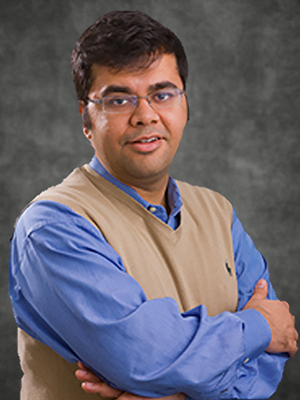
Stephen Boyes is a Professor of Chemistry and Director in the Division of Chemistry at the National Science Foundation, affiliated with George Washington University's Columbian College of Arts & Sciences. His research focuses on polymer synthesis, organic chemistry, polymer brushes, nanomedicines, and tissue engineering, with an emphasis on biomedical applications and surface modifications. His work spans the development of novel polymer materials, including refractive index-matched polymers and rigid-rod brushes, as well as nanoparticles for medical imaging and therapy. The Boyes Research Lab, located at 800 22nd St. NW, Washington DC, drives innovations in nanomedicine and advanced materials. Recent publications highlight advancements in lithium extraction, antifouling coatings, and gold/lanthanide nanoparticle conjugates. While no awards are explicitly listed in the provided texts, his research contributions reflect significant impact in materials and biomedical fields. His lab's interdisciplinary approach integrates polymer chemistry, nanotechnology, and surface science, addressing challenges in energy storage, medical devices, and tissue engineering.
Stephan Pfister is a Professor at ETH Zurich in the Department of of Civil, Environmental and Geomatic Engineering, where he leads research in the Ecological Systems Design group. His office is located at HIF D 85.2, Laura-Hezner-Weg 7, 8093 Zürich, Switzerland. Professor Pfister teaches multiple courses including Introduction into Environmental Engineering, Advanced Environmental Assessments, and Computer Laboratory courses for the Autumn Semester 2025. Dr. Pfister received his PhD from ETH Zurich in 2011 with a dissertation on 'Environmental evaluation of freshwater consumption within the framework of life cycle assessment.' Following his doctoral studies, he completed a one-year post-doctoral position at UC Santa Barbara in 2011. His academic journey has resulted in over 100 original research publications spanning more than a decade of scholarly contributions. Professor Pfister's research is highly interdisciplinary, focusing on methodological advancements in the impact assessment of water consumption, land use, and biodiversity loss within Life Cycle Assessment (LCA) and Multi-Regional Input-Output Analysis (MRIO). His work spans multiple sectors including agriculture and forestry, material extraction and processing, and power production. He has notably advanced water footprint concepts, including future scenario analyses and assessment of international trade implications. His research integrates environmental science with practical applications for sustainable resource management, addressing critical global challenges related to freshwater scarcity and ecosystem preservation. Analysis of Professor Pfister's recent publication record (2024-2025) reveals a strong trend toward integrated environmental assessment methodologies, particularly at the intersection of water resources, climate change, and sustainable systems design. His work increasingly addresses complex supply chain analyses, with growing emphasis on policy-relevant applications in sustainable food systems, urban mobility, and resource extraction. The methodological focus remains firmly rooted in Life Cycle Assessment while expanding into complementary frameworks like Water Footprint Assessment, demonstrating his leadership in advancing environmental assessment science. Professor Pfister's research has been supported by various funding mechanisms including the Swiss National Science Foundation (SNF) project 'Minimizing Energy Input, Exergy Loss and Environmental Impacts of Greenhouse Systems in Iran and Switzerland Exploiting Industrial Symbiosis Opportunities' (Grant No. 192875). His interdisciplinary approach has fostered collaborations across multiple institutions and research groups, contributing to the advancement of environmental assessment methodologies globally. The Ecological Systems Design group at ETH Zurich, led by Professor Pfister, serves as a hub for innovative research at the intersection of environmental science, engineering, and policy. The group maintains strong connections with international research networks focused on sustainability assessment, contributing to methodological standardization efforts and practical applications of environmental assessment tools in industry and policy contexts.
Manuel Pastor is Distinguished Professor of Sociology and American Studies & Ethnicity at USC, where he directs the Equity Research Institute. His research examines urban poverty, regional equity, environmental justice, and immigrant integration. Pastor has authored influential books including 'State of Resistance' and 'Solidarity Economics,' analyzing economic inequality and social movements. He received the 2022 American Academy of Arts and Sciences fellowship and was named an LA Times Influential leader in 2024. American Academy of Arts and Sciences (2022) LA Times Influential Civic Leader (2024) Champion for Equity Award (2017)
Victor Vasquez is a Professor and Chair of the Chemical and Materials Engineering Department at the University of Nevada, Reno (UNR). He holds a PhD in Chemical Engineering from UNR (1999) and focuses on thermodynamics, atomistic modeling, and process systems engineering for extreme materials. Key projects include Metal hexaboride research for neutron detection Reverse micellar systems for nanoparticle synthesis Lithium and cobalt supply chain analysis via complex networks Geothermal energy life cycle analysis Thermal pretreatment of lignocellulosic biomass Research keywords include: Materials Science Thermodynamic Modeling Molecular Dynamics Machine Learning Environmental Engineering Supply Chain Optimization Scientific awards: DELTA New Department Leaders Institute (2023) Faculty Academic Leadership Program (2019) He mentors graduate and undergraduate students, particularly from diverse backgrounds, and serves as adviser for UNR's AIChE and SHPE student chapters. Collaborations span UC San Diego, Alfred University, and Latin American institutions. Leadership roles include AIChE NORCAL section director (2010-2017) and ABET symposium participation (2021).
Susan Park is a Professor of Global Governance in International Relations at the University of Sydney. Her research focuses on international organizations, global governance, and their roles in renewable energy transition and environmental accountability. She has held visiting scholar positions at prestigious institutions including the London School of Economics, Oxford University, and the Technical University of Munich. Her work is funded by governments in Australia, Canada, Britain, and Germany. Senior Research Fellow and Research Lead, Earth Systems Governance Affiliated Faculty, Munk School’s Environmental Governance Lab (University of Toronto) External Associate, Centre for the Study of Globalisation and Regionalisation (Warwick University) Her research spans International Relations , Constructivist theory , Global Environmental Politics , and Accountability mechanisms in development banks. She examines how international institutions adapt to environmental challenges and renewable energy governance. From 2023–2025, she leads two Australian Research Council Discovery Grants on Global Governance, Eco-Justice and Global Governing Gaps for Solar Energy . Her publications include books on The Good Hegemon (Oxford University Press) and Environmental Recourse at the Multilateral Development Banks (Cambridge University Press). 2022 Vice Chancellor’s Award for outstanding research Editorial Board: Earth Systems Governance Journal Lead Editor: Global Environmental Politics She supervises current PhD students including Hugh Tuckfield, FEI Su, and Ana-Maria Ulloa, and has previously supervised Marcel Kaba and Helena Varkkey. Park is affiliated with the Sydney Environment Institute, China Studies Centre, and The Net Zero Institute. She is a Hans Fischer Senior Fellow (2019–2023) at the Technical University of Munich.
Bhushan Gopaluni is a Professor in the Department of Chemical and Biological Engineering at the University of British Columbia, where he also serves as Associate Dean for Education and Professional Development in the Faculty of Applied Science. He holds associate faculty positions in multiple interdisciplinary institutes including the Institute of Applied Mathematics, Institute for Computing, Information and Cognitive Systems, Pulp and Paper Center, and Clean Energy Research Center. He previously held the Elizabeth and Leslie Gould Teaching Professorship from 2014 to 2017. Education: Ph.D. in Chemical Engineering, University of Alberta (2003) Bachelor of Technology in Chemical Engineering, Indian Institute of Technology, Madras (1997) Research Interests: Professor Gopaluni's research spans several critical areas at the intersection of chemical engineering, machine learning, and process control. His primary focus includes the development of advanced process control strategies using reinforcement learning and machine learning techniques. He has made significant contributions to battery technology research, particularly in capacity estimation and remaining useful life prediction for lithium-ion batteries. His work also encompasses sustainable energy systems, industrial process monitoring, fault diagnosis, and the application of digital twin technology in chemical processes. His research methodology emphasizes the integration of data-driven approaches with fundamental process understanding, leading to practical solutions for complex industrial challenges. This includes the development of interpretable machine learning models for industrial applications, real-time optimization strategies, and advanced monitoring systems for process industries. Publications and Research Impact: Professor Gopaluni's recent publications demonstrate a strong focus on cutting-edge applications of machine learning in chemical engineering. His work prominently features battery technology and energy systems, with multiple papers addressing lithium-ion battery capacity estimation and management. He has also contributed significantly to process control applications, including drilling process monitoring, greenhouse gas reduction in marine transport, and renewable carbon tracking in biofuel processing. His research extends to advanced computational methods including deep learning, reinforcement learning, and causal discovery in industrial processes. Awards and Recognition: Killam Teaching Prize (University of British Columbia) Dean's Service Medal (University of British Columbia) D.G. Fisher Award in Process Control (Canadian Society for Chemical Engineers) Elizabeth and Leslie Gould Teaching Professor (2014-2017) Professional Service and Editorial Roles: Professor Gopaluni currently serves as Associate Editor for three prestigious journals: Journal of Process Control, The Journal of Franklin Institute, and Results in Control and Optimization. His service to the academic community extends through his role as Associate Dean for Education and Professional Development, where he oversees educational initiatives across the Faculty of Applied Science. Industry Experience: From 2003 to 2005, Professor Gopaluni worked as an engineering consultant at Matrikon Inc. (now Honeywell Process Solutions), where he designed and commissioned multivariable controllers for British Columbia's pulp and paper industry and implemented controller performance monitoring projects across oil & gas and chemical industries.
Dr. V. Seshadri Sravan Kumar is an Associate Professor in the Department of Electrical Engineering at the Indian Institute of Technology Hyderabad. His research spans Power Engineering and Applied Mathematics, with a focus on Time and Frequency Domain Modeling, Electromagnetic Transients, Phasor and Frequency Estimation, and Machine Learning applications in power systems. Ph.D. and M.Sc.(Engg.) from IISc Bangalore Current research trends include Battery-Ultracapacitor Integration, Electric Vehicle Power Systems, and Non-ideal Component Modeling His group has contributed to 15 recent publications in journals like IEEE Transactions on Vehicular Technology, Renewable Energy (Elsevier), and conferences including IEEE PES General Meeting and PEDES. Key awards include the 2021 IIT Hyderabad Teaching Excellence Award and 2016 POSOCO Power System Award. Students mentored include Ph.D. candidates Sai Vinay Kishore N and alumni such as Anirudh C V S and Naresh Palla. He teaches graduate-level courses like Matrix Theory, Electrical Machine Analysis, and Modeling of Electromagnetic Transients.
Ngoc T. Bui is an Assistant Professor in the Department of Sustainable Chemical, Biological and Materials Engineering at the University of Oklahoma. He holds a Ph.D. in Chemical Engineering from the University of Connecticut (2014), an M.S. in Textile Engineering from Chonnam National University (2007), and a B.S. in Chemical Engineering with a minor in Organic Chemistry from HoChiMinh City University of Technology (Vietnam). His research focuses on the water-energy-environment nexus, developing advanced functional materials and membranes for sustainable separations, environmental remediation, and renewable energy applications. Dr. Bui's work integrates physics, chemistry, and engineering to study nanomaterials' physicochemical properties and their transport behaviors. His lab designs membranes and adsorbents from nanoscale building blocks, focusing on energy-efficient wastewater treatment from oil and gas industries and converting pollutants into valuable commodities. Key projects include bioinspired supramolecular complexes for heavy metal removal, carbon nanotube-based breathable protective fabrics, and adsorptive membranes for precision ion separation. His research outputs span over 30 peer-reviewed articles, patents on nanoporous membranes and adsorptive technologies, and contributions to textbooks like Desalination: Water from Water and Desalination 2nd Edition . Collaborations with Lawrence Berkeley and Livermore National Laboratories highlight his expertise in applied nanotechnology and sustainable engineering. Dr. Bui's lab emphasizes translational research through systems-level assessments, aiming to transform water, energy, and environmental landscapes. Current efforts include granulation technologies for nutrient recovery and fluidized-bed systems for industrial wastewater treatment.
María Arquero de Alarcón is an Associate Professor at the University of Michigan Taubman College of Architecture and Urban Planning , where she teaches Physical Planning and Design , Global and Comparative Planning , and Climate-Related Urbanism . She leads MAde Studio , a research-based design practice focusing on socio-spatial strategies for urban transformation in conditions of scarcity. Research Focus: Her work combines architecture , landscape urbanism , and social justice to address urban development challenges, particularly in informal settlements and resource-constrained environments. Projects span São Paulo's urban peripheries , Detroit's riverfront , and Lithium extraction territories , emphasizing collaborative processes with local communities. Scientific Awards: ACSA Collaborative Practice Award (2019) AIA Michigan Design Awards (2013-2015) BSA Award Citations (2013-2014) ACSA Faculty Design Award (2012) Publications include contributions to The Third Coast Atlas , Mapping Detroit , and journals like Sustainability and Michigan Journal of Sustainability . Her exhibitions include the Shenzhen-Hong Kong Biennale and Eli Broad Art Museum. Education: Professional Degree in Architecture (Madrid Polytechnic University), Master of Advanced Studies in Landscape Architecture (ETH Zurich), Master of Landscape Architecture in Urban Design (Harvard University). Recipient of the Fellowship for Postgraduate Studies “Obra Social La Caixa” for US studies.
Alissa Kendall is a Professor in the Department of Civil and Environmental Engineering at the University of California, Davis, with affiliations in the Energy Graduate Group, Institute of Transportation Studies, and Agricultural Sustainability Institute. She holds a Ph.D. jointly conferred by the School of Natural Resources & Environment and Department of Civil & Environmental Engineering from the University of Michigan, Ann Arbor, along with an M.S. in Natural Resource Policy and a Certificate in Industrial Ecology. Her research focuses on life cycle assessment, industrial ecology, sustainable systems, and circular economy principles applied to transportation, energy systems, and geotechnical engineering. Kendall's work bridges environmental engineering with policy-relevant solutions for sustainable resource management. Her publications demonstrate consistent focus on life cycle methodologies applied to emerging technologies, with strong emphasis on electric vehicle systems, critical minerals management, and sustainable infrastructure. Research shows increasing attention to circular economy implementation and policy integration over time. Awards: UC Davis Chancellor’s Fellow (2016) Laudis Medal, International Society of Industrial Ecology (2013) National Academy of Engineering’s Frontiers in Engineering Education (2012) UC Davis Hellman Fellow (2009-2010) 3M Award for Industrial Ecology (2005)
Cejna Anna Quist-Jensen is an Associate Professor at the Department of Chemistry and Bioscience, Aalborg University, affiliated with the Bioresources and Process Engineering Center and the Center for Membrane Technology. Her research focuses on membrane-based technologies for resource recovery, including minerals/metals and freshwater from unconventional sources like waste streams. She specializes in membrane distillation, membrane crystallization, electrodialysis, and forward osmosis. Education: PhD in Membrane Crystallization (Institute on Membrane Technology, ITM-CNR, 2016) and MSc in Chemical Engineering (2012). Key projects include BEYONDBATTREC (battery recycling), CORNERSTONE (water-energy-solute recovery), and EXBRINER (seawater brine resources). She teaches Integrated Process Modeling and supervises students across multiple semesters in water/wastewater treatment. Research interests span sustainable development goals (SDGs), particularly clean water (SDG 6), affordable energy (SDG 7), and responsible consumption (SDG 12). Her work addresses industrial wastewater treatment, produced water management, and circular economy strategies. Notable contributions include advancements in 3D-printed membranes, percrystallization for zero liquid discharge, and lithium/magnesium recovery from brines. She actively participates in conferences and collaborates internationally on membrane technology innovations.
Dr. Ajay Achath Mohanan is a Lecturer at the Malaysia School of Engineering, Monash University. He holds a PhD in Engineering from Monash University Malaysia (2016) and a Bachelor of Engineering in Electrical and Computer Systems Engineering from the same institution (2009). His research focuses on flexible surface acoustic wave (SAW) sensors integrated with ZnO nanostructures, transitioning from rigid to flexible substrates. Key areas include piezoelectric ZnO thin films on polymers, low-temperature hydrothermal synthesis of nanowires, and UV-LED photolithography for sensor fabrication. He teaches ECE2071 - Computer Organisation and Programming and ECE3091 - Engineering Design . Mohanan leads or collaborates on projects such as flexible Lamb wave resonators for wastewater monitoring and graphene-integrated acoustic sensors. He has contributed to over 15 peer-reviewed publications since 2009, addressing topics like SAW resonator design, nanowire growth, and semiconductor defect analysis. His research aligns with UN SDG 4 (Quality Education) and SDG 9 (Industry, Innovation, and Infrastructure). Mohanan’s work emphasizes sustainable sensor technologies for environmental and industrial applications. He operates in the Micro and Nano Devices Lab, advancing flexible electronics and wearable sensor platforms.
Professor Justine Nolan serves as the Director of the Australian Human Rights Institute and a Professor in the Faculty of Law and Justice at UNSW Sydney. With over 25 years of experience, she is an internationally recognized expert in modern slavery and human rights issues relating to business practices. Her career has included significant advisory roles with business, civil society, government, and the United Nations, and she has been a key driver of the Australian and global business and human rights movement. Professor Nolan holds an MPP from the University of California, Berkeley, and both an LLB(Hons) and BSc from the Australian National University. Her educational background provides a strong foundation for her interdisciplinary approach to human rights and business issues. Nolan's research focuses on the intersection of business and human rights, particularly supply chain responsibility for human rights and modern slavery. Her work is noted for both conceptual clarity and practical application, setting strategic paths to address significant business and human rights challenges. She has led major research projects, including one on 'transformative business practices' funded by the Laudes Foundation, which identifies and tests replicable business practices for just transitions in global supply chains. Her influential publications include the 2019 co-authored book Addressing Modern Slavery , The International Law of Human Rights (OUP, 2017), and Business and Human Rights: From Principles to Practice (Routledge, 2016). Professor Nolan's scholarly output reveals consistent focus on modern slavery legislation, supply chain transparency, human rights due diligence, and corporate accountability. Her work demonstrates a progression from theoretical frameworks to practical applications, with increasing emphasis on remediation mechanisms and regulatory effectiveness in recent years. UNSW Arc Postgraduate Outstanding Research Supervisor Award (2020) Academic of the Year, Australian Law Awards (2019) UNSW Vice Chancellor's Award for Teaching Excellence (2018) UNSW Plus Alliance Fellow (2019-2020) Professor Nolan has supervised numerous doctoral students on topics including human rights protection in manufacturing supply chains, extraterritorial processing of refugees, the lithium extractive sector and corporate human rights compliance, and remedying corporate human rights violations. She has secured substantial research funding, including grants from the Laudes Foundation (EUR238,033), Freedom Fund (US$72,727), and Australian Government programs. Her teaching portfolio includes International Human Rights Law and Advocacy, Business and Human Rights, and Human Rights Law in Practice. As Director of the Australian Human Rights Institute, Nolan leads a major research center focused on business and human rights issues. She has held significant leadership roles including Deputy Director of the Australian Human Rights Centre (2006-2017) and Associate Dean Academic at UNSW Law (2016-2019). She continues to influence policy through appointments to the Australian Government's Modern Slavery Expert Advisory Group (2020, reappointed 2024) and other expert panels.
Sami Virolainen is a Research Professor and Head of the Department of Separation Technology at LUT University's School of Engineering Sciences. His work focuses on hydrometallurgy, particularly in metal separation processes critical for the green transition and resource recovery. Education: LUT University (Chemical Engineering diploma, PhD in 2009) Research interests span separation technology for battery material recycling, rare earth element recovery, and applications in water purification, biorefinery, and Power-to-X technology. His department investigates resource-efficient methods for critical metals like cobalt, nickel, and lithium. Recent publications emphasize sustainable metallurgy , including solvent extraction, ion exchange, and nanofiltration techniques for battery waste and industrial byproducts. Key areas include multi-metal recovery , acid recycling , and rare earth purification . Virolainen leads cross-disciplinary collaborations under LUT's SCI-MAT platform, integrating separation science with economics and sustainability. He advocates for European self-sufficiency in critical metals while acknowledging market-driven challenges. Based in Lappeenranta, he has spent over two decades at LUT University, starting as a chemical engineering student in 2001. His department operates across LUT's geographical locations, including Lappeenranta, Lahti, Mikkeli, and Kouvolan campuses. Outside academia, Virolainen is connected to regional sports culture as a lifelong supporter of Finnish hockey teams like Mikkelin Jukurit and SaiPa, and currently involved with youth basketball through Catz Lappeenranta.
Sarbajit Banerjee is a Senior Professor in the Department of Materials Science & Engineering at Texas A&M University. His research spans solid-state and materials chemistry, focusing on nanoscale materials, electronic structure, x-ray spectroscopy, thin films, light metals, and nanocomposites. 2022: Distinguished Achievement Award in Graduate Mentoring 2021: Edith and Peter O’Donnell Award in Science 2017: Fellow, Institute of Physics His recent work explores neuromorphic computing , Li-ion diffusion , and redox photocatalysis , with over 15 publications (2022–2025) addressing battery cathode design, corrosion protection, and advanced material synthesis. Awards highlight his contributions to graduate mentoring and early-career research excellence. 2010: Cottrell Scholar Award 2009: NSF CAREER Award