

Jan Alber is a Professor of Modern English and American Literature at the Department of English and American Literature and Culture, Justus Liebig University Giessen . He previously held positions at RWTH Aachen, Aarhus University, TU Darmstadt, and the University of Freiburg. His work bridges narrative theory, cognitive studies, and postcolonial literature, with a focus on unnatural narratives and empirical approaches to literary analysis. Fields of Interest: Unnatural Narratology, Cognitive Literary Studies, Climate Fiction, Postcolonial Literature Key Themes: Storyworlds, Ideology, Empirical Methods, Narrative Beginnings Alber's recent publications explore narrative theory's intersections with cognition and ideology, including analyses of digital post-postmodernist novels and climate change narratives. His empirical studies examine how readers process experimental narratives, particularly unnatural narrators and metaleptic structures. He has received prestigious awards such as the Habilitation Prize from the German Association of Anglists (2013) and the FRIAS junior group competition (2008). His research is funded by the AHRC, DFG, and Alexander von Humboldt Foundation, notably supporting interdisciplinary work on post-truth political narratives and Ukrainian scholars. Alber co-founded the Aachen Center for Cognitive and Empirical Literary Studies and serves as President of the International Society for the Study of Narrative. He organizes international workshops on cognitive narratology and teaches courses spanning literary history, theory, and postmodern fiction.
جستجوی استاد راهنمای دانشگاهی
برای مسیر پژوهشیتان، استاد راهنما، استاد دانشگاه و پژوهشگر مناسب را پیدا کنید و با آنها ارتباط بگیرید.
نمایش ۱-۱۵ از ۱٬۶۰۳ استاد راهنما
اطلاعات پروفایلها از صفحات عمومی دانشگاهها گرفته شده و ممکن است بهروز نباشد.
Gül Şenمشاهده پروفایل
مدرس ارشد
Gül Şen is a Senior Lecturer and Privatdozentin at the Institute of Oriental and Asian Studies, University of Bonn, and also serves as a Lecturer at the University of Heidelberg. Her academic work focuses on premodern Ottoman history, historiography, and the dynamics of dependency, particularly in maritime contexts such as galley slavery and war captivity. She is actively involved in major research programs including the DFG-Priority Program 'Transottomanica' and the Bonn Center for Dependency and Slavery Studies. Her research areas include: Premodern Ottoman historiography and narrative strategies Legitimacy of rule and political transitions Maritime unfree labor and galley slavery War captivity and captivity narratives in the 18th century Dependency and asymmetrical power relations in the early modern Mediterranean Her recent publications reveal a strong thematic trend centered on the interplay between narrative construction and social power, particularly in contexts of slavery and captivity. She investigates how historical actors used storytelling to assert legitimacy, cope with crises, and negotiate identity. Her work bridges literary analysis with social history, offering nuanced understandings of agency within systems of dependency. She frequently collaborates with leading scholars like Stephan Conermann and contributes to major edited volumes and series in Ottoman studies. Her scientific awards include: DAAD Award for outstanding academic achievements (2012) Postdoctoral Scholarship from the Fritz Thyssen Foundation (2012–2013) Postdoctoral Fellowships at the Annemarie Schimmel Kolleg (2015–2016, 2018–2019) Postdoctoral Scholarship from the University of Bonn (2019–2020) She has supervised numerous B.A. and M.A. theses at the University of Bonn and Heidelberg and has secured third-party funding, including a DFG project (€192,000) from 2016–2018 and Fritz Thyssen Foundation grants. She is co-editor of the 'Ottoman Studies' and 'Otto Spies Memorial Series' book series, and holds leadership roles in the Society for Turkic, Ottoman and Turkish Studies (GTOT) and the International Association for Ottoman Social and Economic History (IAOSEH). Her academic activities are deeply embedded in collaborative and interdisciplinary research environments. She is affiliated with the Bonn Center for Dependency and Slavery Studies and contributes to the DFG-Priority Program 'Transottomanica,' where she examines mobility dynamics and captivity narratives. Her work is supported by a strong network of international collaborations and editorial engagements.

Prof. Dr. Claudine Moulin is a Full Professor of Historical Linguistics at the Department of German Studies, University of Trier. She co-directs the Trier Center for Digital Humanities and serves as Vertrauensdozentin der Deutschen Forschungsgemeinschaft. With academic roots in Brussels and Bamberg, she completed her PhD in 1990 and Habilitation in 1999 at the University of Bamberg. Her research spans medieval and early modern languages, manuscript studies, digital humanities, and Luxembourgish linguistics. As a leading scholar in historical linguistics, Moulin's work explores urban language history, phraseology, and cultural knowledge transmission through manuscripts. She has directed major digital humanities projects like LexicoLux and Cartul@rium, while pioneering digital codicology methods for medieval texts. Her research combines traditional philology with computational approaches. Her academic accolades include the Akademiepreis Rheinland-Pfalz (2010), Landesverdienstorden (2014), and the Verdienstkreuz am Bande (2025). She has held visiting professorships at Sorbonne, EHESS Paris, and EPHE, and received fellowships from the Humboldt Foundation and European Science Foundation. Notable Academic Roles: Co-founder and Chair of DHd (Digital Humanities in German-speaking countries) Founding member of Trier Center for Language and Communication Member of German Historical Institute Paris scientific board Advisory positions at Austrian Center for Digital Humanities and Herzog August Bibliothek Her editorial leadership includes chief editorship of Sprachwissenschaft journal and co-editorship of Germanistische Bibliothek monograph series. She has mentored over 40 graduate students in topics ranging from medieval marginalia to urban language studies.
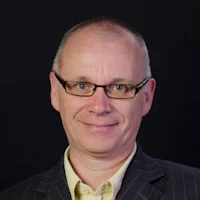
Professor Max Deeg is a leading scholar in Buddhist Studies at Cardiff University , holding a personal chair since 2009. With a career spanning institutions in Germany, Austria, and the UK, his research focuses on transcultural Buddhist history from India to East Asia, Chinese Buddhist travelogues , and interreligious encounters in medieval China. He has held visiting positions at universities in Japan, Nepal, the US, and Germany, and currently directs the Centre for the History of Religion in Asia (CHRA) . PhD from University of Würzburg (1990) Dr. phil. habil. in Religious Studies (1998) Full Professor at University of Vienna (2002-2006) His research explores Buddhist narratives as tools for constructing religious identity, foundation myths in trans-Himalayan contexts, and terminology evolution in Chinese Buddhist translations. Recent publications analyze Indian Buddhist monasticism through Chinese sources and religious concepts like xin (trust) across Buddhist, Manichaean, and Christian traditions. Awarded the KHK Visiting Research Fellowship (2016) and a DAAD Scholarship (1986-87) , Prof Deeg contributes to editorial boards of major journals. He supervises PhD students and teaches Buddhist Studies , Life of the Buddha , and Chinese Buddhist Texts .
Jan Jokischمشاهده پروفایل
پژوهشگر
Jan Jokisch is a Researcher and PhD student at the Max Planck Institute for Empirical Aesthetics in Frankfurt am Main, Germany, affiliated with the Heisenberg research group. His academic background includes a Master's in Comparative Literature from Johannes Gutenberg University Mainz and the University of Massachusetts Amherst, and a Bachelor's in Comparative Literature and Philosophy from Mainz. He has lectured in German language and literature at Argentine universities and served as a translator for the DEFA Film Library. His research focuses on drama history, quantitative and digital literary studies, and methodologies in the humanities, with current collaboration on the DFG-funded 'Forager Folklore Database (FFDB)' project. Education highlights include a thesis on 'Epistemological Horror in Literature' (2021) and a BA thesis reinterpreting Shklovsky's literary theory through Heidegger's phenomenology (2018). Jokisch has been recognized with DAAD scholarships (2019, 2021) and the Gutenberg Lehrkolleg Award (2018). He has authored and edited conference proceedings, including works on distant reading methodologies and interdisciplinary language studies. His academic work bridges computational analysis with traditional humanities, emphasizing the role of technology in literary research. Collaborations and editorial roles reflect his commitment to fostering international student scholarship and innovative research practices.
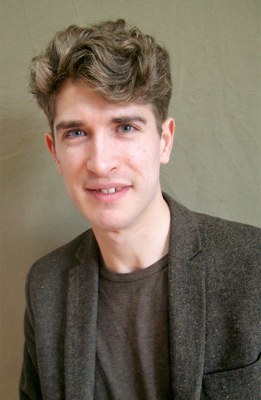
Victor Kempfمشاهده پروفایل
پژوهشگر ارشد
Dr. Victor Kempf is a postdoctoral researcher at the Institut für Philosophie , Humboldt-Universität zu Berlin, since March 2025. He completed his PhD at Goethe-Universität Frankfurt in 2017 and focuses on social and political philosophy from a critical theory perspective.
Sebastian Thies is Professor and Chair for Ibero-American Literary and Cultural Studies at the University of Tübingen, where he has been employed since October 2012. He serves as Vice Director of the Interdisciplinary Centre for Global South Studies (ICGSS) and coordinates the BMBF/DAAD thematic network 'Futures under construction in the Global South'. His academic journey began with a PhD in Hispanic Studies from the University of Osnabrück in 2000, followed by positions at the University of Bielefeld where he progressed from Junior Professor for Hispanic Literary and Media Studies to Full Professor for Inter-American Studies. Thies' research focuses on Global South Studies, with particular emphasis on Latin American literature, film, and media. His work explores subjectivity formations, entangled temporalities, and political communication across borders. He has directed significant research initiatives including the doctoral studies program 'Entangled Temporalities in the Global South' and has co-edited major reference works such as The Routledge Handbook for Global South Studies on Subjectivities (2024). His extensive publication record demonstrates a consistent engagement with transnational cultural phenomena, particularly examining how Latin American cultural production intersects with global political and social dynamics. Thies frequently collaborates with international scholars, reflecting his commitment to transdisciplinary and transregional approaches to cultural analysis. Project Leader: Research Training Network 'Entangled Temporalities in the Global South' Vice Project Leader: Thematic network 'Literary Cultures of the Global South' Associated Investigator: BMBF-Area Studies Project 'The Americas as a Space of Entanglement' Project Leader: Research Group 'E Pluribus Unum? Ethnic Identies in Processes of Transnational Integration' Thies actively supervises doctoral students through the Interdisciplinary Centre for Global South Studies and has established collaborative networks across Latin America, particularly with institutions in Mexico and Colombia. His current research agenda focuses on 'Futures under construction in the Global South' and continues to explore the intersections of cultural production, political communication, and subjectivity formation in transnational contexts.
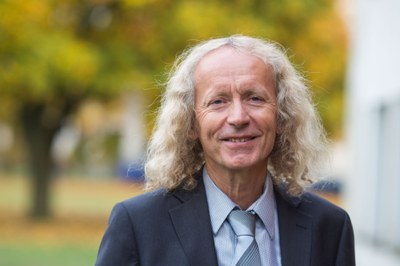
Ansgar Nünning is a Professor of English and American Literature and Cultural Studies at the Justus-Liebig-Universität Gießen since 1996. He is the founding director of the Giessen Graduate School for the Humanities and the International Graduate Centre for the Study of Culture (GCSC), and serves as academic director of the International PhD Program (IPP) 'Literary and Cultural Studies'. Additionally, he is a member of the Collaborative Research Centre 'Memory Cultures' and has driven internationalization efforts in PhD education through partnerships like PhDnet Literary and Cultural Studies. Research Focus: Interdisciplinary cultural studies, narrative theory, cultural memory, and media-specific narratology. Academic Leadership: Founded key graduate institutions, supervised 15+ PhD candidates, and co-developed transdisciplinary teaching frameworks. Notable Contributions: His work spans media-conscious literary analysis, theory of narrative self-making, and cultural transgression studies. He has mentored scholars who now hold academic positions across Europe and beyond. Scientific Award: Honorary doctorate from the University of Stockholm (2017) for contributions to literary/cultural studies and PhD education reform. Current Roles: Oversees research at the GCSC, collaborates on media-specific narratology projects (e.g., Robin Schmieder's vlog analysis), and contributes to transdisciplinary teaching initiatives.
Kyung-Ho Chaمشاهده پروفایل
استادیار
Kyung-Ho Cha serves as Junior Professor of Modern German Literature at the University of Bayreuth's Faculty of Languages & Literature within the Department of New German Literature. His academic journey includes studies at Bonn, Oxford, and Columbia University, followed by doctoral work at Technical University Berlin completed in 2010. His research centers on three interconnected domains: literature-science intersections with focus on evolutionary biology and Walter Benjamin's writings; literary representations of migration; and human rights discourse in contemporary literature. This tripartite framework informs his critical analysis of authors like Elfriede Jelinek and Fatih Akin. Cha's publications reveal consistent engagement with transnational themes, particularly examining German-Turkish cultural dynamics, refugee narratives, and ethical dimensions of literary representation. His work demonstrates methodological rigor in bridging literary analysis with philosophical and scientific discourse. German National Merit Foundation Fellowship DAAD Fellowship ICI Berlin Institute Fellowship DFG Fellowship Volkswagen-Foundation Support Harvard Mahindra Humanities Center Fellowship (2011-2012) Cha has directed significant research projects including the DFG-funded 'Seelenwanderung und literarische Kommunikation' at Freie Universität Berlin and contributed to the DFG Graduiertenkolleg 'Körper-Inszenierungen'. His editorial work on human rights literature demonstrates leadership in establishing interdisciplinary scholarly dialogues. Current research continues to explore migration narratives within the 'Future Migration' initiative at Bayreuth.
Prof. Dr. Kianoosh Rezania is a Professor of West Asian Religious History and Director of the Käte Hamburger Kolleg Dynamics of Religious History at Ruhr University Bochum. His research focuses on Zoroastrianism, Iranian religions, and the history of religions, with a particular emphasis on ancient Iranian languages and interreligious dynamics. He holds a Ph.D. from Georg-August University Göttingen and has conducted extensive research on topics such as Zoroastrian cosmology, Sasanian-Zoroastrian interactions, and the transmission of religious texts. His work combines philological analysis with historical and cultural studies approaches. Rezania's academic career includes roles as a research associate at Göttingen University and his habilitation project on spatial concepts in early Zoroastrianism. He has directed major research initiatives like the Graduate School of Metaphor and Religion (GSMR) and the Käte Hamburger Kolleg. His publications span monographs, edited volumes, and peer-reviewed articles exploring themes such as religious economics, Middle Persian lexicography, and cross-cultural exchanges between the Safavid and Mughal empires. His current projects include the 'Zoroastrian Middle Persian: Digital Corpus and Dictionary' initiative and studies on Pahlavi literature's interreligious context. He collaborates internationally, leading interdisciplinary teams and contributing to digital humanities efforts in religious studies.
Stephan Leskerمشاهده پروفایل
پژوهشگر
Dr. Stephan Lesker is a Researcher at the Institute for German Studies within the Faculty of Philosophy at the University of Rostock, serving as a research and teaching assistant to Prof. Dr. Lutz Hagestedt at the Chair of Modern and Contemporary Literature since April 2015. His educational background includes: Bachelor of Arts in German and Philosophy, University of Rostock (2005-2008), thesis on narrative aspects in Edgar Hilsenrath's Jossel Wassermann's Homecoming Master of Arts in German and Linguistic Communication/Communication Disorders, University of Rostock (2011), thesis on crisis experiences in Hermann Hesse and Ernst Jünger Dr. Lesker's research centers on 20th-century German literature with specialized focus on narrative theory, media staging and simulation (particularly in Rainald Goetz and Walter Kempowski), and the complex interplay between autobiography and fiction. His scholarly approach examines how literary texts negotiate historical representation and personal narrative boundaries through theoretical frameworks of simulation and mediality. Analysis of his recent publications reveals sustained engagement with German literary figures Matthias Claudius and Walter Kempowski, exploring themes of intellectual history, travel literature, and the tension between factual and fictional elements. His editorial work on the Kempowski Yearbook and contributions to Claudius scholarship demonstrate methodological consistency in examining autobiographical impulses within literary production. No scientific awards were documented. Information regarding student advising, research grants, or laboratory teams was not provided in the source materials.
Prof. Dr. Christoph U. Werner is the Chair of Iranian Studies at Otto-Friedrich-University Bamberg since 2019, following his 12-year professorship at Marburg University (2007-2019) and previous academic roles. He specializes in Iranian Studies with focus areas in social history , legal institutions , Shiite religious structures , and Persophone literary history . As a Research Dean of Humanities and Cultural Studies (2023-2025) Managing Director of the Institute of Oriental Studies (2021-2025) President of Societas Iranologica Europaea (2019-2023) , he leads major academic initiatives. His research spans Qajar-era legal contracts Waqf (endowment) systems Persian-Ottoman-Georgian historical interconnections Manuscript studies of Persian documents , often combining archival analysis with interdisciplinary approaches. Recent publications focus on 20th-century Persian cultural politics, early modern Persian-Ottoman interactions, and legal epigraphy. He collaborates extensively with institutions like the University of Oxford's Invisible East and DFG Priority Programme Transottomanica . His editorial work includes Orientalistische Literaturzeitung (2022-) Persimone blog (2022-) Bamberg University Press publications and multiple Iranian academic journals.
- Iranian Studies
- Islamic Studies
- Social History
- +۳ مورد دیگر
Fabian Schulzمشاهده پروفایل
پژوهشگر
Dr. Fabian Schulz is a Senior Researcher in Ancient History at the University of Tübingen, where he works in the Department of History within the Faculty of Humanities. He leads a prestigious Junior Research Group under the Emmy Noether Programme of the German Research Foundation (DFG), titled 'Power and Influence: Influencing Emperors between Antiquity and the Middle Ages.' His academic profile also includes association with the Collaborative Research Center (SFB) 923 'Threatened Order - Societies under Stress' and active participation in the 'Tübingen Theosophy' research group. Previously, he contributed to the Heidelberg Academy of Sciences and Humanities project on John Malalas' Chronicle and the University of Tübingen's DFG project 'East and West 400-600 AD.' Dr. Schulz earned his PhD in Classics from Freie Universität Berlin (2006-2010), where he also served as a teaching assistant. During his doctoral studies, he was a Pensionnaire étranger at the École Normale Supérieure Paris. Prior to that, he completed an MA equivalent degree in Classics at Freie Universität Berlin, with time spent as a visiting student at the University of Oxford (1999-2005). His early career included teaching Latin and Greek at a grammar school in Lübeck (2006). His research specializes in power structures and influence mechanisms in ancient societies, with particular focus on how advisors shaped imperial decisions in Late Antiquity. He has made significant contributions to understanding councils of elders in Archaic Greece (especially the Spartan Gerousie), Byzantine chronography (particularly John Malalas' works), and the complex dynamics between Eastern and Western Roman empires during the 5th and 6th centuries. His methodological innovation lies in applying modern sociological models of interpersonal influence to historical analysis of ancient political culture, bridging literary representation with political reality in pre-modern monarchical states. Young researchers award for 'Ratgeber, Experten, Manipulatoren: Einfluss als Machtfaktor und Diskursobjekt in der Antike' As principal investigator of his Emmy Noether project, Dr. Schulz has secured substantial research funding from the German Research Foundation. His collaborative work includes multiple edited volumes on Late Antique history and Byzantine chronography, reflecting his strong international scholarly network. He currently serves as a deputizing member (non-professorial academic staff) on the faculty board of Humanities at the University of Tübingen. His research often intersects with contemporary concerns about power dynamics, political influence, and historical memory, as evidenced by his work on video game representations of ancient history. Dr. Schulz is an active contributor to the online commentary project on John Malalas' chronicle, specifically editing sections of Book XVIII. His work frequently involves detailed textual criticism and analysis of historical sources, with particular attention to how narratives are transmitted and reinterpreted across different cultural contexts. His scholarly approach combines philological precision with broader historical and sociological perspectives.
- Ancient History
- Classics
- Late Antiquity
- +۷ مورد دیگر
Prof. Dr. Ingo Scholtes is Chair of Machine Learning for Complex Networks at Julius-Maximilians-Universität Würzburg's Center for Artificial Intelligence and Data Science (CAIDAS). His research spans network science, graph machine learning, and computational social science, with applications in software engineering, ecology, biology, and physics. He received a Juniorfellowship from the German Informatics Society (2014) and an SNSF Professorship (CHF 1.5Mio, 2018). Current affiliations: JMU Würzburg (since 2021), University of Zurich (2018-2024), Bergische Universität Wuppertal (2019-2021) Research focus: Higher-order network modeling, temporal graph analysis, AI for collaborative systems, causality-aware machine learning His recent publications demonstrate strong trends in temporal network analysis , graph neural networks for time-series, and higher-order models across software engineering and social science domains. He co-chairs multiple international workshops on complex networks and serves as associate editor for EPJ Data Science and Advances in Complex Systems. Key scientific contributions: Foundational work on higher-order network models published in Nature Physics Methodological innovations in temporal network visualization (HOTVis) and path-based analysis (pathpy) As both educator and organizer, he leads the Computational Social Science Section at GI e.V., mentors across disciplines, and develops tools like git2net for collaboration analysis. His work bridges theoretical foundations with practical applications in network science.
Hakan Özkanمشاهده پروفایل
پژوهشگر
Hakan Özkan is a Privatdozent and Research Associate at the Institute of Arabic and Islamic Studies, Department of Middle Eastern Studies, University of Münster, where he has been working since 2007 in various capacities. He was awarded his Venia Legendi (Habilitation) in November 2019 for Arabic and Islamic Studies with his thesis 'History of Eastern Zajal – Dialectal Arabic Verse Poetry from the East of the Arab World.' His academic background includes a Franco-German doctorate completed in 2006 from Université de Provence and University of Cologne, supervised by Claude Audebert and Monika Gronke, with external reviewers including Wolfhart P. Heinrichs from Harvard University. His educational background includes: 2019: Venia Legendi for Arabic and Islamic Studies, University of Münster 2002-2006: Franco-German Doctorate in Arabic Studies and Narratology (Université de Provence and University of Cologne) 1995-2000: Master of Arts in Islamic Studies, Oriental Languages and Literatures (University of Cologne) 2000-2001: Course program in Modern Standard Arabic and Syrian-Lebanese dialect at Institut Français d'Etudes Arabes de Damas Özkan's research focuses on premodern Arabic dialect poetry, particularly zajal and muwashshaḥ forms, narratology, prosimeter literature, socio-literary history, and diachronic dialectology. His interdisciplinary approach bridges linguistic analysis with literary criticism, examining how dialectal forms evolved within Arabic literary traditions across different historical periods and geographical regions. He has conducted extensive field research in Arab countries including Syria, Egypt, Lebanon, Tunisia, and Morocco, with particular emphasis on the historical development of poetic forms from the Mamluk through Ottoman periods. His publication history demonstrates consistent scholarly contributions to Arabic literary studies, with his 2020 monograph 'History of Eastern Zajal' representing a landmark study in the field. His recent work has expanded to include analyses of religious poetry praising the Prophet Muhammad in zajal form, wine poetry in Arabic literary traditions, and the integration of dialects into Arabic language teaching methodologies. His scholarly output spans monographs, critical editions, encyclopedia entries, journal articles, and book chapters across multiple languages including German, English, French, and Turkish. Among his academic recognitions: 2018: Second place on shortlist for W2 Professorship for Arabic Language and Translation Science, University of Leipzig 2008: Offered Junior Professorship at American University in Cairo (declined) 2007: Second place on shortlist for maître de conférence position at University of Nancy 2007: Official Qualification from National University Council (CNU) for positions as maître de conférence at French universities Özkan has served on numerous academic committees, including appointment committees for professorships in Sinology and Arabic and Islamic Studies at the University of Münster. He has been a juror for the Sheikh Hamad Award for Translation and International Understanding in Doha and has served on the steering committee for the 'Translation for Dialogue' program of the Anna Lindh Foundation. His editorial work includes reviewing for Mamluk Studies Review, Die Welt des Islams, and Middle Eastern Literatures since 2012. His scholarly activities extend to linguistic fieldwork on Pontic Greek dialects in Turkey and organizing significant academic conferences including 'The Race Course of Literature – An-Nawāǧī and His Contemporaries' in 2018 at the University of Münster. His multilingual capabilities (Arabic, Turkish, German, French, English, Persian, Ottoman Turkish, and knowledge of Modern Greek) enable his comparative work across multiple linguistic and cultural traditions in the Mediterranean region.
نمایش نتایج تا ۷۵۰ مورد اول. برای یافتن نتایج دقیقتر، جستجوی خود را با فیلترها محدود کنید.