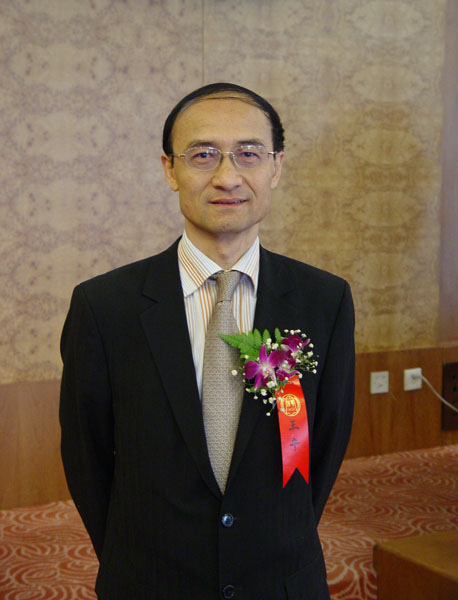
Wang Ning is a distinguished Professor of English and Comparative Literature with affiliations at Tsinghua University (part-time) and Shanghai Jiao Tong University. His career spans prestigious roles including Zhiyuan Chair Professor (2009–present) and Changjiang Distinguished Professor (2013–present). Born in 1955, he holds academic qualifications from institutions in China, Europe, and North America. Research interests focus on cosmopolitanism, translation studies, Northrop Frye's mythopoeia, cultural studies, and Chinese-Western comparative literature. He has secured over ten grants since 1991 aimed at introducing European theory to China and has conducted research across Europe, North America, and Australia as a visiting professor/research fellow. Key achievements include the Changjiang Scholars Award (2013), membership in Académé de la Latinité (2010), and fellowships at Cambridge and Gottingen Universities. He co-founded Chinese editions of New Literary History and Critical Inquiry , advancing transnational literary discourse. Wang has delivered keynote lectures globally and led initiatives to bridge Chinese and Western literary traditions. His work emphasizes global literary dynamics, translation’s role in cultural exchange, and reinterpreting modern Chinese literature within global contexts.
Beth M. Carter is an Assistant Professor of Japanese at Case Western Reserve University, specializing in premodern Japanese literature. Her research focuses on mourning rituals and practices in The Tale of Genji and related texts. Education: B.A., Sarah Lawrence College; M.A., Johns Hopkins University; M.A. and Ph.D., University of Pennsylvania Her work introduces the concept of "mourning poetics," analyzing the interplay between post-death rituals and lament poetry in Japanese literary traditions. Secondary research explores women's voices in historical Japanese texts. Recent publications (2016–2025) examine corporeal expressions of grief, regional symbolism in mourning scenes, and the evolution of ritual practices in classical Japanese narratives. Scientific Awards Fulbright Graduate Research Fellowship (Kyoto, Japan 2013, 2015) Blakemore Freeman Fellowship for Advanced Asian Language Study (Yokohama, Japan 2014) Current affiliations include Department of Japanese, Guilford House 313, and Phone: 216.368.2102.
Zaur Gasimov is a Lecturer at Johannes Gutenberg University Mainz and currently serves as DAAD Departmental Coordinator and Co-Head at the Faculty of Economics and Administrative Sciences, Turkish-German University. He holds a habilitation in Modern History and Eastern European History, with a focus on Eastern European History, political science, and sociology. Education : B.A. in International Relations from Baku State University; M.A. from Catholic University of Eichstätt-Ingolstadt; Doctorate in Eastern European history Research : Concentrates on Russian-Turkish relations, nationalism in Eastern Europe, cultural transfer processes, and historical narratives. His habilitation thesis analyzed Polish-Turkish anti-Soviet alliances. Publications : Authored monographs on Prometheism, Azerbaijani historiography, and Russification policies. Collaborated on comparative studies of cultural transfer and Ottoman-Russian entanglements.
Prof. Neslihan YETKİNER is the current Dean of İzmir University of Economics and a member of the TÜBİTAK SOBAG Advisory Board. She holds a PhD in Linguistics from Groningen University (Netherlands) and has served as a research assistant at Hacettepe University and part-time lecturer at London University. Her academic career spans over two decades, with expertise in Translation Studies, Pragmatics, and Corpus-based Translation. Education: BA (Summa Cum Laude) and MA in Translation from Hacettepe University; PhD in Linguistics from Groningen University. Administrative Roles: Dean since 2023, previously Head of the Department (2006–2009). Research Interests: Focus on translation theory, critical discourse analysis, children’s literature, and cultural studies. Her work explores themes like censorship in children’s books, translator prefaces, and intercultural adaptation. Her recent articles address topics such as the impact of the pandemic on the translation industry, liminality in folk tale translations, and community interpreting professionalism. She has led three TÜBİTAK-funded projects on translation and literary analysis. Prof. YETKİNER has received multiple awards, including the TÜBİTAK Scientific Publication Encouragement Award (2012–2017), and has advised PhD student Hamide Çakır. She is actively involved in academic administration and contributes to national and international conferences.
Eric J Klaus is Professor of German Area Studies and Chair of the German Area Studies program at Hobart and William Smith Colleges (HWS), where he has been a faculty member since 2001. He holds a Ph.D. in German Studies from Brown University, an M.A. in Germanic Studies from the University of Maryland College Park, and a B.A. in German with a minor in History from Dickinson College. His academic home is within the Faculty of Humanities, focusing on German literature and intellectual history. Ph.D., German Studies, Brown University M.A., Germanic Studies, University of Maryland College Park B.A., German (minor in History), Dickinson College His research and teaching focus on modern German literature and intellectual history, with particular emphasis on modernism , the Bildungsroman , the uncanny , esotericism , and vanitas and dance of death motifs . He explores the evolution of selfhood, allegory, and humanism in literary texts, especially in Goethe and Gorky. His dissertation, Engineering Souls: Humanism, Allegory, and Specularity in Goethe's Wilhelm Meisters Lehrjahre and Gorky's Mother , reflects this deep engagement with identity and narrative form. The available publication information indicates ongoing scholarly work on Gustav Meyrink and forthcoming articles on the uncanny and the Bildungsroman, suggesting a continued contribution to the understanding of psychological and metaphysical dimensions in modern German literature. These works fall within broader disciplines of literature, philosophy, and cultural studies, with subfields including symbolic interpretation, narrative theory, and intellectual history. Professional Affiliations: Modern Language Association (MLA) American Association of Teachers of German (AATG) ACTFL MACLA Europäischer Totentanz-Vereinigung Klaus integrates his research into the classroom, teaching courses such as Beginning through Intermediate German , Madness and Mayhem in Modernity , and Haunting Memories – revealing the uncanny . He values the teacher-scholar model, emphasizing student engagement in exploring complex literary and philosophical themes. There is no indication of grant funding in the provided text, but his pedagogical philosophy highlights mentorship and collaborative inquiry. He has taught previously at Brown University, the University of Rhode Island, and the University of Maryland College Park. Klaus leads the German Area Studies program as its Chair, shaping curriculum and academic direction. While no formal lab or research team is mentioned, his leadership role and active scholarship suggest a guiding presence in the department’s intellectual life.
Andrew Ollett is an Associate Professor and Director of Graduate Studies in the Department of South Asian Languages and Civilizations at the University of Chicago , where he has taught since 2019. His research focuses on the literary and intellectual traditions of South and Southeast Asia, particularly through works in Sanskrit, Prakrit, Apabhramsha, and Kannada from the first millennium CE. Co-founder and editor of NESAR (New Explorations in South Asia Research) Director of NEH-funded edition/translation of the Kavirājamārga (earliest Kannada literary manual) Expert in Prakrit and Kannada literary traditions His work explores the 'question of language'—examining how language choice shaped cultural production and change in premodern India. Current projects include a monograph on context-sensitivity in Indian language theories and a study of manuscript technology's impact on early South Asian knowledge communities. He has authored The Mirror of Ornaments (Naples: Unior Press, 2025) and Language of the Snakes (UC Press, 2017), and co-authored Lilavai (Harvard, 2021). Recent publications include interdisciplinary studies on: Sanskrit-Prakrit campū genre reevaluation Pragmatics in Mīmāṁsā interpretive concepts Manuscript literacy's influence on literary forms Historical linguistics of Middle Indic syllable reduction Philosophy of language in Śālikanātha and Kumārila Bhaṭṭa Awarded the NEH 'Scholarly Editions and Translations' grant , he teaches classical South Asian literature courses covering Sanskrit, Prakrit, and Tamil traditions. He maintains digital resources including a Prakrit Digital Texts Project and Mīmāṁsādigdarśinī digital text repository, and actively contributes to open-access scholarship.
Lucia Binotti is a Professor of Spanish and Digital Humanities at the University of North Carolina at Chapel Hill (UNC-CH), with dual affiliations in the Department of Romance Studies and interdisciplinary Digital Humanities initiatives. She serves as Graduate Advisor for Hispanic Linguistics and Director of the Honors Study Abroad Program in Rome. Her work bridges traditional philology with cutting-edge digital scholarship, emphasizing immersive learning experiences through virtual reality (VR) and augmented reality (AR) technologies. Binotti holds a Ph.D. from UC Santa Barbara (1990), an MA (1985), and a BA (1984) in Romance Philology from the Università degli Studi di Pisa. Her research focuses on linguistic identity, cultural heritage preservation, and innovative educational platforms like Amirabilia—the world’s first experiential learning platform. Notable projects include nXimena (healthcare training for Latinx abuse survivors) and Entiendelo (a linguistic/cultural navigation app for Latinx communities). Her scholarly interests span Early Modern Spanish literature, digital humanities applications, and the intersection of technology with social justice. She has directed grants totaling over $500K for projects involving AR/VR integration in education, including collaborations with the UNC Health Science Library and NCSU’s DELTA initiative. Recent awards include the John K. Walsh Award (2010) and Digital Innovation Fellow status (2014). Grants & Leadership: CFE-Lenovo Technology Grants (2018–2019) for AR/VR expansion iLRN 2020 International Co-Chair XR Faculty Learning Community Leader (UNC) Teaching: Courses span from introductory Hispanic literature to advanced topics like medieval intellectual history and digital humanities methodologies. Binotti’s work emphasizes ‘place, presence, and perspective’ in Cyber-Humanities education, particularly addressing marginalized communities through technology-driven solutions.
Elaine Treharne serves as the Roberta Bowman Denning Professor of Humanities at Stanford University, holding primary appointment in the Department of English with courtesy appointments in German Studies and Comparative Literature. She concurrently acts as Senior Associate Vice Provost for Undergraduate Education and Director of Curriculum, while directing Stanford Text Technologies—a major initiative exploring textual transmission across historical periods. Her leadership extends to co-directing SILICON and spearheading NEH-funded projects that redefine digital approaches to manuscript studies. Her academic foundation includes a B.A. in English Language and Literature (First Class Honors) from the University of Manchester (1986), a Master of Archive Administration from the University of Liverpool (1987), and a Ph.D. in English from the University of Manchester (1992). This archival training underpins her dual expertise in traditional manuscript scholarship and digital innovation. Treharne's research pioneers intersections between medieval materiality and contemporary technology, investigating the haptic experience of medieval books, AI applications for manuscript analysis, and the long history of text technologies. She challenges conventional periodization through projects like 'Disrupting Categories, 1050-1250' while developing computational frameworks for fragmentology and textual distortion. Her work consistently bridges paleography with digital methodology to examine how writing systems shape cultural memory. Recent publications reveal a decisive shift from foundational medieval scholarship toward integrative digital-humanities frameworks, with increasing emphasis on phenomenological approaches to both physical and digital texts. This trajectory culminates in current projects applying machine learning to manuscript transmission patterns and developing ethical guidelines for digital archival tools. Her scientific recognition includes: Fellow of the Society of Antiquaries Fellow of the Royal Historical Society Honorary Lifetime Fellow of the English Association (former Chair and President) Fellow of the Learned Society of Wales American Philosophical Society Franklin Fellow Princeton Procter Fellow Fellow of the Stanford Clayman Institute for Gender Studies Treharne actively supervises graduate students in early literature, Book History, and Digital Humanities while securing major grants including NEH funding for Stanford Global Currents, AHRC support for the Production and Use of English Manuscripts project, and Stanford Impact Labs fellowship for archival tool development. She maintains commitment to ethical scholarly environments through her leadership in VPUE initiatives and digital pedagogy. She directs the Stanford Text Technologies initiative hosting the annual Collegium series, co-directs SILICON for internet longevity research, and leads specialized projects including 'Digital Ker' for Anglo-Saxon manuscript cataloging and 'Medieval Networks of Memory' analyzing mortuary rolls. These interconnected efforts form a comprehensive ecosystem for advancing textual scholarship across temporal and technological boundaries.
Professor Jacqueline Manuel is a Professor of English Education and Curriculum Coordinator for Secondary English at the University of Sydney's Faculty of Arts and Social Sciences. She holds a PhD (UNE), DipEd (UNE), and BA (Hons I) from the University of New England. Her research focuses on secondary English education, curriculum history, teacher development, and teenage reading practices. She coordinates the English curriculum methodology for the Master of Teaching (Secondary) program and advises multiple PhD students. Current projects include co-editing volumes on English teacher development and leading international collaborations like the Professional Lives of English Language Arts Teachers Project. She has held significant roles in curriculum committees and boards, including chairing NSW Board of Studies committees and serving on AITSL panels. Key research interests span educational history, teacher professional identity, creativity in arts education, and early career teacher support. Notable publications include Reimagining Shakespeare Education (2023) and Teenagers and Reading (2012). Awards include the 2018 Alan Laughlin Award for Educational Leadership and 2016 Outstanding Service Award. Professor Manuel collaborates with institutions like the International Federation for the Teaching of English (IFTE) and chairs multiple editorial boards. Her work integrates international perspectives, emphasizing English as an emancipatory subject promoting social justice.
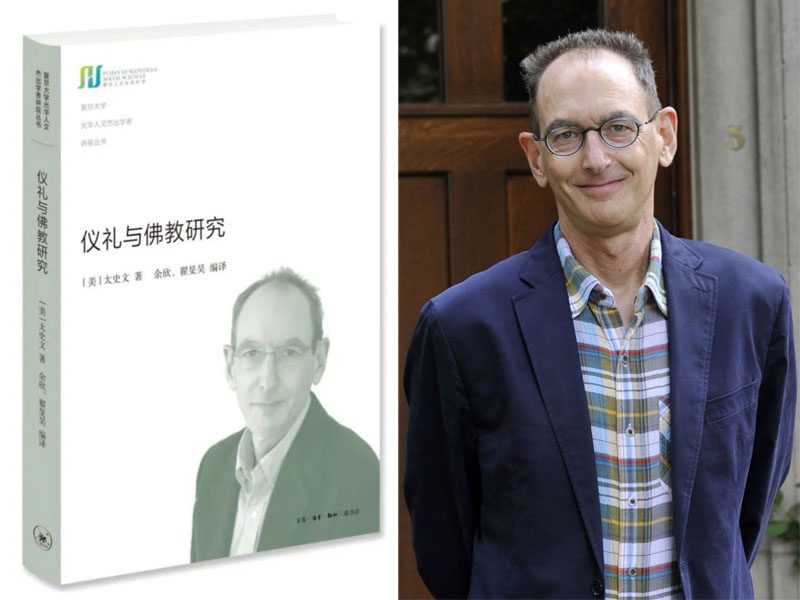
Stephen F. Teiser is the D.T. Suzuki Professor in Buddhist Studies and Professor of Religion at Princeton University. He holds the Old Dominion Research Professor title in the Humanities Council (2022-2023). His work focuses on Buddhist rituals, Chinese religious history, and the intersection of Indian and Chinese religious traditions. Teiser delivered lectures at Fudan University, shaping his research into broader scholarly discourse. His book Ritual and the Study of Buddhism (2022) explores Buddhist rituals in Chinese contexts, emphasizing cross-cultural and methodological insights. His research bridges medieval Chinese religious practices with modern academic frameworks, addressing topics like funerary rituals, lay communities, and textual interpretation. His academic contributions span Buddhist historiography, ritual studies, and East Asian religious history. Notable works include analyses of the Ghost Festival, Dunhuang liturgies, and comparative religious texts. Teiser’s interdisciplinary approach highlights the adaptation of Buddhism in Chinese culture and its global scholarly relevance. Awards: Old Dominion Research Professor (2022-2023) Teiser’s research also engages with collaborative international projects, such as co-editing volumes on divination and East Asian manuscripts. His work emphasizes the importance of language and cultural context in interpreting religious practices, making his scholarship foundational for understanding Buddhism’s evolution in China.
Adrienne Raphel is a Lecturer in the Department of English at Baruch College, part of the Weissman School of Arts and Sciences at The City University of New York (CUNY). She holds a Ph.D. in English Literature from Harvard University, an M.F.A. in Creative Writing (Poetry) from the University of Iowa, and a B.A. in English Literature and Creative Writing from Princeton University. Her research and creative work intersect contemporary culture, poetry, and the history of wordplay. She explores modernist literature, dark academia, and the evolution of puzzles like crosswords and board games as cultural artifacts. Raphel's recent publications highlight crosswords, poetry, and literary criticism, reflecting her interests in generational trends, linguistic innovation, and urban themes. Her articles analyze cultural phenomena through the lens of games, literature, and media. She has received prestigious awards, including: Visiting Fellowship at the American Library in Paris (2023) James Merrill Writer in Residence (2023) Writer in Residence at The Mastheads (2018) Raphel serves on the Awards and Honors Committee and teaches courses such as Writing II and Great Works of Literature I. She has contributed to media outlets like The New Yorker , The New York Times , and The Paris Review .
Professor Michael Burke holds a full professorship in Rhetoric at Utrecht University (Faculty of Humanities) and teaches at University College Roosevelt (UCR) in Middelburg. Previously, he served as UU Honours Dean (2016–2021). His research focuses on rhetoric, stylistics, cognitive aspects of language, and education. He earned his Ph.D. in English Language and Literature from the University of Amsterdam, where he also completed his undergraduate studies. Research interests span written, oral, and digital rhetoric, emphasizing pedagogical, cognitive, stylistic, and neuroscientific dimensions. He has held visiting roles at institutions like the University of Cambridge and University of Bologna. Editorial roles include series editor for Routledge’s 'Research Monographs in Linguistics' and board memberships with journals like Language and Literature . Teaching includes undergraduate courses on classical rhetoric, argumentation, and public speaking at UCR, plus leadership and interdisciplinary research modules for Utrecht’s Honours College. He supervises PhD students in the UiL-OTS linguistics research school. Notable publications include The Routledge Handbook of Stylistics (2023) and studies on critical thinking, digital literacy, and cognitive literary science. Professional activities include keynote speaking at conferences like PCST and EARS, and contributions to projects such as ‘Undergraduate Research in the Netherlands’. His work bridges rhetoric, cognitive science, and education, emphasizing practical applications for students and educators.
Vladimir Golstein is Professor of Slavic Studies and Interim Chair of Slavic Studies at Brown University. He has previously held teaching positions at Oberlin College (1990–1993) and Yale University (1993–2003), where he taught a wide range of courses on Russian and Western literary traditions. Ph.D. in Slavic Languages and Literatures, Yale University, 1992 B.A. in Philosophy, Columbia University, 1982 M.S. in Computers, Moscow Institute of Management His research centers on Russian culture, religion, philosophy, and poetry from the 19th and 20th centuries. He has published extensively on major Russian authors including Pushkin, Gogol, Tolstoy, Dostoevsky, Chekhov, Tsvetaeva, and Bulgakov. His book Lermontov's Narratives of Heroism (1998) explores heroism in 19th-century Russian literature. He is currently completing a monograph on generational conflict in Russian society. The recent publications reflect a consistent engagement with Russian intellectual and cultural history, blending literary analysis with philosophical and religious inquiry. His work often examines the moral and spiritual dimensions of literature, particularly in relation to the role of the intelligentsia and artistic expression under political pressure. There are no scientific awards listed in the provided text. Professor Golstein has supervised graduate and undergraduate students and teaches courses such as Russian Culture: From Peter the Great to Putin , Dostoevsky , Russian Poetry: Silver Age , and Roaring Twenties: Literature, Arts, and Politics in Post-Revolutionary Russia . While specific grant information is not mentioned, his ongoing research and publication record suggest active scholarly engagement. He is deeply involved in the academic life of the Department of Slavic Studies at Brown, contributing to curriculum development and leadership as Interim Chair. His interdisciplinary approach connects literature with philosophy, religion, and visual arts, fostering a holistic understanding of Russian cultural evolution.
Duran Icels serves as an Associate Professor in the Department of Western Languages and Literatures at Kirikkale University's Faculty of Humanities and Social Sciences, specializing in French language and literature studies. His academic career spans appointments at Zonguldak Bülent Ecevit University (1997), Hacettepe University (2000-2007; 2014-2017), and current service at Kirikkale University since 2008, including roles as Erasmus-Farabi Coordinator (2009-2013) and Deputy Director of the School of Foreign Languages (2013-2016). Educational background: BA in French Language and Literature, Hacettepe University (1994) MA in French Language and Literature, Hacettepe University (1999) PhD in French Language and Literature, Hacettepe University (2005) Research focuses on French literary traditions, cross-cultural comparative analysis, and Turkish-French poetic dialogues. His scholarship examines structural and thematic intersections between Francophone and Turkish literary canons, with particular emphasis on translation theory and poetic form evolution across cultural boundaries. Academic leadership includes developing international exchange programs through Erasmus-Farabi coordination and administrative oversight as Deputy Director of Foreign Languages. He has supervised master's theses in translation studies while maintaining active bilingual (Turkish-French) scholarly engagement.
Associate Professor Mustafa GulTekin serves at Gaziantep University in the Faculty of Arts and Sciences , affiliated with both the Department of Turkish Language and Literature and the Department of Turkish Folklore . He holds a Doctorate in Turkish Folklorics (2010) from Ege University and has been teaching since 2004. Education: PhD in Turkish Folklorics, Ege University (2004-2010) MA in Turkish Language and Literature, Gaziantep University (2002-2004) Bachelor in Turkish Language and Literature, Balikesir University (1997-2001) Research Focus: Specializes in Turkic world fairy tales, oral literature analysis, minstrelsy traditions, and intangible cultural heritage. His work intersects folklore methodology with performance studies and cultural anthropology. Projects: Led/managed national projects including TUBITAK-funded research on Diyarbakir Alevi ocaks (2013-2016), Uzbek cultural studies in Gaziantep (2012-2015), and applied Karagöz education programs (2009-2010). Administrative Roles: Head of Department (2014-2017, 2012-present) Deputy Head of Department (2017-present, 2011-2012) Director of Research and Application Center (2012-2016)