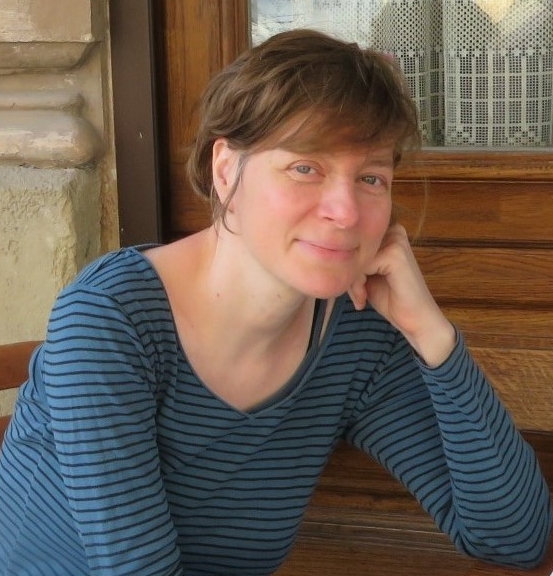
Jasmina Lukic is a Professor in the Department of Gender Studies at Central European University (CEU). She serves as the Principal Investigator for the HORIZON TMA MSCA Doctoral Network project EUTERPE (2022-2026), focusing on European Literatures and Gender in Transnational Perspective. Her academic work spans transnational feminism, post-Yugoslav literature, and interdisciplinary research methodologies. Education: Ph.D. in Comparative Literature, University of Belgrade. Research Areas: Gender Studies, Transnational Literature, Post-Yugoslav Societies, Interdisciplinary Methods. Projects: EUTERPE (2022-2026), STINT (2016-2019), Research Integration (2004-2006). Courses: Traveling Concepts in Gender Studies, Narrating Worlds, Feminism and Community, Strategies of Reading. Her recent publications explore themes such as feminist transnational convergences, literary transduction, memory politics in Dasa Drndić’s work, and gendered approaches to realism. Articles like The Transnational Turn and Scherezade in Exile (forthcoming, 2023) emphasize cross-border solidarity and feminist reinterpretation of literary genres. Her work bridges feminist theory, comparative literature, and post-conflict analysis. Notable affiliations include co-editing Times of Mobility: Literature and Gender in Translation (2019) and contributing to debates on War, Literature, and Ethics (2019). She actively engages in academic events like the book launch Soul, Body, and Gender in Late Antiquity (2024) and feminist conferences.
Károli Gáspár University of the Reformed ChurchHungary
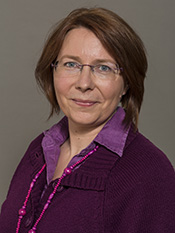
Sara Toth is an Associate Professor at the Department of English Literatures and Cultures within the Faculty of Humanities and Social Sciences at Károli Gáspár Reformed University in Budapest, Hungary. With a PhD in Literary Studies from ELTE (2004), her academic career spans decades of research at the intersection of literature, religion, and cultural studies. Prior to her academic appointment, she served as Editor-in-Chief at Harmat Publishing House, bringing practical editorial experience to her scholarly work. Dr. Toth earned her MA in English Language and Literature from ELTE in 1991 before completing her doctoral studies there in 2004. Her dissertation, The Other Side of Imagination: Literature and Religion in the Critical Work of Northrop Frye , established the foundation for her ongoing research into the relationship between literary theory and religious thought. Her research focuses on the intricate connections between 18th-20th century British literature, literary theory, and religious studies, with particular expertise in Northrop Frye's critical framework, Protestant spirituality, and the works of contemporary American author Marilynne Robinson. Dr. Toth has made significant contributions to understanding how religious experience manifests in literary form, exploring themes of sacramentality, transcendence, and the sacred-profane dialectic. Her scholarship demonstrates how literary works can serve as vehicles for theological reflection and spiritual exploration, particularly within the Protestant tradition. Analysis of Dr. Toth's recent publications (2020-2025) reveals a sustained engagement with Protestant spirituality, particularly through the lens of North American literature. Her work consistently examines the interplay between literary narrative and theological concepts, with a strong emphasis on Marilynne Robinson's fiction and Paul Tillich's theology. The publications demonstrate increasing sophistication in analyzing how literary form conveys religious experience, with growing attention to specific religious practices (baptism, preaching) and theological concepts (forgiveness, restoration, the sacred). Publication of the Year (shared) - Gaspar Karoli Reformed University (2015) Dr. Toth has served as an opponent at doctoral defenses, including for Palatinus David Levente's dissertation on "Framing the Body, Staging the Gaze" (PPKE, 2009) and Ruth Karin Lévai's work on "The Concept of Truth in Four Works" (ELTE BTK, 2020). She participates in the Fundamentalism research group (2020-present) and the Canadianist research group, contributing to interdisciplinary scholarly conversations. Her language proficiency in English and Spanish supports her international scholarly collaborations and research. As a member of the Central European Association for Canadian Studies, Dr. Toth contributes to cross-cultural academic dialogue. Her current research activities within the Fundamentalism research group demonstrate her ongoing commitment to understanding the complex relationship between religion, literature, and contemporary cultural phenomena. Her work bridges literary scholarship with theological reflection, creating a distinctive interdisciplinary approach to studying the spiritual dimensions of literature.
Dr. Anna Borgos is a Senior Research Fellow at the University of Miskolc, Faculty of Humanities and Social Sciences, Teacher Training Institute, and the HUN-REN TTK Institute of Cognitive Neuroscience and Psychology. Her academic career spans multiple prestigious Hungarian institutions including the Hungarian Academy of Sciences, University of Pécs, Central European University, and Eötvös Loránd University. Her educational background includes: Doctoral degree (summa cum laude) from the Department of Psychology, University of Pécs (2005) Theoretical Psychoanalysis doctoral program at University of Pécs (1999-2002) MA in Gender and Culture Program from Central European University (1998-1999) MA in Psychology with social psychology specialization from ELTE BTK (1992-1998) Counseling psychologist training and professional psychologist diploma from ELTE PPK (2013-2015) Dr. Borgos's research focuses on the historical and social dimensions of psychoanalysis in Hungary, with particular emphasis on women's contributions to psychoanalytic thought and practice. Her work explores the intersection of gender, sexuality, and psychoanalytic theory within Hungarian historical contexts, examining how political regimes shaped psychoanalytic discourse and practice. She has made significant contributions to understanding women's history within psychoanalytic contexts, particularly during the state socialist period in Hungary. Her methodological approach combines archival research, biographical analysis, and discourse analysis to uncover hidden narratives of women in psychoanalytic history. Dr. Borgos's scholarly output demonstrates consistent thematic focus across decades, evolving from early work on body representations in identity formation to more recent publications examining lesbian history in state-socialist Hungary and women's roles in the Budapest School of Psychoanalysis. Her research shows a clear trajectory from theoretical psychoanalysis to applied historical analysis of gender and sexuality, with increasing attention to marginalized voices within psychoanalytic history. This evolution reflects broader shifts in gender studies toward intersectional analysis and recovery of hidden histories. Her scholarly recognition includes: János Bolyai Research Scholarship (2009-2011) Senior fellowship at Collegium Hungaricum, Vienna (2014) Marion Dönhoff Foundation fellowship, Berlin (2012) MTA-Sasakawa Young Leaders Fellowship (2000) NKA Creative Support (2015) Dr. Borgos has led significant research projects including the OTKA-funded "Social inequalities and prejudices in the light of psy-sciences in Hungary" (2018-2023) and co-organized the Budapest conference of the European Society for the History of the Human Sciences (2019). Her editorial work includes serving as editor-in-chief of Imágó Budapest since 2016 and membership on the editorial boards of Journal of the History of the Behavioral Sciences and Journal of Lesbian Studies. Her teaching portfolio spans multiple institutions with courses on gender psychology, ethics, and LGBTQ client counseling, reflecting her commitment to translating research into practical application. She currently leads the Social and Cultural Psychology Research Group at HUN-REN TTK and maintains active collaborations with international scholars through the European Society for the History of the Human Sciences, where she served as secretary from 2016 to 2020.
Kata Gyuris is an Assistant Professor at Eötvös Loránd University Budapest, Department of English Studies, specializing in African literature, gender studies, and trauma theory. She holds a PhD in comparative African literature with a focus on violence in contemporary Anglophone and Francophone fiction, currently adapting her dissertation into a book. Visiting scholar at University of Kwazulu-Natal’s School of Oriental and African Studies Co-organized 2019 conference on Performativity in Contemporary Culture Co-authored Turning the Page: Gendered Identities in Contemporary Literary and Visual Cultures (2018) Her research intersects African literature with gender studies , trauma analysis , and postcolonial discourse , examining how violence and identity are represented in works by authors like Coetzee, Adichie, and Le Clézio. Her recent articles explore feminist narrative structures in African coming-of-age stories and ethics of reconciliation in apartheid literature. While no explicit scientific awards are documented, her scholarly output spans critical essays on postcolonial allegory, queer theory, and intertextuality across Hungarian, English, and French contexts.
Attila Simon is a Professor at the Department of Comparative Literature and Cultural Studies at Eötvös Loránd University (ELTE), Budapest. He earned his Ph.D. with a thesis on Aristotle’s aesthetics and holds the title of Doctor of Science (DSc). His academic work focuses on ancient Greek drama, literary theory (both ancient and contemporary), and intersections of culture and media. Education: Ph.D. in Aristotle’s aesthetics; Doctor of Science (DSc) status. Simon’s research explores themes like classical reception , media history , and biopoetics , often bridging philosophical and literary analysis. His publications address Aristotle’s political philosophy, Cicero’s oratory techniques, trauma in modern literature, and the cultural implications of ancient texts. His recent studies include analyses of Plato’s Phaedrus and Cicero’s De Oratore , alongside contributions to edited volumes on biopoetics and media theory. Key collaborative works include co-edited volumes with scholars like Zoltán Kulcsár-Szabó and Roland Végső. Scientific Awards: DAAD grant (2018) for research on Plato’s Phaedrus. NKFIH grants (120375, 128492) for media history studies. Funding from Aktion Österreich-Ungarn for 2022 research.
Károli Gáspár University of the Reformed ChurchHungary
Thomas Cooper holds a PhD in Comparative Literature from Indiana University (2003) and an MA in Central Euro-Asian Studies (1998). He is currently an Adjunct Assistant Professor at Károli Gáspár University of the Reformed Church in Hungary, affiliated with the Faculty of Humanities and Social Sciences and the Department of English Literatures and Cultures. Previously, he served as Associate Professor at Eszterházy Károly College and Assistant Director at Columbia University's Institute for Comparative Literature and Society. Cooper's research focuses on literary history, translation theory, and the interplay of culture and narrative. His recent articles explore topics such as storytelling techniques, cultural mediation in translation, and the literary impact of 20th-century historical events like the 1956 Hungarian Revolution. His work also intersects with musicology, analyzing tonal innovations in Ferenc Liszt's compositions. Scientific Awards: György Ránki Award (1998) Cooper has held guest teaching and research roles, including at Columbia University (2006), and presented at the United Nations Study Group on Languages (2015). His linguistic expertise includes near fluency in French, German, and Hungarian, alongside native English proficiency.
Károli Gáspár University of the Reformed ChurchHungary
Csaba Horvath (born 1967) is an associate professor at the Department of Modern Hungarian Literature and Comparative Literature within the Faculty of Humanities and Social Sciences at Károli Gáspár Reformed University. He holds a habilitation from ELTE (2017) and earned his PhD from ELTE in 2002 with a dissertation on 'Education and narration in the European novel.' Previously, he worked as a senior research fellow at the Petőfi Literary Museum and as a secondary school teacher at Óbudai Gimnázium. His educational background includes an MA in Hungarian language and literature from ELTE (1993) and a Diploma in advanced studies from Ecole des Hautes Etudes en Sciences Sociales in Paris (1994). Horvath's research focuses on contemporary Hungarian literature, 20th century Hungarian literature, aesthetics, literary theory, and popular culture, with particular emphasis on post-postmodern and epimodern literary theory. Horvath has published extensively from 1995 to 2025, with recent work exploring epimodern Hungarian literature, contemporary narrative structures, and the relationship between literature and philosophy. His publications reveal a consistent engagement with Hungarian literary modernity and its evolution through postmodern and epimodern phases, examining how contemporary Hungarian authors navigate historical consciousness, narrative form, and aesthetic innovation. National Research, Development and Innovation Office (NRDIO) Project No. 150051: 'Researches of ERA (Epimodern Research Atelier)' Contemporary Central European Novel Research Group Hungarian Literary History for Foreigners MTA-ELTE Elegy research group Lajos Grendel research group Biofiction Research Group Horvath has served as a doctoral supervisor for Adam Barta (ELTE, 2023) and as an opponent in doctoral defenses for Janos Fejes (2018), Deák Szebeni Imola (2024), and András Pikó (2025). He has held numerous guest professorships across Europe including at Ecole des Hautes Etudes en Sciences Sociales in Paris (2006, 2012), Charles University in Prague (2019, 2022), Nouvelle Sorbonne in Paris 3 (2021, 2023), and the University of Warsaw (2023).
Éva Péteri is an Associate Professor at the School of English and American Studies , Department of English Studies , Eötvös Loránd University, Budapest. Her academic work bridges literature, art history, and cultural studies, with a focus on Victorian visual culture and its intersections with Hungarian artistic traditions. Academic Rank: Associate Professor Institution: Eötvös Loránd University Contact: peteri.eva@btk.elte.hu Her research explores Pre-Raphaelite art, Shakespearean visual adaptations, and the cultural memory of British literature in Hungary. She has extensively analyzed Victorian religious imagery, interlibrary cooperation systems, and the socio-political dimensions of 19th-century British painting. Key article trends include: Victorian art's symbolic and moral dimensions Intermedial adaptations of literary works Cultural exchange between British and Hungarian art Documentation of urban and historical narratives in painting Periodical monitoring systems for academic resources Her publications also address library science challenges, including interlibrary loans and digital resource management (2008-2018), though no formal scientific awards are listed. She has not provided student advisement records in available texts.
Vera Benczik serves as Senior Lecturer and Deputy Head of the Department of American Studies at Eötvös Loránd University's School of English and American Studies in Budapest. She is a founding member of the EASPop popular culture research group and maintains active roles in both institutional leadership and scholarly communities. Her academic foundation includes: Studies in English and Assyiriology at Eötvös Loránd University PhD in American Studies (2011) focusing on journey motifs in Ursula K. Le Guin's science fiction Dr. Benczik's research centers on science fiction with specialization in post-apocalyptic narratives and Ursula K. Le Guin's works . She explores intersections of space/place dynamics , gender studies , and environmental themes within speculative fiction, while maintaining parallel expertise in Margaret Atwood's writings and Canadian women's literature. Her current project examines spatial representations in post-apocalyptic science fiction. Her publication trajectory reveals consistent engagement with Hungarian cultural contexts through analyses of local interpretations of American science fiction, particularly regarding apocalyptic themes. The body of work demonstrates evolving focus from Le Guin studies toward contemporary post-apocalyptic discourse with strong environmental humanities dimensions. Her scholarly recognition includes: Fulbright Research Scholarship at Notre Dame University (2017) ESSE Research grant for Liverpool University (2013) CEACS Conference grant (2011) As Deputy Director for Scientific Affairs, Dr. Benczik shapes departmental research direction while leading the EASPop research group. Her academic profile reflects sustained commitment to bridging Hungarian and international scholarship through comparative analyses of science fiction's cultural implications, with particular attention to how apocalyptic narratives function as social commentary in Central European contexts.
Károli Gáspár University of the Reformed ChurchHungary
Joop van der Horst is an associate professor at Károli Gáspár Reformed University, Faculty of Humanities and Social Sciences, specializing in Dutch Studies. Previously, he held professorial roles at KU Leuven and the University of Amsterdam. PhD in Linguistics (University of Amsterdam, 1986) MA in Dutch Language and Literature (Leiden University, 1975) His research spans historical linguistics, focusing on grammaticalization, collocations, and language change, as well as descriptive linguistics (syntax, morphology) and sociolinguistics. He has extensively studied fixed verb constructions, Dutch-French grammatical comparisons, and long-term language-society interactions. His publications and conference contributions from 2002-2013 highlight trends in Dutch syntax evolution, comparative German-Dutch verb patterns, and the decline of Renaissance language culture in Europe. Key themes include grammatical theory, European multilingualism, and language education reforms. LOT Publication Award Our Language Award He has supervised PhD students Freek Van de Velde, Judith Schonenboom, and Bert Cappelle, while serving as an opponent in doctoral defenses including Evie Coussé and Rinaldo Neels. His guest professorships include institutions in Berlin, Maastricht, Cologne, Münster, and Wroclaw.
Károli Gáspár University of the Reformed ChurchHungary
Miklos Peti is an Associate Professor in the Department of English Literatures and Cultures at the Institute of English Studies, Faculty of Humanities and Social Sciences, Károli Gáspár Reformed University in Budapest, Hungary. With a PhD in English literature from the University of Szeged (2007), his academic career spans multiple institutions including the University of Pécs and József Attila High School. His scholarly work focuses on the intersections between early modern English literature, classical reception, and Milton studies, with particular expertise in the reception of Greek epic and lyric in Renaissance literature. PhD (2007) : English literature, 'Homeric interpretations in 16th–17th century English literature' from University of Szeged MA (2002) : Ancient Greek from University of Szeged MA (2001) : Comparative literature from University of Szeged MA (1998) : English language and literature from University of Szeged Peti's research centers on early modern English literature with a special focus on the reception of classical works, particularly Greek epic and lyric poetry, in 16th-17th century England. His scholarship explores Milton's engagement with classical traditions, examining how Homeric elements were transformed in Paradise Lost and other works. He investigates textual criticism through the lens of hypertextuality and orality-literacy transitions, while also examining Milton's reception in various historical periods including the Augustan age and modernism. His work bridges literary analysis with cultural history, particularly regarding how classical traditions were transmitted and transformed across centuries. Analysis of Peti's recent publications reveals a consistent focus on Milton studies, particularly examining Paradise Lost through multiple lenses including classical reception, translation history, and performance studies. His work demonstrates growing interest in Cold War-era Milton reception in Eastern Europe, as seen in his 2022 book 'Paradise from behind the Iron Curtain.' The publications show interdisciplinary connections between literary studies, theater history, and cultural politics, with increasing attention to Hungarian contexts of literary reception. His scholarship combines close textual analysis with broader cultural and historical frameworks. Publication of the year KRE BTK (2020) Instructor of the Year KRE BTK (2019) 3rd place, youth performance competition (2013) ESSE Bursary (2014, 2017, 2020) Peti has served as an opponent in doctoral defenses for dissertations including 'The 1608 King Lear Quarto in Context' (2010) and 'Protean Vicissitude and Milton's Paradise Lost' (2012). His research has been supported by significant grants including the János Bolyai Research Scholarship (2011-2014) and the OTKA-funded project for the critical edition of the Hungarian translation of Paradise Lost (2012-2016). He has coordinated international research projects, including a joint initiative between the University of Hull and University of Szeged (2000-2001), demonstrating his capacity for collaborative scholarship across national boundaries. As a member of the editorial board for The AnaChronisT , Peti contributes to academic publishing in English studies. His professional affiliations include the Hungarian Society for the Study of English (HUSSE), Milton Society of America, Hungarian Society of Ancient Studies, and Renaissance Society of America, reflecting the interdisciplinary nature of his work. He has organized significant academic events, notably the 'Milton Through the Centuries' international conference in 2008, and has presented his research at numerous international venues across Europe and North America.
Petra Bozsoki is a Lecturer at the Institute of Hungarian Literature and Cultural Studies , Eötvös Loránd University, Budapest. She serves as an editor for the Verso Journal of Literary History and contributes to academic discourse on 19th-century Hungarian women's literature and intellectual history. Her research focuses on women's history-writing , gender roles , and feminist theory , particularly analyzing the works of Emília Kánya, Hungary's first female journal editor. Her publications explore the intersection of gender , national identity , and market strategies in 19th-century Hungarian periodicals. Key trends in her 2023–2013 publications include: methodological innovations in women's history gendered editorial strategies cultural memory of feminist pioneers analysis of patriotic women's roles critique of gender narratives in literature
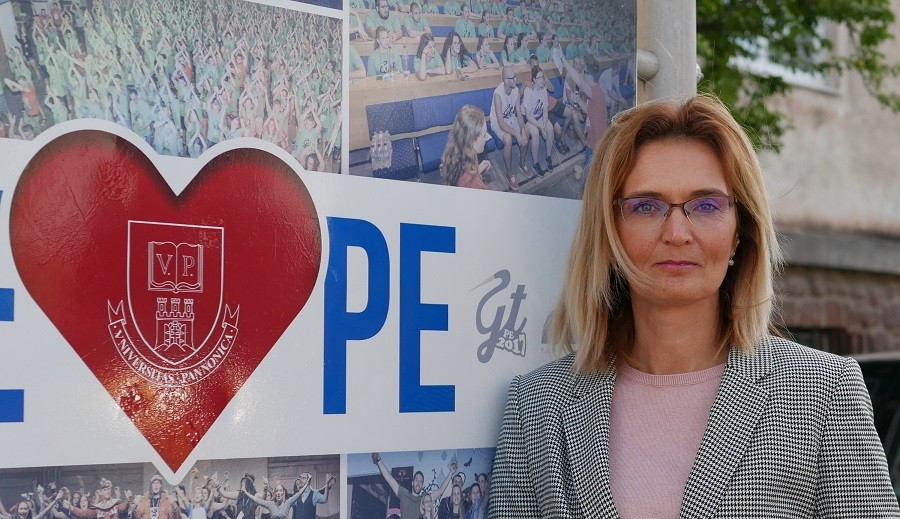
Dr. Andrea SZABÓ is an Associate Professor and Institute Director at the English and American Studies Institute, University of Pannonia. Her research explores literary criticism through lenses of gender, space, and cultural identity, with extensive work on Canadian authors like Alice Munro and Cormac McCarthy. She investigates Gothic paradigms, transnational narratives, and media representations of societal structures. Her publications predominantly analyze literature through feminist and spatial theories, focusing on: Deconstruction of gendered identities in domestic and public spaces Transcultural adaptation of popular fiction Subversion of traditional genres like Westerns and Gothic tales Discursive construction of femininity in contemporary narratives Article trends (2011-2024) reveal concentrated scholarship on Alice Munro’s fiction, Canadian Gothic subversions, and media-military relations, employing interdisciplinary approaches from psychoanalysis to discourse studies.
Eloise Adde is an Associate Professor and MA Program Director in the Department of Historical Studies at Central European University (CEU) in Vienna. She holds dual PhDs in Medieval History from Paris Panthéon Sorbonne and Czech Literature from Sorbonne Université. Her research focuses on nation-building, political thought, subjectivity, and manuscript culture in late medieval Bohemia and Brabant, with a particular emphasis on vernacular literature and the legitimization of power. Her academic journey includes prestigious fellowships such as the Marie Skłodowska-Curie fellowship and multiple grants from the FNR Luxembourg. She has held research positions at institutions including Saint-Louis University Brussels, the University of Luxembourg, and Humboldt University Berlin. Her research interests include: Nation-Building and National Identity in the Middle Ages Political Thought and Legitimacy Vernacular Literature and Language Politics Manuscript Transmission and Textual Reception State Formation and Feudal Opposition Medieval Czech and Brabant History Her recent publications reveal a strong thematic focus on the emergence of national subjects, the naturalization of political power, and the role of the nobility in shaping political discourse. Her work often employs comparative frameworks between Bohemia and Brabant, analyzing how different socio-political structures influenced the development of national consciousness. She has received significant recognition through scientific awards including: Marie Skłodowska-Curie fellowship (2020-2022) FNR-CORE grant (2015-2018) FNR-AFR grant (2013-2015) Fernand Braudel-Clemens Heller grant (2013) MAEE, CNRS, CEFRES, Prague grant (2011-2012) Eloise Adde supervises PhD students and has advised Samuel Beňa on the reign of George of Poděbrady. She teaches courses such as The Medieval Nation, Historiography, and Manuscripts, Textual Flow, New Audiences. She is currently preparing a monograph titled Nation – Power – Subjectivity: The Making of National Subjects in Late Medieval Bohemia and Brabant (1300-1450) . She is also co-editing several conference proceedings on Luxembourg dynasty, naturalization of power, and premodern nation-building.
Károli Gáspár University of the Reformed ChurchHungary
Dr. Julia Somodi is an Associate Professor at the Department of Japanology, Institute of East Asia, Faculty of Humanities and Social Sciences, Károli Gáspár Reformed University (KRE) in Budapest, Hungary. Her academic career spans over two decades with significant contributions to translation studies and Japanese linguistics. Her educational background includes: PhD in Translation Studies (2015) from ELTE with dissertation on Japanese address terms in Hungarian film translations MA in Japanese and English Studies (2001-2002) from Károli Gáspár Reformed University Dr. Somodi's research focuses on the intricate relationship between pragmatics and translation, particularly examining address terms across Japanese and Hungarian languages. Her work bridges theoretical linguistics with practical translation challenges, with special attention to cultural transfer in literary contexts. She has made significant contributions to understanding how linguistic politeness strategies and address systems function differently across these linguistically distant languages. Analysis of her 15 most recent publications reveals a consistent trajectory in translation studies with evolving sophistication. Her early work concentrated on foundational aspects of Japanese address terms, while recent publications demonstrate expanded scope into translation pedagogy, cultural transfer in contemporary literature, and innovative teaching methodologies. A notable thread throughout her career is the humanitarian application of her expertise, particularly in translating testimonies of Hiroshima atomic bomb survivors. Her scientific recognition includes: OTDK témavezetői elismerés (2015, 2021, 2025) Innovatív Oktatói Díj (Innovative Teacher Award, 2024) Dr. Somodi has actively contributed to academic service through committee memberships (Credit Transfer Committee, Quality Assurance Committee), conference organization (including the 30th Departmental Jubilee Conference in 2024), and leadership in the Japanese-Hungarian Translation Technology Workbook project (2025-26). Her international research collaboration with Kyoto University on 'Disfluency in Comparison' demonstrates her standing in the global academic community. She has also served as opponent in doctoral defenses at ELTE, showing her role in shaping the next generation of scholars. Her laboratory work centers around translation technology development and practical translation projects, most notably her ongoing collaboration with the Hiroshima Atomic Bomb Victims National Peace Memorial Hall since 2018, where she coordinates and translates survivor testimonies into Hungarian.