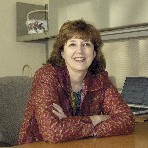
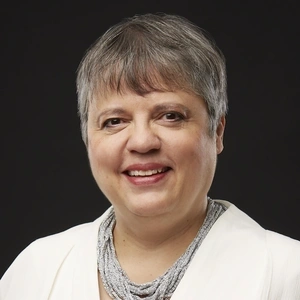
Susan Powers is a Professor of Civil & Environmental Engineering at Clarkson University, where she also serves as the Spence Professor of Sustainable Environmental Systems, Director of the Institute for a Sustainable Environment, and Associate Director of Sustainability. She earned her Ph.D. in Environmental Engineering from the University of Michigan in 1992. Research Interests: Dr. Powers specializes in lifecycle assessment and environmental impact metrics for energy systems, with recent interdisciplinary work on anaerobic digestion for food waste management and smart housing to encourage energy conservation. Her educational research integrates project-based learning to enhance energy and climate change literacy across K-12 and college levels. Scientific Awards: AEESP Distinguished Service Award (2019) AEESP Fellow (2019) Spirit of Entrepreneurship Award (2012) Premier Curriculum Award for K-12 Engineering (2009) NSF Directors Award – Distinguished Teaching Scholar (2004) Grants & Educational Leadership: Dr. Powers has led multiple education-oriented grants, including the NSF Distinguished Teaching Scholars award, to develop project-based modules for sustainability education. She actively incorporates campus sustainability initiatives into student projects to teach real-world environmental problem-solving.
Miguel Ángel Bernal Merino serves as a Part-Time Lecturer in the Department of Modern Philology, Translation and Interpretation at the University of Las Palmas de Gran Canaria. Concurrently, he acts as convener of the MA in Translation at the University of Roehampton in London, managing its Specialised Translation, Audiovisual Translation, and Intercultural Communication pathways since 2005. His academic profile bridges theoretical research and industry application in localization disciplines. PhD in The Localisation of Video Games, Imperial College London MSc in The Localisation of Multimedia Interactive Entertainment Software, Imperial College London Certificate in Software Localisation, University of Limerick CELTA, University of Cambridge MPhil in Lip-Synched Dubbing, Universidad de Alicante MA in Hispanic Literature, University of Rhode Island BA in English & Spanish Linguistics, Universidad de Alicante Bernal Merino's research pioneers the expansion of Translation Studies into interactive media domains. His work on video game localization examines interactivity, cultural adaptation, glocalisation, and playability, while his audiovisual translation research investigates creativity in lip-synched dubbing, subtitling, and audiodescription. He extends these frameworks into gaming-based language learning through haptic environments and multisensory reinforcement, exploring physiological aspects of multilingual cognition and polysemiotic neural networks. This multidisciplinary approach fundamentally challenges traditional boundaries in translation theory. His publication trajectory reveals evolving industry-academia integration, shifting from foundational game localization frameworks (2008-2015) toward user-centered research and educational applications (2018-2024). Recent work emphasizes measurable business impacts through quality localization, regional market adaptations, and crowd-sourced methodologies, demonstrating consistent influence on professional standards across gaming and translation sectors. Fellow of the Higher Education Academy Bernal Merino supervises doctoral research on mobile game localization, transmedia fan experiences, and historical game content translation while developing industry-academia pipelines through projects like AHRC's Media Across Borders. His funded initiatives—including Maximising ROI through Quality Game Localisation and Video Games for Language Learning—bridge theoretical innovation with commercial implementation, focusing on glocalisation strategies, interactivity metrics, and playability optimization. These collaborations connect European universities, gaming studios, and localization service providers. As chair of the IGDA Localization SIG and member of GIR Discourse, Communication and Society, he directs international forums for game localization discourse. His work with Routes into Languages promotes audiovisual media in language education, while REF-readiness collaborations enhance research excellence across European institutions through his professional network spanning industry conferences like GDC Summit and Game Global.
Vicki L. Plano Clark is a Professor in the Research Methods area of the School of Education at the University of Cincinnati, where she advises students in the Quantitative and Mixed Methods Research Methodologies (QMRM) concentration of the Educational Studies doctoral program and the Applied Research Methods (ARM) track of the Educational Studies master's program. She joined the University of Cincinnati in 2012 after serving as the director of the Office of Qualitative and Mixed Methods Research at the University of Nebraska-Lincoln. Dr. Plano Clark earned her Ph.D. in Quantitative and Qualitative Methods in Education from the University of Nebraska-Lincoln (2005), M.S. in Physics from Michigan State University (1993), and B.A. in Physics from Kalamazoo College (1990). Her academic journey transitioned from physics education to research methodology, bringing a unique interdisciplinary perspective to her work. As a leading methodologist specializing in mixed methods research, Dr. Plano Clark's scholarship focuses on delineating useful designs for conducting mixed methods research, examining procedural issues associated with these designs, and exploring the contexts for the adoption and use of mixed methods. Her research spans diverse application areas including cancer pain management, STEM graduate student identity development, teacher professional development, and the well-being of rural low-income families. Her work demonstrates how mixed methods approaches can effectively address complex research questions across multiple disciplines. Dr. Plano Clark has made significant contributions to the field through her editorial leadership and publications. She was the founding Managing Editor for the Journal of Mixed Methods Research and currently serves as an Associate Editor. In 2011, she co-led the development of Best Practices for Mixed Methods in the Health Sciences for NIH's Office of Behavioral and Social Sciences Research. In 2012, she became a founding co-editor of the Mixed Methods Research Series with Sage Publications. She has authored numerous influential books including 'Designing and Conducting Mixed Methods Research' (now in its 3rd edition) and 'Mixed Methods Research: A Guide to the Field.' Founding Managing Editor for the Journal of Mixed Methods Research Co-developer of NIH's Best Practices for Mixed Methods in the Health Sciences (2011) Founding co-editor of the Mixed Methods Research Series with Sage Publications (2012) Chair of the Mixed Methods Research Special Interest Group of AERA As an active researcher, Dr. Plano Clark has secured multiple grants including a Department of Education grant evaluating Ohio Network of Education Transformation (ONET) Schools (as Principal Investigator) and a UC University Research Council grant on reducing mass incarceration by improving public defense (as Collaborator). Her recent publications continue to advance methodological understanding in mixed methods research, with a focus on integration techniques, terminology challenges, and applications across health sciences and education. Dr. Plano Clark maintains an active role in the research community through invited presentations and workshops worldwide, helping to train the next generation of researchers in mixed methods approaches and contributing to the ongoing development of methodological standards and practices.
Kelly K. Ivy, Ph.D. is an Assistant Professor at the University of the District of Columbia (UDC) in the College of Arts and Sciences. Specializing in culturally responsive math teaching and urban STEM education, she contributes to teacher self-efficacy research and curriculum development. Her work bridges academic inquiry with practical applications in K-12 and higher education contexts. Doctor of Philosophy in Mathematics Education, University of Maryland, College Park Master of Education in Curriculum & Instruction, Trinity Washington University Bachelor of Science in Mathematics, Secondary Education Professional Minor, Howard University Dr. Ivy’s research focuses on urban STEM education , culturally responsive pedagogy , and equitable mathematics instruction . She emphasizes teacher self-efficacy and interdisciplinary literacy, particularly in linguistically diverse classrooms. Her publications highlight strategies for improving STEM outcomes for African American students and reflective practices in culturally relevant teaching. Recent publications (2019–2024) span topics including equitable teaching , Black female STEM perspectives , and curriculum innovation . These works employ qualitative research methods and stress cultural relevance in urban settings. Faculty Scholar of Promise Award, UDC’s College of Arts and Sciences (2024) Dr. Ivy serves as Co-Project Manager for the Katherine G. Johnson Math Teacher Training Institute (2025–Present) and has participated in the Maryland Collaborative for Research in Urban STEM Education (2020–23). Her advocacy for Black students in STEM includes presentations at national conferences and media engagements.
Professor Anne Wallace is an Adjunct Professor at La Trobe Law School and holds concurrent roles at the University of Denver's Sturm College of Law and Victoria University's Sir Zelman Cowan Centre. She has extensive experience in judicial administration, having served as Head of School at Edith Cowan University and Associate Dean at the University of Canberra. Her research focuses on technology in justice systems, court administration, and Indigenous justice issues. Wallace holds a PhD from the University of Sydney and has authored over 37 scholarly works. Education: LLB (Tasmania), LLM (Melbourne University), Grad Cert Higher Ed (Canberra), PhD (Sydney). Her research explores the integration of ICT in courts, remote witness testimony, and judicial workload management. Notable projects include ARC-funded studies on visual evidence and remote testimony guidelines, and a decade-long Indigenous cultural awareness initiative for judiciary. Recent work addresses post-pandemic court digitalization and Indigenous justice disparities. She has contributed to international collaborations, serving as a visiting expert for CEELI Institute and editorial board member for the International Journal for Court Administration. Her funded research includes the 'Compliance by Design' project under Data to Decisions CRC (2018-2019). Professional activities include judicial training programs, curriculum development for Indigenous justice issues, and advisory roles in court technology policy.
Yasmin Kafai is a Professor at the University of Pennsylvania's Graduate School of Education (GSE), Department of Learning Sciences. Her research focuses on computational thinking, AI education, and equitable K-12 computing pedagogy. She has pioneered work on integrating electronic textiles (e-textiles) and participatory design into STEM education to engage youth in critical perspectives of technology. Kafai's recent work emphasizes algorithmic literacy, youth-led auditing of machine learning systems, and bridging technical and societal dimensions of computing. Key research areas include: computational empowerment, AI ethics in education, youth agency in technology design, and culturally responsive computing curricula. Her projects often involve hands-on making activities, such as constructing generative AI models or debugging e-textile systems, to foster both technical and critical understandings. Publications from 2024-2025 highlight trends in youth engagement with generative AI, algorithm auditing frameworks, and the intersection of physical computing with growth mindset practices. She has also explored the role of storytelling methodologies in reimagining computing narratives for marginalized groups. Kafai collaborates extensively with teachers to develop scalable professional development programs addressing equity in CS education. Her work frequently appears in learning sciences and computing education journals, with a focus on practical classroom implementations and systemic educational reforms. Ongoing efforts include designing 'Hour of Code' activities that integrate critical AI literacy and fostering youth as co-designers of ethical technology solutions.
Dr. Susana Castro-Kemp is an Associate Professor in Psychology and Human Development at University College London's Institute of Education (IOE), where she serves as Director of the Centre for Inclusive Education (CIE) since September 2023. Previously, she was a Reader in Education at the University of Roehampton for eight years. Her work focuses on inclusive education policy and practice globally, with particular expertise in special educational needs and disabilities (SEND), early childhood intervention, and mental health in schools. The IOE has been ranked number one in the world for Education for several consecutive years, providing an ideal environment for her impactful research. Dr. Castro-Kemp holds a PhD in Psychology jointly awarded in 2012 by the University of Porto (Portugal) and the University of North Carolina at Chapel Hill (USA). Her doctoral research was fully funded by the Foundation for Science and Technology/European Commission and the Global Education and Development Studies scholarships. She is a Chartered Psychologist with the British Psychological Society, a Senior Fellow of Advance HE, and a Recognised Research Supervisor by the UK Council for Graduate Education. Dr. Castro-Kemp's research centers on policy regulating education, health, and welfare services for children, particularly those with support needs. She examines inclusive education practices from users' perspectives, policy models leading to effective inclusive pedagogy, and country-level policy impacts on outcomes for children with special educational needs. Her work moves away from diagnostic labels toward engagement and civic participation as educational outcomes. She also investigates inclusion and early intervention in low- and middle-income countries, mental health in schools, and quality of early childhood education. Her recent publications reveal several key trends in inclusive education research. There's growing emphasis on understanding educational experiences through the voices of children and families rather than diagnostic labels. Much of her work examines the implementation gap between inclusive education policy and classroom practice. She has conducted significant research on how children with special educational needs experienced the pandemic, revealing both challenges and unexpected "silver linings" for some groups. Her corpus analysis of Ofsted reports shows narrow focus in early childhood education inspections, while her work on SEND policy increasingly takes an international comparative approach. Dr. Castro-Kemp has received recognition for her impactful work, including: Best Digital Humanities Project for Community Engagement Prize (2023) from the National Institute of Humanities and Social Sciences of South Africa for her project "Optimising collaborations and reducing inequalities of Early Childhood Intervention in post-Covid-19 South Africa" Dr. Castro-Kemp has secured approximately £1.3 million in research funding from various sources including ESRC, British Academy/Leverhulme Trust, European Commission, and private sponsors. Her current major project is 'ScopeSEND' (2024-2026), funded by the Nuffield Foundation (£250,000), examining international SEND policies. She has led numerous projects including "Transdisciplinary provision for children with disabilities in the Global South" (£3,500), "Optimising collaborations in South Africa" (£47,200), and "Froebel meets Ofsted" (£19,185). As a supervisor, she mentors MA/MSc and PhD students in education policy, early childhood, and inclusive education, having been nominated for student choice awards for excellent feedback and outstanding research supervision. As Director of the UCL Centre for Inclusive Education since 2023, Dr. Castro-Kemp leads a team focused on advancing knowledge exchange and research in inclusion and special needs. The Centre works with schools, educators, parents, and early years settings to translate research into practice. Her international collaborations include work with the World Health Organization as a technical advisor on the use of the International Classification of Functioning, Disability and Health (ICF) system in educational contexts. She also serves on the SEN Policy Research Forum and has provided oral evidence to the House of Commons Education Select Committee.
Professor John Powell is a Professor of Digital Health and NIHR Senior Investigator at the University of Oxford's Nuffield Department of Primary Care Health Sciences. He holds a Senior Research Fellowship at Jesus College and serves as a Consultant Public Health Physician. His roles include leading digital health research initiatives, advising national agencies like NICE and MHRA, and co-directing the MSc in Applied Digital Health. Powell has dual degrees from the University of Cambridge (Social and Political Sciences and Clinical Medicine) and advanced qualifications from the London School of Hygiene and Tropical Medicine. Research Focus: Digital health transformation, AI in healthcare, patient feedback systems, and evaluation of digital health technologies. His work explores how digital tools reshape patient-clinician interactions and improve service delivery in the NHS. Notable projects include NHS App evaluations, social media's health impact, and frameworks for medical education in digital competencies. Recent Contributions: Key publications analyze NHS App adoption patterns, social media influencers' health impact, and challenges in AI ethics. He leads the Digital Health Theme in NIHR ARC and HRC, driving translational research. Powell's work bridges academia and policy, with past roles including Clinical Director of NHS Choices and Editor-in-Chief of major health technology assessment journals. Honors & Roles: Fellowships in Public Health and Clinical Informatics, Honorary Professor at University of Bristol, and former Warwick Professor of Public Health. Active in global health policy through roles like senior clinician at NICE.
Sally M. Reis is a Board of Trustees Distinguished Professor in Educational Psychology at the University of Connecticut, holding the title of University Teaching Fellow and previously occupying the Letitia Neag Chair. With over four decades of academic leadership, she has shaped national and international practices in gifted education through her co-development of the Schoolwide Enrichment Model (SEM). Her academic credentials include: Ph.D. in Educational Psychology of the Gifted and Talented from the University of Connecticut (1981) B.A. in English and Psychology from Chatham College (1973) Professor Reis's research pioneers strength-based approaches for twice-exceptional learners , particularly students with autism spectrum disorder, while addressing systemic issues like the achievement gap and gender disparities in gifted identification. Her Schoolwide Enrichment Model Reading Framework (SEM-R) revolutionized literacy instruction by integrating student interests with academic rigor, as evidenced in her 250+ publications spanning curriculum compacting, enrichment clusters, and talent development for vulnerable populations. Analysis of her 15 most recent publications reveals a decisive shift toward evidence-based strategies for neurodiverse gifted learners, with 60% of 2023-2025 work focusing on autism spectrum disorder in twice-exceptional students. Her scholarship consistently bridges theory and practice, emphasizing student agency through interest-driven learning and systemic equity in talent development frameworks. Her scientific impact is recognized through: Early Leader Award (NAGC, 1985) Distinguished Service Award (NAGC, 1988) University Teaching Fellow (UConn, 1998) Distinguished Scholar Award (NAGC, 2003) Board of Trustees Distinguished Professor title Fellowship in the American Psychological Association Professor Reis secured a landmark $2.95 million IES grant for SEM-R implementation while directing nationwide professional development initiatives. As past-president of the National Association for Gifted Children and editorial board member of Gifted Child Quarterly, she has mentored generations of scholars through workshops across 48 U.S. states. Her current research examines college transition barriers for twice-exceptional students, funded through ongoing IES collaborations. Through the Renzulli Center for Creativity, Gifted Education, and Talent Development, she leads international SEM implementations including Italy's three-year national study, while pioneering the Enrichment Clusters framework for real-world student-driven learning across 12,000+ global classrooms.
Yasmin B. Kafai is the Lori and Michael Milken President's Distinguished Professor at the University of Pennsylvania's Graduate School of Education. Her work focuses on empowering students through computational tools such as Scratch, electronic textiles, and biomaking, aiming to broaden participation in computing and promote equity in STEM education. Affiliations: Editor of the Journal of the Learning Sciences Former President of the International Society of the Learning Sciences Recipient of NSF Early Career Award and Rosenfield Community Prize Her research explores youth engagement with digital media, including gaming, coding, and creative technologies. She co-developed Scratch, a foundational platform for youth programming, and pioneered curricula integrating electronic textiles and biodesign in K-12 education. Key contributions include analyzing the societal impacts of virtual worlds, algorithmic literacy, and culturally responsive pedagogy. Publications & Awards: Author of award-winning books like Connected Gaming and Makeology Contributed to national policy reports, including the 2010 U.S. Department of Education's National Educational Technology Plan Recognized as a Fellow of the American Educational Research Association Her outreach initiatives include mentoring partnerships with the City of Los Angeles and collaborations with community tech centers like the Computer Clubhouse network. Current projects emphasize algorithmic justice, AI literacy, and equity-focused maker education.
Maureen Kendrick is a Professor and Deputy Department Head in the Department of Language & Literacy Education at the University of British Columbia's Faculty of Education. Her research examines literacy and multimodality as integrated communicative practices, addressing social and cultural issues in diverse contexts with particular emphasis on visual communication and refugee/migrant education. Her research interests span digital literacies, multiliteracy and multimodality, and international perspectives on literacy education. She investigates how youth from refugee backgrounds use multimodal approaches to construct identities and engage with learning, often through digital storytelling and visual methodologies. Her work extends to health literacy in Ugandan contexts and the role of play in early childhood literacy development across Canada, Kenya, and Uganda. Analysis of her recent publications reveals consistent focus on refugee/migrant education, digital storytelling, and multimodal literacy. She examines how digital tools empower marginalized youth to express identities while addressing challenges in language learning and cultural integration. Her research also explores HIV/AIDS education through makerspaces and the intersection of arts-based practices with science literacy. Dr. Kendrick's scientific recognition includes: Canadian Committee for Graduate Students in Education (CCGSE) Mentorship Award (2024) Killam Teaching Prize (2012-13) Alan C. Purves Award (2013) She actively supervises graduate students across doctoral and master's programs, with current research focusing on refugee education and multilingual learners. Her SSHRC-funded projects include the 2025-2029 grant 'Digital Multimodal Composing-To-Learn' and the 'Language and Literacy Learning Among Refugee and Migrant Background Children' initiative, involving collaborators from UBC, York, and Western universities. Dr. Kendrick leads international research teams across Canada, Uganda, and Kenya, developing community-engaged approaches to literacy education that bridge academic research and classroom practice.
Philip Bell is a Professor in the Learning Sciences & Human Development at the University of Washington College of Education . He holds the Shauna C. Larson Endowed Chair in Learning Sciences and serves as Director of the Institute for Science + Math Education . Additionally, he co-directs the LIFE Science of Learning Center , focusing on equity-driven innovation in STEM education. Education : PhD and MEd in Human Development & Cognition, Science/Math Education from UC Berkeley (1998, 1996); BS in Electrical Engineering & Computer Science from University of Colorado Boulder (1989). Bell’s research emphasizes cognitive and cultural approaches to learning across diverse environments, including everyday science expertise , learning technology design , culturally expansive instruction , and large-scale educational reform . His work bridges formal and informal learning contexts , addressing equity through participatory design research. Recent research trends include culturally sustaining pedagogies , climate justice science education , and systemic equity in STEM . His team develops STEM Teaching Tools and collaborates with national networks to improve science standards and instructional coherence. Scientific Awards : Shauna C. Larson Endowed Chair in Learning Sciences. Bell mentors a diverse group of doctoral students and has advised numerous PhD/MEd graduates now in academic and research roles. His projects span K-12 STEM innovation , science communication , and equity-focused policy , including contributions to the Next Generation Science Standards . He leads the Institute for Science + Math Education and collaborates with the Research+Practice Collaboratory , Seattle/Renton school districts, and national teams to scale equitable science education.
Soojin Oh Park is an Assistant Professor in the Learning Sciences & Human Development department at the University of Washington College of Education. Her research focuses on equity-driven improvements in early childhood education, family literacy engagement with Dual Language Learners (DLLs), and culturally grounded parenting practices. Ed.D., Human Development and Education, Harvard University M.Ed., Educational Policy and Analysis, Harvard University M.S.Ed., Learning, Teaching, and Literacies, University of Pennsylvania B.A., Psychology, University of Pennsylvania Park’s interdisciplinary work combines qualitative, quantitative, and mixed-methods approaches to address gaps in early childhood education (ECE) and parenting, emphasizing: Family literacy engagement for DLLs’ language and literacy development Culturally sustaining pedagogy to amplify family strengths Equity-oriented reforms in ECE systems and policies Her publications span topics like heritage language maintenance, culturally responsive assessment, and the impact of immigration policy on child development, often utilizing advanced methodologies such as machine learning. Awards include the SRCD Federal Policy Fellowship and Best Article of the Year from the Journal of School Psychology. Outstanding Research Paper Award (Korean American Educational Research Association) Distinguished Paper Award (Washington Educational Research Association) Best Article of the Year Award (Journal of School Psychology) Emerging Scholar Fellowship (National Research Center on Hispanic Children and Families) Park leads projects such as FAMILY (Fathers And Mothers Investing in Learning of Young Children) and BASECAMP (Bolstering Asian Students in Early Childhood by Advancing Multilingual Pedagogies). She teaches courses on language and literacy learning, bilingual development, and parenting impacts on early education.
Yang Wang is a Professor of Information Science and Computer Science (courtesy) at the University of Illinois at Urbana-Champaign (UIUC), where he co-directs the SALT lab and is part of the Interactive Computing group and Security and Privacy Research at Illinois (SPR@I). He holds affiliations with the Institute of Software Research (ISR) at UC Irvine and advises Conviva. His research spans AI governance, privacy, security, and inclusive technologies, focusing on marginalized populations such as people with disabilities and non-Western communities. Education: Ph.D. from the University of California, Irvine (UCI), under advisors Dr. Alfred Kobsa, Dr. André van der Hoek, and Dr. Gene Tsudik. Previous roles include Assistant Professor at Syracuse University and Research Scientist at Carnegie Mellon University’s CyLab. He has collaborated with institutions like Alcatel-Lucent Bell Labs, Intel Research, and Tsinghua University. Research interests include AI safety for children (aisafety4kids.org), inclusive privacy mechanisms, accessible authentication for visually impaired users, and policy implications of AI. Notable projects include Inclusive.AI (funded by OpenAI), privacy in smart homes, and drone privacy studies. Awards and grants include NSF SaTC awards, NSF CAREER, and industry partnerships with Meta/Facebook, Google, and OpenAI. His work has been featured in outlets like the New York Times and Wall Street Journal. Current PhD advisees include Smirity Kaushik and Yaman Yu, with notable alumni such as Dr. Yaxing Yao (now at Johns Hopkins) and Dr. Tanusree Sharma (Penn State). Labs/Teams: Co-director of the SALT lab, part of SPR@I and the Interactive Computing group at UIUC. Collaborates with industry and policy bodies, including the FTC.
Claudia Berger is a Visiting Assistant Professor at the School of Information, Pratt Institute, and serves as the Digital Humanities Librarian at Sarah Lawrence College. They are actively engaged in digital scholarship, critical making, and interdisciplinary research at the intersection of libraries, technology, and the humanities. Education: MSLIS and Advanced Certificate in Digital Humanities, School of Information, Pratt Institute MA in Classics & Ancient History, University of Exeter BA in Electronic Media & Art and Classics, Bard College at Simon’s Rock Their research focuses on innovative methodologies in digital humanities, particularly data physicalization, digital environmental humanities, and critical engagement with data through craft and tactile experiences. They explore how digital tools can be reimagined through embodied and inclusive practices, often integrating queer perspectives and ecological awareness into scholarly work. Their recent publications reflect a strong trend toward interdisciplinary making, environmental justice, and pedagogical innovation in library and information science. Themes include countermapping, plant-human relations, craft-based digital scholarship, and inclusive professional identity formation. Their work bridges technical practice with critical theory, emphasizing accessibility and material engagement. Professional Service: Editor, dh+lib and dh+lib Review Deputy Secretary, Association for Computers and the Humanities (ACH) Former Librarian, The Mellon Foundation (supporting research in higher learning, arts and culture, public knowledge, and humanities in place) Claudia Berger is deeply involved in mentoring and shaping the future of information professionals through curriculum analysis, editorial work, and collaborative projects. While no formal grants or advising relationships are listed, their leadership in digital humanities education and community-building initiatives demonstrates significant scholarly impact. They maintain an active public research presence through a Zotero repository on physical data visualization.