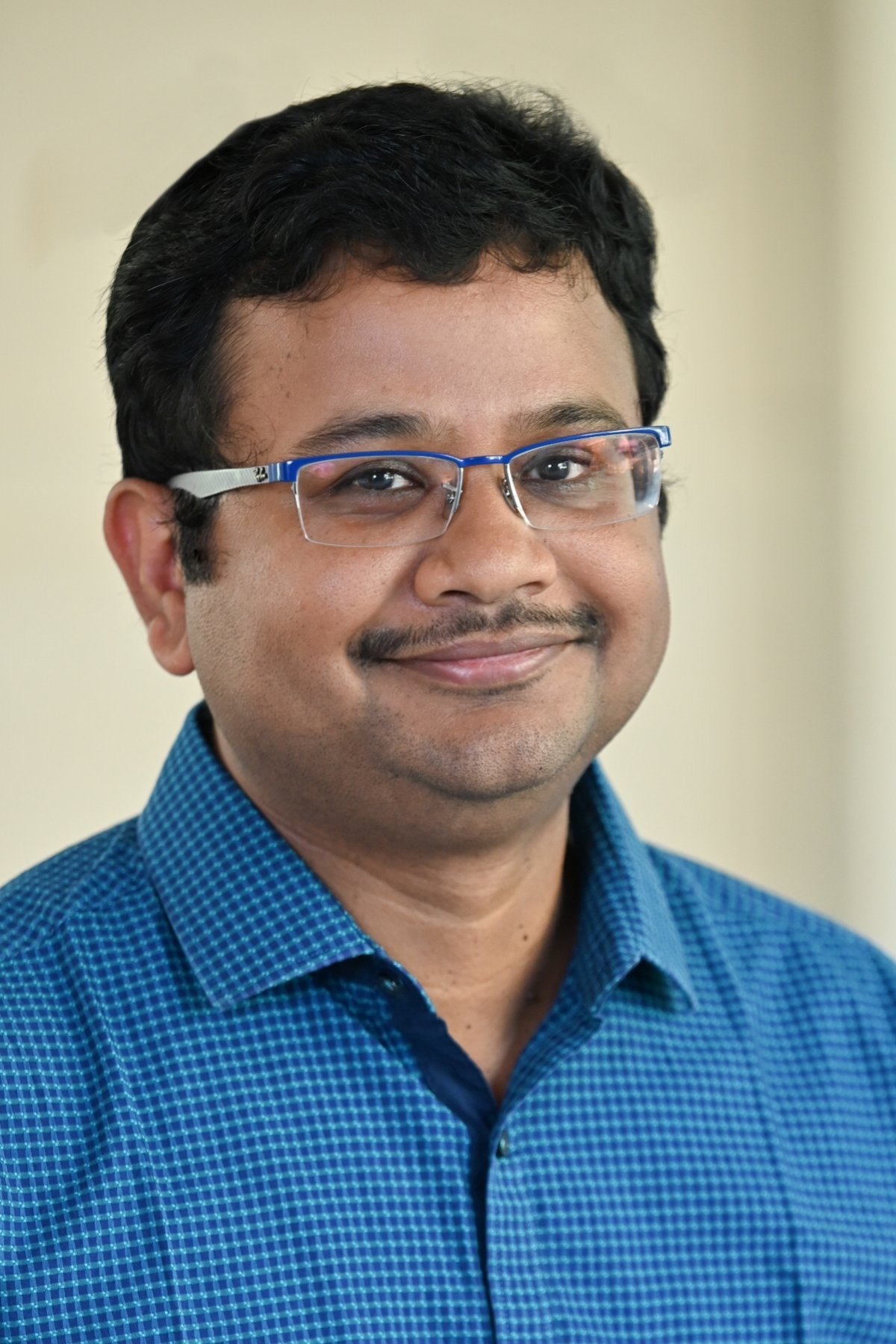
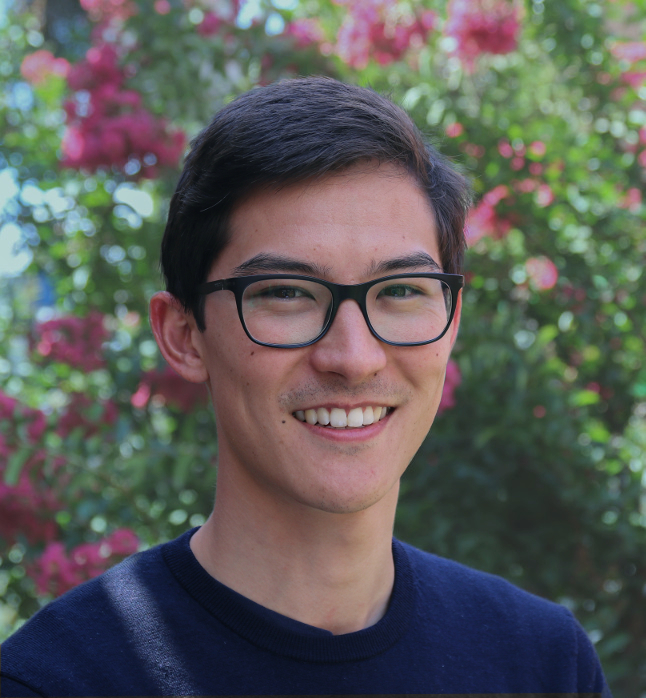
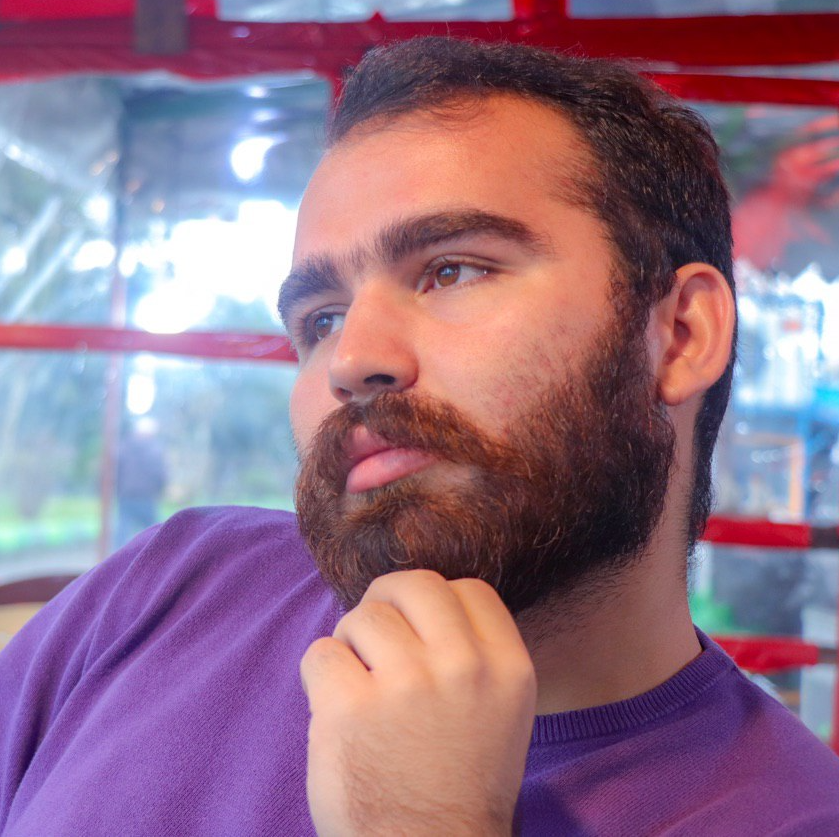
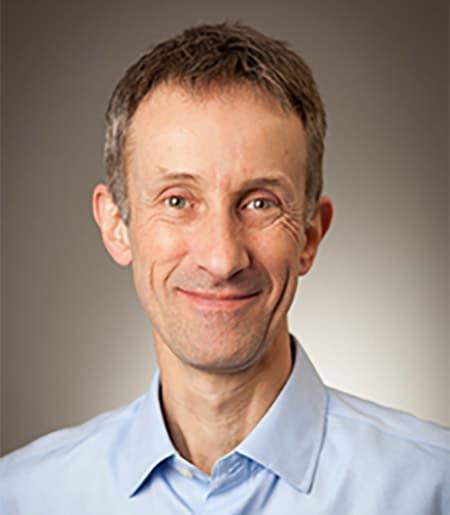
Arnab Sen is an Associate Professor at the School of Mathematics, University of Minnesota. His research focuses on probability theory and discrete harmonic analysis, with emphasis on models from statistical physics such as spin glasses, random graphs, random matrices, and random polynomials. PhD in Statistics, UC Berkeley (2010), advised by Steven N. Evans and Elchanan Mossel Postdoctoral Fellow, Statistical Laboratory, University of Cambridge His research spans discrete probability , statistical physics , and random matrix theory , addressing topics like disorder chaos in spin glasses, eigenvalue distributions, and quantum percolation. He has taught graduate and undergraduate courses including Random Matrix Theory , Introduction to Stochastic Processes , and Multivariable Calculus . His recent publications analyze spin glass models, random matrices, and combinatorial systems.
Krzysztof Burdzy is a Professor of Mathematics and Adjunct Professor of Statistics at the University of Washington, where he is affiliated with the Department of Mathematics in the College of Arts and Sciences. He maintains an active research and teaching profile, currently offering undergraduate courses in probability. His research interests span Probability Theory , Stochastic Processes , Neumann Eigenfunctions , Hot Spots Problem , and the Philosophy of Probability . He is particularly known for his work on Brownian motion, eigenfunction behavior, and spectral theory in geometric domains. His recent work includes contributions to the resolution of the hot spots conjecture for Euclidean triangles and the discovery of interior hot spots in convex sets. The most recent articles reflect a deep engagement with both theoretical mathematics and foundational philosophy. Topics include spectral geometry, probabilistic methods in PDEs, critiques of philosophical theories of probability, and interdisciplinary reflections on epistemology. The publication trend shows sustained contributions from the 1990s through 2024, with a dual focus on rigorous mathematical proofs and meta-scientific analysis. Euclidean triangles have no hot spots (Annals of Mathematics, 2020) Convex sets can have interior hot spots (preprint, 2024) Hypocrisy++: On Philosophy of Probability and Sociology of Ideologies (2023) Burdzy has advised students in mathematics and probability, though specific names are not listed. He has received recognition through publications in top-tier journals such as Annals of Mathematics and Journal of Functional Analysis , though formal awards are not explicitly mentioned. He has delivered numerous talks on the philosophy of probability and its relationship to statistics. He is actively involved in public scholarship, maintaining a personal website with essays on quantum probability, real estate, philosophy, and AI. His work on the limitations of mathematics, suicide prevention, and critiques of post-modern thought reflect a broad intellectual engagement beyond technical mathematics. He does not appear to lead a formal lab or research team, but collaborates with scholars such as R. Bañuelos, W. Werner, and others in probability and analysis.
Prof. Dr. Thomas Schick is a Professor of Mathematics at the Mathematical Institute of the University of Göttingen, leading the vibrant research group in Topology and Geometry. His work focuses on areas such as index theory, K-theory of C*-algebras, and geometry and analysis. He is a core member of the Research Training Group 2491 'Fourier Analysis and Spectral Theory', serving as its speaker, and has supervised numerous doctoral students in topics ranging from persistent cohomology to spectral engineering. His academic journey includes a PhD from Johannes Gutenberg University Mainz (1996) under Wolfgang Lück, followed by postdoctoral positions at the University of Münster and Penn State University before joining Göttingen in 2001. He has held visiting roles at institutions worldwide. Prof. Schick is an Ordentliches Mitglied of the Göttingen Academy of Sciences, a Fellow of the American Mathematical Society, and leads the Scientific Advisory Board of the Mathematisches Forschungsinstitut Oberwolfach. He edits several high-impact journals, including Annales Mathématiques Blaise Pascal and the Bulletin of the Iranian Mathematical Society. His research interests span topological and geometric analysis, with recent work exploring scalar curvature rigidity, T-duality, and coarse geometry. He regularly teaches advanced courses and seminars, including 'Index Theory and Theorems' and 'Topological Data Analysis', and actively mentors students through the RTG program.
Sofya Raskhodnikova is a Professor in the Department of Computer Science at Boston University, part of the College of Arts and Sciences. She holds a Ph.D. from MIT and has held positions at Penn State University and postdoctoral fellowships at the Hebrew University of Jerusalem and the Weizmann Institute of Science. Her research focuses on sublinear-time algorithms, data privacy, approximation algorithms, and complexity theory. She is a recipient of the NSF CAREER Award and has contributed significantly to the theoretical foundations of privacy-preserving computation and algorithm design. Education: Ph.D. in Computer Science from MIT (2003), postdoctoral research at Hebrew University of Jerusalem and Weizmann Institute of Science (2003–2006). Visiting positions at UCLA, Harvard University, and the Simons Institute for the Theory of Computing. Research Interests: Sofya’s work bridges theoretical computer science and practical applications, emphasizing algorithms that operate efficiently on large datasets. Key areas include property testing (e.g., monotonicity, sortedness), differential privacy, and sublinear-time algorithms. She explores how algorithms can analyze data while preserving privacy guarantees and minimizing computational resources. Publications: Over 50 peer-reviewed articles in top venues such as STOC, FOCS, and SODA, with recent contributions focusing on dynamic graph algorithms under privacy constraints and robust property testing against adversarial noise. Professional Activities: Editor for ACM Transactions on Computation Theory and Algorithmica ; program committee chair for WOLA 2021 and CSR 2022; active in mentoring initiatives like Sigma Camp and Artemis. Advising & Students: Current advisees include Ephraim Linder and Debanuj Nayak. Notable alumni include Iden Kalemaj (Meta Research) and Nithin Varma (Max Planck Institute). She has supervised over 15 Ph.D. students and postdocs, fostering a collaborative research environment.
Aryeh Kontorovich is a Professor in the Computer Science Department at Ben-Gurion University. His research primarily focuses on theoretical machine learning, with expertise in probability, statistics, Markov chains, and metric spaces. His research interests span theoretical machine learning, with particular emphasis on: Probability theory and concentration inequalities Statistical learning theory Markov chains and mixing time estimation Metric space learning Kernel methods Sample compression schemes Professor Kontorovich's recent publications (2021-2025) demonstrate a continued focus on theoretical foundations of machine learning. His work shows strong trends in statistical estimation for Markov processes, distribution learning, metric space analysis, and sample compression. Many papers explore the intersection of probability theory and machine learning, particularly examining concentration inequalities, minimax optimality, and theoretical guarantees for learning algorithms. His research consistently bridges abstract mathematical theory with practical machine learning applications. Scientific awards and recognitions: Distinguished contribution award at MLG 2007 for "A Universal Kernel for Learning Regular Languages" Professor Kontorovich has advised numerous students and collaborated extensively with researchers in theoretical machine learning. His work spans both theoretical foundations and practical applications, with significant contributions to understanding the mathematical limits of learning algorithms. While specific grant information isn't provided in the source material, his extensive publication record in top venues suggests successful funding for his research programs. He maintains active collaborations with researchers worldwide, including prominent names like L. Gottlieb, D. Berend, and S. Hanneke.
Giuseppe Mingione is a Full Professor in the Department of Mathematical, Physical and Computer Sciences at the University of Parma, Italy. His research spans Calculus of Variations , Elliptic and Parabolic PDEs , and Nonlinear Potential Theory . He has delivered over 25 lecture series and 180+ invited talks globally. PhD in Mathematics, University of Naples Federico II (1999) Degree in Mathematics, University of Naples Federico II (1994) His work focuses on regularity theory for nonlinear PDEs, nonuniform ellipticity, and geometric analysis. Publications include breakthroughs in Schauder estimates, double phase problems, and nonlocal systems. He has received the Amerio Prize (2016) , Caccioppoli Prize (2010) , and Stampacchia Medal (2006) . Recent articles address nonuniform ellipticity, nonlocal PDEs, and gradient regularity. Awards include the Order of the Merit of the Italian Republic (2017) and Von Staudt Chair (2004) . He serves on editorial boards for international journals.
Cristiana De Filippis serves as Associate Professor in the Department of Mathematical, Physical and Computer Sciences at the University of Parma. Her academic journey includes a Bachelor's degree from the University of Torino (2014), Master's from University of Milano-Bicocca (2016), and PhD from the University of Oxford (2020), followed by a tenure-track position at Parma since 2021 and habilitation to full professorship in 2023. Her research focuses on Mathematical Analysis , particularly Regularity Theory for elliptic and parabolic partial differential equations and the Calculus of Variations . She investigates fundamental properties of solutions to nonlinear PDEs, including sharp growth conditions, nonuniform ellipticity, and double-phase functionals. Her work bridges abstract mathematical theory with applications in physics and engineering through rigorous analysis of solution behavior. Analysis of her 15 most recent publications reveals a concentrated research program in nonuniformly elliptic systems (2022-2025), double-phase variational problems (2023-2024), and gradient regularity under irregular coefficients (2020-2024). Key contributions include establishing sharp growth rates in Schauder theory and developing novel techniques for nearly linear growth conditions. European Mathematical Society Prize 2024 Bartolozzi Prize 2023 (Italian Mathematical Union) Iapichino Prize 2020 (Accademia dei Lincei) Premio per la Cultura Mediterranea 2023 G-Research Prize 2019 Forbes 100 Most Successful Italian Women 2023 European Mathematical Society Young Academy (inaugural cohort) Professor De Filippis has delivered invited lectures at prestigious institutions including Erwin Schrödinger Institute (2025), Charles University Prague (2024), and Accademia Nazionale dei Lincei (2022). She teaches Mathematical Analysis courses for Computer Science, Geological Sciences, and Management Engineering programs at undergraduate level. Her research is supported through multiple international collaborations, particularly with Giuseppe Mingione at Parma and researchers at European institutions.
Andrea Pinamonti is an Associate Professor at the University of Trento. His research focuses on geometric analysis, partial differential equations, calculus of variations, and functional analysis in metric measure spaces, particularly in sub-Riemannian and Carnot group settings. He frequently collaborates with researchers from institutions such as the Universities of Pisa, Jyväskylä, and others, addressing topics like geometric measure theory, regularity of solutions, and nonlocal functionals. His recent work examines structures in Heisenberg groups, such as perimeter minimization, CR geometry, and differentiability theorems. He has also explored equations involving the p-Laplacian, fractional operators, and universal differentiability sets in non-Euclidean spaces. These studies reflect a sustained engagement with the interplay between geometry and analysis in sub-Riemannian frameworks. Events and Contributions: Speaker at Warsaw Analysis Days Event WADE25 (2025), Summer school in fluid dynamics (2024), and Workshop on Synthetic Curvature Bounds (2024). Organizer of Three days between Analysis and Geometry in Trento (2025, 2024) and EUregio School on Control Theory and Applications (2024). He has maintained a prolific publication record across high-impact journals such as Journal of Geometric Analysis , Advances in Mathematics , and Communications in Contemporary Mathematics . His academic activities include promoting collaborative research through workshops and open positions at his institution.
Tamás Keleti is a Professor in the Department of Analysis at Eötvös Loránd University (ELTE) in Budapest, Hungary. He has been actively teaching various mathematics courses since at least 2006, including Univariate Analysis, Multivariate Analysis, Real Function Theory, Geometric Measure Theory, and Descriptive Set Theory. His office is located at Pázmány Péter sétány 1/c, Budapest, 1117 Hungary, with contact information including phone (36-1)-209-0555 / ext. 8510. Professor Keleti's research primarily focuses on Geometric Measure Theory , with special emphasis on Hausdorff Dimension and dimensional properties of sets in Euclidean spaces. His work investigates how dimension behaves under transformations, projections, and other operations, making significant contributions to understanding sets avoiding certain patterns and structures. He has developed deep connections between geometric measure theory, combinatorial geometry, and harmonic analysis. Analysis of his recent publication record reveals a consistent research trajectory in dimensional properties, with particular attention to Fubini-type theorems for Hausdorff dimension, Kakeya-type problems, and tiling problems with connections to Diophantine approximation. His work often bridges pure mathematical theory with applications in fractal geometry and combinatorial number theory. Scientific Awards and Achievements: Led ELTE's team to win the International Mathematics Competition for University Students in 2007 Led ELTE's team to win the International Mathematics Competition for University Students in 2008 As an advisor and mentor, Keleti has cultivated exceptional mathematical talent. In the 2007 and 2008 International Mathematics Competitions, his students Endre Csóka, Demeter Kiss, Péter Pál Pach, Roland Paulin, András Béla Rácz, and Balázs Strenner won first prizes, while Márton Hablicsek won a second prize. Several achieved remarkable individual rankings, with Roland Paulin placing 3rd overall and András Béla Rácz 5th in 2008. Professor Keleti has developed extensive course materials and problem sets for his analysis courses, contributing significantly to mathematics education at ELTE. His teaching spans from introductory analysis for first-year mathematics teacher training students to advanced topics like Geometric Measure Theory and Descriptive Set Theory for specialized students, demonstrating his commitment to both research and education.
Sebastian Stich is a tenured faculty member at the CISPA Helmholtz Center for Information Security , where he leads research in Trustworthy Information Processing . He has been a tenure-track faculty since 2021 and was promoted to tenured professor in 2025. He is also a member of the European Lab for Learning and Intelligent Systems (ELLIS) . Education: PhD in Computer Science, ETH Zurich (2010–2014) MSc and BSc in Mathematics, ETH Zurich (2005–2010) Research Scientist, EPFL (2016–2021) Research at CORE/ICTEAM, UCLouvain (2014–2016) His research centers on optimization for machine learning , with a focus on federated, decentralized, and distributed learning . He investigates methods for communication efficiency , adaptive stochastic optimization , privacy-preserving training , and generalization theory . His work bridges theoretical guarantees with practical scalability. His recent publications (2023–2025) consistently address gradient compression , error feedback , local updates , and decentralized consensus , demonstrating a strong trend toward making distributed learning more efficient, robust, and scalable—especially under heterogeneous data and limited bandwidth. Scientific Awards: ERC Consolidator Grant 2024 (CollectiveMinds) Google Research Scholar Award (2023) Meta Privacy-Enhancing Technologies Research Award (2022) Sebastian Stich actively advises PhD students and postdocs, including Anton Rodomanov , Xiaowen Jiang , and Yuan Gao . He has secured competitive grants such as the ERC CollectiveMinds project, supporting collaborative research on scalable federated learning. He teaches advanced courses at Saarland University and serves as an area chair for NeurIPS, ICML, and ICLR. He leads a research group at CISPA focused on trustworthy and efficient machine learning systems , contributing to both foundational theory and real-world applications in privacy and security.
Matthew K. Tam is an Associate Professor at the School of Mathematics and Statistics, The University of Melbourne, specializing in Operations Research. He is also an investigator at the Melbourne Centre for Data Science and an associate investigator in the ARC Training Centre OPTIMA. PhD in Mathematics (2016) from University of Newcastle under Jonathan Borwein Postdoctoral research at University of Göttingen with RTG-2088 and Alexander von Humboldt Foundation Junior Professor at University of Göttingen (2017-2020) His research focuses on continuous optimization, monotone operator theory, and variational analysis, with applications in wavelet construction and inverse problems. Key trends include distributed algorithms, resolvent splitting, and convergence analysis for feasibility problems. Discovery Early Career Researcher Award (DECRA) Alexander von Humboldt Fellowship He collaborates with institutions like ANZIAM, Springer, and IEEE, with publications spanning mathematical optimization, harmonic analysis, and computational mathematics. His work emphasizes algorithmic design for complex data systems and real-world applications in imaging and industrial modeling.
Shayan Aziznejad is a Senior ML Scientist at Distran, working on the intersection of machine learning and acoustic imaging. He was previously an ML researcher at Daedalean AI (October 2022–December 2024) and a Ph.D. candidate at Ecole Polytechnique Fédérale de Lausanne (EPFL) , where he focused on mathematical optimization and signal processing under Prof. Michael Unser. His academic background includes dual B.Sc. degrees in Electrical Engineering and Pure Mathematics from Sharif University of Technology . Research Focus: Machine learning, neural network certification, wavelet analysis, Hessian-Schatten regularization, and sparse modeling. Scientific Recognition: Swiss National Science Foundation Postdoc Fellowship (2021) Best Student Paper Award at ICASSP (2019) Gold Medalist at Iranian National Mathematics Olympiad (2011) Academic Contributions: Authored 15+ publications in top-tier journals (SIAM, IEEE, etc.) and conferences (ICASSP, EUSIPCO), with a focus on Lipschitz-regularized models, spline-based optimization, and inverse problems. Advising Experience: Supervised 11+ students across master's theses, summer internships, and semester projects, including Eliana Renzo, Joaquim Campos, and Haojun Zhu. Email: shayan.aziznejad@gmail.com
Gourab Ray is an Associate Professor in the Department of Mathematics and Statistics at the University of Victoria, Faculty of Science. He holds a PhD from the University of British Columbia, Vancouver. His research focuses on the intersection of probability theory, geometry, and mathematical physics, particularly large-scale patterns in stochastic models inspired by physics. Key areas include random planar maps, random walks, lattice spin models, dimer models, Gaussian free field properties, and Liouville quantum gravity. Recent work emphasizes establishing Gaussian free field-like behaviors in dimer models across various graphs and surfaces. He teaches courses such as MATH 236: Introduction to Real Analysis and MATH 555: Topics in Probability. His publications span leading journals including Inventiones Mathematicae , Annals of Probability , and Probability Theory and Related Fields . Notable contributions include studies on unimodular hyperbolic triangulations, half-planar map classifications, and conformal invariance in dimer models. No specific awards are listed for Dr. Ray, though his work has been recognized in peer-reviewed venues. He actively contributes to academic service, including roles on graduate committees and research collaborations. His research group engages with theoretical and applied aspects of probability theory, often bridging discrete and continuous mathematical frameworks.
Adrian Lewis is the Samuel B. Eckert Professor of Engineering at Cornell University, affiliated with the College of Engineering and the Department of Operations Research and Information Engineering . He specializes in variational analysis and nonsmooth optimization, focusing on eigenvalue optimization and semi-algebraic geometry. His research has been supported by NSF grants, including DMS-1613996. He holds prestigious awards like the SIAM Fellow and the Lagrange Prize. Research interests include optimization algorithms, convex analysis, and the interplay between geometry and optimization. Notably, his work on eigenvalue optimization and nonsmooth problems has advanced theoretical and computational methods. He has contributed to journals like Mathematical Programming and SIAM Journal on Optimization , and serves as Co-Editor of Mathematical Programming A . Professional achievements include the 1995 Aisenstadt Prize, SIAM Outstanding Paper Award (2005), and the INFORMS Computing Society Prize (2018). He has held leadership roles, such as Director of ORIE (2010–2013), and editorial positions across multiple journals. His research also explores metric spaces, subgradient methods, and nonsmooth algorithms, reflecting a commitment to foundational and applied optimization challenges.
Prof. Anne PICHON is a Professor at the University of Aix-Marseille and a member of the Institut de Mathématiques de Marseille (I2M). She holds leadership positions, including membership in the CoNRS (National Committee of CNRS) section 41 since 2021 and directorship of the FRUMAM (Research Federation of Mathematics Units of Marseille) from 2018 to 2022. Her research focuses on topology and geometry of singular spaces, algebraic geometry, and low-dimensional topology. She coordinates the ANR project LISA (2017–2022) and serves as an associate editor for the Journal of Singularities . Her work explores Lipschitz geometry, metric properties of singularities, and their classification. She actively participates in seminars like the Marseille Geometry and Topology Seminar and the Rauzy Seminar. PICHON’s contributions bridge geometric analysis with algebraic structures, emphasizing both theoretical and applied aspects of singularity theory. Research Interests Topology and geometry of singular spaces and morphisms Algebraic geometry, particularly singularities of complex spaces Lipschitz geometry of singularities and metric invariants Low-dimensional topology and fiber structures Key Activities ANR Project LISA Coordinator (2017–2022) Member of GDR Singularities and Applications Editorial Board, Journal of Singularities Leadership roles in FRUMAM and CoNRS Labs/Teams She contributes to the Institut de Mathématiques de Marseille (I2M) and collaborates within the FRUMAM federation, fostering interdisciplinary research in geometry and topology.