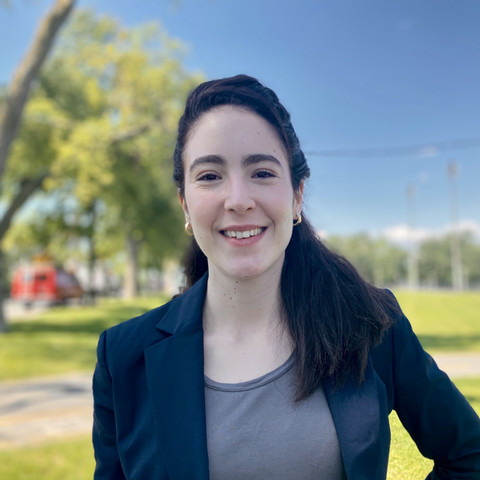
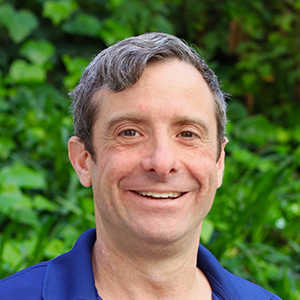
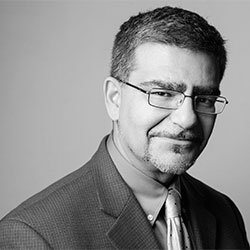
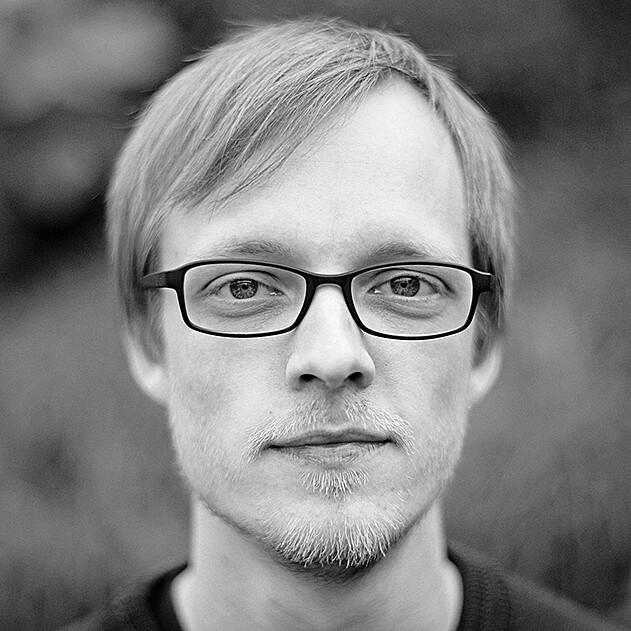
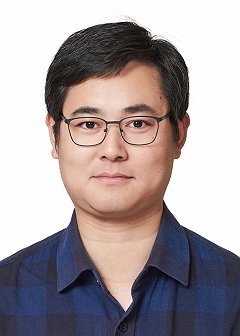
Mariam Guizani serves as an Assistant Professor in the Department of Electrical and Computer Engineering at Queen's University, where her research bridges Software Engineering and Human-Computer Interaction to advance Diversity and Inclusion in Open-Source Software ecosystems. Education: PhD from Oregon State University Second MSc from Oregon State University BSc in Software Engineering MSc in Software Engineering Her work focuses on designing processes and tools to help Open-Source communities dismantle cognitive barriers, improve inclusivity, and retain contributors. Through multi-year collaborations with Google, Apache Software Foundation, Microsoft Research, and Wikimedia, she has directly influenced real-world platforms including GitHub's Discussion Dashboard and GitHub Blocks. Her research methodology combines socio-technical analysis with empirical studies of contributor experiences across large-scale OSS projects. Scientific Awards: Fulbright fellowship Dr. Guizani actively disseminates her findings through invited presentations at premier academic conferences including ICSE and CSCW, as well as industry forums such as GitHub, ApacheCon, and the Linux Foundation Open-Source Summit, demonstrating significant cross-sector impact of her work on community-driven software development practices.
Michael Wrzaczek is an Associate Professor at the University of Helsinki, affiliated with the Viikki Plant Science Centre (ViPS) and the Organismal and Evolutionary Biology Research Program. His research focuses on receptor-like kinases (RLKs) and their integration with reactive oxygen species (ROS) signaling in plant stress adaptation and development. He teaches plant biochemistry, cell biology, and programming for biologists. Associate Professor, University of Helsinki (2011–present) PhD in Biology, University of Vienna (2004) Master of Science, University of Vienna (2001) His work explores how CRKs and ROS regulate cell death, stress responses, and developmental processes. Recent projects include evolutionary analysis of CRKs, ROS production mechanisms, and extracellular signaling complexes. He employs systems biology and biochemical assays, often collaborating with experts like Dr. Sachie Kimura and Dr. Jarkko Salojärvi. Key publications from 2023–2022 highlight CRK evolution, ROS feedback loops, and climate resilience strategies. He has contributed to 38 peer-reviewed articles and led projects such as "Understanding peptide ligands and their receptors in plants" (2019–2023). Michael's lab at ViPS investigates plant signaling networks, emphasizing stress adaptation. He has organized conferences like "Plant Responses to Climate Change" (2019) and taught Unix/Linux tools to biologists.
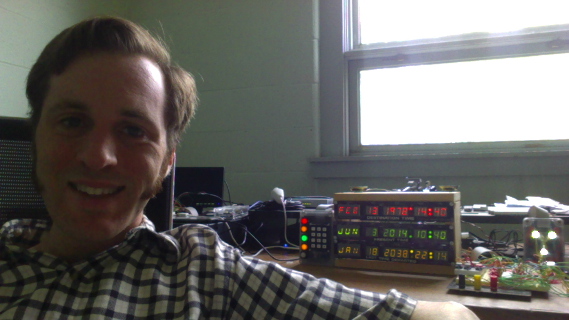
Joshua Butler serves as an Assistant Professor in the Department of Information and Computing Studies within the National Technical Institute for the Deaf (NTID) at Rochester Institute of Technology (RIT). His teaching responsibilities include Windows Operating Systems (NACT-151), Introduction to Linux (NACT-155), Computer and Data Security (NACT-250), and A+ Certification Prep (NACT-255), emphasizing practical system administration and security skills. His research spans Computer Science, Information Systems, Health Informatics, Cybersecurity, Operating Systems, and Accessibility Technology. A 2021 JAMIA publication on electronic health records for deaf patients highlights his interdisciplinary focus on technology-driven health equity solutions. His publication demonstrates consistent emphasis on accessibility within health information systems, specifically addressing communication barriers for deaf communities through technical innovations in electronic health records. Scientific Awards : None mentioned. Advising and Grants : No student advisement or grant funding details were provided in the source material.
Thorsten Berger is a Professor and Head of the Chair of Software Engineering at Ruhr University Bochum, Germany. His office is located at MC 4.101 on the RUB campus, with contact details including phone (+49 (0) 234 32 25975) and email (thorsten.berger@rub.de). He's an active researcher with extensive service in the software engineering community, serving on program committees for major conferences including ICSE, FSE, ASE, and SPLC. Professor Berger's research primarily focuses on software engineering with specialization in variability management, software product lines, and robotics software engineering. His work bridges theoretical foundations with practical applications, particularly in behavior trees for robotic systems, configuration management, and domain-specific language engineering. His interdisciplinary approach connects software engineering with control theory and machine learning applications. Analysis of his recent publications reveals a strong trend toward robotics software engineering, with increasing focus on behavior trees, test-case specification, and runtime verification for robotic systems. His work also shows growing interest in machine learning integration with traditional software engineering practices, particularly in model integration and asset management for ML-enabled systems. The research demonstrates consistent evolution from foundational work in variability management toward more applied domains. His scientific achievements have been recognized with numerous awards: Multiple Most Influential Paper Awards (SLE 2024, VaMoS 2023, VaMoS 2020) Wallenberg Academy Fellowship VR Starting Grant from Swedish Research Council (2016) Best Paper Awards at Modularity (2015) and CSMR (2013) Distinguished Reviewer Awards from ASE, ICSE, and SPLC conferences ERC Starting Grant finalist (2019, 2020) Professor Berger has secured substantial research funding as Principal Investigator for multiple projects including Novel Techniques for Data-Driven Root-Cause Analysis and Variability Management (Volkswagen Infotainment), Properties and Verification Techniques for Behavior Trees (Phoenix Contact Foundation), and PrivacyE2E framework for AI-enabled systems (Federal Ministry of Education and Research). His Wallenberg Academy Fellowship and VR Starting Grant demonstrate his capacity to attract competitive early-career funding. He leads the Virtual Platform project funded by the Swedish Research Council and participates in EU-funded initiatives like CO4ROBOTS. As Head of the Chair of Software Engineering at Ruhr University Bochum, he leads a research group focused on advanced software engineering techniques with particular emphasis on variability-intensive systems. His team actively participates in international research collaborations including the Wallenberg Autonomous Systems Program (WASP) and has organized significant events like the Dagstuhl seminar 19191 on 'Software Evolution in Time and Space: Unifying Version and Variability Management.'
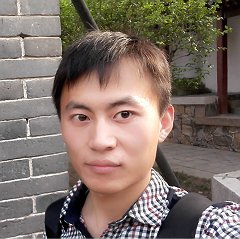
Xiang Gao is a Pre-tenure Associate Professor in the School of Software at Beihang University, China. His research focuses on applying program analysis, test generation, and formal methods to improve software quality through automated bug fixing and program synthesis. He has established significant collaborations with Fujitsu Laboratories of America, Microsoft Research, and other leading institutions in the software engineering field, demonstrating strong industry-academia connections. Dr. Gao received his Bachelor's degree in Computer Science (Elite Class) from Shandong University in 2016, followed by a Ph.D. from the School of Computing at the National University of Singapore, where he also served as a Postdoctoral Fellow until December 2021. His educational background spans both Chinese and Singaporean academic institutions, providing him with a global perspective on software engineering research. His primary research interests span multiple cutting-edge areas of software engineering: Program Analysis techniques for detecting and fixing software bugs with formal methods Software Security vulnerabilities with focus on automated repair methods Automated Program Repair systems that generate high-quality patches without overfitting Program Synthesis for creating transformation rules from examples Software Engineering for Artificial Intelligence (SE4AI) to improve AI model reliability and security Mobile Software Engineering with particular attention to UI testing and automation Deep Learning Security including model protection and obfuscation techniques Dr. Gao's recent publication trajectory shows a strategic evolution toward integrating large language models with traditional software engineering approaches, particularly in test generation and program repair. His work on DNN modularization (NeMo, CNNSpliter, SeaM) represents an innovative approach to enhancing model reusability and security in resource-constrained mobile environments, addressing critical challenges in deploying AI on edge devices. His scientific contributions have been recognized with multiple prestigious awards: ACM SIGSOFT Distinguished Paper Award for "ProveNFix: Temporal Property guided Program Repair" at FSE'24 IEEE TCSE Distinguished Paper Award for "Investigating and Detecting Silent Bugs in PyTorch Programs" at SANER'24 ACM SIGSOFT Distinguished Paper Award for "Modularizing while Training: A New Paradigm for Modularizing DNN Models" at ICSE'24 Distinguished Artifact Award for "Automated Patch Backporting in Linux (Experience Paper)" at ISSTA'21 Dr. Gao actively mentors students at various levels, seeking "self-motivated Ph.D, master, undergraduate students and interns with strong programming skills" for his research projects. He serves on numerous program committees for top software engineering conferences including ICSE, ASE, ISSTA, and FSE, demonstrating his growing influence in the academic community. His research has been supported through collaborations with industry partners including Microsoft Research and Fujitsu Laboratories of America, translating theoretical advances into practical applications. His laboratory focuses on several key research projects including Automated Software Vulnerability Repair (with techniques like Fix2Fit, VulnFix, and ExtractFix that address the overfitting problem in program repair), Program Synthesis for Program Transformation (including Semi-supervised synthesis and FixMorph for automated patch backporting in Linux), and Software Engineering for Artificial Intelligence (with projects like CNNSpliter, SeaM, and Sensei that apply software engineering principles to improve AI model usability and robustness). These projects represent cutting-edge work at the intersection of traditional software engineering and modern AI techniques, addressing critical challenges in software reliability and security.
Randy Miller serves as Professor in the Department of Chemistry at California State University, Chico within the College of Natural Sciences. He joined the faculty in 1988 and transitioned from Department Chair to Interim Associate Dean for the College of Natural Sciences in fall 2020. His educational background includes: BS in Chemistry with honors from Illinois State University (1981) PhD from University of California, Davis (1987) under Dr. Dino Tinti Postdoctoral fellowship at Northwestern University with Dr. Ken Spears Miller's research spans Physical/Analytical Chemistry and Chemistry Education . He employs spectroscopy to investigate solvent effects on chemical reactions while maintaining a Linux cluster for molecular modeling. His educational work focuses on laboratory curriculum reform, notably developing an integrated lab sequence with Dr. David Ball to replace traditional physical, analytical, inorganic, and advanced organic laboratories. He actively researches correlations between lab modifications and student success in general chemistry. Award highlights: Campuswide Outstanding Teaching Assistant award during graduate studies at UC Davis Miller teaches diverse courses including general chemistry, quantitative analysis, instrumental analysis, and physical chemistry. His administrative leadership includes prior service as Department Chair and current role as Interim Associate Dean. He contributes to departmental initiatives through the Chemistry Summer Research Institute (CSRI) and Chemistry Club (SAACS), supporting student research opportunities and academic enrichment.
Vincent Weaver is an Associate Professor in the Electrical and Computer Engineering Department at the University of Maine's College of Engineering. He leads the VMW Research Group, focusing on low-level systems research including hardware performance counters, computer architecture, and operating systems. Weaver received his BS in Electrical Engineering from the University of Maryland College Park in December 2000, followed by MS (January 2009) and PhD (May 2010) degrees in Electrical and Computer Engineering from Cornell University. He joined the University of Maine faculty in July 2012 as an Assistant Professor and earned tenure and promotion to Associate Professor in September 2018. His research centers on hardware performance analysis, architectural simulation, and systems programming with emphasis on Linux kernel development and embedded systems. Weaver's work bridges theoretical computer architecture with practical systems implementation, often resulting in open-source tools that advance the field. His publications reveal a consistent focus on performance analysis techniques, code optimization, and security through low-level system understanding. Weaver maintains an active teaching schedule including courses in embedded systems, operating systems, and network engineering. He values students with strong programming skills and encourages open source contributions as part of the learning process. His research group provides hands-on experience with cutting-edge processor architectures and performance analysis tools.
Peter Bartoli is a Lecturer in the Department of Computer Science at San Diego State University's College of Sciences. He teaches Computer Security (CS 574) and Unix/Linux System Administration (CS 470), and is developing a new security class for Spring 2025. Areas of Expertise: Offensive and Defensive Security, Digital Forensics, Network Wargaming, and Cybersecurity Competition Coaching. Since 2015, he has served as faculty advisor and head coach for the San Diego State Cyber Defense Team in CCDC/CPTC/NCL leagues. Office location: GMCS, 5500 Campanile Dr, San Diego, CA 92182.
Babak D. Beheshti, Ph.D., is Professor and Dean of the College of Engineering and Computing Sciences at New York Institute of Technology, where he has served since 1986. His 35-year tenure includes roles as faculty member, Academic Senate President, Associate Dean, and Dean. Under his leadership, the college introduced its first PhD programs (Computer Science and Engineering), new bachelor's/master's degrees, and climbed to #49 in U.S. News undergraduate engineering rankings. He established industry partnerships with NASA, IBM, and cybersecurity firms, and launched a co-op program for computer science/IT students. His research focuses on: Wireless sensor networks and IoT security Cryptographic frameworks for resource-constrained devices Cybersecurity penetration testing methodologies Adaptive algorithms for anomaly detection Honors include: IEEE MGA Leadership Award (2014) IEEE Millennium Medal IEEE LI Educator Award (2013) IEEE Region 1 Technical Innovation Award (2008) Ellis College Teaching Excellence Award (2007) He drives experiential learning through industry co-ops and serves on boards for IEEE, LISTnet, and manufacturing/transportation consortia.
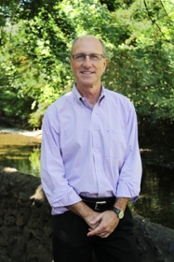
Dr. Christopher S. Thaxton is a Professor in the Department of Physics and Astronomy at Appalachian State University, where he has served since 2004, progressing from Assistant Professor to his current position. He holds multiple leadership roles including Director of the Atmospheric Science Minor Program (since 2018) and previously directed the Environmental Science Program (2012-2017) and Professional Science Master's Program (2007-2012). He also served as Interim Director of the Engineering Physics Graduate Program from 2022 to June 2023. Dr. Thaxton leads the Applied Fluids Laboratory (AppAFL), which investigates fluid mechanics of boundary layers and the coupling between fluids and terrestrial surfaces. The lab develops and applies instrumentation and analytical/numerical tools for research in sediment transport, seafloor dynamics, and atmospheric boundary layer processes. His research interests span multiple areas of fluid dynamics with particular focus on: Seafloor object burial dynamics and sediment transport Atmospheric boundary layer processes in complex terrain Urban stream hydrology and temperature dynamics Computational fluid dynamics and modeling Machine learning applications in fluid dynamics Dr. Thaxton's recent publications demonstrate strong activity in naval applications of fluid dynamics, atmospheric modeling using the Weather Research and Forecasting (WRF) model, and sediment transport mechanics. His work often involves interdisciplinary collaboration with environmental scientists, geographers, and engineers. Notable awards and funding include: $350,000 contract with the U.S. Naval Research Laboratory's Ocean Sciences Division Collaboration in an NSF MRI program award of $530,000 Multiple student NREIP (Naval Research Enterprise Internship Program) fellowships As an advisor, Dr. Thaxton mentors both graduate and undergraduate students, with recent advisees including Adian Keaveney, Nick Mencis, Joshua McNeill, and Tess Mickey. His lab provides students with substantial computational resources and opportunities for research travel and conference participation. The Applied Fluids Laboratory maintains strong connections with the Naval Research Laboratory and other research institutions, providing students with valuable networking and career opportunities. The lab maintains extensive computational resources including specialized workstations running Linux with software for computational fluid dynamics (OpenFOAM), atmospheric modeling (WRF), and machine learning applications. Dr. Thaxton also teaches courses related to his expertise including Atmospheric Physics and Fluid Mechanics.
Iker García González serves as a Lecturer at Pompeu Fabra University within the School of International Business. He teaches the Programming and Big Data Analysis course as part of the Bachelor's Degree in International Business and Marketing program, a 4-ECTS elective course delivered in English. His academic expertise centers on practical data science applications for business contexts with specialized knowledge in: Programming languages: Python, R, SQL Data visualization tools: Tableau, Power BI, Metabase Database systems: MySQL Operating systems: Linux García González combines his academic role with professional experience as a Data Analyst at Cint, where he manages and analyzes large datasets while collaborating across departments to improve data accessibility. His teaching methodology emphasizes hands-on learning with real-world business datasets from commerce, logistics, and consumer preferences domains, preparing students for data-driven decision making in international business environments.
Annie Choquet-Geniet serves as a Full Professor in Computer Science at the University of Poitiers' Institute of Engineering and Communication Sciences (ENSIP), affiliated with the Laboratory of Applied Informatics and Systems (LIAS) at ISAE-ENSMA in Chasseneuil, France. Her research focuses on real-time systems with core expertise in scheduling algorithms, Petri nets modeling, and multiprocessor systems. Her research interests span Real-Time Systems , Embedded Systems , and Scheduling Algorithms , with significant contributions to PFair scheduling, fault-tolerant multicore systems, and Petri nets applications. Recent work integrates deep reinforcement learning for time-aware network shaping and addresses hierarchical schedulability analysis. Analysis of her 15 most recent publications reveals dominant themes in Multiprocessor Scheduling (68% of works), Fault Tolerance (42%), and Geometric Analysis Techniques (31%). Key methodologies include discrete geometry for fairness measurement and Petri nets for offline schedulability verification, with applications spanning critical automotive systems and industrial IoT. Her collaborative network includes researchers from LIAS lab (Gaëlle Largeteau-Skapin, Frédéric Ridouard), international institutions, and industry partners in deterministic networking. Current projects focus on IEEE 802.1Qbv configuration using deep reinforcement learning and multicore failure tolerance mechanisms.
David Runge serves as a PartTime Lecturer at the Central Institute for Continuing Education and Transfer, Berlin University of the Arts (UdK Berlin), where he contributes to audio technology education and professional development programs. His academic foundation includes a degree in Audio Communication and Technology from Technische Universität Berlin, providing technical grounding for his specialized work. Runge's research critically examines spatial audio renderers with emphasis on usability engineering and professional audio implementation within Linux environments. His work bridges theoretical audio spatialization techniques with practical open-source software development, addressing accessibility challenges in immersive sound design and real-time audio processing systems. This positions him at the intersection of human-computer interaction and specialized operating system audio architectures. From 2015 to 2017, he actively mentored student projects at an Electronic Music Studio, guiding collaborative initiatives in electronic music production and technology integration. His advisory approach emphasizes hands-on technical implementation within creative contexts, fostering innovation in audio project development.
Jie Liu is a Researcher at the Institute of Software, Chinese Academy of Sciences and a Professor and Doctoral Supervisor at University of Chinese Academy of Sciences. He is also a Member of the Youth Innovation Promotion Association of the Chinese Academy of Sciences and an Executive Committee Member of the System Software Committee of the CCF Computer Society. His research is conducted within the Software Engineering Technology R&D Center. Dr. Liu received his Ph.D. from the University of Science and Technology of China in 2011 and his B.A. from the same institution in 2004. He has progressed through the ranks at the Institute of Software, CAS, starting as an Assistant Research Fellow (2011-2014), then Associate Research Fellow (2014-2024), and currently as a Researcher (since 2024). His research spans Big Data Intelligent Analysis Models and Systems at the intersection of AI, Software Engineering, and System Software. Specifically, his work covers three main areas: Big Data and Machine Learning Systems (statistics and AI algorithm model libraries, data quantitative analysis tools, LLM reasoning optimization, Earth Big Data); Intelligent Software Engineering (code model constraint decoding, data science agents, system log analysis agents); and Knowledge-Enhanced Intelligent Model Construction (knowledge extraction, knowledge graphs, domain AI model design). His research has resulted in innovative approaches to handling complex data analysis challenges across multiple domains. Dr. Liu's research has produced significant outcomes including EarthDataMiner, which supports SDG indicator calculations and won the 2024 Beijing Municipal Science and Technology Progress First Prize. His work on RISC-V software migration technology has been integrated into the Ruiqian tool (https://rvpt.top/), demonstrating practical applications of his research in emerging computing architectures. Beijing Science and Technology Progress Award, First Prize, 2024 2023 Surveying and Mapping Science and Technology Award, Special Prize, 2023 DASFAA Best Paper Runner-up, Second Prize, 2013 Dr. Liu has successfully guided numerous graduate students who have secured positions at major technology companies including Alibaba, ByteDance, Southern Power Grid, and Agricultural Bank of China. He has secured funding through multiple National Natural Science Foundation projects, National Key R&D Program projects, and over ten other research initiatives. His research collaborations span industry leaders like Huawei, JD.com, and TravelSky, as well as academic institutions within the Chinese Academy of Sciences. He teaches graduate courses such as 'Machine Learning Systems' and 'Cloud Computing and Big Data Technology' at University of Chinese Academy of Sciences, and has established a research group focused on developing innovative solutions at the intersection of AI and software engineering with real-world applications in earth sciences, healthcare, and intelligent systems.
Zhiyun Qian is the Everett and Imogene Ross Professor in the Department of Computer Science and Engineering at the University of California Riverside. His research bridges academic security research with practical hacking techniques, focusing on vulnerability discovery and analysis across operating systems, networks, and mobile platforms. His primary research interests include: System security: Automated cyber attacks/defenses, kernel vulnerability discovery, and security tool development Network security: TCP side channels, multi-path TCP flaws, and firewall evasion techniques AI/ML applications for security: LLM-integrated static analysis and reinforcement-learning-based fuzzing His work has led to critical discoveries including unfixable TCP side channel vulnerabilities (CVE-2016-5696) recognized with GeekPwn awards. His research methodology combines program analysis, reverse engineering, fuzzing, model checking, and machine learning to build practical security systems. Notable scientific awards include: GeekPwn 2016 most creative idea award Geekpwn 2017 winner award Applied Networking Research Prize Professor Qian actively mentors students in security competitions including Pwn2Own and GeekPwn. He serves on prestigious program committees including IEEE Security and Privacy (Oakland), ACM CCS, and USENIX Security. His teaching portfolio includes graduate courses CS 254 (Network Security) and CS 255 (Computer Security), along with undergraduate courses CS 153 (Operating Systems) and CS 165 (Computer Security). He leads the SecLab research group at UCR (GitHub: seclab-ucr, 3824★) developing security tools for kernel and Android ecosystems. Current projects focus on LLM-enhanced static analysis, precise vulnerability detection, and automated patch testing.