Eric Mantz is an Associate Professor in the Department of Technology, Design, and Technical Education (TDTE) at Utah State University's College of Agriculture and Applied Sciences. His contact details include office location in Blanding, BAEC 119, phone number (435) 678-8123, and email eric.mantz@usu.edu. Educational Background: Combined Arms and Services, Command and General Staff College (1999) MS in Business Information Systems and Education, Utah State University (1997) Computer, Network, and Software Engineering, Air Force Institute of Technology (1991) BS in Administrative Systems (MIS) with minors in Business Administration and Military Science, Utah State University (1986) Certified Netware Instructor and Network Engineer, Novell (2001) Mantz specializes in technical education, teaching courses spanning cybersecurity, networking, web development, and cloud computing. His instruction focuses on hands-on technical skills and certifications including Security+, A+, and Linux administration.
John Woods is a Lecturer in the Department of Computer Science at Southern Illinois University, affiliated with the College of Engineering. He holds an M.S. in Computer Science from the same institution. His research interests include: Computer Graphics Linux/UNIX system programming Contact details: Office location Engineering A 405F, Phone: 618-453-6055, Email: johnheathwoods@siu.edu.
Rosalind Deena Kumari is an Assistant Professor at the School of Mathematical and Computer Sciences, Heriot-Watt University, Malaysia Campus. Her research spans interdisciplinary domains including algorithms, quality management, and educational applications. Research Interests: Algorithms, Quality Management, Educational Applications, Industrial Sector Performance Her scholarly work focuses on enhancing performance metrics through algorithmic optimization and quality management frameworks. In 2022, she published on quality management principles in education sectors, building on earlier contributions to operating systems fairness (2008). Dr. Kumari actively engages in academic collaborations, including participation in the 2022 PURE Workshop for HWUM MACS. She currently accepts PhD students for research in her areas of expertise.
Assoc. Prof. Georgi Petrov is an academic at New Bulgarian University (NBU), holding the position of Associate Professor in the Telecommunications Department. With over two decades of experience spanning academia, international organizations, and industry, he specializes in telecommunications systems, electromagnetic field analysis, and biomedical applications of technology. Professional Roles: Acting Head of the State Customs Committee (2011–2022), full-time assistant at NBU's Faculty of Economics (2009–2011), and hardware engineer at Assen Aero (2019–2020). Research & Grants: Led projects like "Improving interdisciplinary skills in telecommunications" (2013–2015) and contributed to studies on electromagnetic fields' health impacts (2013–2014). Participated in international initiatives like I3E (2010) and Balkan Case Challenge (2009). Consulting: Independent consultant for the International Telecommunication Union (ITU Geneva), Stress-RX (USA), and defense systems like Intelligent Munitions System (2008). Expertise: Courses taught include Microprocessors , Digital Signal Processing , Human-Machine Systems , and Mobile Application Development . Membership: Part of the Union of Electronics, Electrical Engineering, and Communications (Bulgaria) and the Union of Mathematicians in Bulgaria.
Snizhana Yuryivna Gimchynska is an Assistant Professor at the Department of Computer Systems and Networks , Faculty of Physics , Chernivtsi National University named after Yu. Fedkovych . Her work bridges computer hardware/software development with educational technology innovation . Education: Chernivtsi State University (1992) (Computer Science), Retraining in Public Finance (2010) Research Focus : Designing distance learning systems since 2004 Developing computer hardware/software for scientific applications Advancing information coding and digital signal processing methodologies Exploring TCP/IP network database architectures and cloud computing in education Publication Trends : 15+ years of contributions in educational technology , computer networking , and scientific instrumentation , with recent emphasis on cloud-based learning environments (2011) and open-source software adoption (2015-2016). Scientific Recognition : 2023: P-Certificate (Continuing Education) 2022: IPD Week Award 2021: Woman in IT Recognition 2019: CISCO IT Essentials Certification 2019: PCAP Python Programming Certification
Lisovenko Iryna Dmytrivna serves as Assistant Professor in the Department of Computer Systems and Networks at Yuriy Fedkovych Chernivtsi National University since 2002, following her 2000 diploma in Computer Systems and Networks from the same institution. Her professional trajectory includes software engineering at a municipal medical institution (2000–2002) and ongoing contractual collaboration with Elogic Commerce since 2018. Her academic credentials include: Yuriy Fedkovych Chernivtsi State University, Faculty of Physics, Department of Computer Science, specialty "Computer Systems and Networks" (2000) Dr. Lisovenko's research centers on parallel and distributed computing, emphasizing automatic parallelization techniques, GPU-accelerated non-graphical computing, and structural analysis of program intermediate representations. She concurrently investigates specialized computer systems for data stream processing and develops methodologies for enterprise accounting automation, bridging theoretical computer science with business process optimization. Her scholarly output demonstrates sustained innovation in high-performance computing architectures. Analysis of her 15 most recent publications (2012–2021) reveals three dominant research thrusts: GPU-based parallelization (40% of works, including Kalyna encryption and bitonic sorting implementations), algorithmic optimization for diverse hardware (33%, covering sorting networks and structural matrices), and applied systems for real-world problems (27%, spanning smart home control, social media analysis, and enterprise automation). This evolution reflects increasing focus on practical GPU applications while maintaining core expertise in parallel algorithm design. She actively contributes to academic development through teaching Parallel and Distributed Computing, Economic and Legal Aspects of Enterprise Automation, and DevOps/DevNet courses, while authoring 12+ methodological manuals including "Parallel and Distributed Computing: Laboratory Workshop" (2022) and "System Administration of Linux OS" (2021). Her professional development includes certifications in Constitutional Law, Finance and Investment, DevNet Associate, and All Digital Week initiatives (2020–2021).
Sukanya Suranauwarat serves as an Assistant Professor at Johnson & Wales University in Providence since 2022, teaching foundational and advanced computer science courses including Problem Solving for Computing, Computer Science I/II, Introduction to Operating Systems, Network Protocols I, and Information Security with Cryptography. Education: Ph.D. in Computer Science & Communication Engineering from Kyushu University, Japan M.Eng. in Computer Science & Communication Engineering from Kyushu University, Japan B.Eng. in Computer Science & Communication Engineering from Kyushu University, Japan Research Interests: Her scholarly work emphasizes Operating Systems and Computer Science Education , with deep expertise in Unix/Linux system administration, Linux kernel development, and multi-language programming (Assembly, C, Java, Python). Additional focus areas include networking protocols, MySQL database systems, and cybersecurity fundamentals, leveraging over two decades of academic instruction and industry-aligned professional certifications.
Konstantinos Barlas serves as a Senior Lecturer in the Department of Computer and Information Engineering within the School of Engineering at the University of West Attica. His academic career spans both Greek and international institutions, bringing specialized expertise in formal methods and mathematical logic to his teaching and research activities. Education: Diploma and Integrated Master from the School of Applied Mathematics and Physical Sciences, National Technical University of Athens (2006) PhD from the School of Electrical and Computer Engineering, National Technical University of Athens (2018) with research focus on algebraic pattern specification Dr. Barlas' research centers on formal methods in computer science, with particular emphasis on algebraic specifications, formal verification, and mathematical logic. His work bridges theoretical computer science with practical applications in systems design and open standards development. His scholarly approach integrates mathematical rigor with software engineering principles to address complex specification challenges in computing systems. He has published 10-12 papers in international scientific journals and conferences, including contributions to NASA's Innovations in Systems and Software Engineering. His publication record demonstrates consistent engagement with formal methods communities and interdisciplinary applications of mathematical logic in computing. As an educator, Dr. Barlas teaches core mathematics courses for computer science students including Discrete Mathematics, Probability and Statistics, Mathematical Analysis I, and Linear Algebra. He serves as a scientific editor for the Greek publication 'Μαθηματικές Δομές για την Επιστήμη Υπολογιστών (Διακριτά μαθηματικά και εφαρμογές)'. His teaching philosophy emphasizes the foundational mathematical principles that underpin computer science education. Dr. Barlas maintains strong connections with open source software communities, utilizing Arch and Void Linux distributions with i3wm as his preferred tiling window manager. His technical interests extend to Raspberry Pi projects, and he has creative pursuits including a music project called 'A group of crows'. His intellectual interests span literary works exploring absurdism and circular reasoning, including 'Catch-22', 'The Dice Man', 'The Hitchhiker's Guide to the Galaxy', and 'Gödel, Escher, Bach'.
Blagoj Nenovski serves as Associate Professor at the Faculty of Law, Kichevo, within St. Kliment Ohridski University - Bitola. He teaches Informatics 1 and 2 for undergraduate studies and pioneered the ICT in Scientific Research course for doctoral programs. Elected to his current rank in 2020, he holds dual specializations in Informatics and ICT Application in Higher Education. His academic journey includes: Diploma in Engineering (2009) from Technical Faculty in Bitola (8.63 GPA) Master's in Informatics and Computer Engineering (2012) (10.00 GPA) PhD in Informatics and Computer Engineering (2020) (10.00 GPA) Nenovski's research spans Augmented Reality systems, digital banking transformation, and disinformation countermeasures. His AR work focuses on outdoor object recognition using NFT markers, while legal domain contributions include establishing an ICT Training Department for lawyers. Recent banking sector studies analyze digital services' competitive impact, and cross-national research examines problematic internet use patterns. Publication trends reveal increasing focus on disinformation threats (particularly deepfakes) and spatial exploration technologies since 2022, while maintaining strong output in banking digitization and educational informatics. His interdisciplinary approach consistently bridges technical ICT solutions with domain-specific applications. Though no formal awards are documented, Nenovski actively serves on thesis evaluation committees, curriculum development boards for Law and Technology programs, and multiple university governance committees including elections oversight and study guide creation. He has coordinated research projects and provided peer review services for academic publications. As coordinator of the Department for ICT Training of Lawyers since 2021, he leads initiatives at the ICT-law intersection, developing digital resources for legal professionals. His technical proficiency spans Windows/Linux systems, Spring Boot, React, JavaScript, and network security frameworks, supporting both academic innovation and administrative responsibilities including OJS system management for university journals.
William Andreopoulos serves as an Assistant Professor in the Department of Computer Science at San José State University's College of Engineering. With a strong interdisciplinary background spanning computer science, bioinformatics, and molecular biology, he bridges computational methods with biological applications. His academic journey has taken him through prestigious institutions including Lawrence Berkeley National Laboratory, Columbia University, and TU Dresden. Ph.D. in Computer Science and Engineering, York University, Toronto, Canada (2006) M.Sc. in Computer Science, University of Toronto, Canada (2001) B.Sc. in Computing and Software, McMaster University, Canada (1999) Dr. Andreopoulos specializes in applying machine learning and computational approaches to biological problems, with particular emphasis on genomics, metagenomics, and bioinformatics. His research spans fungal genomics, microbial community analysis, plasmid identification, and the development of tools for omics data integration. He has extensive experience working with environmental data as well as cancer datasets from PCAWG and TCGA projects. His publication record reveals a strong interdisciplinary focus, with recent work spanning from fungal genomics and microbial identification to natural language processing applications. The research demonstrates consistent integration of machine learning techniques across diverse biological contexts, with notable contributions in developing computational pipelines for high-throughput sequencing data analysis. As an educator, Dr. Andreopoulos has mentored numerous graduate students through CS297/CS298 projects and CS280/CS180 courses, with students working on bioinformatics-related computational projects. His professional experience includes 8 years as a data scientist at the Joint Genome Institute, Lawrence Berkeley National Laboratory, where he developed software pipelines for automated processing of high-throughput sequencing data. His laboratory focuses on computational biology projects that require expertise in Java, Python, Linux command line, machine learning libraries, and data visualization tools. Current research directions include strain separation in microbial communities, plasmid identification, 16S sequence reconstruction, and deep learning applications to molecular biology problems.
Dmitry Vladimirovich Alexandrov serves as Professor at the Faculty of Computer Science, Department of Software Engineering at the National Research University Higher School of Economics (HSE) and heads the Research and Educational Laboratory of Cloud and Mobile Technologies. With 24 years of scientific and teaching experience, he joined HSE in 2014 and has established himself as a leading expert in multiple computer science domains. His academic credentials include Doctor of Technical Sciences (2010) and the academic title of Professor (2012). His educational foundation was built at Vladimir State University, where he graduated in 1997 with specialty in "Computers, complex systems and networks" and earned his Candidate of Technical Sciences degree in 2000. Dr. Alexandrov's research spans artificial intelligence, machine learning, mobile application development (particularly iOS), software engineering, and database technologies. His work bridges theoretical research with practical applications in cloud computing, mobile technologies, and intelligent systems development. His recent publications reveal a strong focus on practical AI applications in software engineering, including code generation using large language models, service mesh optimization, face recognition algorithms, and database technologies. This research demonstrates interdisciplinary collaboration across computer science subfields with real-world applications. HSE University Honorary Diploma (February 2025) Gratitude from the Faculty of Computer Science, National Research University Higher School of Economics (July 2023) Dr. Alexandrov actively supervises students at all academic levels, from bachelor's theses to doctoral research. He has secured significant research funding including the Grant of the President of the Russian Federation for state support of scientific research by young Russian scientists-doctors of sciences. As laboratory head, he directs research on cloud and mobile technologies, oversees scientific seminars, and leads collaborative projects with industry partners. His laboratory recently developed and registered with Rospatent software for visualization and markup of digital medical images in DICOM format, developed in partnership with the N.V. Sklifosovsky Research Institute of Emergency Medicine.
Thomas Dreibholz is a Chief Research Engineer at Simula Metropolitan's Center for Resilient Networks and Applications. He specializes in cyber sovereignty, network security, and internet testbeds, with extensive work on distributed systems, cloud computing, and 5G networks. Affiliation: Simula Metropolitan, Oslo, Norway Research Focus: Multi-path transport protocols, network resilience, and privacy-preserving frameworks His research explores the intersection of network security, cloud/fog computing, and next-generation communication protocols. Recent work includes HiPerConTracer for network analysis, privacy-aware fog platforms , and multi-layered federated learning security . He contributes to testbed development, including the NorNet infrastructure for real-world multi-path transport research. Publications reflect expertise in multi-path TCP , 5G network optimization , and cloud/fog security . He has delivered invited talks at institutions like Hainan University and Princeton University, emphasizing open-source testbed deployment and educational outreach.
Akın DOĞRU is a Lecturer at Adiyaman University's Besni Ali Erdemoğlu Vocational School, Department of Computer Technologies. With over 20 years of academic experience since 2001, he teaches a comprehensive range of computer technology courses at both associate degree and bachelor's levels. His educational background includes: Bachelor's degree in Mechanical Engineering from Gaziantep University (1997) Master's degree in Computer Engineering from Ahmet Yesevi University (2011) Dr. DOĞRU specializes in practical computer technologies with emphasis on web development, mobile applications, and system administration. His teaching portfolio spans foundational courses like Basic Information Technologies to advanced topics including Mobile Application Development, Server Operating Systems, and E-Commerce Programming. He has consistently taught across multiple academic years from 2006 through the current 2024-2025 term. His administrative experience includes significant leadership roles: Department Head (2002-2007, 2010-2011, 2020) Deputy Director of Vocational School (2006-2007) Deputy Head of Department (2025) Dr. DOĞRU maintains active technical expertise through his membership in the Linux Users Association and specialized certificates in Microcontroller Programming and Arduino development. His pre-academic career as a mechanical engineer (1997-2001) provides valuable industry perspective that enriches his teaching methodology and course content.
Bryan Parno is the Kavčić-Moura Professor of Electrical & Computer Engineering and Computer Science at Carnegie Mellon University, where he leads the Secure Foundations Lab within CyLab, CMU's Security & Privacy Institute. His research combines theory and practice to provide formal, rigorous security guarantees about concrete systems, with emphasis on creating solid foundations for practical solutions. His research spans secure systems , formal software verification , applied cryptography , data privacy , and usable security . Current work focuses on protocols for verifiable computation and zero-knowledge proofs, building practical formally verified secure systems, and developing next-generation application models. His lab maintains a strong commitment to reproducibility, open-sourcing code under permissive licenses, and avoiding patenting results to maximize public benefit. His recent publications demonstrate a clear trend toward practical verification of real-world systems, particularly through the Verus project for verifying Rust code, Everest for building verified HTTPS stacks, and Ironclad for provably secure systems. These works bridge the gap between theoretical security guarantees and practical implementation, with applications ranging from blockchain protocols to verified cryptographic libraries deployed in the Linux kernel. His scientific achievements include multiple Distinguished Paper/Artifact Awards (USENIX Security, SOSP, PLDI), the IEEE Cybersecurity Award for Practice , the Sloan Fellowship , and the ACM Doctoral Dissertation Award . His work on verifiable computation protocols has influenced blockchain systems, while his research on secure code execution environments contributed to Intel's SGX and TDX technologies. As an advisor, Parno has mentored numerous PhD students including Aymeric Fromherz (recipient of the ACM SIGSAC Doctoral Dissertation Award) and Jay Bosamiya. His lab receives funding from diverse sources including NSF, industry partners, and security foundations. Notably, his work has been incorporated into Windows 8+, iOS 13+, and the Linux kernel. He also serves in leadership roles including Chair of IEEE Computer Society's Technical Committee on Security & Privacy. The Secure Foundations Lab maintains strong industry connections, with alumni joining Microsoft Research, Inria, Northeastern University, and other leading institutions. Recent projects like Verus, Everest, and Ironclad represent the lab's commitment to building end-to-end verified systems that provide rigorous security guarantees while maintaining practical performance.
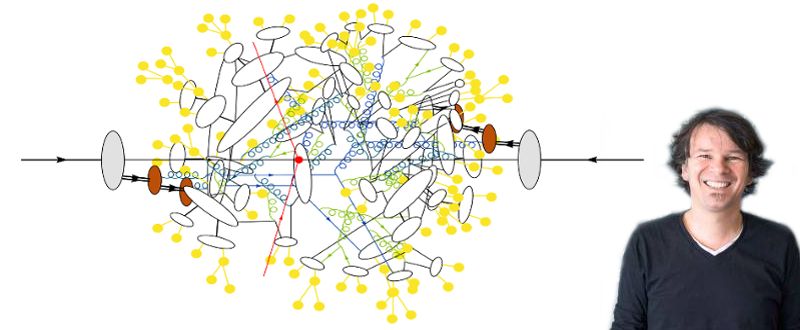
PD Dr. Stefan Gieseke is a Senior Lecturer leading a research group at the Institute for Theoretical Physics (ITP) at Karlsruhe Institute of Technology (KIT). His group is integral to the international Herwig collaboration and Monte Carlo network MCnet, partnering with CERN, IPPP Durham, Lund University, Manchester University, and the University of Vienna. Research focuses on advancing the Monte Carlo Event Generator Herwig for simulating 13 TeV proton collisions at the LHC. Key initiatives include: Enhancing precision in perturbative Quantum Chromodynamics (QCD) calculations and parton showers Refining non-perturbative hadronization models for quark-gluon transitions Modeling multiple partonic interactions in proton collisions Developing methodologies to detect Physics Beyond the Standard Model Dr. Gieseke actively supervises Bachelor's, Master's, and PhD theses in event generator development, requiring theoretical particle physics coursework and computational skills (C++, Python, Linux/Unix). PhD funding is secured through case-specific arrangements. The group collaborates globally via the Herwig consortium and MCnet to pioneer high-precision collision simulations for next-generation LHC analyses.