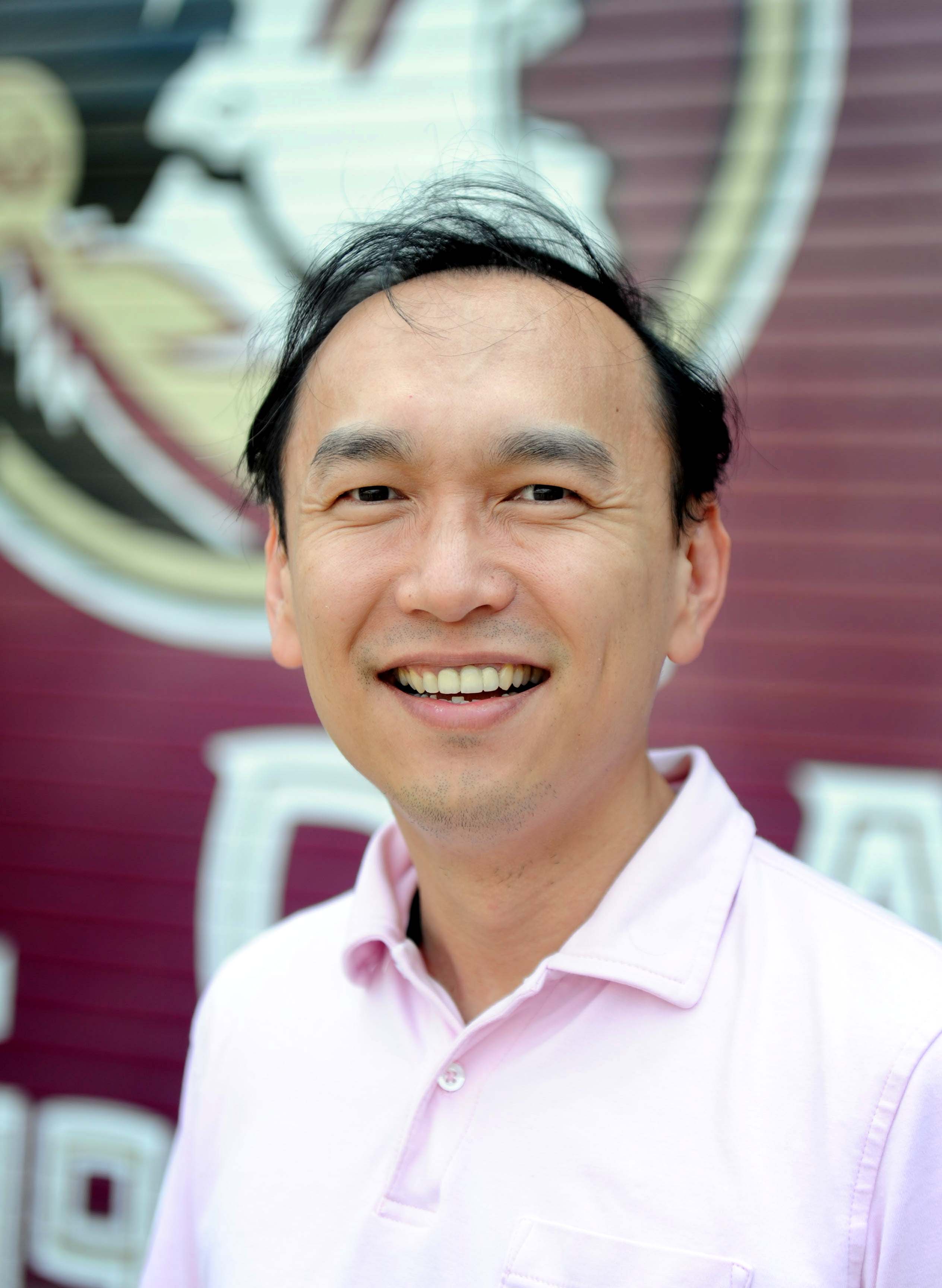
Dr. Viet-Hoang Tran is a former member of the Cloud and Large Scale Computing group at UCLouvain, where he conducted research on network protocols and transport layer technologies. His work focuses on improving the extensibility and performance of transport protocols like TCP and QUIC, with applications in multipath communication, TLS integration, and network asymmetry handling. He holds a PhD from UCLouvain (2019), titled 'Measuring and extending Multipath TCP.' Key Research Contributions: Developed TCPLS protocol combining TCP and TLS for modern transport services Advanced Multipath QUIC implementations for asymmetric networks Extended Linux TCP stack using eBPF for enhanced flexibility Published extensively on MPTCP measurement and protocol optimization Recent Work: Contributions include Multipath Extension for QUIC, SRv6-FEC integration, and Plugin Distribution Systems. His research emphasizes practical implementations resistant to network intermediaries while maintaining performance. Collaborations: Worked closely with researchers like Olivier Bonaventure, Quentin De Coninck, and Maxime Piraux on transport layer innovations. Active contributor to IETF-related projects.
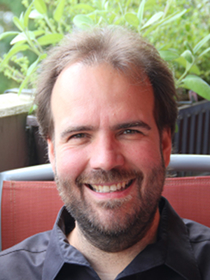
Elias Allayiotis is an Associate Lecturer in the Department of Computing at the School of Sciences, University of Central Lancashire Cyprus. He holds a PhD in Computer Science (2017) and has professional certifications in Information Systems Auditing and Linux Administration. His research focuses on enhancing mobile user Quality of Experience (QoE) through context-aware systems and mobile-to-cloud computing architectures. Education: PhD (UCLan, 2017), MSc & BSc (Roosevelt University, 2004–2007) Certifications: ISACA, LPI, HEA His research interests include modeling mobile QoE using context-aware approaches, optimizing mobile-to-cloud data offloading, and developing adaptive systems for user-centric experiences. He has published in venues like IEEE PIMRC and IWCMC. Awards: AWS Research Grant (2015), UCLan PhD Scholarship (2013) Professionally, he has held roles as CTO/VP of Product Development at Competitive Analytics Professionals and Managing Director at UVIA Technologies. He teaches the Masters Project module (CO4804) and is a member of ACM, IEEE, and ICSC.
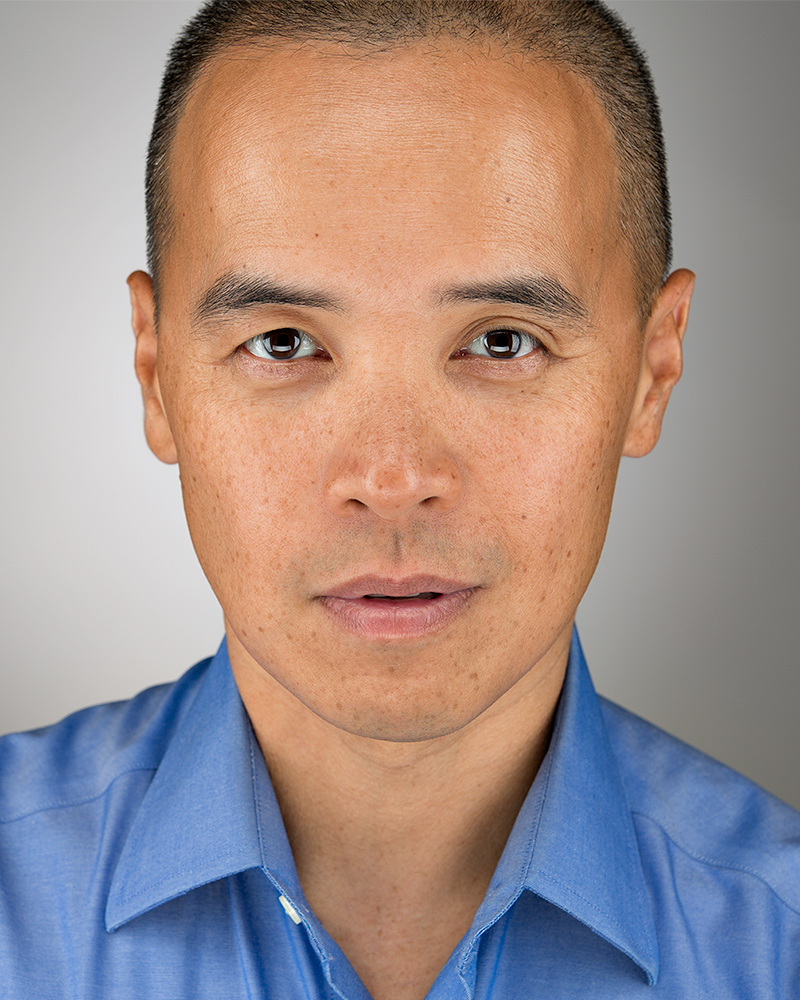
Andy Wang is an Assistant Professor in the Department of Computer Science at Florida State University (FSU), where he has been since 2003. He earned his Ph.D. and M.S. in Computer Science from UCLA (2003 and 1998, respectively) and a B.S. from UC Berkeley (1995). His research focuses on file systems, storage systems, optimistic replication, and distributed systems, with notable contributions including the Composite-File File System (CFFS), Cashtags, and TrueErase. He has received prestigious awards such as the NSF CAREER Award (2009), Excellence in Teaching (2019), and the Mainline Endowed Professorship (2024). Research interests span data flow management, secure deletion (TrueErase), power-aware storage (PARAID), and performance evaluation. His work also explores mobile security (Cashtags) and real-time storage systems. Key projects include CFFS (decoupling metadata and data for performance) and the ADAPT toolkit for storage path optimization. Teaching includes operating systems courses (COP 4610/5611), advanced performance analysis (CIS 5105), and kernel programming. He has administered NSF-funded S-STEM programs to broaden participation in CS. His publications span conferences like USENIX FAST, ACM SIGMETRICS, and journals like ACM Transactions on Storage. Notable grants include NSF S-STEM scholarships and work on energy-efficient storage systems. He advises students on projects involving file system consistency, fuzzing, and secure deletion. His lab's innovations aim to bridge theoretical insights with practical storage solutions.
Prof. Dr. Volker Christian Behr serves as an Associate Professor at the University of Würzburg's Faculty of Physics and Astronomy, where he leads the Magnetic Particle Imaging group within the Chair of Experimental Physics (Biophysics). Located in Building P1, Room F-076 at the Am Hubland campus in Würzburg, Germany, Prof. Behr contributes significantly to the advancement of medical imaging technologies with expertise in Magnetic Particle Imaging and Magnetic Resonance Imaging. Prof. Behr's research focuses on Magnetic Particle Imaging (MPI), a novel medical imaging technique that detects superparamagnetic iron oxide nanoparticles with high sensitivity and specificity within the human body. His work explores the nonlinear magnetization function of these particles to develop marker-based applications that avoid radioactive nuclides, offering significant potential for clinical applications. He has contributed to the development of MPI-MRT hybrid systems where MPI captures the marker signal while MRT provides the anatomical background. His research extends to scanner technology, wave propagation in high-field MRI, and applications in non-destructive material testing. Prof. Behr's publications over the past two decades demonstrate a consistent focus on medical imaging technologies, with particular emphasis on Magnetic Particle Imaging since 2009. His work spans from fundamental scanner components and hardware to novel reconstruction techniques and clinical applications. The evolution of his research shows progression from general MRI technology (2003-2011) to specialized MPI development (2015-2018), reflecting the emergence of MPI as a distinct field within medical imaging. Prof. Behr leads the Magnetic Particle Imaging research group within the larger Magnetic Resonance Imaging group at Experimental Physics 5. His team works on advancing MPI technology, developing novel reconstruction techniques, and exploring clinical applications of magnetic particle imaging. The group is part of the Chair of Experimental Physics (Biophysics) at the University of Würzburg, which maintains strong connections with medical researchers for translational applications of imaging technologies.
Tuomo Hänninen is a researcher affiliated with the University of Oulu . His work focuses on telecommunications, wireless networks, and IoT technologies. Research Interests 6G Networks Digital Twin UAV Communication IoT Platforms Energy Efficiency in Wireless Systems Publications Trends Hänninen’s recent publications highlight advancements in 6G architecture, UAV-based IoT solutions, and digital twin applications in smart spaces.
Jason Nieh is a Professor of Computer Science at Columbia University and Co-Director of the Software Systems Laboratory. He also serves as Chief Scientist at CertiK. His research focuses on operating systems, virtualization, computer security, and formal verification. He holds faculty appointments in Columbia's Department of Computer Science and has advised numerous graduate students. Education: B.S. from MIT (Electrical Engineering), M.S. and Ph.D. from Stanford University (Electrical Engineering). Research interests include operating systems design, cloud security, hardware-software co-design, and verified systems. His work has been integrated into major platforms like Linux and Android, and he has contributed to technologies used by Amazon Web Services and Google Cloud. Recent professional activities include program committee roles at top conferences (SOSP 2025, OSDI 2023) and distinguished lectures at Academia Sinica and National Taiwan University. Awards include AAAS/ACM/IEEE Fellowships, Sigma Xi Young Investigator Award, NSF CAREER Award, and multiple best paper awards. He has also served as a technical advisor in high-profile legal cases like the Microsoft Antitrust Settlement.
Rosen Pasarelski is a Professor in the Telecommunications Department at New Bulgarian University (NBU), where he has taught since 2003. His academic career includes roles as assistant professor (2003–2015) and current professor status since 2015. He has directed NBU's Telecommunications bachelor's program (2005–2015) and actively participates in departmental councils and seminars. Education : PhD in Radio Transmitter and Receiver Equipment (2009), Master's in Telecommunications Systems (2003), Bachelor's in Telecommunications Systems (2001), Specialist degree in Telecommunications (1999) His research focuses on radio communications , wireless networks , and WEB technologies , with recent publications exploring 5G network optimization, microwave antennas for space-based radar, IoT vehicle tracking, and femtocell technologies. He has contributed to projects including satellite studio development, WLAN network analysis, and electromagnetic field safety studies. Recent publications highlight trends in 5G network algorithms , radio wave attenuation modeling , and AI-driven cybersecurity . His work often intersects telecommunications engineering with practical applications in smart city infrastructure and educational technology . He teaches courses such as: Network Administration and Virtualization Applied Software for Telecommunications Mobile Communications WEB Services Installation Computer Hardware/Software Installation Technical expertise includes LINUX systems , cloud computing , VoIP security , and WiMAX protocol analysis . He holds advanced English and Russian language proficiency alongside native Bulgarian.
Sławomir Kotyra, M.A., is a Lecturer at the Department of Neuroinformatics and Biomedical Engineering under the Faculty of Mathematics, Physics and Computer Science at Maria Curie-Skłodowska University (UMCS). His academic profile includes research in biomedical signal processing and neuroinformatics. Department: Neuroinformatics and Biomedical Engineering School: Mathematics, Physics and Computer Science Email: slawomir.kotyra@mail.umcs.pl Research interests focus on neurofeedback systems , EEG signal analysis , and SSVEP (Steady-State Visually Evoked Potentials) with applications in human-animal interaction and neural response measurement. His work spans hardware-software integration for Linux-based biomedical systems and data acquisition protocols. His publications address EEG in animal behavior studies , synchronized signal processing , and Linux-compatible neurophysiological software . Key themes include signal analysis, brain-computer interfaces (BCI), and comparative neurophysiology between trained/untrained dogs.
Tae Soon Park is a Professor in the Department of Computer Engineering at Sejong University, where he has maintained continuous academic service since 1995. His professional affiliation spans nearly three decades at this institution, with current teaching responsibilities including Advanced C Programming, Linux Programming, and Latest Technology Colloquium courses through 2026. His educational background includes: Ph.D. in Computer Science from Texas A&M University (1994) M.S. in Computer Science from Texas A&M University (1989) B.S. in Computer Engineering from Seoul National University (1987) Professor Park's research centers on computational resilience, with primary focus areas spanning fault-tolerant systems, mobile computing environments, mobile agent architectures, distributed systems, and grid computing. His work addresses critical challenges in maintaining system reliability amid network instability and device mobility, particularly through innovative checkpointing and recovery techniques. The research trajectory shows consistent evolution from foundational distributed systems work in the 1990s toward specialized mobile computing applications in recent decades. His publication record demonstrates significant contribution to fault tolerance methodologies, with particular emphasis on mobile ad-hoc networks and agent-based recovery systems. The research output shows sustained productivity across multiple decades, with recent publications in 2022 confirming ongoing scholarly activity in distributed snapshot algorithms and message optimization techniques. Professor Park maintains the Fault Tolerance Lab (room 603C) at Sejong University, where he conducts research on reliable mobile computing systems. His office hours are held on Mondays from 15:00-17:00, and he can be contacted at tspark@sejong.ac.kr or by phone at 02-3408-3240.
Bruno Ruviaro is an Associate Professor in the Department of Music at Santa Clara University, part of the College of Arts and Sciences. His work bridges composition, electronic music, and interdisciplinary arts. Education: Center for Computer Research in Music and Acoustics (CCRMA), Stanford University His research focuses on Electronic Music Composition , including laptop orchestras, live-electronics, acousmatic music, and sampling & musical borrowing. Secondary interests span theater, dance, linguistics, radio art, and the intersection of technology with politics and intellectual property. Bruno teaches courses such as Intro to Electronic Music (MUSC 9), SCLOrk (Santa Clara Laptop Orchestra), and Experimental Sound Design (MUSC 115). He maintains an online presence at brunoruviaro.com , showcasing scores, recordings, and texts. Notable affiliations include the AIMES Program, Environmental Studies and Sciences, and the Latin American Studies Program. Bruno resides in Oakland and commutes daily to Santa Clara via Amtrak, integrating his artistic practice with collaborative and interdisciplinary approaches.
Associate Professor Yakovleva Inna Dmitrievna serves in the Department of Computer Systems and Networks at Chernivtsi National University's Faculty of Physics. With over two decades of academic experience, she has established herself as a prominent researcher in computer architecture and parallel computing. Her career progression from Assistant Professor (2003-2011) to her current Associate Professor position demonstrates her commitment to the institution and field. Her educational background includes a degree from Chernivtsi State University named after Yu. Fedkovych (Faculty of Physics, Department of Computer Science, 1993) followed by candidate studies at Lviv Polytechnic National University (2004-2007). She earned her Candidate of Technical Sciences degree in 2010 with a thesis on "Methods and tools for designing algorithmic operating devices with graphical representation of executed algorithms". Professor Yakovleva's research spans specialized computer systems, theoretical foundations of computer construction, data stream processing, algorithm development, parallelization techniques, and specialized processor design. Her work demonstrates a consistent focus on bridging theoretical computer science with practical hardware implementation, particularly through graphical representations of algorithms. She has made significant contributions to structural matrix representations of algorithm flow graphs and parallel computing architectures. Her publication record shows a strong trajectory in algorithm representation methods, evolving from foundational work on structural matrices to applications in smart home technology, voice control systems, and image processing. Recent publications indicate expanding interests in AI applications while maintaining core expertise in parallel computing and hardware design. Certificate of Appreciation from Ministry of Education (2023) 5 Years of Service Instructor Certificate (2021) Honorary Certificate from Regional Authorities (2019) Multiple EarthRover competition awards (2011-2018) Professional certifications in Linux, Cisco, and ChatGPT technologies Professor Yakovleva teaches System Software, VHDL Design Technology, Linux System Administration, and Cisco NDG Linux Essentials. Her professional development includes numerous certifications reflecting current industry trends. While the text doesn't detail specific mentoring activities, her extensive publication record with multiple co-authors suggests active collaboration with students and colleagues. Her work with research teams is evident through numerous joint publications, particularly with colleagues like Melnyk A.O. and Lisovenko I.D.
Ali Ghane serves as Associate Professor and Program Director of the M.S. in Computer Information Technology at Elmhurst University's Department of Computer Science and Information Systems. He joined the institution in 1996 as Assistant Director for Academic Computing and transitioned to full-time faculty in 1997, where he continues to lead the MCIS program. His educational background includes a Master of Science in Electrical Engineering (MSEE) and Master of Science in Biomedical Engineering (MSBE). Prior to Elmhurst, he worked as a research specialist at the University of Illinois at Rockford, College of Medicine. Dr. Ghane's research centers on Signal Processing and Computer Networks , with specialized expertise in Blind Adaptive Filtering, Voice Recognition, and Digital Signal Processing. His work bridges theoretical signal processing techniques with practical networking applications, particularly in voice and data transmission systems. He teaches diverse courses spanning foundational to advanced topics: CS 111 (Introduction to Software Applications), CS 205 (Linux), CS 310 (Computer Organization), IT 312 (Networking Fundamentals), CS 315 (Web Design), and graduate-level networking courses including Cloud Computing and Voice Over IP. Scientific Awards: No awards or honors were documented in the source material. As Program Director, he oversees curriculum development and administration for the MCIS program. His academic leadership extends to mentoring students in computer information systems, though specific advisees and research grants were not detailed in the provided text.
Phil Howard serves as an Associate Professor in the Department of Computer Systems Engineering at Oregon Institute of Technology's Klamath Falls campus. With a Ph.D. in Computer Science from Portland State University (2012) and over 20 years of industry experience at Hughes Aircraft, Intel, Diamond Multimedia, and Sharp Microelectronics Technology, he bridges academic theory with real-world engineering practice. His visiting professorships at West Virginia University Institute of Technology (2013) and University of Puget Sound (2012) further demonstrate his cross-institutional academic engagement. His educational background includes: Ph.D. in Computer Science, Portland State University, 2012 Dr. Howard's research specializes in concurrent programming paradigms and high-performance data structures , with critical focus on memory models for multicore architectures. His work pioneers relativistic programming techniques to overcome synchronization bottlenecks in parallel systems. This research directly impacts operating system design, compiler optimization, and network programming frameworks where latency tolerance and scalability are paramount. His publication trajectory reveals a concentrated evolution from theoretical concurrency models (2012) toward implementable data structure solutions (2013), consistently targeting the synchronization challenges of modern manycore processors. This trajectory positions his work at the intersection of theoretical computer science and practical high-performance computing. As an educator, Dr. Howard teaches advanced systems courses including Compiler Methods, Operating Systems, and Concurrent Programming, leveraging his industry experience to contextualize complex concepts like grammars, network programming, and Linux systems development.
Philippe Bonnet is a Professor at the Department of Computer Science (DIKU) at the University of Copenhagen since 2023, where he is affiliated with the Programming Languages and Theory of Computation section. Previously, he served as a Professor at the IT University of Copenhagen from 2009 to 2023 and as an Associate Professor at DIKU from 2001 to 2009. His academic journey began with a PhD from Universite Savoie Grenoble, France in 1999. Education: PhD from Universite Savoie Grenoble, France (1999) Philippe Bonnet is an experimental computer scientist with expertise in database systems and storage system software. His research focuses on the intersection of database systems and storage technologies, with significant contributions to the uFlip Benchmark, Linux multiqueue block layer, Linux framework for Open-Channel SSDs, OX architecture for computational storage, xNVMe library, and Delilah prototype for eBPF offload. His work spans database tuning, sensor networks (Cougar project at Cornell, Hogthrob and Mana projects at U.Copenhagen), and edge-based AI for predictive maintenance through the DAPHNE Project. His technical contributions bridge theoretical computer science with practical systems development. His recent publications demonstrate a strong trend toward integrating database systems with advanced storage technologies, particularly focusing on computational storage, CXL integration, and reliability mechanisms between databases and SSDs. His work bridges computer architecture, operating systems, and database systems to create more efficient data processing infrastructures, with increasing emphasis on edge-based applications and reproducibility in computer science research. Scientific Awards: ACM SIGMOD Contribution Award (2020) Professor Bonnet has served in numerous editorial and committee roles, including as Editor of Big Data Research Journal since 2021, Member of the VLDB Endowment (2020-2025), Member of ACM EIGREP, and long-standing involvement with ACM conferences. His work on the DAPHNE Project focuses on creating an open and extensible system infrastructure for integrated data analysis pipelines, particularly for edge-based AI applications in predictive maintenance. He co-authored a book on database tuning with Dennis Shasha and has been instrumental in advancing storage system software through multiple high-impact projects and collaborations.
Douglas E. Comer is a Distinguished Professor of Computer Science at Purdue University, where he has made significant contributions to the fields of computer networking, operating systems, and distributed computing. He is renowned for his foundational work on TCP/IP protocols and for authoring influential textbooks that have shaped academic and professional understanding of computer science concepts. Comer's research interests focus on networking fundamentals, operating system design (particularly the XINU OS), and cloud computing architectures. His professional activities include consulting for industries, delivering seminars on TCP/IP, DNSSEC, and network processor design, and advising on large-scale web systems. He has authored over 20 books translated into multiple languages, including Computer Networks and Internets , Internetworking with TCP/IP , and Operating System Design . His work emphasizes practical education through experimental projects and lab guides, such as Hands-on Networking with Internet Applications . He is also known for his guidance on Ph.D. programs and academic careers in computer science, advocating for rigorous research and mastery of domain knowledge. Comer's contributions extend to open-source software implementations, including protocol stacks and educational tools. His consulting practice focuses on network security, distributed systems design, and emerging technologies like edge computing and software-defined networking.