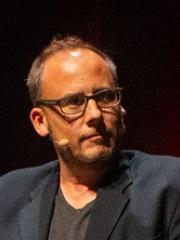
Jan von der Assen is a doctoral student at the Communication Systems Group (CSG) within the Department of Informatics at the University of Zurich . His research focuses on Holistic Cybersecurity , spanning Threat and Asset Management , Security Economics , and AI-powered Malware Mitigation . Education : MSc in Software Systems from University of Zurich (2021) Research Affiliations : Involved in 12+ national/EU projects (2021–2025) including CheeseChain , CONCORDIA , and DSI Cybersecurity . His work emphasizes Moving Target Defense (MTD) for IoT security, Decentralized Federated Learning with blockchain-based reputation systems, and Ransomware Detection using hypervisor-level system call monitoring. Recent publications include: GuardFS (JISA 2025) for Linux ransomware mitigation HyperDtct (IEEE CSR 2025) on hypervisor-based detection ThreatFinderAI (CNSM 2024) for LLM threat modeling
Daniel Duque Campayo is a Professor in the Department of Physics Applied to Aeronautical and Naval Engineering at Universidad Politécnica de Madrid (UPM), affiliated with the School of Naval Engineering. He has held this position since 2012 and was appointed Deputy Director of the department in 2023. His research spans Applied Mathematics, Fluid Mechanics, and Computational Fluid Dynamics (CFD), with a focus on numerical simulations and interdisciplinary applications. Education: Implied PhD in Physics or Engineering, though exact details not explicitly provided. His recent publications include topics like blackbody radiation, Voronoi diagrams, and numerical methods in fluid dynamics. While specific awards are not listed, his curriculum highlights contributions to research financing, technological development, and training of young researchers. He actively collaborates with industry and public institutions, particularly in hydrodynamic testing through the CEHINAV group. He utilizes open-source tools like FreeCAD, OpenFOAM, and reveal.js for technical workflows and presentations, emphasizing software freedom. His blog archives from 2016–2025 reflect expertise in von Neumann stability, Coriolis force modeling, and Maxwell constructions for energy modeling.
Dr. Anthony Serapiglia serves as Associate Professor and Department Chair in the Department of Computing & Information Systems at Saint Vincent College's Herbert W. Boyer School of Natural Sciences, Mathematics and Computing. Joining the faculty in 2011 after completing his Doctor of Science at Robert Morris University, he integrates 15+ years of industry experience in web development, systems architecture, and project management across healthcare, legal, and manufacturing sectors. His educational credentials include: PhD in Computing & Information Science from Robert Morris University MS from Robert Morris University BS in Computer Science from Allegheny College with Education minor Dr. Serapiglia's research centers on innovative Information Systems pedagogy, with publications spanning cybersecurity education, database design, and cryptocurrency applications. His work consistently bridges theoretical concepts with hands-on implementation through Raspberry Pi projects, Formula One data modeling, and competitive security teams. He emphasizes real-world problem-solving through current events and industry-relevant technologies. Analysis of his publication history reveals persistent focus on educational methodology evolution, particularly in adapting emerging technologies like blockchain and cloud infrastructure for classroom use. His scholarship demonstrates increasing specialization in vulnerability analysis within cryptocurrency ecosystems and SIEM complexity management, while maintaining foundational work in database normalization and networking education. As a liberal arts advocate, he hosts annual interdisciplinary symposiums exploring faith-reason integration and knowledge frameworks. His industry background informs practical course development in Advanced Networking, Computer Security, and Information Systems Management, where he implements lessons from sectors including oil drilling and payment processing.
Alexander Konstantinovich Petrenko is a Professor at the Faculty of Computer Science of the National Research University Higher School of Economics (HSE), where he has been working since 2009. He serves as the Academic Director of the educational program 'System Programming' and is affiliated with the Basic Department 'System Programming' of the Institute for System Programming named after V.P. Ivannikov of the Russian Academy of Sciences (ISP RAS). With 42 years of scientific and teaching experience, he holds a Doctor of Physical and Mathematical Sciences degree (2004) and was awarded the academic title of Professor in 2011. His research focuses on verification and validation technologies, formalization of interface standards, and free software/open standards. His work primarily centers on operating system security, formal methods in software engineering, and system programming. He has made significant contributions to runtime verification of operating systems, access control models, and security policy integration. Professor Petrenko's publication record demonstrates a consistent focus on formal methods for operating system verification, with recent work emphasizing security by design principles, dynamic verification techniques, and integration of multiple security models (RBAC, MIC, MLS). His research bridges theoretical computer science with practical applications in system security and reliability. Letter of thanks from the Vice-Rector of HSE (November 2021) Gratitude from the Faculty of Computer Science of HSE (August 2017) With extensive experience across multiple institutions including the Keldysh Institute of Applied Mathematics (1974-1994), the Institute of System Programming of the Russian Academy of Sciences (since 1994, as head of the Department of Programming Technologies since 2004), and Moscow State University (since 1999, as professor since 2004), Professor Petrenko has established himself as a leading expert in system programming and formal verification. He has contributed significantly to educational programs in software engineering that recently achieved professional accreditation. His work spans both theoretical foundations and practical applications in system security, with strong connections to industry needs through his involvement with the Institute for System Programming and collaborations on real-world security challenges.
Anton Semjonov is a Research Associate in the Distributed Operating Systems (DOS) group at the Department of Informatics, University of Hamburg, working under Prof. Dr. Janick Edinger. He also leads the interdisciplinary Creative Lab "base.camp" at the faculty level, fostering student innovation and real-world problem solving. His academic journey includes a Master’s in Informatics with a focus on Information Security from Universität Hamburg (2023) and a Bachelor’s in General Engineering Science with a focus on Computer Science from TU Hamburg (2020). Master of Science, Informatics (Information Security), Universität Hamburg, 2023 Bilingual Bachelor of Engineering, General Engineering Science (Computer Science), TU Hamburg, 2020 His research focuses on computation offloading and edge computing, particularly through browser-based middleware like Wasimoff, which leverages WebAssembly to enable zero-setup, volunteer-driven distributed computing. He also investigates coordination in distributed systems and information security, with publications at Middleware and IEEE PerCom. His work extends into computer science education, where he analyzes how creative labs bridge gaps in traditional curricula. The most recent articles highlight a strong trend in decentralized, secure, and scalable computing frameworks that utilize idle edge devices through web browsers. These works emphasize real-world deployment, performance evaluation, and the integration of privacy-preserving and context-aware mechanisms in heterogeneous environments. There is a clear interdisciplinary thread combining systems research with educational innovation. No scientific awards have been mentioned in the provided materials. Anton Semjonov is actively involved in research advising through his leadership in the DOS group and the base.camp lab. He contributes to research projects such as DDLitLab's LegalGPT initiative. While no formal grants are listed, his ongoing contract and project involvement suggest active funding support. He collaborates with Prof. Edinger and other researchers on distributed systems and AI applications. He is a key member of the Distributed Operating Systems research group and leads the Creative Lab "base.camp," which serves as an interdisciplinary platform for students to develop innovative solutions to real-world problems. These environments support open-ended, exploratory learning and promote collaboration across academic and societal domains.
Knut Omang serves as an Associate Professor in the Department of Informatics at the University of Oslo, Faculty of Mathematics and Natural Sciences. His academic position has been maintained since completing his Dr.Scient (Ph.D) from the same department in 1998, where he has held the position of 1.amanuensis-II continuously. His educational background includes a Doctor Scientiarum (Ph.D) from the University of Oslo's Department of Informatics (1998). Prior to his academic career, he gained extensive industry experience including positions at Oracle (2010-2020), Paradial (2006-2010), Fast Search and Transfer (2001-2006), and Scali (1998-2001). Professor Omang's research spans virtualization technologies, high-speed interconnects, distributed systems architecture, and Linux kernel development. His work bridges academic research and practical industry applications, with particular focus on solving real-world challenges in system performance, maintainability, and scalability. He has developed significant open-source contributions including the Kernel Test Framework (KTF) for Linux kernel testing and has been actively involved in QEMU development. His current research interests include challenges with Internet of Things networks, novel applications of commercial building sensor data, Rust programming language applications, and virtualization platform development. He actively supervises master's students on topics related to these research areas. Professor Omang currently serves as CTO for Properate, a startup developing cloud-based solutions for monitoring and managing energy usage in commercial buildings, where he addresses challenges ranging from sensor network management to cloud infrastructure using Kubernetes. Haakon Andersen: Thesis on challenges around operating multiple gateways to remote sensor networks Arild Lillegård: Thesis on Test Driven Development in the Linux Kernel using KTF Christian Resell: Thesis on Forward-Edge and Backward-Edge Control-Flow Integrity Performance in the Linux Kernel His teaching responsibilities include courses INF 3151/4151 and IN 5070, with a focus on supervising master's students in systems-level computing topics. His industry experience directly informs his academic work, creating a strong bridge between theoretical research and practical implementation.
Dr. Robert G. Brookshire is Professor Emeritus in the Department of Integrated Information Technology at the University of South Carolina's Molinaroli College of Engineering and Computing. He directs the Master of Health Information Technology program and conducts research at the intersection of information systems, statistical modeling, and health technology. Brookshire's research examines applications of neural networks, mobile security, and health informatics. His current work investigates trust frameworks for mobile payment systems and digital patient education tools. Earlier publications explored statistical computing methods and information systems pedagogy. His scholarship has received multiple recognitions including the David and Elaine Spitz Prize (2009) for Political Constitutionalism , Organizational Systems Research Association Best Paper (2006), and Southern Association of Information Systems Best Paper (2005). Brookshire serves as past president of the Organizational Systems Research Association and previously edited the Information Technology, Learning, and Performance Journal (2001-2011). Teaching responsibilities include courses on Database Systems, Mainframe Systems, and Linux Programming. His professional affiliations include the Association for Information Systems and Health Information Management Systems Society.
Associate Professor John Williams holds dual roles as Deputy Director of Cyber Security and faculty member at the School of Electrical Engineering and Computer Science, University of Queensland. His academic journey includes a PhD (2001) and undergraduate degrees (1995) in Electronic Engineering and Information Technology from Queensland University of Technology (QUT). Research Focus: Reconfigurable computing architectures Real-time embedded systems 3D computer vision and imaging Cyber security solutions Key Contributions: Edited the 2004 IEEE International Conference on Field Programmable Technology proceedings Developed the Egret platform for reconfigurable systems-on-chip Published 5 journal articles and over 20 conference papers Professional Affiliations: Member of IEEE for over 20 years, contributing to standards and interdisciplinary cyber security initiatives at UQ.
Riccardo Garofalo is a Research Fellow and PhD student in Aeronautical and Space Engineering at the Space Systems and Space Surveillance Laboratory (S5Lab) of Sapienza University of Rome. His research fellowship (June 2023–June 2024) focuses on "On-board electronic systems for two-phase flow experiments in microgravity," aligning with his doctoral work in advanced space technologies. Education: Master's Degree in Aeronautical Engineering, Roma Tre University (2022) Bachelor's Degree in Aerospace Engineering, Sapienza University of Rome (2019) Research Focus: His work spans thermal management in microgravity, CubeSat sensor networks, and innovative tracking systems for stratospheric balloons and space vehicles. Key areas include two-phase cooling systems (e.g., Baridi-Sana project), IoT applications for wildlife monitoring via CubeSats, and software-defined radio navigation (STRAINS/TARDIS experiments). Publications: Garofalo's 13 articles emphasize experimental aerospace engineering, with recurring themes in thermal regulation, satellite navigation, and educational CubeSat projects. Trends show strong interdisciplinary integration of thermodynamics, materials science, and AI-assisted systems for space missions. Technical Proficiencies: LabVIEW, MATLAB, Python, C/C++, GNURadio, and STK for aerospace simulations, alongside expertise in Linux/Windows environments. Affiliations: Active contributor to ESA educational programs and S5Lab's CubeSat initiatives (GreenCube, WildTrackCube-SIMBA).
Manuel Jesus Lopez Sanchez is a tenured professor at the University of Cádiz, Spain, affiliated with the College of Engineering and the Department of Automatic Engineering, Electronics, Computer Architecture, and Networks. His work focuses on Systems Engineering and Automation, with expertise in Nonlinear Dynamics, Cyber-Physical Systems, Robust Control , and Advanced Process Control . He has developed control methodologies for chaotic systems, marine applications, and real-time simulation environments. Education: PhD in Systems Engineering (1999) - University of Cádiz PhD in Systems Engineering (1995) - University of Sevilla His research spans multiple domains including chaos control , marine automation , and real-time systems . Key contributions include H∞ controller designs for aircraft , adaptive ship stabilization systems , and open-source hard real-time environments . Article trends show sustained focus on robust control algorithms (7/15 articles), chaotic system stabilization (5/15 articles), and maritime automation (6/15 articles) since the 1990s. He has collaborated on numerous projects, including the development of the ControlAvH software for controller design and the EPESC real-time simulation system. His work integrates nonlinear control theory with practical hardware implementations , often through experimental validation using physical systems like chaotic circuits and marine vessels.
Yuantao Fan is an Associate Senior Lecturer at Halmstad University's School of Information Technology, specializing in artificial intelligence and machine learning applications for industrial systems. His academic work bridges theoretical research with practical implementations in predictive maintenance and equipment monitoring. Dr. Fan's research focuses on Artificial Intelligence, Machine Learning, Anomaly Detection, and Data Mining , with particular emphasis on streaming data from real-world applications. His work spans equipment diagnosis and prognosis, predictive maintenance (PdM), and condition-based monitoring systems. His research integrates self-organizing models with expert knowledge to create robust diagnostic frameworks applicable to transportation systems and industrial equipment. Analysis of Dr. Fan's publication record from 2013-2025 reveals consistent specialization in predictive maintenance for transportation systems , particularly bus fleets and heavy vehicles. His work demonstrates progression from basic fault detection methods to sophisticated hybrid approaches combining physics-based models with deep learning. Recent publications increasingly address explainability in predictive maintenance systems and applications in healthcare analytics. Dr. Fan actively contributes to academic instruction as course responsible and examiner for Databases, Introduction to Linux and Python, and Linux administration system courses. He also teaches Artificial Intelligence, Data Mining, Perspectives on Computer Science and Engineering, Machine Learning for Predictive Maintenance, and AI Implementation courses. His technical expertise spans multiple domains including automotive systems diagnostics, battery health monitoring, acoustic signal processing, and healthcare prediction models. Dr. Fan's work demonstrates strong industry collaboration, particularly with Volvo and city bus fleet operators, translating academic research into practical industrial applications.
Andrii Shalaginov is a Professor in Cyber Security at Kristiania University of Applied Sciences, School of Economics, Innovation and Technology. He leads the Smart Security Lab with a research focus on applying artificial intelligence for cybersecurity, detection of computer viruses, network attacks and protection of Internet of Things devices. Dr. Shalaginov holds a PhD in Information Security from the Norwegian University of Science and Technology (NTNU), where he worked with digital forensics at the Center for Cyber and Information Security (CCIS). His research spans multiple critical areas of modern cybersecurity with a particular emphasis on Internet of Things security , machine learning applications for threat detection, and digital forensics . He has developed expertise in intelligent malware detection systems, network security for smart environments, and forensic analysis of IoT devices. His work bridges theoretical computer science with practical security implementations for real-world systems. Analysis of his recent publication trends (2022-2025) reveals a strong focus on AI-enabled security solutions for IoT ecosystems, vulnerability detection frameworks, and resource-efficient security mechanisms for constrained devices. His research increasingly addresses the intersection of machine learning and practical security implementations, with growing attention to energy efficiency in security protocols and international data space security frameworks. Dr. Shalaginov has received professional recognition through: Nomination as Norwegian representative in EU COST Action CA17124 "DigForAsp" Nomination as Norwegian representative in EU COST Action CA22104 "BEiNG-WISE" Membership in the "Impact of Technology" Expert Group at the European Union Intellectual Property Office Observatory As head of the Smart Security Lab, Dr. Shalaginov oversees research projects focused on developing practical security solutions for emerging technologies. His GitHub activity demonstrates active development of open-source tools for malware analysis across multiple platforms (Linux, Windows, IoT) and implementation of machine learning approaches for security applications. His research group appears to focus on bridging the gap between theoretical security models and practical implementations for real-world systems.
Enrica Valeria Zola is a Professor Agregat at the Polytechnic University of Catalonia (UPC), affiliated with the Department of Telecommunications Engineering within the School of Telecommunications and Aerospace Engineering of Castelldefels (EETAC). She is an active member of two research groups: GRXCA (Group for Research in Cellular and Ad-hoc Communication Networks) and ISG-MAK (Information Security Group - Mathematics Applied to Cryptography). Her research focuses on wireless networking technologies, with particular expertise in Wi-Fi positioning systems (especially IEEE 802.11mc/RTT), 5G, ad-hoc networks, and mobile networking. With over 100 publications spanning from 2001 to 2025, her work demonstrates consistent contributions to the field. Recent publications (2021-2025) show a strong focus on Wi-Fi positioning technologies, particularly addressing challenges in accuracy, scalability, security, and implementation of the IEEE 802.11mc standard and RTT (Round Trip Time) positioning. Analysis of her 15 most recent publications reveals a cohesive research trajectory centered on improving wireless positioning systems. Her work spans theoretical analysis, practical implementation, security considerations, and performance optimization of Wi-Fi-based positioning technologies. She frequently addresses real-world challenges including NLOS (Non-Line-of-Sight) environments, hardware limitations, scalability issues in dense networks, and the integration of multiple positioning techniques for improved accuracy. Best Short Paper Award - International ACM Conference on Modeling, Analysis and Simulation of Wireless and Mobile Systems 2023 Best paper award - ICNS 2012 Professor Zola has served on scientific committees for numerous international conferences including the International ACM Conference on Modeling, Analysis and Simulation of Wireless and Mobile Systems, IEEE PE-WASUN, and IEEE International Conference on Wireless and Mobile Computing. Her extensive collaboration network includes researchers such as Israel Martin-Escalona, Francisco Barcelo, and Andreas Kassler, reflecting her integration within the international wireless communications research community.
Pawel Hawrylak is a Full Professor and University Research Chair in Quantum Theory of Materials, Nanostructures and Devices at the University of Ottawa. He leads the Quantum Theory Group, focusing on computational design of materials at the nanoscale, including graphene, 2D crystals, topological insulators, and quantum devices. His work integrates quantum theory, nanoelectronics, spintronics, and photonics to advance quantum computing and nanotechnology. Education: Ph.D., Condensed Matter Theory, University of Kentucky (1984) M.Sc. (with Honours), Wroclaw University of Technology (1979) Research Interests: Theoretical condensed matter physics, quantum information, quantum dots, graphene, topological quantum matter, and nanoscale device design. His group develops tools like QNANO for atomistic simulations of nanostructures. Awards & Grants: Brockhouse Medal (2002), Humboldt Research Prize (2023, 1999) NSERC Strategic Grant (2018-2021), NRC IoT Challenge Program (2022-2025) Editorial roles at Physica Status Solidi , Solid State Communications Lab & Collaborations: The Quantum Theory Group operates a local Linux cluster (Zeus/Hercules) and collaborates with institutions globally. Key projects include quantum circuits in 2D materials, spin-based qubits, and quantum simulators.
Jocelyn Corey is a Lecturer in the Department of Computer Science at Swarthmore College, where she teaches laboratory sections for introductory computer science and systems courses. Her professional background includes roles in IT and software development at Vanguard, focusing on systems engineering and infrastructure operations. She holds a BS in Information Sciences & Technology from Penn State University, with a minor in Spanish. Corey currently teaches CS 21 (Intro to Computer Science) and CS 31 (Intro to Computer Systems) labs, managing multiple sections per week. Her expertise spans technical leadership in Linux environments and educational instruction, blending practical IT experience with academic teaching. Office hours are held across courses, emphasizing accessibility for students. No scientific awards or grants are explicitly mentioned in the provided text. Her advising and research activities remain unspecified, though her role as a lab instructor suggests a focus on pedagogical support and practical skill development in computer science education.