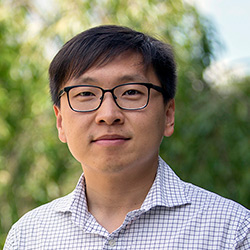
Ben Findlay serves as Senior Lecturer in Computer & Digital Forensics within the Department of Computing and Games at Teesside University, where he leads the BSc (Hons) Computer and Digital Forensics and MSc Digital Forensics and Cyber Investigation programmes. His prior career as a Digital Forensic Investigator with North Yorkshire Police involved high-profile cases including murder, child abuse, and cybercrime, providing real-world context to his academic work. He earned both his BSc (Hons) in Applied Science and Forensic Investigation and MSc in Digital Forensics from Teesside University. His research program focuses on forensic artefacts, mobile and cloud investigations, and child protection, with particular expertise in Linux systems, embedded devices, and digital policing methodologies. Analysis of his recent publications reveals a consistent trajectory toward solving practical forensic challenges in under-resourced environments, with significant contributions to Linux forensics (including thumbnail analysis and encryption access), embedded device acquisition, and standard operating procedures for law enforcement. His work bridges academic research and police practice through active consultancy and professional scheme assessments. Fellow of Higher Education Academy Member of Chartered Institute for IT (BCS) Member of Chartered Institute of Information Security (CIISec) Assessor for College of Policing's ICDIP scheme Member of Chartered Society of Forensic Sciences (CSFS) Ben supervises postgraduate research in digital forensics areas and organizes the student-led Teesside Digital Forensics Conference (TDFCon), demonstrating commitment to developing the next generation of forensic practitioners through hands-on learning experiences.
Rakesh Kumar is an Associate Professor in the Department of Computer Science (IDI) at the Norwegian University of Science and Technology (NTNU) , affiliated with the Computer Architecture Lab (CAL) within the Faculty of Information Technology and Electrical Engineering . Prior to joining NTNU, he held postdoctoral and research associate positions at Uppsala University and the University of Edinburgh, and interned at Intel Barcelona Research Center. Research Interests include improving large-scale datacenter efficiency through microarchitecture and memory system optimizations, hardware/software co-designed processors, dynamic code translation, vectorization, and serverless function execution. His work explores ready-aware instruction scheduling, branch prediction organization, and address translation mechanisms. Scientific Contributions span publications at top-tier conferences like MICRO (2024, 2023, 2018, 2016) HPCA (2020, 2019, 2023, 2022) ASPLOS (2018) DATE (2019, 2021) Journal articles appear in ACM Transactions on Computer Systems and IEEE Computer Architecture Letters . Awards include Intel Spontaneous Level II/Excellence Award (2014) Best Presentation Award at HiPC-SS08 (2008) Best Paper Award at National Conference on High Computing Technologies (2008) Distinguished Artifact Award at MICRO 2023 PhD Supervision involves advising students like Roman Kaspar Brunner, Elias Orrem, and Truls Asheim on topics spanning microarchitecture, vector units, and runahead execution policies.
James Davis is an Assistant Professor in the Elmore Family School of Electrical and Computer Engineering at Purdue University. His research focuses on engineering robust computing systems through socio-technical approaches, emphasizing software correctness, security, and usability. He applies empirical methodologies to evaluate the practical impact of technical solutions. Research interests include software supply chain security, deep learning reproducibility, regular expression optimization, IoT cybersecurity, and the socio-technical challenges in system design. His work bridges theoretical foundations with real-world applications, addressing issues like regex denial-of-service (ReDoS), model reuse in AI, and developer practices for safety-critical systems. Recent publications span topics such as actor reputation metrics in software supply chains, AI safety for downstream developers, and edge-computing optimizations for vision transformers. His interdisciplinary approach integrates empirical studies, formal verification, and human-centered design principles. No scientific awards are explicitly mentioned in the provided materials. His advising record is currently unspecified, though his research group likely engages in collaborative projects with industry and academia. He contributes to initiatives like the Sigstore ecosystem and open-source security tooling, reflecting his commitment to practical impact.
Dr. Sina Pournouri is a Lecturer in Cyber Security at Sheffield Hallam University, having joined in 2019. His research explores cybersecurity, information security management, and data mining. Recent publications focus on threat prediction during the COVID-19 pandemic, vulnerability assessments of drone systems, space governance frameworks, and automated penetration testing using AI. His scholarly work demonstrates consistent focus on cybersecurity analytics, with articles applying classification techniques for attacker profiling and malware prediction. Research spans both technical security mechanisms and policy implications, particularly in crisis contexts.
Prof. Dr. Andreas Herkersdorf is a Full Professor and Chair of Integrated Systems at the Technical University of Munich (TUM) School of Computation, Information and Technology. His research focuses on application-specific multicore processors (MPSoC), FPGA-based prototyping, fault-tolerant systems, and energy-efficient architectures, with applications in IP packet processing, automotive systems, and visual computing. He has received multiple IBM innovation awards and serves on editorial boards including the DFG Review Board for computer architecture. Education: Dipl.-Ing. Electrical Engineering (TUM, 1987), Dr. techn. Electrical Engineering (ETH Zurich, 1991) Research: MPSoC architectures, autonomic computing, NoC resilience, FPGA acceleration, and self-optimizing systems. Awards: IBM Master Inventor (1998), IBM Outstanding Technical Achievement Award (2001), multiple IBM Innovation Achievement Awards (1996-2003) His recent publications emphasize hardware/software co-design, machine learning integration for runtime optimization, and network-on-chip innovations. He collaborates on projects involving 6G systems, smartNICs, and automotive communication protocols.
Heyuan Shi is an Associate Professor at the School of Electronic Information, Central South University since 2023. He earned his B.S. (2015) and Ph.D. (2020) from Central South University and Tsinghua University respectively. His research focuses on software quality assurance with emphasis on kernel fuzz testing , open source software security , and AI application security . Presided over 10+ projects including NSFC General Program (No.62472448) and National Key R&D Sub-Project Published 30+ CCF-A/B papers across software security, machine learning, and quantum testing Supervised 15+ graduate students in software quality assurance areas His recent 2024-2025 publications demonstrate expertise in: LLM-enhanced patch classification Quantum neural network verification Hypergraph adversarial attacks RTOS fuzzing techniques Scientific recognition includes: 2024 Beijing Science & Technology Progress Award (First Prize) Hunan Province Xiaohe Sci-Tech Talent (2023) China Association for Science & Technology Young Talent (2025-2027) Active in academic service as PC member for FM2024 and reviewer for IEEE Transactions journals. Leads industry collaborations with Alibaba and Beijing Institute of Aerospace Metrology.
Changhee Jung is the Samuel D. Conte Associate Professor in the Department of Computer Science at Purdue University. His research focuses on compilers and computer architecture with an emphasis on performance, reliability, and security. His educational background includes a Ph.D. from Georgia Tech (2013) under the supervision of Prof. Santosh Pande. Professor Jung's research spans compilers and computer architecture with a focus on performance, reliability, and security. He has developed program analysis and microarchitecture optimization techniques for soft error resilience, concurrency bug detection, and system security such as memory safety and Linux kernel permission check. Currently, he is working on energy-efficient intermittent computation and nonvolatile memory crash consistency. He often leverages compiler-architecture codesign and repurposes existing hardware features to develop cost-effective solutions for complex computing challenges. His recent publications demonstrate a clear trajectory toward intermittent computing systems, nonvolatile memory architectures, and security mechanisms for energy-constrained environments. His work shows innovative approaches to power failure recovery, capacitor vulnerability exploitation, and EMI attack defense in intermittent systems, with significant contributions to whole-system persistence, cache design, and prefetching techniques for low-power computing. His notable scientific achievements include: NSF CAREER Award (2018) Inducted into MICRO Hall of Fame (2021) Best Paper Honorable Mention in ISCA 2025 Memorable Paper Award Finalist in NVMW 2024 Dissertation Advisor of 2023 ACM SIGBED Paul Caspi Memorial Dissertation Award winner Jongouk Choi 2017 AMD Faculty Research Award Professor Jung has successfully advised numerous graduate students, many of whom have secured prominent positions at leading technology companies including Google, Intel, and Samsung Electronics. His lab, the CompArch (Compiler and Architecture) research group, was formed in 2013 at Virginia Tech and continues at Purdue, focusing on compiler-architecture cooperation to address cross-cutting concerns involving performance, reliability, and security. The lab has received significant research funding, including an NSF CAREER Award in 2018 and an AMD Faculty Research Award in 2017.
Philipp Tuertscher serves as Full Professor of Collaborative Innovation at Vrije Universiteit Amsterdam's School of Business and Economics, where he leads research within the Knowledge, Information and Innovation department and the KIN Center for Digital Innovation since 2013. His work bridges organizational theory with digital innovation practices across scientific, corporate, and community settings. Education: PhD in Management, University of St. Gallen (awarded 2009; research period 2003-2007) Tuertscher's research investigates how collaborative innovation emerges through social practices and organizational mechanisms. His fingerprint reveals dominant expertise in Open Innovation (spanning Computer Science and Social Sciences), Innovation Processes, and Digital Product Platforms, with significant contributions to understanding knowledge integration in complex systems like CERN and community-driven innovation in Wikipedia/Linux ecosystems. Recent work increasingly addresses sustainability challenges through crowdsourcing and multi-stakeholder problem-solving. His publication trajectory demonstrates consistent focus on collaborative innovation architectures, showing evolution from foundational studies of scientific collaborations (2014) to contemporary examinations of digital platform ecosystems (2021) and sustainable impact scaling (2020-2023). The work integrates management theory with practical applications in technology-intensive environments. Scientific Awards: Distinguished Winner of the Award for Responsible Research in Management (2022) JMS Best Paper Award (2020) AOM Best Paper Award (2020) SBE Education Award (2021) Professor Tuertscher actively mentors doctoral researchers including Diriker and Porter, and leads major initiatives like The Impact Lab: SBE Future of Learning Challenge. His funded projects include the €750,000 NWO Open Competition OPEN-QUAL grant (2022) focused on innovation management. He maintains strong international collaborations evidenced by co-authored work with institutions like Pennsylvania State University. As a core member of the KIN Center for Digital Innovation, he contributes to interdisciplinary teams advancing digital transformation research, with recent activities targeting data commons for biodiversity and climate impact initiatives through relational infrastructures.
Gustavo Rodriguez-Rivera is an Associate Teaching Professor in the Department of Computer Science at Purdue University, part of the School of Science. He joined the department in 2000 and holds a Ph.D. in Computer Science from Purdue University (1998), an M.S. in Electrical Engineering from ITESM Campus Monterrey (1990), and a B.S. in Electrical Engineering from the same institution (1985). His research focuses on Operating Systems, Computer Networks, Memory Management, Embedded Systems, Real-Time Systems, and broader areas like Numerical Analysis and Artificial Intelligence. Dr. Rodriguez-Rivera has received multiple teaching awards, including the ACM Faculty Award in Computer Science (2020, 2023) and Best Teacher in the School of Science (2014, 2016). His work spans software engineering education, structural health monitoring for wind turbines, and memory management algorithms. Notable publications include studies on garbage collection techniques, real-time project tracking in programming courses, and vibro-acoustic modulation for turbine blade inspection. He has advised numerous projects and contributed to grants such as the NSF-funded work on wind turbine blade monitoring. His academic contributions also include developing secure programming course modules and tools for interactive debugging systems.
Benjamin Mako Hill is an Associate Professor in the Department of Communication at the University of Washington, with adjunct roles in Human-Centered Design & Engineering, Computer Science & Engineering, and the Information School. He is also a Faculty Associate at Harvard’s Berkman Klein Center and a Fellow at Princeton’s Center for Information Technology Policy (2023–2024). His research focuses on online communities, peer production (e.g., Wikipedia, Linux), and how technology design influences social outcomes. He holds a PhD from MIT in Management and Media Arts & Science. Education: PhD (2013) and MS (2007) from MIT, BA (2003) from Hampshire College. Awards include the Dordick Award for Best Dissertation (2013) and multiple best paper honors at CHI and CSCW conferences. Research interests span digital public goods, collaborative knowledge systems, and socio-technical dynamics. His work has been supported by grants from the National Science Foundation (e.g., $549,959 CAREER grant for digital knowledge commons research) and the Alfred P. Sloan Foundation. Publications span journals like Proceedings of the ACM on Human-Computer Interaction and Journal of Computer-Mediated Communication , with over 50 peer-reviewed articles. He co-founded the Community Data Science Collective and leads projects on open source sustainability, governance of digital communities, and computational social science.
Xing Xinyu is an Associate Professor of Computer Science at Northwestern University's McCormick School of Engineering. Their research focuses on kernel security, reverse engineering, and AI security, with a strong emphasis on fuzzing techniques, adversarial machine learning, and vulnerability discovery. They hold a PhD from Georgia Institute of Technology, an MS from the University of Colorado Boulder, and a BASc from Beihang University. Research interests include advanced cybersecurity methodologies such as heap memory protection, automated exploit generation, and defense mechanisms against adversarial attacks on large language models. Their work bridges theoretical computer science with practical applications in system security and AI ethics. Publications span topics like LLM jailbreak assessments, reinforcement learning optimization, and blockchain anomaly detection. Notable contributions include frameworks like BandFuzz for collaborative fuzzing and SeaK for secure kernel allocators.
Mark A. Stockman is an Associate Professor at the University of Cincinnati, specializing in cybersecurity, cloud computing, and system administration. He holds a BS in Industrial and Systems Engineering from Ohio University's Russ College of Engineering and Technology (1992) and an MBA in Management from Ohio University's College of Business (1994). His research focuses on integrating social science principles into cybersecurity education, developing cloud-based educational infrastructure, and analyzing cybercrime prevention strategies. Notable contributions include pioneering work on honeynet systems for hacker behavior analysis and organizational cybersecurity victimology frameworks. Stockman has published extensively on topics like insider threat mitigation, IT curriculum design, and virtualization technologies. His work bridges technical cybersecurity practices with organizational risk management, emphasizing interdisciplinary approaches to modern IT challenges. He has advised on multiple educational initiatives including cloud lab development and remote-access systems for computing disciplines. His publications reflect a commitment to advancing both technical and pedagogical innovations in information technology.
Maha Shaikh is an Associate Professor at the Department of Operations, Innovation and Data Sciences within Esade Business School , Ramon Llull University. She holds an ORCID identifier 0000-0001-5110-1619 and maintains an active research agenda across multiple domains of information systems and open technology.
Bruno Tucunduva Ruviaro is an Associate Professor in the Department of Music within the College of Arts and Sciences at Santa Clara University, where he has taught since Fall 2012. Originally from Brazil, Ruviaro is a composer and performer with a specialization in electronic music. Prior to joining Santa Clara, he studied and worked at the Center for Computer Research in Music and Acoustics (CCRMA) at Stanford University. Ruviaro's primary research focus is Music Composition with a strong emphasis on Electronic Music. His specific interests include electronic music composition, laptop orchestras, live-electronics, acousmatic music, and sampling & musical borrowing. He also explores secondary interests spanning theater, dance, linguistics, speech, radio art, Linux, intellectual (im)property issues, and the intersection of music & politics. His work demonstrates a consistent exploration of how technology transforms musical creation and performance. Ruviaro's scholarly output reveals a strong trajectory in electronic and computer music composition, with particular attention to laptop orchestras and musical borrowing practices. His recent works like Pós-Tudos and Mozart and the Elections demonstrate his continued innovation in contemporary composition, while publications such as From Schaeffer to* lorks and Intellectual Improperty reveal his theoretical engagement with the evolving nature of musical instruments and copyright in digital contexts. His compositions frequently incorporate technology in innovative performance setups, as seen in works utilizing smartphones and unconventional sound production methods. Ruviaro is the director of SCLOrk (Santa Clara Laptop Orchestra), continuing a tradition from his time at Stanford where he was part of SLOrk (Stanford Laptop Orchestra). He teaches courses including Intro to Electronic Music (MUSC 9), SCLOrk - Santa Clara Laptop Orchestra (MUSC 157), Music Theory III (MUSC 3), Experimental Sound Design (MUSC 115), Form and Analysis (MUSC 113), and Beginning Composition (MUSC 37), along with private composition lessons. His educational contributions include A Gentle Introduction to SuperCollider , making complex music programming more accessible to students.
Simone Ferlin is an Adjunct Senior Lecturer at Karlstad University working with 5G and Internet evolution. She completed her PhD in computer science in 2017 at the Simula Research Lab and Universitetet i Oslo under the supervision of Dr. Ozgu Alay and Prof. Michael Welzl. Her PhD dissertation focused on increasing robustness in multipath transport with MPTCP. Dr. Ferlin's educational background includes a PhD in Computer Science from the Simula Research Lab and Universitetet i Oslo (2017). Her doctoral research centered on enhancing robustness in multipath transport protocols, specifically focusing on MPTCP (Multipath TCP). She also completed undergraduate work that contributed to a book project with Prof. Friedrich Oehme on electronics and circuit technology. Dr. Ferlin's research spans multiple domains at the intersection of networking, systems, and performance engineering. Her primary interests include network and system measurements, performance analysis, security, and congestion control. She investigates how networks like the Internet evolve, examining technology development, adoption patterns, and their impacts on various entities. Additionally, she explores ways to harmonize security and privacy while making them more usable and assessable. Her work particularly focuses on transport layer and multipath transport protocols, examining their performance and security aspects. She also investigates application and transport layer performance, automation, and monitoring. Her research extends to network programming in both Linux kernel and user space, mobile broadband networks from 2G to 5G, and their intersection with the Internet. She is deeply engaged in observability, distributed and system performance monitoring, and automation. Analysis of Dr. Ferlin's recent publications reveals a strong focus on next-generation networking technologies. Her work spans multiple domains including 5G/6G networks, transport protocols (particularly QUIC and MPTCP), network virtualization, container orchestration, and the application of machine learning to networking problems. She has increasingly incorporated large language models into network configuration and automation research. Her publications demonstrate a consistent emphasis on performance measurement, optimization, and security across diverse networking environments from the edge to the cloud. Dr. Ferlin has received notable recognition for her research contributions: Best paper award at IEEE ICIN'21 for 'Learning-based Incast Performance Inference in Software-Defined Data Centers' Applied Networking Research Prize (ANRP)'25 winner for 'NetConfEval: Can LLMs Facilitate Network Configuration?' Dr. Ferlin is actively involved in mentoring the next generation of networking researchers. She has co-supervised numerous Master's and PhD students across multiple institutions including Karlstad University, KTH, TU Berlin, University of Oslo, and universities in Brazil. Her students have worked on diverse topics including NAT64 performance comparison, system tracing visualization, network observability, ML applications to multipath transport, FEC integration with QUIC, high-performance networking for 5G, congestion control, shared bottleneck detection, multipath IoT applications, and container runtime performance. She is also involved in several significant research projects including Vinnova's SEMLA (Securing Enterprises via Machine-Learning-based Automation), Horizon Europe's CODECO (Cognitive Decentralised Edge Cloud Orchestration), and the Knowledge Foundation of Sweden's DRIVE (Data-driven Latency-Sensitive Mobile Services for a Digitized Society). Dr. Ferlin serves as Workshop Chair for ACM SIGCOMM '25, is a member of the ACM/IRTF Applied Networking Research Workshop (ANRW) steering committee, and co-chairs the Internet Congestion Control Research Group (ICCRG) at the IRTF. She previously served as Associate Technical Editor for IEEE Communications Magazine and has been active on numerous program committees for major networking conferences including SIGCOMM, CoNEXT, IMC, and PAM.