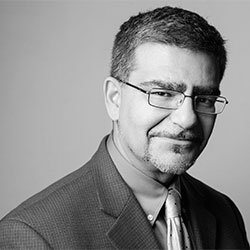
Babak D. Beheshti, Ph.D., is Professor and Dean of the College of Engineering and Computing Sciences at New York Institute of Technology, where he has served since 1986. His 35-year tenure includes roles as faculty member, Academic Senate President, Associate Dean, and Dean. Under his leadership, the college introduced its first PhD programs (Computer Science and Engineering), new bachelor's/master's degrees, and climbed to #49 in U.S. News undergraduate engineering rankings. He established industry partnerships with NASA, IBM, and cybersecurity firms, and launched a co-op program for computer science/IT students. His research focuses on: Wireless sensor networks and IoT security Cryptographic frameworks for resource-constrained devices Cybersecurity penetration testing methodologies Adaptive algorithms for anomaly detection Honors include: IEEE MGA Leadership Award (2014) IEEE Millennium Medal IEEE LI Educator Award (2013) IEEE Region 1 Technical Innovation Award (2008) Ellis College Teaching Excellence Award (2007) He drives experiential learning through industry co-ops and serves on boards for IEEE, LISTnet, and manufacturing/transportation consortia.
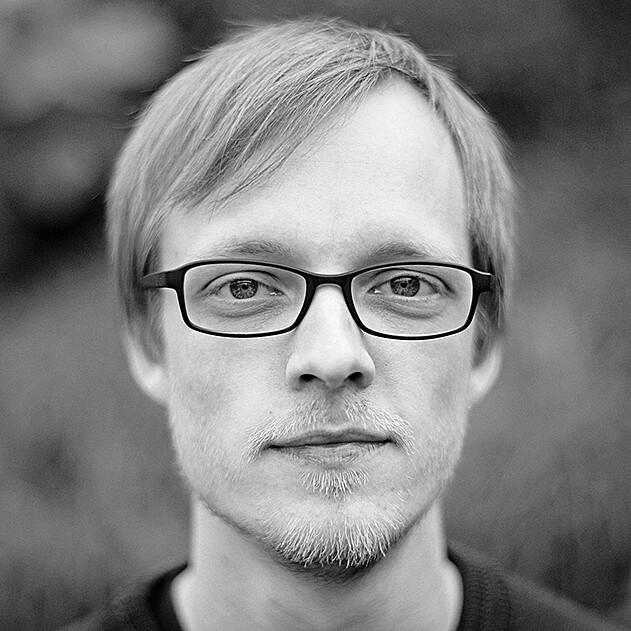
Dr. Christopher S. Thaxton is a Professor in the Department of Physics and Astronomy at Appalachian State University, where he has served since 2004, progressing from Assistant Professor to his current position. He holds multiple leadership roles including Director of the Atmospheric Science Minor Program (since 2018) and previously directed the Environmental Science Program (2012-2017) and Professional Science Master's Program (2007-2012). He also served as Interim Director of the Engineering Physics Graduate Program from 2022 to June 2023. Dr. Thaxton leads the Applied Fluids Laboratory (AppAFL), which investigates fluid mechanics of boundary layers and the coupling between fluids and terrestrial surfaces. The lab develops and applies instrumentation and analytical/numerical tools for research in sediment transport, seafloor dynamics, and atmospheric boundary layer processes. His research interests span multiple areas of fluid dynamics with particular focus on: Seafloor object burial dynamics and sediment transport Atmospheric boundary layer processes in complex terrain Urban stream hydrology and temperature dynamics Computational fluid dynamics and modeling Machine learning applications in fluid dynamics Dr. Thaxton's recent publications demonstrate strong activity in naval applications of fluid dynamics, atmospheric modeling using the Weather Research and Forecasting (WRF) model, and sediment transport mechanics. His work often involves interdisciplinary collaboration with environmental scientists, geographers, and engineers. Notable awards and funding include: $350,000 contract with the U.S. Naval Research Laboratory's Ocean Sciences Division Collaboration in an NSF MRI program award of $530,000 Multiple student NREIP (Naval Research Enterprise Internship Program) fellowships As an advisor, Dr. Thaxton mentors both graduate and undergraduate students, with recent advisees including Adian Keaveney, Nick Mencis, Joshua McNeill, and Tess Mickey. His lab provides students with substantial computational resources and opportunities for research travel and conference participation. The Applied Fluids Laboratory maintains strong connections with the Naval Research Laboratory and other research institutions, providing students with valuable networking and career opportunities. The lab maintains extensive computational resources including specialized workstations running Linux with software for computational fluid dynamics (OpenFOAM), atmospheric modeling (WRF), and machine learning applications. Dr. Thaxton also teaches courses related to his expertise including Atmospheric Physics and Fluid Mechanics.
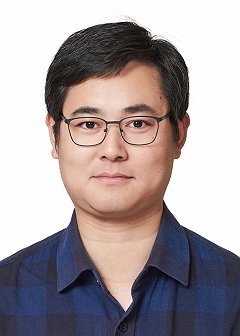
David Runge serves as a PartTime Lecturer at the Central Institute for Continuing Education and Transfer, Berlin University of the Arts (UdK Berlin), where he contributes to audio technology education and professional development programs. His academic foundation includes a degree in Audio Communication and Technology from Technische Universität Berlin, providing technical grounding for his specialized work. Runge's research critically examines spatial audio renderers with emphasis on usability engineering and professional audio implementation within Linux environments. His work bridges theoretical audio spatialization techniques with practical open-source software development, addressing accessibility challenges in immersive sound design and real-time audio processing systems. This positions him at the intersection of human-computer interaction and specialized operating system audio architectures. From 2015 to 2017, he actively mentored student projects at an Electronic Music Studio, guiding collaborative initiatives in electronic music production and technology integration. His advisory approach emphasizes hands-on technical implementation within creative contexts, fostering innovation in audio project development.
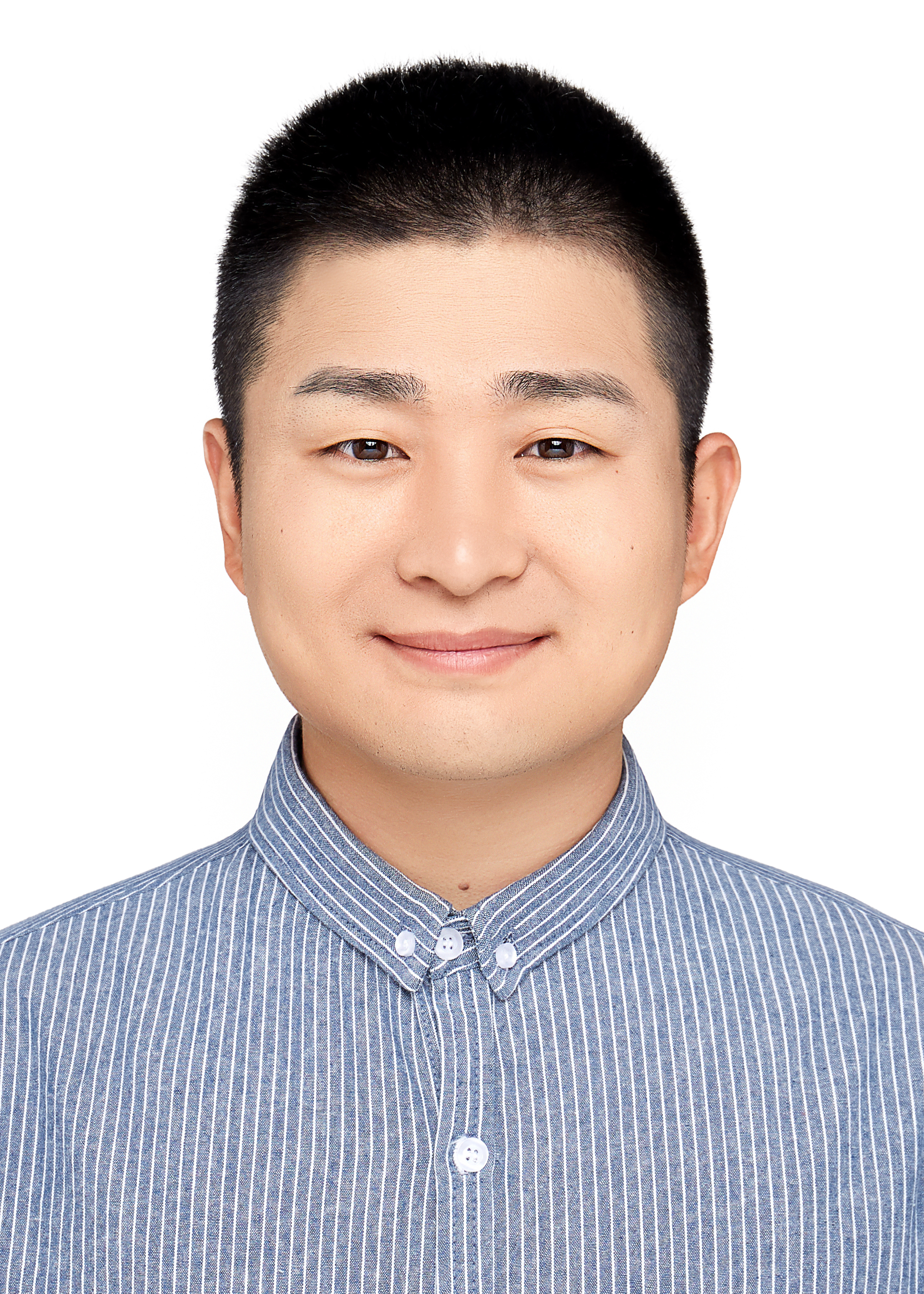
Jie Liu is a Researcher at the Institute of Software, Chinese Academy of Sciences and a Professor and Doctoral Supervisor at University of Chinese Academy of Sciences. He is also a Member of the Youth Innovation Promotion Association of the Chinese Academy of Sciences and an Executive Committee Member of the System Software Committee of the CCF Computer Society. His research is conducted within the Software Engineering Technology R&D Center. Dr. Liu received his Ph.D. from the University of Science and Technology of China in 2011 and his B.A. from the same institution in 2004. He has progressed through the ranks at the Institute of Software, CAS, starting as an Assistant Research Fellow (2011-2014), then Associate Research Fellow (2014-2024), and currently as a Researcher (since 2024). His research spans Big Data Intelligent Analysis Models and Systems at the intersection of AI, Software Engineering, and System Software. Specifically, his work covers three main areas: Big Data and Machine Learning Systems (statistics and AI algorithm model libraries, data quantitative analysis tools, LLM reasoning optimization, Earth Big Data); Intelligent Software Engineering (code model constraint decoding, data science agents, system log analysis agents); and Knowledge-Enhanced Intelligent Model Construction (knowledge extraction, knowledge graphs, domain AI model design). His research has resulted in innovative approaches to handling complex data analysis challenges across multiple domains. Dr. Liu's research has produced significant outcomes including EarthDataMiner, which supports SDG indicator calculations and won the 2024 Beijing Municipal Science and Technology Progress First Prize. His work on RISC-V software migration technology has been integrated into the Ruiqian tool (https://rvpt.top/), demonstrating practical applications of his research in emerging computing architectures. Beijing Science and Technology Progress Award, First Prize, 2024 2023 Surveying and Mapping Science and Technology Award, Special Prize, 2023 DASFAA Best Paper Runner-up, Second Prize, 2013 Dr. Liu has successfully guided numerous graduate students who have secured positions at major technology companies including Alibaba, ByteDance, Southern Power Grid, and Agricultural Bank of China. He has secured funding through multiple National Natural Science Foundation projects, National Key R&D Program projects, and over ten other research initiatives. His research collaborations span industry leaders like Huawei, JD.com, and TravelSky, as well as academic institutions within the Chinese Academy of Sciences. He teaches graduate courses such as 'Machine Learning Systems' and 'Cloud Computing and Big Data Technology' at University of Chinese Academy of Sciences, and has established a research group focused on developing innovative solutions at the intersection of AI and software engineering with real-world applications in earth sciences, healthcare, and intelligent systems.
Jie Lu is an Associate Professor at the Institute of Computing Technology of the Chinese Academy of Sciences (ICT, CAS), where he leads research in software security and program analysis. His work focuses on developing advanced program analysis techniques to improve software reliability and security, with applications in cloud systems, distributed environments, and modern web applications. Dr. Lu's research interests include: Software Security: Focusing on vulnerability detection and prevention in open-source software Program Analysis: Specializing in static/dynamic analysis techniques and context-sensitive pointer analysis Cloud Systems: Researching distributed system security, crash-recovery, and concurrency bug detection His recent publications demonstrate a strong focus on practical security solutions for real-world systems. The research spans Kubernetes ecosystems, PHP applications, Linux kernel security, Java web applications, and Windows IPC systems. A notable trend is the development of precise static analysis techniques that balance efficiency with accuracy, addressing the longstanding challenge in program analysis. His work often bridges theoretical advances with practical implementations that have been adopted by industry. Dr. Lu has received several prestigious awards: ACM SIGSOFT Distinguished Paper Award 2025 Best Paper Honorable Mention at CCS 2022 Chinese Academy of Sciences Outstanding Doctoral Dissertation 2021 Chinese Academy of Sciences President's Special Award 2020 ICT New Hundred Stars 2020 Dr. Lu actively mentors students and researchers, recruiting PhD candidates, Master students, and research interns interested in software security and program analysis. His research has been supported by the National Natural Science Foundation of China, CCF-Huawei Innovation Research Plan, and CCF-Ant Research Fund. The Program Analysis Group (ICT-PAG) at the National Key Laboratory of Processor has successfully identified numerous errors and vulnerabilities in popular open-source applications, with over 200 severe bugs confirmed by the open-source community and assigned more than 100 CVE numbers. His research group, the Program Analysis Group (ICT-PAG), is based in the National Key Laboratory of Processor at ICT, CAS. The group has achieved significant impact through both academic publications in top venues (SOSP, CCS, USENIX Security, NDSS, OOPSLA, ISSTA, FSE, ASE, TSE) and practical applications in leading IT companies and government organizations.
Wei Chen is a Research Fellow at the Institute of Software, Chinese Academy of Sciences, where he serves as a PhD and Master's supervisor. He leads the Software Engineering Technology R&D Center and maintains affiliations with the University of Chinese Academy of Sciences and its Nanjing College. Dr. Chen has established himself as a leading figure in intelligent software engineering research within China's academic community. His primary research focuses on four interconnected areas: intelligent code maintenance and quality assurance (particularly Python ecosystem compatibility based on domain knowledge), reliability assurance of complex IoT systems in human-machine-object convergence scenarios, cloud-native system development with emphasis on Function-as-a-Service optimization, and quality assurance of deep learning frameworks in resource-constrained environments. Dr. Chen's work consistently bridges theoretical advances with practical applications, maintaining strong industry collaborations with major Chinese technology companies. Analysis of Dr. Chen's recent publications reveals a strategic integration of AI techniques with traditional software engineering challenges. His research shows increasing emphasis on leveraging large language models for IoT component synthesis, sophisticated dependency management solutions for Python ecosystems, and innovative approaches to testing autonomous systems. The work demonstrates both theoretical depth and practical utility, with many publications leading to implemented tools and systems. Second Prize of Science and Technology Progress Award of China Institute of Electronics (2022) First Prize of Science and Technology Progress Award of China Institute of Electronics (2021) ACM SIGSOFT Distinguished Paper Award (2023) Special Prize of the 4th China Software Open Source Innovation Competition (2021) First Prize in the 4th China Software Open Source Innovation Competition (2021) OW2 Programming Contest First Prize (2016) Dr. Chen has mentored over ten graduate students who have achieved notable success in academic competitions and industry placements. His laboratory (TCSE, http://tcse.cn/) currently manages multiple significant research projects including 'Complex IoT System Reliability Assurance Key Technology Research' (2025-2028), 'Intelligent Development, Testing, and Maintenance of Cloud-native Software Ecosystems' (2024-2027), and 'Traffic Infrastructure Digital Industrial Software Architecture and Core Technology Standard System' (2021-2024). The lab maintains active collaborations with Huawei, Alibaba, Tencent, and other leading technology enterprises.
Blagoj Nenovski serves as Associate Professor at the Faculty of Law, Kichevo, within St. Kliment Ohridski University - Bitola. He teaches Informatics 1 and 2 for undergraduate studies and pioneered the ICT in Scientific Research course for doctoral programs. Elected to his current rank in 2020, he holds dual specializations in Informatics and ICT Application in Higher Education. His academic journey includes: Diploma in Engineering (2009) from Technical Faculty in Bitola (8.63 GPA) Master's in Informatics and Computer Engineering (2012) (10.00 GPA) PhD in Informatics and Computer Engineering (2020) (10.00 GPA) Nenovski's research spans Augmented Reality systems, digital banking transformation, and disinformation countermeasures. His AR work focuses on outdoor object recognition using NFT markers, while legal domain contributions include establishing an ICT Training Department for lawyers. Recent banking sector studies analyze digital services' competitive impact, and cross-national research examines problematic internet use patterns. Publication trends reveal increasing focus on disinformation threats (particularly deepfakes) and spatial exploration technologies since 2022, while maintaining strong output in banking digitization and educational informatics. His interdisciplinary approach consistently bridges technical ICT solutions with domain-specific applications. Though no formal awards are documented, Nenovski actively serves on thesis evaluation committees, curriculum development boards for Law and Technology programs, and multiple university governance committees including elections oversight and study guide creation. He has coordinated research projects and provided peer review services for academic publications. As coordinator of the Department for ICT Training of Lawyers since 2021, he leads initiatives at the ICT-law intersection, developing digital resources for legal professionals. His technical proficiency spans Windows/Linux systems, Spring Boot, React, JavaScript, and network security frameworks, supporting both academic innovation and administrative responsibilities including OJS system management for university journals.