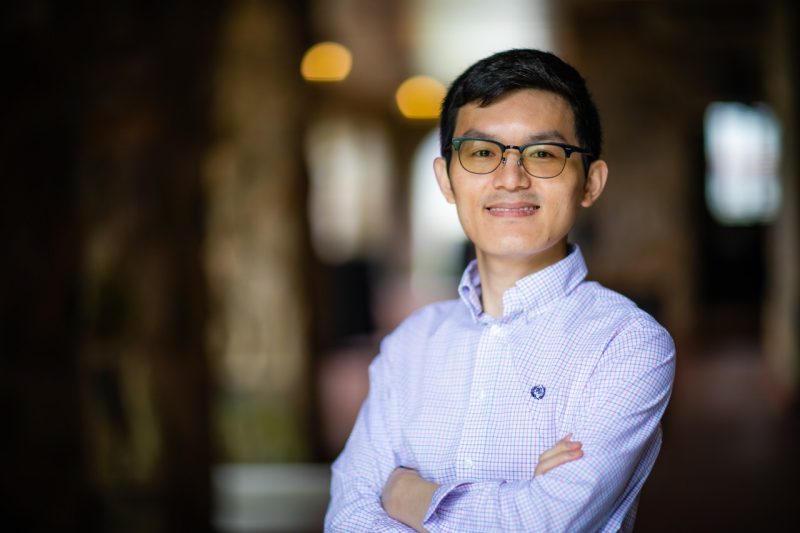
Manuel Sánchez Rubio is an Associate Professor at the Department of Computer Science, University of Alcalá (Spain). He holds a Ph.D. in Computer Science from the University of Alcalá (2013), focusing on data post-processing methodologies for unmanned aerial vehicles (UAVs) under critical conditions. His research interests span cybersecurity, malware analysis, UAV data processing, and educational technology. He is affiliated with the LITE (Laboratory of Information Technologies in Education) and has contributed to security training platforms and critical infrastructure protection projects. Ph.D. Thesis: "Aportaciones para el postproceso de datos en vehículos aéreos no tripulados" (2013) His work emphasizes practical applications in security, including hybrid assessment methodologies for web applications, malware evasion techniques, and unsupervised learning for network analysis (e.g., TOR clustering). He has developed automated virtual machine tools for security training and explored hyperspectral sensor integration in UAVs for environmental monitoring. Key contributions include datasets for attack pattern modeling, spam honeypot systems in cloud environments, and SCADA security studies. His research bridges theoretical computer science with real-world challenges in aerospace, education, and critical infrastructure.
Hong Jin Kang is a Lecturer in the School of Computer Science at The University of Sydney. His research focuses on improving developer productivity through human-centric AI tools, particularly in Active Learning and AI-driven Software Engineering. Prior roles include postdoctoral fellowships at UCLA and a PhD at Singapore Management University (SMU), advised by Prof. David Lo. His work spans vulnerability detection, program transformation, and software supply chain security, with practical industry impact through CVE discoveries and deployed techniques. Education : PhD in Computer Science, Singapore Management University (2023) Postdoctoral Research, University of California, Los Angeles (UCLA) Research Interests : Active Learning for code analysis and vulnerability management AI and ML integration into software development tools Cybersecurity in software supply chains Program transformation and legacy code modernization His publications address challenges in automated tool development, including vulnerability identification (e.g., CHRONOS), code model compression, and adversarial specification mining. Recent work emphasizes sustainability in AI and human-in-the-loop systems. Awards : Distinguished Reviewer Award for ICSE 2025 Advising & Grants : Actively mentoring PhD students in software engineering and AI, with a focus on curiosity-driven candidates. His research is supported by collaborations with industry and academic institutions. Labs/Teams : Pioneers tools like Coccinelle4J for Java program transformation and collaborates on projects such as VulCurator and HERMES for vulnerability analysis.
David Vincze is a researcher at the Department of Precision Mechanics, Chuo University, Japan. Previously affiliated with the University of Miskolc, Hungary, he has taught courses in Operating Systems, UNIX System Administration, and Modern Information Technologies. His research spans computational intelligence, fuzzy systems, reinforcement learning, and human-robot interaction. PhD in Computer Science Current Position: Researcher, Chuo University Previous Affiliation: University of Miskolc David Vincze's research focuses on Fuzzy Systems , particularly Fuzzy Rule Interpolation (FRI) , and its integration with Reinforcement Learning (e.g., FRIQ-learning). He applies these methods to Human-Robot Interaction (HRI) , drawing inspiration from ethology and animal behavior. His recent work explores applications in Parent-Child Interaction Therapy (PCIT) , using social robots to support child development and family communication. He also investigates Operating Systems Security , especially Linux kernel mechanisms. His publications show a consistent trend in developing and optimizing FRI-based learning methods for real-time, embedded, and robotic applications. He has worked on performance optimization, parallelization, and knowledge injection in FRIQ-learning, aiming to make fuzzy reinforcement learning more efficient and applicable in dynamic environments. Scientific Contributions: Developed FRIQ-learning: Fuzzy Rule Interpolation-based Q-learning Applied ethological models to robot behavior Designed fuzzy automata for HRI Optimized fuzzy inference for real-time systems Explored indoor localization for HRI experiments Vincze has advised students such as Alex Tóth and has been involved in student supercomputing teams (ASC 2014–2017). He has developed various Linux tools, including security extensions for Apache, video filters for MPlayer, and drivers for TV tuner cards. He maintains active research profiles on ResearchGate, Google Scholar, and Scopus. He leads projects in Mihoko Niitsuma's Lab at Chuo University, focusing on social robotics, behavior modeling, and real-time interaction systems.
Yuvraj Patel is a Lecturer (Assistant Professor) in Computer Science at the School of Informatics, University of Edinburgh, and a member of the Institute for Computing Systems Architecture (ICSA). He previously served as a postdoctoral researcher and Associate Lecturer at the University of Wisconsin–Madison, where he also earned his Ph.D. under Professors Andrea and Remzi Arpaci-Dusseau. His research spans operating systems, concurrency, security, storage systems, and distributed systems. His research focuses on performance and security challenges in concurrent systems, particularly where synchronization primitives are shared among untrusted tenants. He introduced the concepts of scheduler subversion and adversarial synchronization , showing that synchronization must be treated competitively rather than cooperatively. His key contributions include Scheduler-Cooperative Locks (SCLs) for fair lock usage and Trātṛ , a kernel extension that detects and mitigates synchronization attacks. He has extensive industry experience from nearly eight years at NetApp working on the WAFL filesystem and a stint at SanDisk on FTL design. His recent publications, appearing in venues like USENIX Security, EuroSys, FAST, and OSDI, demonstrate a consistent focus on real-world systems problems involving isolation, fairness, and security in shared environments. His work combines deep systems insight with practical implementation and evaluation. US Patent 10,705,951 – Shared Fabric Attached Memory Allocator US Patent 10,621,162 – Storage Tier Verification Checks US Patent 8,078,653 – Process for Fast File System crawling Yuvraj Patel actively mentors students and is currently recruiting Ph.D. candidates at the University of Edinburgh. He has advised multiple undergraduate and graduate students on topics including fairness in locking, adversarial synchronization, and kernel critical section analysis. His teaching includes Security Engineering at Edinburgh and Introduction to Operating Systems at Wisconsin. He leads a research group focused on building abstractions for near-ideal isolation in shared environments, with ongoing work in synchronization, storage systems, and kernel security. His team develops open-source software such as Trātṛ, CuttleFS, and SCL implementations.
Rishabh Iyer is an Assistant Professor in the Electrical Engineering and Computer Sciences department at the University of California, Berkeley. His research bridges computer systems, networking, and formal methods with a focus on performance predictability and reliability. Prior to Berkeley, he completed his PhD at EPFL and undergraduate studies at IIT Bombay. His educational background includes: PhD in Computer Science from École Polytechnique Fédérale de Lausanne (EPFL) Bachelor's degree from Indian Institute of Technology Bombay (IIT Bombay) Iyer's research centers on performance interfaces for computer systems – creating succinct abstractions that allow engineers to reason about system performance without understanding implementation details. His work spans three major directions: (1) Extracting performance interfaces from implementations, (2) Designing systems with predictable performance, and (3) Formally verifying performance claims. This research combines operating systems, networking, computer architecture, and formal verification techniques to address performance unpredictability in modern systems. His group develops tools like PIX for network functions, KFlex for kernel extensions, and Software LPN for hardware accelerators. His publications reveal strong focus on performance modeling for network functions, kernel extensions, and hardware accelerators, with recent work expanding into real-time systems and SD-WAN validation. The research consistently targets practical impact, with deployments at companies like Meta and Alibaba. Scientific recognition includes: ACM SIGOPS Dennis M. Ritchie Award Eurosys Roger Needham PhD Award Dimitris N. Chorafas Award Best Paper at VDAT 2019 Iyer actively advises students at UC Berkeley and teaches courses including CS 294-262 (Performance Analysis) and CS 168 (Internet Architecture). Previously at EPFL, he taught Principles of Computer Systems, Software Engineering, and Vector Calculus. His group seeks talented students interested in building reliable, high-performance systems. Current research directions include performance interfaces for distributed applications, next-generation kernel extensions, and formally verified network systems. He leads research within UC Berkeley's systems community and maintains strong connections with EPFL's Dependable Systems Lab where he completed his PhD.
Manu Sridharan is a Professor of Computer Science and Engineering at the University of California, Riverside, where he leads research in programming languages and software engineering. He is a member of the RIPLE research group and actively recruits PhD students for cutting-edge research in software reliability, security, and performance. Prior to his academic career, Sridharan worked at prominent industry research labs including IBM Research, Samsung Research America, and Uber, where he developed practical tools like NullAway to eliminate Java null pointer errors. His research focuses on developing tools and techniques to make large-scale software more reliable, performant, secure, and maintainable. Sridharan's work spans static analysis, program verification, type systems, memory safety, and resource management. He has made significant contributions to JavaScript analysis, call graph construction, nullability checking, and resource leak detection. His research bridges theoretical foundations with practical applications, resulting in tools that have been deployed in industry settings. Sridharan's publication record shows a consistent trajectory of high-impact research in top venues like PLDI, OOPSLA, ECOOP, and FSE. His recent work (2021-2025) demonstrates continued innovation in static analysis techniques, particularly in nullability inference, taint analysis, resource management, and call graph construction. His research shows a clear progression from foundational program analysis techniques to increasingly practical and deployable tools that address real-world software engineering challenges. Outstanding Artifact Award for Effective Race Detection for Event-Driven Programs (OOPSLA 2013) Best Paper Award for Predicting your own effort (AAMAS 2012) Best Paper Award for Debugging overconstrained declarative models using unsatisfiable cores (ASE 2003) Sridharan has mentored numerous students through their academic journeys, including current PhD candidates and Master's students working on cutting-edge research problems. His former PhD student Narges Shadab graduated in 2023. He has served in leadership roles for major conferences, including as Program Committee Chair for ECOOP 2021 and Area Chair for ECOOP 2022. His research has been supported by various grants that enable his team to pursue ambitious projects in program analysis and software engineering. As a member of the RIPLE research group at UC Riverside, Sridharan collaborates with other faculty and students on interdisciplinary projects that span programming languages, systems, and security. His team's work often involves building practical tools that can be deployed in real-world settings, as evidenced by his industry experience and tools like NullAway that were developed during his time at Uber.
Mohsen Lesani is an Associate Professor at the Computer Science and Engineering Department of University of California, Santa Cruz . He obtained his PhD from UCLA , MS in Artificial Intelligence from Sharif University of Technology , and BS in Software Engineering from University of Tehran . His research focuses on reliability and security of software systems , particularly concurrent and distributed systems , with recent work on secure replicated systems and distributed machine learning . NSF CAREER Award (2020) DARPA Young Faculty Award (2022) SIGPLAN Research Highlight (2019) Distinguished Paper Award at OOPSLA 2018 Best Paper Award at ISSRE 2015 His recent publications tackle challenges in automated synthesis of distributed protocols , heterogeneous replication , secure blockchain transactions , and verified RDMA-based data types . He advises PhD students Xiao Li , Eric Chan , Javad Saber-Latibari , and Tejas Mane in the Safe and Secure Software (S3) lab . He has taught courses on Distributed Systems , Parallel Programming , and Compiler Design .
Frank Mueller is a Professor in the Department of Computer Science at North Carolina State University, actively contributing to high-performance computing, embedded systems, and quantum computing research. His technical focus spans operating systems, parallel and distributed systems, and software engineering. Current affiliations: NSF Quantum Leap Challenge Institute , International Workshop on Integrating High-Performance and Quantum Computing , and ACM SIGPLAN Symposium on Principles and Practice of Parallel Programming program committee. Recent research explores real-time scheduling ( WHPQC ), quantum error correction ( QCE 2024 ), and OpenMP extensions for real-time systems. His publications emphasize cross-layer optimization in heterogeneous systems, with notable work on GPUDirect performance analysis and quantum co-design. Awards include ACM Fellow , IEEE Fellow , and multiple NSF Career Grants . Teaching: Parallel Systems , Real-Time Systems , and Quantum Computing Tutorials . Professional service: Participating in IEEE HPCA and EMSOFT program committees.
Konstantinos Sagonas is a Senior Lecturer/Associate Professor at Uppsala University's Department of Information Technology. His work bridges theoretical and practical aspects of computer science, focusing on concurrency, formal verification, and functional programming in Erlang. Despite his self-identification as a "terrible e-mail responder," he encourages phone contact for direct communication. University: Uppsala University Department: Department of Information Technology Academic Rank: Senior Lecturer/Associate Professor His research spans from stateless model checking and dynamic partial order reduction for concurrent systems to static analysis and type systems in functional programming. Recent work explores IoT protocol testing via fuzzing and symbolic execution, fine-grain memory coherence for security, and automated detection of state machine bugs in network protocols. Key publication trends include formal methods (2024: "Testing IoT Protocol Requirements"; 2023: "Tailoring Stateless Model Checking for Event-Driven Programs") and concurrent data structures (2021: "Lock-free Contention Adapting Search Trees"). Earlier contributions focus on Erlang optimization (2002-2018) and logic programming tabling (1999-2006).
Binoy Ravindran is a Professor and Bradley Senior Faculty Fellow in the Department of Electrical and Computer Engineering at Virginia Tech, where he leads the Systems Software Research Group. He holds a Ph.D. from The University of Texas at Arlington (1998). His research focuses on computer systems, emphasizing security, performance, energy efficiency, and timeliness in areas like concurrent, heterogeneous, distributed, and real-time computing. Recent projects include the Low-level Reasoning Machine (LLRM), Popcorn Linux, and LibrettOS. He teaches courses such as ECE/CS 5510 (Multiprocessor Programming), ECE/CS 5544 (Compiler Optimizations), and ECE 5984/SS (Modern Binary Exploitation). His service roles include editorial board positions at IEEE Transactions on Cloud Computing and ACM Transactions on Embedded Computing Systems, and he co-chaired ACM Systor 2025. Ravindran has published over 330 papers, earning nine best paper awards, and has mentored 26 PhD students, 23 postdocs, and 11 research faculty. Notable honors include ACM Distinguished Scientist and an Office of Naval Research Faculty Fellowship. His research group explores projects like LLRM (binary security verification), Popcorn Linux (heterogeneous ISA systems), and KairosVM (real-time hypervisor). Recent advancements include Stramash OS (ASPLOS'25) and Hexo (DOD infrastructure offloading).
Huaicheng Li is an Assistant Professor in the Department of Computer Science at Virginia Tech, affiliated with the College of Engineering. He leads the MoatLab research group, focusing on operating systems, storage systems, memory systems, and systems architecture. His work emphasizes performance optimization, resource efficiency, and programmability for modern hardware. Education: Ph.D. in Computer Science (University of Chicago, 2020), M.S. (University of Chicago, 2018), and B.S. in Computer Science and Technology (Wuhan University, China, 2013). Research interests include: Co-designing software/hardware stacks for low latency and high throughput Offloaded/disaggregated systems for resource efficiency Systems support for emerging hardware like CXL Key awards include the NSF CAREER Award (2024) and Google Research Scholar Award (2025), with publications in top conferences like ASPLOS, SOSP, and FAST. Recent work explores CXL memory pooling (Pond), tiered memory management, and SSD optimization. Advising includes 10+ PhD/Master’s students. Teaching roles include courses like Advanced Linux Kernel Programming and Operating Systems. Research is supported by NSF, Samsung, and Google grants. MoatLab develops open-source tools such as Pond, IODA, and LeapIO, emphasizing practical system implementation and benchmarking.
Michael Specter is an Assistant Professor at Georgia Institute of Technology, holding dual appointments in the School of Computer Science and the School of Cybersecurity and Privacy. He previously served as a Senior Research Scientist at Google, focusing on Android security and privacy. Specter earned a PhD in Electrical Engineering and Computer Science from MIT, advised by Gerald Sussman and Danny Weitzner, with a thesis committee including Matthew D. Green, Joan Feigenbaum, and Ron Rivest. His research bridges systems security, applied cryptography, and public policy, addressing topics like election security, surveillance, and cryptographic accountability. Education: PhD in EECS, MIT (2021) Research Staff, MIT Lincoln Laboratory Research Focus: His work emphasizes practical security solutions for real-world systems, particularly those with societal impact. Key areas include vulnerabilities in voting systems (e.g., Voatz, Democracy Live), cryptographic protocols for email privacy (KeyForge), and policy implications of emerging technologies like blockchain voting. He advocates for transparent, auditable systems with a focus on public interest. Publications & Impact: Recent work includes groundbreaking analyses of online voting platforms, cryptographic accountability mechanisms, and privacy-preserving contact tracing protocols (PACT). His research has influenced policy debates, with findings featured in major media outlets like the New York Times and The Economist. Awards & Recognition: 2023 EVN Research Award (for election security work) EFF Pioneer Award (2015 paper on encryption policy) Commendation from Senator Ron Wyden at DEFCON (2020) Teaching & Mentorship: Teaches courses on information security and the intersection of security/privacy with democracy. Actively recruiting PhD students in systems security and applied cryptography with policy interests. Provides mentorship through Georgia Tech’s Computer Science PhD program and postdoc opportunities via a dedicated application form. Professional Contributions: Serves on program committees for top venues like Usenix Security, IEEE S&P, and NDSS. Co-authored amicus briefs to reform the Computer Fraud and Abuse Act (CFAA) and contributed to Google’s Syzkaller Linux kernel fuzzer.
C Giuffrida is an Associate Professor at the Faculty of Science, Vrije Universiteit Amsterdam, with affiliations to the Network Institute and the Systems and Network Security group. His research focuses on computer systems security, hardware vulnerabilities, and software reliability. Giuffrida holds a PhD in Computer Systems from Vrije Universiteit Amsterdam (2014). His academic contributions span multiple areas including transient execution attacks, fuzzing techniques, and hardware-software co-design for security. Research Interests: Hardware Security: Investigating vulnerabilities like Spectre, Rowhammer, and speculative execution risks. Software Security: Focusing on memory safety, compiler optimizations, and exploit mitigation strategies. Systems Research: Developing tools like BinRec for binary analysis and VPS for C++ vulnerability protection. His work has been recognized with awards such as the Distinguished Paper Award in 2021. Giuffrida supervises advanced courses in operating systems and hardware security, and has guided 16 PhD theses to completion.
Dr. Pablo Salva-Garcia is a Lecturer and Programme Leader of the BSc in Web and Mobile Development at the University of the West of Scotland (UWS). He earned his PhD at UWS and has contributed to EU Horizon projects such as SelfNet, SliceNet, and 6GBrains. His research focuses on 5G/6G networks, network slicing, edge computing, and cognitive control planes. He actively participates in the Beyond5GHub, emphasizing practical applications in industrial and aerospace sectors. Salva-Garcia's education includes a PhD from UWS, reflecting his deep institutional involvement. His research interests span Network Management, Software-Defined Networks (SDN), and Cloud Computing. Recent work emphasizes 6G architecture innovations, hardware acceleration (e.g., eBPF-XDP), and topology-aware slice management. His articles highlight trends in 5G/6G deployment challenges, economic feasibility of aerospace 5G, and hardware-based network slicing. He collaborates internationally, addressing multi-tenant network security and real-time video optimization in virtualized environments. Grants/Projects: EU Horizon projects (SelfNet, SliceNet, 6GBrains), Beyond5GHub collaboration. Advising: Accepting PhD students in mission-critical communications and next-gen networks. Salva-Garcia leads the BSc in Web and Mobile Development, integrating academic rigor with industry-relevant skills. He also contributes to the design of immersive network management interfaces and scalable video optimization frameworks.
Eric Keller is an Associate Professor in the Department of Electrical, Computer & Energy Engineering at the University of Colorado's College of Engineering. His research focuses on computer networks, network security, and cloud/edge computing, with particular emphasis on software-defined networking and efficient resource allocation in distributed systems. Keller's research spans several interconnected domains including network virtualization, hardware acceleration, container-based computing, and security protocols. His work often bridges the gap between theoretical networking concepts and practical system implementations. Through his publications, Keller demonstrates consistent focus on optimizing network performance and security, particularly in cloud and edge computing environments. His recent work shows growing interest in hardware-level acceleration and AI-enhanced networking solutions.