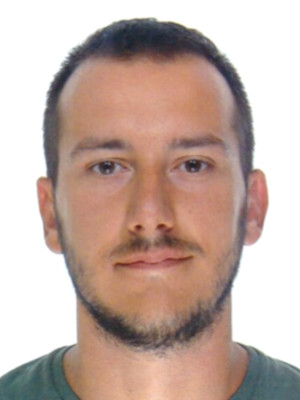
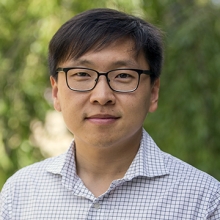
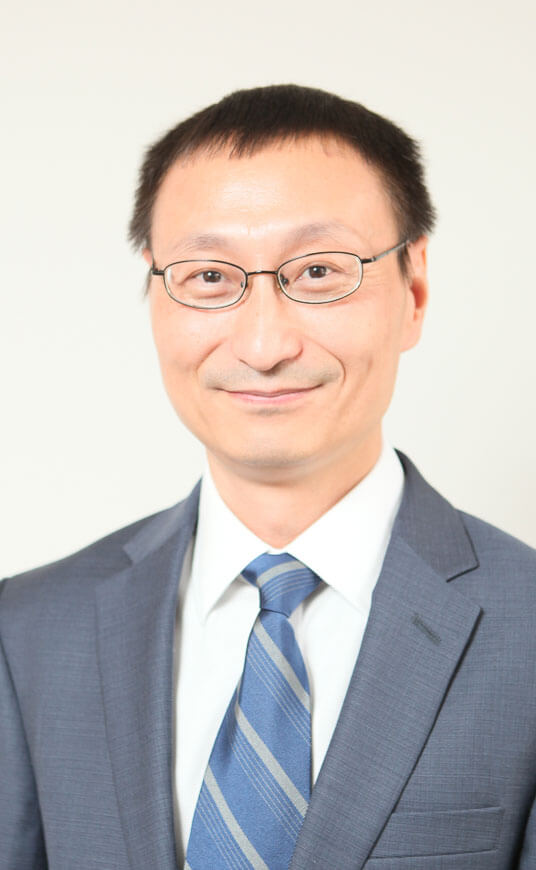
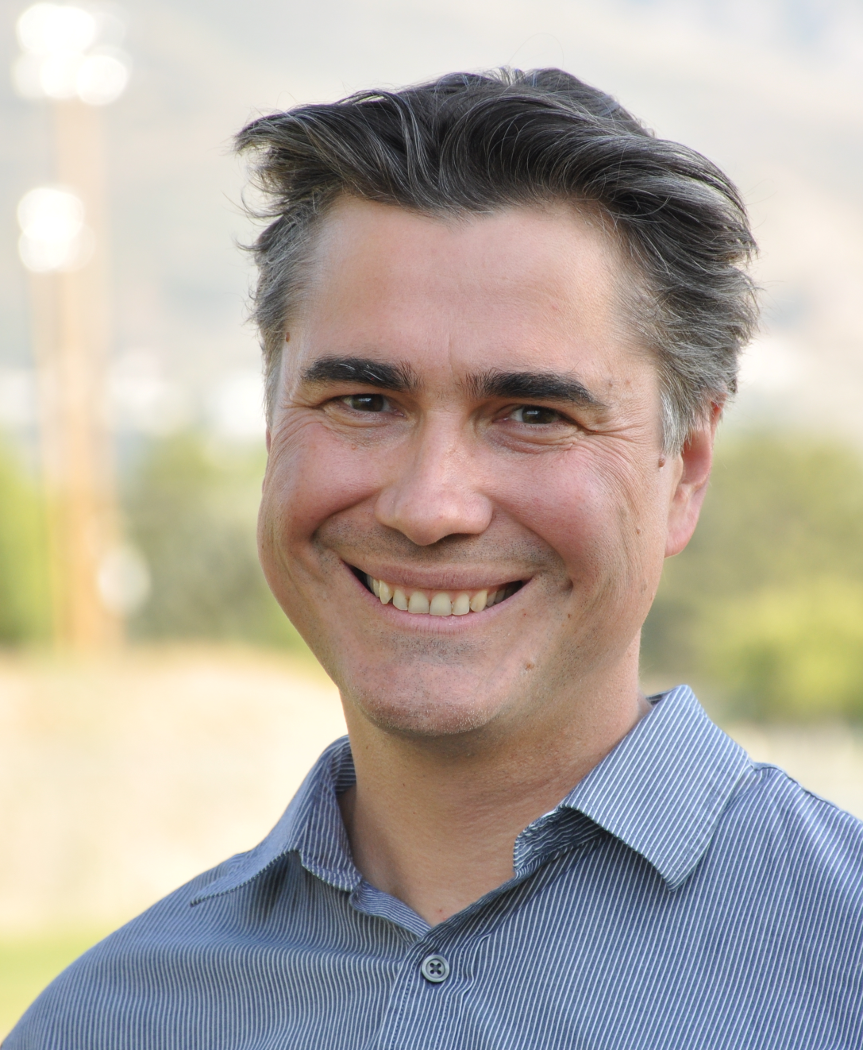
Dr. Daniel Casini is an Assistant Professor at the Department of Information Engineering and Computer Science, Sant'Anna School of Advanced Studies. His academic journey includes a PhD (2016–2019) and postdoctoral research (2019–2021) in Real-Time Systems. He specializes in real-time scheduling algorithms, edge computing, and embedded system predictability. His work focuses on optimizing latency, resource allocation, and security in cyber-physical systems. Education: PhD in Computer Science, Sant'Anna School of Advanced Studies (2016–2019) Postdoctoral Researcher in Real-Time Systems (2019–2021) Research Interests: Real-Time Scheduling (Partitioned/EDF/Gang Scheduling) Edge Computing and Predictable Virtualization Middleware Optimization (DDS/ROS 2) Hardware-Software Co-Design for Cyber-Physical Systems Security-Temporal Trade-offs in Critical Systems Key Contributions: Developed MATERIAL framework for edge real-time applications on QNX RTOS Pioneered analysis of QNX IPC predictability and Linux kernel noise Designed latency-optimized thread chains for DDS middleware Awards: IEEE TCCPS Early-Career Award 2023 Labs/Teams: Active contributor to the SPHERE project, developing heterogeneous multi-SoC architectures for next-gen cyber-physical systems.
Xinyu Xing is an Associate Professor in the Department of Computer Science at Northwestern University and co-founder of Sec3. His research focuses on operating systems security, AI security, and kernel exploitation. He earned his Ph.D. from Georgia Tech under Dr. Wenke Lee and Dr. Nick Feamster. His team actively participates in CTF competitions and presents at top conferences like BlackHat and DEFCON. Key research areas include heap memory protection, reinforcement learning applications in security, and kernel vulnerability analysis. Notable contributions include frameworks like BandFuzz (collaborative fuzzing), RICE (reinforcement learning optimization), and ShadowBound (heap memory protection). His work has been recognized with awards such as the CCS 2018 Outstanding Paper Award and ACSAC 2017 Best Paper Award. Over 20 students under his guidance have received prestigious awards and moved to roles at Meta, Apple, and top universities. Education: Ph.D., Computer Science, Georgia Institute of Technology Alumni: 10+ former students hold academic or industry positions globally Lab/Team: Active in Sec3, DEFCON CTF, and industrial conference presentations
Prof. Johannes Bauer is a Professor of Computer Science at Cooperative State University Mannheim (DHBW Mannheim) since 2022. He holds a Ph.D. in Computer Science from Friedrich-Alexander-Universität Erlangen-Nürnberg (2016), focusing on cost-effective security measures for embedded systems. His research spans applied cryptography, vulnerability assessment, side-channel analysis, and hardware security modules (HSMs). Professional Experience: 2022–Present: Professor at DHBW Mannheim 2018–2021: Principal Designated Engineer for cybersecurity standards at Underwriters Laboratories 2016–2018: Product Security Officer at Robert Bosch Smart Home GmbH Research Interests: Embedded systems security Physical-layer attacks and covert channels Cold-boot attacks and memory forensics Hardware-software co-design for security Smart grid cybersecurity Publications Highlight: His 2016 Ph.D. thesis introduced novel methods for timing side-channel detection and anti-EMI feature abuse. Recent work includes analyzing demand response capabilities in smart grids (2019). Labs/Teams: Active in cybersecurity research groups, contributing to standards like ETSI EN 303 645 and UL MCV 1376. Collaborates with industry partners on embedded system hardening.
Tudor Dumitraș is an Associate Professor in the Department of Electrical and Computer Engineering at the University of Maryland, with a joint appointment in the University of Maryland Institute for Advanced Computer Studies (UMIACS) and core faculty status in the Maryland Cybersecurity Center. His research focuses on data-driven security, empirical studies of adversary behavior, and the security of machine learning systems. Education Ph.D. and M.S. in Electrical and Computer Engineering from Carnegie Mellon University Diplôme d’Ingénieur in Computer Science from Ecole Polytechnique, Paris, France B.S. in Computer Science from "Politechnica" University, Bucharest, Romania Dumitraș's work bridges system security, big data analysis, and machine learning. He developed the Worldwide Intelligence Network Environment (WINE), an innovative platform for sharing cybersecurity field data between academia and industry. His research includes malware detection using machine learning, analysis of zero-day attacks, and mitigation of adversarial threats against AI models. Recent publications highlight his contributions to adversarial machine learning, vulnerability exploit prediction, and neural network security. Scientific awards include the NSA Best Scientific Cybersecurity Paper Honorable Mention (2013), A.G. Jordan Award from Carnegie Mellon (2011), ACM SIGPLAN John Vlissides Award (2009), and multiple conference best paper awards. He has secured research funding from Amazon Web Services and received scholarships from the French government. Dumitraș advises graduate students and contributes to professional communities through program committee service, including on USENIX Security'24. He leads the development of security datasets and tools like Exploitability.app, HardwareFail.ml, and FeatureSmith. His outreach includes TED-style talks explaining cybersecurity concepts to broad audiences.
Associate Professor Mike LeVan teaches mathematics at Transylvania University, emphasizing practical applications of theory across disciplines. He holds a Ph.D. (1995), M.A.M. (1991), and B.S. (1989) from Auburn University and Eastern Kentucky University. His research focuses on combinatorial designs, coding theory, and Linux administration. He co-coordinates summer academic camps for middle/high school students with Kenny Moorman. LeVan has received prestigious awards including the Bingham Award for Teaching (2000) and NSF grants. He actively develops special topics courses like Linux System Administration and integrates technology into education. His work spans mathematical research, educational innovation, and community outreach. Education: Ph.D. in Mathematics, Auburn University, 1995 M.A.M., Auburn University, 1991 B.S. in Mathematics, Eastern Kentucky University, 1989 Research Interests: LeVan explores combinatorial designs and coding theory with applications to cryptography, alongside advancing quantitative literacy and Linux system administration in educational settings. He emphasizes cross-disciplinary connections, leveraging Transylvania’s liberal arts ethos to bridge mathematics with technology, ethics, and history. Awards: Bingham Award for Excellence in Teaching (2000) NSF Kentucky EPSCoR Grant (1997, 1999) David and Betty Jones Grant for Faculty Development (1997–2010) Grants and Mentorship: LeVan collaborates with students on independent studies and special topics courses, fostering a dynamic learning environment. His mentorship extends beyond academia through summer camps focusing on computer programming and robotics. Labs/Teams: Engages in collaborative research with Dr. K.T. Phelps on coding theory projects, contributing to journals like Designs, Codes, and Cryptography .
Prof. Dr. Frank Bauernöppel is a Lecturer in Computer Engineering at the Berlin University of Applied Sciences (HTW Berlin) , affiliated with the Department of Engineering - Energy and Information. His academic work focuses on embedded systems, software development for real-time operating systems, and computer architecture. Teaching areas: C/C++/C#/Python programming, Linux kernel development, OpenEmbedded/Yocto tools, FreeRTOS/ROS systems Research interests: Image processing with OpenCV/TensorFlow, algorithm optimization using CUDA/SIMD, computational complexity analysis Contact: Frank.Bauernoeppel@HTW-Berlin.de | Office hours by appointment
Hui Chen is an Associate Professor in the Department of Computer and Information Science at Brooklyn College, City University of New York, and a member of the doctoral faculty in the CUNY Computer Science Ph.D. program. His research integrates software engineering, wireless networks, and system security. Education: B.E. (1993), M.S. (1996), M.S. (2003), Ph.D. (2007) in Computer Science and Geophysics. Chen's research spans modeling and analytics of software and systems , wireless sensor networks, network security, and computer science education . His lab focuses on accountable systems and predictive models for developer behavior. Recent publications emphasize just-in-time defect prediction , internet censorship detection , and wireless sensor applications . Awards include multiple PSC-CUNY grants and an NSF award for secure programming education innovations. Scientific Awards: PSC-CUNY Award #67751-00 55 (2024-2025) NSF #2235976 (2023-2026) Additional PSC-CUNY grants (2018-2024) Chen serves on IEEE/ACM technical program committees and advises students in his MASS lab , which emphasizes industry collaboration and hands-on research in software/hardware security domains.
Ewan Tempero is a Professor in the School of Computer Science at the University of Auckland , holding a PhD from the University of Washington . His research focuses on software design quality , empirical software engineering , and computing education , with a particular emphasis on software metrics and code quality analysis . He serves as Deputy Head of his school and teaches courses like COMPSCI331 and SOFTENG701 . Areas of Expertise: Software Engineering, Software Testing, Software Design Measurement Research Outputs: Over 222 publications, including recent work on technical debt quantification, code style models, and kernel programming education His Qualitas Corpus project provides a curated collection of Java systems for empirical studies. Current research explores veracity debt, program comprehension models, and modularity impacts. Articles like the 2025 Requirements Technical Debt Quantification paper and 2024 Code Style vs Quality study demonstrate his focus on bridging academic research with industry practices through systematic mapping studies, controlled experiments, and educational tool development.
Djob Mvondo is an Associate Professor at the University of Rennes 1, France, affiliated with the IRISA laboratory and the WIDE Team. He previously held a postdoctoral position at the University of Edinburgh, focusing on virtualization and cloud computing under Antonio Barbalace. His Ph.D. from the University of Grenoble Alpes (2020) explored resilience and sizing in virtualized environments under Prof. Noel De Palma and Prof. Alain Tchana. His research interests span virtualization, cloud computing, and operating systems. Notable achievements include the 2021 ASF and GDR RSD Thesis Prize for his dissertation. He advises two Ph.D. students and collaborates with institutions like Inria and Blacknut. Recent grants include a 300K€ French National Research Agency award (2023) and a 40K€ Rennes Metropole grant for heterogeneous CPU architectures. Teaching includes courses on cloud security, network security in IoT, and ACM programming at ENS Lyon. Active in the academic community, he serves on program committees for conferences such as Eurosys, Middleware, and DSN. He organizes hackathons and contributes to open-source projects like Unikraft. His work addresses challenges in distributed systems, hypervisor optimization, and cloud resilience.
Anton Burtsev is an Associate Professor at the Kahlert School of Computing, University of Utah. His research focuses on redefining operating system architectures to address modern challenges like security attacks, data center workloads, and heterogeneous hardware. He leads the Mars Research Group, developing systems like the formally verified Atmosphere microkernel in Rust/Verus, and the high-performance DRAMHiT hash table. Key projects include Rust for Linux kernel integration, verified drivers (Veld), and isolation mechanisms like RedLeaf OS. Research interests include kernel isolation, formal verification, language safety (Rust), and overcoming the memory wall. Current work emphasizes clean-slate OS designs and retrofitted security solutions for existing kernels. Collaborative projects include Horizon (secure scientific cloud computing) and RedLeaf OS verification efforts. Advising undergraduate to PhD students interested in OS research. Notable grants include NSF CAREER (NgOS) and collaborative NSF grants on verified systems. Active in the MARS reading group and open-source contributions via repositories.
Andrew Clausen is a Senior Lecturer at the School of Economics, University of Edinburgh, with office located in Room 3.06 at 31 Buccleuch Place, Edinburgh. He holds a PhD in Economics from the University of Pennsylvania and completed undergraduate studies in Computer Science and Mathematics in Australia. Education PhD in Economics, University of Pennsylvania Computer Science and Mathematics (undergraduate), Australia Research Focus Dr. Clausen specializes in Economic Theory and Contract Theory, investigating institutional design for accountability systems. His work examines critical trade-offs including: Loyalty versus independence Transparency versus privacy Rewards versus punishments Accuracy in false accusation protection versus true accountability Primary application domains include policing, journalism, and legal systems. Prior to economics, he co-founded the GNU Parted project and contributed to GNU/Linux kernel development for SGI hardware. Professional Background Office hours are held Monday 10:30am-11:20am and Tuesday 1pm-2pm. His interdisciplinary career bridges computer science (1998-2005 GNU Parted maintenance, SGI Origin 200 kernel development) and economics research. Current work focuses on theoretical frameworks for institutional accountability mechanisms.
Rosalind Deena Kumari is an Assistant Professor at the School of Mathematical and Computer Sciences, Heriot-Watt University, Malaysia Campus. Her research spans interdisciplinary domains including algorithms, quality management, and educational applications. Research Interests: Algorithms, Quality Management, Educational Applications, Industrial Sector Performance Her scholarly work focuses on enhancing performance metrics through algorithmic optimization and quality management frameworks. In 2022, she published on quality management principles in education sectors, building on earlier contributions to operating systems fairness (2008). Dr. Kumari actively engages in academic collaborations, including participation in the 2022 PURE Workshop for HWUM MACS. She currently accepts PhD students for research in her areas of expertise.
Dmitry Vladimirovich Alexandrov serves as Professor at the Faculty of Computer Science, Department of Software Engineering at the National Research University Higher School of Economics (HSE) and heads the Research and Educational Laboratory of Cloud and Mobile Technologies. With 24 years of scientific and teaching experience, he joined HSE in 2014 and has established himself as a leading expert in multiple computer science domains. His academic credentials include Doctor of Technical Sciences (2010) and the academic title of Professor (2012). His educational foundation was built at Vladimir State University, where he graduated in 1997 with specialty in "Computers, complex systems and networks" and earned his Candidate of Technical Sciences degree in 2000. Dr. Alexandrov's research spans artificial intelligence, machine learning, mobile application development (particularly iOS), software engineering, and database technologies. His work bridges theoretical research with practical applications in cloud computing, mobile technologies, and intelligent systems development. His recent publications reveal a strong focus on practical AI applications in software engineering, including code generation using large language models, service mesh optimization, face recognition algorithms, and database technologies. This research demonstrates interdisciplinary collaboration across computer science subfields with real-world applications. HSE University Honorary Diploma (February 2025) Gratitude from the Faculty of Computer Science, National Research University Higher School of Economics (July 2023) Dr. Alexandrov actively supervises students at all academic levels, from bachelor's theses to doctoral research. He has secured significant research funding including the Grant of the President of the Russian Federation for state support of scientific research by young Russian scientists-doctors of sciences. As laboratory head, he directs research on cloud and mobile technologies, oversees scientific seminars, and leads collaborative projects with industry partners. His laboratory recently developed and registered with Rospatent software for visualization and markup of digital medical images in DICOM format, developed in partnership with the N.V. Sklifosovsky Research Institute of Emergency Medicine.
Bryan Parno is the Kavčić-Moura Professor of Electrical & Computer Engineering and Computer Science at Carnegie Mellon University, where he leads the Secure Foundations Lab within CyLab, CMU's Security & Privacy Institute. His research combines theory and practice to provide formal, rigorous security guarantees about concrete systems, with emphasis on creating solid foundations for practical solutions. His research spans secure systems , formal software verification , applied cryptography , data privacy , and usable security . Current work focuses on protocols for verifiable computation and zero-knowledge proofs, building practical formally verified secure systems, and developing next-generation application models. His lab maintains a strong commitment to reproducibility, open-sourcing code under permissive licenses, and avoiding patenting results to maximize public benefit. His recent publications demonstrate a clear trend toward practical verification of real-world systems, particularly through the Verus project for verifying Rust code, Everest for building verified HTTPS stacks, and Ironclad for provably secure systems. These works bridge the gap between theoretical security guarantees and practical implementation, with applications ranging from blockchain protocols to verified cryptographic libraries deployed in the Linux kernel. His scientific achievements include multiple Distinguished Paper/Artifact Awards (USENIX Security, SOSP, PLDI), the IEEE Cybersecurity Award for Practice , the Sloan Fellowship , and the ACM Doctoral Dissertation Award . His work on verifiable computation protocols has influenced blockchain systems, while his research on secure code execution environments contributed to Intel's SGX and TDX technologies. As an advisor, Parno has mentored numerous PhD students including Aymeric Fromherz (recipient of the ACM SIGSAC Doctoral Dissertation Award) and Jay Bosamiya. His lab receives funding from diverse sources including NSF, industry partners, and security foundations. Notably, his work has been incorporated into Windows 8+, iOS 13+, and the Linux kernel. He also serves in leadership roles including Chair of IEEE Computer Society's Technical Committee on Security & Privacy. The Secure Foundations Lab maintains strong industry connections, with alumni joining Microsoft Research, Inria, Northeastern University, and other leading institutions. Recent projects like Verus, Everest, and Ironclad represent the lab's commitment to building end-to-end verified systems that provide rigorous security guarantees while maintaining practical performance.
Thorsten Berger is a Professor and Head of the Chair of Software Engineering at Ruhr University Bochum, Germany. His office is located at MC 4.101 on the RUB campus, with contact details including phone (+49 (0) 234 32 25975) and email (thorsten.berger@rub.de). He's an active researcher with extensive service in the software engineering community, serving on program committees for major conferences including ICSE, FSE, ASE, and SPLC. Professor Berger's research primarily focuses on software engineering with specialization in variability management, software product lines, and robotics software engineering. His work bridges theoretical foundations with practical applications, particularly in behavior trees for robotic systems, configuration management, and domain-specific language engineering. His interdisciplinary approach connects software engineering with control theory and machine learning applications. Analysis of his recent publications reveals a strong trend toward robotics software engineering, with increasing focus on behavior trees, test-case specification, and runtime verification for robotic systems. His work also shows growing interest in machine learning integration with traditional software engineering practices, particularly in model integration and asset management for ML-enabled systems. The research demonstrates consistent evolution from foundational work in variability management toward more applied domains. His scientific achievements have been recognized with numerous awards: Multiple Most Influential Paper Awards (SLE 2024, VaMoS 2023, VaMoS 2020) Wallenberg Academy Fellowship VR Starting Grant from Swedish Research Council (2016) Best Paper Awards at Modularity (2015) and CSMR (2013) Distinguished Reviewer Awards from ASE, ICSE, and SPLC conferences ERC Starting Grant finalist (2019, 2020) Professor Berger has secured substantial research funding as Principal Investigator for multiple projects including Novel Techniques for Data-Driven Root-Cause Analysis and Variability Management (Volkswagen Infotainment), Properties and Verification Techniques for Behavior Trees (Phoenix Contact Foundation), and PrivacyE2E framework for AI-enabled systems (Federal Ministry of Education and Research). His Wallenberg Academy Fellowship and VR Starting Grant demonstrate his capacity to attract competitive early-career funding. He leads the Virtual Platform project funded by the Swedish Research Council and participates in EU-funded initiatives like CO4ROBOTS. As Head of the Chair of Software Engineering at Ruhr University Bochum, he leads a research group focused on advanced software engineering techniques with particular emphasis on variability-intensive systems. His team actively participates in international research collaborations including the Wallenberg Autonomous Systems Program (WASP) and has organized significant events like the Dagstuhl seminar 19191 on 'Software Evolution in Time and Space: Unifying Version and Variability Management.'