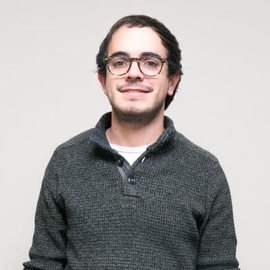
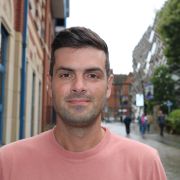
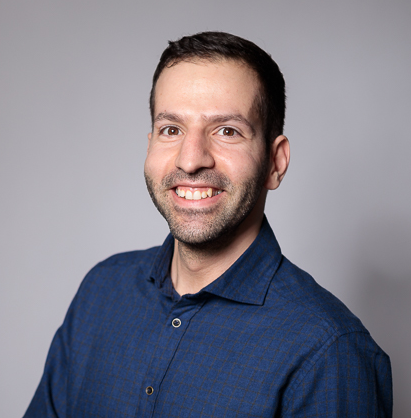
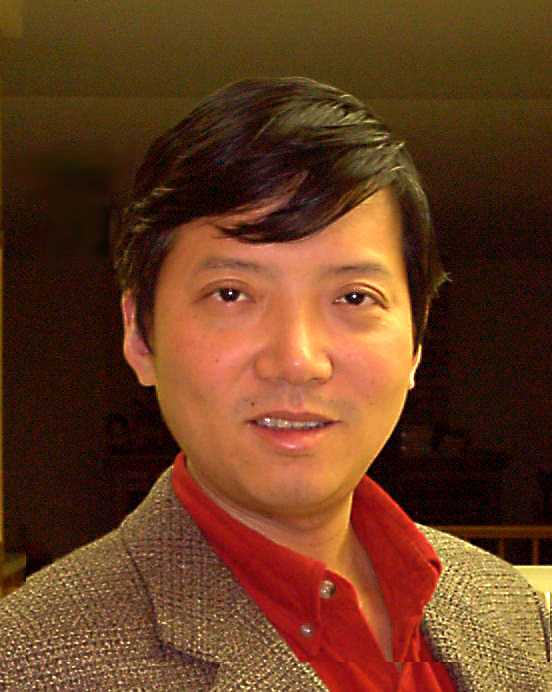
Andrea Santilli is a Research Scientist at Nous Research and holds a PhD in Computer Science from GLADIA at Sapienza University of Rome. His research focuses on large language models (LLMs), robustness, reliability, and multimodal learning. He previously worked at Apple MLR, Hugging Face’s BigScience, and Pi School. He earned his MSc and BSc in Computer Science from Tor Vergata University and Sapienza. Education: PhD in Computer Science, Sapienza University of Rome (2024) MSc in Computer Science, University of Roma Tor Vergata (2020) BSc in Computer Science, University of Roma Tor Vergata (2018) Research Interests: Santilli’s work spans LLM robustness , mechanistic interpretability , multimodal neural databases , and instruction-tuning . He introduced Parallel Jacobi Decoding and contributed to projects like BLOOM, Camoscio, and Fauno. His research bridges syntax-aware NLP, privacy-preserving LLMs, and cross-modal alignment. Publications: His work includes advancements in 3D-text latent space alignment (CVPR 2025), evolutionary merging (ICML 2025), and efficient decoding (ACL 2023). Over 15+ peer-reviewed papers span venues like ACL, CVPR, and ICLR. Awards: Received the Emanuele Pianta Award for his MSc thesis on continual language learning with syntax-based episodic memory. Grants & Projects: Winner of ‘Machine Learning Algorithms for Translation’ grant (2022), developing Parallel Decoding Co-PI for ‘Multimodal AI for 3D Analysis’ (2021) with Ecole Polytechnique Labs & Teams: Active in GLADIA (Sapienza), Apple MLR, and Hugging Face’s BigScience initiative. Core contributor to open-source projects like PromptSource and BLOOM.
Nazli Goharian is a Clinical Professor of Computer Science at Georgetown University and Associate Director of the Information Retrieval Lab. She holds a PhD from Florida Institute of Technology and joined Georgetown in 2010 after industry experience and previous academic positions at Illinois Institute of Technology. Education: PhD Computer Science, Florida Institute of Technology (2001) MSc Computer Science, George Mason University (1995) BSc Computer Science, Dortmund University (1992) Her research spans information retrieval, text mining, and natural language processing with applications in health/medical domains. She focuses on developing computational methods for medical search, mental health analysis from social media, clinical text summarization, and adverse drug reaction detection. Her recent publications (2020-2016) predominantly focus on neural ranking models, transformer architectures for document retrieval, and clinical NLP applications. Notable trends include work on BERT-based re-ranking, zero-shot multilingual retrieval, and ontology-aware medical summarization. Awards & Honors: EMNLP 2017 Best Long Paper Award COLING 2018 Honorable Mention & Area Chair Favorite Julia Beveridge Award for Faculty (IIT, 2009) Multiple Teaching Excellence Awards (2002-2007) Research Leadership: She has supervised 6 PhD students to completion with placements at leading institutions. Secured over $500,000 in research funding from NSF, Adobe, and international partners. Founded the Semi-Annual Graduate Research Presentation Days at Georgetown and served as Program Chair for ECIR 2024. She leads the Information Retrieval Lab which focuses on developing novel algorithms for efficient document retrieval, cross-lingual search, and specialized applications in healthcare text analysis.
Nikos Aletras is a Professor of Natural Language Processing at the University of Sheffield's School of Computer Science, where he serves as Head of the Natural Language Processing research group and is co-affiliated with the Machine Learning group. His academic journey began with a Bachelor's degree in Computer Science from the University of Crete, followed by a PhD in Natural Language Processing at the University of Sheffield. Prior to his current position, he worked as a research scientist at Amazon (Core ML and Alexa) and as a research associate at UCL's Department of Computer Science. Aletras' research spans multiple domains within AI, with particular emphasis on Natural Language Processing applications across social science, legal contexts, and data science. His work demonstrates a consistent focus on practical implementations of NLP techniques to solve real-world problems, especially in computational social science and legal technology. He has developed innovative text analysis methods that bridge traditional disciplinary boundaries, creating tools applicable across multiple scientific domains. His recent publications reveal a strong trend toward efficient and responsible AI, with significant work on model compression, hallucination mitigation in language models, and ethical considerations in computational social science research. The publications also show deep engagement with multilingual NLP challenges, explainable AI, and applications of NLP to social media analysis and legal contexts. Area Chair Award: Society and NLP (2023) Aletras has secured substantial research funding as both Principal Investigator and Co-Principal Investigator, including grants from EPSRC, ESRC, Leverhulme, EC Horizon 2020, and industrial partners like Amazon. His current projects focus on efficient deployment of large language models, addressing socio-technical limitations of LLMs for medical and social computing, and developing speech and language technologies. He actively supervises PhD students and collaborates with researchers across multiple disciplines. He leads the Natural Language Processing research group at Sheffield, which focuses on advancing NLP methodologies while applying them to diverse domains including computational social science, legal informatics, and healthcare technologies. The group maintains strong industry connections, particularly with technology companies working on language technologies, and collaborates with legal scholars and social scientists on interdisciplinary projects.
Kourosh Davoudi is an Associate Professor of Computer Science at Ontario Tech University's Faculty of Science. He holds a PhD in Computer Science from York University with a focus on Machine Learning and Data Mining. Prior to joining Ontario Tech in 2019, he was a postdoctoral research fellow at the University of Waterloo's Department of Management Sciences. His research interests span Natural Language Processing, Deep Learning, Reinforcement Learning, Graph Mining, and Machine Learning. He actively supervises graduate students in these areas and teaches courses such as Data Mining and Artificial Intelligence. His research emphasizes practical applications of AI techniques in areas like outbreak detection, sentiment analysis, and automated grading systems. Recent work includes innovations in neural document segmentation, vision-language models, and hybrid outbreak detection using social media data. His publications consistently address challenges in algorithm design, explainable AI, and domain-specific NLP applications. Dr. Davoudi has contributed to conferences such as COLING, EMNLP, and IEEE transactions, focusing on interdisciplinary applications of machine learning. His work bridges theoretical advancements with real-world problems in healthcare, education, and social media analysis.
Navid Rekab-saz is an Assistant Professor at the Institute of Computational Perception, Johannes Kepler University Linz (JKU), Austria. He is actively involved in research and teaching, offering courses such as Natural Language Processing and Natural Language Processing with Deep Learning . He maintains regular office hours and is accessible via email and a dedicated booking system for meetings. His research focuses on natural language processing , information retrieval , fairness and bias in AI , and recommender systems , with applications in humanitarian action and ethical AI. He employs deep learning and machine learning techniques to address challenges in bias mitigation, explainability, and domain adaptation. His work often bridges technical innovation with societal impact, especially in developing inclusive and fair AI systems. The recent publications of Navid Rekab-saz reflect a strong trend in debiasing strategies , parameter-efficient learning , and evaluation of societal biases in search and recommendation systems. His research spans from foundational work on word embeddings and retrieval models to applied studies in humanitarian NLP and gender bias in user queries. He frequently collaborates with a broad network of researchers and contributes to the development of datasets and benchmarks. Scientific Awards: Best Student Paper Award at ISMIR 2022 for 'Traces of Globalization in Online Music Consumption Patterns and Results of Recommendation Algorithms' Advising and Grants: Navid Rekab-saz has advised and collaborated with numerous students and researchers, many of whom are co-authors on his publications. While specific grant details are not listed in the provided text, his extensive publication record in top-tier venues suggests active involvement in funded research projects, likely supported by national or European funding bodies. He is also engaged in interdisciplinary research, particularly at the intersection of technical AI and legal or social implications. Labs and Teams: He is a core member of the Institute of Computational Perception at JKU, where he contributes to research projects in computational linguistics and AI. He collaborates closely with the team led by Prof. Markus Schedl and participates in initiatives related to music information retrieval, fairness in AI, and humanitarian applications of NLP.
Daniel Hardt serves as Associate Professor in the Department of Management, Society and Communication at Copenhagen Business School. His interdisciplinary research bridges computational linguistics, artificial intelligence, and social analysis, with particular focus on natural language processing applications and theoretical linguistic phenomena. His primary research domains include Computational Linguistics (specializing in ellipsis resolution and sluicing phenomena), Natural Language Processing (developing methods for psychographic classification and sentiment analysis), and Artificial Intelligence (examining large language model capabilities and limitations). Recent work analyzes travel behavior during crises, gender effects in evaluations, and GDPR policy comprehension through NLP techniques. His publications span top venues including Linguistic Inquiry , Tourism Management , and ACL proceedings. Hardt actively engages with practical business applications through 27 media contributions discussing AI implementation, ChatGPT transparency, and data-driven leadership strategies. His academic service includes organizing events like the 2019 "Fake News" conference at CBS and presenting at international venues including JSAI 2024. With 28 supervised academic works documented, he maintains substantial mentoring activity while contributing to public discourse on digital transformation challenges.
Charles Ling is a Professor of Computer Science at Western University, holding the title of Science Distinguished Research Professor. He also serves as Director of the Data Mining and Business Intelligence Lab and Associate Scientist at the Lawson Health Research Institute. His academic background includes a B.Eng. (CS and EE) from Shanghai Jiao Tong University and MSc/PhD from the University of Pennsylvania (UPenn). Research interests span machine learning, deep learning, AI, and healthcare informatics, with notable contributions to the GlucoGuide diabetes management system. He has authored over 220 peer-reviewed papers and a book titled Crafting Your Research Future , focusing on academic career development. Awarded Fellow of the Canadian Academy of Engineering (CAE) and recipient of the First Prize for Best Clinical Research Presentation (2011). Active in grants (NSERC, FedDev, Mitacs) and organizational roles in top conferences (KDD, ICDM). Supervises 5 PhD and 4 MSc students, with notable advisees including Harry Zhang and Victor Sheng. Leverages AI in education to enhance children's cognitive abilities through video-based programs like Power Thinking , approved by Curriculum Services Canada. His work integrates machine learning with healthcare, finance, and software engineering.
Guido Zuccon is a Professorial Research Fellow at the School of Electrical Engineering and Computer Science , The University of Queensland (UQ), where he leads the Information Engineering Lab (ielab) . He serves as the AI Director for the Queensland Digital Health Centre (QDHeC) and is an Affiliate Professor at the UQ Centre for Health Services Research . He was previously a Lecturer and Senior Lecturer at Queensland University of Technology and a Postdoctoral Fellow at CSIRO. His research spans Information Retrieval , Health Search , Formal Models of Search , and Health Data Science , with a strong focus on consumer health search, cohort identification, clinical decision support, and systematic review automation. He has pioneered work on search interaction, semantic models, and the evaluation of retrieval systems in health contexts. His recent publications highlight a strong trend toward leveraging large language models (LLMs) for zero-shot retrieval, federated search, dense retrieval, and query formulation. His work integrates advanced neural methods with practical applications in healthcare, including systematic review automation and clinical AI. He frequently publishes at top venues such as SIGIR, ECIR, and WSDM, often in collaboration with key researchers like Bevan Koopman, Shengyao Zhuang, and Harry Scells. ARC DECRA Fellow (2018–2020) Best Paper Awards at AIRS 2017, CLEF 2016, ALTA 2015, ECIR 2012 Best Reviewer Award at ECIR 2014 Principal Investigator on ARC Discovery Projects and MRFF grants Guido Zuccon actively supervises a large cohort of PhD students, primarily in areas related to neural information retrieval, health search, and systematic review automation. He has led significant research projects funded by the ARC, Google, Microsoft, GRDC, and CSIRO. He is a key organizer of international evaluation labs such as the CLEF eHealth Consumer Health Search task and the TREC 2019 Decision Track. He leads the ielab , a vibrant research group focused on information retrieval and data science, and contributes to major open-source initiatives like Big Brother , a tool for logging user interactions in web studies.
Bekir Taner Dincer is a Professor at Muğla Sıtkı Koçman University, Faculty of Engineering, Department of Computer Engineering. He has been actively teaching courses including Web Development and Programming, Artificial Intelligence, Data Mining, Natural Language Processing, and Senior Design Projects for multiple academic years including the upcoming 2025-2026 term. Dr. Dincer earned his Bachelor's degree in Statistics from Middle East Technical University (1988-1993), followed by a Master's degree in Statistics and Computer Science from Muğla Sıtkı Koçman University (1996-1998), and completed his Doctorate in Computer Science from Ege University's International Computer Institute (1998-2004). His research focuses on Information Retrieval, Natural Language Processing (particularly for Turkish language), and related computational linguistics areas. His work addresses challenges in Turkish language processing including morphological analysis, constituent chunking, information retrieval systems, and term weighting methods. He has made significant contributions to adapting information retrieval techniques for agglutinative languages like Turkish, which presents unique challenges compared to Indo-European languages. His publication record shows a consistent research trajectory with recent work (2013-2018) focusing on risk-sensitive evaluation methods, learning to rank, entity recognition in big data, and specialized approaches for Turkish language processing. His research often bridges theoretical information retrieval concepts with practical applications for Turkish text processing. Dr. Dincer has served as editor for prestigious publications including the International ACM SIGIR Conference proceedings and ACM Transactions on Information Systems journal, demonstrating recognition of his expertise by the international research community. He has supervised numerous graduate students, guiding PhD and Master's theses on topics including unsupervised syntactic disambiguation for Turkish, statistical analysis of word roots and affixes, and information retrieval system design. His research has been supported by TÜBİTAK projects including the Design of a Statistics-Driven Selective Information Retrieval System (2015-2018) and the Design of a Statistical Information Access System (2011-2014).
Kalina Bontcheva is a Senior Researcher in the Natural Language Processing Group within the Department of Computer Science at the University of Sheffield. She holds an EPSRC Career Acceleration Fellowship (working part-time since October 2015) focused on personalized summarization of social media content. Her research spans multiple EU-funded projects including PHEME (computing veracity of social media), TrendMiner, DecarboNet, and uComp, with significant contributions to the GATE (General Architecture for Text Engineering) open-source NLP infrastructure since 1999. Dr. Bontcheva's research interests focus on the intersection of natural language processing and social media analysis. Her work encompasses NLP for social media, semantic search, information extraction from social platforms, crowdsourcing of NLP corpora, collaborative text annotation, semantic technologies, and text mining and analytics. She has particular expertise in developing methods for personalized, abstractive multi-document summarization across different social media platforms, addressing the challenges of noisy, jargon-filled and dynamic content. Her interdisciplinary approach combines machine learning, semantic technologies, and social dimension analysis to create systems that adapt to individual users' information seeking goals. Analysis of her recent publications reveals a strong focus on social media processing challenges, with emphasis on Twitter analysis, temporal expression recognition, and handling noisy text. Her work consistently addresses the unique characteristics of social media content and develops specialized techniques for information extraction, sentiment analysis, and user geolocation within these platforms. The GATE framework serves as the foundation for much of her tool development, demonstrating her commitment to creating reusable, open-source NLP infrastructure. Her most significant award is the EPSRC Career Acceleration Fellowship, which supports her work on personalized social media summarization. This prestigious fellowship includes a substantial budget of £560k and involves collaborations with industry partners including The Press Association, British Telecom, and Fizzback. Dr. Bontcheva has led numerous major research projects throughout her career. She was Principal Investigator on three EU-funded projects (MUSING, TAO, and ServiceFinder) between 2006-2009, coordinating the TAO consortium with seven partner institutions. She currently leads the PHEME EU project and serves as PI for TrendMiner and DecarboNet European projects, while also contributing as Co-I on the uComp project. Her project portfolio demonstrates consistent success in securing competitive research funding across multiple domains within NLP and semantic technologies. She works within the Natural Language Processing Group at the University of Sheffield, which has been central to the development of the GATE infrastructure. Her work connects with various initiatives including the GATE Cloud platform and the TextVRE project for e-humanities textual studies. She has established collaborations with organizations including the Press Association, British Telecom, Oxford Internet Institute, and Sheffield's Department of Journalism to ensure her research addresses real-world needs across different user communities.
Hans Uszkoreit is a German AI researcher and Honorary Professor at Technische Universität Berlin, specializing in language and knowledge technologies. He serves as Scientific Director at the German Research Center for Artificial Intelligence (DFKI) Berlin and co-founder of the Artificial Intelligence Technology Center (AITC) in Beijing. He is also Chief AI Advisor at Lenovo Corporation. His roles include leading initiatives like the Berlin Big Data Center and the German Smart Data Forum, funded by German federal ministries. Uszkoreit’s research focuses on natural language processing, machine translation, and knowledge-based systems, with contributions to projects such as the Multilingual Europe Technology Alliance and spin-off companies like Sematell and Acrolinx. He has supervised over 40 PhD theses, emphasizing computational linguistics and computer science. His work bridges academic research and industry applications, fostering innovation in AI and language technologies.
Dr. Amal Zouaq is a Full Professor in the Department of Computer Engineering and Software Engineering at Polytechnique Montréal. She holds the FRQS (Dual) Chair in AI and Digital Health, serves as Director of the LAMA-WeST research laboratory, and is an Associate Member of MILA. Her work bridges artificial intelligence with applications in digital health, cultural heritage, and educational technologies, positioning her at the forefront of interdisciplinary AI research in Canada. Her research focuses on Artificial Intelligence , particularly Natural Language Processing and the Semantic Web . Specific interests include knowledge representation, ontology learning, SPARQL query generation, bias mitigation in language models, and clinical text processing. Her work spans multiple domains including healthcare, cultural heritage, and educational technology, with emphasis on developing practical AI solutions that address real-world challenges in knowledge management and information extraction. Analysis of her recent publications reveals a strong trajectory in advancing NLP techniques for knowledge-intensive applications. Her work increasingly focuses on domain-specific applications in healthcare and cultural heritage, with growing emphasis on ethical AI considerations like bias mitigation. The research demonstrates progression from foundational semantic web technologies toward more sophisticated neural approaches while maintaining strong theoretical grounding in knowledge representation. Scientific Recognition: Holder of the FRQS (Dual) Chair in AI and Digital Health Dr. Zouaq has supervised 23 graduate students to completion, including 1 PhD and 22 Master's theses, with research spanning ontology learning, knowledge representation, and NLP applications. Her supervision record demonstrates consistent mentorship in cutting-edge AI research with practical applications across multiple domains. She actively serves on program committees for major conferences in knowledge engineering, data mining, and semantic web technologies. She directs the LAMA-WeST (Web, Semantics and Text) laboratory , which specializes in natural language processing and artificial intelligence research. The lab focuses on knowledge representation, semantic technologies, and their applications in healthcare, cultural heritage, and educational contexts. As a member of IVADO and MILA, she collaborates with leading AI researchers across Montreal's vibrant AI ecosystem.
Sameer Singh is a Professor of Computer Science at the University of California, Irvine's Donald Bren School of Information and Computer Sciences. He also holds affiliations with Linguistics and EECS departments. His research primarily focuses on the robustness and interpretability of machine learning algorithms, along with models that reason with text and structure for natural language processing. Dr. Singh received his PhD from the University of Massachusetts, Amherst in 2014, an MS in Computer Science from Vanderbilt University in 2007, and a BEng in Electrical Engineering from the University of Delhi in 2004. His research interests span machine learning robustness, natural language processing, model interpretability, and knowledge representation. Singh investigates how to make AI systems more reliable and understandable, particularly focusing on testing methodologies for NLP models and developing techniques to improve model behavior. His work bridges theoretical understanding with practical applications in AI safety and reliability. Analysis of Singh's recent publications reveals a strong focus on language model interpretability, bias detection, and model robustness. His work explores how language models process information, where they fail, and how to make them more reliable. A significant portion of his recent research examines the limitations of multimodal models, language model alignment techniques, and addressing social biases in AI systems. Dr. Singh has received numerous prestigious awards including the Kavli Fellowship from the National Academy of Sciences, the NSF CAREER award, UCI Distinguished Early Career Faculty award, and the Hellman Faculty Fellowship. His papers have won multiple awards including at KDD 2016, ACL 2018, EMNLP 2019, AKBC 2020, and ACL 2020. His research group has secured substantial funding from major organizations including the Allen Institute for AI, Amazon, NSF, DARPA, Adobe Research, Hasso Plattner Institute, NEC, Base 11, and FICO. Singh previously served as an Allen Fellow at the Allen Institute for AI (2021-2023) and is currently a co-founder and CTO of Spiffy AI in Seattle. He completed postdoctoral research at the University of Washington after earning his PhD. Dr. Singh maintains an active presence in the AI community through his work on projects like AutoPrompt and Checklist, which have become influential tools for testing and interpreting NLP models. His research continues to shape how the field approaches model evaluation and interpretability.
Maxime Gobert is a researcher at the University of Namur's Faculty of Computer Science, specializing in database systems and software engineering. Having completed his PhD in March 2023 titled 'Design, Manipulation and Evolution of Hybrid Polystores,' Gobert has established himself as an expert in hybrid database systems, particularly focusing on the HyDRa framework for modeling and evolving polystores. His research interests span database systems, hybrid polystores, database schema evolution, software engineering, data-intensive systems, and static program analysis. Gobert's work bridges theoretical database concepts with practical applications, particularly in NoSQL databases like MongoDB and complex hybrid data storage environments. His publication record demonstrates a clear trajectory from his 2013 Master's thesis on database reverse engineering through to his recent work on database testing best practices and sign language processing applications. His research shows strong collaboration with colleagues at the University of Namur, particularly with Professor Cleve A., and extends to international collaborations as evidenced by his 2016 guest researcher position at the University of Geneva. Best New Idea and Emerging Results (NIER) Paper Award at the 20th IEEE Working Conference on Source Code Analysis and Manipulation (SCAM 2020) Jean Fichefet 2013 award Gobert has contributed significantly to the development of the HyDRa framework for hybrid polystore management and has extended his research into sign language processing through collaborative projects creating bilingual sign language dictionaries and parallel corpora. His work demonstrates both technical depth in database systems and a commitment to applying this expertise to accessibility-focused applications.
Kathleen R. McKeown is the Henry and Gertrude Rothschild Professor of Computer Science at Columbia University and the Founding Director of Columbia's Data Science Institute (2012-2017). She has been a faculty member since 1982 and served as Department Chair (1998-2003) and Vice Dean for Research in the School of Engineering and Applied Science. Her research focuses on natural language processing , text summarization , natural language generation , and social media analysis . Current projects include neural methods for extractive/abstractive summarization, electricity usage message generation via reinforcement learning, and social media sentiment analysis in low-resource languages like Uyghur. She leads the Columbia NLP Group and developed the long-running Newsblaster system (2001-present) for automated news tracking and multi-document summarization. Key scientific awards include NSF Presidential Young Investigator (1985) NSF Faculty Award for Women (1991) AAAI Fellow (1994) ACM Fellow (2003) ACL Founding Fellow (2012) Columbia Great Teacher Award (2010) Anita Borg Woman of Vision Award (2010) She has held leadership roles in major academic organizations: President of the Association for Computational Linguistics (1992), Vice President (1991), Secretary-Treasurer (1995-1997), and board member of the Computing Research Association with secretary role.