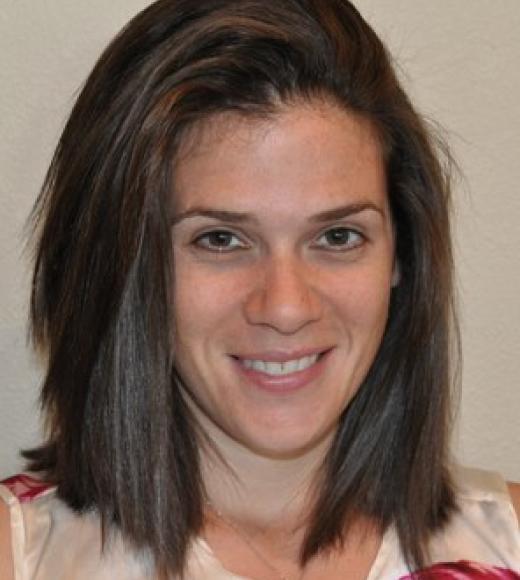
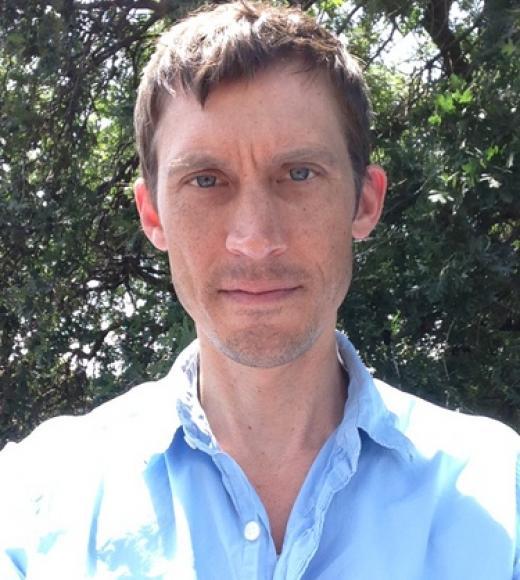
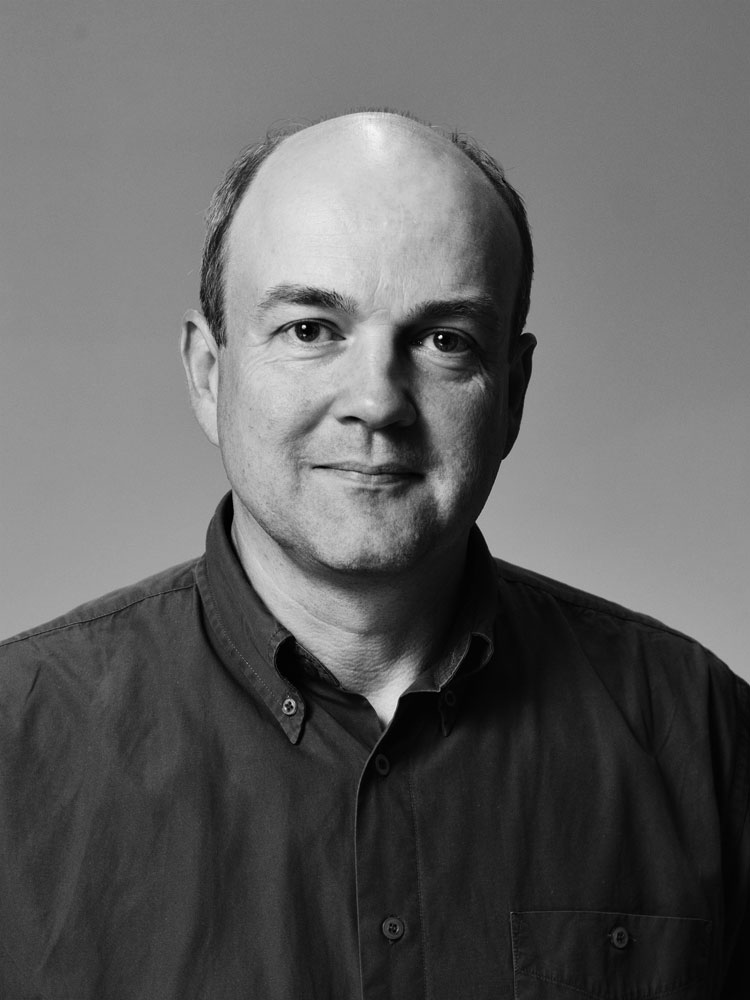
Simon King is a Professor of Speech Processing at the University of Edinburgh , affiliated with the School of Philosophy, Psychology and Language Sciences . He serves as Director of the Centre for Speech Technology Research (CSTR) and teaches courses like Speech Processing and Speech Synthesis , while directing the MSc in Speech and Language Processing . Research Interests His research focuses on: Developing new acoustic models (e.g., Linear Dynamical Models, factorial-HMMs) for speech recognition Advancing unit selection and HMM-based speech synthesis Integrating articulatory measurement data for enhanced modeling Exploring perceptual measures in synthesis criteria Building multilingual speech systems to identify universal speech building blocks Publication Trends Simon's recent work emphasizes deep learning (DNNs, LSTMs) in speech synthesis, multilingual frameworks , and articulatory-acoustic feature integration . His studies often bridge grapheme-based modeling , perceptual error reduction , and noise-robust synthesis . Scientific Awards EPSRC Advanced Research Fellowship (2005-2009) Students & Collaborations He has supervised numerous PhD students including Rasmus Dall, Tom Merritt, and Srikanth Ronanki. Current research fellows like Mirjam Wester and Zhizheng Wu contribute to projects such as Natural Speech Technology (NST) and Simple4All .
Karthik R. Narasimhan is a Professor at Princeton University's School of Engineering and Applied Science in the Department of Computer Science. Previously, he earned his PhD from MIT under Regina Barzilay and served as a visiting research scientist at OpenAI during 2017-18. His research focuses on the intersection of language and decision-making, building autonomous agents that learn from both experience and human knowledge. His research spans multiple high-impact areas including language agents (Text-DQN, CALM, ReAct, Tree of Thoughts), reinforcement learning (h-DQN, Multi-Objective RL), and AI safety (Toxicity in ChatGPT, DataMUX). He has developed critical datasets and benchmarks such as WebShop, InterCode, SWE-bench, and SILG that have become standard evaluation tools in the field. Current work emphasizes agent capabilities, software engineering automation, and multimodal interaction. His publication trends show strong focus on practical agent deployment (SWE-agent, Tree of Thoughts), safety evaluation (Probing AI Safety), and efficiency improvements (DataMUX). Recent work increasingly addresses real-world challenges in software engineering, security, and human-AI collaboration through rigorous benchmarking. Co-author of foundational GPT (2018) paper Key developer of Text-DQN (2015), CALM (2020), ReAct (2022), Tree of Thoughts (2023) Creator of influential benchmarks: WebShop (2022), SWE-bench (2023), InterCode (2023) He actively advises students through Princeton's computer science program, with research supported by multiple grants focused on autonomous agent development and language-based decision systems. His GitHub repositories (nlp-datasets, text-world-player) demonstrate strong community engagement in open-source research tools. Current projects include advancing language agent capabilities through Reflexion (2023) and Tree of Thoughts (2023) frameworks while addressing critical safety and efficiency challenges.
Sara Stymne is a Senior Lecturer in Computational Linguistics at the Department of Linguistics and Philology, Uppsala University, where she has been working since 2012. She initially joined as a post-doc (2012-2015), then worked as a researcher (2015-2017), and served as an assistant professor (2017-2023) before her current position as Senior Lecturer. Prior to Uppsala, she was a researcher at Linköping University's Department of Computer and Information Science. Dr. Stymne earned her PhD in Computational Linguistics from Linköping University in 2012 with the thesis 'Text Harmonization Strategies for Phrase-Based Statistical Machine Translation,' following a Licentiate degree in Computational Linguistics (2009) and a Master's degree in Cognitive Science (2006), both also from Linköping University. During her doctoral studies, she spent the autumn of 2010 and spring of 2009 at Xerox Research Centre Europe in Grenoble, France. Her primary research interests focus on cross-lingual natural language processing and digital humanities, with particular emphasis on multilingual dependency parsing. Dr. Stymne is passionate about applying computational linguistics to solve research questions in other fields, including language history, literary analysis, and political science. Her earlier work concentrated on machine translation, with specific interests in discourse-aware translation, compound processing, and error analysis. She has made significant contributions to the development of language technology tools for analyzing dialogue, narrative, and stylistic features in literature. Analysis of Dr. Stymne's recent publications reveals a strong focus on cross-lingual and cross-domain natural language processing. Her work spans multiple subfields including dependency parsing across genres and topics, discourse relation analysis in low-resource languages like Egyptian Arabic, direct speech identification in Swedish literature, and causality detection in governmental documents. A notable trend is her application of NLP techniques to digital humanities problems, particularly in analyzing literary texts and historical language change. Her research often involves creating and utilizing specialized datasets for specific linguistic phenomena across multiple languages. Dr. Stymne actively supervises graduate students, having guided numerous master's and bachelor's theses on topics ranging from speech recognition to multilingual parsing and causality detection. She leads or participates in several research projects including 'Fictional prose and language change' (funded by VR, 2021-2023) and 'Enabling climate-resilient development' (funded by Marianne and Marcus Wallenberg Foundation, 2023-2027), demonstrating her commitment to interdisciplinary research with practical applications. Her work has resulted in several notable software resources including uuPronPred for cross-lingual pronoun prediction, uuparser for dependency parsing, and Docent for document-level machine translation. Within the Computational Linguistics and Language Technology group at Uppsala University, Dr. Stymne contributes to multiple research initiatives focused on developing language technology tools for digital humanities applications. Her team works closely with literary scholars and historians to create computational methods for analyzing large corpora of literary texts, particularly focusing on Swedish literature across different historical periods. Her research bridges the gap between theoretical computational linguistics and practical applications in the humanities, creating new methodologies for quantitative analysis of literary and historical texts.
Prof. Dr. Gülşen Eryiğit is a Professor at Istanbul Technical University within the Faculty of Computer and Informatics , Department of Artificial Intelligence and Data Engineering . She founded and directs the ITU Natural Language Processing Group , Turkey's leading team in Turkish-language NLP, and serves as Senior Action Editor for ACL RR , Director of ITU TÖMER (Turkish Language Teaching Center), and Co-Chair of the EU UniDive Cost Action WG3. Education: PhD in Computer Engineering from ITU (2007), MSc and BSc from ITU and Marmara University Research: Focuses on Natural Language Processing for Turkish, including dependency parsing , coreference resolution , multiword expressions , and language education technology Her recent work involves multilingual transfer learning , LLM applications for Turkish text simplification, and gamification for morphology education. She has received prestigious awards like the Siemens Excellence Award and TÜBİTAK's Above Threshold Award . Her research has produced 65+ publications and 29+ projects funded by EU, TÜBİTAK, and industry partners. Scientific Awards: Siemens Excellence Award (2007) Above Threshold Award (TÜBİTAK, 2015) Certificate of Appreciation (EU 7th Framework, 2012) Thank You Plaque (ITU, 2017) The ITU NLP Group under her leadership has developed Turkey's first licensed NLP software exported internationally. She collaborates with European institutions through COST actions and participates in ACL, CoNLL, and LREC conferences. Her lab focuses on language technology for Turkish , including sign language processing and social media normalization.
Professor Dorit Abusch is a faculty member in the Department of Linguistics and Philosophy at Cornell University's College of Arts & Sciences. Her research focuses on semantics, pragmatics, and their applications to visual narratives. She explores topics like tense semantics, presupposition triggering, modal logic, and the interplay between language and visual media. Current work extends linguistic methodologies to analyze art forms such as comics, cave paintings, and temple sculptures. Her research interests include formal semantics applied to visual narratives, dynamic semantics, possible world theory, and multimodal discourse representation. She investigates how visual elements like sequential art and pictorial sequences convey temporal progression, aspectual distinctions, and free perception constructions through semiotic frameworks. Recent presentations include talks on applying semantics to film and picturebooks at institutions like MIT and the University of Padua. Her publications emphasize cross-media analysis, with key works published in Linguistics & Philosophy and Sinn und Bedeutung . Abusch has received grants for projects studying visual narratives in Indian art and wall paintings of Rajasthan. These include a 2012-2013 Humanities Research Grant and a Cornell Institute for Social Sciences award. Her work bridges linguistics with philosophy and visual studies, offering innovative frameworks for understanding non-linguistic communication through formal semantic tools.
Rachel Applebaum is Associate Professor of History at Tufts University specializing in Soviet and Eastern European history, the global Cold War, and transnational studies. Her award-winning book 'Empire of Friends' examines Soviet-Czechoslovak relations through the lens of socialist internationalism. Current research investigates Russian language politics during and after the Cold War, tracing Soviet efforts to establish Russian as a global language and its legacy in Putin's 'Russian World' concept. The project has received a National Endowment for the Humanities Fellowship. Teaching covers Russian history surveys, Eastern Europe, global communism, Stalinism, and Cold War politics. Awards include the Radomír Luža Prize for Austrian/Czechoslovak history and ASEEES First Book Subvention Award.
Joseph Eremondi is an Assistant Professor in the Department of Computer Science at the University of Regina, Faculty of Science, Canada. He began his tenure in 2024 after serving as a Royal Society Newton International Fellow at the University of Edinburgh, where he conducted postdoctoral research with Ohad Kammar in the Laboratory for Foundations of Computer Science. He earned his PhD from the University of British Columbia (UBC) under the supervision of Ron Garcia at the UBC Software Practices Laboratory. His research is centered on programming languages theory, with a strong focus on type systems that enhance software reliability and usability. He is particularly known for his work in dependent types, gradual typing, and the integration of both paradigms. His research interests include: Dependent pattern matching and its semantic foundations Gradual dependent types and approximate normalization Error message generation and usability in dependently typed languages Static analysis using set constraints and SMT solvers Theoretical properties of reversal-bounded counter automata and shuffle operations His recent publications, appearing in premier venues like POPL, ICFP, and CPP, reflect a consistent trajectory toward making advanced type systems more accessible and practical. Key themes include coverage semantics for dependent pattern matching, formal models of gradual dependent typing, and improving the developer experience through better tooling and error diagnostics. Notable scientific recognitions include the NSERC Discovery Grant (awarded in 2025) and the prestigious Royal Society Newton International Fellowship. These awards underscore the impact and promise of his research program on the usability of dependently typed programming languages. Joseph is actively mentoring and recruiting graduate students, particularly in areas such as dependently typed programming (Lean, Agda, Idris, Coq), gradual typing, live programming environments, and static analysis. He emphasizes close collaboration within a small, focused research group. He has also served on program committees, including for TyDe and POPL Artifact Evaluation, demonstrating active engagement in the programming languages community. His work bridges theoretical rigor with practical implementation, evident in his artifact releases on GitHub and integration with tools like Ott and DrRacket. He maintains a personal website and open-source repositories that support reproducibility and community involvement.
David Yarowsky is a Professor in the Department of Computer Science at Johns Hopkins University. He leads the Low-Resource Languages Lab and is a member of the Center for Language and Speech Processing. Harvard University - Bachelor of Arts in Computer Science (1987) University of Pennsylvania - Master of Science in Engineering (1993) and PhD in Computer and Information Science (1996) Research Interests : Natural Language Processing, particularly focusing on word sense disambiguation, minimally supervised induction algorithms, multilingual NLP, and machine translation for low-resource languages. His work bridges theoretical linguistics with practical applications in information retrieval, spoken language systems, and very large text databases. Article Trends : His publications emphasize cross-lingual transfer learning, universal morphology, and low-resource language technologies. Key themes include morphological analysis, computational etymology, and adversarial speech recognition. Scientific Awards : ACL Fellow (2013-present) Professional Service : Served as Treasurer and Executive Committee Member of the Association for Computational Linguistics, Secretary-Treasurer of SIGDAT, and chair/co-chair of major conferences including EMNLP 2013, IJCNLP 2011, and ACL 2014. Labs & Teams : Director of the Low-Resource Languages Lab at JHU and active member of the Center for Language and Speech Processing.
Georgia Zellou is an Associate Professor in the Department of Linguistics at the University of California, Davis, where she co-directs the Phonetics Lab and conducts award-winning research at the intersection of phonetics, speech perception, and human-AI interaction. Her work investigates how phonetic detail is cognitively represented through variations in speech production, with significant contributions to understanding speech alignment with voice assistants, face-masked speech intelligibility, and cross-linguistic perception of synthetic voices. Her academic credentials include a Ph.D. in Linguistics from the University of Colorado at Boulder (2012), an M.A. in Linguistics from Stony Brook University (2007), and a B.A. in Linguistics & Anthropology from the University of Florida (2005, Cum Laude, Phi Beta Kappa). Ph.D., Linguistics, University of Colorado at Boulder (2012) M.A., Linguistics, Stony Brook University (2007) B.A., Linguistics & Anthropology, University of Florida (2005) Professor Zellou's research program centers on laboratory phonology approaches to real-world communication challenges, examining how acoustic-phonetic details influence speech perception across contexts. Her studies span speech alignment with voice-AI systems (e.g., Amazon Alexa), sociophonetic variation in bilingual speech, and the cognitive mechanisms underlying perceptual compensation for coarticulation. She employs experimental methods including eye-tracking, acoustic analysis, and perceptual testing to uncover how phonetic variation functions pragmatically in human communication and human-machine interaction. Analysis of her 15 most recent publications (2023-2025) reveals three dominant research trajectories: (1) human-AI voice interaction dynamics, including prosodic alignment and social evaluation of TTS voices; (2) intelligibility optimization in challenging contexts (face masks, clear speech for diverse listeners); and (3) cross-linguistic phonetic variation in vowelless words and consonant clusters. These works consistently bridge theoretical phonology with applied speech technology, demonstrating how fine-grained phonetic detail influences communication effectiveness in both human-human and human-machine contexts. Her scientific recognition includes: Fulbright Scholar (2022) for research in France Chancellor’s Award for Excellence in Undergraduate Mentoring (2019) Fellow of the Linguistic Society of America (2020) Amazon Faculty Research Award (2019) for Alexa-related speech studies Dean’s Fellow designation at UC Davis (2020-2023) Professor Zellou maintains an active mentoring practice recognized with the Chancellor’s Award, supervising undergraduate researchers in the Phonetics Lab while teaching core linguistics courses from introductory to advanced graduate levels. Her research program is supported by competitive grants including NSF funding, Amazon Research Awards, and UC Davis internal grants (Hellman Foundation, ISS Junior Faculty Grant), reflecting the translational value of her work for speech technology development. She has co-directed major initiatives including the 2019 LSA Linguistic Institute. The Phonetics Lab she co-leads serves as a hub for experimental phonetics research, focusing on speech production-perception relationships through projects investigating vocal accommodation to voice assistants, nasal coarticulation dynamics, and cross-linguistic prosody. Current collaborations with industry partners aim to implement human speech adaptation principles into voice assistant design to enhance naturalness and engagement.
Shrikanth (Shri) Narayanan is University Professor and Niki & C. L. Max Nikias Chair in Engineering at the University of Southern California (USC), with appointments spanning Electrical & Computer Engineering, Computer Science, Linguistics, Psychology, Neuroscience, Pediatrics, and Otolaryngology-Head & Neck Surgery. He serves as Research Director of the Information Sciences Institute and Director of the Ming Hsieh Institute. PhD in Electrical Engineering (UCLA, 1995) Engineer and MS in Electrical Engineering (UCLA, 1992 and 1990) BE in Electrical Engineering (Anna University, India, 1988) His interdisciplinary research focuses on human-centered signal processing and machine intelligence , addressing societal challenges in health, education, defense, and media arts. Key areas include: Behavioral signal processing Affective computing Multimodal signal processing Computational speech science Biomedical applications Scientific Awards : IEEE James L. Flanagan Speech and Audio Processing Award (2025) Edward J. McCluskey Technical Achievement Award (2024) ISCA Medal for Scientific Achievement (2023) Claude Shannon-Harry Nyquist Technical Achievement Award (2023) ACM ICMI Sustained Accomplishment Award (2020) USC Distinguished Faculty Service Award With over 1,000 publications and 19 patents , his work has been commercialized through startups like Behavioral Signals Technologies and Lyssn . He leads transformative university initiatives and has served in editorial roles for top journals including Computer Speech and Language and IEEE Transactions on Affective Computing .
Dinah Ribard is a Director of Studies at the École des Hautes Études en Sciences Sociales (EHESS), working within the Centre de Recherches Historiques (CRH). She serves as Center Director for the GRIHL (Groupe de recherche interdisciplinaire sur l'histoire du libéralisme) research group. Her academic career has been dedicated to the historical study of work, intellectual practices, and cultural production from the early modern period through the 19th century. Ribard completed her thesis in December 2000 at the University of Paris III - Sorbonne Nouvelle under the direction of Alain Viala, entitled "Live Tell Think. Research on the literary status of the philosopher: the Lives of philosophers in France 1650-1766." She was formerly a student at the École Normale Supérieure (Ulm) and holds a degree in Modern Literature. Prior to her position at EHESS, she served as an ATER (Attaché Temporaire d'Enseignement et de Recherche) at Paris III University from 1999 to 2001 and taught at Lycée Jacques-Feyder in Epinay sur Seine from 2001 to 2003. Ribard's research focuses on the history of work from multiple perspectives - examining both intellectual work (1600-1900) and material labor. She investigates how work has been conceptualized, narrated, and institutionalized throughout history. Her work explores the relationship between knowledge production and labor, analyzing how different professions and social statuses have shaped intellectual and cultural practices. She examines the historical construction of disciplines, professions, and social classifications, with particular attention to how writing practices intersect with work identities. Her recent publications reveal a consistent focus on the relationship between writing, work, and social identity across the early modern and modern periods. Ribard's scholarship demonstrates how textual practices were embedded in specific work contexts, from artisanal workshops to academic institutions. Her work shows how literary forms were used to construct professional identities and how writing practices served as forms of political action. She has made significant contributions to understanding the historical relationship between intellectual labor and material production. Ribard has published extensively, including the notable 2023 book "Le Menuisier de Nevers. Poésie ouvrière, fait littéraire et classes sociales (XVIIe-XIXe siècle)" which examines how working-class poetry was historically constructed and marginalized. Her scholarship challenges traditional literary classifications and reveals how social categories have been historically produced through cultural practices. As Director of Studies at EHESS, Ribard supervises doctoral students and contributes to the academic training of historians. She co-responsible for the Grihl seminar and teaches courses at EHESS on topics including "Writings of the Past. Literature and History: Methods, Theories, Fields" and "History and stories of work." Her teaching reflects her research interests in the intersection of literary practices, historical methodology, and social analysis. Within the CRH, Ribard is affiliated with the GRIHL research group, which focuses on the interdisciplinary history of liberalism. Her work bridges historical, literary, and sociological approaches to understanding the development of social and intellectual categories. Through her research, teaching, and institutional leadership, Ribard has made significant contributions to the historical understanding of work, knowledge production, and cultural classification.
Lee Miller is a Professor in the Department of Neurobiology, Physiology, and Behavior at the University of California, Davis, College of Biological Sciences. His research integrates neural engineering, physiology, and computational methods to develop communication restoration technologies and investigate sensory processing mechanisms. His primary research interests include neural engineering for speech neuroprosthetics, electrophysiological analysis of speech production, auditory neuroscience, and geometric approaches to neuromuscular signal decoding. He employs surface electromyography (EMG), electroencephalography (EEG), and computational modeling to study brain-machine interfaces for speech restoration and multisensory integration. Recent publications reveal a dominant focus on EMG-based speech neuroprostheses, with geometric and topological analysis of neuromuscular signals emerging as a key methodology. His lab has pioneered non-invasive approaches to speech articulation decoding, created standardized EMG databases, and investigated neural mechanisms of attention in speech-in-noise processing. This work bridges engineering innovation with fundamental neuroscience to address communication disorders. Professor Miller leads the Miller Lab at UC Davis, which specializes in neural engineering for communication restoration. The lab develops real-time speech synthesis systems from neural signals and investigates the physiological basis of speech production and perception using multimodal recording techniques.
Martin Volk is a Full Professor of Computational Linguistics at the University of Zurich, with a dual affiliation to the Department of Informatics since 2019. He holds a PhD from the University of Koblenz and has held academic positions at institutions including Stockholm University (part-time from 2008-2011), Zurich University of Applied Sciences, and the University of Georgia. His research focuses on grammar engineering, machine translation evaluation, multilingual text analysis, and cross-language information retrieval. Education : Born in Cochem, Germany Studied Computer Science and Computational Linguistics at EWH University, Koblenz Master's in Artificial Intelligence at the University of Georgia (Fulbright Scholar) PhD in Computational Linguistics from the University of Koblenz Research Interests : His work emphasizes data-driven NLP methods, including corpus-based approaches, parsing technologies, and the application of machine learning to historical and multilingual texts. Key focuses include: Machine translation systems and evaluation frameworks Grammar testing environments (e.g., GTU) OCR and digitization of historical documents (e.g., Gothic script) Development of parallel corpora for linguistic research Projects : SMULTRON: Multilingual parallel treebank project Bullinger Digital: Historical document digitization initiative Text+Berg: Digital Humanities project for alpine textual heritage EU-funded MuchMore (cross-language medical IR) Grants & Collaborations : Recipient of grants from the Swiss National Science Foundation, EU projects, and industry partnerships (e.g., Siemens, Xerox). His work integrates academic and industrial perspectives in NLP tool development. Labs & Teams : Leads research teams in the Institute of Computational Linguistics at UZH, focusing on projects like the Zurich Parallel Corpus Collection and MODERN (modeling discourse for MT).
Joakim Nivre is a Professor at Uppsala University's Department of Linguistics and Philology. He is a leading researcher in computational linguistics, with a focus on dependency parsing, Universal Dependencies (UD) framework development, and multilingual NLP applications. His recent work explores LLMs in climate change discourse analysis, pharmacovigilance explainability, and historical text processing. Key research areas: Dependency parsing theory, Universal Dependencies standardization, LLM evaluation Collaborations: SweSAT-1.0 benchmark development, ClimateEval project, PARSEME integration His 2025-2023 publications demonstrate expertise in explainable AI for healthcare, synthetic data generation for idioms, and multilingual benchmark design. Notably, he co-developed SweSAT-1.0 to evaluate Swedish LLMs and contributed to typology-informed UD revisions. Despite extensive work in NLP, no scientific awards are mentioned in available texts.
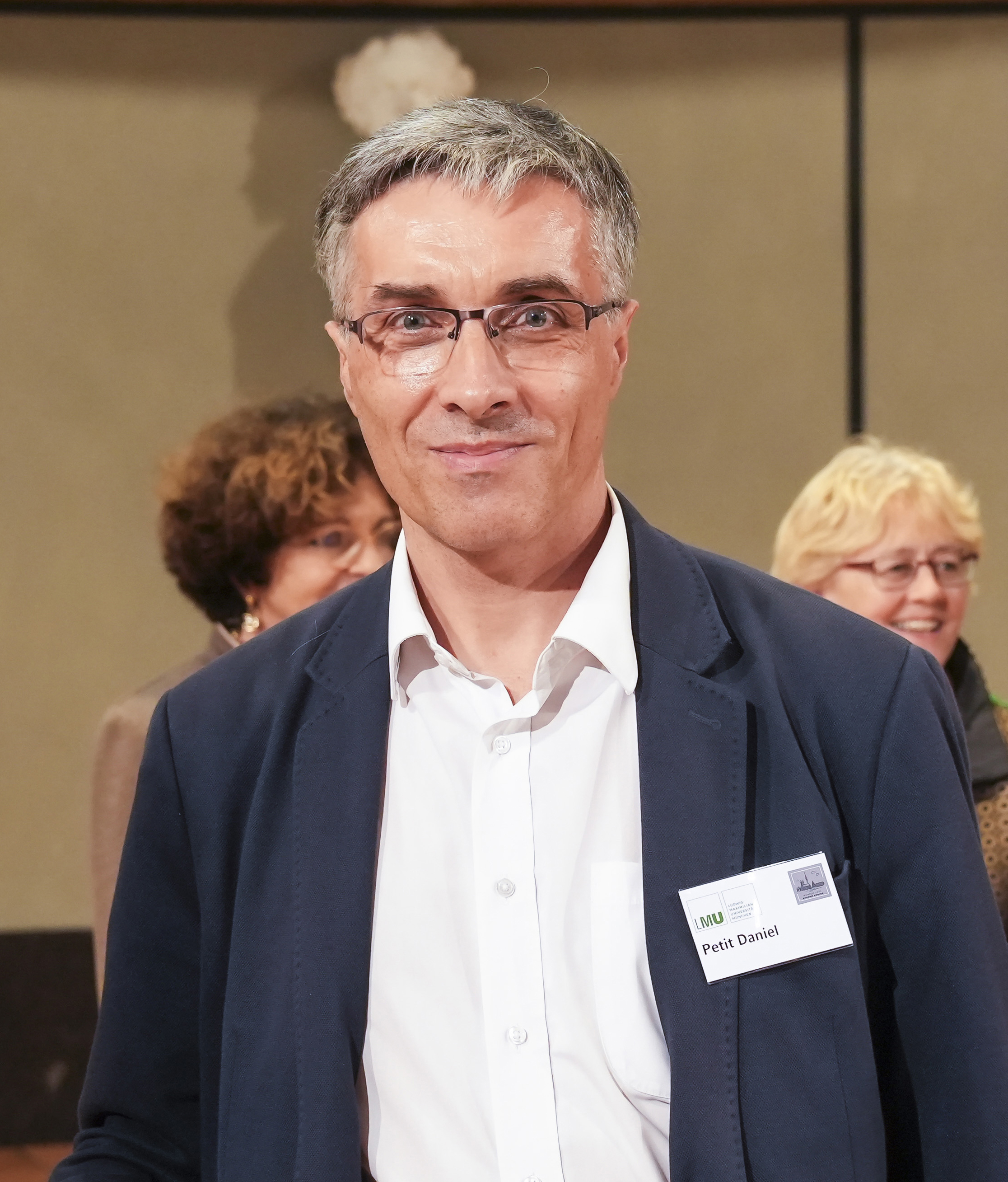
**Daniel Petit** is a **Full Professor of Indo-European Linguistics** at the **École normale supérieure (ENS)** since 2003 and **Director of Studies in Baltic and Indo-European Linguistics** at the **École pratique des hautes études (EPHE)** since 2011. He holds a PhD in Greek Linguistics (1996) and a Habilitation in Baltic Linguistics (2002), both from Paris-Sorbonne Université. His research focuses on historical syntax, comparative grammar of Indo-European languages, Baltic linguistics, and the history of comparative linguistics. **Education**: PhD in Greek Linguistics, Paris-Sorbonne Université (1996) Habilitation in Baltic Linguistics, Paris-Sorbonne Université (2002) Agrégation de Grammaire (1st rank, 1990) Multidisciplinary background including classics, Lithuanian, and Greek linguistics. **Research Interests**: Explores syntactic evolution in Indo-European languages, Baltic language structures, and the historical development of comparative linguistics. Specializes in Latvian, Old Prussian, Ancient Greek, and Lithuanian linguistics and philology. **Awards**: Correspondent member of the Académie des Inscriptions et Belles-Lettres (2021) Vice-chair of the Indogermanische Gesellschaft (2016-2021) Chevalier des Palmes Académiques (2011) **Advising & Leadership**: Supervised 9 PhD students (4 defended, 5 ongoing) and served on 28 doctoral committees. Organized 15 international conferences. Currently serves as Secretary (Chief Editor) of the *Bulletin de la Société de Linguistique de Paris* since 2017.