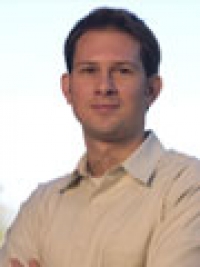
Peter Gordon is an Associate Professor of Neuroscience and Education and Cognitive Science in Education at Teachers College, Columbia University. He directs the Language and Cognitive Neuroscience Lab and holds affiliations with Biobehavioral Sciences, Human Development, and other departments. His research focuses on language acquisition, developmental neuroscience, cross-cultural numerical cognition, and MRI-based studies of language processing. Dr. Gordon earned a B.A. (Hons) in Psychology from the University of Stirling (Scotland) and a Ph.D. in Psychology from MIT. His fieldwork includes extensive studies with the Piraha in Amazonia, Brazil, and the Kadiweu in Mato Grosso do Sul, Brazil. His research interests span infant event representations, behavioral genetics of language, and the interplay between language structure and cognitive development. Notable contributions include work on anumeric cultures and the linguistic relativity hypothesis. Publications highlight cross-cultural studies, morphological processing, and cognitive neuroscience of language. He has conducted influential research on numerical cognition in Amazonian cultures and the genetic influences on language acquisition. Contact: pg328@tc.columbia.edu | Office: 1152 Building 528 | Lab: [Link Provided].
Mykel Loren Brinkerhoff is a Postdoctoral Research Associate and Acting Phonetics Lab Director in the Department of Linguistics at the University of Washington. His research focuses on phonology, phonetics, and linguistic fieldwork, particularly on Mesoamerican languages like Santiago Laxopa Zapotec. He investigates syntactic and prosodic phenomena in Celtic and Germanic languages and collaborates on projects such as the Zapotec Language Project. Brinkerhoff has taught at the University of California, Santa Cruz, and the University of North Carolina at Chapel Hill, leading courses in phonetics, phonology, and syntax. He mentors students in fieldwork and linguistic analysis, with notable projects on Zapotec voice quality and Scandinavian syntax. His work bridges theoretical linguistics with empirical research, contributing to our understanding of phonological interfaces and language structure. His publications explore topics like voice quality in Zapotec, Norwegian object shift, and Welsh morphophonology. He actively contributes to academic discourse through presentations at conferences like LabPhon and SSILA. Brinkerhoff’s research also emphasizes documenting endangered languages and advancing methodologies in acoustic phonetics.
Julie Anne Legate is Professor and Chair of Linguistics at the University of Pennsylvania's Department of Linguistics. She earned her PhD from the Massachusetts Institute of Technology in 2002. Legate co-directs the Penn Syntax Lab and served as Editor-in-Chief of Natural Language & Linguistic Theory for 10 years. Her research focuses on syntactic theory, morphosyntax, and syntax-semantics interfaces, with specialization in endangered/understudied languages. Key interests include passives, impersonals, causatives, null subjects, case theory, and locality domains. She maintains secondary research interests in language acquisition. Legate's publications demonstrate extensive work on voice systems (especially passives), ergativity, case theory, recursion, and cross-linguistic analysis of languages including Acehnese, Warlpiri, and Lithuanian. Her research frequently combines theoretical innovation with empirical fieldwork. Awards include the LSA’s Best Paper in Language Award (2020) for On Passives of Passives . She has advised multiple PhD students including Faruk Akkuş (2021), Milena Šereikaitė (2020), Ava Irani (2019), Helen Jeoung (2018), and Einar Freyr Sigurðsson (2017). Current projects include: syntactic islands (with Charles Yang), Mandarin bridge verbs (with Jiayi Lu and Charles Yang), null subjects in Brazilian Portuguese (with Gesoel Mendes), and passive agent binding.
Brendan Regan is an Associate Professor of Spanish & Linguistics at Texas Tech University, directing the Sociolinguistics & Bilingualism Research Lab. He coordinates Hispanic Linguistics programs at both undergraduate and graduate levels. His research focuses on sociolinguistics, sociophonetics, and language variation, employing mixed-methods approaches including experimental design, corpus analysis, and discourse analysis. Education: Ph.D., The University of Texas at Austin (2017) M.A., Temple University B.A., University of Richmond Research Interests: His work addresses sociolinguistic variation, bilingualism, SLA, dialect contact, and language attitudes. Recent studies explore phonetic variation in Andalusian Spanish, language ideologies in heritage speakers, and place-name variation in Texas. Lab & Collaborations: The lab focuses on language variation in West Texas, offering research opportunities for students. Collaborative projects include corpus-based analyses of Spanish dialects and experimental studies on listener perception.
Rachel Walker is a Professor of Linguistics at the University of California, Santa Cruz (UCSC), affiliated with the Department of Linguistics. Her research focuses on phonology, phonetics, and their intersections with morphology and psycholinguistics, particularly exploring segmental distribution patterns, harmony systems (vowel, consonant, nasal), and the articulatory basis of complex consonants like liquids. She collaborates on documenting the phonetics/phonology of Ladin varieties spoken in the Italian Central-Eastern Alps. Key research themes include: - Long-distance consonantal interactions - Vowel harmony transparency mechanisms - Articulatory phonetics of English liquids - Theoretical phonology (Optimality Theory, Harmonic Serialism) - Language documentation (Ladin, Kinyarwanda, Menominee) Her recent work (2020-2024) emphasizes consonant phonotactics in Ladin, privileged positions in vowel harmony, and articulatory coordination in consonant clusters. Over 80 peer-reviewed publications span journals like Journal of Phonetics , Phonology , and Language , along with influential books such as Vowel Patterns in Language (2011). She holds a PhD in Linguistics and has advised graduate researchers on phonological fieldwork and theoretical analysis.
Elaine M Shenk is a Professor of Spanish and Chair of the Department of Languages and Linguistics at Saint Joseph's University. Her work focuses on sociolinguistic phenomena in language contact settings, emphasizing language ideologies, bilingualism, and policy debates across Puerto Rico and the United States. Education : PhD in Spanish-Linguistics from the University of Iowa; MA in Spanish-Linguistics from the University of New Mexico; BA in Liberal Arts from Eastern Mennonite University. Her research explores the symbolic values and political dimensions of language contact, with a focus on Puerto Rican communities, U.S. legislative discourse, and educational contexts. She examines metaphors in language-status dynamics, sociolinguistic variation in intermediate classrooms, and the historical evolution of language policies in Congressional bills. Recent publications address language ideologies in Puerto Rican migration, metaphors in language debates, and policy frameworks. These works span sub-fields like language legitimation campaigns, bilingual education strategies, and discourses on protectionism versus receptivity in language officialization. Scientific Awards : 2019 Ed Brady SJ Faith in Action Award 2019 Alpha Sigma Nu Teaching Award 2016 Honorable Mention, AATSP Outstanding Scholarly Publication Award Multiple research grants including the Michael J. Morris Grant (2014) Service-learning and curriculum development grants (2012-2010)
Laura Kalin is the Acting Director of the Program in Linguistics at Princeton University since Fall 2024, having previously served as Associate Director from Fall 2023. She is an Associate Professor of Linguistics in the Council of the Humanities and joined Princeton in 2016. Her full name is Laura Kalin, and she holds a Ph.D. from UCLA (2014). She is based at Green Hall (1-S-4C/1-S-19) and can be reached via lkalin@princeton.edu. Her research focuses on syntax and morphology in understudied and endangered languages, particularly Neo-Aramaic (e.g., Turoyo, Senaya, and Adıyaman Kurmanji), Austroasiatic (Nancowry), Austronesian (Malagasy), and Carib (Hixkaryana) languages. Key research themes include allomorphy, infixation, nominal licensing, agreement systems, and the interplay between morphosyntax and phonology. She also explores root-and-pattern morpho-phono-syntactic structures in languages like Malagasy and Turoyo. Laura’s research contributions span formal linguistic theory, typology, and fieldwork-based analysis. Recent work emphasizes cyclic morphosyntax-phonology interactions and morphological opacity across languages. She has published in major journals such as NLLT and Glossa, and her website (www.laurakalin.com) provides further details on her work. No scientific awards are explicitly listed in the provided texts. Her advising and grant activities remain unreported here. She is affiliated with the Program in Linguistics, the Humanities Council, and the Joseph Henry House at Princeton.
Tom Boellstorff is a Professor of Anthropology at the University of California, Irvine. He holds a Ph.D. from Stanford University (2000). His research focuses on digital anthropology, virtual worlds, queer theory, and the intersection of technology with cultural practices. Boellstorff is known for pioneering ethnographic studies in virtual environments like Second Life and has explored topics such as Indonesian LGBTQ+ communities, disability in digital spaces, and the cultural history of early video games like Intellivision. His work spans theoretical frameworks for understanding digital cultures, methodological innovations in virtual ethnography, and critical analyses of technology’s role in shaping identity, politics, and social structures. Boellstorff’s interdisciplinary approach integrates cultural theory, media studies, and queer studies to examine how digital platforms mediate human experience. Recent publications emphasize the anthropology of emerging technologies (e.g., metaverse studies), historical analyses of video game platforms, and the sociopolitical implications of digital exclusion. His documentary work, including Virtual Cultures in Pandemic Times , extends his ethnographic focus into visual media.
University of California , Santa Barbara (UCSB)United States
John W. Du Bois is a Professor in the Department of Linguistics at the University of California, Santa Barbara (UCSB), within the College of Letters and Science. His work focuses on the interplay between discourse, grammar, and sociocultural contexts. Specializing in dialogic syntax, he explores how linguistic structures emerge from interactional dynamics, particularly in conversational coherence and stance-taking mechanisms. His research integrates corpus linguistics, computational methods, and ethnographic approaches to study languages like Mayan and Kazakh. Key research areas include: Discourse and grammar integration Dialogic resonance and affective alignment Corpus design and analysis Ritual language and cognitive models Mayan linguistic systems Recent studies emphasize computational tools like Rezonator for dialogue coherence visualization and remote corpus development methodologies. His work bridges theoretical linguistics with applied research in language documentation and education. Du Bois has contributed to foundational texts on discourse transcription standards and maintains active involvement in the Santa Barbara Corpus of Spoken American English project. His publications span over four decades, reflecting sustained engagement with linguistic complexity across multiple levels—from micro-level syntactic interactions to macro-level sociocultural frameworks. Current projects investigate dialogic syntax in autism and the evolutionary niche of language within social interaction.
University of California , Santa Barbara (UCSB)United States
Emiliana Cruz Cruz is a professor-researcher at the Center for Research and Higher Education in Social Anthropology (CIESAS) in Mexico City, specializing in linguistic anthropology with a PhD from the University of Texas at Austin. Originally from Cieneguilla, San Juan Quiahije, Oaxaca, she focuses on indigenous language preservation and community collaboration. Her educational background includes: PhD in Linguistic Anthropology, University of Texas at Austin, USA Dr. Cruz Cruz's research spans linguistic anthropology, indigenous language documentation, and revitalization, with emphasis on education, language rights, and territory-indigenous identity relationships. She actively participates in the collective "Dialogues among Indigenous Scholars," centering indigenous epistemologies and community-driven methodologies to address language endangerment through ethnographic approaches. Her publications demonstrate consistent community-engaged scholarship on Chatino language transmission, intergenerational knowledge transfer, landscape-language interconnections, and theoretical contributions from indigenous researchers in anthropological fieldwork. Key recognitions include: Distinguished Community Engagement Award from the University of Massachusetts for the Chatino Language Documentation Project SNI Level I by the Mexican National System of Researchers She currently leads multiple initiatives including a Chatino dictionary with ethnographic context, neuroplasticity studies in endangered language speakers, and broader Chatino language preservation projects, maintaining deep collaboration with indigenous communities across Latin America.
Yoshiko Matsumoto is the Yamato Ichihashi Professor in Japanese History and Civilization and Professor of East Asian Languages and Cultures at Stanford University, with a courtesy appointment in Linguistics. She has been a faculty member at Stanford since 1992, progressing from Assistant Professor to her current distinguished position. Matsumoto also serves as coordinator of the Japanese Language Program and has held significant administrative roles including Chair of the Department of Asian Languages (2003-2005) and Interim Chair of the Department of East Asian Languages and Cultures (2016). Matsumoto earned her Ph.D. in Linguistics from the University of California, Berkeley (1989), following M.A. degrees in Linguistics from UC Berkeley and General and Applied Linguistics from the University of Tsukuba, an M.I.A. in American Studies from the University of Tsukuba, and a B.A. in English Language & Literature from Japan Women's University. Professor Matsumoto's research focuses on linguistic pragmatics from cross-linguistic perspectives, with particular expertise in Japanese language. Her work spans structural and sociocultural aspects of language in use, including noun-modifying clause constructions, honorifics, discourse markers, and the intersection of language with gender and aging. She has pioneered research on conversational narratives of older adults, examining how ordinary framing strategies help individuals navigate difficult experiences. Her current projects explore intergenerational communication through haiku, communicative abilities of people with dementia, and noun-modifying constructions across Eurasian languages. Matsumoto's scholarship consistently bridges theoretical linguistics with practical applications for understanding human communication in diverse social contexts. Matsumoto's recent publications reveal a growing focus on practical applications of linguistic research for social benefit, particularly in intergenerational communication and dementia care. Her work increasingly integrates arts-based approaches, especially haiku poetry, to bridge generational divides and enhance communication with elderly populations. The research shows a consistent trajectory from theoretical linguistic frameworks toward applied, human-centered language studies that address real-world challenges in aging societies, with particular attention to how ordinary language practices help individuals navigate life transitions and difficult experiences. Dean's Award for Distinguished Teaching, School of Humanities and Sciences, Stanford University (2000) Richard E. Guggenhime Faculty Scholar, Stanford University (2000-2003) Violet Andrews Whittier Fellow, Stanford Humanities Center (2019-2020) Faculty Research Fellow, Michelle R. Clayman Institute for Gender Research (2014-2015) Research Fellow, Japan Foundation (2002) Internal Fellow, Stanford Humanities Center (2005-2006) Presidential Fund for Innovation in the Humanities, Stanford University (2009-2011) Professor Matsumoto has mentored numerous students through her teaching in Japanese language and linguistics courses, including specialized offerings on language and aging, points in Japanese grammar, and haiku-based communication. Her research has been supported by prestigious grants from the National Endowment for the Humanities, the Japan Foundation, and Stanford's Presidential Fund for Innovation in the Humanities. She has served on multiple editorial boards including the Journal of Pragmatics since 1992, demonstrating long-standing leadership in her field. Matsumoto has also advised students through individual studies and thesis projects in East Asian Languages and Cultures. Matsumoto leads several collaborative research initiatives including the 'Sharing Conversations' project which examines intergenerational communication through haiku, and research on communicative abilities of people with dementia. Her work often involves interdisciplinary teams spanning linguistics, gerontology, and creative arts, with fieldwork conducted in both Japan and the United States. The 'Noun-Modifying Constructions in Languages of Eurasia' project represents a major international collaboration examining linguistic structures across cultural boundaries. She also directs the 'Language, Old Age and Gender in Japan' project supported by the Stanford University/Japan Foundation, and the 'Difficult Conversations Continue: Memories of the 3.11 Disaster and Bereavement Narratives' project focused on post-disaster communication.
Dorothy Noyes is Professor of Folklore at The Ohio State University with a joint appointment in the Departments of English and Comparative Studies and courtesy appointments in Anthropology, French and Italian, and Germanic Languages and Literatures. She serves as Director of the Mershon Center for International Security Studies and teaches in the Program in International Studies, having previously directed the Center for Folklore Studies from 2005 to 2014. She earned her Ph.D. in Folklore and Folk Life from the University of Pennsylvania. Her research centers on political ritual and the traditional public sphere in Europe, folklore theory, and international policy careers of culture concepts, authoring key works including 'Fire in the Plaça: Catalan Festival Politics After Franco' and 'Humble Theory: Folklore’s Grasp on Social Life', with her current project 'Exemplary Failures: Gesture and Pedagogy in Liberal Politics'. Noyes' scholarship consistently explores intersections of cultural tradition, political expression, and international relations, with recurring themes of civic engagement, national identity formation, and ritual dynamics across European contexts. Her methodological approach bridges ethnographic fieldwork with theoretical innovation in folklore studies. Her recent publications demonstrate sustained focus on political ritual, cultural policy, and tradition's role in contemporary society, with increasing attention to sensory studies and material culture following pandemic-era disruptions to communal practices. Noyes has received significant recognition for her contributions to folklore studies: Elected Fellow of the American Folklore Society (2005) Honorary Doctorate from the University of Tartu, Estonia (2019) As current President of the American Folklore Society and former executive board member of the Société Internationale d'Ethnologie et de Folklore, Noyes has shaped international scholarly discourse through leadership roles and interdisciplinary projects including the Göttingen Working Group on Cultural Property. Her institutional leadership spans the Mershon Center for International Security Studies and the former Center for Folklore Studies, where she fostered collaborations connecting folklore scholarship with international security policy and cultural heritage management.
Mark W. Lentz is an Associate Professor of Latin American History at Utah Valley University, specializing in colonial Mexico, Central America, and the Atlantic World. His research focuses on interethnic relations, linguistic dynamics, and religious influences during the Spanish colonial period. Ph.D., Tulane University (2009) 2015-2016 R. David Parsons Fellow, John Carter Brown Library 2007-2008 Graduate Fellow, Tulane University Center for Ethics Lentz's work explores interpreters in the conquest of Yucatan , indigenous-African interactions , and Jesuit pedagogical practices . He has led student travel programs to Spain and Utah, emphasizing multicultural historical experiences. His 2018 monograph Murder in Merida, 1792 analyzes colonial legal systems, while his award-winning article in the Hispanic American Historical Review (2018) examines creole and African-descent literacy in indigenous languages. 2018 Best Article Prize, RMCLAS Lentz’s publications reveal trends in colonial power structures , missionary impact , and multilingual societies . His academic roles integrate fieldwork, archival research, and interdisciplinary analysis. Outside academia, he engages in Wasatch Range outdoor activities like hiking and skiing.
University of Illinois Urbana-ChampaignUnited States
Suzie Telep is an Assistant Professor in the Department of Anthropology and European Union Center at the University of Illinois at Urbana-Champaign. A linguistic and cultural anthropologist, she examines intersections of language, race, and artistic production within the African diaspora in postcolonial France. Educational background includes a PhD in Linguistics from Paris Cité University, a Marie Sklodowska-Curie Postdoctoral Fellowship at the University of Pennsylvania, and affiliations with institutions like Stanford University and University of Angers. Her research focuses on race, gender, and language ideologies in Black diasporic communities, particularly Cameroonian immigrants in Paris, analyzing practices like 'whitisation' (accent mimicry) and Afro-feminist aesthetics in digital media and fashion. Key methodologies blend ethnographic fieldwork with arts-based research , exploring how language and performance negotiate identity in contexts shaped by anti-Black racism and colonial legacies. Scientific awards include the Marie Sklodowska-Curie Fellowship (2021) and the Richard Mille - La Francophonie en Débat prize (2021) . Her creative work includes a multimedia performance-lecture, My Afropean Musical Journey , presented at conferences like the African Studies Association and Unsettling Images, Engaging Fictions.
Reynaldo Romero serves as Associate Professor in the Department of History, Humanities and Languages at the University of Houston-Downtown, where he has maintained active teaching and research since at least 2012. His academic foundation spans linguistics, public health, and translation studies across multiple institutions. His educational background includes: Ph.D. in Spanish Linguistics from Georgetown University (Dissertation: Structural Consequences of Language Shift: Judeo-Spanish in Istanbul) M.P.H. in Community Health Practice from UTHealth (Dissertation: Beliefs on COVID-19 vaccination among Hispanic day laborers) M.A. in Translation from Kent State University Multiple B.A. degrees in French, General Linguistics, and Spanish Language/Linguistics from Rice University Romero's research creates critical intersections between linguistic theory and real-world applications. His work on Spanish for the Professions establishes frameworks for medical and legal interpreting while addressing systemic language access barriers. The scholarship on endangered languages—particularly Judeo-Spanish and Afro-Hispanic varieties—combines rigorous documentation with urgent revitalization efforts. His healthcare access research directly engages Houston's linguistic minorities through community-based projects like the Medical Translation Project with HISD. Recent publications reveal three dominant trajectories: (1) advancing methodologies in Afro-Hispanic linguistics through collaborative edited volumes; (2) developing social justice frameworks for marginalized language communities; and (3) documenting endangered linguistic varieties with innovative digital approaches. These threads converge in his community-engaged scholarship that bridges academic research and practical language access solutions. Professional recognition includes: Certified Translator status from the American Translators Association Advanced Professional Analytic Linguist certification Specialized medical and legal interpreter credentials Online teaching certification with digital tools specialization Romero's grant activity demonstrates sustained commitment to practical applications of linguistic research. Current projects include 'Promoting the Critical and Responsible Use of Digital Tools and AI in Written Tasks' (2024-2025), while past work developed medical interpreter training during disaster relief and language access protocols for healthcare settings. His service learning initiatives—like the Medical Translation Project with Houston ISD—create tangible community impact while advancing pedagogical innovation. Through the Medical Translation Project and language access advocacy, Romero cultivates collaborative spaces where academic research directly serves Houston's linguistic minorities. His work with heritage speakers and endangered language communities establishes frameworks for linguistic empowerment beyond traditional academic boundaries.