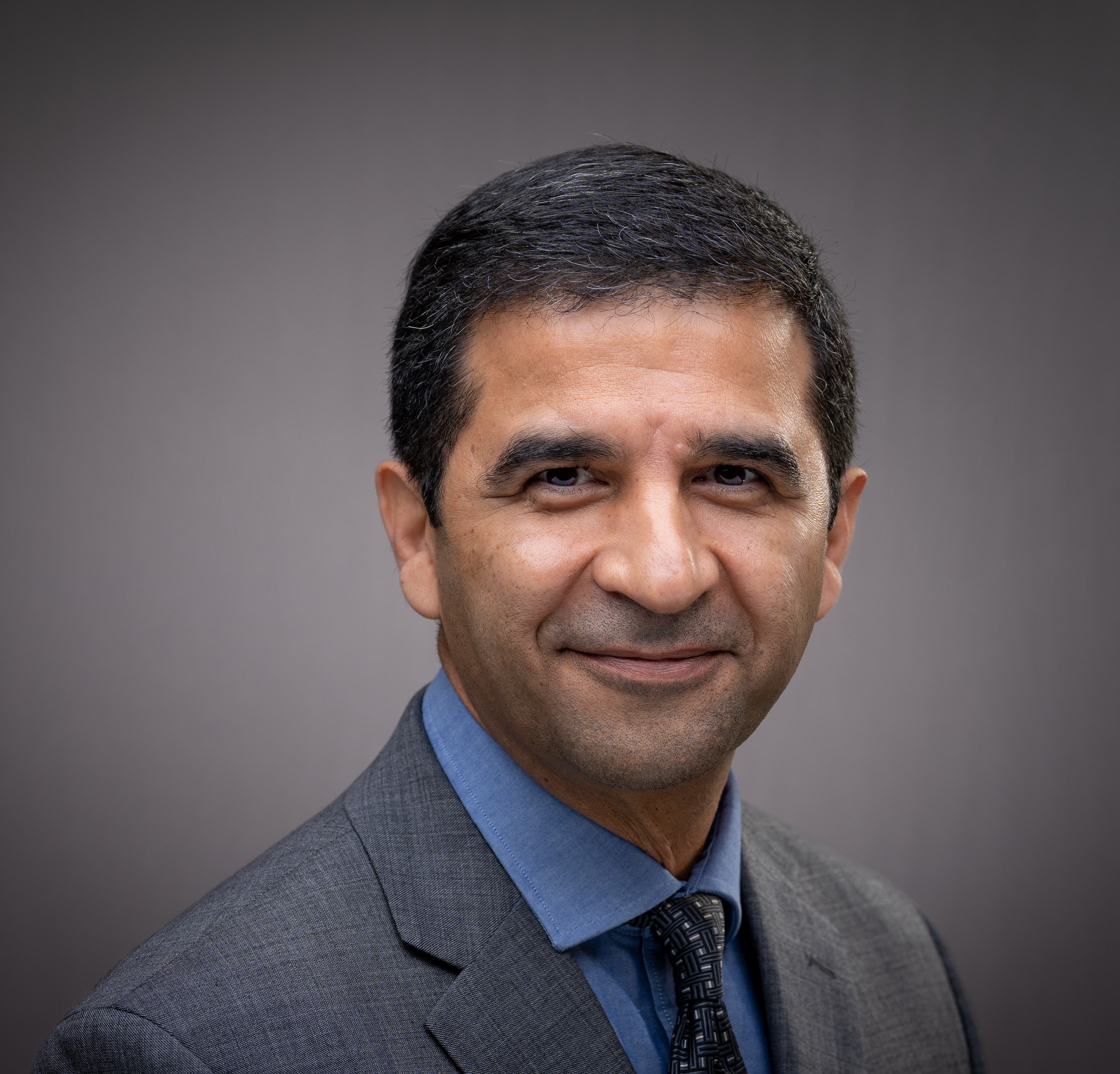
Dr. Mohammad Ali Ayoubi is an Associate Professor in the Department of Mechanical Engineering at Santa Clara University's School of Engineering. He holds a Ph.D. in Aeronautics and Astronautics from Purdue University (2007), an M.S. in Aerospace Engineering from Sharif University of Technology (1998), and a B.Sc. in Mechanical Engineering from Amirkabir University of Technology (1991). His research focuses on dynamics and control systems for aerospace applications, including: Multibody and spacecraft dynamics Vibration control of rotating machinery Intelligent control algorithms (fuzzy logic, neural networks) Guidance systems for reentry vehicles and spacecraft attitude control Recent publications (2016-2024) demonstrate strong emphasis on spacecraft control, vibration suppression, and optimal guidance methods, frequently employing advanced techniques like Takagi-Sugeno fuzzy models and data-driven approaches. Awards & Honors: AIAA Leadership Award (2019) ASME Fellow (2016) NASA Faculty Fellow (2013-2014) Researcher of the Year, Santa Clara University (2013) Teaching excellence awards from Purdue University (2004-2006)
Yasushi Hamanaka is a Professor at the Nagoya Institute of Technology , affiliated with the Graduate School of Engineering in the Materials Function Field . He holds a Doctorate in Engineering from Osaka University (1995) and has an academic background in Applied Physics from Osaka University (BSc 1990, MSc 1992). His research focuses on plasmonics , nonlinear optics , and semiconductor nanomaterials , particularly AgInS2 , CuInS2 , and lead halide perovskites . He has secured significant grants from JSPS and private foundations for projects on quantum dot superlattices , pressure-dependent optical properties , and green synthesis methods . Scientific Awards : Meishokai Award (2022.11) Enai Kagaku Gijutsu Zaidan Prize (2016.03) Meishokai Award (2013.11) Professional Memberships : The Japan Society of Applied Physics (2007) Physical Society of Japan (1992) Society of The Nano Science and Technology (2005) Japan Institute of Metals (2015) His laboratory synthesizes metal/semiconductor nanoparticles via liquid-phase laser ablation and colloidal methods , emphasizing environmentally friendly fabrication and optical device applications . Collaborations include high-pressure studies and industrial partnerships for energy conversion materials.
Dr. Doru Cristian Sticleț is a distinguished Researcher at the National Institute for Research and Development of Isotopic and Molecular Technologies (INC DTIM) , specializing in Quantum Engineering . With a PhD in Theoretical Physics from Université Paris-Sud (2012) and an MSc from Utrecht University (2009), his work bridges fundamental research and applied quantum technologies. PhD: Theoretical Physics , Université Paris-Sud (2012) MSc: Theoretical Physics , Utrecht University (2009) His research spans Condensed Matter Physics , Superconductivity , Topological Materials , and Quantum Transport . Key areas include Majorana bound states in semiconductor-superconductor hybrids, Berry phases, quantum dynamics in non-Hermitian systems, and Josephson junctions. He leads projects on quantum computation with Schrödinger cat states and stability analysis of organic battery materials via DFT simulations. Recent collaborative projects focus on: Full-stack error-corrected quantum processors using cat codes (2020–2024) Thermodynamic stability of conjugated sulfonamides MOFs for Li-ion batteries (2021–2023) Entanglement in non-Hermitian Hamiltonians (2021–2023) Quantum transport in 2D transition metal dichalcogenides (2020–2022) Foundational work for Romania's participation in the European Quantum Technologies Flagship (2018–2021) His peer-review activities and project coordination roles highlight his contribution to advancing quantum research infrastructure in Europe.
Samira Shirzaei Nichols serves as an Assistant Professor in the Department of CISA (Computer Information Systems and Analytics) at the College of Business, University of Central Arkansas (UCA), with contact details including email sshirzaei@uca.edu, office COB 305D, and phone (501) 450-5331. Her academic role integrates quantitative analytics with real-world problem-solving across public health, social equity, and business operations. Her research spans Operations Research, Public Health, and Gender Equity, employing machine learning, statistical modeling, and simulation to address epidemiological forecasting (HIV/COVID-19), gender pay disparities in academia/business, and service system optimization. Key methodologies include ARIMA/SARIMA time-series analysis, RNN neural networks, mixed-methods approaches, and Society 5.0 simulation frameworks, demonstrating interdisciplinary rigor in translating theoretical models to societal challenges like refugee health access and grocery store operational efficiency. Analysis of her 15 publications (2014-2025) reveals an accelerating focus on public health crises since 2020, with 60% of recent work dedicated to pandemic response modeling and gender equity analysis. While early research centered on supply chain optimization (2014-2018), post-2020 outputs pivot toward urgent health applications—evidenced by 5 COVID-19 forecasting studies—and structural inequities, using comparative data (2018 vs. 2021) to quantify gender pay gaps across academic disciplines. Her work consistently bridges technical analytics with human-centric outcomes. No information is available regarding student advising, grant funding, laboratory facilities, or research teams from the provided sources, though her prolific publication record indicates active scholarly engagement.
Dr. Raj Dhara is an Assistant Professor at the Department of Mathematical Modeling, Lodz University of Technology. His academic work spans mathematical analysis of degenerate PDEs, fractional calculus, and computational methods, alongside interdisciplinary research in materials science focusing on optoelectronic properties and sensor development. Key Research Areas: Partial Differential Equations Functional Analysis Nonlocal Equations Organic Electronics Optoelectronic Sensors Nanoscale Modeling The 15 most recent publications highlight expertise in both mathematical theory and applied materials science, with a focus on nonlinear systems, eigenvalue problems, and molecular design for light-emitting devices. Conference contributions include multiscale modeling techniques for MEMS arrays.
Martin Hairer is a Professor of Mathematics at École Polytechnique Fédérale de Lausanne (EPFL) and Imperial College London. He previously held positions at the University of Warwick and the Courant Institute of New York University. Hairer is globally renowned for his groundbreaking work in stochastic analysis, particularly stochastic partial differential equations (SPDEs), for which he received the Fields Medal in 2014. Doctoral studies at the University of Geneva under Jean-Pierre Eckmann (PhD in Physics, 2001) BSc in Mathematics (1998) and MSc in Physics (1998) from the University of Geneva Research Interests: Hairer’s work focuses on stochastic analysis, SPDEs, and regularity structures. His contributions include ergodic theory for stochastic systems, non-Markovian dynamics, and the development of the theory of regularity structures to solve nonlinear SPDEs. Recent articles explore topics like Gaussian multiplicative chaos, stochastic quantization of quantum field theories, and spectral gaps for SPDEs. Scientific Awards and Honours : Fields Medal (2014) Breakthrough Prize in Mathematics (2021) King Faisal Prize (2022) Whitehead Prize (2008) Philip Leverhulme Prize (2008) Royal Society Wolfson Research Merit Award (2009) ERC Consolidator Grant (2014) Fellow of the Royal Society (2014), American Mathematical Society (2015), and other academies
Prof. Dr. Ole Wilms is an Assistant Professor at the University of Hamburg's Faculty of Business, Economics and Social Sciences , Department of Economics, focusing on Macroeconomics and Fiscal Policy . He also holds a part-time Associate Professorship in Finance at Tilburg University. Education : Ph.D. in Management and Economics from University Zurich, M.Sc. in Quantitative Finance from Kiel University, B.Sc. in Economics from Kiel University. Research Focus : Asset pricing, climate finance, macro-finance, machine learning applications in economics, investor disagreement effects on financial markets, and nonlinear dynamic model methodologies. Publications : Published in top journals including the Journal of Finance , Review of Financial Studies , and Journal of Financial Economics , with recent emphasis on climate risk pricing and economic modeling techniques. Academic Affiliations : Active in research teams at both University of Hamburg and Tilburg University, mentoring doctoral researcher Marlene Renkel. Contact : ole.wilms@uni-hamburg.de
Takéo Takahashi serves as an Inria Research Director and leads the SPHINX project team at Inria Nancy–Grand Est, affiliated with the Institut Élie Cartan de Lorraine (IECL) under the University of Lorraine's Faculty of Science and Technology in Vandœuvre-lès-Nancy, France. His role centers on advanced mathematical research within the institution's Partial Differential Equations team. His research expertise spans partial differential equations, control theory, and fluid dynamics, with emphasis on controllability, stabilization, and well-posedness of fluid systems. Key investigations include Navier-Stokes equations, Oseen systems, Burgers equation, and fluid-structure interactions, alongside interdisciplinary applications in cosmic-ray physics and population dynamics. Analysis of Takahashi's 2024-2025 publications reveals a dominant focus on mathematical control theory for fluid dynamics, particularly Carleman estimates for Oseen systems and small-time controllability. His work bridges theoretical PDE analysis with practical applications, extending to astroparticle physics through graph neural network implementations for cosmic-ray reconstruction. As head of the Inria SPHINX project team, he directs research on complex systems modeling and control theory development within the Nancy–Grand Est region.
Luis David Avendaño-Valencia is an Associate Professor in the Department of Mechanical Engineering at the University of Southern Denmark's College of Engineering. His research focuses on structural dynamics, monitoring, and damage detection under time-dependent environmental and operational conditions, integrating signal processing, statistics, and machine learning. Education: PhD in Mechanical and Aeronautical Engineering (2016), BEng in Electronic Engineering (2007) External Roles: External Censor at Censorkorps (2023–present), Member of the Danish Center for Applied Mathematics and Mechanics (DCAMM) (2018–present) His work emphasizes system identification and damage diagnosis algorithms for wind turbines, marine systems, and other structures. Key methodologies include Gaussian Process Regression, Bayesian updating, and Linear Parameter Varying (LPV) models. He has contributed to offshore wind turbine blade diagnostics, marine diesel engine monitoring, and uncertainty quantification in vibration analysis. Recent publications highlight hybrid physics-data-driven approaches and multivariate regression techniques to mitigate environmental/operational variability. Collaborations span maritime engineering, wind energy, and machine learning-based diagnostics. He teaches courses on machine learning for structural monitoring, structural vibrations, and time-series methods. Supervision includes PhD projects on digital twins of axial piston pumps and operational regime clustering for wind turbines.
Sine Leergaard Wiggers is an Associate Professor at SDU Mechanical Engineering , University of Southern Denmark. With a Ph.D. in Mechanical Engineering from DTU (2005) and an M.Sc. in Mechanical Engineering (2001), her work focuses on Multibody Dynamics , Structural Vibrations , and Dynamic Analysis . Education: M.Sc. (2001) & Ph.D. (2005) from Technical University of Denmark Her research explores eigenfrequencies , beam-column mechanics , and dynamic stability , often employing finite element analysis and computational simulations . Recent publications delve into spring-supported boundary conditions, buckling stresses, and nonlinear structural behaviors. Her 15 most recent articles (2018-2004) emphasize structural stability , eigenfrequency analysis , and dynamic modeling of mechanical systems, with applications in beam-column interactions, discretized systems, and chain drives. Subfields span mathematical modeling , computational mechanics , and applied engineering . She has taught courses such as Ingeniørfagligt Grundlag (2018-2021) and served on the Academic Study Board (2022-2025). Her professional experience includes consultancy roles at Lloyd's Register (2005-2008) and post-Ph.D. work at MAN B&W Diesel A/S.
Prof. Dr. Jan Bender holds a professorship in Computer Animation at RWTH Aachen University's College of Engineering. As a leading researcher in physics-based simulation methods, his work focuses on developing advanced numerical techniques for fluid dynamics, deformable solids, and multi-physics interactions through Smoothed Particle Hydrodynamics (SPH) and Finite Element Methods (FEM). Key Contributions: Invented PF-FLIP for two-phase flows, developed SymX symbolic framework for energy-based simulations, created STARK unified solver for robotics applications, and introduced implicit boundary handling for SPH Methodologies: Specializes in hybrid Eulerian/Lagrangian approaches, differentiable physics, adaptive discretization, and machine learning integration for simulation acceleration Research Impact: 2023 & 2024 Best Paper Awards in VMV and SCA conferences. His work enables billion-particle fluid simulations and realistic multi-body interactions for robotics, with applications in welding, thermal spraying, and soft robotics. Collaborations: Works extensively with robotics institutes (Gazebo Fluids extension) and materials science departments (TIG welding, thermal spray modeling). Maintains open-source code repositories for simulation frameworks.
Dr. FENG Weiqiang is an Assistant Professor and PhD supervisor at the Department of Ocean Science and Engineering, Southern University of Science and Technology (SUSTech), Shenzhen, China. He received his PhD in Geotechnical Engineering from The Hong Kong Polytechnic University in 2016, after completing a Master's at Zhejiang University and a Bachelor's at Central South University. His research bridges marine geotechnics with advanced computational and sensing technologies. PhD: Geotechnical Engineering, The Hong Kong Polytechnic University (2011–2016) MSc: Geotechnical Engineering, Zhejiang University (2008–2011) BEng: Mining & Geotechnical Engineering, Central South University (2004–2008) Dr. Feng specializes in marine soil consolidation , elasto-viscoplastic constitutive modeling , and fiber optic geotechnical sensors . He pioneered a modified Cam-Clay model incorporating nonlinear loading-unloading and temperature effects , with applications in major projects like Hong Kong International Airport's Third Runway and the Tseung Kwan O reclamation. His fiber Bragg grating effective stress meter , licensed to NanZee Sensing Co., Ltd., represents the first global instrument for direct soil stress measurement. His publications (73 SCI papers, H-index 23) focus on submarine pipeline-soil interaction , robot safety systems , and offshore energy islands . Key trends include multi-physics coupling in geotechnical systems, machine learning integration for damage detection, and advanced sensing techniques for marine environments. 2024: Outstanding College Advisor Award, SUSTech 2023: Dual Outstanding Individual Awards (Student Recruitment & Party Affairs), SUSTech 2020: Shenzhen Municipal Government Category C Overseas High-Level Talent 2016: 'Ringo Yu' Best Doctoral Thesis, Hong Kong Institution of Civil Engineers 2007: National Scholarship, Ministry of Education, China Dr. Feng actively leads 5 research projects (including 1 National NSFC grant and 3 provincial/municipal grants), participates in over 10 national/Hong Kong SAR funded programs, and mentors prospective postdoctoral fellows, PhD, and master's students in geotechnical, mechanical, and environmental disciplines. His team develops intelligent geotechnical systems for offshore applications, including submarine robot safety frameworks and smart energy island infrastructure . Current collaborations span Canadian National Geotechnical Code implementation and Kunlong 500 tracked mining vehicle soil interaction studies.
Firdaus E. Udwadia is a Professor at the University of Southern California , with appointments across multiple departments including Civil Engineering , Aerospace & Mechanical Engineering , Mathematics , Information and Operations Management , and Systems Architecture Engineering . His research spans Applied Mechanics , Earthquake Engineering , Dynamics and Control , and Computational Methods , with a focus on nonlinear systems, stability analysis, and innovative control strategies. Research Interests Applied Mechanics and Applied Mathematics Earthquake Engineering Dynamics and Control Computational Methods Engineering Management Editorial Roles Editor-in-Chief of several journals Associate Editor for Journal of Mathematical Analysis and Applications , Nonlinear Dynamics , and others His recent work emphasizes uncoupling multi-degree-of-freedom systems , stability of gyroscopic systems , and advanced computational techniques in structural mechanics. Publications highlight applications in aerospace, civil engineering, and mechanical systems, with a strong theoretical foundation in Lyapunov theory and generalized inverses .
Jan Modersitzki is a Full Professor of Applied Mathematics at the University of Lübeck, where he leads research at the Institute of Mathematics and Image Computing. He holds a secondary affiliation with Fraunhofer MEVIS, focusing on image registration projects. His academic journey includes a Diploma (1990) and PhD (1995) from the University of Hamburg, followed by a Habilitation (2003) from the University of Lübeck. Career milestones include positions at Emory University, McMaster University, and CAU Kiel. Modersitzki's research centers on computational methods for medical imaging , with emphasis on variational techniques, optimization, and deformable registration. He developed the widely used FAIR toolbox (Flexible Algorithms for Image Registration) and has contributed to foundational theories in image alignment. His work bridges mathematical rigor with clinical applications in oncology, ophthalmology, and pulmonology. Analysis of his 15 most recent publications (2017–2025) reveals dominant themes: multiscale registration , discontinuous deformation modeling , and high-performance computing solutions for medical images. Trends include GPU acceleration, inverse problem optimization, and integration of machine learning with traditional variational frameworks. He actively contributes to academic societies including GAMM, MICCAI, and SIAM. No awards, grants, or supervised students are detailed in available materials.
Alberto Ponce-Torres served as a Substitute Professor in the Department of Mechanical, Energy and Materials Engineering at the University of Extremadura, Spain, from October 2019 to September 2020. Previously, he was a pre-doctoral grant-assisted student (FPU) in the same department from September 2015 to September 2019, conducting research that led to his PhD. His educational background includes a PhD in Engineering (2015-2019), a Research Master in Engineering and Architecture (2014-2015), and a Mechanical Engineering degree (2010-2014), all from the University of Extremadura. Ponce-Torres's primary research interests span Fluid Dynamics, Mechanical Engineering, and Materials Science, with significant recent expansion into Structural and Civil Engineering. His foundational work investigated liquid bridge stability, surfactant effects on drop dynamics, and viscoelastic fluid behavior, while his latest publications address structural failures in concrete parking garages and fatigue mechanisms of piles in cohesive soils. Analysis of his 25 publications reveals a distinct transition from fundamental fluid mechanics (2016-2020) to applied structural engineering (2024-2025), demonstrating interdisciplinary evolution with increasing focus on civil infrastructure resilience. No scientific awards were documented in the source material. His doctoral research was funded by Spain's competitive FPU grant (Formación de Profesorado Universitario). There is no public record of students he may have advised or additional grant funding beyond this fellowship.