Thomas Garm Pedersen is a Professor at the Department of Materials and Production, Faculty of Engineering and Science, Aalborg University. His research focuses on quantum mechanics, nanotechnology, and optical properties of materials such as graphene and quantum dots. He holds a PhD in Physics from 1997, specializing in the microscopic theory of linear optical properties of quantum dots. Affiliations: Center for Classical Communication in the Quantum Era (Co-Investigator), Member of the Danish National Research Foundation-funded projects Research Interests: Pedersen’s work explores excitonic physics, magnetic field effects, and optoelectronic properties of nanomaterials. His studies include quantum dots, graphene nanorings, and polymer-based optical systems. He employs theoretical and computational methods to analyze confined quantum systems and nonlinear optical responses. Publications: His recent work spans 261 publications, emphasizing quantum phenomena in confined systems and nanomaterial applications. Key areas include Aharonov-Bohm ring dynamics and excitonic effects in 2D materials. Awards: Knight of the Dannebrog (2021) Grants/Projects: Active in projects like Classique (Quantum Communication) and polymer optical characterization studies. Supervised 9 PhD students and contributed to interdisciplinary research in materials science and quantum technologies.
Philipp Schulze is a Researcher and Lecturer at Technische Universität Berlin's Faculty II - Mathematics and Natural Sciences, within the Institute of Mathematics. His primary focus is on modeling, simulation, and optimization of real processes, particularly in the realm of model reduction for complex systems. Current roles include Lecturer for Model Reduction (Summer 2024) and Research Associate in the Department of Modeling, Simulation and Optimization of Real Processes under Prof. Tobias Breiten. Education: Bachelor's in Energy and Process Engineering (2008–2012) Master's in Scientific Computing (2011–2014) PhD in Mathematics (2023) Research Interests: Structure-preserving model reduction, port-Hamiltonian systems, numerical methods for transport-dominated phenomena, and applications in fluid dynamics, combustion, and two-phase flows. His work emphasizes energy-based approaches and nonlinear approximation techniques for systems with complex dynamics. Publications: Recent work focuses on nonlinear embeddings for Hamiltonian systems, error bounds for port-Hamiltonian model reduction, and efficient simulations of wildland fires and two-phase flows. Contributions highlight the development of reduced-order models that preserve physical structures like energy conservation and port-Hamiltonian properties. Grants & Awards: No specific awards listed, but active in collaborative projects involving digital twins and combustion control. Labs/Teams: Part of TU Berlin's Modellierung, Simulation und Optimierung realer Prozesse group and previously worked with Prof. Volker Mehrmann's Numerical Mathematics team.
Dianne P. O'Leary is a Professor affiliated with the Department of Computer Science at the University of Maryland. Her work focuses on scientific computing, numerical analysis, and computational science, with a particular emphasis on matrix factorizations, differential equations, and Monte Carlo methods. She authored the textbook *Scientific Computing with Case Studies* (SIAM Press, 2009), which integrates theoretical concepts with practical case studies across physics, engineering, epidemiology, and biology. Her research explores topics such as image deblurring, blind deconvolution, elastoplastic torsion, and iterative methods for solving large linear systems. The book includes nineteen case studies that illustrate algorithm design, mathematical modeling, and software development principles. Notably, the text emphasizes stability, error analysis, and MATLAB implementation grounded in machine arithmetic and memory management. While no explicit scientific awards or student advisees are mentioned in the provided texts, her contributions to computational education and algorithm development are central to her work. Supplementary materials include solution manuals, MATLAB code repositories, and detailed notes on topics like sensitivity analysis, computer memory management, and finite element methods. Her case studies often bridge theory and application, such as modeling epidemics, robot control systems, and structural engineering problems. The book’s structure reflects a commitment to hands-on learning, with units dedicated to dense matrix computations, optimization, Monte Carlo simulations, and sparse matrix techniques for partial differential equations.
Cristian Guillermo Gebhardt is a Professor and Director of the Bergen Offshore Wind Centre (BOW) at the Geophysical Institute, University of Bergen. His research focuses on computational mechanics, aeroelastic simulation of wind turbines, offshore energy systems, and structural dynamics. He leads interdisciplinary projects on data-driven methodologies for wind energy infrastructure, combining advanced numerical techniques with engineering applications. His expertise spans nonlinear dynamics of mechanical systems, finite element methods, and optimization frameworks. He has pioneered mid-fidelity simulation tools for aeroelastic analysis, mooring line dynamics, and rotor-blade interactions. Recent work emphasizes machine learning integration for surrogate models and adaptive time-stepping algorithms to enhance computational efficiency. Key contributions include advancements in Kirchhoff rod modeling, isogeometric discretization for nonlinear rods, and fatigue assessment methodologies for offshore structures. His projects often bridge academia and industry, addressing challenges in wind farm design, turbine reliability, and environmental regulatory gaps. Projects: Machine Wind (2024-2028), NextGenT (2024-2027), Data-Driven Offshore ERC (2023-2028) Focus Areas: Offshore wind energy systems, aeroelastic instabilities, data-driven computational mechanics Publications emphasize validation of simulation tools, rotor dynamics under varying conditions, and structural health monitoring techniques. His work highlights the intersection of mathematical rigor and engineering pragmatism in sustainable energy solutions.
H.G.E. Meijer is an Associate Professor in the Mathematics of Imaging & AI (MIA) group within the Department of Applied Mathematics at the University of Twente, part of the Faculty of Electrical Engineering, Mathematics and Computer Science (EEMCS). He began his tenure at the university in 2007 after completing his PhD in Mathematics at Utrecht University in 2006. His research centers on applied dynamical systems theory and neuroscience , particularly focusing on characterizing dynamical transitions in biological models using geometric and structural insights. He investigates how neuromodulation can improve neuronal function, with applications in epilepsy, Parkinson's disease, and sensory processing. His work combines mathematical modeling, numerical analysis, and collaboration with clinical research teams to analyze patient data and refine treatment protocols such as neurostimulation in epilepsy surgery and deep brain stimulation. Meijer is a co-developer of MatCont , a leading numerical bifurcation analysis toolbox, where he contributes new algorithms and delivers training through courses and tutorials. This software is widely used in the dynamical systems community for stability analysis and model exploration. He teaches core subjects including Mathematical Modelling Calculus Linear Algebra Nonlinear Dynamics Programming Numerical Methods for Biomedical Engineering and Applied Mathematics Mathematical Neuroscience His expertise spans Neuroscience , Neuron , Epilepsy , Seizure , Excitability , Stimulation , and Electro-stimulation , reflecting his interdisciplinary approach bridging mathematics and medicine. Meijer actively collaborates with clinical and experimental groups and is open to new interdisciplinary projects. He is affiliated with the TechMed Centre , indicating involvement in technology for healthcare innovation.
Thomas Pock is a Professor of Computer Science at Graz University of Technology, holding the AIT Stiftungsprofessur for Mobile Computer Vision. He is affiliated with the Institute for Computer Graphics and Vision (ICG) within the Faculty of Computer Science and serves as a principal scientist at the Austrian Institute of Technology (AIT), Center for Vision, Automation & Control. He leads the Vision, Learning and Optimization (VLO) research group, which focuses on mathematical modeling and optimization in computer vision. His research interests lie at the intersection of computer vision, image processing, and mathematical optimization. Specifically, he develops mathematical models for computer vision and efficient convex and non-smooth optimization algorithms , particularly for mobile scenarios. His recent work increasingly integrates variational methods with deep learning, especially in solving inverse problems in imaging such as medical reconstruction and deblurring. The trends in his recent publications show a strong emphasis on deep learning for inverse problems , variational networks , and learned optimization . His group explores how to combine classical mathematical models with data-driven deep learning approaches to achieve stable, interpretable, and high-performance solutions in image reconstruction and processing. His scientific achievements have been recognized with several prestigious awards: START Prize, Austrian Science Fund (FWF), 2013 German Pattern Recognition Award, DAGM, 2013 ERC Starting Grant, European Research Council, 2014 Thomas Pock actively mentors students and leads a research group of 10 PhD students and 2 postdocs. He has secured significant research grants, including the ERC Starting Grant, which supports his foundational work. He is also engaged in scientific communication, giving invited talks at international venues such as SIAM and co-organizing the IMAGINE One World seminar series to foster global collaboration in imaging and inverse problems. He leads the Vision, Learning and Optimization (VLO) group at the Institute for Computer Graphics and Vision. The group develops mathematical models and efficient algorithms for computer vision and image processing, with a focus on mobile applications. The team includes multiple PhD students and postdoctoral researchers and has produced notable software and publications in top venues.
Gregory Chini is a Professor in the Department of Mechanical Engineering at the University of New Hampshire (UNH), where he has been a faculty member since 1999. He also serves as the Director of the Integrated Applied Mathematics (IAM) Ph.D. program and holds affiliations with the College of Engineering and Physical Sciences. He has been a visiting researcher at the California Institute of Technology and the University of Nottingham, and is a regular participant in the Woods Hole Summer Program in Geophysical Fluid Dynamics. Ph.D., Aerospace and Aeronautical Engineering, Cornell University M.S., Aerospace and Aeronautical Engineering, Cornell University B.S., Aerospace and Aeronautical Engineering, University of Virginia Prof. Chini's research lies at the intersection of fluid dynamics and applied mathematics, with a focus on modeling geophysical, environmental, biological, and industrial flows. He investigates the stability and dynamics of coherent structures such as vortices, waves, and boundary layers using asymptotic, variational, and spectral methods. His work emphasizes reduced-order modeling to understand complex systems like turbulent convection and porous media flows. The recent publications highlight a strong trend in multiscale modeling, turbulent transport, and mathematical analysis of fluid systems. His articles frequently address Rayleigh-Bénard convection, stratified turbulence, boundary layer dynamics, and optimal transport, often employing quasilinear and asymptotic frameworks to extract physical insights. The research spans from theoretical analysis to computational modeling, with applications in oceanography, geophysics, and soft matter. He has been awarded multiple research grants from the National Science Foundation (NSF) and the U.S. Department of Defense (Navy), supporting projects on high Reynolds number turbulence, wall-bounded flows, and multiscale oceanic modeling. These grants reflect sustained funding and leadership in fundamental fluid mechanics research. National Science Foundation (NSF): Development of Asymptotically-Reduced Multi-Scale Models (2014–2019) National Science Foundation (NSF): Multiscale Modeling of Oceanic Mixed Layer (2009–2015) U.S. DOD, Navy: Predicting Non-Equilibrium Wall-Flow Phenomena (2017–2023) Mentis Sciences Inc: Cooling System for Laser Enclosure (2018) Prof. Chini teaches core courses such as Fluid Dynamics (ME 608), Thermodynamics (ME 503), Viscous Flow (ME 909), and Asymptotic Methods (IAM 940), and supervises doctoral research in applied mathematics and mechanical engineering. He advises Ph.D. students and collaborates widely, particularly with researchers like Christopher White. His lab and research group focus on theoretical and computational fluid dynamics, with an emphasis on model reduction and predictive simulation of complex flows.
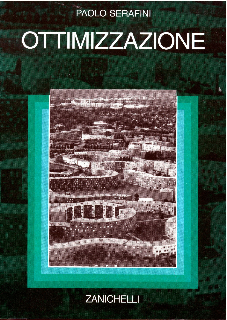
Paolo Serafini is a Professor in the Department of Mathematics and Computer Science. His academic work centers on Operations Research and Mathematical Optimization, with extensive contributions to both theoretical and applied aspects of the field. Position: Professor Department: Department of Mathematics and Computer Science His research spans a broad range of topics within optimization, including linear and integer programming, graph algorithms, duality, and computational methods. He has developed comprehensive educational materials that reflect deep expertise in the discipline. Paolo Serafini authored the textbook Ottimizzazione , covering fundamental and advanced topics in operations research. The book includes structured chapters on complexity, convex analysis, linear and nonlinear programming, network flows, dynamic programming, matroids, polyhedral combinatorics, and heuristic methods. Accompanying this work are exercise solutions and computational models, demonstrating a strong commitment to pedagogy. Scientific awards are not mentioned in the available materials. He has supervised no students listed in the provided content. There is no mention of grants or funding sources. However, his development of teaching resources—including solved exercises, Lingo models, and Excel implementations—shows active engagement in academic instruction and dissemination. There is no information about labs, research teams, or collaborative groups in the provided texts.
Dimitris Angelakis is a Full Professor of Quantum Physics and Quantum Computing at the Technical University of Crete's School of Electrical and Computer Engineering. He also holds a Visiting Professor appointment at Singapore's Centre for Quantum Technologies. His work bridges quantum simulations with industrial applications, particularly focusing on quantum processors for high-performance computing and fundamental research in strongly correlated quantum systems. He represents Greece in the European Flagship in Quantum Technologies' Quantum Community Network and serves on Greece's National Council for Research Technology and Innovation. Education: PhD in Theoretical Quantum Optics (Imperial College, 2002), MSc in Atomic and Molecular Physics (University of Crete, 1998), BSc in Physics (University of Crete, 1997) His research explores quantum simulation and computation, quantum machine learning, optimization, and industrial applications of quantum computing. The group develops hardware-efficient algorithms for NISQ devices and investigates fundamental quantum phenomena like many-body scarring and topological states. Recent work includes resource-efficient quantum circuits for nonlinear dynamics and quantum chemistry applications. Scientific recognition includes: Google Quantum Innovation Award (2018) Greek Ministry of Defense Distinguished Young Scientist Award (2004) Institute of Physics UK Quantum Electronics Thesis Prize (2002) St Catharine’s College Cambridge Junior Research Fellowship (2001-2004) Valerie Myerscough PhD Prize (2000) Prof Angelakis has mentored numerous PhD students including Chong Hian Chee, Muhammad Umer, Harvey Cao, and Jirawat Porras. His group collaborates globally with institutions like NUS Singapore, Cambridge University, and Google Quantum AI. They actively contribute to professional service through editorial roles in European Physical Journal: Quantum Technology and Advanced Quantum Technology .
Cristóbal López Sánchez is a Full Professor in the Department of Physics at the University of the Balearic Islands (UIB), specializing in Condensed Matter Physics. He holds a PhD in Physics from UIB and completed postdoctoral research at the University of Rome 'La Sapienza'. His academic career includes serving as a Ramón y Cajal fellow and associate professor at UIB from 2001-2019 before becoming a full professor in December 2019. He maintains active research collaborations with institutions worldwide including the University of Cambridge, ICTP Trieste, and LOCEAN Paris. His educational background includes a Physics degree from the University of Granada and PhD from UIB. International research stays have been conducted at: University of Cambridge (UK) University of Rome 'La Sapienza' (Italy) University of Oldenburg (Germany) Eotvos University of Budapest (Hungary) LEGOS Toulouse (France) LOCEAN Paris (France) ICTP Trieste (Italy) CASUS Gorlitz (Germany) López Sánchez's research focuses on the interdisciplinary applications of Statistical and Non-linear Physics to complex systems. His work centers on understanding emergent behavior in complex systems, particularly transport processes in oceans and their influence on marine ecosystems, as well as collective behavior in biological systems. Key research contributions include characterizing mesoscale mixing and dispersion processes in marine surfaces using Lagrangian Coherent Structures, and studying pattern formation in models of organisms with spatial nonlocal interactions. His broader research portfolio encompasses micro-macro connections in particle systems, biological search dynamics, machine learning applications for spatio-temporal prediction, quantum fluids, sinking particle dynamics, and vegetation pattern formation. His recent publications reveal a strong emphasis on interdisciplinary applications of physics principles to biological and environmental systems. The research demonstrates sophisticated integration of mathematical modeling with real-world phenomena, particularly in ocean transport processes and biological pattern formation. Key thematic areas include Lagrangian transport methodologies, nonlinear dynamics in ecological systems, and computational approaches to complex spatio-temporal phenomena. Scientific recognition includes: Ramón y Cajal fellowship López Sánchez actively mentors graduate students and leads significant research initiatives. His current LAMARCA project investigates Lagrangian transport of marine litter and microplastics in coastal waters, focusing on transport structures and connectivity patterns. He serves as thesis advisor for the PhD in Physics program at UIB and has maintained consistent teaching responsibilities across multiple academic years. His research group Complex systems in life and the environment (CILIA) operates as a Consolidated R+D+I Group at UIB. He directs the Complex systems in life and the environment (CILIA) research group and leads the LAMARCA project on marine litter transport. His laboratory work integrates theoretical physics approaches with environmental and biological applications, particularly through computational modeling of complex systems.
Janusz Ginster is a postdoctoral researcher in the Partial Differential Equations group at the Weierstrass Institute for Applied Analysis and Stochastics (WIAS) since September 2024. He has held postdoctoral positions at Humboldt University of Berlin (2019-2024), Technical University Berlin (2019), and Carnegie Mellon University (2016-2018). His research focuses on variational methods for non-convex minimization problems, energy scaling laws, and geometric rigidity in materials science and continuum mechanics. Research Interests : Gamma-convergence, scaling laws, elasticity, plasticity, fracture mechanics, micromagnetism, phase transitions, and geometric rigidity. Teaching : Lecturer at Humboldt University of Berlin (2020-2024) and Carnegie Mellon University (2016-2018), covering courses like Functions of Bounded Variation , Nonlinear Functional Analysis , and Continuum Mechanics . Education : PhD from the University of Bonn (2013-2016) under Stefan Müller; MSc in Mathematics (2011-2013) and BSc (2007-2010) at the University of Bonn. Publications span nonlinear elasticity, phase transitions, dislocation models, and pattern formation, with recent work on biomembranes, martensitic transformations, and frustrated spin systems. No scientific awards or honors are explicitly documented in the provided materials.
Shohei SHIMIZU is a Professor at Osaka University 's Department of Reasoning for Intelligence and a Specially Appointed Professor at Shiga University 's Faculty of Data Science . With a career spanning multiple institutions and roles, he has been pivotal in advancing causal discovery methodologies. His research focuses on Statistical Causal Inference Machine Learning for Observational Data Reliability of AI Systems Industry-Academia Collaborations Recent work includes differentiable causal discovery and counterfactual explanations for complex AI models, emphasizing applications in biomedical research and financial analysis . Key trends in his publications show a strong emphasis on non-Gaussian models , hidden variables , and scalable algorithms , with recent integrations of large language models and open-source Python tools . Students and Collaborations Ph.D. students: Yuji Sakamoto, Kentaro Tagawa, Yi Jiang, Yoshimitsu Morinishi, Daigo Fujiwara Collaborations: RIKEN AIP Causal Inference Team, JST CREST Project, Tokyo Institute of Technology
Alberto Manuel Tavares Simões is an Assistant Professor in the Department of Mathematics at the University of Beira Interior (UBI), Portugal. He holds a PhD in Mathematics (2011) and a Master's degree in Mathematics (2004) from the University of Aveiro. PhD: Mathematics, University of Beira Interior (2011) Master's: Mathematics (Functional Analysis and Operator Theory specialization), University of Aveiro (2004) Graduation: Applied Mathematics, University of Évora (14.4/20) His research focuses on Hyers-Ulam stability and related methods for integral equations , differential equations , and operator theory . Key areas include fixed-point theorems, convolution operators, and wave diffraction problems with higher-order boundary conditions. The 15 most recent publications highlight his work on stability analysis for Voltterra and Fredholm integral equations , Bessel differential equations , and integro-differential equations . Subfields span boundary conditions , partial differential equations , operator theory , and mathematical physics . He has supervised one Master's dissertation on the teaching of derivatives and has been active in academic roles at UBI since 2000, transitioning from Assistant to Assistant Professor in 2011.
Miguel Angel Navarro Burgos is a PartTime Lecturer in the Department of Mathematics at the University of León , affiliated with the College of Industrial, Informatics and Aerospace Engineering. His research spans Partial Differential Equations , Functional Analysis , Quantum Theory , and Operator Theory , with a focus on stability of radial solutions, geometric quantization, and mathematical physics. He earned his Ph.D. from the Universidad de Granada (2016) under the supervision of Dr. Salvador Villegas Barranco. His recent publications analyze k-Hessian and p-Laplace equations , emphasizing semistable radial solutions , Liouville-type theorems , and geometric constraints . Additional work includes unitary operators in von Neumann algebras , Hölder norm-preserving mappings , and quantum field theory in curved spacetime . Co-authors include Victor Aldaya, Manuel Calixto, and Justino Sánchez. Key trends in his work: Stability and symmetry in PDEs Operator theory in quantum systems Geometric methods in mathematical physics Nonlinear elliptic equations Functional analysis applications No scientific awards are listed in the zbMATH Open database. His email is mnavb@unileon.es .
Nils Bausch is a Course Leader in the Department of Science and Engineering at Southampton Solent University. He holds a PhD from the University of Portsmouth and a Diplom Ingenieur (FH) in Mechatronics from FH Aachen. His academic roles include teaching engineering modules across foundation, undergraduate, and postgraduate levels, with a focus on project supervision and applied engineering. Affiliations : Southampton Solent University; Department of Science and Engineering Professional Memberships : Chartered Engineer (CEng), Member of Institution of Engineering and Technology (MIET), Fellow of the Higher Education Academy (FHEA) Research interests span embedded systems, additive manufacturing, corrosion detection, nuclear power plant control, and AI-driven technologies. Nils has secured grants from GCRF, EPSRC, and Innovate UK, and has authored over 40 peer-reviewed publications. His work includes studies on intelligent systems for powered wheelchairs, corrosion monitoring of offshore wind turbines, and advanced control methodologies for nuclear reactors. Key Research Themes : Smart home and assistive technologies Sensor systems and IoT applications Robust control engineering for critical infrastructure Material degradation analysis in marine environments Recent articles focus on wavelet-based control systems for nuclear reactors, corrosion detection in offshore wind turbines, and bio-inspired UAV control algorithms. Awards include prestigious engineering certifications reflecting his industry-academia collaboration. Nils serves as an external examiner for UK higher education programs and actively contributes to professional registration processes through the IET.