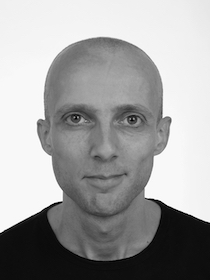
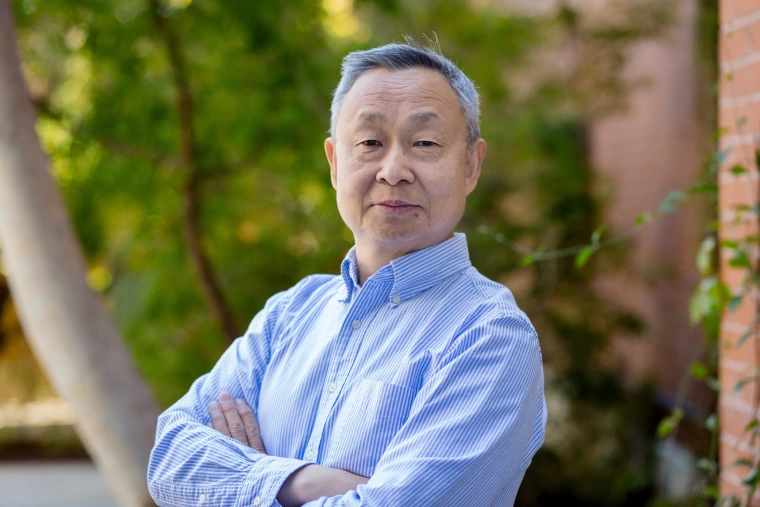
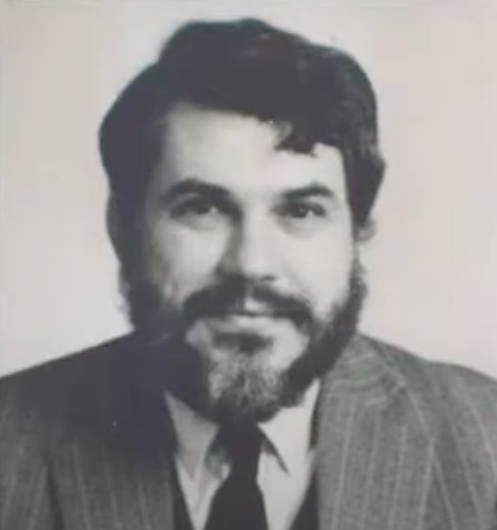
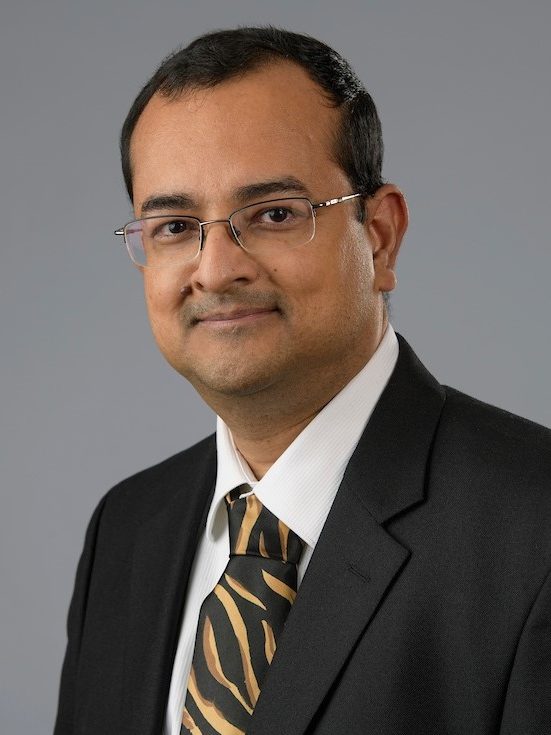
Alexander Moll is an Assistant Professor of Mathematics at Reed College, specializing in probability theory and mathematical analysis. His research encompasses integrable probability, non-linear dispersive waves, soliton quantization, and semi-classical analysis. He earned a B.A. from Columbia University and a Ph.D. from M.I.T. Before joining Reed in 2022, he held postdoctoral positions at the Institut des Hautes Études Scientifiques, Hausdorff Center for Mathematics, Northeastern University, and served as the inaugural Robert T. Seeley Visiting Assistant Professor at the University of Massachusetts Boston. His recent publications focus on asymptotic analysis in probability, spectral theory of integrable systems, and combinatorial aspects of mathematical physics. The research demonstrates a consistent exploration of boundary phenomena and symmetry structures across different mathematical domains.
Mohamed Djemai is a Full Professor at ENSEA (École Nationale Supérieure d'Électronique, d'Électrotechnique, d'Informatique, d'Hydraulique et des Télécommunications), where he leads research in the Quartz Lab focusing on control systems, robotics, and hybrid systems. He holds affiliations with INSA Hauts-de-France (LAMIH UMR CNRS 8201) and Université Polytechnique des Hauts-de-France (UPHF) in Valenciennes. Research & Teaching : His expertise spans control theory, multi-agent systems, and fault-tolerant robotics. He teaches subjects like Linear Systems, Signal Processing, and Diagnostics. Current research emphasizes hybrid systems stability, fractional-order control, and resilient UAV navigation. Leadership & Service : Since 2022, he has been seconded to ENSEA-Cergy’s Quartz Lab. He serves as an elected member of CNU-Section 61 (2019–present) and on INSA-Hauts-de-France’s Board of Directors (2021). He co-chairs the National Working Group GT-SDH (Hybrid Dynamic Systems) and holds roles in IFAC-TC committees (since 2001/2005). Publications : Over 100 peer-reviewed articles focus on adaptive control, sliding mode techniques, and time-scale theory applications. Notable works address satellite attitude control, quadrotor trajectory tracking, and distributed fault detection in multi-agent systems. His Google Scholar profile: link .
Dr. Akif Kutlu is an Associate Professor at the Civil Engineering Department of Istanbul Technical University (ITU). He holds a PhD in Structural Engineering from ITU and has been affiliated with the university since 2000, progressing through roles including Research Assistant, Doctorate Lecturer, and Academic Duty holder. He is a member of the Chamber of Civil Engineers since 2010. Education: PhD in Structural Engineering (2007–2013), Istanbul Technical University MSc in Structural Engineering (2005–2007), Istanbul Technical University BSc in Civil Engineering (2000–2005), Istanbul Technical University Research Interests: Dr. Kutlu specializes in Structural Mechanics and Solid Body Mechanics , focusing on advanced finite element methods, composite materials, and dynamic analysis. His work includes vibration analysis of complex structures, stress distribution in laminated beams, and fluid-structure interaction. He employs refined theories like the zigzag theory and peridynamic differential operators to address challenges in structural engineering. Publications: His recent work emphasizes structural dynamics, composite materials, and finite element modeling. Key topics include vibroacoustic analysis of submarine systems, buckling of plates on elastic foundations, and stress analysis of functionally graded beams. These contributions highlight interdisciplinary approaches between mechanics, materials science, and computational methods. Grants & Advising: While no specific grants are listed, his academic roles and publications indicate involvement in research projects. He has collaborated with multiple co-authors but has no listed advisees. His administrative service includes Faculty Board Membership (2015–2018). Labs & Teams: Though not explicitly stated, his research likely involves ITU’s Civil Engineering laboratories focused on structural mechanics and computational modeling.
Misha Kilmer is the William Walker Professor of Mathematics at Tufts University, with a secondary appointment in Computer Science. She also serves as Deputy Director of ICERM at Brown University and co-PI of Tufts TRIPODS Institute. Her research focuses on numerical linear algebra, scientific computing, and image reconstruction/restoration. Kilmer has held leadership roles, including Chair of Tufts' Mathematics Department (2013-2019) and has received prestigious recognition, including SIAM Fellowship (2019) and the Tufts Undergraduate Teaching Award (2001). Education: PhD in Applied Mathematics, University of Maryland (1997) MA in Mathematics, Wake Forest University (1994) BS in Mathematics, Wake Forest University (1992) Research Interests: Kilmer's work emphasizes tensor decompositions, iterative methods, and model reduction. She develops algorithms for high-dimensional data analysis, imaging applications, and inverse problems. Her techniques bridge computational mathematics and engineering challenges, with applications in biomedical imaging, environmental monitoring, and machine learning. Publications Trends: Recent work highlights advancements in tensor-based neural networks, dynamic image reconstruction, and efficient algorithms for large-scale data. Key contributions include randomized algorithms for tensor decompositions and compressed sensing techniques for multi-modal data. Awards: SIAM Fellow (2019) Tufts Undergraduate Initiative in Teaching Award (2001) Advising & Grants: Kilmer has secured funding from NSF, NIH, IARPA, DARPA, and IBM. She co-chairs major SIAM conferences and serves on editorial boards for journals like SIAM Review and La Matematica . Labs/Teams: Active in Tufts' Data Intensive Studies Center (DISC) and co-leads the TRIPODS Institute. Collaborates internationally on projects involving tensor analysis and computational science.
Alef Sterk is an Assistant Professor at the Faculty of Science and Engineering, University of Groningen, affiliated with the Bernoulli Institute. His research focuses on dynamical systems, mathematical physics, and applied mathematics. Roles: Programme Director for BSc (Applied) Mathematics, Board member of Stichting Epsilon, Treasurer of the Koninklijk Wiskundig Genootschap. Research Interests: Alef explores extreme value theory in autoregressive processes, reaction-diffusion equations in core-shell geometries, bifurcation analysis of biological and atmospheric models, and nonlinear dynamics in generalized Lorenz-96 systems. His work often bridges pure mathematics with interdisciplinary applications. Key Trends in Research Output: Alef’s publications emphasize dynamical systems with applications to chaos theory, extreme events, and biological/physical modeling. He frequently applies bifurcation theory, topological methods, and stochastic processes to analyze complex systems. Ancillary Activities: He contributes to academic governance and education as a programme director, board member, and treasurer.
Xubin Zeng is a Professor of Hydrology and Atmospheric Sciences at the University of Arizona, holding the Agnese Nelms Haury Endowed Chair in Environment. He directs the Climate Dynamics and Hydrometeorology Center (CDHC) and serves as a Joint Professor in Global Change and Remote Sensing and Spatial Analysis GIDPs. His research focuses on land-atmosphere-ocean interface processes, climate modeling, hydrometeorology, and remote sensing, with a strong emphasis on non-linear dynamics and predictability. Dr. Zeng earned his Ph.D. in Atmospheric Sciences from Colorado State University in 1992. His work integrates computational models, neural networks, and remote sensing techniques to study climate variability, water-energy interactions, and atmospheric dynamics. Key areas include aerosol-cloud interactions, planetary boundary layer structures, and the impact of Tibetan Plateau temperature anomalies on global climate systems. His recent publications (2023–2025) highlight advancements in seasonal hydrology prediction, ensemble forecasting, and satellite-based wind retrieval technologies. He has contributed to international initiatives like the Global Precipitation Experiment and the GEWEX/LS4P project. Awards include the Haury Endowed Chair, recognizing his leadership in environmental science. Dr. Zeng’s interdisciplinary approach bridges atmospheric physics, hydrology, and computational modeling, addressing challenges in climate predictability and Earth system modeling. His research informs water resource management and climate policy through improved understanding of subseasonal-to-seasonal climate variability.
Giancarlo Sangalli is a Professor in the Department of Mathematics at the University of Pavia. His research focuses on Scientific Computing, particularly Numerical Methods and Applications, with a strong emphasis on Isogeometric Analysis (IGA) for solving Partial Differential Equations (PDEs). He leads the Scientific Computing group and contributes to interdisciplinary fields such as computational mechanics, biomedical engineering, and environmental modeling. His work integrates advanced numerical techniques, including high-order finite element methods, space-time formulations, and matrix-free solvers, to address challenges in computational efficiency and accuracy. Key areas of application include cardiac electrophysiology, wave propagation, and groundwater flow modeling. Sangalli has pioneered low-rank solvers, Tucker tensor-based methods, and immersed boundary techniques to enhance computational scalability. He actively publishes in top journals and conferences, with a focus on advancing IGA theory and its applications to real-world problems. His research also explores uncertainty quantification, Bayesian calibration, and nonlinear dynamics. Despite no explicitly listed awards, his extensive publication record reflects recognition in computational mathematics and engineering. Sangalli collaborates internationally and maintains a research website at https://mate.unipv.it/sangalli . His group's work is supported by projects in computational electromagnetics, structural mechanics, and fluid-structure interaction, demonstrating a commitment to bridging theoretical advancements with practical engineering solutions.
Basilis Xanthopoulos was a distinguished Professor of Physics at the University of Crete. His career included roles as Assistant Professor (1982-1983), Associate Professor (1983-1987), and Professor (1987-1990), serving as Chair of the Department of Physics from 1987 until his untimely death in 1990. He held prior positions at Montana State University (Visiting Assistant Professor) and Syracuse University (Research Associate). His research focused on Mathematical Physics, General Relativity, and Theoretical Astrophysics, particularly exploring gravitational waves, black holes, and cosmic strings. Education: BSc in Mathematics (University of Thessaloniki, 1973); MSc and PhD in Physics (University of Chicago, 1976 and 1978). Research interests included exact solutions of Einstein's equations, gravitational wave interactions, and relativistic astrophysical phenomena. His work spanned 30+ years, producing influential studies on black hole uniqueness, cosmic string dynamics, and nonlinear gravitational field behavior. He contributed to foundational theories in general relativity and mathematical physics. Awards and honors are not explicitly listed, though his contributions to the field are widely recognized. His academic legacy includes foundational papers in journals like Physical Review and collaborations with leading physicists like Subrahmanyan Chandrasekhar.
Dr. Ivo Dravins is a PostDoc at the Chair of Numerical Analysis within the Faculty of Mathematics at Ruhr-Universität Bochum, working in Prof. Katharina Kormann's research group. He focuses on preconditioning techniques for implicit time-stepping algorithms, particularly within the PDExa project. His research spans numerical linear algebra, implicit Runge-Kutta methods, and PDE-constrained optimization. Research Interests: Preconditioning of large-scale linear systems Implicit time-stepping algorithms for PDEs High-order numerical methods Optimal control problems with constraints Numerical linear algebra applications Key Research Trends: His work emphasizes scalable preconditioning strategies for parallel computing environments, with a focus on achieving high-order accuracy in time integration. Recent efforts have addressed stage-parallel Runge-Kutta implementations and spectral analysis of preconditioned matrices in PDE-constrained optimization contexts. Labs/Teams: Member of Prof. Kormann's Numerical Analysis group, contributing to the PDExa project. Associated with the Kormann Group within the Faculty's Numerics division.
Dr. Markus Tempelmayr is a researcher at the Applied Mathematics Münster: Institute for Analysis and Numerical Analysis, part of the Department of Mathematics and Computer Science at the University of Münster. His work focuses on stochastic analysis, regularity structures, and numerical methods for partial differential equations. He contributes to advancing theoretical frameworks for stochastic PDEs and their applications in fluid dynamics and nonlinear systems. Research Interests: Dr. Tempelmayr specializes in stochastic estimates for complex systems, including thin-film equations with thermal noise and quasilinear equations. His recent work explores diagram-free approaches in regularity structures and Malliavin calculus applications. These efforts aim to bridge abstract mathematical theory with computational methods for solving high-dimensional and stochastic problems. Publications Trends: His articles emphasize developing novel analytical tools for stochastic processes and PDEs, particularly through regularity structures and tree-free methodologies. This reflects a commitment to advancing both the theoretical underpinnings and practical numerical techniques in applied mathematics. Labs/Teams: He is affiliated with the Analysis and Numerics research group, collaborating on projects related to stochastic PDEs and their numerical treatment.
Jonas Nicodemus is a doctoral researcher at the University of Stuttgart, specializing in data-driven modeling and control theory for complex physical systems. His work focuses on port-Hamiltonian systems , model order reduction , and physics-informed machine learning . Education: M.Sc. in Engineering Cybernetics, University of Stuttgart (2021) B.Sc. in Engineering Cybernetics, University of Stuttgart (2018) His research develops structure-preserving methods for system identification and control, including energy-matching techniques for reduced-order models and enhanced PINNs for mechanical systems. Key publications address stability preservation in dynamic mode decomposition and control strategies for multi-link manipulators. He contributes to open-source projects like PortHamiltonianSystems.jl and PortHamiltonianModelReduction.jl , emphasizing reproducibility and computational efficiency.
Ricardo Gutierrez Diez is an Associate Professor (Profesor Titular) in the Department of Mathematics at University Carlos III of Madrid, where he teaches courses in linear algebra, calculus, differential equations and numerical analysis. He is also a member of the Grupo Interdisciplinar de Sistemas Complejos (GISC), contributing to interdisciplinary research in complex systems. His research focuses on theoretical aspects of statistical physics, with particular emphasis on dynamical large deviations, quantum many-body systems, glassy soft matter, and synchronization phenomena in complex networks. His work bridges physics, mathematics, and network theory, exploring fundamental questions about collective behavior and phase transitions in complex systems. Previously, he also conducted research in experimental neuroscience, developing quantitative approaches to brain connectivity analysis. His publication record demonstrates significant contributions across multiple domains of theoretical physics. His recent work shows a strong focus on dynamical phase transitions, network synchronization, and the application of large deviation principles to complex systems. His research often involves collaborations with leading institutions including the University of Nottingham, Weizmann Institute of Science, and various Spanish universities. His academic journey includes positions as Assistant Professor at University Carlos III of Madrid (2019-2021), Assistant Professor at King Juan Carlos University (2017-2019), Marie Skłodowska-Curie Fellow at University of Nottingham (2015-2017), and Postdoctoral Fellow at Weizmann Institute of Science (2013-2014). He completed his PhD in Physics of Complex Systems at Technical University of Madrid (2010-2013).
Sadeq Yaqubi is a Postdoctoral Researcher in Automation Technology and Mechanical Engineering, focusing on advanced control methodologies for flexible robotic systems. His research integrates partial differential equations (PDEs), nonlinear control theory, and machine learning to address challenges in manipulator dynamics, endpoint control, and deflection mitigation. Key research interests include boundary control of distributed systems, computational efficiency in sensor-based estimation, and semi-analytical controller design for non-homogeneous boundary conditions. His work emphasizes practical applications such as vibration suppression in heavy-duty manipulators and real-time adaptive learning for multivariable systems. Yaqubi's contributions span conference proceedings (CASE, ROBIO) and journals like the International Journal of Robust and Nonlinear Control. His articles explore topics ranging from reinforcement learning-based motion planning to model predictive control of uncertain systems. Collaborations focus on automation technology and mechanical engineering innovations. No scientific awards are explicitly listed in the provided materials. Research activity highlights include 5+ peer-reviewed publications between 2020–2025, with a focus on flexible manipulator control and PDE-driven methodologies. No grants or advising roles are mentioned in the text.
Yuliya Troitskaya is a Professor at Nizhny Novgorod State University, specializing in Geophysical Fluid Dynamics. She leads the Institute Section for Non-linear Geophysical Processes since 2003, following roles at the Nansen Environmental Remote Sensing Center (1997) and the Institute of Applied Physics, RAS (1987-2003). PhD in Physics (Institute of Applied Physics, RAS, 1986) MSc in Radiophysics (Gorky State University, 1983) Her research focuses on theoretical and experimental geophysical fluid dynamics , including nonlinear surface wave generation, internal gravity waves, turbulence-wave interactions, and wake dynamics in stratified media. She pioneered methods for remote sensing of sea surface states and tsunami identification via radar backscatter . Her publications span topics like stratified shear flow stability, capillary-gravity wave modulation, and wake modeling in high Reynolds/Froude number regimes. Key methodologies include kinetic modeling, viscous diffusion analysis, and nonlinear critical layer theory. Scientific Awards: INTAS, CRDF (USA), NATO, RFBR (Russia) grants President of Russia Grant 'Young Doctors of Science' (2000) Academia Europaea membership (2007) Troitskaya has held leadership roles in geophysical research institutions and contributed to understanding turbulence-wave interactions and remote sensing applications for oceanic monitoring.
Nishant Kumar is a Teaching Professor and Associate Chair for Undergraduate Affairs in the Department of Mechanical and Aerospace Engineering at the College of Engineering and Computing, Missouri University of Science and Technology (Missouri S&T). He has a strong focus on education and has received multiple teaching awards for his contributions. Education Ph.D. in Mechanical Engineering (2008), New Mexico State University M.S. in Mechanical Engineering (2003), Texas Tech University B.S. in Mechanical Engineering (1998), Birsa Institute of Technology Sindri His research interests span Nonlinear Dynamics and Vibrations , Deterministic and Random Dynamical Systems , Model Order Reduction , and Structural Dynamics , with a focus on theoretical modeling and numerical computation. His teaching portfolio includes foundational and advanced courses such as Statics, Dynamics, Vibrations, Fluid Mechanics, Thermodynamics, and Non-linear Dynamics and Chaos Theory. Scientific Awards Missouri S&T CEC Dean’s Educator Award (2021) S&T Outstanding Teaching Award (2019) University of Denver 'Outstanding Performance in Pedagogy' Certificate (2009–2010) NMSU Travel Conference Award (2007) NMSU Preparing Future Faculty Internship Pilot Program Award (2007–2008) NMSU Merit Award ($1000) (2006–2007) NMSU Graduate Research Assistant Award (2005–2007) Texas Tech University Mechanical Engineering Graduate Scholarship (2002–2005)