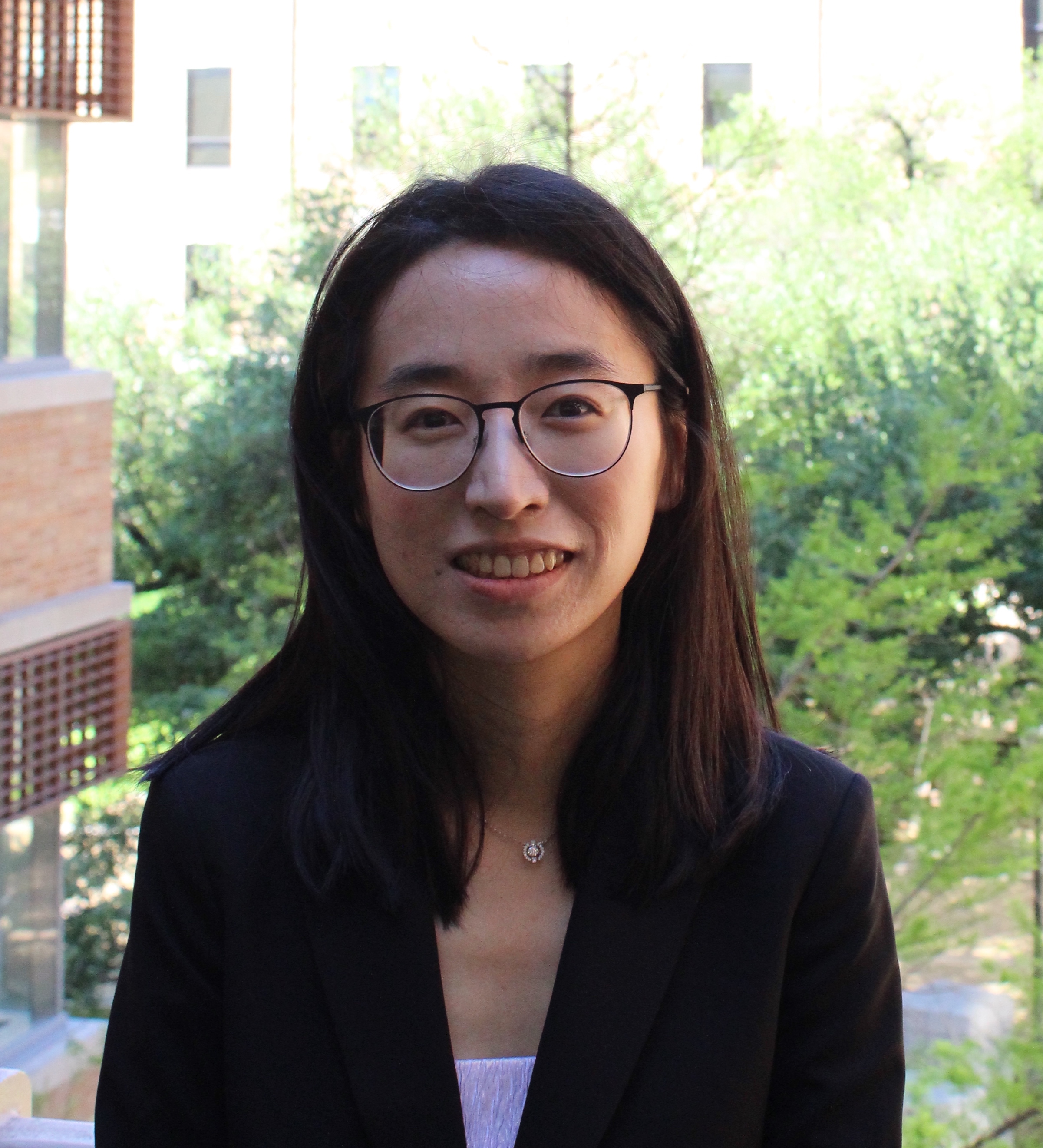
Cédric Elloumi is a Professor at the CEDRIC Laboratory within Conservatoire National des Arts et Métiers (CNAM), specializing in combinatorial optimization and mathematical programming. With a continuous publication record since 1992, he has established himself as a leading researcher in quadratic programming, binary optimization, and facility location problems. His research interests focus on developing exact and approximate methods for discrete optimization problems, particularly through convex reformulation techniques. Elloumi has made significant contributions to the p-center and p-median problems, quadratic assignment problems, and more recently, quantum-inspired optimization methods. His work bridges theoretical advancements with practical applications in network design, energy systems, and telecommunications. Analysis of his recent publications (2022-2025) reveals a continued focus on facility location problems, with increasing attention to robust optimization under uncertainty and emerging applications in quantum computing. His research demonstrates consistent methodological innovation, particularly in reformulation techniques that transform difficult non-convex problems into tractable forms. Throughout his career, Elloumi has maintained extensive collaborations with researchers including Billionnet, Lambert, Alès, and Plateau, resulting in numerous publications in top-tier optimization journals such as Journal of Global Optimization, Computers and Operations Research, and Mathematical Programming.
Zafeirakis Zafeirakopoulos is a researcher at the National and Kapodistrian University of Athens (Greece) in the ELIDEK project led by Prof. Maria Chlouveraki. His academic career includes roles as an assistant professor at Gebze Technical University (2016-2022) and postdoctoral research at University of Athens (Greece), Galatasaray University (Turkey), and University of Geneva (Switzerland) under the Eccellenza project of Prof. Jehanne Dousse. PhD in RISC - Research Institute for Symbolic Computation (supervised by Prof. Peter Paule and Prof. Matthias Beck) Current affiliations: Mathematics department of National and Kapodistrian University of Athens Service roles: Information Director of ACM SIGSAM, Associate Editor of ACM CCA His research focuses on symbolic computation, discrete mathematics, and computational geometry. He has developed algorithms for parametric curve topology (PTOPO) and linear Diophantine systems (Polyhedral Omega), emphasizing efficiency and geometric interpretations. Recent work involves Julia/Maple implementations for practical applications. Publication trends highlight interdisciplinary work in symbolic algorithms, polyhedral geometry, and combinatorial optimization. He actively contributes to international conferences like ACA 2025 (co-organizer) and SCALE 2022.
Prof. Yossi Bukchin is a Professor in the Department of Industrial Engineering at The Iby and Aladar Fleischman Faculty of Engineering, Tel Aviv University. His research focuses on manufacturing systems, production engineering, and operations research with particular expertise in assembly line design and optimization. His primary research interests include: Assembly systems design Assembly line balancing Facility design Operational scheduling Human factors engineering Warehouse and storage systems Prof. Bukchin's recent work demonstrates a strong focus on puzzle-based storage systems, assembly line optimization, and operations management. His research spans both theoretical developments in scheduling algorithms and practical applications in manufacturing and logistics systems. He has made significant contributions to the understanding of Bucket Brigade systems, puzzle-based storage optimization, and assembly line balancing with mixed-model production. His scholarly output shows evolution from early work on robotic assembly lines to contemporary research on machine learning applications in warehouse systems and advanced optimization techniques for modern manufacturing challenges. Contact information: Email: bukchin@tau.ac.il Phone: 03-6407941 Fax: 03-6407669 Office: Wolfson - Engineering
Keely Croxton serves as Professor of Logistics in the Department of Marketing and Logistics at The Ohio State University's Max M. Fisher College of Business. Her academic leadership spans undergraduate, MBA, PhD, and Executive Education programs where she teaches supply chain management, forecasting, modeling, and Social Impact courses. Dr. Croxton holds a PhD from the Massachusetts Institute of Technology and a BS from Northwestern University. Prior to academia, she gained industry experience in automotive, paper and packaging, and third-party logistics sectors. Her research centers on supply chain resilience, developing frameworks to balance vulnerabilities with management capabilities during disruptions. Specialized interests include facility location, demand management, relationship management, and supply chain integration. Her work demonstrates consistent focus on process-oriented approaches to supply chain challenges, particularly examining how firms respond to operational disruptions through strategic adaptation and relationship capital. Analysis of her publication history reveals strong emphasis on supply chain risk mitigation (60% of recent works), with significant contributions to supplier portfolio management, resilience assessment tools, and big data integration challenges. Her research consistently bridges theoretical frameworks with practical industry applications, often developed through collaborations with organizations like OSU's National Center for the Middle Market. Bernard J. LaLonde Best Paper Award (Journal of Business Logistics, 2005) Finalist for Bernard J. LaLonde Best Paper Award (Journal of Business Logistics, 2010) Research grant funding from OSU’s National Center for the Middle Market (2013) Dr. Croxton serves on the advisory board for OSU’s Global Water Initiative and has developed influential frameworks for supply chain management processes. Her industry background informs practical teaching approaches across multiple degree programs, including specialized courses like Contemporary Issues in Supply Chain Management (BUSOBA 7392) and Strategic Supply Chain Management (BUSML 7391).
Alexander Barvinok is a Professor in the Department of Mathematics at the University of Michigan, Ann Arbor. His office is located in East Hall (4066 East Hall), where he has been conducting research and teaching advanced courses in computational mathematics since receiving his Ph.D. from Leningrad State University in 1988. Professor Barvinok's research focuses on computational complexity and algorithms in algebra, geometry and combinatorics. He is particularly interested in connections between various notions of phase transition in statistical physics, analytical properties of partition functions and computational complexity. His work bridges theoretical mathematics with practical computational approaches, exploring how physical phenomena can inform algorithmic design and analysis. His research spans convex geometry, combinatorial optimization, and the computational aspects of polynomial systems. His recent publications (2016-2024) demonstrate a consistent focus on partition functions, computational aspects of convex bodies, and approximation algorithms for counting problems. He has made significant contributions to understanding the zeros of partition functions in statistical physics models, developing efficient volume estimation algorithms for polyhedra, and creating polynomial-time approximation schemes for problems previously thought to be computationally intractable. His work frequently connects algebraic properties of polynomials with computational feasibility. Professor Barvinok has authored several influential textbooks including "A Course in Convexity" (AMS Graduate Studies in Mathematics, 2002), "Integer Points in Polyhedra" (Zurich Lectures in Advanced Mathematics, 2008), and "Combinatorics and Complexity of Partition Functions" (Springer, 2016). He regularly teaches advanced graduate courses such as Math 669 on specialized topics including "Combinatorics, Geometry and Complexity of Integer Points" and "Topics in Convexity," with his lecture notes often evolving into significant research contributions.
Layla Oesper is an Associate Professor in the Computer Science Department at Carleton College. She previously worked as a post-doctoral researcher and graduate student at Brown University, where she earned her PhD and ScM in Computer Science. She received her BA in Mathematics from Pomona College and worked at Epic as a software tester. PhD in Computer Science - Brown University ScM in Computer Science - Brown University BA in Mathematics - Pomona College Her research focuses on designing algorithms for high-throughput DNA sequencing data analysis, particularly in cancer genomics. She develops computational methods for tumor evolutionary history inference, with emphasis on consensus approaches and noise tolerance in phylogenetic reconstruction. Recent publications highlight her work on computational biology education, distance measures for tumor phylogenies, and weighted consensus tree algorithms. Her research spans algorithm design, cancer genomics, and bioinformatics software development. NSF CAREER grant recipient (2021) Google Anita Borg Memorial Scholarship (2014) NSF Graduate Research Fellowship (2011) Best Presentation Award at HitSeq workshop (2014) She has advised multiple students who have received recognition in computational biology, including CRA Outstanding Undergraduate Researcher honorable mentions. Her software tools include TuELiP, CASet/DISC, and GraPhyC for tumor evolution analysis.
Samuel LAGRANGE is Lecturer at IAE Clermont Auvergne – School of Management, Université Clermont Auvergne, where he conducts research within the Strategy, Territory and Actor Networks (STeRA) axis of the CRCGM laboratory (Centre de Recherche Clermontois en Gestion et Management). Education : No explicit educational background is provided in the supplied text. Research interests revolve around the governance and optimization of franchise networks, supply-chain modelling, New Public Management, and the management of commercial relationships in banking networks. He employs decision-modelling techniques, simulation, and mixed-integer linear programming to assess and enhance logistic and financial flows across diverse franchise systems, including bakery, restaurant, and fast-food networks. His work also explores how statutory diversity and proximity theory can illuminate managerial challenges within these networks. Publications (2010–2018) demonstrate a consistent focus on developing quantitative and conceptual frameworks for franchise and supply-chain management, with empirical applications to prominent French networks such as Paul, La Mie Caline, Flunch, Buffalo Grill, McDonald’s, and KFC. The studies collectively advance methodologies for optimizing mix rates, evaluating financial flows, and reinventing retail formats, particularly bank branches. Scientific awards : None are mentioned in the provided materials. Advising & grants : No specific doctoral or master’s students, research grants, or funded projects are listed. Laboratory & teams : He is an active member of the CRCGM – Centre de Recherche Clermontois en Gestion et Management (EA 3849), located at 28 Place Henri Dunant, 63000 Clermont-Ferrand, France.
András Frank is a Professor at the Department of Operations Research, Eötvös Loránd University, Budapest. As founder and leader of the MTA-ELTE Egerváry Research Group on Combinatorial Optimization (EGRES), he focuses on combinatorial optimization, matroid theory, submodular functions, matchings, graph theory, and polynomial-time algorithms. University: Eötvös Loránd University Department: Operations Research Research Group: EGRES (MTA-ELTE Egerváry Research Group on Combinatorial Optimization) His research addresses both theoretical and applied aspects of combinatorial optimization, including network flows, graph connectivity, and algorithmic applications. He authored the book Connections in Combinatorial Optimization (Oxford University Press, 2011), which explores polynomial-time algorithms and their role in graph theory and matroid theory. Key trends in his recent work include fair integral flows, discrete convex optimization, and algorithmic approaches to supermodular functions. While no specific scientific awards are listed in the provided texts, his contributions have been recognized through publications in top-tier venues and leadership in the EGRES group.
Masood Parvania is the Roger P. Webb Endowed Professor at the University of Utah in Electrical and Computer Engineering. He serves as Director of the Utah Smart Energy Laboratory (U-Smart) and Co-Director of the NSF WIRED Global Center . His research focuses on mathematical optimization , control theory , and machine learning applications in power system operation, resilience, and interdependent infrastructure modeling. His work addresses critical challenges including: Equity-aware grid restoration Climate-resilient energy systems Cyber-physical security analysis Hybrid energy storage coordination Extreme heat event mitigation strategies Key research trends across his 15 most recent publications reveal deep integration of: Renewable energy with storage systems Machine learning in real-time grid operation Cybersecurity frameworks for critical infrastructure Equity metrics in energy distribution Honors include: IEEE Outstanding Associate Editor Award (2022) University of Utah Presidential Scholar (2020) IEEE Utah Section Outstanding Educator Award (2017) Multiple Best Reviewer and Distinguished Service Awards As Associate Editor for IEEE Transactions on Power Systems , he actively shapes energy research discourse while leading NSF-funded initiatives like: U.S.-Canada Climate-Resilient Grid Center ($90M+ Western EV Infrastructure Scale-Up Wasatch Multi-Modal Corridor Electrification
Swarnendu Biswas is an Assistant Professor in the Department of Computer Science and Engineering at the Indian Institute of Technology Kanpur. He teaches courses including Programming for Performance (CS 610), Analysis of Concurrent Programs (CS 636), and Compiler Design (CS 335), demonstrating his expertise across multiple areas of computer systems. His research interests center on Programming Languages, Compilers, Runtime Systems, and Parallel Software Systems. He leads the PROSPAR (Programming Languages and PARallel Systems) research group, which focuses on developing techniques to build efficient and correct parallel software through program analysis, compiler optimizations, and runtime systems. His recent publications reveal a strong trend in addressing fundamental challenges in parallel computing, with work spanning cache coherence, false sharing detection, data race analysis for GPUs, verification of neural networks, and thermal-aware management of heterogeneous systems. His research bridges theory and practice with significant contributions to both hardware and software aspects of parallel systems. His scientific achievements have been recognized through multiple prestigious awards: Google India Research Award 2021 Google Explore CSR 2022 Research Grant from Intel Corporation SERB Start-up Research Grant 2019 Google Cloud Platform Research Credits (2019, 2020) IITK Initiation Grant 2019 As an advisor, he mentors several PhD and MTech students working on cutting-edge research in parallel systems. His PROSPAR group has secured significant funding from industry and government sources, supporting innovative research in programming languages and parallel systems. The group actively collaborates with industry partners including Google and Intel, addressing real-world challenges in parallel computing. He leads the PROSPAR research group at IIT Kanpur, which brings together faculty, PhD students, and MTech researchers to tackle challenging problems at the intersection of programming languages, compilers, and parallel systems. The group maintains strong industry connections and focuses on practical solutions that can be deployed in real systems.
José Manuel Vasconcelos Valério Carvalho is a Full Professor at the School of Engineering, University of Minho, and Senior Researcher at Algoritmi Research Center's SEOR R&D Group. His academic career spans decades with significant contributions to combinatorial optimization and operations research. His educational background includes: PhD in Production Engineering (Operational Research major) from University of Minho MSc in Industrial Engineering and Operations Research from Virginia Polytechnic Institute (Fulbright scholar) Research focuses on large-scale integer programming applications in cutting/packing, network design, and operations planning. He develops exact and heuristic algorithms for complex optimization problems, frequently integrating domains like bin packing with vehicle routing using arc-flow formulations and column generation. Recent publications (2016-2025) reveal strong trends toward integrated logistics solutions, emphasizing temporal aspects, multi-trip scenarios, and combined routing/packing challenges. His methodologies consistently yield robust formulations for real-world supply chain applications. He has supervised 7 postdoctoral and 12 PhD students, many achieving award-winning work. Research leadership includes coordination of FCT-funded national projects and European project workpackages. As core member of Algoritmi's SEOR Group and former coordinator of the SEOOR Research Line (consistently rated 'Excellent' by international panels), he contributes to Portugal's leading operations research team.
Jingbo Wang is an Assistant Professor in the Elmore Family School of Electrical and Computer Engineering at Purdue University, where he conducts research at the intersection of software engineering and formal methods. His work emphasizes developing rigorous program analysis and verification techniques to improve the security, robustness, and fairness of software systems. Prior to joining Purdue in August 2024, he was a Postdoctoral Researcher in the Department of Computer Science at University of Texas, Austin, working with Professor Isil Dillig. He obtained his PhD in Computer Science from the University of Southern California in 2023 under the supervision of Professor Chao Wang. Dr. Wang's educational background includes: PhD in Computer Science, University of Southern California, 2023 Postdoctoral Researcher, University of Texas, Austin, 2023-2024 Dr. Wang's research focuses on bridging software engineering and formal methods to create more secure, robust, and fair software systems. His work spans several key areas: Program Analysis and Verification : Developing techniques for static and dynamic analysis of software systems Security and Privacy : Creating methods to detect and prevent security vulnerabilities and privacy leaks Fairness in Machine Learning : Certifying and quantifying fairness properties of AI systems Formal Methods for Neural Networks : Verification techniques for deep learning models His recent publications demonstrate a strong trend toward applying formal methods to machine learning systems, particularly in ensuring fairness and robustness. He has published extensively in top-tier venues including PLDI, POPL, ICSE, and CAV, with multiple papers on verifying properties of neural networks and decision trees. His work often combines program analysis techniques with constraint solving and optimization approaches. Dr. Wang has received numerous awards and recognitions for his research: ACM SIGPLAN Distinguished Paper Award, PLDI, 2023 MIT EECS Rising Star, MIT, 2021 WiSE Merit Award, USC, 2021 Selected to participate in the 7th Heidelberg Laureate Forum, 2019 Selected for CRA-W Grad Cohort for Women Workshop, 2019 Multiple conference scholarships including VMW Scholarship (CAV'19) and PLMW Scholarship (PLDI'19) Dr. Wang is actively mentoring students and planning to recruit PhD students for Fall 2025. He currently advises: Siyu Chen (PhD student, 2024 Fall -- present) Xuyang Li (PhD student, 2024 Fall -- present) Multiple undergraduate researchers including Weiyi Chen, Yaoyang Ye, Paul Jiang, and Sarthak Tandon He has also served as a mentor for the PLMW @ PLDI'21 and USC Viterbi Graduate Mentorship Program. Dr. Wang is deeply involved in the programming languages and formal methods research community, serving on multiple program committees including OOPSLA, PLDI, CAV, ICSE, and ISSTA. His GitHub repository shows active work on fair decision trees and formal verification techniques, indicating an active research lab focused on the intersection of formal methods and machine learning.
Sriram Sankaranarayanan is a Professor in the Department of Computer Science at the University of Colorado Boulder and also serves as Associate Dean for Digital Education in the College of Engineering and Applied Science. Since joining the faculty in 2009, he has built an internationally recognized research program that blends programming languages, formal methods, and control theory to reason about cyber-physical systems. Education: Ph.D. in Computer Science, Stanford University, 2005 (advisers Zohar Manna & Henny Sipma) B.Tech., Indian Institute of Technology Kharagpur (President’s Gold Medal, 2000) Research Interests: Prof. Sankaranarayanan’s work centers on hybrid dynamical systems —models that capture discrete software interacting with continuous physical environments—and on developing formal-methods techniques for their verification, control, and synthesis. Specific themes include control-barrier & Lyapunov function synthesis, neural-network verification, stochastic-game models for human-autonomy interaction, and physics-informed machine learning. Application domains range from autonomous robotics and surgical-task planning to safety-critical medical devices such as the artificial pancreas. Recent Publication Trends (2024-2025): His latest papers advance safe control synthesis (successive control barrier functions, piecewise-affine Lyapunov functions) and trustworthy AI (Taylor-model enhanced physics-informed neural networks), while also exploring game-theoretic anticipation for robotic systems interacting with uncertain human operators. Honors & Awards: NSF CAREER Award (2009) Siebel Scholar (2005) President’s Gold Medal, IIT Kharagpur (2000) CU Boulder Dean’s Award for Outstanding Junior Faculty (2012) CU Boulder Outstanding Teaching Award (2014) CU Boulder Provost’s Faculty Achievement Award (2014) Coursera Outstanding Innovation Award (2022) Student Advising & Grants: He has mentored numerous PhD students; recent graduates include Dr. Emily Jensen, Dr. Monal Narasimhamurthy, and Dr. Kandai Watanabe (2024). His group regularly publishes at top venues such as HSCC, POPL, PLDI, CAV, and WAFR, supported by NSF, NIH, and industry grants. Group & Teaching: Prof. Sankaranarayanan leads activities within the Programming Languages & Verification group and teaches graduate and undergraduate courses on programming languages, algorithms, optimization, and formal methods. He is active in conference organization (e.g., PC Chair VMCAI 2025) and maintains open-source courseware and research notebooks on GitHub.
Eduardo Anibal Lalla is an Associate Professor at the Digital Society Institute and Industrial Engineering & Business Information Systems. His research focuses on applying artificial intelligence and optimization techniques to logistics and transportation challenges, particularly in maritime and urban logistics. He has published extensively on topics such as vehicle routing, metaheuristics, and mathematical programming, contributing to advancements in intelligent transport systems and container logistics. Research Trends : Over the past decade, his work has emphasized optimization algorithms for multi-depot vehicle routing collaborative berth allocation models matheuristics for dynamic scheduling AI-driven decoupling strategies in inter-terminal transport robot stations integration in logistics networks Scientific Awards : Best algorithm in Generalized Continuous Optimization Contest (2016) EURO Excellence in Practice Finalist/Runner-up (2021) Extraordinary doctoral distinction (2017)
Alex Zolan serves as a Researcher IV at the National Renewable Energy Laboratory (NREL) within the Center for Energy Conversion and Storage Systems and Mechanical Engineering Department. Since joining NREL in August 2018 as a postdoctoral researcher, he has established himself as a key contributor to concentrating solar power systems research, focusing on optimal design, dispatch, and operations of hybrid renewable energy systems. His educational background includes dual bachelor's degrees from the University of Pennsylvania (Economics and Electrical and Systems Engineering), a Master's and PhD in Operations Research and Industrial Engineering from the University of Texas at Austin, and a Master's in Mathematics from Western Connecticut State University. Zolan's research centers on Concentrated Solar Power with specialized expertise in heliostat technology, solar power plant optimization, and industrial process heat applications. He employs stochastic optimization and Monte Carlo simulation to model energy systems, addressing critical challenges in cost reduction and efficiency improvement for solar thermal deployment. With 40 research outputs over five years (2021-2025), his recent publications demonstrate accelerating impact in CSP systems analysis and techno-economic modeling. The 2024-2025 works show particular focus on heliostat advancement and industrial heat applications, reflecting strategic alignment with national renewable energy priorities. As part of NREL's Center for Energy Conversion and Storage Systems, Zolan contributes to advancing solar thermal technologies through rigorous modeling and cross-institutional collaboration. His work supports the development of cost-effective concentrating solar power systems for diverse energy applications, particularly in industrial decarbonization contexts.