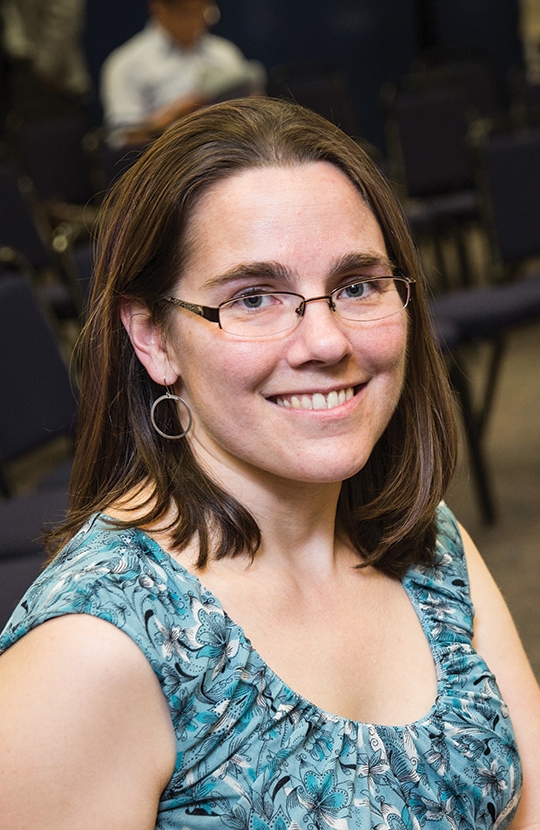
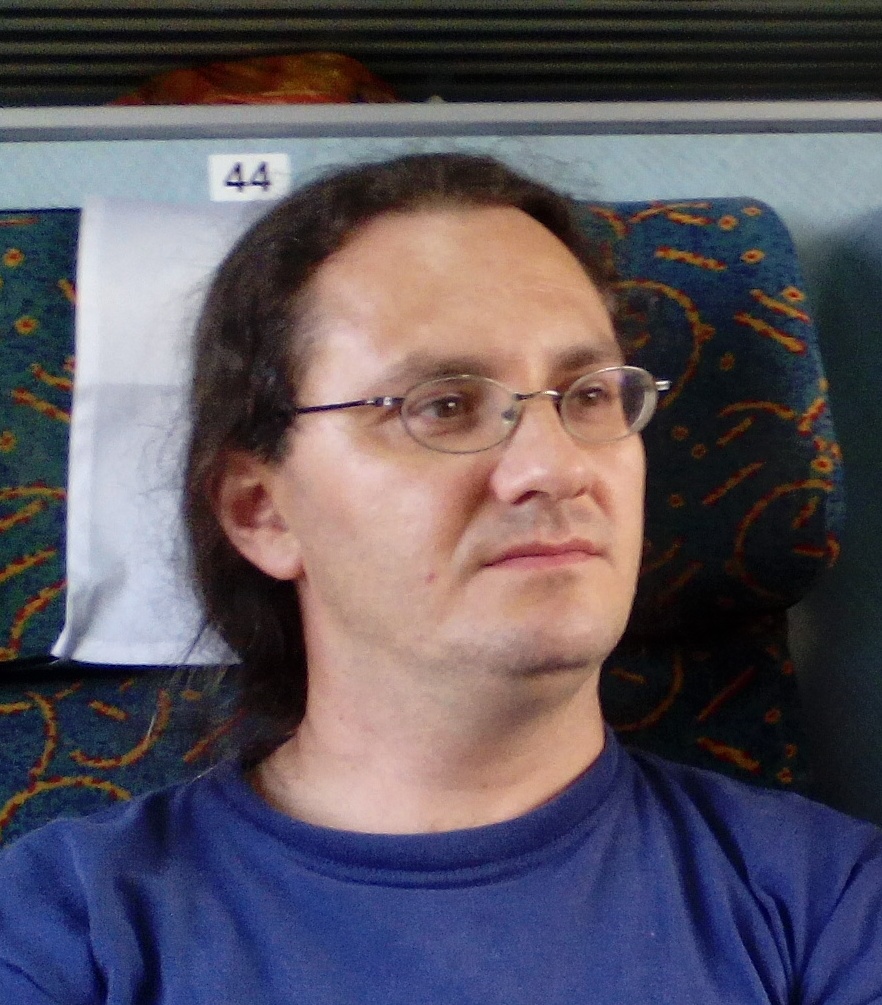
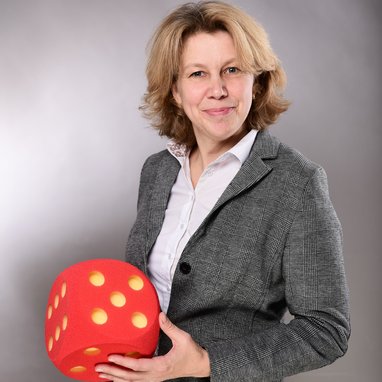
Benoît Frénay is a Professor at the Faculty of Computer Science of the University of Namur (UNamur), affiliated with the Namur Digital Institute and the Research Institute in Didactic and Education. He holds a Doctor of Science in 'Uncertainty and Label Noise in Machine Learning' from Université Catholique de Louvain (2013). His research focuses on machine learning, data analysis, and their applications in domains like sign language recognition, environmental monitoring, and medical imaging. He leads major projects such as SMARTSENS (sensors and machine learning for environmental monitoring) and VAMOS (Venus atmospheric exploration). His work bridges theoretical advances with real-world applications, including healthcare, industrial anomaly detection, and open government data systems. Notable contributions include developing robust clustering algorithms, energy-efficient neural networks, and interactive visualization tools for dimensionality reduction. Education: Ph.D. in Machine Learning (2013, UCLouvain) Key Projects: SMARTSENS, VAMOS, SafeTransRNN Research Themes: Explainable AI, Computer Vision, Sign Language Processing His publications span over 127 articles, emphasizing interdisciplinary collaborations. He actively participates in conferences and workshops, contributing to the AI ethics discourse and educational outreach initiatives like School-IT for computer science education.
Dr. Richard Vernon is an Associate Professor and Department Head of Mathematics at Xavier University of Louisiana. His research focuses on Continuum Theory, Difference Equations, and Number Theory. He holds a BS from Tennessee Technological University and MS/PhD degrees from Tulane University. Key research contributions include studies on Hausdorff dimensions, Fibonacci-type sequences, and topological dynamics. His work bridges pure mathematics with applied analysis, addressing topics like boundedness in difference equations and inverse limits. No scientific awards or grants are explicitly listed. Advising records and lab affiliations are not detailed in the provided text.
Dawn Nelson is the Chair and Associate Professor of Mathematics at Saint Peter’s University. She holds a Ph.D. from Brandeis University and a B.A. from Williams College. Prior to her current role, she served as a visiting assistant professor at Bates College, a mathematics textbook/journal editor, and a high school teacher. Her teaching philosophy emphasizes active learning, mistake-friendly environments, and independent critical thinking. Education: Ph.D., Brandeis University; B.A., Williams College Her research focuses on number theory, algebraic structures, and Fibonacci sequence variations. Notable publications explore legal decompositions, bin partitions, and generalized theorems like the Kentucky Sequence. She actively contributes to STEM ethics education through courses like NS-320. Her work bridges foundational mathematics with pedagogical innovation, reflecting a commitment to both scholarly rigor and accessible learning.
Hung Viet Chu is a Visiting Assistant Professor at Texas A&M University (TAMU), specializing in Mathematics with a focus on approximation theory, Banach space theory, combinatorics, and number theory. He earned his PhD from the University of Illinois Urbana-Champaign (UIUC) in 2023 and holds a double major in Mathematics and Economics from Washington and Lee University (W&L), 2019. Education: PhD in Mathematics, UIUC (2023) Bachelor of Arts, Mathematics & Economics, W&L (2019) Research Interests: Chu’s work includes nonlinear approximation in Banach spaces, combinatorial structures in number theory (e.g., divisor functions, MSTD sets), and interdisciplinary applications in economics and behavioral science. Teaching: At TAMU, he teaches Calculus II and Complex Variables. At UIUC, he was a Teaching Assistant for Calculus and Matrix Theory, earning top student evaluations. His average teaching score at UIUC was 4.4/5. Awards: Three-time UIUC “List of Excellent Teachers” Advising: Mentors undergraduate researchers, including students like Kevin Huu Le* and Uihyeon Lee*. Collaborates with leading mathematicians like Kevin Beanland and Thomas Schlumprecht. Labs/Teams: Engages in collaborative research across functional analysis and combinatorics, with over 30 peer-reviewed articles.
Stefano Barbero is an Assistant Professor at the Department of Mathematics, University of Trento. His research focuses on Number Theory, Algebra, and Combinatorics with applications to p-adic analysis, linear recurrence sequences, and Diophantine approximation. He has contributed to studies on continued fractions in p-adic contexts and algebraic structures of sequences. His work frequently intersects with topics like divisibility sequences, Salem numbers, and combinatorial properties of algebraic structures such as Hurwitz series rings and binomial convolutions. He has collaborated extensively with researchers like Nadir Murru and Umberto Cerruti, producing influential papers in journals like Experimental Mathematics and Mathematics of Computation . Key research directions include exploring periodic representations of quadratic irrationals in p-adic fields, developing matrix-based approximation methods for algebraic irrationalities, and investigating connections between group theory and Pythagorean triples via conic geometries.
Andrei Asinowski is a Researcher at the Institute of Mathematics at Alpen-Adria-Universität Klagenfurt. He has held academic appointments at institutions including Bielefeld University (2005–2006), University of Haifa (2006–2008), Technion (2008–2011), Free University of Berlin (2012–2015), and TU Wien (2015–2018). Since 2020, he leads the FWF-funded project 'Generic Rectangulations: Enumerative and Structural Aspects' (P32731). His research focuses on combinatorics, discrete mathematics, computational geometry, and enumerative combinatorics. Key interests include rectangulations, permutation patterns, lattice paths, and guillotine partitions. Research Interests: Combinatorics of rectangulations, permutation classes, enumerative combinatorics, geometric permutations, and algorithmic applications of discrete structures. His work bridges combinatorial theory and computational geometry, with recent emphasis on bijections between rectangulations and permutations, generating functions, and analytic methods. Grants & Projects: Principal Investigator of FWF Grant P32731 (since 2020), exploring enumerative and structural aspects of rectangulations. Collaborative projects include EuroGIGA's ComPoSe (2012–2015) and SFB F50's Algorithmic and Enumerative Combinatorics (2015–2018). Publications Trends: Recent work emphasizes rectangulation enumeration, permutation patterns, and analytic combinatorics techniques. Earlier contributions addressed geometric permutations, computational geometry, and lattice path enumeration.
Sander Dahmen is an Associate Professor in the Department of Mathematics at Vrije Universiteit Amsterdam. He is affiliated with the Faculty of Science and actively involved in academic research and teaching. His primary research interests include Number Theory, Algebraic Geometry, and the formalization of mathematical proofs. Dahmen has contributed to foundational work in areas such as Dedekind domains, class groups of global fields, elliptic curves, and Diophantine equations. He has led research projects including the 'Formalizing Diophantine algorithms' (2022–2026) and 'New Diophantine Directions' (2017–2022), focusing on algorithmic and computational aspects. He currently teaches courses such as 'Number Theory' and 'Project Computer Assisted Proofs'. His research has been supported by grants, including the NWO tenure-track grant (2014–2019). His publications span topics like formalizing mathematical structures, elliptic curve computations, and solving complex Diophantine equations. Dahmen also serves as an external member of the exam committee for Boswell-Bèta in Utrecht since 2021. His work bridges foundational mathematics with computational methods, emphasizing rigor through formal proof systems like Coq.
Charles J Geyer is a Professor in the Department of Statistics at the University of Minnesota, Twin Cities, within the College of Science and Engineering. He has been an active researcher since at least 1988, with a sustained record of scholarly output in statistical theory and methodology. His research focuses on advanced statistical methods including maximum likelihood estimation, exponential families, Markov Chain Monte Carlo (MCMC), likelihood-free inference, and aster models. These methods are applied in interdisciplinary contexts such as evolutionary biology, genetics, and ecological modeling, particularly in life history analysis and phenotypic selection. His work bridges theoretical statistics with practical computational tools for complex data. The recent publications highlight a strong trend toward computationally efficient inference, especially in models where traditional maximum likelihood fails. He has contributed to the development of the R package glmm for generalized linear mixed models and has worked extensively on envelope methods and variance reduction techniques. His research outputs include numerous peer-reviewed articles, book chapters, and publicly shared datasets, reflecting a commitment to open science. Scientific contributions include: Development of MCMC methods for dependent data Foundational work on likelihood inference when MLE does not exist Integration of aster models with envelope methodology Applications in evolutionary and ecological statistics He has collaborated with researchers such as D. J. Eck, R. G. Shaw, and R. D. Cook. While formal advisee relationships are not listed, his collaborative work suggests mentorship and academic leadership. He has not received any explicitly mentioned awards in the provided text, but his sustained impact is evident through citations and methodological influence. His datasets are archived in the University of Minnesota Data Repository, supporting reproducible research.
Prof. Dr. Ömür DEVECİ is a Professor of Mathematics at Kafkas University's Faculty of Arts and Sciences, specializing in Algebra and Number Theory. He holds a PhD from Atatürk University (2010), an MSc from Kafkas University (2007), and a BSc from Atatürk University (2002). His research focuses on sequences such as Fibonacci, Pell, Jacobsthal, and Padovan in group theory, modular arithmetic, and algebraic structures. He has advised over 30 graduate students and led 9 research projects. His work appears in journals like Notes on Number Theory and Discrete Mathematics and Communications in Algebra . Education: PhD: Algebra and Numbers (Atatürk University) MSc: Mathematics (Kafkas University) BSc: Mathematics (Atatürk University) Key Research Areas: Algebraic sequences in finite groups, modular arithmetic, combinatorial identities, and number pattern analysis. Grants & Projects: "Gruplarda Circulant ve Hurwitz Tipli Diziler" (2018-2019) "Arrowhead-Pell ve Arrowhead-Jacobsthal Tipli Diziler" (2017-2019) "Adjacency-Pell ve Adjacency-Jacobsthal Tipli Diziler" (2016-2017)
James Worrell is a Professor of Computer Science at the University of Oxford , with a focus on logic in computer science , linear dynamical systems , and automated verification . He is also a Fellow of Green Templeton College. His research spans theoretical computer science and formal methods , including work on metric temporal logic , probabilistic semantics , and category theory . His publications address decision problems , verification of linear dynamical systems , and automata theory . James has received the EPSRC Established-Career Fellowship for his work in linear dynamical systems verification . His recent papers include polynomial invariants , polyhedral escape problems , and skolem problem solutions . He has advised students such as Mehran Hosseini , Pascale Gourdeau , and Ventsislav Chonev , and teaches courses like Computational Learning Theory and Logic and Proof . His work appears in venues like ICALP , LICS , and SODA .
Shahla Ahdout is an Associate Professor of Mathematics in the Department of Mathematics within the College of Liberal Arts and Sciences at Long Island University (LIU Post). She earned her B.S. from Arya-Mehr University and completed her Ph.D. in Mathematics at the Massachusetts Institute of Technology (MIT). She has held prestigious research positions at the Institute for Advanced Study in Princeton and the Mathematical Sciences Research Institute (MSRI) in Berkeley, and served as an Assistant Professor at UC Berkeley prior to joining LIU in 1985. Research Interests: Her primary research lies in the fields of Analysis and Geometry , with a focus on geometric analysis, spectral theory, and dynamical systems. She investigates topics such as Lagrangian manifolds, geodesic flows, convex planar regions, and spectral invariants, often bridging pure mathematics with deep structural insights from differential and symplectic geometry. The publications indicate a strong trend toward geometric and spectral analysis, particularly in the study of convex domains and their spectral properties, as well as algebraic-topological structures in transformation groups and dynamical systems. Her work frequently appears in respected mathematical journals, reflecting sustained scholarly contribution in pure mathematics. Academic Background: B.S., Arya-Mehr University Ph.D., Massachusetts Institute of Technology (MIT) Research Appointments: Research Fellow, Institute for Advanced Study, Princeton, NJ Researcher, Mathematical Sciences Research Institute (MSRI), Berkeley, CA Assistant Professor, University of California, Berkeley Advising and Grants: While no specific students or grant awards are listed in the provided text, her long-standing position and publication record suggest active involvement in academic mentoring and research supervision. There is no mention of external funding, but her affiliations with elite institutions imply prior competitive research support. Laboratories and Research Teams: No specific labs or research teams are mentioned in the available information. However, her collaborative publications suggest participation in mathematical research networks and interdisciplinary academic environments.
Nadir Murru is an external researcher and teaching collaborator at the Department of Mathematical Sciences (DISMA) of Politecnico di Torino. He serves as an external tutor for PhD programs in Mathematics and contributes to advanced courses in number theory and cryptography. Research: Cryptography and Number Theory (DISMA) Teaching: Courses on Number Theory, Cryptography, and Post-quantum Cryptography His research focuses on cryptography and number theory, with applications in blockchain technology, cryptanalysis, and algebraic structures. Recent work includes algorithms for p-adic continued fractions and cryptographic uses of Pell hyperbolas. He supervises PhD students such as Leonardo Errati, Giulia Salvatori, and Federico Accossato. His publications span topics like linear recurrent sequences, Pell equations, and post-quantum cryptographic systems.
Julie Scholler serves as an Associate Professor of Mathematics at the University of Tours, working within the Economic Sciences Section of the UFR of Law, Economics and Social Sciences. She holds the position of Head of the first year of the MÉcEn (Master's in Business Economist) program and has been actively teaching since at least 2013 across various levels of the economics curriculum. Her research interests focus on advanced statistical methodologies and data science applications, particularly in exploratory data analysis, factor analysis, unsupervised classification, and machine learning techniques. She specializes in applying these methods using R programming, with expertise in RMarkdown, RShiny, and data visualization techniques. Her work spans from fundamental statistical theory to practical Big Data solutions with R optimization. Analysis of her recent publications reveals a strong emphasis on classification methods, particularly boosting algorithms, random forests, and ensemble methods. Her work demonstrates expertise in prediction error estimation, with applications across various domains including economics, social sciences, and business analytics. She maintains a consistent focus on practical implementation of statistical methods using R, with particular attention to reproducible research practices through RMarkdown. Professor Scholler has developed extensive teaching materials covering statistics, data analysis, and R programming across multiple academic levels. Her courses include Descriptive Statistics, Inferential Statistics, Bayesian Statistics, Dynamical Systems, and specialized topics in Data Mining and Big Data. She appears to be actively involved in student projects and practical applications of statistical methods, as evidenced by student-produced dashboards on topics ranging from world happiness to Covid vaccination data.
Alina Ostafe is an Associate Professor in the School of Mathematics and Statistics at The University of New South Wales (UNSW) in Sydney, Australia. She joined UNSW in 2013 as a Postdoc and has steadily progressed through the academic ranks to her current position as Associate Professor since January 2023. Her research focuses on the intersection of number theory and dynamical systems, with particular emphasis on arithmetic properties of polynomial iterations and Diophantine problems. Dr. Ostafe received her PhD in 2010 from the Institute of Mathematics at the University of Zurich, Switzerland, following an MSc from the University of Bucharest, Romania in 2007. Her academic journey includes postdoctoral positions at both UNSW and Macquarie University before her appointment to the faculty. Her research interests span several interconnected areas within number theory and dynamical systems. She investigates Diophantine problems, polynomials and rational functions over local and global fields, finite fields, and arithmetic statistics of matrices. Within dynamical systems, her work focuses on the arithmetic properties of elements in orbits and algebraic properties of iterates. This research bridges classical number theory with modern dynamical systems theory, yielding insights into the distribution of special points in algebraic dynamical systems. An analysis of her recent publications reveals a strong focus on counting problems in arithmetic statistics, particularly concerning matrices with number-theoretic constraints. Her work frequently examines multiplicative dependence in various contexts, including linear recurrence sequences, rational values modulo finitely generated groups, and superelliptic equations. She also investigates the distribution of special points in dynamical systems, with applications to quantum ergodicity and character sums. Dr. Ostafe has received significant recognition through multiple competitive grants: Australian Research Council Future Fellowship (2026-2029) Multiple Australian Research Council Discovery Projects (2018-2026) UNSW Science Faculty Research Grants (2015-2025) UNSW Start-up Grant (2017) UNSW Vice-Chancellor's Postdoctoral Fellowship (2013-2016) Swiss National Science Foundation Grants (2010-2013) As an advisor, Dr. Ostafe currently supervises PhD student Muhammad Afifurrahman and has mentored several postdoctoral researchers including Subham Bhakta, Kamil Bulinski, Ali Mohammadi, Ayreena Bakhtawar, and Jorge Mello. She is actively involved in the mathematical community through her editorial role at Research in Number Theory and her organization of numerous conferences and seminars, including the Number Theory Web Seminar and the UNSW Number Theory Seminar. Dr. Ostafe is a key organizer of the UNSW Number Theory Seminar, which has been running since 2015, and has co-organized multiple international conferences including workshops at BIRS, MFO, and CIRM. Her leadership in the number theory community extends to her role as co-organizer of the Number Theory Web Seminar, which has built an international platform for researchers in the field.
Annegret Weng serves as Professor and Dean of the School of Applied Mathematics and AI at Stuttgart University of Applied Sciences since 2009, with board membership in the German Society for Financial and Insurance Mathematics (DGVFM) since 2023. Her career bridges industry expertise from Allianz and SV Sparkassenversicherung with academic leadership in quantitative disciplines. Diploma in Mathematics, University of Frankfurt PhD, University of Essen (1999) Postdoctoral Research, Universities of Essen and Mainz (1999-2001) Her research integrates pure mathematics with financial applications, focusing on number theory (De Bruijn sequences, cyclic matrices) and actuarial science (Solvency II compliance, disability risk modeling). Recent work explores AI's role in educational assessment and regulatory frameworks for insurance algorithms, demonstrating consistent innovation across theoretical and applied domains. Publication trends (2015-2024) reveal dual expertise: advancing actuarial methodologies through parameter uncertainty modeling while pioneering AI-driven educational tools. Her work consistently connects recreational mathematics (e.g., magical properties of linear recursions) with industry-critical applications in insurance risk assessment. As head of the Laboratory for Quantitative Methods of Actuarial Mathematics , she leads research in computational risk modeling. Her industry engagement includes the German Actuarial Association's Big Data in Life Insurance Working Group (since 2024) and DGVFM's School Working Group (since 2019), driving collaboration between academia and insurance regulators.