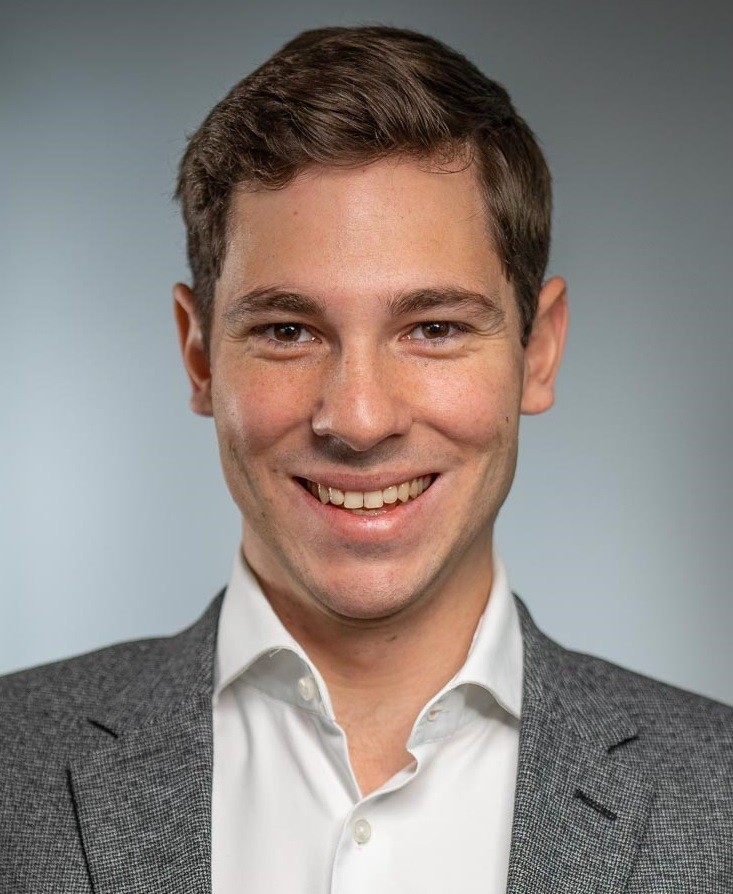
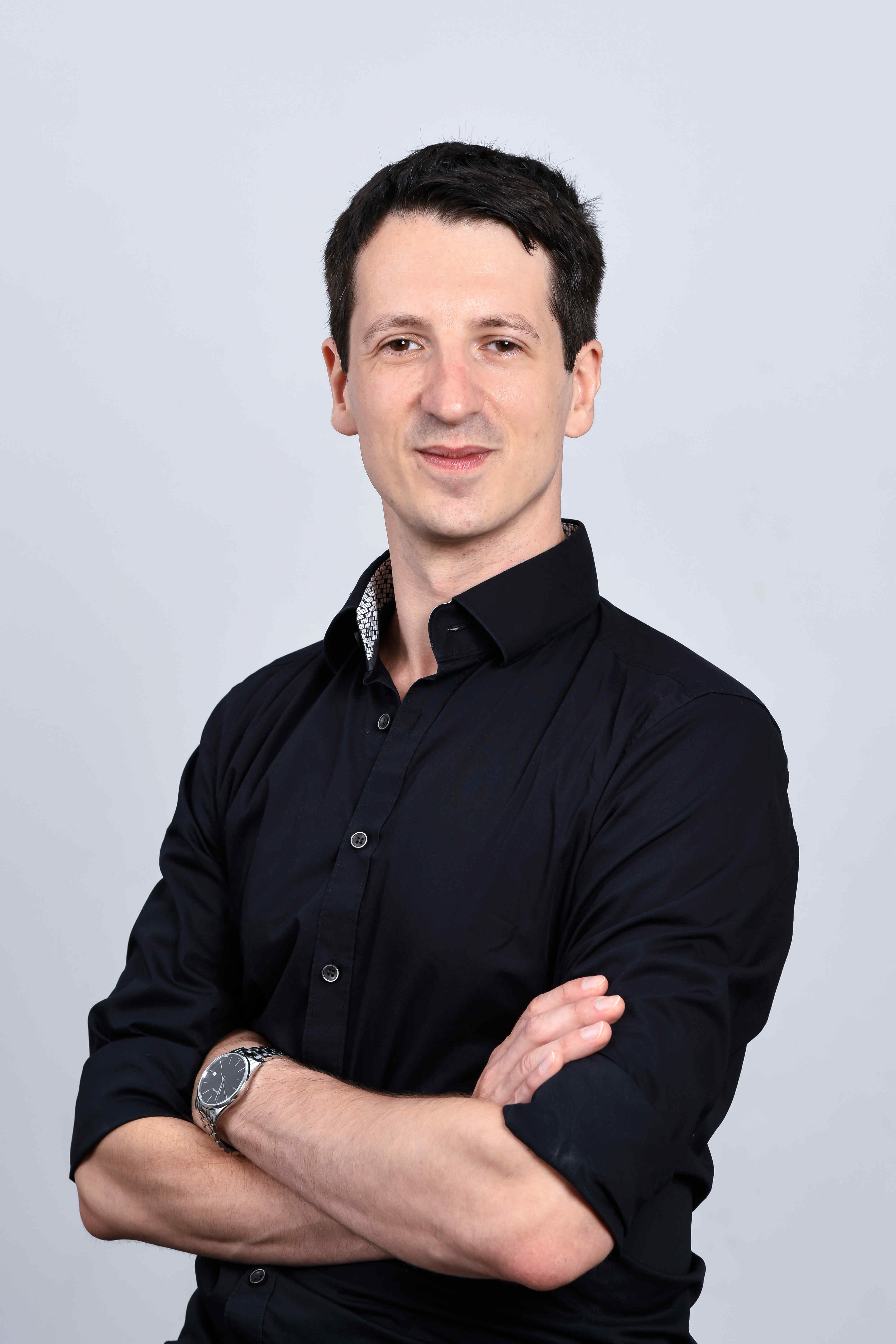
Leo Eigner is a Researcher affiliated with the Department of Swiss and International Security Policy at ETH Zürich, Switzerland. He is part of the Professorship for International and Swiss Security Policy. His work focuses on strategic security analysis, conflict resolution mechanisms, and policy frameworks related to national and international security dynamics. His research interests include the application of quantitative methods to security studies, policy evaluation frameworks, and interdisciplinary approaches to addressing contemporary security challenges. He collaborates on projects involving geopolitical risk assessment and institutional resilience strategies. Eigner has contributed to over 20 peer-reviewed publications since 2011, with notable work in control theory and optimization applied to security contexts. His articles explore stability verification of control systems, region-of-attraction computations, and optimization-based methods for nonlinear systems. Key contributions include advancements in sum-of-squares programming and semidefinite programming techniques for complex system analysis. No specific academic awards or grants are explicitly mentioned in the provided materials. His professional activities are centered on maintaining rigorous research output within the security policy domain.
Severin Nowak is a Lecturer at the Institute of Electrical Engineering (IET) within the Lucerne School of Engineering and Architecture at Lucerne University of Applied Sciences (HSLU). He holds a Ph.D. in Electrical Engineering from the University of British Columbia, Canada, focusing on electric power systems, and a federal diploma in electrical engineering from the University of Applied Sciences and Arts Western Switzerland. His research integrates industrial experience with academic rigor, emphasizing data-driven approaches for modernizing power grids, renewable energy integration, and sustainable energy systems. Research Interests: Grid Modernization and Digitalization Renewable Energy Deployment Electric Vehicle Integration AI and Machine Learning in Energy Systems Decarbonization Strategies Key Projects: FIT4GRID: Integration of electric trucks into grid design EVFlex: Aggregation of electric vehicle flexibility for grid services AISOP: AI-assisted grid operational planning Publications span topics like fault detection in distribution networks, federated learning for load forecasting, and vehicle-to-grid systems. His work bridges academia and industry, addressing challenges in sustainable energy transition and grid resilience.
Clément Pit-Claudel is a Tenure-Track Assistant Professor at École Polytechnique Fédérale de Lausanne (EPFL), leading the SYSTEMF Laboratory in the School of Computer and Communication Sciences. His work bridges programming languages, formal verification, and systems engineering to build high-assurance software and hardware components. PhD in Computer Science from MIT (2016), thesis on proof-producing compilers MSc in Computer Science from MIT BSc in Computer Science from École Polytechnique (France) Research Interests focus on correct-by-construction program synthesis , domain-specific compilers , and formal verification . He develops tools like Alectryon for interactive Coq proof visualization and Rupicola for verified compiler construction. His work spans hardware description languages (e.g., Kôika ), software verification (e.g., Fiat ), and regex engine formalization (e.g., Elk and Warblre ). Recent publications include foundational work on JavaScript regex mechanisms (ICFP 2024), relational compilation (PLDI 2022), and hardware simulation (ASPLOS 2021). His lab SYSTEMF emphasizes full assurance without compromise through machine-checked proofs and hardware-software co-design. Awards include the MIT Frederick C. Hennie III Teaching Award (2016) and MIT William A. Martin Thesis Award (2016). He has served as program committee member for conferences like PLDI, POPL, and Coq Workshop. Teaching includes Software Construction (400+ students at EPFL) and Interactive Theorem Proving graduate course. He has advised doctoral students in formal methods and compiler design.
Prof. Dr. Adam Andrzej Kurpisz is a Tenure Track Professor at the Bern University of Applied Sciences (BFH) and a senior researcher at the Institute for Operations Research (IFOR) at ETH Zürich. He leads the Ambizione Junior Research Group under Prof. Rico Zenklusen. His research bridges combinatorial optimization, robust optimization, and semi-algebraic proof systems, with applications in polynomial optimization and approximation algorithms. Education: PhD from Wrocław University of Science and Technology (supervised by Prof. Paweł Zieliński), postdoctoral work at IDSIA and Max-Planck-Institut. Grants: Secured over CHF 600,000 via Swiss National Science Foundation and other grants, including the AMBIZIONE project on linear/semidefinite relaxations. Research Interests: Focuses on semi-algebraic proof systems, approximation algorithms, robust optimization, and polynomial optimization. Applies techniques from algebraic geometry, Fourier analysis, and linear algebra to analyze optimization hierarchies. Teaching: Lectures on convex optimization, polynomial optimization, and discrete mathematics at ETH Zürich and BFH. Supervised courses in algorithms, programming, and mathematical analysis. Industry Collaboration: Co-founder of startups Silencions and Deeptale, advancing their ventures to global finals of MassChallenge Switzerland with over €5M in EU grants secured.
Jonas Schnidrig is a Lecturer at École Polytechnique Fédérale de Lausanne (EPFL), affiliated with the School of Engineering (STI) and the School of Architecture, Civil and Environmental Engineering (ENAC). He works as an External Employee in the SCI STI FM Group at EPFL Valais Wallis, based at the IPESE institute in Sion. His research focuses on sustainable energy policy and planning, specializing in energy system modeling, optimization, and decision support for the energy transition. He actively bridges research, industry, government, and society by developing strategies that balance ecological, social, and economic dimensions of energy transitions. Dr. Schnidrig's educational background includes: PhD in Mechanical Engineering (Energy and Technologies) from EPFL-HES-So Valais Wallis (2020-2024) Master's in Mechanical Engineering (Thermodynamics & Energetics) from EPFL (2018-2020) Bachelor's in Mechanical Engineering from EPFL (2013-2018) His research interests span sustainable energy system modeling, life cycle assessment, renewable energy planning, rational use of energy, and thermoeconomic optimization. He specializes in energy system integration, incorporating sustainability metrics into energy planning, policy support for sustainable energy transitions, and renewable energy finance and infrastructure planning. His work emphasizes a life-cycle perspective to evaluate the ecological, social, and economic dimensions of energy systems. Analysis of his recent publications reveals a strong focus on decentralized energy systems, multi-actor energy planning, and the integration of environmental metrics into energy modeling. His research demonstrates how strategic decentralization can reduce system costs by up to 10% while increasing self-consumption by up to 68%. He has pioneered methodologies that integrate life-cycle impact assessment into energy system modeling, showing potential for 15-47% cost reductions alongside 31-81% reductions in environmental impacts. His notable scientific achievement includes: Zanelli Prize for outstanding contribution to sustainable development (2020) Dr. Schnidrig coordinates the EnergyScope Community, which brings together over 50 researchers and practitioners, and contributes to major international projects including EnergyScope Community, Net Zero Valais, and collaborations with Polytechnique Montréal, Hydro Québec, and Swiss energy institutions. He supervises semester and master projects at EPFL and teaches the course "Sustainability, climate and energy" (ENV-421). He leads research on digital twins for cities within the Blue City project and focuses on understanding the role of infrastructure in high share renewable energy systems, investigating synergies across different scales, and developing sustainable energy systems that align economic efficiency with environmental sustainability.
Anastasia Khukhro serves as a Lecturer at the Swiss Federal Institute of Technology Lausanne (EPFL) within the Centre des méthodes mathématiques et statistiques (CMS), operating under the Associate Vice Presidency for Education (AVP-E). Her primary role focuses on delivering foundational mathematics instruction for EPFL's preparatory year program across multiple academic tracks. Her teaching portfolio encompasses core mathematical disciplines essential for engineering and science students: Linear Algebra (for CMS): Integrating set theory, elementary logic, and geometric interpretation of fundamental linear algebra concepts in dimension 2 Analysis I (for CMS): Comprehensive introduction to differential calculus principles Analysis II (for CMS-3): Advanced continuation of calculus topics (coursebook pending section approval) Analysis B (for MAN): Establishment of differential and integral calculus fundamentals Her pedagogical expertise centers on foundational mathematics education, with specialized focus on Linear Algebra, Mathematical Analysis, and preparatory curriculum development for diverse student cohorts. Based at EPFL's Lausanne campus in Building BS room 281, she maintains direct accessibility through her professional email anastasia.khukhro@epfl.ch and office phone +41 21 693 12 73.
Meike Akveld is a Professor in the Department of Mathematics at ETH Zurich, where she has held roles since 1997, including her current position as Titularprofessorin since 2024. Her work focuses on mathematics education, outreach, and diversity initiatives. 2024–Present: Titularprofessorin, ETH Zurich 2016–2024: Senior Scientist, ETH Zurich Research Interests : Meike Akveld specializes in mathematics education, with emphasis on innovative teaching methods, mathematical competitions, and the popularization of knot theory. Her work includes designing automated assessment tools (e.g., STACK) and promoting inclusive education practices. Publications Trends : Recent articles address educational technology, flipped classrooms, and the role of competitions in STEM learning. Themes include calculus instruction, linear algebra pedagogy, and diversity in mathematics education. Scientific Awards : Finalist, KITE Award (2024) – Digital Math Assessment Credit Suisse Award for Best Teaching (2021) Finalist, KITE Award (2020) – Brückenkurs Project Goldene Eule des VSETH (2014, 2009) – Teaching Excellence
Dr. Kevin J Liang is a Research Scientist at Meta Platforms, Inc. , specializing in Deep Learning , Computer Vision , and 3D Reconstruction . He earned his PhD in Electrical & Computer Engineering from Duke University in 2020, with a dissertation on Deep Automatic Threat Recognition for Airport X-Ray Baggage Screening . His research focuses include: 3D Computer Vision (ICON, Fast3R) Few-Shot Learning (Sylph, HyperMix) Federated Learning (WAFFLe) Object Detection (EgoTracks, Self-Supervised Methods) Recent publications demonstrate his leadership in Egocentric Vision (Ego-Exo4D) and Transformer Applications (GliTr). He has received numerous awards including the E Bayard Halsted Fellowship (2017) and Summa cum laude (2015), and serves on program committees for major conferences like NeurIPS and CVPR . As an educator, he developed and taught tutorials for Duke University's Machine Learning School and Coursera courses, covering TensorFlow, PyTorch, and foundational ML concepts for over 600 students.
Michel Besserve is a Full Professor in the Department of Empirical Inference at the Max Planck Institute for Intelligent Systems in Tübingen, Germany. His research bridges artificial intelligence, causal inference, and neuroscience to develop trustworthy and interpretable AI systems for understanding complex phenomena in artificial, physical, and socioeconomic systems. Dr. Besserve completed his PhD dissertation titled Analyse de la dynamique neuronale pour les Interfaces Cerveau-Machine : un retour aux sources at Université Paris-Sud 11 in November 2007. His academic journey has led him to become a leading researcher in causal machine learning, collaborating extensively with Bernhard Schölkopf and other prominent scientists in neuroscience and AI. Professor Besserve's research centers on causal machine learning, with a focus on understanding and anticipating changes in complex systems. He investigates principles like the Independence of Causal Mechanisms (ICM) to improve causal model identifiability and develop more robust AI. His work spans theoretical foundations of causal inference to practical applications in neuroscience, brain function analysis, and socioeconomic systems. He has made significant contributions to understanding brain networks through causal inference and machine learning, with publications in major journals including Nature, PLOS Biology, and Neuron. His publication record reveals a clear trajectory from theoretical causal inference toward developing frameworks for real-world applications. Recent work focuses on building Causal Computational Models (CCMs) that integrate data, domain knowledge, and causal structure to improve robustness and interpretability of complex system models. His research shows increasing integration of causal machine learning with applications to neuroscience and socioeconomic systems, particularly in developing causal AI that can address real-world complexity while producing interpretable outcomes for decision makers. Through his leadership in the Department of Empirical Inference, Professor Besserve has established a research program that bridges theoretical machine learning with practical applications in neuroscience and complex systems. His team develops novel causal machine learning tools that uncover internal structure and transformations of complex systems, with potential applications ranging from brain function analysis to sustainable economic modeling.
Matteo Castiglioni is an assistant professor (RTD-A) at the Department of Electronics, Information and Bioengineering (DEIB) at Politecnico di Milano. He received his PhD in computer science from the same institution under the supervision of Prof. Nicola Gatti. His academic career spans multiple teaching roles across various programs at Politecnico di Milano. Castiglioni's research focuses on the intersection of artificial intelligence, algorithmic game theory, and multi-agent systems. He specializes in combining machine learning techniques with economic paradigms to build strategic agents capable of operating in complex multi-agent environments. His work addresses fundamental challenges in contract theory, mechanism design, and strategic decision-making under uncertainty. His publication record shows a clear trajectory toward increasingly sophisticated models that integrate learning with strategic behavior. Recent papers demonstrate expertise in constrained optimization, regret minimization, and handling both stochastic and adversarial environments. His work bridges theoretical computer science with practical applications in economics and market design. Castiglioni has taught across multiple academic levels including B.Sc., M.Sc., and Ph.D. programs. He has served as both professor and teaching assistant for courses in Game Theory, Online Learning Applications, and Computer Science and Engineering programs.
Bingcong Li is a postdoctoral researcher at ETH Zurich collaborating with Prof. Niao He and the ODI group. Previously, they completed doctoral studies at the University of Minnesota under Prof. Georgios B. Giannakis, followed by industry experience focused on large language models (LLMs). Education includes a PhD from the University of Minnesota under Prof. Georgios B. Giannakis. Research centers on making computation efficient, accessible, and affordable across heterogeneous resources—from GPU clusters to consumer hardware—through interdisciplinary approaches combining deep learning, optimization, and signal processing. Key research areas address foundational computing architectures, large-scale system sustainability, and personalized AI access. Their work develops theoretically grounded methods for explainable systems, with recent focus on LLM fine-tuning efficiency. Publication trends show consistent contributions to top conferences (NeurIPS, ICML, ICLR) with emphasis on optimization techniques for resource-constrained LLM deployment. Their advising and grant activities aren't explicitly detailed, though they actively participate in academic service through conference talks (EUROPT 2025, ICASSP 2025) and co-organizing events like the Efficient LLMs Fine-tuning Track at AI+X Summit. Lab affiliation centers on ETH Zurich's ODI group under Prof. Niao He, focusing on optimization-driven AI solutions.
Dr. Anastasios Tsiamis is a Lecturer at the Department of Information Technology and Electrical Engineering at ETH Zürich, working in the Automatic Control Laboratory (Professur Control and Computation). His research focuses on the intersection of control theory and machine learning, specifically investigating how system theoretic properties affect the statistical difficulty of learning in system identification, online estimation, and control. Dr. Tsiamis received his Diploma (MEng, five-year degree) in Electrical and Computer Engineering from the National Technical University of Athens (NTUA). He completed his Ph.D. in Electrical and Systems Engineering at the University of Pennsylvania under Professor George Pappas, following graduate research with Professor Petros Maragos and undergraduate work with Professor Kostas J. Kyriakopoulos at NTUA. His primary research areas include Statistical Learning and Control, Data-Driven Control, Online Learning, Risk-Aware Control, and Security and Privacy in Networked Control Systems. Dr. Tsiamis has made significant contributions to understanding the fundamental statistical limits of learning in control systems, particularly focusing on sample complexity. His work on risk-aware optimization develops algorithms that safeguard against catastrophic events while maintaining good average performance, and his security research addresses eavesdropping attacks in remote estimation and motion planning. Analysis of Dr. Tsiamis's recent publications reveals a strong focus on data-driven approaches to control theory with emphasis on distributionally robust methods, risk-aware optimization, and finite sample guarantees. His work bridges theoretical foundations with practical applications across system identification, online learning, and adaptive control, providing rigorous non-asymptotic guarantees for learning-based control algorithms. Dr. Tsiamis has received several notable research recognitions: Best student paper award at IEEE 61th Conference on Decision and Control (2022) Spotlight Presentation at 41st International Conference on Machine Learning (2024) Finalist for best student paper award at American Control Conference (2019) Finalist for young author prize at IFAC World Congress (2017) Oral presentation at 2nd L4DC Conference (2020) Dr. Tsiamis teaches Linear System Theory (227-0225-00L) at ETH Zürich and collaborates extensively with Professor John Lygeros, Professor Manfred Morari, and researchers from the University of Pennsylvania. His publication record demonstrates strong collaborative research across multiple institutions while advancing theoretical foundations of learning-based control. As an active member of the Automatic Control Laboratory at ETH Zürich, Dr. Tsiamis contributes to advancing control systems science through rigorous mathematical analysis and innovative algorithmic development, with applications spanning robotics, energy systems, and networked control.
Dr. Oliver Strub is a Lecturer at the University of Bern, affiliated with the Group for Business Analytics, Operations Research and Quantitative Methods. His research focuses on quantitative finance, optimization algorithms, and data-driven decision making. He holds a PhD and has expertise in applying mathematical and computational techniques to financial and operational problems. His research interests include index-tracking portfolio optimization, feature selection in machine learning, and the development of heuristic and mathematical programming methods. He has explored hybrid approaches combining genetic algorithms, MILP models, and data-mining techniques to enhance portfolio performance while adhering to regulatory constraints like UCITS. Recent work emphasizes optimization methods for portfolio management, particularly under constraints such as UCITS regulations. He has developed solutions that blend heuristic algorithms with mathematical programming to achieve efficient financial and operational outcomes. His contributions span algorithmic trading, risk management, and compliance-driven portfolio construction. Dr. Strub's affiliations include the Group for Business Analytics, where he collaborates on projects involving business analytics, operations research, and quantitative methodologies. While no awards or grants are explicitly noted, his extensive publication record reflects a strong focus on practical and theoretical advancements in quantitative fields.
Lukas Ballo is a Lecturer at the Department of Civil, Environmental and Geomatic Engineering at ETH Zurich. His work focuses on sustainable urban mobility, particularly cycling infrastructure and road space reallocation. He holds an MSc in Spatial Development and Infrastructure Systems from ETH Zurich and a BSc in Architecture from the same institution. Education: MSc (ETH Zurich, 2016), BSc (ETH Zurich, 2014) Professional Experience: Co-Founder of Roll2Go (acquired by BOND Mobility), Head of Mobility Data Analytics at BOND Mobility, Engineer at Swiss South-Eastern Railway His research explores systemic transport transitions, such as the 'E-Bike City' concept, aiming to decarbonize urban mobility through radical infrastructure redesign. Key contributions include automated road space reallocation tools (e.g., SNMan) and accessibility modeling frameworks. His work bridges academia and policy, emphasizing equity and sustainability. Publications highlight optimization of cycling networks, multimodal infrastructure design, and the societal implications of urban mobility shifts. Collaborations include IVT and IKG institutes at ETH Zurich, with funding from projects like the D-BAUG Lighthouse Initiative.
Heinz Riener is a Researcher at the Integrated Systems Laboratory (LSI) within the School of Computer and Communication Sciences (IC) at EPFL, Lausanne, Switzerland. He holds a Ph.D. (Dr.-Ing.) in Computer Science from the University of Bremen, Germany. Previously, he worked at the German Aerospace Center (DLR) and the University of Bremen's Reliable Embedded Systems group. His research focuses on logic synthesis , formal methods , and computer-aided verification of hardware and software systems. Key areas include quantum computing (e.g., AQFP circuits), nanotechnology (e.g., RFET-based circuits), and emerging technologies like adiabatic quantum-flux parametron systems. Developed open-source tools like mockturtle and easy for logic synthesis and ESOP forms. Principal Investigator on projects like the Open Logic Synthesis Libraries initiative. Active in program committees for conferences like DAC, DATE, and FDL. Collaborates with institutions such as TU Graz, TU Hamburg, and UC Berkeley. His work emphasizes reproducibility and open-source collaboration in logic synthesis, contributing to benchmarks and libraries widely used in academia and industry.