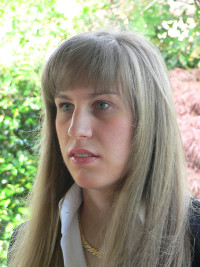
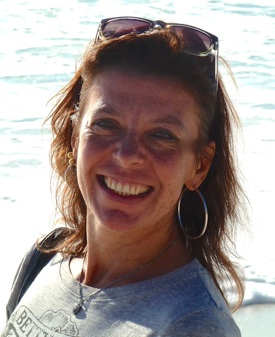
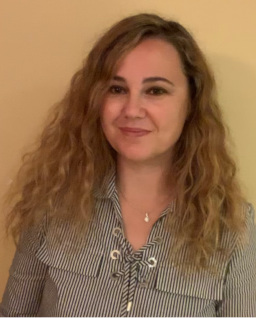
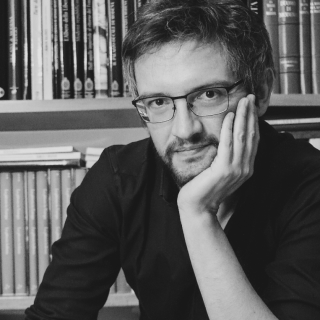
Antonio De Rosa is an Associate Professor in the Department of Decision Sciences at Bocconi University, Italy. Previously, he held positions at the University of Maryland, College Park (2020–2024), and the Courant Institute of Mathematical Sciences, New York University (2017–2020). He earned his Ph.D. in Mathematics from the University of Zurich in 2017 under Camillo De Lellis and Guido De Philippis. Education: Ph.D. in Mathematics, University of Zurich (2017). His research spans Geometric Analysis , Partial Differential Equations , Calculus of Variations , Geometric Measure Theory , Optimal Transport , and Non-convex Optimization . Recent work focuses on anisotropic geometric variational problems, including existence, regularity, and uniqueness of anisotropic minimal surfaces and CMC (constant mean curvature) surfaces. He has also contributed to interdisciplinary applications in Explainable Risk Assessment and Data Analysis . The 15 most recent articles highlight advancements in anisotropic surfaces , min-max theory , optimal transport , and mathematical programming (e.g., K-means clustering, linear programming). Key trends include the intersection of geometric measure theory with nonlinear PDEs and applications in machine learning and transportation networks . Scientific Awards and Grants: 2023 Maryland Research Excellence Carlo Ciliberto Prize (2019) ERC Starting Grant ANGEVA (101076411, 2023–2028) Air Force Office of Scientific Research (AFOSR) grant (FA9550-23-1-0123) NSF CAREER Award (DMS-2143124) NSF DMS Awards (DMS-1906451, DMS-2112311) AMS Simons Travel Grant Antonio actively supervises research and teaches courses such as Optimization and Introduction to Partial Differential Equations . His work is supported by significant funding totaling approximately €3 million.
Giulia Giordano is a Full Professor in the Department of Industrial Engineering at the University of Trento, Italy, where she leads the Dynamical Networks and Systems Biology research group. She also holds a dual appointment as Visiting Professor and Delft Technology Fellow at the Delft Center for Systems and Control, Delft University of Technology, The Netherlands. Her career includes previous positions as Assistant Professor at Delft University of Technology (2017-2019), Postdoctoral Research Fellow at Lund University, Sweden (2016-2017), and Research Fellow at the University of Udine, Italy (2016). Giulia earned her Ph.D. in Industrial and Information Engineering: Automation (Excellent) from the University of Udine with a thesis titled "Structural Analysis and Control of Dynamical Networks." She completed her M.Sc. and B.Sc. in Electrical Engineering (both Summa cum laude) at the same institution. She also undertook research visits at Caltech (2012) as a SURF Fellow and at the University of Stuttgart (2015) as a DAAD Research Scholar. Her primary research focuses on the analysis and control of dynamical networks with applications in systems biology, mathematical ecology, and mathematical epidemiology. She develops mathematical frameworks that bridge control theory, network theory, and dynamical systems to address complex problems in biological systems. Her recent work spans epidemic modeling, opinion dynamics, biochemical networks, and neurological disorders, with a particular emphasis on structural analysis of networked systems. She employs both theoretical and computational approaches to understand system behavior under uncertainty. Giulia's publications reveal a strong interdisciplinary focus, spanning from theoretical control systems to practical applications in epidemiology and biology. Her recent work shows increasing emphasis on epidemic modeling (particularly related to mpox and SARS-CoV-2), network synchronization, and the application of control theory to biological phenomena like fibromyalgia pathogenesis and opinion formation. Many of her papers appear in top-tier control journals including Automatica and IEEE Transactions on Automatic Control. 2024: Outstanding Service as Associate Editor of IEEE Control Systems Letters 2021: SIAM Activity Group on Control and Systems Theory Prize 2020: Outstanding Reviewer, Annals of Internal Medicine 2017: NAHS Best Paper Prize and EECI PhD Award 2016: Outstanding TAC Reviewer, IEEE Transactions on Automatic Control Giulia actively mentors students and postdoctoral researchers, currently supervising five postdoctoral researchers and two Ph.D. students at the University of Trento. She has advised numerous M.Sc. and B.Sc. students on topics ranging from bio-inspired modeling to optimal control of epidemic systems. Her research is supported by competitive grants including the ERC Starting Grant INSPIRE (Integrated Structural and Probabilistic Approaches for Biological and Epidemiological Systems). She serves as Associate Editor for IEEE Control Systems Letters and Automatica, and is a Senior Member of IEEE and the Control Systems Society. Giulia leads the Dynamical Networks and Systems Biology research group at the University of Trento, which maintains strong international collaborations across Europe and North America. The group's work combines theoretical advances in control theory with practical applications to pressing problems in public health and biological systems, demonstrating the power of mathematical approaches to understanding complex phenomena in the life sciences.
Maria Elena Valcher is a Professor at the Department of Information Engineering, University of Padova, Italy. She is an IEEE Fellow (since 2012), IFAC Fellow (since 2023), Socio Effettivo of Istituto Veneto di Scienze, Lettere ed Arti (since 2017, previously Socio Corrispondente 2008-2017), and Socio Effettivo of Accademia Galieliana di Scienze, Lettere ed Arti in Padova (since 2022, previously Socio Corrispondente 2017-2022). She currently serves as Administrator of the Istituto Veneto and holds leadership positions including EUCA President (2024-2025) and IEEE Control Systems Society Past President. Her research focuses on control systems, systems theory, optimization, Boolean control networks, multi-agent systems, and consensus problems. She has made significant contributions in distributed control, data-driven methods, and network optimization, with recent work exploring applications in opinion dynamics and social networks. Recent publications demonstrate a strong emphasis on data-driven approaches to control systems, particularly in distributed state estimation, unknown-input observer design, and multi-agent coordination. Her work shows consistent development in theoretical frameworks for networked systems with practical applications. Awards and Honors: IEEE Fellow (2012) IFAC Fellow (2023) Socio Effettivo, Istituto Veneto di Scienze, Lettere ed Arti (2017-present) Socio Effettivo, Accademia Galieliana di Scienze, Lettere ed Arti in Padova (2022-present) She teaches 'Controlli Automatici' (Bachelor in Information Engineering) and 'Systems Theory' (Master in Control Systems Engineering) during the 2024/2025 academic year. She has chaired major conferences including the 61st IEEE Conference on Decision and Control (CDC 2022) and serves as Program Chair for ICSTCC 2025.
Paola Cristofori is an Associate Professor in the Department of Physical, Computer and Mathematical Sciences at the University of Modena and Reggio Emilia. Her research focuses on Algebraic Topology, Differential Geometry, and Manifold Theory, with contributions to PL topology, 4-manifolds, and combinatorial structures like crystallization theory. She teaches courses in Geometry, Linear Algebra, and Algebraic Topology for undergraduate and graduate programs in Mathematics, Civil Engineering, and Strategic Sciences. Her work emphasizes topological invariants, combinatorial methods in manifold classification, and applications of colored graphs. Key areas include trisections of 4-manifolds, Kirby diagrams, and G-degree theory. She collaborates extensively on projects involving geometric topology and computational topology tools. Dr. Cristofori’s teaching spans foundational topics in linear algebra, Euclidean geometry, and advanced algebraic topology, emphasizing rigorous proofs and practical applications. Her research is published in top journals and includes over 40 articles, reflecting her deep engagement with low-dimensional topology and geometric structures.
Pietro Liò is a Full Professor in the Department of Computer Science and Technology at the University of Cambridge, where he is also a member of the Artificial Intelligence group. His work bridges computer science and biomedical applications, with a strong focus on advancing AI methods for healthcare. Research Interests: His research is centered on developing Artificial Intelligence and Computational Biology models to unravel the complexity of diseases and support personalized and precision medicine. A current emphasis is on Graph Neural Network modeling, leveraging topological data structures to represent biological and medical systems. His interdisciplinary background enables innovative approaches at the intersection of machine learning and life sciences. The trends in his research, though no specific articles are listed, indicate a strong focus on AI-driven biomedical discovery, particularly using deep learning on structured data for health applications. This includes modeling biological networks, disease mechanisms, and patient-specific conditions through advanced neural architectures. Scientific Awards: As a principal investigator and academic leader, Pietro Liò likely supervises PhD and postdoctoral researchers and secures research grants in AI for health, though specific advisees and funding details are not mentioned in the text. His dual PhD background and affiliation with a leading AI group suggest a robust research program with significant grant involvement. He is associated with AI research activities at Cambridge, including seminars and software development, possibly contributing to or leading a research lab or initiative focused on AI applications in biology and medicine, though no formal lab name is provided beyond the general AI group membership.
Matteo Penegini serves as an Associate Professor in the Department of Mathematics at the University of Genoa, where he holds a seat on the Department Board. His teaching portfolio spans multiple degree programs including Economic and Financial Sciences, Biomedical Engineering, and Mathematical Statistics, with courses such as General Mathematics, Geometry, and Linear Algebra and Analytic Geometry. His research centers on advanced Algebraic Geometry, specializing in the classification and structural analysis of algebraic surfaces and threefolds. Key investigations include triple covers of K3 surfaces, surfaces with pg=q=2 invariants, and projective varieties of general type. His work integrates cohomological methods, birational transformations, and moduli space theory to explore geometric genus constraints and Albanese map properties. Recent publications reveal a consistent focus on geometric invariants and covering spaces, with collaborative studies examining K3 surface covers (2022), surface families with specific Chern numbers (2021), threefold classification (2021), cohomology of irregular surfaces (2020), and Zariski multiplets from isogenous surfaces (2020). This trajectory demonstrates deepening engagement with Hodge theory and moduli problems in complex algebraic geometry.
Cristiana De Filippis serves as Associate Professor in the Department of Mathematical, Physical and Computer Sciences at the University of Parma. Her academic journey includes a Bachelor's degree from the University of Torino (2014), Master's from University of Milano-Bicocca (2016), and PhD from the University of Oxford (2020), followed by a tenure-track position at Parma since 2021 and habilitation to full professorship in 2023. Her research focuses on Mathematical Analysis , particularly Regularity Theory for elliptic and parabolic partial differential equations and the Calculus of Variations . She investigates fundamental properties of solutions to nonlinear PDEs, including sharp growth conditions, nonuniform ellipticity, and double-phase functionals. Her work bridges abstract mathematical theory with applications in physics and engineering through rigorous analysis of solution behavior. Analysis of her 15 most recent publications reveals a concentrated research program in nonuniformly elliptic systems (2022-2025), double-phase variational problems (2023-2024), and gradient regularity under irregular coefficients (2020-2024). Key contributions include establishing sharp growth rates in Schauder theory and developing novel techniques for nearly linear growth conditions. European Mathematical Society Prize 2024 Bartolozzi Prize 2023 (Italian Mathematical Union) Iapichino Prize 2020 (Accademia dei Lincei) Premio per la Cultura Mediterranea 2023 G-Research Prize 2019 Forbes 100 Most Successful Italian Women 2023 European Mathematical Society Young Academy (inaugural cohort) Professor De Filippis has delivered invited lectures at prestigious institutions including Erwin Schrödinger Institute (2025), Charles University Prague (2024), and Accademia Nazionale dei Lincei (2022). She teaches Mathematical Analysis courses for Computer Science, Geological Sciences, and Management Engineering programs at undergraduate level. Her research is supported through multiple international collaborations, particularly with Giuseppe Mingione at Parma and researchers at European institutions.
Laura Sanità is an Associate Professor in the Department of Computing Sciences at Bocconi University, Milano, Italy. She previously held academic positions at TU Eindhoven (Netherlands) and the University of Waterloo (Canada). Education: Bachelor's in Management Engineering (2003), Università di Roma Tor Vergata Master's in Management Engineering (2005), Università di Roma Tor Vergata PhD in Operations Research (2009), Università Sapienza di Roma Postdoctoral Fellow at EPFL (Switzerland, 2009-2011) Laura's research focuses on discrete mathematics, theoretical computer science, and operations research, with particular emphasis on algorithmic solutions for combinatorial optimization problems. Her work spans approximation algorithms, network design, polyhedral combinatorics, and algorithmic game theory, advancing methodologies for solving complex optimization challenges in theoretical and applied contexts. Her publications demonstrate expertise in network design problems, spanning from fundamental polyhedral characterizations to game-theoretic applications. Key contributions include iterative randomized rounding techniques for Steiner trees, circuit augmentation algorithms, and stabilization approaches for network games. Scientific Awards: NWO-VIDI Award (Netherlands) Discovery Accelerator Supplements Award (NSERC, Canada) Golden Jubilee Research Excellence Award (University of Waterloo) Early Researcher Award (Ontario) Best Paper Award at STOC 2010 Advising & Collaborations: Laura advises PhD students Dylan Hyatt-Denesik and Lucy Verbeck, and collaborates with postdoctoral researchers like Afrouz Jabal Ameli. She has served on program committees and as Associate Editor for top journals including Mathematical Programming, Mathematics of Operations Research, and Operations Research Letters.
Roberto Zanino is a Full Professor of Nuclear Engineering at the Department of Energy (DENERG) of the Polytechnic of Turin, Italy. He serves as Advisor to the Rector for relations with European and international university networks and for the UniTe project, Undergraduate Research Opportunities Coordinator, and Project management functions of PoliToArgentina. He is also Scientific Advisor for the Partnership Agreement with NEWCLEO. Dr. Zanino earned his Laurea cum laude in Nuclear Engineering from Politecnico di Torino in 1984 and his Ph.D. in Energetics in 1989. His academic progression includes Assistant Professor (1990-91), Associate Professor (1992-2000), and Professor (2001-present). He previously served as Director of Alta Scuola Politecnica (2007-2010) and Head of the Graduate Program in Energetics (2011-present). His research spans computational fluid dynamics, concentrated solar power, controlled thermonuclear fusion, Generation IV nuclear fission reactors, and plasma physics. His work focuses on thermal-hydraulic analysis of liquid metal systems, superconducting magnet design for fusion applications, and concentrated solar power optimization. His recent publications demonstrate strong expertise in coupling computational tools for nuclear applications, particularly in CFD-system code integration for liquid metal systems and fusion magnet analysis. Dr. Zanino has received recognition as an IEEE Senior Member (2012) and has supervised numerous doctoral students working on topics including thermal-hydraulic analysis of heavy liquid metal systems, superconducting magnet simulation for fusion applications, and concentrated solar power modeling. He has extensive international experience, having worked at Max-Planck-Institut für Plasmaphysik, Massachusetts Institute of Technology, and University of Illinois at Chicago. He is actively involved in major fusion projects including ITER, DTT (Divertor Tokamak Test facility), and EUROfusion. His teaching portfolio includes Computational Heat and Mass Transfer, Nuclear Fusion Reactor Engineering, Solar Thermal Technologies, and Computational Thermal Fluid Dynamics at both master's and doctoral levels.
Simon Masnou is a Full Professor at Université Claude Bernard Lyon 1, affiliated with the Institut Camille Jordan (CNRS UMR 5208). He holds leadership roles as Head of the 'Applied Mathematics, Statistics' Master's degree and Head of the 'M2 Maths in Action' program. Previously, he served as Director of the Camille Jordan Institute (2018-2022). His research focuses on applied mathematics, image processing, shape optimization, and geometric measure theory, with contributions to variational models, geometric flows, and applications in computer vision and materials science. Education: PhD in Mathematics (1998, Paris Dauphine) and HDR (2008, Paris 6). Research projects include ANR STOIQUES (2024-2028), PEPR PDE-AI (2023-2028), and collaborations with industry on topics like defect prediction in aluminum production and high-dimensional data analysis. Teaching includes courses on linear algebra, optimization, and machine learning at undergraduate and graduate levels. Key contributions span phase field models, varifold-based surface approximation, and image inpainting. He supervises PhD students in geometric variational problems and computational methods. His work bridges theoretical mathematics with industrial challenges, addressing issues in materials science, medical imaging, and cultural heritage preservation.
Jorge Raul Cordovez Manriquez serves as an External Lecturer and Teaching Assistant at the Department of Mathematical Sciences 'GL Lagrange' (DISMA) at Polytechnic University of Turin. He holds invited membership in both the College of Biomedical Engineering and College of Chemical and Materials Engineering. His primary teaching responsibilities span multiple engineering programs including Aerospace Engineering, Computer Science Engineering, and Management Engineering, as well as Architecture programs. His research focuses on advanced topics in algebraic geometry, particularly Schubert calculus, Fano varieties, and complete intersections. His work explores combinatorial structures in algebraic varieties, geometric configurations of lines and conics, and binomial formulas in intersection theory. The mathematical techniques developed in his publications have applications in enumerative geometry and theoretical physics. Over the past decade, Cordovez Manriquez has maintained consistent publication activity in specialized mathematics journals, with his most recent work (2009) extending binomial formulas to Schubert calculus contexts. His research demonstrates deep connections between combinatorial algebra and geometric structures in projective spaces. As an educator, he has taught foundational mathematics courses including Mathematical Analysis I, Linear Algebra and Geometry, and Mathematical Principles across multiple academic years (2019/20-2025/26). His teaching portfolio shows particular emphasis on engineering mathematics for Aerospace Engineering programs, where he has served as both Course Lecturer and Course Collaborator for core mathematical subjects.
Fabio Furini is an Associate Professor at the Department of Computer Science, Automatics, and Management (DIAG) at Sapienza University of Rome since September 2021. Prior to this position, he served as a CNR researcher at IASI-CNR in Rome (2020-2021), Maître de Conférences at Université Paris-Dauphine, France (2013-2019), postdoctoral researcher at Université Paris-13, France (2012-2013), and research fellow at the University of Bologna (2011-2012). His educational background includes a Ph.D. in Control Engineering and Operations Research from the University of Bologna in 2011. He further obtained the Habilitation à Diriger des Recherches (HDR) in France in 2017 and the National Scientific Qualification for Full Professor in Operations Research in Italy in 2019. Fabio Furini conducts theoretical and methodological research on Combinatorial Optimization and Operations Research. His primary focus is on developing exact algorithms based on decomposition and reformulation techniques for integer linear programming problems. His research spans various applications including network optimization, graph theory, and combinatorial problems such as the maximum clique problem, bin packing problem, and vertex separator problem. His work often bridges theoretical developments with practical applications in transportation, logistics, and network security. His recent publications demonstrate a strong focus on exact algorithms for combinatorial optimization problems, particularly in network interdiction, bin packing with temporal constraints, and graph-based problems. His work consistently combines integer programming techniques with combinatorial search methods to develop novel formulations and efficient solution approaches that advance the state-of-the-art in these domains. Among his notable scientific awards are the Prime d'encadrement doctoral et de recherche (PEDR), which he received annually from 2014 to 2020, recognizing him among the top 15% of researchers in the French university system. He also holds the prestigious Habilitation à Diriger des Recherches from France (2017) and the National Scientific Qualification for Full Professor in Operations Research from Italy (2019). Fabio Furini has been actively involved in supervising PhD students and has served as principal investigator for numerous national and international research projects. His extensive network includes over 60 co-authors across European and American universities. He is also a member of the editorial boards for three prestigious international journals: Omega, Annals of Operations Research, and Discrete Applied Mathematics. His research activities include collaborations with various institutions across Europe and the United States, including Imperial College London and the University of Colorado. These collaborations have resulted in a robust research program focused on advancing the theoretical foundations and practical applications of combinatorial optimization.
Igor Simone Stievano is a Full Professor at the Polytechnic University of Turin , affiliated with the Department of Electronics and Telecommunications (DET) and the Interdepartmental Center Ec-L - Energy Center Lab . He holds a PhD in Electrical Engineering and has supervised numerous students in disciplines spanning electromagnetic compatibility, machine learning, and multi-energy networks. His research interests include: Modeling and simulation of integrated circuits Machine learning for signal integrity Multi-energy network resilience Stochastic analysis of electrical systems Electromagnetic compatibility Key projects include the EU-funded SHIMMER initiative on hydrogen injection in gas networks and commercial contracts for high-speed I/O macromodeling. He serves as a chair and committee member at major conferences like the IEEE Workshop on Signal and Power Integrity. Scientific recognitions : IEEE Senior Member Recipient of the 2013 Futuro in Ricerca grant Editorial Board member of ENERGIES (2020-) Stievano actively participates in PhD college evaluations for Mathematical Sciences and Metrology programs at Politecnico di Torino, while teaching courses in Electrical Engineering and Digital Technologies across biomedical, computer, and media engineering curricula.
Marco Pirra is a Researcher in the Department of Economics, Statistics and Finance at the University of Calabria, Italy. He holds a position in the academic rank of Researcher and is actively involved in teaching and research within the Finance and Insurance master's program. His contact information includes the email marco.pirra@unical.it and phone number 0984/492436. Marco Pirra's primary research areas encompass: Actuarial Science, with focus on insurance reserving, Solvency II, and technical provisions Risk Management in insurance, including cyber risk, agricultural risk, and long-term care insurance Stochastic modeling for mortality, disability, and financial markets Application of econometric and statistical methods to insurance and finance problems His research is characterized by the use of advanced quantitative techniques to address complex challenges in the insurance industry. Analysis of his recent publications (2020-2025) reveals a consistent focus on actuarial applications, particularly in the areas of claims reserving, Solvency II compliance, and emerging risks. He has made significant contributions to the understanding of cyber risk insurance and weather index-based insurance for agriculture. His work often involves collaboration with colleagues from the University of Calabria and other institutions. No scientific awards were mentioned in the provided text. Details about Marco Pirra's advisees and research grants were not provided in the available information. He is a member of the research group "Metodi quantitativi per l'economia, la finanza ed il management" (Quantitative Methods for Economics, Finance and Management) at the DESF department. This group conducts research using mathematical programming, econometric techniques, and statistical methods. Additionally, he is associated with the "Finance & Insurance Atelier" laboratory, which focuses on research in finance and insurance.
Carlo Fezzi is an Associate Professor at the Department of Economics and Management, University of Trento. His research focuses on econometrics, environmental economics, and climate change impacts, particularly in policy design and integrated modeling. Teaches Applied Econometrics and Econometrics for Behavioral and Applied Economics and Mathematics programs. Leads workshops in the Market Analysis Laboratory (G3-2), emphasizing data-driven market understanding. Fezzi’s research integrates econometric methods with environmental policy, addressing biodiversity, climate adaptation, and energy economics. Recent work explores land use optimization under climate change, electricity demand forecasting, and coral reef valuation. His publications span topics like carbon trading, agro-environmental modeling, and non-market valuation techniques. Fezzi’s 15 most recent articles highlight trends in econometric applications to environmental challenges, including climate policy, energy demand modeling, and biodiversity conservation. His methodologies combine linear/nonlinear models, neural networks, and spatial analysis to address global issues like food security, carbon emissions, and ecosystem resilience.