
Federico Benvenuto is an Associate Professor in the Department of Mathematics (DIMA) at the University of Genoa. His academic roles include teaching courses such as Big Data Techniques, Linear Algebra and Numerical Analysis, Calculus 1, Fundamentals of Numerical Calculation, Inverse Problems and Applications, Nonlinear Imaging, and Reverse Problems and Applications for various degree programs including Computer Science, Mathematics, and Economics and Data Science. University: University of Genoa Department: Department of Mathematics (DIMA) Academic Rank: Associate Professor His research interests span numerical analysis, computational mathematics, inverse problems, and nonlinear imaging. The email address federico.benvenuto@unige.it is provided for appointments. No scientific awards or publications are mentioned in the scraped text.
جستجوی استاد راهنمای دانشگاهی
برای مسیر پژوهشیتان، استاد راهنما، استاد دانشگاه و پژوهشگر مناسب را پیدا کنید و با آنها ارتباط بگیرید.
نمایش ۲۷۱-۲۸۴ از ۲۸۴ استاد راهنما
اطلاعات پروفایلها از صفحات عمومی دانشگاهها گرفته شده و ممکن است بهروز نباشد.
Cristina Campiمشاهده پروفایل
دانشیار
Cristina Campi is an Associate Professor at the Department of Mathematics (DIMA) of the University of Genoa. Her academic work focuses on numerical analysis and mathematical applications in biomedical contexts, particularly in medical imaging and data processing for radiology techniques. In her teaching role, she delivers courses such as Geometry for Computer Engineering students, Mathematical Analysis for Physics and Computer Science, and advanced courses like Numerical Methods for Linear Algebra and Statistical Methods in Biomedicine . She is also involved in teaching inferential statistics and mathematical data processing for multiple degree programs. Her research interests bridge mathematics, computer science, and medical imaging, emphasizing practical applications of theoretical concepts in real-world contexts. Office hours are available by appointment, coordinated through lessons or email communication.
- Algebraic Geometry
- Complex Geometry
- Linear Algebra
- +۳ مورد دیگر
Victor Lozovanu is an Associate Professor in the Department of Mathematics (DIMA) at the University of Genoa, Italy. He teaches Geometry for Mechanical Engineering students and Linear Algebra and Analytic Geometry courses for Mathematics and Mathematical Statistics degree programs across multiple curricula. His research centers on Algebraic Geometry with expertise in linear series, positivity phenomena, and syzygies on algebraic varieties. Key interests include theta divisors on abelian varieties, higher syzygy conditions for surfaces with trivial canonical bundles, and applications of convex geometry through valuation theory and Newton-Okounkov bodies. Recent publications (2018-2024) demonstrate consistent focus on local positivity of linear series, particularly for surfaces and abelian varieties. His work bridges valuation theory with classical problems in birational geometry, emphasizing multiplicity functions and syzygetic properties of linear systems. No scientific awards are documented in the available information. Details regarding student advisees and research grants are not provided in the source material. Research team or laboratory affiliations are not specified in the current profile.
- Algebra
- Commutative Algebra
- Coding Theory
- +۴ مورد دیگر
Emanuela De Negri is a Full Professor at the University of Genoa's Department of Mathematics (DIMA), serving on both the Academic Senate and Department Board. Her teaching responsibilities span undergraduate and graduate programs including Computer Science (Algebra), Mathematics (Linear Algebra and Analytic Geometry, Coding Theory), and Biomedical Engineering (Geometry). Her research centers on Commutative Algebra and Algebraic Geometry, with emphasis on structural properties of ideals and varieties. Key areas include initial ideals, radical ideals, semiregular sequences, and secant varieties, often exploring combinatorial and computational aspects with applications in coding theory and cryptography. Recent work reveals consistent focus on multigraded structures and characteristic-free methods. Publications from 2020-2022 demonstrate collaborative research patterns, particularly with Conca and Gorla, addressing foundational questions in ideal theory and tensor decompositions. The work shows strong interdisciplinary connections between abstract algebra and information theory, notably in encryption and error-correcting codes.
Nadir Murruمشاهده پروفایل
پژوهشگر
- Cryptography
- Number Theory
- Cryptanalysis
- +۲ مورد دیگر
Nadir Murru is an external researcher and teaching collaborator at the Department of Mathematical Sciences (DISMA) of Politecnico di Torino. He serves as an external tutor for PhD programs in Mathematics and contributes to advanced courses in number theory and cryptography. Research: Cryptography and Number Theory (DISMA) Teaching: Courses on Number Theory, Cryptography, and Post-quantum Cryptography His research focuses on cryptography and number theory, with applications in blockchain technology, cryptanalysis, and algebraic structures. Recent work includes algorithms for p-adic continued fractions and cryptographic uses of Pell hyperbolas. He supervises PhD students such as Leonardo Errati, Giulia Salvatori, and Federico Accossato. His publications span topics like linear recurrent sequences, Pell equations, and post-quantum cryptographic systems.
Michele Taragna is a Tenured Associate Professor in the Department of Electronics and Telecommunications (DET) at the Polytechnic University of Turin, actively teaching across degree programs: Experimental Modeling for PhD students in Electrical, Electronic and Communications Engineering (2019-2025), Estimation and System Identification for Mechatronic Engineering Master's program (2019-2026), and Automatic Control for Computer Engineering Bachelor's program (2019-2026) as course holder or collaborator. His research centers on Systems and Control Engineering , with primary interests in data-driven control for autonomous vehicles and fleets, direct virtual sensors, and machine learning-enhanced system identification. Key areas include Set Membership methods for robustness under bounded noise, computational complexity reduction in Nonlinear Model Predictive Control (NMPC), sensor fusion for robotics, and applications in automotive suspensions. This work aligns with ERC sectors PE7_1 (Control engineering), PE1_20 (Control theory), and PE6_12 (Scientific computing). Trends in his publications (2024-2004) reveal sustained innovation in applying Set Membership identification to NMPC for autonomous vehicles, achieving real-time feasibility through search domain reduction. Sensor fusion techniques using Kalman filters for mobile manipulators and data-driven filter design for uncertain LTI systems with bounded noise are recurring themes, emphasizing practical implementation and computational efficiency. Scientific awards: None documented in provided materials. Advising and research funding: Supervised PhD student Mattia Boggio (2020-2024) in Electrical, Electronic and Communications Engineering; thesis on Real-time Nonlinear Model Predictive Control with domain reduction. Led the nationally funded PRIN project Controllo ad alte prestazioni a partire dai dati sperimentali (2007-2009) as Scientific Responsible. He is a core member of the Automatica research group within DET, focusing on system identification, control design, and validation for dynamic systems with applications in automotive and robotics domains.
Sara Angela Filippini is a University Researcher at the Department of Mathematics and Physics "Ennio De Giorgi" at the University of Salento. She teaches courses in Linear Algebra and Analytical Geometry for undergraduate programs in Industrial Engineering, Optics and Optometry, and Primary Education Sciences. Her teaching methodology combines lectures and exercises, with exams conducted via written tests and optional oral sessions. Office: Ground Floor, Former Fiorini College, Lecce Email: saraangela.filippini@unisalento.it Her courses emphasize the integration of geometric and algebraic problem-solving, aligning with the university's focus on foundational mathematical knowledge for engineering and educational applications.
Stefano Marchesiello is a Full Professor of Applied Mechanics at the Polytechnic University of Turin, Department of Mechanical and Aerospace Engineering (DIMEAS), a position he has held since 2019. His academic work spans theoretical studies, numerical applications, and experimental tests within the field of Applied Mechanics. He maintains active roles in doctoral education, serving on mechanical engineering doctoral colleges from 2013/2014 through 2024/2025, and teaches courses including Dynamics and Identification of Nonlinear Systems, Dynamics of Mechanical Systems, Vibration Mechanics, and Machine Mechanics for Aerospace Engineering. Marchesiello's research focuses on modal analysis and identification, damage diagnosis in structures and construction materials, damping systems, mechanical vibrations, and nonlinear dynamics. His primary research lines include vehicle-bridge dynamic interaction, dynamic identification techniques in linear and nonlinear fields, damage identification, vibrations of continuous systems with non-proportional damping, innovative vibration damping devices, diagnostics and monitoring of rotating systems, and pantograph-catenary dynamic interaction. His work bridges theoretical mechanics with practical engineering applications, particularly in transportation infrastructure and mechanical systems. His recent publications demonstrate a strong focus on nonlinear system identification, structural health monitoring, and vibration analysis across various mechanical and aerospace applications. Marchesiello's research shows increasing integration of machine learning techniques with traditional mechanical engineering approaches, particularly in system identification and damage detection. His work spans from fundamental nonlinear dynamics to practical applications in railway systems, rotating machinery, and structural components. Certificate of reviewing awarded by Journal of Sound and Vibration - Elsevier, Netherlands (2013) Certificate of Excellence in Reviewing - Mechanical Systems and Signal Processing 2013 awarded by Elsevier, Netherlands (2013) Marchesiello serves as Scientific Director for multiple commercial research contracts, particularly with Officina Fratelli Bertolotti SpA, focusing on vibration damping systems for railway catenaries and rotor dynamics modeling. He has led research projects from 2008 through 2023, demonstrating sustained research leadership and industry collaboration. His editorial work includes membership on the Editorial Board of SHOCK AND VIBRATION since 2018, and he has served on program committees for the International Conference on Damage Assessment of Structures (DAMAS) across multiple years. He is actively involved with the Dynamics of Mechanical Systems and Identification research group (DIMEAS), which focuses on developing advanced methods for analyzing and identifying mechanical systems with both linear and nonlinear behaviors. His research integrates computational modeling, experimental validation, and practical applications across multiple engineering domains.
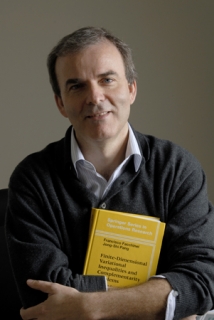
Francisco Facchinei is a Professor at Sapienza University of Rome, affiliated with the Department of Computer, Automatic and Management Engineering Antonio Ruberti within the College of Engineering. His research spans nonlinear and non-differentiable optimization, complementarity problems, variational inequalities, and game theory applications in telecommunications. His work focuses on developing algorithms for nonconvex optimization with ghost penalties, asynchronous distributed methods, and applications in healthcare and communications systems. Key Contributions: Foundational work in variational inequality theory, generalized Nash equilibrium problems, and optimization over dynamic networks. Recent Trends: Emphasis on asynchronous parallel algorithms, stochastic optimization, and non-invasive medical diagnostics via machine learning. He has held academic positions at Sapienza University since 1990, progressing from Ricercatore to Professore Ordinario. No scientific awards are explicitly mentioned in the provided texts.
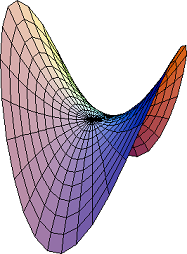
Flaminio Flamini is a Full Professor in Geometry at the Department of Mathematics, Università di Roma "Tor Vergata", where he has been teaching since 2005. His research focuses on Algebraic Geometry, particularly on families of singular curves, vector bundles, and moduli spaces. He has held visiting positions at prestigious institutions worldwide including KIAS in Korea, and universities in France, USA, and Norway. Professor Flamini earned his PhD in Mathematics from the Consortium of the Universities of Rome "La Sapienza" and "Roma Tre" in 2000, with a thesis titled "Families of nodal curves on smooth projective surfaces" advised by E. Sernesi. Prior to his PhD, he completed his Laurea in Matematica at the University of Rome 1 "La Sapienza" in 1993. Professor Flamini's research spans several key areas in Algebraic Geometry: families of singular curves on smooth projective varieties, degenerations of algebraic surfaces, subloci in moduli spaces, vector bundles on projective varieties, covering families of curves on hypersurfaces, Hilbert schemes of scrolls, Brill-Noether loci, and Ulrich bundles. His recent work has particularly focused on Ulrich bundles on various algebraic varieties including scrolls, Del Pezzo threefolds, and blow-ups of the plane. His recent publications (2023-2025) show a strong emphasis on Ulrich bundles, with multiple papers on this topic appearing in prestigious journals like Advances in Mathematics and Journal of Algebra. He has also published significant work on Brill-Noether theory, vector bundles on K3 surfaces, and moduli spaces of curves, demonstrating both depth and breadth in his research program. Professor Flamini has supervised numerous PhD students including Dr. L. Benzo, Dr. D. Sacchi, Dr.ssa R. Giancroce, and others across multiple cohorts. He serves as Principal Investigator for the "Families of curves: their moduli and their related varieties" project under the "Mission Sustainability" framework at Tor Vergata, and has led several national and international research collaborations. He is a member of the Algebraic Geometry research group at Tor Vergata, which participates in national networks including GVA (Geometria delle Varietà Algebriche) and INdAM-GNSAGA. The group maintains active collaborations with research centers worldwide, particularly in France and Korea.
Daniele Bartolucci is a Full Professor in Mathematical Analysis at the Department of Mathematics, University of Rome Tor Vergata. He is actively engaged in research and teaching, with a focus on Partial Differential Equations and related mathematical fields. His academic activities span multiple institutions through the joint PhD program with Sapienza University of Rome and Roma Tre University. Professor Bartolucci's primary research interests include: Partial Differential Equations, particularly Liouville type equations Blow-up analysis and pointwise estimates for equations with singular data Self-dual vortices in Gauge theories Prescribing Gaussian curvature problem on surfaces with conical singularities Mean-field type equations and their connection to statistical mechanics Harnack-type inequalities for blow-up solutions His recent publications (2017-2019) demonstrate an active research program with numerous collaborations, particularly with A. Jevnikar, C.S. Lin, Y. Lee, W. Yang, and G. Tarantello. These works focus on advanced topics in nonlinear PDEs, including mean field equations, blow-up analysis, and geometric aspects of differential equations. The research has significant applications in mathematical physics, particularly in understanding phenomena related to cosmic strings and two-dimensional turbulence. Professor Bartolucci has received research support through the MIUR Excellence Department Project MATH@TOV and the 'Beyond Borders' project sponsored by the University of Rome Tor Vergata, which fund his collaborative research activities and specialized course offerings. As an educator, Professor Bartolucci follows a rigorous approach emphasizing understanding concepts from their causes rather than accepting them on faith. His teaching portfolio is extensive: Undergraduate courses in Mathematical Analysis for Engineering and Mathematics students since 2008 PhD courses on 'Introduction to PDE' for the joint PhD program of Rome's universities Specialized courses on 'Liouville Equations with Applications' Regular office hours in room 1107 at the Department of Mathematics His office is located in room 1107 at the Department of Mathematics, University of Rome Tor Vergata, where he maintains regular office hours for students.
Alessia Elisabetta Kogoj is an Associate Professor in the Department of Pure and Applied Sciences (DiSPeA) at the University of Urbino Carlo Bo. She teaches courses including Mathematics with Elements of Statistics, Probability and Mathematical Statistics, and Introduction to Differential Models in Applied Sciences for various degree programs such as Biological Sciences, Environmental Sustainability Geology, and Computer Science. Professor Kogoj's research focuses on qualitative properties and pointwise estimates for solutions to second order PDEs of sub-Riemannian type. Her work centers on degenerate elliptic equations with underlying Carnot-Charathéodory metric structures and evolution equations on Lie groups of Kolmogorov-Fokker-Planck type. She has made significant contributions to the understanding of hypoelliptic operators, Kolmogorov-type operators, and various boundary value problems for evolution equations. Her publication record shows consistent high-quality output in prestigious mathematics journals. The trends in her research demonstrate a deepening exploration of hypoelliptic operators, particularly Kolmogorov-type operators and their properties. Her work spans theoretical foundations including Harnack inequalities, Liouville-type theorems, rigidity results, and boundary value problems for various classes of degenerate PDEs. Professor Kogoj is actively involved in the mathematical community, organizing and participating in numerous conferences and workshops including the Urbino PDEs afternoons and the 3 days on Evolution PDEs workshop-school. She has presented her research at international venues across Europe, Asia, and the Americas, demonstrating the global recognition of her work in partial differential equations.
Giuseppe Contiمشاهده پروفایل
دانشیار
- Nonlinear Functional Analysis
- Differential and Integral Equations
- Mathematical Applications to Architecture
- +۵ مورد دیگر
Giuseppe Conti is an Associate Professor of Mathematical Institutions at the Faculty of Architecture, University of Florence, where he has been teaching since 1980. Born in Florence on February 27, 1947, he graduated in Mathematics from the University of Florence in 1972 with highest honors (110 cum laude). His career has spanned multiple institutions including the University of Calabria where he taught from 1973-1980 before returning to Florence. Professor Conti's research interests bridge pure and applied mathematics, with primary focus on Nonlinear Functional Analysis, Differential and Integral Equations, and the mathematical applications to architecture, particularly the analysis of Brunelleschi's Dome of Santa Maria del Fiore. His work also extends to mathematical applications in music, photogrammetry, and economics. He has developed specialized techniques for photogrammetric analysis of architectural structures and co-authored a significant text on analytical photogrammetry of non-metric architectural images. His publication record shows consistent output through 2025, with recent work focusing on geometric structures in architecture, Fibonacci numbers in art and music, and continued theoretical work in integral equations. His publications demonstrate a unique interdisciplinary approach that connects mathematical theory with practical architectural applications. Pirelliaward 2002 for scientific dissemination via the internet (first mathematician to win this award) Professor Conti has supervised numerous theses on both pure mathematics topics and mathematical applications to architecture. His teaching spans multiple departments at the University of Florence, including Architecture and Engineering, where he teaches mathematical analysis and specialized courses connecting mathematics to architecture and music. He has also been active in professional development, conducting numerous courses organized by the Veneto and Friuli regions with European Social Fund sponsorship. His research group focuses on mathematical applications to architectural analysis, particularly the geometric modeling of historical structures. This work has led to significant insights into Brunelleschi's construction techniques and has been featured in national television programs, architectural journals, and major Italian newspapers.
Alexander Fuller Viguerie is a Researcher (Ricercatore Legge 240/10 a tempo determinato) at the Department of Pure and Applied Sciences (DiSPeA) at the University of Urbino Carlo Bo. His position involves both teaching responsibilities in mathematical courses and conducting advanced research primarily focused on numerical methods and mathematical modeling. He teaches courses including Logic, Algebra and Geometry; Numerical Methods for Linear Algebra and Functional Analysis; and Statistical Processing of Experimental Data across various programs including Informatics, Digital Innovation, and Biotechnology. Viguerie's research spans multiple interdisciplinary domains with an emphasis on numerical analysis and computational methods. His primary research interests include mathematical epidemiology (particularly modeling of infectious diseases like COVID-19), computational fluid dynamics, partial differential equations, and dynamic mode decomposition techniques. His work demonstrates a strong focus on developing and applying advanced numerical methods to solve complex problems in epidemiology, fluid mechanics, and biomedical applications. He has developed compartmental models with diffusion components for spatially resolved epidemic simulations, created novel approaches using delay differential equations for disease modeling, and applied dynamic mode decomposition to accelerate simulations of cancer growth models. His publication record shows a significant shift toward mathematical epidemiology during the pandemic years, with numerous high-impact papers analyzing the spatiotemporal spread of COVID-19 across different countries. Viguerie has developed modified SEIRD models with dynamic parameterization capabilities, enabling more accurate forecasting of pandemic trajectories. His work extends beyond epidemiology to include applications in computational fluid dynamics, additive manufacturing, and biomedical modeling, demonstrating versatility across multiple application domains while maintaining a strong methodological foundation in numerical analysis. Viguerie maintains an extensive international research network, with collaborations spanning Europe, Asia, North America, and South America. His research shows particularly strong connections with institutions in Italy, the United States, Brazil, Germany, and Singapore. This global collaboration network enables him to conduct cross-country comparative studies, as evidenced by his work analyzing the spread of COVID-19 in Italy, the USA, and Brazil. His research methodology frequently combines theoretical mathematical analysis with practical numerical implementation, resulting in tools that have potential applications in public health decision-making and engineering design processes.