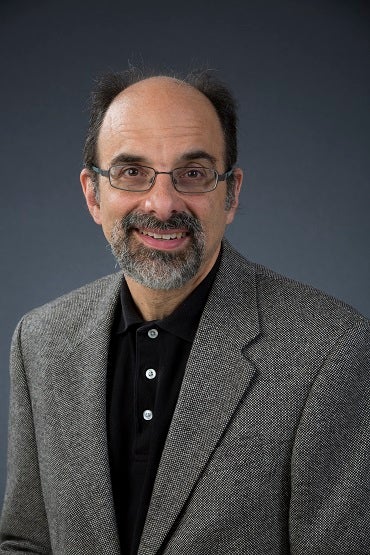
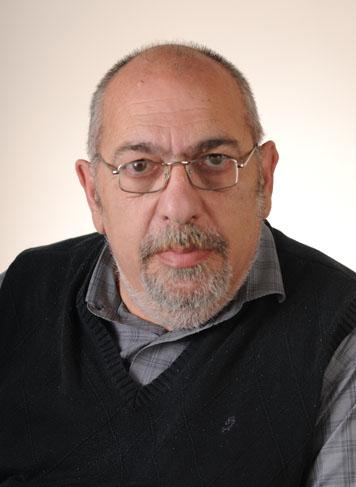
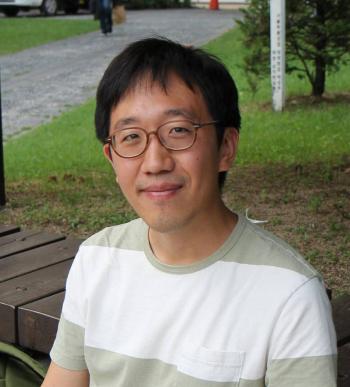
Yang P. Liu is an Assistant Professor at Carnegie Mellon University 's Department of Computer Science . He received his PhD from Stanford University under the supervision of Aaron Sidford and previously studied at MIT . Fields of Interest : Graph Algorithms, Optimization, High-Dimensional Geometry, Additive Combinatorics, Theoretical Computer Science. His research focuses on algorithmic design and analysis for graph problems, optimization, and combinatorics, with applications in machine learning and complexity theory. Recent work includes advancements in parallel repetition games , combinatorial lines , and dynamic graph algorithms . In 2024, his research spanned FOCS , STOC , and RANDOM conferences, addressing problems in k-CSPs , min-cost flow , and hypergraph sparsification . Earlier contributions (2023) included deterministic flow algorithms and spectral hypergraph techniques. Scientific Awards : NDSEG Fellowship (2018-2021), Google PhD Fellowship (2022-2023), FOCS Best Paper (2022), STOC Best Student Paper (2022), FOCS Best Student Paper (2021). He teaches CS 15-759 , a graduate course on convex optimization theory and applications, covering gradient descent, interior point methods, and algorithmic sparsification techniques.
David Nadler is a Professor in the Department of Mathematics at the University of California, Berkeley, appointed in 2012. His research centers on geometric representation theory and symplectic geometry, with significant contributions to the Langlands program, microlocal sheaf theory, and symplectic topology. He maintains an active research group and teaches courses ranging from undergraduate linear algebra to graduate algebraic topology and geometry. Nadler's research explores the interface of algebraic geometry, topology, and representation theory. His work in geometric representation theory focuses on Langlands duality, Springer theory, and Betti geometric Langlands. In symplectic geometry, he investigates microlocal sheaves, Fukaya categories, and Weinstein structures. His recent publications demonstrate a consistent focus on categorical methods in geometric Langlands correspondence and symplectic arborealization. His publications consistently emphasize categorical and geometric approaches to representation theory. Recent works cluster in three areas: (1) extensions of the geometric Langlands program to Betti cohomology settings, (2) microlocal analysis of sheaves on symplectic manifolds, and (3) combinatorial models in symplectic topology. This reflects sustained development of 'Betti geometric Langlands' as a distinct research program bridging topology and automorphic forms. Nadler has advised over a dozen PhD students since 2012, with dissertations spanning geometric representation theory, symplectic geometry, and algebraic topology. Student projects frequently investigate categorical aspects of geometric Langlands, microlocal sheaves, and combinatorial models in symplectic topology.
Anders Rantzer is a Professor of Automatic Control at the Department of Control Engineering, Faculty of Engineering, Lund University, Sweden. He has held visiting positions at Caltech (2004–2005) and the University of Minnesota (2015–2016) as the Taylor Family Distinguished Visiting Professor. His academic journey began with a PhD from KTH Stockholm in 1991, followed by a postdoc at the Institute for Mathematics and its Applications (IMA), University of Minnesota. His research interests center on modeling, analysis, and synthesis of control systems , with a strong focus on scalability, adaptation, and applications in energy networks . He is particularly known for foundational work in positive systems and integral quadratic constraints (IQCs) . These theoretical frameworks are critical in analyzing stability and robustness of large-scale interconnected systems. His work bridges mathematical rigor with practical engineering applications, especially in sustainable energy and networked systems. The recent publications and lecture materials reflect a consistent trajectory in scalable and robust control, optimization, and distributed systems. Themes such as large-scale convex optimization , nonlinear and stochastic control , and network dynamics dominate his scholarly output, indicating a sustained commitment to advancing control theory for complex, real-world systems. Scientific honors include: Fellow of IEEE Member of the Royal Swedish Academy of Engineering Sciences (IVA) Chairman of the Swedish Scientific Council for Natural and Engineering Sciences Chairman of the Royal Physiographic Society of Lund Rantzer has supervised numerous students and contributed extensively to academic leadership and education. He has been involved in major national and international research initiatives such as WASP (Wallenberg AI, Autonomous Systems and Software Program) and ELLIIT. His work includes developing educational tools and courses in control, optimization, and machine learning. He leads and contributes to research projects on autonomous systems, cloud control, and smart energy networks. He is affiliated with the Control Lab at LTH and participates in collaborative efforts such as the Nordic University Hub on Industrial Internet of Things (HI2OT). His work integrates theoretical advances with practical implementations in robotics, biomedical systems, and industrial automation.
Stephen A. Vavasis is a Professor in the Department of Combinatorics and Optimization at the University of Waterloo, part of the Faculty of Mathematics. He holds a PhD in Computer Science from Stanford University (1989) and has held academic positions at Cornell University (1989–2006) before joining Waterloo. His research focuses on continuous optimization, data science, first-order methods, scientific computing, and computational mechanics. Current teaching includes courses on convex optimization and portfolio optimization methods. He has served as Associate Dean of Computing (2017–2020) and Interim Director of Data Science graduate programs. His work is supported by NSERC grants. Notable awards include the Hertz Fellowship, Churchill Scholarship, and Guggenheim Fellowship. Vavasis's research emphasizes applications of optimization to clustering, machine learning, and fracture mechanics. His publications span convex optimization frameworks, algorithmic analysis of gradient methods, and numerical methods in mechanics. Recent work explores unifying analyses of first-order optimization algorithms and robust optimization techniques for high-dimensional data problems.
Professor Dylan Jones is a Professor of Operational Research at the University of Portsmouth within the School of Mathematics and Physics. He holds dual affiliations with the Centre for Operational Research and Logistics and the Centre of Excellence in Defence, Risk & Resilience. His academic journey includes a BSc (Hons) in Mathematics with Operational Research from the University of Southampton and a PhD in Operational Research from the University of Portsmouth. Specializing in Multi-Criteria Decision Making (MCDM), his research spans logistics, healthcare, renewable energy, and defense applications. He has led over 18 PhD theses and secured EU funding for projects focused on offshore wind energy and sustainable logistics. Professor Jones is also the Director of the Centre for Operational Research and Logistics, emphasizing strategic port development and disaster risk reduction. His work integrates advanced methodologies like goal programming and mixed modeling to address complex real-world challenges. Recent contributions include frameworks for offshore wind farm logistics, sustainable port selection, and resilience-based maintenance strategies. Education: BSc (Hons) in Mathematics with Operational Research, University of Southampton PhD in Operational Research, University of Portsmouth Research interests revolve around applying operational research principles to solve multi-objective problems in logistics, healthcare systems, and renewable energy sectors. His work emphasizes sustainability, decision-making under uncertainty, and optimizing resource allocation. Key projects include developing methodologies for offshore wind energy infrastructure and analyzing risk in maritime logistics. His research outputs (109+ publications) focus on advancing operational research techniques, with notable contributions to goal programming, logistics optimization, and multi-criteria decision analysis. He collaborates internationally, particularly in Brazil, France, Spain, and Portugal, to address global challenges in sustainable energy and infrastructure. Labs/Teams: Centre for Operational Research and Logistics Centre of Excellence in Defence, Risk & Resilience
Dima Arinkin is a Professor in the Department of Mathematics at the University of Wisconsin–Madison, specializing in algebraic geometry with significant contributions to geometric representation theory and mathematical physics. His research focuses on: Geometric Langlands Program: Developing frameworks connecting automorphic forms and Galois representations through geometric methods Moduli Spaces: Analyzing spaces of algebraic connections, Higgs bundles, and their compactifications D-modules: Studying systems of linear differential equations via algebraic geometry Integrable Systems: Investigating geometric structures in soliton theory and Painlevé equations Irregular Singularities: Exploring connections with irregular behavior on algebraic curves Analysis of his publications (2008-2016) reveals consistent advancement in geometric Langlands through derived algebraic geometry techniques, particularly in relating singular support of sheaves to automorphic forms and establishing oper structures for connections. No scientific awards are documented in the provided materials. No information regarding student advisement or research grants appears in the source texts.
Arkadi Nemirovski is the John P. Hunter, Jr. Chair and Professor at the H. Milton Stewart School of Industrial and Systems Engineering, Georgia Tech. He holds a Ph.D. in Mathematics (1974) from Moscow State University, a Doctor of Sciences in Mathematics (1990) from the USSR Supreme Attestation Board, and an honorary Doctor of Mathematics from the University of Waterloo (2009). Ph.D. in Mathematics, Moscow State University (1974) Doctor of Sciences in Mathematics, USSR Supreme Attestation Board (1990) Doctor of Mathematics (Honoris Causa), University of Waterloo (2009) His research focuses on Optimization Theory and Algorithms , with emphasis on complexity analysis, efficient methods for nonlinear convex programs, robust optimization, optimization under uncertainty, and applications in engineering and nonparametric statistics. He has pioneered advancements in interior-point methods, semidefinite programming, and stochastic approximation, shaping modern convex optimization. His article trends highlight a trajectory from foundational interior-point algorithms (1990s) to robust optimization (2000s) and recent works on first-order methods, polyhedral estimates, and applications in machine learning, signal processing, and tomography. Key subfields include matrix norms , large-scale optimization , and stochastic uncertainty handling . Scientific awards include: 1982 Fulkerson Prize (joint with L. Khachiyan and D. Yudin) 1991 Dantzig Prize (joint with M. Grotschel) 2003 John von Neumann Theory Prize (joint with M. Todd) 2017 Member, National Academy of Engineering 2018 Fellow, American Academy of Arts and Sciences 2020 Norbert Wiener Prize (joint with M. Berger) He has supervised students like Dmitry Gabelev (polynomial-time cutting plane algorithms), Daureen Steinberg (matrix norms in robust optimization), and Eitan Rubinstein (SVMs via advanced optimization), with their works later formalized in academic journals.
Vijay Vazirani is a Distinguished Professor in the Department of Computer Science at the University of California, Irvine , where he directs the ACO Center @ UCI . He earned his Ph.D. in Computer Science from UC Berkeley and a S.B. from MIT. Vazirani is a Guggenheim Fellow , ACM Fellow , and 2022 INFORMS John von Neumann Theory Prize recipient. Research Areas: Algorithmic Game Theory, Matching Markets, Computational Complexity, Approximation Algorithms His groundbreaking work includes co-founding algorithmic game theory and solving a 30-year-old problem with an NC algorithm for perfect matching in planar graphs . Recent research focuses on matching-based market design, with a $500K NSF grant for advancing algorithms in matching and market equilibria. His 15 most recent papers explore topics like core imputations, stable matching lattices, and Nash bargaining solutions. Scientific Awards: Guggenheim Fellowship ACM Fellow 2022 INFORMS John von Neumann Theory Prize Vazirani advises numerous Ph.D. students and postdocs, including Tung Mai , Thorben Trobst , and Rohith Reddy Gangam . He contributes to major workshops and co-edited foundational texts like Algorithmic Game Theory and Online and Matching-Based Market Design .
Benjamin Grimmer is an Assistant Professor in the Department of Applied Mathematics and Statistics at Johns Hopkins University. He is affiliated with the Mathematical Institute for Data Science (MINDS) and the Data Science & AI Institute. His research focuses on designing and analyzing algorithms for continuous optimization, particularly in nonconvex, nonsmooth, and adversarial settings. Grimmer’s work bridges classical optimization theory and modern machine learning challenges, leveraging computer-assisted proof techniques to advance algorithmic foundations. He earned his PhD in Operations Research from Cornell University, advised by Jim Renegar and Damek Davis. His doctoral work was supported by a National Science Foundation fellowship. Grimmer has held research positions at Google and the Simons Institute, exploring adversarial optimization and continuous-discrete optimization interfaces. His current work is supported by the Air Force Office of Scientific Research and a 2024 Alfred P. Sloan Fellowship. Research interests include algorithm design for stochastic/nonconvex/nonsmooth optimization, computer-aided proof methods, and meta-optimization tools like stepsize schedules. His recent studies, including work on gradient descent acceleration via long steps, were highlighted in Quanta Magazine (2023). Education: PhD in Operations Research, Cornell University (advisor: Jim Renegar and Damek Davis) Awards: Alfred P. Sloan Fellowship in Mathematics (2024) National Science Foundation Graduate Fellowship (PhD support) Dr. Grimmer advises a research group including PhD candidates Ning Liu, Thabo Samakhoana, Alan Luner, Yue Wu, and others. His lab explores optimization algorithms through both theoretical and applied lenses, collaborating closely with industry and academic partners.
June Huh is a Mathematics Professor at Princeton University's Department of Mathematics. His research focuses on the interplay between algebraic geometry, combinatorics, and matroid theory, with notable contributions to Hodge theory, tropical geometry, and log-concavity phenomena. He is actively involved in collaborative projects such as the FRG initiative on matroids, graphs, and algebraic geometry. Key research interests include matroid polytopes, Chow rings, Lagrangian geometry, and combinatorial applications of Hodge-Riemann relations. His work bridges discrete and continuous mathematics, with implications for enumerative geometry and geometric combinatorics. Recent publications explore topics like volume polynomials, Bergman fans, and singular Hodge theory in combinatorial geometries. He has received funding for interdisciplinary research through grants like the FRG Collaborative Research program. His contributions highlight innovative methods in geometric and algebraic combinatorics.
Jiawei Zhang is an Assistant Professor in the Department of Computer Sciences at the University of Wisconsin–Madison since May 2025. His research focuses on optimization algorithms for machine learning, adversarial training, reinforcement learning, and distributed systems. Ph.D. in Computer and Information Engineering, Chinese University of Hong Kong, Shenzhen (2021) B.Sc. in Mathematics (Hua Loo-Keng Talent Program), University of Science and Technology of China His work spans nonconvex optimization , robust machine learning , and data-driven decision-making , with applications to AI and sustainable energy systems. Recent publications at ICML 2025 address stochastic primal-dual methods and contextual optimization robustness, while earlier works explore bilevel optimization, reward learning, and distributed consensus algorithms. Scientific awards include: MIT Postdoctoral Fellowship For Engineering Excellence (2023) CUHK-Shenzhen Presidential Award for Outstanding Doctoral Students (2021) SRIBD PhD Fellowship (2020-2021) CUHK-Shenzhen Outstanding Teaching Assistant (2023) He supervises undergraduate researchers and seeks graduate students with strong mathematical or algorithmic backgrounds for 2025 admission, emphasizing optimization and AI-driven applications.
Yang P. Liu is an Assistant Professor in the Computer Science Department at Carnegie Mellon University's School of Computer Science. Previously, he was a Postdoctoral Member at the Institute for Advanced Study and earned his PhD from Stanford University under the supervision of Aaron Sidford. He completed his undergraduate studies at MIT, graduating in May 2018. His educational background includes: PhD in Computer Science, Stanford University (Advisor: Aaron Sidford) Bachelor's degree, Massachusetts Institute of Technology (graduated May 2018) Dr. Liu's research spans the intersection of mathematics and computer science, with particular focus on graph algorithms , optimization , high-dimensional geometry , and additive combinatorics . His work often develops novel algorithmic techniques that bridge theoretical insights with practical applications. He has made significant contributions to areas such as convex optimization, linear programming, and combinatorial problems. His teaching includes courses like "A Principled Approach to Optimization" (CS 15-759), which covers rigorous treatments of convex optimization topics including gradient descent, interior point methods, linear regression, linear programming, and sparsification. His extensive publication record in top-tier conferences (FOCS, STOC, SODA) demonstrates a consistent focus on developing almost-linear time algorithms for fundamental graph problems, optimization techniques, and combinatorial theorems. Recent work shows increasing emphasis on combinatorial lines, corners theorem, and k-CSP approximability, while maintaining strong connections to optimization theory and graph algorithms. Dr. Liu has received notable recognition for his work: National Defense Science and Engineering Graduate (NDSEG) Fellowship (2018-2021) Google PhD Fellowship (2022-2023) Best Paper award at FOCS 2022 for "Maximum Flow and Minimum-Cost Flow in Almost Linear Time" Best Student Paper at STOC 2021 for "Discrepancy Minimization via a Self-Balancing Walk" His research has been supported by prestigious fellowships including the NDSEG Fellowship and Google PhD Fellowship. His work on graph algorithms, optimization, and combinatorics involves collaborations with researchers across theoretical computer science and mathematics. His publications often involve co-authors from multiple institutions, suggesting active research collaborations across the field. Dr. Liu maintains an active research program with a focus on developing efficient algorithms for fundamental computational problems. His recent work continues to push the boundaries of what's computationally feasible in graph algorithms, optimization, and combinatorial mathematics, with particular emphasis on achieving almost-linear time complexity for challenging problems.
Robert G. Bland is a Professor at Cornell University's School of Operations Research and Information Engineering (ORIE). He joined Cornell in 1978 after roles at SUNY Binghamton and research fellowships in Belgium. He is affiliated with the Center for Applied Mathematics and specializes in linear programming, combinatorial optimization, and network flow theory. His research emphasizes algorithmic efficiency, duality theory, and applications in scheduling and resource allocation. Education: B.S. (1969), Cornell University M.S. (1972), Cornell University Ph.D. (1974), Cornell University Research Interests: Focuses on linear programming duality, combinatorial abstractions, computational methods for optimization, and applications in logistics, scheduling, and scientific computing. Notable work includes the development of new pivoting rules for the simplex method and empirical studies of network flow algorithms. Publications Insight: His work spans foundational LP theory, combinatorial optimization, and algorithmic analysis. Key themes include duality frameworks, Camion bases, and large-scale TSP applications in crystallography. Recent publications address abstract dualities and historical perspectives on pioneers like D. Ray Fulkerson. Awards: Recipient of Cornell's prestigious Merrill Outstanding Educator Award (3 times) and twice recognized as ORIE's best teacher. Member of the Mathematical Optimization Society and American Society for Engineering Education. Grants & Projects: Conducted service projects on vehicle routing and examination scheduling. Collaborated on computational studies of min cost flow algorithms and network flow performance. Labs/Teams: Active in ORIE's research groups, particularly those focused on optimization theory and computational methods.
Rekha R. Thomas is a Professor of Mathematics and Undergraduate Program Director at the University of Washington. She holds a Ph.D. in Operations Research from Cornell University (1994), with postdoctoral experience at Yale University and the Konrad-Zuse-Zentrum in Berlin. Her research focuses on optimization, applied algebraic geometry, and computer vision, with contributions to semidefinite programming, graphical designs, and geometric algorithms. She has held distinguished positions such as the Robert R. and Elaine F. Phelps Professorship (2008–2012) and the Robert B. Warfield Jr. Faculty Fellowship (2017–2020). Her work bridges theory and application, addressing challenges in computer vision, combinatorial optimization, and algebraic geometry. Notable contributions include advancements in multiview geometry, kernel learning, and the geometric analysis of rank-deficient matrices. She actively collaborates across disciplines, publishing extensively and supervising numerous graduate students and postdocs. Rekha also engages in academic leadership, mentoring students, and participating in international conferences. Her research has been recognized through invited talks at major events like the International Congress of Mathematicians (2018) and SIAM Annual Meetings. She continues to explore the intersections of algebraic geometry, optimization, and computational methods.
Bernhard von Stengel is a Professor of Mathematics at the Department of Mathematics, London School of Economics and Political Science . His work bridges game theory, computational complexity , and mathematical economics , with a focus on equilibrium computation and algorithmic aspects. Developed Game Theory Explorer , open-source software for analyzing strategic and extensive-form games. Organized major workshops like What is Strategic Information? (2024) and Game Theory and Machine Learning (2023). Authored the textbook Game Theory Basics (Cambridge University Press, 2021). His research spans zero-sum games , correlated equilibrium , inspection games , and communication over noisy channels . Recent work includes characterizing the Condorcet dimension of metric spaces (2024) and stable-set bounds for Nash equilibria in bimatrix games. He has collaborated with institutions like the Game Theory Society and contributed to public discourse via talks on algorithms' societal impact (2021) and game theory in politics (2020).