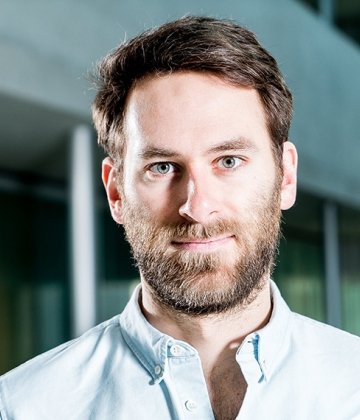
Ana Maria Alonso Rodriguez is a Full Professor of Numerical Analysis at the Department of Mathematics, University of Trento. She holds a PhD in Applied Mathematics from Universidad Complutense de Madrid (1993) and has held academic positions across Italy and Spain since 1990. Her research focuses on numerical methods for partial differential equations, computational electromagnetism, finite element methods, and domain decomposition techniques. She has organized international workshops and minisymposia, including the 2022 Oberwolfach workshop on Hilbert Complexes and the 2018 ICOSAHOM conference session on high-order methods. Her work bridges numerical analysis, topology, and applied electromagnetism, with recent contributions to Whitney finite elements and discrete potential theory. Education: PhD in Applied Mathematics, Universidad Complutense de Madrid (1988-1993) Licenciatura en Ciencias Matematicas, same institution (1982-1987) Research emphasizes high-order discretizations for electromagnetic problems, leveraging finite element exterior calculus and graph-based decomposition techniques. Recent work (2024) advances tree-cotree methods for curl operator spectra and Whitney form interpolation. She actively collaborates with international institutions like the CI2MA in Chile and the Laboratoire J. A. Dieudonné in France. Teaching includes courses on numerical PDEs, finite elements, computational electromagnetism, and MATLAB-based numerical analysis at both undergraduate and PhD levels. She has supervised numerous courses in Italy and Spain since 2000, integrating practical software tools like FreeFem and MODULEF into instruction.
Antonio De Rosa is an Associate Professor in the Department of Decision Sciences at Bocconi University, Italy. Previously, he held positions at the University of Maryland, College Park (2020–2024), and the Courant Institute of Mathematical Sciences, New York University (2017–2020). He earned his Ph.D. in Mathematics from the University of Zurich in 2017 under Camillo De Lellis and Guido De Philippis. Education: Ph.D. in Mathematics, University of Zurich (2017). His research spans Geometric Analysis , Partial Differential Equations , Calculus of Variations , Geometric Measure Theory , Optimal Transport , and Non-convex Optimization . Recent work focuses on anisotropic geometric variational problems, including existence, regularity, and uniqueness of anisotropic minimal surfaces and CMC (constant mean curvature) surfaces. He has also contributed to interdisciplinary applications in Explainable Risk Assessment and Data Analysis . The 15 most recent articles highlight advancements in anisotropic surfaces , min-max theory , optimal transport , and mathematical programming (e.g., K-means clustering, linear programming). Key trends include the intersection of geometric measure theory with nonlinear PDEs and applications in machine learning and transportation networks . Scientific Awards and Grants: 2023 Maryland Research Excellence Carlo Ciliberto Prize (2019) ERC Starting Grant ANGEVA (101076411, 2023–2028) Air Force Office of Scientific Research (AFOSR) grant (FA9550-23-1-0123) NSF CAREER Award (DMS-2143124) NSF DMS Awards (DMS-1906451, DMS-2112311) AMS Simons Travel Grant Antonio actively supervises research and teaches courses such as Optimization and Introduction to Partial Differential Equations . His work is supported by significant funding totaling approximately €3 million.
Stefano Grivet-Talocia is a Full Professor at the Department of Electronics and Telecommunications at the Polytechnic University of Turin, where he also serves as Director of the Doctoral School and President of the Doctoral School Council. He is a member of the Interdepartmental Center SmartData@PoliTO - Big Data and Data Science Laboratory, the University Committee for Research, Technology Transfer and Services to the Territory, and the Commission for the Promotion of Library, Archive and Museum Heritage. His academic career spans over two decades at Politecnico di Torino, where he has established himself as a leading researcher in electromagnetic modeling and signal integrity. Grivet-Talocia earned his Laurea degree (summa cum laude) in Electronic Engineering in 1994 and his Ph.D. in Electronic and Communication Engineering in 1998, both from the Polytechnic University of Turin. Between 1994 and 1996, he conducted research at NASA/Goddard Space Flight Center in Greenbelt, Maryland. His educational background laid the foundation for his expertise in electromagnetic modeling, wavelet analysis, and signal processing. His research focuses on behavioral modeling, electromagnetic compatibility, macromodeling, model order reduction, numerical modeling, passivity, power integrity, signal integrity, transmission lines, and wavelets . Grivet-Talocia is particularly renowned for his work on passive macromodeling of interconnect structures, development of the TOPLine technique for transmission line simulation, and pioneering contributions to passivity enforcement algorithms. He has co-authored the first book entirely dedicated to Macromodeling (2016) and developed innovative approaches to waveform relaxation and wavelet-based signal processing. His recent publications (2024-2025) demonstrate continued leadership in model order reduction, with significant contributions to data-driven modeling of linear and nonlinear systems, power integrity analysis, and electromagnetic compatibility. His work spans both theoretical advances in numerical methods and practical applications in circuit design, with strong industry relevance particularly for semiconductor and electronic design automation companies. IEEE Fellow (2018-present) Three Intel SRS Grants (2022-2024) Three IBM SUR Grant Awards (2007-2009) Best Associate Editor Award - IEEE Transactions on Components, Packaging and Manufacturing Technology (2020) Multiple Best Conference Paper Awards (2006-2020) URSI Young Scientist Awards (1999) Ranked among the "top 2% worldwide researchers" (Stanford) since 2019 Grivet-Talocia actively supervises doctoral students including Michele Cusano, Sara Paknezhad Panahi, Antonio Carlucci, and Kun Zhao. He has secured numerous research grants from competitive national calls (PRIN) and commercial contracts with industry partners including Intel, IBM, Nokia, Hitachi, Infineon, and Cadence. His technology transfer activities include co-founding the spin-off IdemWorks (2007-2016), which was acquired by CST in 2016. He also developed the autoCircuits web service for automated circuit problem generation, widely used in electrical engineering education. He leads the EMC Group (Electromagnetic Compatibility) at DET and has been instrumental in establishing the Compact Dynamical Modeling research area. His work has practical applications in high-speed electronics design, with algorithms embedded in commercial tools like IBM PowerSPICE. Grivet-Talocia maintains strong industry connections through his research projects and serves as Associate Editor for IEEE Transactions on Components, Packaging and Manufacturing Technology.
Giuseppe Mingione is a Full Professor in the Department of Mathematical, Physical and Computer Sciences at the University of Parma, Italy. His research spans Calculus of Variations , Elliptic and Parabolic PDEs , and Nonlinear Potential Theory . He has delivered over 25 lecture series and 180+ invited talks globally. PhD in Mathematics, University of Naples Federico II (1999) Degree in Mathematics, University of Naples Federico II (1994) His work focuses on regularity theory for nonlinear PDEs, nonuniform ellipticity, and geometric analysis. Publications include breakthroughs in Schauder estimates, double phase problems, and nonlocal systems. He has received the Amerio Prize (2016) , Caccioppoli Prize (2010) , and Stampacchia Medal (2006) . Recent articles address nonuniform ellipticity, nonlocal PDEs, and gradient regularity. Awards include the Order of the Merit of the Italian Republic (2017) and Von Staudt Chair (2004) . He serves on editorial boards for international journals.
Cristiana De Filippis serves as Associate Professor in the Department of Mathematical, Physical and Computer Sciences at the University of Parma. Her academic journey includes a Bachelor's degree from the University of Torino (2014), Master's from University of Milano-Bicocca (2016), and PhD from the University of Oxford (2020), followed by a tenure-track position at Parma since 2021 and habilitation to full professorship in 2023. Her research focuses on Mathematical Analysis , particularly Regularity Theory for elliptic and parabolic partial differential equations and the Calculus of Variations . She investigates fundamental properties of solutions to nonlinear PDEs, including sharp growth conditions, nonuniform ellipticity, and double-phase functionals. Her work bridges abstract mathematical theory with applications in physics and engineering through rigorous analysis of solution behavior. Analysis of her 15 most recent publications reveals a concentrated research program in nonuniformly elliptic systems (2022-2025), double-phase variational problems (2023-2024), and gradient regularity under irregular coefficients (2020-2024). Key contributions include establishing sharp growth rates in Schauder theory and developing novel techniques for nearly linear growth conditions. European Mathematical Society Prize 2024 Bartolozzi Prize 2023 (Italian Mathematical Union) Iapichino Prize 2020 (Accademia dei Lincei) Premio per la Cultura Mediterranea 2023 G-Research Prize 2019 Forbes 100 Most Successful Italian Women 2023 European Mathematical Society Young Academy (inaugural cohort) Professor De Filippis has delivered invited lectures at prestigious institutions including Erwin Schrödinger Institute (2025), Charles University Prague (2024), and Accademia Nazionale dei Lincei (2022). She teaches Mathematical Analysis courses for Computer Science, Geological Sciences, and Management Engineering programs at undergraduate level. Her research is supported through multiple international collaborations, particularly with Giuseppe Mingione at Parma and researchers at European institutions.
Valeria Bruschi is a Researcher at the Department of Information Engineering (DII) within the Faculty of Engineering at Università Politecnica delle Marche (UNIVPM) in Ancona, Italy. Her academic profile was last updated on April 13, 2024, and she maintains her office at the Engineering Faculty on via Brecce Bianche, with contact information including phone +39 071-220-4486 and email v.bruschi@staff.univpm.it. Dr. Bruschi's research spans multiple domains within audio and signal processing, with particular expertise in spatial audio systems, automotive human-computer interaction, and biomedical signal applications. Her work bridges theoretical signal processing techniques with practical implementations across diverse fields including automotive safety systems, hearing aid technology, sleep medicine, and agricultural monitoring. She has made significant contributions to head-related transfer function (HRTF) processing, real-time audio enhancement algorithms, and innovative monitoring systems that utilize acoustic signals for various applications. Analysis of Dr. Bruschi's recent publications reveals a strong trajectory in developing practical audio processing solutions with real-world applications. Her work shows increasing integration of machine learning techniques with traditional signal processing approaches, particularly in areas like driver monitoring systems, snoring detection and cancellation, and spatial audio rendering. A notable trend is her focus on creating lightweight, real-time implementations suitable for embedded systems and practical deployment scenarios, while maintaining high performance standards. Her research consistently demonstrates interdisciplinary collaboration, connecting audio engineering with fields as diverse as automotive safety, sleep medicine, and agricultural technology. Dr. Bruschi actively contributes to advancing audio engineering through her research on equalization techniques, noise reduction systems, and immersive audio technologies. Her work on pulse compression techniques for hearing aid distortion measurement represents an important contribution to audiological assessment methodologies. Her publication record demonstrates consistent scholarly output with increasing impact across multiple application domains, reflecting her ability to translate theoretical signal processing concepts into practical engineering solutions.
Laura Sanità is an Associate Professor in the Department of Computing Sciences at Bocconi University, Milano, Italy. She previously held academic positions at TU Eindhoven (Netherlands) and the University of Waterloo (Canada). Education: Bachelor's in Management Engineering (2003), Università di Roma Tor Vergata Master's in Management Engineering (2005), Università di Roma Tor Vergata PhD in Operations Research (2009), Università Sapienza di Roma Postdoctoral Fellow at EPFL (Switzerland, 2009-2011) Laura's research focuses on discrete mathematics, theoretical computer science, and operations research, with particular emphasis on algorithmic solutions for combinatorial optimization problems. Her work spans approximation algorithms, network design, polyhedral combinatorics, and algorithmic game theory, advancing methodologies for solving complex optimization challenges in theoretical and applied contexts. Her publications demonstrate expertise in network design problems, spanning from fundamental polyhedral characterizations to game-theoretic applications. Key contributions include iterative randomized rounding techniques for Steiner trees, circuit augmentation algorithms, and stabilization approaches for network games. Scientific Awards: NWO-VIDI Award (Netherlands) Discovery Accelerator Supplements Award (NSERC, Canada) Golden Jubilee Research Excellence Award (University of Waterloo) Early Researcher Award (Ontario) Best Paper Award at STOC 2010 Advising & Collaborations: Laura advises PhD students Dylan Hyatt-Denesik and Lucy Verbeck, and collaborates with postdoctoral researchers like Afrouz Jabal Ameli. She has served on program committees and as Associate Editor for top journals including Mathematical Programming, Mathematics of Operations Research, and Operations Research Letters.
Roberto Zanino is a Full Professor of Nuclear Engineering at the Department of Energy (DENERG) of the Polytechnic of Turin, Italy. He serves as Advisor to the Rector for relations with European and international university networks and for the UniTe project, Undergraduate Research Opportunities Coordinator, and Project management functions of PoliToArgentina. He is also Scientific Advisor for the Partnership Agreement with NEWCLEO. Dr. Zanino earned his Laurea cum laude in Nuclear Engineering from Politecnico di Torino in 1984 and his Ph.D. in Energetics in 1989. His academic progression includes Assistant Professor (1990-91), Associate Professor (1992-2000), and Professor (2001-present). He previously served as Director of Alta Scuola Politecnica (2007-2010) and Head of the Graduate Program in Energetics (2011-present). His research spans computational fluid dynamics, concentrated solar power, controlled thermonuclear fusion, Generation IV nuclear fission reactors, and plasma physics. His work focuses on thermal-hydraulic analysis of liquid metal systems, superconducting magnet design for fusion applications, and concentrated solar power optimization. His recent publications demonstrate strong expertise in coupling computational tools for nuclear applications, particularly in CFD-system code integration for liquid metal systems and fusion magnet analysis. Dr. Zanino has received recognition as an IEEE Senior Member (2012) and has supervised numerous doctoral students working on topics including thermal-hydraulic analysis of heavy liquid metal systems, superconducting magnet simulation for fusion applications, and concentrated solar power modeling. He has extensive international experience, having worked at Max-Planck-Institut für Plasmaphysik, Massachusetts Institute of Technology, and University of Illinois at Chicago. He is actively involved in major fusion projects including ITER, DTT (Divertor Tokamak Test facility), and EUROfusion. His teaching portfolio includes Computational Heat and Mass Transfer, Nuclear Fusion Reactor Engineering, Solar Thermal Technologies, and Computational Thermal Fluid Dynamics at both master's and doctoral levels.
Simon Masnou is a Full Professor at Université Claude Bernard Lyon 1, affiliated with the Institut Camille Jordan (CNRS UMR 5208). He holds leadership roles as Head of the 'Applied Mathematics, Statistics' Master's degree and Head of the 'M2 Maths in Action' program. Previously, he served as Director of the Camille Jordan Institute (2018-2022). His research focuses on applied mathematics, image processing, shape optimization, and geometric measure theory, with contributions to variational models, geometric flows, and applications in computer vision and materials science. Education: PhD in Mathematics (1998, Paris Dauphine) and HDR (2008, Paris 6). Research projects include ANR STOIQUES (2024-2028), PEPR PDE-AI (2023-2028), and collaborations with industry on topics like defect prediction in aluminum production and high-dimensional data analysis. Teaching includes courses on linear algebra, optimization, and machine learning at undergraduate and graduate levels. Key contributions span phase field models, varifold-based surface approximation, and image inpainting. He supervises PhD students in geometric variational problems and computational methods. His work bridges theoretical mathematics with industrial challenges, addressing issues in materials science, medical imaging, and cultural heritage preservation.
Fabio Furini is an Associate Professor at the Department of Computer Science, Automatics, and Management (DIAG) at Sapienza University of Rome since September 2021. Prior to this position, he served as a CNR researcher at IASI-CNR in Rome (2020-2021), Maître de Conférences at Université Paris-Dauphine, France (2013-2019), postdoctoral researcher at Université Paris-13, France (2012-2013), and research fellow at the University of Bologna (2011-2012). His educational background includes a Ph.D. in Control Engineering and Operations Research from the University of Bologna in 2011. He further obtained the Habilitation à Diriger des Recherches (HDR) in France in 2017 and the National Scientific Qualification for Full Professor in Operations Research in Italy in 2019. Fabio Furini conducts theoretical and methodological research on Combinatorial Optimization and Operations Research. His primary focus is on developing exact algorithms based on decomposition and reformulation techniques for integer linear programming problems. His research spans various applications including network optimization, graph theory, and combinatorial problems such as the maximum clique problem, bin packing problem, and vertex separator problem. His work often bridges theoretical developments with practical applications in transportation, logistics, and network security. His recent publications demonstrate a strong focus on exact algorithms for combinatorial optimization problems, particularly in network interdiction, bin packing with temporal constraints, and graph-based problems. His work consistently combines integer programming techniques with combinatorial search methods to develop novel formulations and efficient solution approaches that advance the state-of-the-art in these domains. Among his notable scientific awards are the Prime d'encadrement doctoral et de recherche (PEDR), which he received annually from 2014 to 2020, recognizing him among the top 15% of researchers in the French university system. He also holds the prestigious Habilitation à Diriger des Recherches from France (2017) and the National Scientific Qualification for Full Professor in Operations Research from Italy (2019). Fabio Furini has been actively involved in supervising PhD students and has served as principal investigator for numerous national and international research projects. His extensive network includes over 60 co-authors across European and American universities. He is also a member of the editorial boards for three prestigious international journals: Omega, Annals of Operations Research, and Discrete Applied Mathematics. His research activities include collaborations with various institutions across Europe and the United States, including Imperial College London and the University of Colorado. These collaborations have resulted in a robust research program focused on advancing the theoretical foundations and practical applications of combinatorial optimization.
Alfonso Sorrentino is a full professor of mathematical analysis at the Department of Mathematics, University of Rome Tor Vergata. He specializes in Hamiltonian dynamical systems, with expertise in nonlinear analysis, differential geometry, and mathematical physics. He earned his Ph.D. in mathematics from Princeton University (2008) and held academic positions at the Fondation des Sciences Mathématiques de Paris (2008–2009) and the University of Cambridge (2009–2012). His research focuses on invariant structures in Hamiltonian systems, billiard dynamics, and spectral rigidity. Key recognitions include the Fubini Prize (2018), Barcelona Dynamical Systems Prize (2019), Best Paper Award (Gold medal, 2020), and Frontiers of Science Award (2023). His work bridges pure mathematics and applications, emphasizing geometric and analytic approaches to dynamical systems. Recent studies explore topics like invariant Lagrangian graphs, spectral properties of billiards, and homogenization of Hamilton-Jacobi equations on networks. His contributions reflect a commitment to advancing theoretical frameworks in dynamical systems and their interdisciplinary implications.
Professor Caterina Ida Zeppieri is an Associate Professor at the Institute for Numerical and Applied Mathematics , University of Münster, Germany. Her research focuses on homogenization theory, calculus of variations, and applications in material science. She leads the Analysis and Modelling Research Group , which explores variational methods and their computational implications. Research Interests: Her work centers on stochastic and deterministic homogenization of free-discontinuity problems, Γ-convergence, and the analysis of heterogeneous materials. She investigates mathematical models for fracture mechanics, phase transitions, and plasticity, often employing advanced techniques from calculus of variations and partial differential equations. Recent Contributions: Recent articles address topics such as strong approximation of SBV functions (2025), stochastic homogenization in perforated domains (2024), and gradient damage models (2022). These studies emphasize rigorous mathematical analysis with applications to real-world material behavior. Grants & Collaborations: Zeppieri’s research is supported by grants from the German Research Foundation (DFG), including projects within the Cluster of Excellence 2044 (e.g., C1: Evolution and Asymptotics). She collaborates with institutions globally, advancing interdisciplinary approaches to material modeling. Teaching: She teaches advanced courses like Applied Functional Analysis and Calculus of Variations , and mentors students through seminars and thesis supervision. Her group hosts regular colloquia and workshops, fostering academic exchange in applied mathematics.
Basile Grassi is an Assistant Professor of Economics at Bocconi University, Research Fellow at CEPR, and Affiliate at IGIER. He obtained his PhD from Paris School of Economics and completed postdoctoral research at Oxford University. His research examines macroeconomic phenomena through firm-level lenses, particularly focusing on how production networks, firm heterogeneity, and industrial organization shape aggregate economic outcomes. Major contributions include analyzing business cycle fluctuations through large firm dynamics, measuring pandemic impacts via input-output networks, and studying EU integration effects. Grassi teaches intermediate macroeconomics at undergraduate and PhD levels. He develops analytical tools for assessing sectoral economic shocks, with applications to climate change adaptation and industrial policy.
Michele Rimoldi is an Associate Professor at the Department of Mathematical Sciences 'G. L. Lagrange' (DISMA) at Politecnico di Torino, specializing in geometric analysis and differential geometry. His research focuses on Riemannian geometry, mean curvature flow, and Ricci solitons. Research Interests: Differential geometry, geometric analysis, Ricci solitons, mean curvature flow, Sobolev spaces, and elliptic PDEs. Teaching: Courses in linear algebra, geometry, and mathematical analysis for biomedical, mechanical, and aerospace engineering students. Publications: 15 recent articles address topics like isoperimetric inequalities, stability of self-shrinkers, and density problems on manifolds.
Marco Pirra is a Researcher in the Department of Economics, Statistics and Finance at the University of Calabria, Italy. He holds a position in the academic rank of Researcher and is actively involved in teaching and research within the Finance and Insurance master's program. His contact information includes the email marco.pirra@unical.it and phone number 0984/492436. Marco Pirra's primary research areas encompass: Actuarial Science, with focus on insurance reserving, Solvency II, and technical provisions Risk Management in insurance, including cyber risk, agricultural risk, and long-term care insurance Stochastic modeling for mortality, disability, and financial markets Application of econometric and statistical methods to insurance and finance problems His research is characterized by the use of advanced quantitative techniques to address complex challenges in the insurance industry. Analysis of his recent publications (2020-2025) reveals a consistent focus on actuarial applications, particularly in the areas of claims reserving, Solvency II compliance, and emerging risks. He has made significant contributions to the understanding of cyber risk insurance and weather index-based insurance for agriculture. His work often involves collaboration with colleagues from the University of Calabria and other institutions. No scientific awards were mentioned in the provided text. Details about Marco Pirra's advisees and research grants were not provided in the available information. He is a member of the research group "Metodi quantitativi per l'economia, la finanza ed il management" (Quantitative Methods for Economics, Finance and Management) at the DESF department. This group conducts research using mathematical programming, econometric techniques, and statistical methods. Additionally, he is associated with the "Finance & Insurance Atelier" laboratory, which focuses on research in finance and insurance.