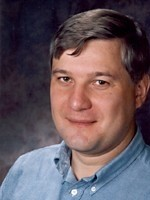
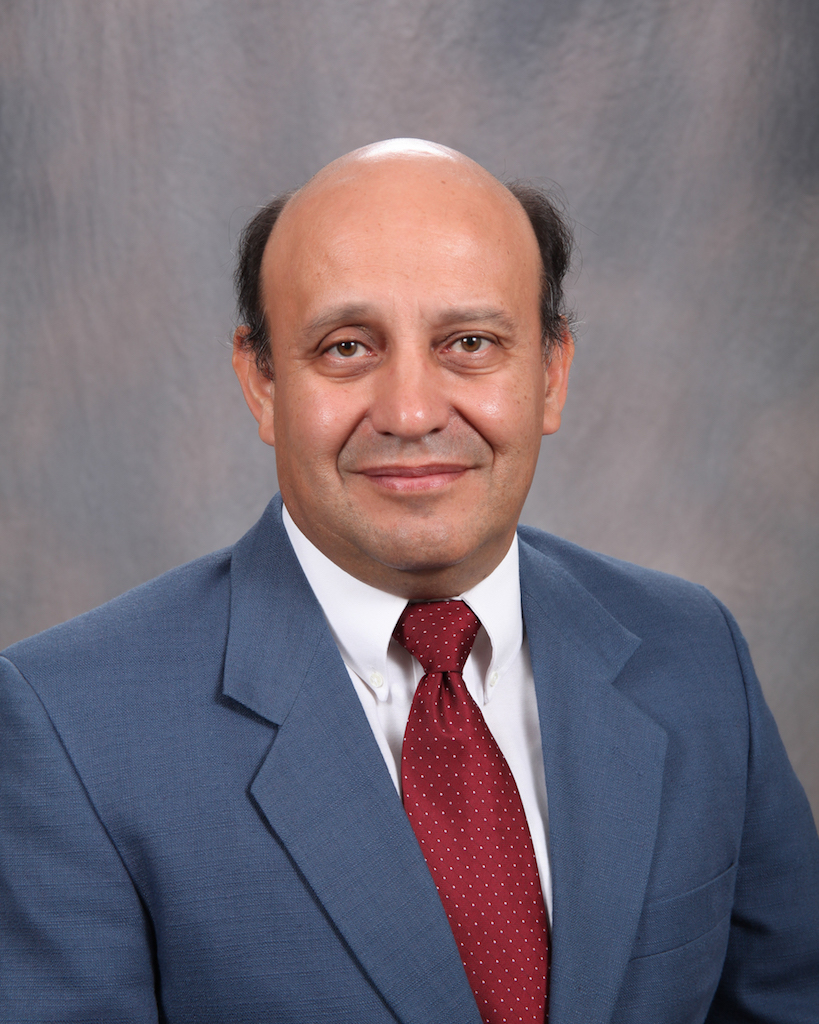
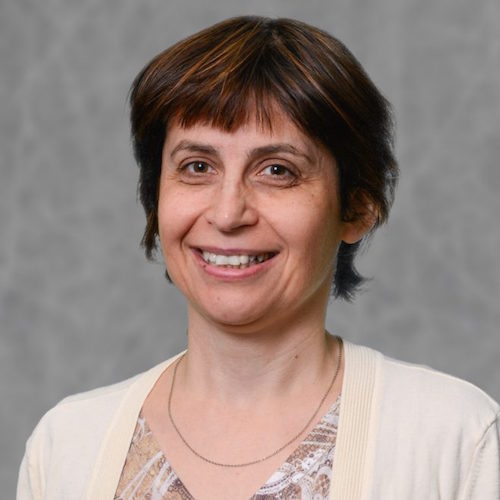
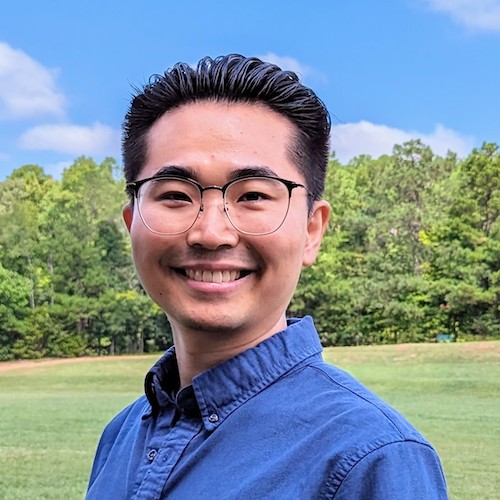
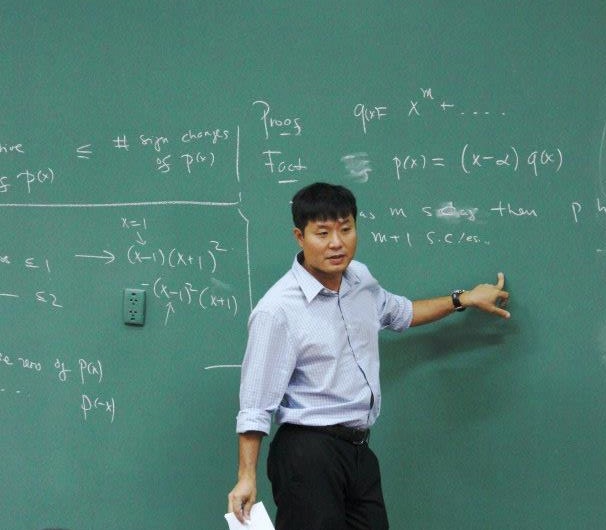
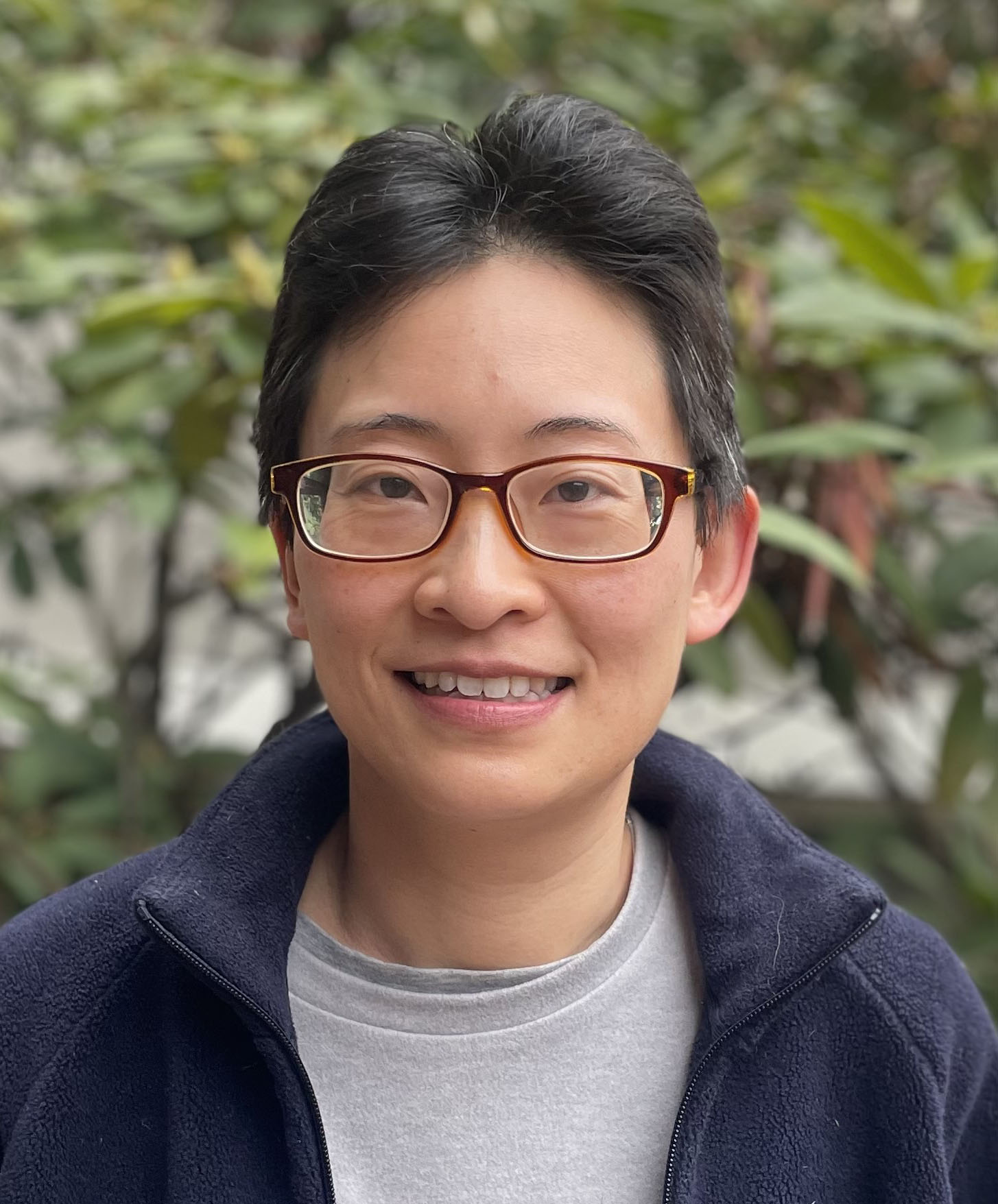
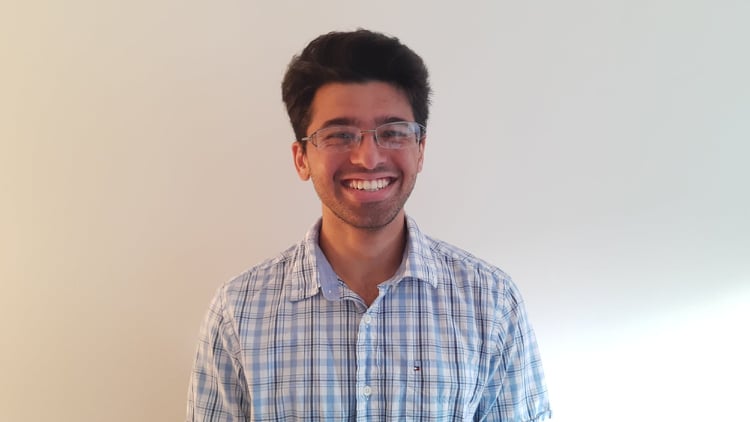
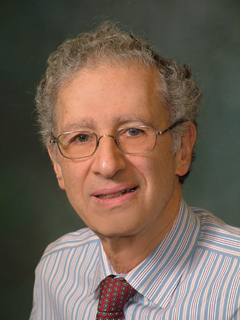
Zhirong Yang is a Professor at the Department of Computer Science at the Norwegian University of Science and Technology (NTNU). He is affiliated with the Norwegian Open AI Lab and focuses on machine learning, information visualization, and data representation learning. His work integrates techniques like neural attention models, nonnegative matrix factorization, and dimensionality reduction algorithms such as Neighbor Embedding (NE) for visualization. Yang's research has applications in bioinformatics, medical imaging, and engineering systems. His educational background includes advanced studies in pattern recognition and computational methods, though specific details are not provided. Research collaborations span institutions globally, including work on bacterial population genomics and chromosome classification. Key contributions include scalable optimization frameworks for visualization (NE) and novel clustering algorithms using graph random walks and low-rank matrix decompositions. Yang has developed software tools like ChordMixer for sequence processing and HSSNE for robust data visualization. His recent publications emphasize advancements in attention mechanisms, sparse factorization, and medical diagnostics. He actively contributes to open-source projects and collaborates with industry on applications like subsea pipeline inspection and energy scheduling systems.
Petr Lisonek is a Professor in the Department of Mathematics at Simon Fraser University (SFU), part of the Faculty of Science. His research focuses on applications of algebraic and combinatorial methods in cryptography, error-correcting codes, steganography, and computer algebra. Education: Ph.D. in Computer Science from Johannes Kepler University (1994). Research Interests: Non-linear functions in symmetric cryptography and their algebraic/combinatorial constructions. Design of error-control codes for classical and quantum channels using finite fields and finite geometries. Steganographic schemes leveraging linear codes for secure information hiding. Algorithmic aspects of cryptography and coding theory in computer algebra systems. Recent Research Trends: Recent work emphasizes quantum code construction, cryptographic APN permutations, and foundational results in quantum contextuality (Kochen-Specker sets). Publications span topics like twisted codes, maximal nonassociative quasigroups, and minimal magic sets in quantum mechanics. Affiliations: Editor for Advances in Mathematics of Communications . Maintains a research website at CECM .
Oscar Moreira is a Professor of Practice in Electrical & Computer Engineering at Texas A&M University's College of Engineering. He holds a Ph.D. from Texas A&M University and specializes in analog circuit design, power management, and signal processing. His research bridges theoretical concepts with practical applications in electronic systems. Dr. Moreira's educational background includes a Ph.D. and M.S. from Texas A&M University. His research focuses on developing innovative solutions for analog-to-digital conversion, digital signal processing, and power management systems. Recent investigations explore multi-tone generators for neurostimulation and high-performance circuit designs for memory systems. His scholarly publications demonstrate a consistent focus on signal processing techniques and analog circuit optimization. Articles consistently address challenges in circuit stability, signal integrity, and real-time processing through novel hardware implementations. Dr. Moreira's research group operates within the advanced facilities of the Electrical and Computer Engineering department, collaborating with industry partners to translate theoretical advancements into practical electronic systems.
Irina Kogan is a Professor in the Department of Mathematics at NC State University, part of the College of Sciences. She holds a PhD in Mathematics from the University of Minnesota (2000). Her research focuses on geometric study of differential equations, equivalence and symmetry problems, computational invariant theory, and symbolic computation. She is affiliated with the Symbolic Computation Research Group and the Topology, Geometry, and Mathematical Physics Research Group. Dr. Kogan's recent work emphasizes differential invariants, object-image correspondence under projections, and computational methods in algebraic geometry. Her articles span topics like curve reconstruction, moving frames, and applications of invariant theory in computer vision and physics. Key contributions include studies on non-congruent curves with identical signatures and minimal-degree affine frames for polynomial curves. Her research has addressed hyperbolic conservation laws, integrability theorems of Darboux, and algorithmic approaches to μ-bases and Jacobians. While no awards are explicitly listed, her extensive publication record reflects sustained contributions to geometric and algebraic research. She collaborates on projects like the NSF-funded 'Fundamental Challenges in Nonlinear Hyperbolic PDEs' (2013). Dr. Kogan's affiliations include the Department of Mathematics office at SAS Hall 3146, and she maintains an active website. Her work bridges theoretical mathematics with computational applications, particularly in symbolic computation and geometric modeling.
Yeonjong Shin is an Assistant Professor of Mathematics at North Carolina State University (NC State), with prior tenure-track roles at KAIST (South Korea) and Brown University (USA). His research focuses on applied and computational mathematics, particularly in artificial intelligence, scientific machine learning, and numerical methods for partial differential equations. He holds a Ph.D. in Mathematics from The Ohio State University (2018) and dual B.S. in Mathematics and B.A. in Economics from Yonsei University (2013), with military service as a KATUSA (2009–2011). Shin’s expertise includes approximation theory, numerical optimization, and uncertainty quantification. He leads research in AI-driven scientific computing, reduced order modeling, and physics-informed neural networks. His work bridges computational mathematics and machine learning, addressing challenges in data-driven dynamical systems and high-dimensional function approximation. He has published extensively in top journals like SIAM Journals, Neural Networks, and Comput. Methods Appl. Mech. Eng. Notable contributions include thermodynamics-informed latent space dynamics (tLaSDI), S-OPT hyper-reduction algorithms, and error analysis for neural network-based PDE solvers. Shin has taught courses at NC State, KAIST, and Brown, including statistical inference, numerical optimization, and computational linear algebra. He actively participates in conferences such as SIAM CSE, ICIAM, and KSIAM, and has delivered invited talks at institutions worldwide.
Van Vu is the Percey F. Smith Professor of Mathematics and Professor of Statistics & Data Science at Yale University. He holds a Ph.D. from Yale University (1998). His research focuses on additive number theory, combinatorics, probability, and random matrices, with significant contributions to probabilistic combinatorics and random matrix theory. He co-leads the combinatorics group at Yale, which hosts regular seminars and explores topics like random graphs, hypergraphs, and additive combinatorics. Dr. Vu has been recognized with prestigious awards, including the Polya Prize (2008) and Fulkerson Prize (2012). His work bridges theoretical mathematics and applied domains, addressing challenges in spectral analysis, network consensus dynamics, and statistical inference. He actively participates in academic service, including grant-funded research projects and collaborations on interdisciplinary topics like biocontrol agents derived from plant extracts. Education: Ph.D., Yale University, 1998 Affiliations: Department of Mathematics, Yale University Key Research Themes: Random matrix perturbation, sparse network dynamics, additive combinatorics, and applications in data science His research group emphasizes collaborative efforts, with ongoing projects on eigenvalue distribution universality, matrix completion algorithms, and probabilistic methods in combinatorics. Dr. Vu also maintains an active blog and contributes to academic conferences, reflecting his commitment to advancing both theoretical and applied mathematical research.
Dr. Gary Royden Watson Greaves is an Assistant Professor in the Division of Mathematical Sciences at the School of Physical and Mathematical Sciences, Nanyang Technological University (NTU), Singapore. His research focuses on algebraic graph theory, combinatorial design theory, and computational discrete mathematics. He has held academic positions including Lecturer (2016) and Senior Lecturer (2020) before becoming an Assistant Professor in 2024. Greaves' research contributions span topics such as Neumaier graphs, equiangular lines, chromatic polynomials of signed graphs, and spectral graph theory. He has been recognized with awards including the Nanyang Education Award (College) in 2024 and a monetary award for solving parts of Wei-Hsuan Yu's conjecture in 14, 16, and 17 dimensions. His work often intersects with combinatorics, linear algebra, and computational methods. Key research activities include collaborations on graph constructions, matrix models, and design theory. He has presented at international conferences such as the Australasian Combinatorics Conference and Combinatorics in Christchurch. His publications reflect a strong emphasis on theoretical results with applications in discrete geometry and algebraic structures.
Edmond Chow is a Professor and Associate Chair in the School of Computational Science and Engineering at Georgia Institute of Technology. His research focuses on numerical methods, high-performance computing, and scientific computing applications in quantum chemistry, molecular dynamics, and machine learning. He holds awards including the 2009 ACM Gordon Bell Prize and 2002 PECASE. He leads the Intel Parallel Computing Center, advancing computational chemistry algorithms for Intel architectures. Education: Ph.D., Computer Science (minor in Aerospace Engineering), University of Minnesota, 1997 Honors B.A.Sc., Systems Design Engineering, University of Waterloo, 1993 Research Interests: Parallel algorithms for sparse linear systems and preconditioning High-performance quantum chemistry simulations Asynchronous iterative methods for extreme-scale computing Kernel-based methods and hierarchical matrices for Gaussian processes Applications in biological macromolecule dynamics and machine learning Awards & Recognition: ACM Gordon Bell Prize (2009) PECASE (2002) SIAM Fellow (2021) SC23 Test of Time Award Advising & Grants: Advised 11+ PhD/MSc students in numerical methods and HPC Funded by NSF, DOE, DARPA, and Intel Developed software tools like H2Pack (hierarchical matrices), GTFock (quantum chemistry), and Simint (electron integrals) Labs & Teams: Leads the Intel Parallel Computing Center and collaborates with institutions like LLNL, Sandia, and Temple University on asynchronous computing and quantum chemistry projects.
Melody Chan is an Associate Professor in the Department of Mathematics at Brown University, where she has held this position since joining in 2015. She completed her PhD at UC Berkeley in 2012 under Bernd Sturmfels and was an NSF Postdoctoral Fellow and Lecturer at Harvard University from 2012–2015. Her research focuses on combinatorial algebraic geometry, particularly algebraic curves and their moduli, tropical geometry, and graph theory. She has received significant recognition including the 2020 AWM-Microsoft Research Prize and a 2022 AMS Fellowship. Her work bridges classical and tropical geometry, with recent contributions to the cohomology of moduli spaces (e.g., A_g and M_{g,n}) using tropical and graph-theoretic methods. She has held prestigious grants like an NSF CAREER award (DMS-1844768) and currently leads projects in algebraic geometry and combinatorics. She advises multiple graduate students and collaborates internationally, organizing events like the 2025 Summer Research Institute in Algebraic Geometry. Her teaching spans undergraduate and graduate courses, including algebraic geometry, combinatorics, and linear algebra. She co-founded the Horizons seminar at Brown to promote diversity in mathematics and actively contributes to editorial roles (e.g., Combinatorial Theory ) and professional societies.
Hanz Cheng is a Postdoctoral Researcher at the Department of Mathematics and Systems Analysis, School of Science, Aalto University. His research focuses on numerical methods for partial differential equations, finite volume schemes, plasma simulations, and computational fluid dynamics. He holds expertise in advection-diffusion equations, magnetized transport, and porous media flow modeling. His work includes developing high-order numerical methods, flux schemes, and hybrid mimetic mixed methods. Recent publications address coupling advection-diffusion equations with Poisson equations, anisotropic media modeling, and efficient implementation of mass-conserving schemes. Cheng collaborates on projects involving plasma physics, electromagnetic fields, and interdisciplinary computational challenges. Publications span applications in plasma simulations, porous media, and fluid dynamics, emphasizing both theoretical contributions and practical numerical implementations. His research bridges mathematical rigor with real-world engineering problems.
Akshay Ramachandran is an upcoming Assistant Professor in the Department of Computer Science at the University of British Columbia starting July 2025. Currently, he is a Postdoctoral Researcher at École Normale Supérieure de Lyon (ENS Lyon) under Professor Omar Fawzi in the QINFO group, and previously held a postdoctoral position at Centrum Wiskunde & Informatica (CWI) in Amsterdam. His research focuses on convex analysis, optimization algorithms in non-Euclidean spaces, and applications to quantum information theory, numerical linear algebra, and high-dimensional statistics. He earned his Ph.D. from the Cheriton School of Computer Science at the University of Waterloo, advised by Lap Chi Lau. Prior to that, he graduated from UC Berkeley with a B.S. in Electrical Engineering and Computer Science, working with Luca Trevisan and Nikhil Srivastava. His work bridges fundamental mathematical theory with computational challenges in optimization and statistics. Research Interests Generalizations of convex analysis to non-Euclidean spaces Quantum information theory applications Geometric invariant theory High-dimensional statistical models Optimization algorithms for matrix and tensor scaling His recent publications emphasize algorithmic advancements in frame scaling, matrix/tensor normal models, and spectral analysis with interdisciplinary applications across computer science and pure mathematics. He has been recognized with prestigious awards including the Mathematics Doctoral Prize (second place) and the Cheriton Distinguished Dissertation Award. Professional activities include teaching roles at CWI and University of Waterloo, and active participation in workshops such as SODA, FOCS, and the Simons Workshop on Symmetry in Optimization.
Dr. Johannes Storn is affiliated with the Faculty of Mathematics at Universität Bielefeld. His research focuses on numerical analysis, partial differential equations, and stochastic processes, with a particular emphasis on stochastic non-Newtonian fluids and their regularity and numerical solutions. He is involved in the Collaborative Research Center (SFB) 1283 project, specifically the sub-project B7 addressing 'Stochastic Non-Newtonian Fluids: Regularity and Numerics.' His research interests span numerical methods for PDEs, finite element techniques, adaptive mesh refinement, and iterative solvers for nonlinear problems. Recent work includes studies on minimal residual methods, p-Laplacian equations, and interpolation operators in negative Sobolev spaces. Dr. Storn contributes to interdisciplinary projects at the intersection of mathematics and fluid dynamics, leveraging advanced numerical analysis to address complex physical phenomena. Key trends in his publications emphasize robust numerical schemes for challenging PDE systems, including those with large exponents or stochastic elements, and the development of efficient adaptive algorithms. His work often intersects with applied mathematics, targeting real-world applications in engineering and physics.
Prof. Dr. Adam Andrzej Kurpisz is a Tenure Track Professor at the Bern University of Applied Sciences (BFH) and a senior researcher at the Institute for Operations Research (IFOR) at ETH Zürich. He leads the Ambizione Junior Research Group under Prof. Rico Zenklusen. His research bridges combinatorial optimization, robust optimization, and semi-algebraic proof systems, with applications in polynomial optimization and approximation algorithms. Education: PhD from Wrocław University of Science and Technology (supervised by Prof. Paweł Zieliński), postdoctoral work at IDSIA and Max-Planck-Institut. Grants: Secured over CHF 600,000 via Swiss National Science Foundation and other grants, including the AMBIZIONE project on linear/semidefinite relaxations. Research Interests: Focuses on semi-algebraic proof systems, approximation algorithms, robust optimization, and polynomial optimization. Applies techniques from algebraic geometry, Fourier analysis, and linear algebra to analyze optimization hierarchies. Teaching: Lectures on convex optimization, polynomial optimization, and discrete mathematics at ETH Zürich and BFH. Supervised courses in algorithms, programming, and mathematical analysis. Industry Collaboration: Co-founder of startups Silencions and Deeptale, advancing their ventures to global finals of MassChallenge Switzerland with over €5M in EU grants secured.
Jonathan L. Gross is a Professor of Computer Science at Columbia University, with a joint appointment in the School of Engineering and Applied Science. He previously held a position at Princeton University, where he worked with Ralph Fox, and earned his Ph.D. in 3-dimensional topology from Dartmouth College, solving a problem posed by John Milnor. His undergraduate studies were at MIT. His research spans topological graph theory, knot theory, computer graphics, and mathematical models for social anthropology. Notable contributions include the voltage graph construction for graph imbeddings and foundational work on enumerative techniques in topological graph theory. He has authored/co-authored influential books such as Topological Graph Theory and Graph Theory and Its Applications . Research Interests: Genus polynomials, Celtic knots, woven shapes, voltage graphs, grid-group theory, 3-manifold topology. Teaching: Courses include Graph Theory (COMS 4203), Combinatorial Theory (COMS 4205), and Topics in Graph Theory (COMS 6204). Recognition: Alfred P. Sloan Fellowship, IBM Postdoctoral Fellowship, and the Columbia Great Teacher Award. His work bridges pure mathematics and applied domains, including collaborations with artists and computer scientists on weaving algorithms and 3D modeling tools. He has developed software for performance evaluation and reusable software design at Bell Labs and IBM.
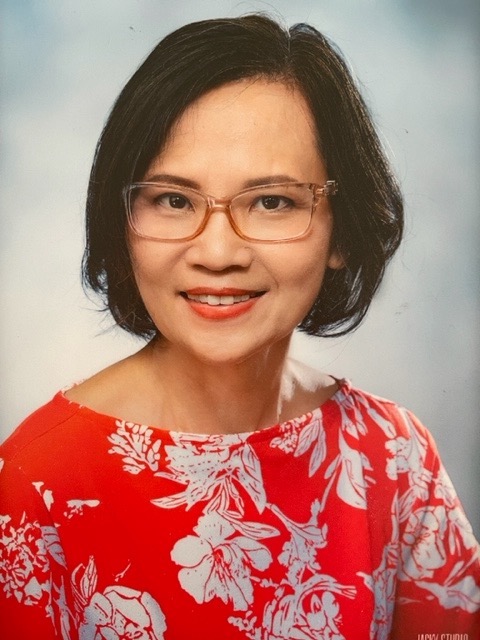
Bing Ngu is an Associate Professor in Mathematics Education at the School of Education, University of New England (UNE), Australia. She is a key contributor to the Faculty of Humanities, Arts, Social Sciences and Education, where she teaches secondary mathematics education and cognitive load theory at undergraduate and postgraduate levels. Her research focuses on improving student learning through cognitive load theory, learning by analogy, and comparison, with applications in algebra, trigonometry, and percentage problems. BSc (Chemistry with Management Science) (Hons), Imperial College of Science and Technology, UK Ph.D. in Education, University of New South Wales, Australia Dr. Ngu's research centers on cognitive load theory and its application in mathematics instruction. She investigates how element interactivity influences learning complexity and instructional efficiency. Her work emphasizes learning by analogy and learning by comparison to enhance problem-solving skills in linear equations, trigonometry, and percentage-change problems. She also explores cross-cultural mathematics education and has collaborated with scholars from China, Malaysia, Singapore, Taiwan, and Bhutan. Recently, she has extended her research into life and death education , examining existential understanding and personal philosophization. Her recent publications (2022–2024) reflect a strong focus on instructional design , cognitive load , and problem-solving expertise . Themes include the role of diagrams, prior knowledge, and learner expertise in mathematical learning. Her work combines theoretical development with empirical validation, often using randomized classroom studies. She has contributed to advancing the theory of human optimization and has helped elevate UNE’s ERA profile in Educational Psychology to an internationally recognized level. Dr. Ngu has received no explicitly listed scientific awards, but her editorial role on the board of PLOS One underscores her academic standing. She actively mentors early-career researchers and students from diverse international backgrounds. She supervises research in instructional design , cognitive load theory , mathematics education , and student well-being . Her leadership in research and teaching has significantly contributed to curriculum development, including the Master of Neuroscience and Education program at UNE. She has secured research collaborations and funding through joint publications and international partnerships. Dr. Ngu is a member of the editorial board for PLOS One and collaborates within research networks focused on educational psychology and mathematics instruction. She is involved in professional development initiatives for teachers in Armidale and Malaysia, translating research into classroom practice.