Muhammad Muddasar is a Researcher at the University of Limerick's School of Engineering, affiliated with the Bernal Institute. His primary research focuses on developing sustainable materials derived from lignin for energy harvesting and storage applications. Under the supervision of Professor Maurice Collins, he investigates advanced materials such as hydrogels, ionic conducting membranes, and carbon nanomaterials to enhance renewable energy systems. His work emphasizes reducing environmental impact through innovative synthesis techniques and lifecycle analysis. Key research areas include thermoelectric materials, bioenergy production, microbial electrolysis cells, and lignin valorization. Collaborations span topics like low-grade thermal energy recovery, supercapacitor optimization, and carbon fiber production improvements. Despite no explicit awards listed, his contributions include over 17 peer-reviewed publications between 2021-2025, showcasing impactful work in Materials Today Sustainability, Advanced Functional Materials, and ACS Applied Polymer Materials. His articles highlight trends in lignin-derived materials for energy applications, sustainable manufacturing, and nanomaterial-driven bioenergy systems. Active in international networks, his research bridges material science and renewable energy engineering, addressing global sustainability challenges.
Daria Camilla Boffito is a Full Professor in the Department of Chemical Engineering at Polytechnique Montréal , holding the Tier-2 Canada Research Chair in Intensified Mechano-chemical Processes for Sustainable Biomass Conversion. Her research spans process intensification , catalysis , sonochemistry , photocatalysis , and metal extraction , with a focus on sustainability. Education: B.Sc. and Ph.D. in Industrial Chemistry from the University of Milan, M.Sc. in Industrial Chemistry and Management Current Research: Developing ultrasound-assisted extraction , CO2 conversion , and floating photocatalysts for wastewater treatment Collaborations: Works with Canadian and international companies on sustainable chemical processes Scientific Awards include the Canada Research Chair Tier-2 (2016-2021), NSERC Banting Postdoctoral Fellowship (2013-2016), and FRQNT PBEEE Postdoctoral Fellowship (2013-2016). Advising has seen 5 Ph.D. and 9 Master's students graduate. She leads the Engineering Process Intensification and Catalysis (EPIC) Laboratory and is a member of the Institut de génie biomédical .
Jouko Peltonen is a Professor in Chemistry at Åbo Akademi University's Faculty of Natural Sciences and Engineering. He leads the Laboratory of Molecular Science and Technology, focusing on sustainable material development and biomedical applications. His work aligns with UN Sustainable Development Goals through green chemistry innovations. Ph.D. in Chemistry (Åbo Akademi, 1994) Licentiate in Chemistry (Åbo Akademi, 1992) Master's in Chemistry (University of Helsinki, 1988) Peltonen's research spans materials science , polymer chemistry , and sustainable technology , with emphasis on nanocellulose composites , antibacterial materials , and bio-based packaging . Recent projects explore biofilm modeling and lignin valorization. His publications (216 total) demonstrate interdisciplinary impact across biomedical engineering , environmental science , and chemical manufacturing . Key collaborations include NordForsk-funded initiatives and EU projects like PACKER 2020. Research grants include: Printed Intelligence Infrastructure (Academy of Finland, 2024-2028) Nordic POP (NordForsk, 2018-2025) ABC-Health (Jane och Aatos Erkkos Foundation, 2021-2024)
Carsten Sievers serves as Adjunct Professor in the Department of Chemical and Biomolecular Engineering at Georgia Institute of Technology, where he leads research in sustainable catalytic processes for fuel and chemical production from alternative resources. His work bridges fundamental spectroscopy with industrial reactor design to address petroleum dependence. Education: Diploma, Technical University of Munich, Germany (2003) D.Sc., Technical University of Munich, Germany (2006) Research Focus: Sievers' program integrates fundamental studies using IR, NMR, XAS, and Raman spectroscopy to probe catalyst structure-reactivity relationships with applied research on flow reactor systems for biomass conversion (hydrodeoxygenation, sugar upgrading) and mechanocatalytic polymer depolymerization. Key initiatives target CO 2 -neutral chemical production from biomass and waste plastics, emphasizing catalyst stability and regeneration. Publication Trends: Recent work (2023-2025) reveals a strategic pivot toward mechanocatalysis for plastic recycling (polyethylene, polystyrene) and ammonia synthesis, while maintaining expertise in hydrocarbon catalysis. Dominant themes include reaction environment engineering in ball mills, metastable surface characterization, and process intensification for CO 2 electrolysis. Scientific Recognition: 2012 Young Scientist Award, International Congress on Catalysis 2023 ACS Fellow designation Academic Leadership: As Director and Past President of the Southeastern Catalysis Society, former ACS Division Director, and Editor of Applied Catalysis A: General , Sievers shapes catalysis research direction. His Sievers Group has secured competitive fellowships for students like Yuchen George Change (Eastman Chemical Fellowship) and Victor Brandão (Ziegler Award), reflecting strong mentorship in sustainable reaction engineering. Research Infrastructure: The group operates advanced flow reactors, spectroscopic characterization suites, and mechanochemical systems for in-situ catalyst analysis, supporting collaborations with industry partners on technology translation.
Yu Xia is a Post Doc at the Department of Chemistry, Stockholm University, Sweden. He is affiliated with the Tom Willhammar Research Group, focusing on advanced electron microscopy and diffraction techniques for structural characterization of materials. PhD (2019–2023) from a joint program between the University of Birmingham (UK) and the Southern University of Science and Technology (China). Research emphasizes fabrication of metallic nanoparticles with non-equilibrium structures and shapes using gas-phase condensation and thermal shock methods. Specializes in scanning transmission electron microscopy (STEM), in-situ heating experiments, and electron energy loss spectroscopy (EELS) for nanoparticle analysis. Current work prioritizes 4DSTEM imaging for electron beam-sensitive materials and Python-based post-processing of electron microscopy datasets. Yu Xia's research spans Materials Science , Nanotechnology , and Electrocatalysis , with applications in photocatalytic hydrogen evolution , graphene composites , and advanced electron microscopy techniques . His work often integrates computational image processing with structural characterization to optimize material properties. Publications highlight innovations in heterostructure engineering , metallic alloy catalysts , and electron beam-sensitive material imaging . No scientific awards are explicitly mentioned in the provided text. Yu Xia's technical expertise includes Python scripting for image analysis, in-situ electron microscopy , and multifunctional graphene-based materials .
Bert F. Sels is a Full Professor at KU Leuven (Catholic University Leuven) in the Faculty of Bioscience Engineering, Department of Molecular and Microbiological Sciences, where he founded and heads the Center for Sustainable Catalysis and Engineering (CSCE). He is also a Visiting Professor at the Chinese Academy of Sciences in Guangzhou and co-founder of the spin-off company Zeopore. Previously, he directed the Centre for Surface Chemistry and Catalysis (COK) from 2016-2019 and served as Head of the Division Bio-refinery and Sustainable Chemistry (2015). He obtained his Ph.D. in 2000 from KU Leuven under Professor Pierre Jacobs, specializing in heterogeneous oxidation catalysis. His research focuses on heterogeneous catalysis for sustainable industrial processes, with expertise spanning: Biorefinery and biofactory systems for chemical production Design of hierarchically structured zeolites and carbon materials Spectroscopic characterization of catalytic active sites Methane activation and small molecule kinetics Renewable chemistry and biomass valorization His group has published 350+ papers (h-index 88) and holds 30 patents. Publications demonstrate strong focus on catalytic biomass conversion, zeolite engineering, and sustainable fuel production, with recent work emphasizing lignin valorization, carbohydrate upgrading, and low-carbon chemical synthesis. Key trends include hierarchical catalyst design and integrated biorefinery processes. Awards and Honors: Green Chemistry Award (2015) INEOS Research Award (2019) European Academy of Sciences and Arts Membership (2018) DSM Chemistry Award (2001) TOTAL Research Award (2013) UMICORE Research Award (2012) First Clean Tech Challenge (2009) He leads the CSCE research group and co-founded the European Research Institute of Catalysis (ERIC). As former co-chair of the International Zeolite Association's Catalysis Commission and associate editor of ACS Sustainable Chemistry & Engineering, he maintains extensive collaborative networks.
Dr. Hongli (Julie) Zhu is an Associate Professor in the Department of Mechanical and Industrial Engineering at Northeastern University's College of Engineering. Her research focuses on sustainable energy storage, multifunctional materials, and advanced manufacturing, with emphasis on developing environmentally friendly biomass-derived materials, all solid-state batteries, and flow batteries. She leads the ZHU Lab at Northeastern University, which is dedicated to creating safer, cheaper, and higher performance energy storage solutions while exploring multifunctional materials derived from nature. Dr. Zhu received her PhD from South China University of Technology and Western Michigan University (2004-2009). She conducted postdoctoral research at KTH Royal Institute of Technology in Sweden (2009-2011), focusing on biodegradable and renewable biomaterials from natural wood, followed by additional postdoctoral work at the University of Maryland (2012-2015), where she researched nanocellulose and energy storage. Dr. Zhu's research spans multiple disciplines at the intersection of materials science, energy storage, and sustainable manufacturing. Her work addresses critical challenges in energy storage technology, including developing all solid-state batteries, flow batteries, and high energy density battery systems. She has pioneered research in sustainable biomass-derived materials, particularly investigating cellulose, hemicellulose, and lignin for applications in bendable, implantable, and biocompatible electronics. Her lab also focuses on advanced manufacturing techniques, including high-speed roll-to-roll processing for emerging advanced materials and devices. Analysis of Dr. Zhu's publication record reveals a strong focus on next-generation battery technologies, particularly solid-state systems. Her research demonstrates significant contributions to understanding and improving lithium dendrite suppression, electrode architecture optimization, and interface stabilization in solid-state batteries. She has also made substantial advances in sustainable materials derived from natural resources, developing applications for cellulose nanostructured fibers, paper, and aerogel/hydrogel systems. MRS Communications Early Career Distinguished Presenters and JMR Distinguished Invited Speakers (2024) Selected in Stanford University List of Top 2% Scientists Worldwide (2021-2024) College of Engineering Faculty Fellow (2023) Soren Buus Outstanding Research Award (2022) Women in Materials Science, Advanced Materials (2021 and 2022) Women Scientists at the Forefront of Energy Research, ACS Energy Letters (2020) Innovator of the Year 2013, Maryland Jakob Wallenberg Scholarship, Sweden Dr. Zhu has secured significant research funding from various sources, including the National Science Foundation and Department of Energy. Her current projects include "Uncovering the mechano-electro-chemo mechanism of fresh Li in sulfide based all solid-state batteries through operando studies" (NSF), "Enabling Advanced Electrode Architecture through Printing Technique" (DOE), and "Engineering the Metal Sulfide Interface in All Solid State Batteries through Operando Study" (NSF). She collaborates with industry partners including Rogers Corporation and has developed patented technologies related to sustainable materials and energy storage. Dr. Zhu serves as Codirector of Advanced & Intelligent Manufacturing, Editor of Progress in Materials Science, and on the Editorial Advisory Board of Chemical Society Reviews. The ZHU Lab at Northeastern University is a highly interdisciplinary research group that bridges scales from the nanoscopic to macroscopic and system level. The lab's work has led to numerous patents, including "Natural fiber composites as a low-cost plastic alternative" and "Fire-retardant Nanocellulose Aerogel, and Methods of Preparation and Uses Thereof." The group focuses on making energy storage safer, cheaper, and higher performing while exploring multifunctional materials derived from nature, with particular emphasis on applying high-speed roll-to-roll manufacturing to emerging advanced materials and devices.
Professor Jukka Konttinen serves as Professor of Chemistry of Biorefining at Tampere University within the Faculty of Engineering and Natural Sciences and Department of Materials Science and Environmental Engineering. Previously, he held professorships at the University of Jyväskylä (2009-2014) and research positions at Åbo Akademi University and industry firms including Carbona Inc. His expertise spans thermochemical biomass conversion and sustainable energy systems. Education: D. Sc. (Chemical Engineering), Åbo Akademi University, 1998 Research Interests: Konttinen specializes in biorefining via thermochemical conversion processes including gasification, pyrolysis, hydrothermal liquefaction, and combustion. His work encompasses hybrid energy systems integrating solid/liquid biofuels, biogas, and solar power at distributed scales. He develops chemical process engineering solutions through modeling, simulation, and experimental validation from laboratory to commercial implementation. Publication Trends: His recent publications (2013-2024) demonstrate concentrated expertise in biomass conversion technologies, emphasizing process optimization for lignocellulosic feedstocks, syngas quality enhancement, and techno-economic-environmental assessments. Key themes include pretreatment methods, gasification kinetics, and integration of thermochemical processes with circular economy principles across agricultural and industrial waste streams. Scientific Awards: Supervisor of Best Academic Dissertation (Tiina Keipi) by Tampere University (2019) Supervisor of Best Academic Dissertation (Tiina Keipi) by Academic Engineers and Architects in Finland TEK (2019) Advising and Grants: Konttinen has supervised 13 PhD students (10 completed, 3 ongoing), 70 Master's theses, and 25 Bachelor's theses. His funding portfolio includes €250k as PI for Bio4all (Business Finland, 2024), €861k as WP leader for BL2F (EU Horizon, 2019-2024), plus €425k in confidential contracts (2014-2024) and €1.5M in prior grants. Labs and Teams: He leads the Bio and Circular Economy research unit and previously directed the Laboratory of Chemistry and Bioengineering (2017-2018). Current projects include EU Horizon's BL2F and Business Finland's Bio4all initiatives focused on climate-neutral energy systems and biorefinery commercialization.
Dr. Michael Philben is an Associate Professor of Chemistry and Geological and Environmental Science at Hope College, where he joined in 2019 after postdoctoral positions at Memorial University (Canada) and Oak Ridge National Laboratory. His research focuses on climate-carbon cycle feedbacks in vulnerable ecosystems, particularly peatlands and Arctic tundra. His educational background includes a Ph.D. in Marine Science from the University of South Carolina (2014) and a B.A. in Earth and Planetary Science from Northwestern University (2010). At Hope College, he teaches Environmental Science courses and contributes to the Day1: Watershed program. Philben's research centers on carbon and nitrogen cycling in ecosystems containing vast organic carbon stocks. He leads an NSF CAREER-funded project investigating Michigan peat bogs as natural laboratories for climate change impacts, using a north-south transect from Portage to Newberry as a 'space-for-time' experiment. His work examines methane emissions, nitrogen availability, and net carbon balance under warming conditions, with particular attention to Sphagnum-dominated peatlands at the southern edge of their climate range. His 15 most recent publications (2020-2024) reveal a strong focus on peatland biogeochemistry, with increasing emphasis on methane dynamics, nitrogen cycling, and the role of specific biochemical compounds like sphagnan. The research combines field measurements across climate gradients with laboratory experiments, often involving Hope College students in all project phases. NSF CAREER Award for peatland climate research Philben actively mentors undergraduate researchers through the Philben Research Group, which investigates how warming impacts carbon cycling in peatlands. His projects involve interdisciplinary work spanning analytical chemistry, geology, and ecology. The group maintains a network of seven Michigan peat bog field sites and collaborates on international research, including Arctic studies in Alaska and Canada. His laboratory focuses on using analytical chemistry tools to predict climate-carbon cycle feedbacks, with particular attention to southern Michigan peatlands as sentinels for larger northern peatland complexes. The research group employs techniques including greenhouse gas flux measurements, radiometric dating of peat cores, and analysis of organic matter composition.
Peyman Karami is a Postdoctoral Researcher at the Laboratory of Biomechanical Orthopedics (LBO) within École Polytechnique Fédérale de Lausanne (EPFL)'s College of Engineering . Research focuses on adhesive hydrogels for cartilage repair and orthopedic applications Investigates biomimetic stimuli (hydrostatic pressure, temperature) in chondrocyte homeostasis Develops ligin-based multifunctional hydrogels for sustainable biomedical applications Expertise in mechanobiology and thermomechanical regulation of tissue-engineered constructs Scientific Contributions: Leads 15+ publications on hydrogel technologies for cartilage regeneration, thermomechanical stimulation effects, and lignin functionalization, including breakthrough work in NIR-light photocuring , malacic trachea repair , and biomimetic temperature gradients . Current Research Trends: Prioritizes injectable adhesive hydrogels , noninvasive tissue repair , and multi-functional biomaterials that couple mechanical and biochemical cues for enhanced regeneration.
Professor Georg Guggenberger is a distinguished academic at Leibniz University Hannover, where he serves as Professor of Soil Chemistry within the Department of Soil Science at the Institute of Earth System Sciences, Faculty of Natural Sciences. In addition to his research and teaching responsibilities, he holds several significant administrative positions including Vice Dean for Research in the Dean's Office of the Faculty of Natural Sciences, Executive Management at both the Institute of Soil Science and Department of Soil Science levels, and Chair of the Selection Committee for the M.Sc. Landscape Sciences program. Prof. Guggenberger's research program focuses on fundamental processes governing soil organic matter dynamics across diverse ecosystems worldwide, from Arctic to tropical regions. His work investigates biotic and abiotic factors influencing the formation, transport, and stabilization of soil organic matter, with particular emphasis on soil fertility maintenance. He employs advanced methodologies including stable isotope approaches, biomarker analyses, microspectroscopic techniques (XPS, ESEM, NMR, NanoSIMS), and molecular biological methods to study biogeochemical interactions on mineral surfaces, dissolved organic matter dynamics, plant-mycorrhizal-soil interactions, permafrost soil organic matter, and impacts of land use and climate change on soil organisms. Analysis of Prof. Guggenberger's recent publications reveals a strong interdisciplinary research program spanning soil biogeochemistry, carbon cycling, soil microbiology, and climate change impacts. His work integrates field experiments along environmental gradients with laboratory manipulation studies to identify underlying mechanisms. The research shows particular strength in understanding organic matter stabilization mechanisms, microbial contributions to soil processes, and development of sustainable soil management practices that address climate change challenges. Prof. Guggenberger actively contributes to academic service through his leadership roles in examination boards and committees, including the Examination Board for Geosciences programs and the Selection Committee for Landscape Sciences. His administrative responsibilities as Vice Dean for Research demonstrate his commitment to advancing research within the Faculty of Natural Sciences at Leibniz University Hannover.
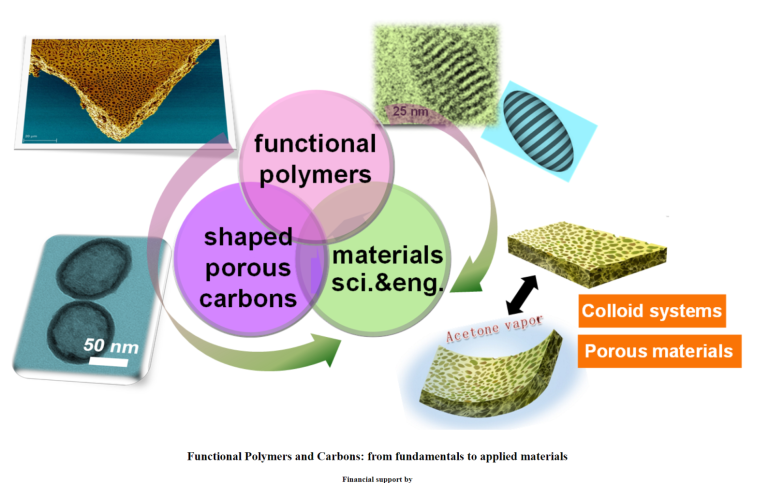
Jiayin Yuan is a Professor of Materials Chemistry at Stockholm University, Department of Chemistry. He leads the Jiayin Yuan Research Group, focusing on functional polymers and carbons for environmental and energy applications. His work emphasizes sustainable materials, including porous polymers, carbon membranes, and energy storage systems. He holds an ERC Consolidator Grant (2022) and previously an ERC Starting Grant (2014), and directs the Stockholm Material Hub. His research spans CO2 capture, catalysis, and nanomaterials for renewable energy. He has held academic positions at Clarkson University (USA) and the Max Planck Institute (Germany), with a PhD from Germany (2009). Education: Bachelor's in Chemistry, Shanghai Jiao Tong University (2002) Master's in Chemistry, Germany (2004) PhD in Chemistry, Germany (2009) Research Interests: Synthesis of functional polymers, carbon materials, and their applications in environmental sustainability and energy. Current projects include CO2 capture via porous liquids, biomass-derived fertilizers, and bijel membranes for energy storage. Grants & Awards: ERC Consolidator Grant (2022) ERC Starting Grant (2014) Wallenberg Academy Fellow (2018) Advising & Labs: Supervises multiple PhD students and postdocs. His group collaborates on advanced materials for energy and environmental challenges. The Stockholm Material Hub (stockholmmaterial.com) fosters interdisciplinary research in materials science.
Tomasz Majka serves as a Lecturer at the Department of Polymer Chemistry and Technology within the Faculty of Chemical Engineering and Technology at Tadeusz Kościuszko Cracow University of Technology. His academic career spans over a decade with continuous research and teaching activities focused on polymer engineering and materials science. His educational background includes a Licentiate in Applied Chemistry (2008) and Pedagogical Preparation (2008) from State Higher Vocational School in Tarnów, followed by MSc in Plastics Technology (2010) and Dr. Eng. in Technical Sciences (2015) from Tadeusz Kościuszko Cracow University of Technology. Majka's research primarily centers on polymer processing technologies , with special emphasis on thermal analysis and flammability of polymer materials , nanocomposite development , and terminal ballistics . His work bridges fundamental polymer science with practical industrial applications, particularly in developing sustainable flame retardant systems using biobased materials like lignosulfonamides. Recent publications reveal a strong focus on circular economy approaches through polymer recycling and biodegradable material development. His scientific contributions demonstrate consistent output in high-impact journals, with a notable shift toward sustainable polymer solutions since 2020, particularly in biodegradable composites and recycling technologies. The 15 most recent publications show expertise spanning flame retardancy mechanisms, nanocomposite engineering, and sustainable polymer processing. III place at International Session of WIiTCh Krakow University of Technology Science Clubs (2010) Award in 'Sustainable Development - Scientific Debut 2010' competition (2010) Award in 'Poster about famous scientist - Norio Taniguchi' competition (2011) II Prize in B-Innovative 'Be Entrepreneurial' business plan competition (2013) Majka actively supervises the Ballistic and Flammability Research Section within WIiTCH PK Chemistry Research Club and maintains strong industry connections through numerous industrial research projects. His professional engagements include international research stays at University of Bolton (UK) and Academy of Sciences of the Czech Republic, focusing on fire testing and polymer materials innovation. He serves as a scientific advisor for several industrial projects related to polymer processing and material safety. His laboratory work spans multiple specialized facilities including thermal analysis equipment, scanning electron microscopy, and polymer processing machinery. Current research directions include developing halogen-free flame retardants from lignin derivatives, optimizing biodegradable polymer composites, and advancing recycling technologies for post-consumer plastics.
Jane Howe is an Associate Professor at the University of Toronto with joint appointments in the Department of Materials Science & Engineering and the Department of Chemical Engineering and Applied Chemistry. Her research focuses on in situ microscopy techniques, advanced materials characterization, and energy storage systems. Dr. Howe holds nine US patents related to electron microscopy and materials development, and has been recognized with two R&D 100 Awards for innovations in lithium battery technology and nano-structured carbon materials. Before joining UofT, Jane worked as a Senior Applications Scientist at Hitachi High-Technologies (2012–2017) and served as a Staff Scientist and Principal Investigator at Oak Ridge National Laboratory (2001–2012). She earned her Ph.D. in Ceramic Science from Alfred University in 2001, followed by a postdoctoral fellowship at ORNL. Her expertise spans materials processing, corrosion science, and advanced electron microscopy techniques, including in situ TEM and correlative microscopy. Her research portfolio includes over 100 peer-reviewed publications, with recent work emphasizing nanomaterials for energy storage, corrosion-resistant coatings for nuclear fuel containers, and Bayesian optimization of carbon nanolattices. Jane’s lab also explores microbial interactions in anaerobic cultures and novel catalysts for CO₂ hydrogenation, reflecting her interdisciplinary approach to materials science challenges. Education: Ph.D. in Ceramic Science, Alfred University (2001) Postdoctoral Fellowship, Oak Ridge National Laboratory (2001–2008) Key Awards: R&D 100 Award (2020s): Lithium Battery Technology R&D 100 Award (2020s): Nano-Structured Carbon Materials Grants & Collaborations: Active in Canada’s nuclear fuel container materials research and US-Canada cross-border microscopy partnerships.
Yves Leterrier is a Senior Scientist and lecturer at École Polytechnique Fédérale de Lausanne (EPFL), where he has been a faculty member since 1993. He works in the Laboratory for Processing of Advanced Composites (LPAC) within the Institute of Materials at the School of Engineering. His academic career spans over three decades with significant contributions to sustainable materials science and polymer composite technologies. Senior Scientist, Laboratory for Processing of Advanced Composites (LPAC) Teaching roles in SMX and EDMX programs PhD program committee member for Materials Science and Engineering Author of over 300 technical articles including 145 peer-reviewed journal papers Leterrier's research focuses on sustainable materials and processes, particularly in polymer composites, multilayer and hybrid materials, photopolymerization and sol-gel processes, mechanics of thin films on polymers, and roll-to-roll process methods. His work bridges fundamental materials science with practical applications in flexible electronics, renewable energy, and sustainable packaging. He has pioneered techniques for creating bioinspired surfaces, diffusion-barrier coatings, and cost-effective manufacturing processes for advanced materials. His recent publications reveal a strong emphasis on water permeation monitoring in bioelectronic implants, fluorine-free superhydrophobic surfaces, and biobased composites using nanocellulose. His research shows a clear trajectory toward sustainable materials solutions with applications in medical devices, flexible electronics, and environmentally friendly packaging. The consistent theme across his work is the development of reliable, high-performance materials through innovative processing techniques and composite design. Leterrier actively contributes to the academic community through editorial roles, including serving on the editorial board of Applied Surface Science since 2012 and as Associate Editor for Frontiers in Materials since 2014. He coordinates EPFL's Minor on 'Engineering for Sustainability' and has been President of the EPFL Materials Science Library commission since 2000. His leadership extends to industry collaboration through multiple funded research projects. His current research portfolio includes significant projects such as BioPack (biobased packaging materials), FLEXCAN (flexible encapsulation of active implants), 3DP4PEACE (sustainable 3D printing), and DuPrintProtect (advanced manufacturing). Previously, he led projects including XinoCaps, UltraCeal, SUNLITE, and REFLEX, demonstrating consistent funding success across diverse materials science applications. He also serves on the board of the French Adhesion Society and has organized international symposia on materials and micro-technologies. Leterrier leads the Laboratory for Processing of Advanced Composites, where his team develops cutting-edge materials processing techniques. His work on photo-hyphenated methods, UV nanoimprint lithography, and electro-fragmentation analysis represents the laboratory's focus on innovative characterization and manufacturing approaches for advanced materials.