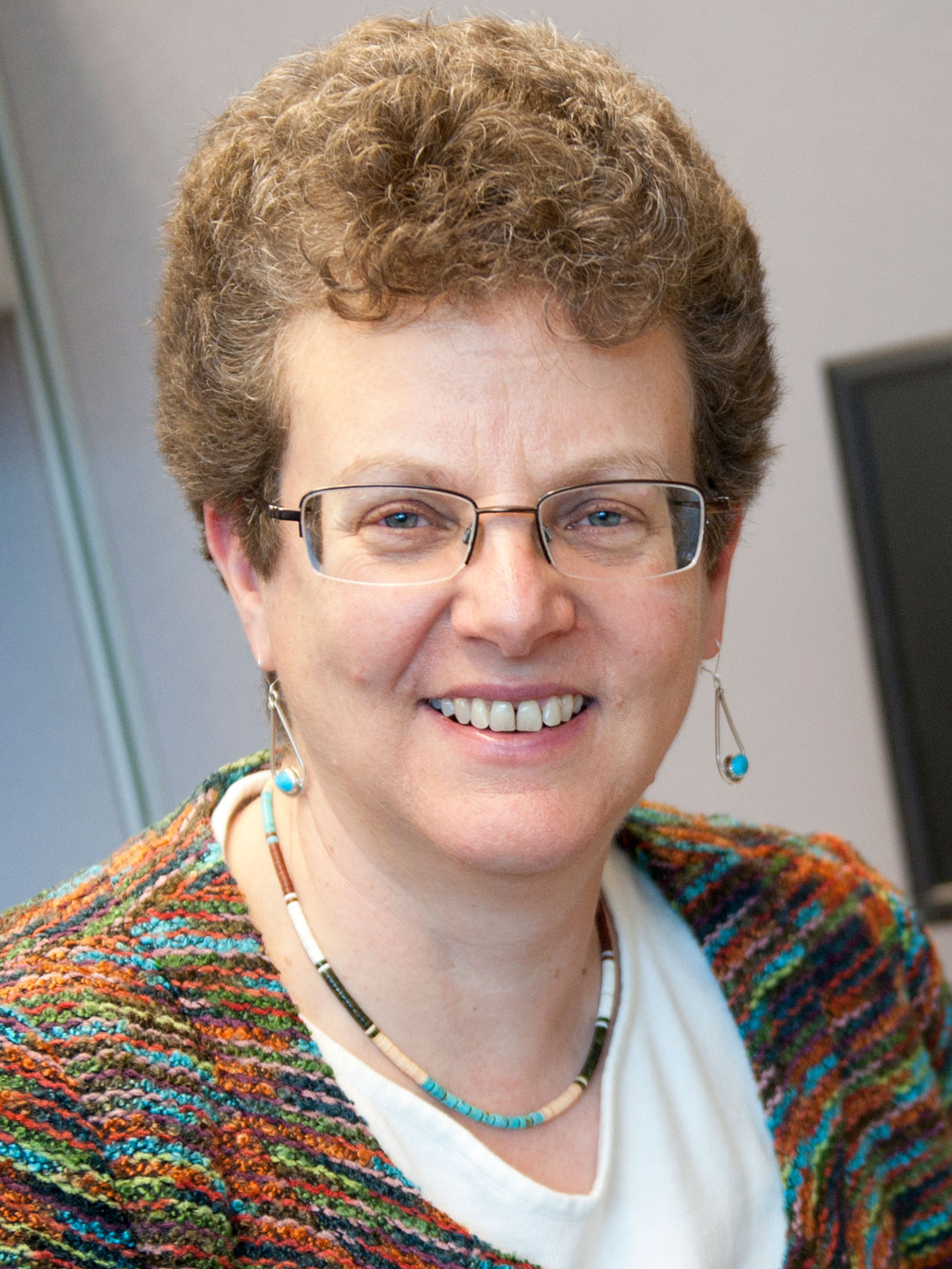
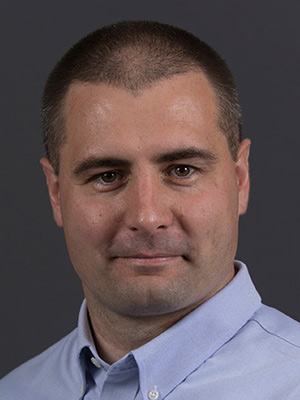
Kalle Ruttik is a University Lecturer at Aalto University's Department of Information and Communications Engineering. His research focuses on cutting-edge communication technologies, including millimeter-wave networks, IoT integration, and 6G advancements. Doctoral degree in Engineering and Technology, Aalto University Licentiate degree in Engineering and Technology, Helsinki University of Technology Master's degree in Engineering and Technology, Tallin Technological University Ruttik’s work spans wireless network optimization, antenna design, and sustainable connectivity solutions. His recent projects explore: Drone communication via reconfigurable intelligent surfaces 5G/6G millimeter-wave propagation modeling Integration of backscatter IoT devices with cellular networks Wi-Fi and DECT-2020 standardization efforts Cloudification of telecom infrastructure His research outputs show increasing emphasis on: Millimeter-wave communication Internet-of-Things (IoT) scalability Radio frequency (RF) signal processing Hybrid communication technologies Antenna height optimization Path loss prediction models Scientific contributions include the 2024 IEEE Most Downloaded Paper Award in Radio Frequency Identification. He actively contributes to: International collaborations (Finland-Korea, EU RRF) Doctoral thesis examination Workshop organization (MIDICON, 2018) Media outreach on information privacy and air traffic control
Miriam Leeser is a Professor and Associate Chair of Research in the Department of Electrical and Computer Engineering at Northeastern University. She leads the Reconfigurable and GPU Computing Lab, focusing on heterogeneous architectures, FPGA accelerators, and their applications in wireless communications, machine learning, and data privacy. Her work emphasizes practical implementations of theoretical advancements, such as cloud-edge computing frameworks and secure multi-party computation using FPGAs. Leeser holds a PhD in Computer Science from the University of Cambridge and a BS in Electrical Engineering from Cornell University. She has been at Northeastern since 1996 and is a Senior Member of both the IEEE and ACM. Notable recognitions include the National Science Foundation Young Investigator Award and her status as a Charter Member of the IEEE Computer Society Distinguished Contributor Program. Her research portfolio includes projects funded by the NSF on topics like resilient cloud infrastructure (CAREFREE), cross-layer wireless coexistence, and FPGA-enabled secure computation. The Reconfigurable Computing Lab develops tools and libraries to simplify accelerator usage, particularly for emerging applications in IoT, medical imaging, and 5G/6G systems. Key Projects: CAREFREE, P4-based FPGA Testbeds, Secure Function Evaluation via FPGAs, MIMO Systems Acceleration Grants: Over $2M in NSF awards for cloud infrastructure and cybersecurity Labs: Reconfigurable and GPU Computing Lab (RCL) Leeser’s publications span FPGA optimization, hardware-software co-design, and privacy-preserving technologies. Recent work highlights include accelerating large language models with token-adaptive quantization and low-latency optical wireless transceivers.
Indian Institute of Technology Hyderabad (IITH)India
Abhishek Kumar is an Assistant Professor in the Department of Electrical Engineering at the Indian Institute of Technology Hyderabad. His research focuses on advanced wireless communication systems and radio-frequency circuit design. Education: Ph.D. from IIT Madras. Research Interests: The work centers on Radio-frequency Integrated Circuit Design , Full-duplex wireless communication , Wide-band frequency synthesis , and Transceiver arrays . Additional projects include exploring Lightweight RF transceivers and Wireless power transfer technologies. Laboratory: He leads the BeCiL (Betar Ci rcuits Laboratory) at IIT Hyderabad, which aims to invent innovative circuit techniques to revolutionize wireless systems.
Vanessa Chen is an Assistant Professor of Electrical and Computer Engineering at Carnegie Mellon University (CMU), part of the College of Engineering. She holds a Ph.D. from CMU (2013) and prior academic appointments at The Ohio State University and Qualcomm. Her research focuses on hardware security for IoT devices, analog/mixed-signal circuits, and ubiquitous sensing systems, with notable contributions in RF fingerprinting and machine learning integration. She leads the Energy-Efficient Circuits and Systems Lab and has received prestigious awards including the NSF CAREER Award (2019). Education : Ph.D., Electrical and Computer Engineering, Carnegie Mellon University (2013) M.S., Electrical Engineering, National Tsing Hua University, Taiwan (2005) B.S., Electrical Engineering, National Tsing Hua University, Taiwan (2003) Research Interests : Chen’s work spans secure analog/RF electronics, brain-machine interfaces, and energy-efficient data conversion systems. She pioneers methods to detect hardware Trojans via electromagnetic side-channels and designs lightweight, energy-efficient transceivers for IoT. Her projects integrate machine learning for real-time threat detection and system optimization. Awards & Grants : NSF CAREER Award (2019) EAGER Grant for Real-Time Learning in Secure RF Electronics (2020) SpecEES Grant for Trusted Wireless Transceivers (2019) Advising & Outreach : Collaborates with industry partners like Apple and Analog Devices. Develops educational initiatives integrating secure sensor design into undergraduate/graduate curricula. Her lab emphasizes interdisciplinary approaches to tackle emerging cybersecurity challenges in IoT and wireless systems.
State University of New York at BuffaloUnited States
Nicholas Mastronarde is an Associate Professor and Associate Chair in the Department of Electrical Engineering at the University at Buffalo, State University of New York, within the School of Engineering and Applied Sciences. He leads the WIRED Lab (Wireless Networking, Reinforcement Learning, and Drones Lab), which conducts cutting-edge research in wireless communications, AI/ML for networks, and UAV systems. Ph.D. in Electrical Engineering from UCLA (2011) M.S. in Electrical Engineering from UC Davis (2006) B.S. in Electrical Engineering from UC Davis (2005, Highest Honors) Dr. Mastronarde's research focuses on wireless networking, reinforcement learning, and drone systems. His work spans AI/ML for wireless networks (reinforcement learning for energy harvesting wireless sensors, IoT, 5G scheduling), NextG wireless networks (active-passive coexistence, software-defined networking, mmWave networks), and modeling, simulation, and field experimentation for future networks. His research has significant applications in spectrum coexistence, digital twin technology, and UAV networking, with emphasis on practical implementation through platforms like UB-ANC and NeXT. His recent publications demonstrate a strong trend toward integrating AI/ML techniques with wireless communications to develop more efficient, adaptive, and intelligent network systems, particularly focusing on spectrum coexistence between satellite and terrestrial networks, digital twin-enabled network simulation, and reinforcement learning applications for next-generation wireless systems. Dimitris N. Chorafas Foundation Award (2011) UCLA Graduate Division Dissertation Year Fellowship (2010-2011) IBM Research Watson Lab Graduate Intern Fellowship (2010) 2020 SEAS Senior Teacher of the Year Award UB's Teaching Innovation Award 2022 Dr. Mastronarde has successfully advised numerous graduate students, including current PhD candidates and multiple alumni who have gone on to work at companies like Qualcomm. His research is supported by prestigious organizations including the US Air Force Research Laboratory, US SOCOM, the National Science Foundation (including the NSF SWIFT award), GE Aviation, US Ignite, ARMOR-IIMAK, and SUNY. His extensive publication record includes over 100 peer-reviewed articles in top-tier journals and conferences. As the leader of the WIRED Lab, Dr. Mastronarde oversees several key research initiatives including UB-ANC (unmanned aerial vehicle networking simulation/emulation), RF-SITL (software-defined transceiver and channel emulation), NeXT (digital twin-enabled multi-fidelity network simulator), and UnionLabs (cloud-based platform for testbed sharing). His team consists of current PhD students, research scientists, and undergraduate researchers working collaboratively on cutting-edge wireless communication projects.
Missouri University of Science and TechnologyUnited States
Dr. Maciej Zawodniok is an Associate Professor of Computer Engineering at the Missouri University of Science and Technology, part of the College of Engineering. He holds a Ph.D. in Computer Engineering from Missouri S&T (2006) and an M.Sc. in Computer Science from Silesian University of Technology, Poland (1999). His research focuses on adaptive and energy-efficient protocols for wireless networks, cyber-physical systems, and RFID systems. He is an investigator at the Intelligent Systems Center and serves as Assistant Director of the NSF I/UCRC on Intelligent Maintenance Systems. Education: Ph.D. in Computer Engineering, Missouri University of Science and Technology (2006) M.Sc. in Computer Science, Silesian University of Technology (1999) Research Interests: Wireless sensor networks RFID systems Energy-efficient protocols RF-based localization Cyber-physical systems Notable Awards: 2013 Outstanding Branch Counselor (IEEE St Louis Section & Region 5) 2013 Outstanding Teaching Commendation Award 2012 Outstanding New Advisor of the Year Award Advising & Grants: Dr. Zawodniok has led NSF-funded projects including the I/UCRC on Intelligent Maintenance Systems and research on memristors for RFID devices. His work emphasizes practical applications in manufacturing, disaster response, and smart grid systems. Collaborations include industry partners like Amplisine. Labs/Teams: Active in the AutoID Research Group and the Missouri S&T Motes project, focusing on wireless network testbeds and RFID innovations.