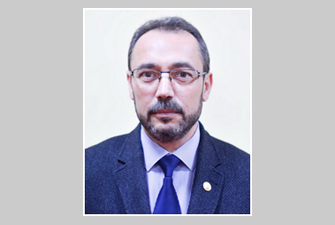
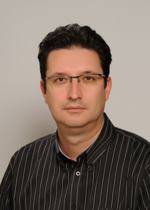
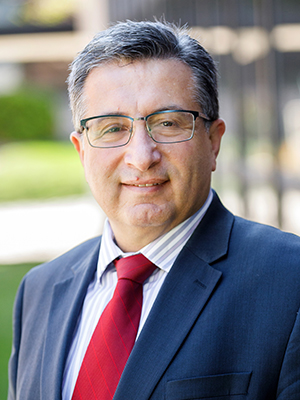
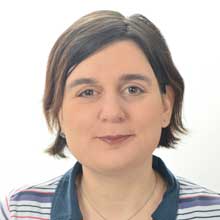
Prof. Istrate Dumitru-Marcel is a Professor at the Department of Power Engineering, Technical University of Iasi, Romania. His research focuses on High Voltage Engineering, Renewable Energy systems integration, and Pollution Control in power plants. He holds a doctoral degree (dr. eng.) and actively contributes to academic and industrial projects in electrical engineering. Research interests include: Switching overvoltages and lightning protection Insulation coordination and testing for high-voltage equipment Photovoltaic and wind energy integration into power grids Emission control and environmental impact mitigation for power generation facilities No specific awards or grants are detailed in the provided text. His professional activities include supervising research projects and academic staff in power engineering domains. Contact: mistrate@tuiasi.ro | Office hours in Romania (GMT+2)
Elena HELEREA is a Professor in the Department of Electrical Engineering and Applied Physics at the Faculty of Electrical Engineering and Computer Science, Transilvania University of Brașov. Her research focuses on electrical materials, fault diagnosis, electromagnetic compatibility, energy transition, and the history of technology. She is actively involved in advancing technologies related to renewable energy systems, sensor development, and industrial applications. Her work includes interdisciplinary studies on energy-water interdependencies, spintronic sensors, and historical analyses of technological advancements. Notable contributions include publications on automotive electrical equipment evolution, hybrid energy management strategies, and electrostatic discharge protection. She has authored/co-authored books like Magnetic Materials for Electrical Machines Used in Transportation and contributed to conferences on science and technology history. Elena’s research integrates theoretical and experimental methods, addressing practical challenges in electrical engineering, material science, and sustainable energy systems.
Dr. Peppas Georgios is an Assistant Professor in the Department of Electrical and Computer Engineering at the Technical University of Crete. His research focuses on surge protection systems, lightning effects on power infrastructure, and high-voltage dielectric materials. He leads projects on nanofluid-based insulation solutions and transient overvoltage mitigation in renewable energy systems. His work frequently addresses challenges in electric vehicle charging stations, medium-voltage grids, and transformer oil performance. Key research areas include: Design and modeling of surge protective devices (SPDs) Lightning protection for wind farms, substations, and pipelines Dielectric properties of natural ester oils and nanofluids High-voltage insulation systems for renewable energy applications Recent studies emphasize nanomaterials' role in improving breakdown voltage and thermal stability of insulating fluids. His work also investigates aging effects and radiation impacts on protective components. Collaboration with industry partners focuses on practical implementations of SPDs in residential and industrial settings. Dr. Peppas is based in the Science/ECE Building (Office 145Α-12) and can be reached at peppas@tuc.gr. His research has produced over 50 peer-reviewed articles since 2016, with 15 new publications in 2024–2025 alone.
Raul DE LACERDA is an Associate Professor at the Signals and Intelligent Networks Department of CentraleSupélec and a researcher at the Signals and Systems Laboratory (L2S - CNRS). He holds degrees from the Federal University of Ceará (Brazil), Eurecom (France), and Alcatel-Lucent Bell Labs collaboration. His research focuses on advanced signal processing for wireless communications, spectrum sharing, and electromagnetic compatibility. He has contributed to projects like L-DACS2 and DME system coexistence, commercial PLC adaptation for avionics, and indoor positioning techniques. Raul has received awards for his work, including the Valuetools 2007 Best Student Paper Award and DASC 2010 Best Session Paper Award. He coordinates international partnerships through programs like the Erasmus Mundus EM-SMART2 consortium. Education: Electrical Engineering (Dipl.Ing., 2003) from UFC, M.Sc. in Teleinformatics (2005), French M.Sc. in Communication Systems (DEA), and Ph.D. in Wireless Communication (Eurecom). Research interests emphasize signal processing for wireless networks, including MIMO systems, UWB technologies, and interference mitigation. His work bridges theoretical advancements with practical applications in aerospace and avionics. Recent projects include hierarchical fingerprinting for indoor localization and 1-bit ADC MIMO data detection. Awards highlight his contributions to aeronautical communication systems and adaptive modulation. He collaborates with labs like L2S and has published extensively on coexistence systems, channel division multiple access (CDMA), and PLC adaptation for avionics. Advising and grants: No listed advisees but actively involved in Erasmus Mundus programs and international partnerships. His work is supported by collaborations with Ericsson, CNRS, and Bell Labs. Labs/Teams: Signals and Systems Laboratory (L2S), Inverse Problems Group, and Modelling and Estimation team.
Michel KIEFFER is a Professor in Signal Processing for Communications at Paris-Sud University and a researcher at the Laboratoire des Signaux et Systèmes (L2S), Gif-sur-Yvette, France. He holds a Ph.D. (1999) and Habilitation (2005) from Université Paris-Sud. Previously, he served on part-time leave at Laboratoire de Traitement et Communication de l’Information (CNRS-Télécom ParisTech, 2009–2016) and was a junior member of the Institut Universitaire de France (2011–2016). His research focuses on joint source-channel coding, signal processing for communication networks, and robust control systems. Key contributions include works on multimedia transmission reliability, UAV localization, and fault identification in power grids. He co-authored over 100 publications and books like Applied Interval Analysis (Springer, 2001) and Joint Source-Channel Decoding (Academic Press, 2009). He serves as Associate Editor for Signal Processing (since 2008) and IEEE Transactions on Communications (2012–2016). His work spans interdisciplinary areas such as energy systems, robotics, and telecommunications, addressing challenges in real-time data transmission, network slicing, and distributed control.
Franciscus Bernardus Johannes Leferink is a Full Professor at the University of Twente, holding dual appointments in the Digital Society Institute and Radio Systems department. He also serves as Director of EMC at Thales Nederland B.V. since 1984. His research focuses on electromagnetic compatibility (EMC), power quality, radio systems, and interference mitigation, with applications in 5G, smart metering, and lightning protection. He has contributed to over 470 publications and received prestigious awards like the 2022 Richard B. Shultz Best Transaction Paper Award. Teaching: Introduction to EMC, Post-Academic EMC courses, IEEE Clayton Paul Global University lectures, and Life-Long-Learning programs. Research Interests: EMC engineering, reverberation chambers, spoofing/jamming countermeasures, and TEMPEST (compromising emanations). Recent articles highlight advancements in EMC measurement techniques, adaptive filters, and EMI reduction strategies for power electronics. He actively contributes to conferences and professional societies, including the Dutch EMC-ESD Society where he served as Chair in 2005. His work aligns with UN Sustainable Development Goals related to infrastructure and innovation. Awards: 2022 Richard B. Shultz Best Transaction Paper Award Innovation Honours Thales 2003 Grants/Advising: Extensive collaboration with industry partners like Thales and leadership in interdisciplinary projects. Leferink leads research teams focused on cutting-edge EMC challenges and maintains a strong presence in both academic and industrial R&D ecosystems.
Associate Professor Todorovski Mirko is affiliated with the Faculty of Electrical Engineering and Information Technologies at Ss. Cyril and Methodius University in Skopje, Macedonia. His primary appointment is in the Department of Power Systems, where he specializes in power systems engineering, grounding systems, and renewable energy integration. He leads research activities at the Transmission Power Systems Institute, focusing on enhancing grid reliability and optimizing energy infrastructure. His research interests span multiple domains, including power system planning, high voltage engineering, lightning protection, and smart grid technologies. Key areas of exploration include radial distribution network design, robust optimization for energy storage systems, and the impact of renewable energy sources on grid dynamics. Recent publications highlight trends in addressing uncertainty in power demand, optimizing feeder routing with battery storage, and mitigating lightning-induced risks in communication tower grounding systems. His work frequently employs advanced computational methods, such as Monte Carlo simulations and stochastic optimization, to address real-world grid challenges. While no formal grants or awards are listed, his contributions to the Macedonian power system's flexibility assessment and grid modernization efforts reflect significant applied research impact. He maintains active involvement in academic teaching, instructing core courses like High Voltage Networks and Earthing Systems in Power Grids. His research often intersects with industry needs, such as improving grid resilience through decentralized charging solutions for electric vehicles and enhancing voltage regulation in low-voltage distribution networks. Ongoing projects explore the integration of distributed generation and advanced grid control strategies.
Dr Jonathan Swingler is an Associate Professor at Heriot-Watt University's School of Engineering & Physical Sciences, serving as Director of Internationalisation (Associate Executive Dean) and former Head of Electrical, Electronic and Computer Engineering. His research focuses on robotics electrical power systems, particularly through the National Robotarium's strategic initiatives. With over 30 years of experience, he specializes in material degradation physics, electrical contacts, and reliability engineering for automotive/aerospace systems. His academic roles include overseeing international partnerships and chairing major conferences like Dielectric2011 and the 28th International Conference on Electrical Contacts. He holds Fellow status with the Institute of Physics and is a Chartered Physicist. Key research contributions span laser sintering techniques, machine learning for power electronics prognostics, and DC arc fault mitigation in electric vehicles. Recent studies emphasize predictive maintenance via deep learning, high-temperature electronics packaging, and lightning protection systems for transmission lines. He has authored over 100 publications and pioneered conducting polymer applications to enhance connector reliability under fretting conditions. Notable collaborations include work with the National Robotarium (www.PowerToTheRobots.com) and industry partnerships addressing real-world robotics power challenges. His work bridges fundamental materials science with practical engineering solutions for sustainable energy systems and autonomous technologies.
Dr. Ramazan Asmatulu is a Boeing Global Engineering Professor at Wichita State University's Department of Mechanical Engineering within the College of Engineering. He has held academic positions since 2006, progressing from Assistant Professor to Professor by 2017. His research focuses on nanotechnology safety across industries (automotive, aerospace, biomedical), composite materials engineering, sustainable materials recycling, energy storage systems, and machine learning applications in materials science. He actively collaborates with industry and academia, including postdoctoral stints at Virginia Tech, University of Connecticut, and Yale University. Dr. Asmatulu leads a research group comprising six PhD, nine MS, and three BS students. He has graduated over 150 students and secured grants exceeding $6.3M. His work spans improving fire-retardant properties of composites, de-icing technologies, hydrogen storage solutions, and atmospheric water harvesting using nanostructured hydrogels. He emphasizes education and accreditation standards, having contributed to comparative studies between NCAAA and ABET engineering evaluations. His research interests are multidisciplinary, combining nanomaterial innovation with practical industrial applications. Notable projects include portable nanofiber-based water purification systems, superhydrophobic coatings for corrosion mitigation, and bio-inspired nanocomposites for medical uses. He is deeply involved in advancing lightweight aerospace materials and eco-friendly desalination techniques through nanotechnology integration.
Dr. Krasimir Marinov Ivanov is a Doctor of Technical Sciences and Head of the Department of Fundamentals of Electricity and Power Engineering at the Faculty of Electrical Engineering and Electronics, Technical University - Gabrovo. With extensive experience in electrical power systems, he has made significant contributions to research in Smart Grid technology, photovoltaic systems, electrical safety, and power quality analysis. His research interests span multiple critical areas of modern electrical engineering. He has conducted extensive work on Smart Grid applications in electricity transmission and distribution networks, exploring modern technologies, intelligent sensors, and control systems. His research portfolio includes comprehensive studies on electromagnetic compatibility, distributed generation integration, and photovoltaic system optimization. In the field of electrical safety, he has investigated occupational hazards, electrocution risks, and lightning protection systems, particularly for renewable energy installations. Dr. Ivanov has also made significant contributions to understanding power quality issues related to harmonics, reactive power management, and the impact of modern electronic loads on electrical networks. Dr. Ivanov's publication record demonstrates a strong focus on practical applications of electrical engineering principles. His recent work shows increasing attention to renewable energy integration, electrical safety in modern power systems, and advanced simulation techniques for power quality analysis. He has particularly emphasized the challenges of integrating distributed generation sources into existing grid infrastructure and developing effective safety protocols for emerging technologies. His research methodology often combines theoretical analysis with practical field measurements and advanced simulation techniques, including finite element analysis. Throughout his career, Dr. Ivanov has successfully supervised five PhD students to completion and has been involved in numerous research projects, including six major completed projects between 2012-2016. His project work has addressed critical issues in Smart Grid implementation, electromagnetic compatibility, distributed generation integration, and electrical network optimization. He has also developed significant educational materials, authoring or co-authoring nine textbooks covering various aspects of electrical engineering, including electrical networks and systems, power plant electrical components, and occupational safety in educational institutions.
Juan Baselga Llido is a Full Professor at Universidad Carlos III de Madrid (UC3M) in the Department of Materials Science and Engineering and Chemical Engineering. He leads the Polymers and Composites Research Group and is affiliated with the Álvaro Alonso Barba Institute of Chemistry and Materials Technology. His research focuses on advanced materials, including nanocomposites, functional polymers, and electromagnetic shielding materials. He has extensive experience in developing sustainable materials and improving material properties through nanotechnology. Key research areas include the design of lightweight nanostructures for electromagnetic interference shielding, nitrogen-doped graphene aerogels, and carbon-based nanomaterials. His work spans applications in aerospace, electronics, and sustainable development. Over 150 publications and numerous patents highlight his contributions to materials science. Notable projects include the development of self-healing asphalt composites and graphene-based lightning strike protection materials for aircraft. He has supervised multiple doctoral theses in materials engineering and holds grants from institutions like the Spanish Ministry of Economy and Competitiveness. His research integrates interdisciplinary approaches, combining polymer chemistry, nanotechnology, and materials engineering to address industrial and environmental challenges.
Antonia Jimenez Morales is a Full Professor at University Carlos III of Madrid, affiliated with the Department of Materials Science and Engineering and Chemical Engineering. She serves as Director of the Official Postgraduate Program for the University Master's Degree in Materials Science and Engineering. Her research activities are centered within the Powder Technology Research Group and the Álvaro Alonso Barba Institute of Chemistry and Materials Technology. Her work spans multiple scientific domains including Materials Science, Chemistry, Electronics, Industrial Engineering, and Biomedical applications. Professor Jimenez Morales' research interests focus on advanced materials processing techniques, particularly powder metallurgy, sol-gel technology, and metal injection molding. Her work has significant applications in biomaterials development, corrosion protection systems, and the creation of MAX phase ceramics for high-temperature applications. She has made notable contributions to the development of antimicrobial sol-gel coatings for medical implants, addressing critical challenges in preventing prosthetic joint infections. Her research bridges fundamental materials science with practical engineering applications, particularly in biomedical and aerospace contexts. Her publication record demonstrates a consistent focus on materials innovation, with recent work emphasizing sustainable manufacturing approaches, advanced ceramic processing, and bioactive coatings. The trajectory of her research shows increasing emphasis on biomedical applications of materials science, particularly in infection prevention strategies for orthopedic implants. Her work combines experimental materials processing with electrochemical characterization and biological testing to develop functional coatings with controlled drug release capabilities. Professor Jimenez Morales has served as principal researcher on numerous significant projects including SMARTGEL (focused on diagnostic and therapeutic strategies for implant-related infections), REVIAL (sol-gel technology for metallic alloy coatings), and several EU-funded initiatives. She has also contributed to research projects addressing sustainable manufacturing, 3D printing technologies, and environmental impact reduction in materials processing. Her supervision of doctoral theses reflects her commitment to training the next generation of materials scientists in specialized areas including sol-gel technology, MAX phase processing, and corrosion protection systems.
Sara RUBINETTI is an Adjunct Professor at the Department of Environmental Sciences, Informatics and Statistics, Ca' Foscari University of Venice. She holds a PhD in Physics and Astrophysics (University of Turin, 2018) and a Master’s in Physics (University of Turin, 2013). Her research focuses on climate modeling, atmospheric processes, and marine circulation dynamics, with applications to coastal management and planetary science. Education: PhD in Physics and Astrophysics (2018), University of Turino Master’s in Physics (2013), University of Turino Visiting PhD Student at ETH Zurich (2016) Research Interests: Lightning detection in Earth and Venus atmospheres Numerical simulations of coastal marine circulation (FESOM-C model) Climate variability analysis using spectral methods Solar activity reconstruction from cosmogenic isotopes Recent Research Focus: Her 2023 publications emphasize climate change impacts on coastal systems (Venice Lagoon), Mediterranean Sea dynamics, and extreme hydrological events. She also explores Venus atmospheric processes via radar modeling. Awards: Abilitazione Scientifica Nazionale (II Fascia) in Geophysics (2023–2034) Teaching: Climate Modelling and Monitoring (PhD and Master’s courses) Collaborations: Projects with CNR-ISAC, Alfred Wegener Institute (AWI), and CORILA consortium on climate adaptation, marine protected areas, and paleoenvironmental reconstructions.
Seyedmahmood Hosseiniimani is a Fixed-term Assistant Professor and Researcher in the Department of Energy (DENERG) at Politecnico di Torino, Italy. He is actively engaged in research and teaching in the domains of electrical energy systems, data science, and smart grid technologies. He contributes to multiple academic programs as a course collaborator and serves on several course councils. Position: Fixed-term Assistant Professor Institution: Politecnico di Torino Department: Department of Energy (DENERG) Research Focus: Data Science, Machine Learning, Electrical Energy Systems, Microgrids, Power Economics His research interests lie at the intersection of data analytics and energy systems, with a strong emphasis on applying machine learning and statistical methods to electricity markets, demand forecasting, and microgrid optimization. He explores topics such as price clustering, inter-zonal congestion, pandemic impacts on energy demand, and demand response in smart grids. The trend in his recent publications shows a consistent focus on data-driven analysis of electricity markets, particularly in the Italian context. His work combines technical modeling with economic and policy implications, targeting journals and conferences in power systems, energy informatics, and sustainable infrastructure. He frequently employs regression models, clustering algorithms, and systematic reviews to extract insights from complex energy datasets. He is a Guest Editor for the journal ENERGIES (2025–present), contributing to scholarly discourse in renewable and sustainable energy. While no formal scientific awards are listed, his editorial role reflects recognition in the academic community. Hosseiniimani supervises PhD student Erminia Consiglio in the field of Electrical, Electronic, and Communications Engineering. His teaching responsibilities include courses such as Smart Grids, Electrical Systems for Buildings, and Fundamentals of Energy Conversion, Transport, and Storage across various engineering programs. He collaborates with senior researchers like Prof. Ettore Bompard and contributes to interdisciplinary research projects aligned with UN SDGs 7, 9, 11, and 12. He is involved in research initiatives related to energy communities, prosumer integration, and data analytics for policy support, working within a dynamic research environment at DENERG focused on sustainable and intelligent energy systems.
Xinyu Lei is an Assistant Professor in the Department of Computer Science at Michigan Technological University (MTU) , where he joined in Fall 2021. He earned his PhD in Computer Science and Engineering from Michigan State University (MSU) , advised by Prof. Guan-Hua Tu. Prior to MTU, he worked as a Research Assistant at Texas A&M University at Qatar (2013) and a Research Intern at Ford Motor Company (2017). University: Michigan Technological University Department: Computer Science Academic Rank: Assistant Professor PhD Institution: Michigan State University His research focuses on distributed computing , mobile systems , data science , and trustworthy machine learning , with particular emphasis on privacy-preserving protocols for IoT and blockchain technologies. His publications span top venues like ACM MobiCom , IEEE TDSC , and IEEE TIFS , addressing vulnerabilities in cellular IoT, secure blockchain protocols, and federated learning systems. Recent work includes privacy-preserving federated learning in 2023 (TIFS), secure redactable blockchain (TDSC), and IoT data heterogeneity handling (IoT-J). Earlier contributions in 2020-2021 explored Wi-Fi security for smart homes (MobiSys), encrypted geodata queries (ICDE), and Bitcoin payment protocols (CODASPY). Research Grants: NSF CRII: CNS-2153393 ($175K, Sole-PI) Professional Activities: Program Committee: CVPR'24, INFOCOM'24 TPC: BigDataService'20, Workshop Mobicom'19 Dr. Lei teaches graduate and undergraduate courses in applied cryptography (CS 5090), network security (CS/EE 4723), and computer security (CS 4471/5471) at MTU. He also contributes to academic community service through program committee roles at conferences like CVPR, INFOCOM, and WSDM.